Skip to content

Free delivery on orders over €350. Fast delivery.

Search

What are you looking for?

Type at least 2 characters to see suggestions.

DSIP spray
DSIP spray

DSIP spray

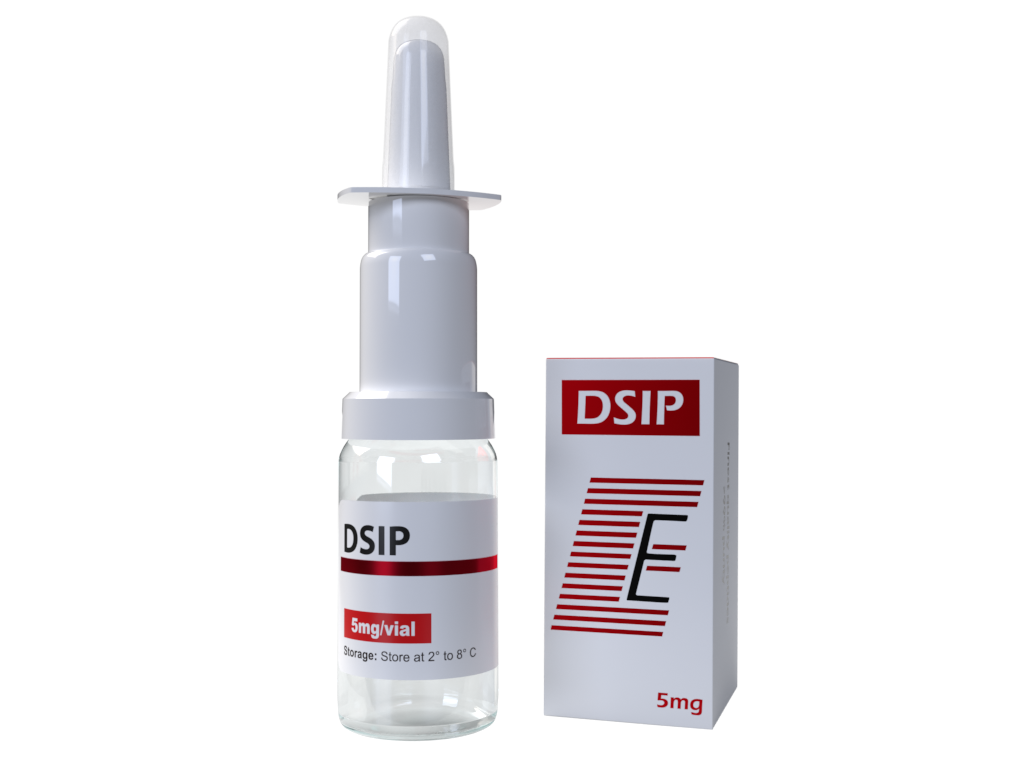
DSIP 5 mg nasal spray is a kit for self-preparation of an intranasal solution: a vial with WAGGDASGE (Delta Sleep Inducing Peptide) nonapeptide lyophilisate + a glass atomizer with a dosing pump. The research profile includes delta sleep modulation (ambiguous effect, not always replicated), anti-stress effects through the HPA axis, thermoregulation and neuroprotection in models. Research Use Only reagent

30,99 €
Fast shipping
Delivery options Free delivery from 350 €
Returns policy
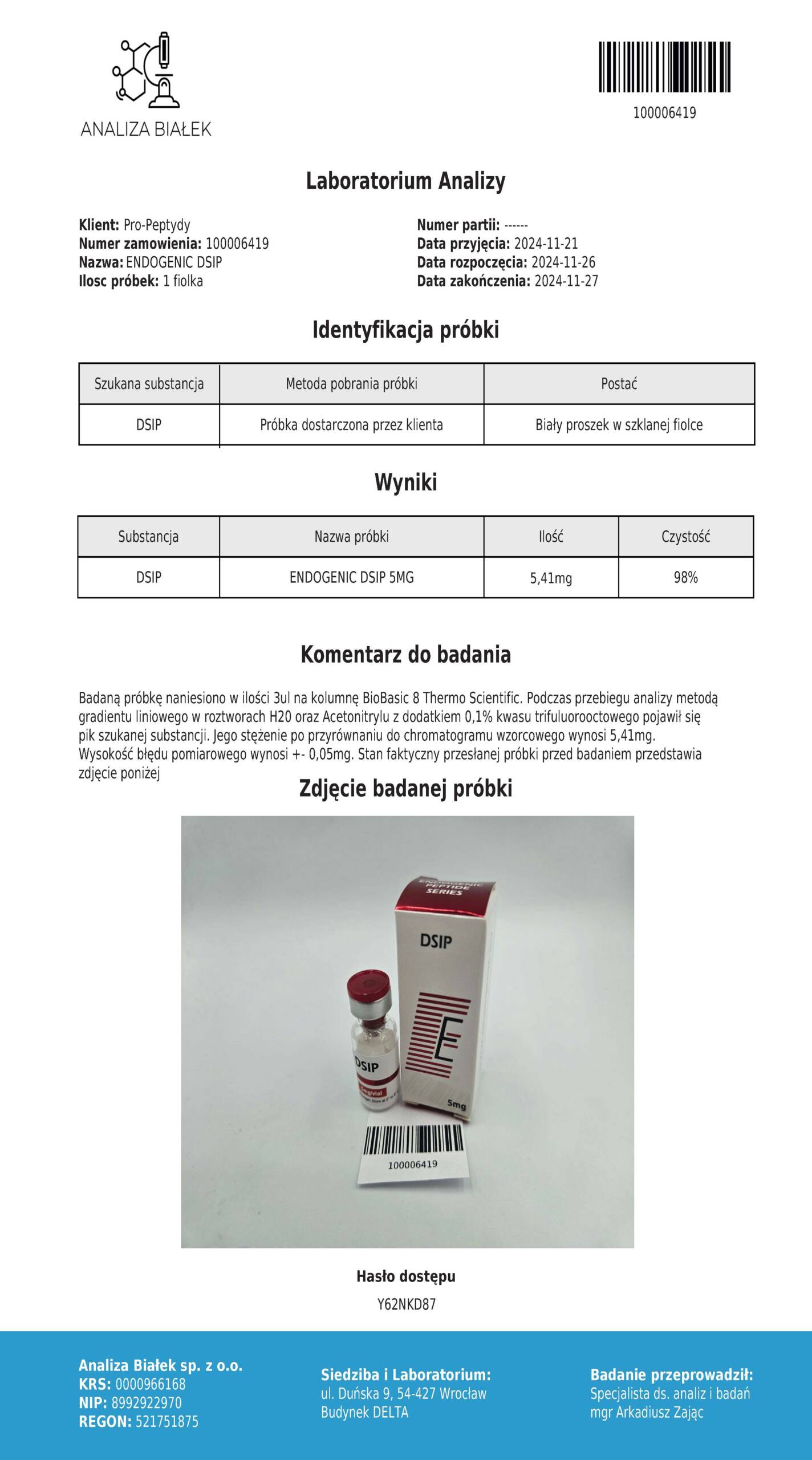
View the laboratory analysis report Peptide Calculator

DSIP nasal - Delta Sleep Inducing Peptide - research reagent

  • DSIP: nonapeptide with the WAGGDASGE sequence.
  • Kit: vial of lyophilisate and glass atomizer; requires solution preparation.
  • Research Use Only reagent, not a medicinal product.

Product status information

Chemical reagent intended exclusively for laboratory tests (Research Use Only). It is not a medicinal product, dietary supplement or food. It is not intended for use on humans or animals. Sales only to registered research units and laboratories.

Introduction

In the group of regulatory peptides of endogenous origin DSIP (Delta Sleep Inducing Peptide) occupies a special place – it is one of the first molecules experimentally related to the physiology of slow-wave sleep, isolated directly from the biological material of a sleeping animal. DSIP belongs to the line Endogenic — reagents mapping molecules of endogenous origin or directly derived from them, provided for research on the neuropharmacology of regulatory peptides.

In the Pro-Body catalog it is adjacent to others peptides for sleep used as reference compounds in slow-wave sleep models. This reagent delivers DSIP in a format consistent with the route of administration explored in neuropharmacology for short central peptides – as kit for self-preparation of a nasal solution: vial with DSIP lyophilisate together with a glass atomizer with a dosing pump.

This is not a ready-to-use solution: the researcher first reconstitutes the lyophilisate and then fills the atomizer, preparing an intranasal solution with parameters tailored to his own protocol. DSIP is a short, nine-amino acid peptide – its size makes it suitable for research on nose-to-brain transport, i.e. delivery of the molecule to the central nervous system while partially bypassing the blood-brain barrier.

In the catalog, this format corresponds to a broader group peptides spray tested by intranasal administration. DSIP is also available in the Pro-Body catalog in a related format, which should not be confused with this set: only a vial of lyophilisate without an atomizer (DSIP 5 mg – lyophilized vial). Both formats contain the same compound (WAGGDASGE) in the form of a lyophilisate that requires reconstitution – the difference is that this kit adds a glass atomizer that allows preparation of the solution for intranasal administration.

The pharmacological profile of DSIP remains one of the most controversial in the entire group of regulatory peptides: despite its historical name, the basic hypnotic effect has not always been replicated in newer studies, and the molecule itself is today considered a modulator of many pathways rather than a simple “sleep switch”. Purity verified by HPLC ≥98%, identity confirmed by mass spectrometry, COA available for each batch.

REGULATORY STATUS

DSIP is not registered as a medicinal product in the EU or USA – not authorized by EMA or FDA. The Russian registration of a medicine with this peptide (Deltaran) does not extend to the RUO reagent. Most of the literature on DSIP comes from Swiss and Russian work from the 1970s–2000s, and independent replication with newer methods remains limited. The Pro-Body vial + atomizer set is a research reagent reflecting the explored route of administration, not a registered drug – communicating the product as a “sleep spray”, “peptide for insomnia” or “natural sleep aid for biohackers” is contrary to the Research Use Only framework.

DSIP, delta sleep and isolation history

To understand DSIP, you need to go back to the mid-1970s and to the Schoenenberger and Monnier laboratory in Switzerland. The starting point was the hypothesis that a humoral factor circulating in the blood of an animal sleeping in deep slow-wave sleep (delta sleep) is capable of inducing a similar state in the recipient animal.

The team collected venous blood from rabbits in delta sleep—experimentally induced by stimulation of the thalamus—and fractionated it to look for the active molecule. The result of this work was the isolation and characterization of a nonapeptide, which was given a name describing the observed effect: Delta Sleep Inducing Peptide. DSIP thus became part of the search trend endogenous substances that regulate sleep — a research direction that assumed that sleep architecture is controlled, among others, by circulating peptide factors.

The strategy itself (isolate the active factor from the biological material of an animal in a specific physiological state, determine its structure, check its function) was typical of peptidology of that era and resulted in a number of molecules derived directly from tissues and body fluids. However, subsequent years of research complicated the simple picture of the “sleep peptide”.

Reviews from the 1980s (Graf, Kastin – DSIP an update) described DSIP as a molecule with a surprisingly broad and heterogeneous profile: in addition to the alleged effect on sleep, they indicated anti-stress effects, modulation of thermoregulation, influence on circadian rhythms, on the secretion of pituitary hormones and cytoprotective properties in models. Importantly, the basic hypnotic effect itself, from which the molecule got its name, turned out to be difficult to reproduce consistently: some studies confirmed it, others did not show a statistically significant effect on sleep architecture.

DSIP therefore remains a molecule with an uncertain, probably multidirectional mechanism, whose historical name precedes the current state of knowledge about its action.

What is DSIP?

DSIP is a linear nonapeptide of endogenous origin – originally isolated from animal blood, now chemically synthesized. In this kit, it is supplied as a lyophilized product in a vial with a glass atomizer, from which the researcher prepares a solution for intranasal administration after reconstitution.

  • Common name: DSIP, Delta Sleep Inducing Peptide, delta sleep inducing peptide
  • Sequence: Trp-Ala-Gly-Gly-Asp-Ala-Ser-Gly-Glu (single letter: WAGGDASGE); linear nonapeptide
  • Structural origin: endogenous peptide isolated from the venous blood of a rabbit in the delta sleep phase; currently produced synthetically using the SPPS method
  • Chemical class: linear regulatory nonapeptide of endogenous origin; a group of CNS neuromodulatory peptides
  • Supplied form: DSIP lyophilisate in a vial + glass nasal atomizer with a dosing pump (kit for self-preparation of a nasal solution); pharmaceutical grade ≥98% HPLC

Table of physicochemical characteristics

Parameter Value Notes
Sequence WAGGDASGE (Trp-Ala-Gly-Gly-Asp-Ala-Ser-Gly-Glu) linear nonapeptide
CAS number 62568-57-4 for the free form of DSIP
Molecular formula C₃₅H₄₈N₁₀O₁₅ acid form
Molar mass 848.81 g/mol monoisotopic mass for verification in the batch COA
Character peptide with predominance of acidic residues (Asp, Glu) two acidic residues give an anionic character
Supplied form lyophilisate in a vial + glass atomizer kit for preparing the nasal solution after reconstitution
Purity ≥98% HPLC UV detection, per batch verification
Peptide content/working concentration vial content according to COA; the concentration is selected by the researcher during reconstitution exact value in the batch COA

Mechanism of action at the molecular level

DSIP is considered in the literature as a peptide with many parallel, weakly interconnected pathways – without a single dominant, clearly confirmed mechanism. The following profiles have been documented for DSIP in preclinical models and early trials; they should be read taking into account the heterogeneity of the data. Profile observed and postulated in research models:

  1. Modulation of delta sleep architecture (ambiguous effect) — historical and basic research direction. Some studies on animals and early trials in humans described the effect of DSIP on the share of slow-wave sleep (delta) and sleep continuity. However, the same effect was not always replicated in later studies with better methodological control – some studies did not show a statistically significant effect on sleep architecture. In the context of this description, DSIP is a tool for testing the hypothesis of peptide regulation of sleep, not a proven sleep inducer.
  2. Anti-stress and adaptogenic effect – modulation of the HPA axis — a number of works (mainly from the Russian school, Sudakov – DSIP and stress) indicated the ability of DSIP to limit the stress response in animal models, including by modulating the hypothalamic-pituitary-adrenal (HPA) axis and influencing corticotropin-releasing hormone (CRH) signaling. In these models, DSIP was considered as a factor increasing the body’s resistance to physical and emotional stress – a direction today often indicated as more consistent than the hypnotic effect itself.
  3. Modulation of thermoregulation and circadian rhythms — the influence of DSIP on the regulation of body temperature and circadian rhythm parameters was observed in animal models. This profile was associated with the role of the peptide as a modulator of central homeostatic mechanisms, and not only the sleep process – which fits into the picture of a molecule with a multidirectional, regulatory nature.
  4. Potential antioxidant and neuroprotective effects (models) — the cytoprotective potential of DSIP (Khvatova – DSIP and neuroprotection), including the effect on oxidative stress markers and cell survival in hypoxic conditions, was examined in cellular and animal models subjected to oxidative stress. The research context includes conservation of neural tissue in experimental models – observations requiring independent replication.
  5. Modulation of pituitary hormone secretion (LH, somatoliberin) — some studies described the effect of DSIP on the neuroendocrine axis, including the secretion of luteinizing hormone (LH) and somatoliberin (GHRH) signaling. The neuroendocrine profile was considered as one of many peripheral lines of action, further complicating the simple “sleep peptide” picture.

Nose-to-brain mechanism - peptide transport by intranasal administration

The atomizer kit format reflects the route of administration explored in the neuropharmacology of short central peptides. The molecular logic of transport is well described, although data for DSIP itself are limited. Most regulatory peptides do not cross the blood-brain barrier (BBB) ​​well when administered peripherally – they are too polar and some are too large. Intranasal administration offers an alternative delivery route to the central nervous system (CNS), partially bypassing the BBB. Two parallel nose-to-brain transport pathways have been described in research models:

  • Olfactory pathway (olfactory) — a peptide applied to the olfactory epithelium in the upper part of the nasal cavity can be transported along the olfactory nerves directly to the olfactory bulb and further to the structures of the forebrain, bypassing the systemic circulation
  • Trigeminal nerve pathway — the endings of the trigeminal nerve innervating the nasal mucosa constitute a second route of transport to the brain stem and further structures of the CNS

For DSIP, the intranasal route is conceptually attractive for two reasons. First, it is a short, nine-amino-acid peptide, and small peptide molecules are typical candidates in nose-to-brain transport studies. Secondly, the putative targets of DSIP (sleep, thermoregulation and HPA axis centers) lie in central structures to which the intranasal route theoretically delivers the peptide more effectively than peripheral administration.

Applications in scientific research

DSIP in a set with an atomizer is a tool for testing a peptide with an exceptionally broad and ambiguous profile, prepared for the route of administration explored for short central peptides. It is used in research areas:

  • Models of sleep architecture — research on the impact of DSIP on the share of slow-wave sleep (delta) and sleep continuity in animal models; DSIP as a reference compound in tests of the peptide hypothesis of sleep regulation, taking into account the problem of replicability of the effect
  • Models of stress and the HPA axis — assessment of the impact on the stress response, corticotropin-releasing hormone (CRH) signaling and parameters of the hypothalamic-pituitary-adrenal axis in models of physical and emotional stress
  • Studies of thermoregulation and circadian rhythms — characterization of the impact of DSIP on body temperature regulation and circadian rhythm parameters in rodent models
  • Nose-to-brain transport studies — comparative pharmacokinetics of intranasal versus systemic administration for a short nonapeptide; characterization of the kinetics of transport through the olfactory epithelium (intranasal bioavailability of DSIP – a direction requiring dedicated research)
  • Models of neuroprotection and oxidative stress — assessment of the cytoprotective potential of DSIP in cell cultures and models of hypoxia/oxidative stress of nervous tissue
  • Neuroendocrine studies — influence on the secretion of luteinizing hormone (LH) and somatoliberin (GHRH) signaling as peripheral directions of action of the peptide

In studies on central peptides, DSIP is sometimes combined with other native regulatory peptides in intranasal form – the reference point for intranasal administration of an anxiolytic peptide is, for example, Selank spray, which has a precedent for research on nose-to-brain transport, and in the context of regulating circadian rhythms and homeostatic processes – a pineal gland bioregulator Epithalon 10mg.

Vial + atomizer set - preparation of nasal solution

Unlike the factory supplied solution, this product is kit for self-preparation of an intranasal solution: vial with DSIP lyophilisate and a glass atomizer with a dosing pump. The solution is prepared by the researcher – first he reconstitutes the lyophilisate, then transfers it to the atomizer. Set characteristics:

  • Lyophilisate vial: DSIP peptide in dry form (lyophilized powder), peptide content declared in the batch COA; requires reconstitution with a solvent selected by the researcher (typically bacteriostatic water or a buffer compatible with the protocol)
  • Glass atomizer: nasal applicator made of glass, with a dosing pump, refillable; the glass protects the solution against light degradation and is chemically neutral towards the peptide
  • Single spray volume: ~100 µl per pump press (approximate value for this type of atomizer – to be confirmed for a given unit)
  • Preparation of the solution: after reconstitution of the lyophilisate, the researcher transfers the solution to the atomizer; the working concentration results from the amount of peptide in the vial and the volume of solvent used for reconstitution – the selection of parameters is up to the researcher
  • Application: preparation of a solution for intranasal administration in protocols examining the nose-to-brain transport of short central peptides

Summary

DSIP in this kit is a linear nonapeptide with the sequence Trp-Ala-Gly-Gly-Asp-Ala-Ser-Gly-Glu (WAGGDASGE) of endogenous origin – a molecule isolated in the mid-1970s by the Schoenenberger and Monnier team from the venous blood of rabbits in the delta sleep phase, supplied as a lyophilisate in a vial with a glass atomizer for self-preparation of the solution for nose.

This is not a ready-to-use solution – the researcher reconstitutes the lyophilisate and fills the atomizer. DSIP is one of the first peptides experimentally related to the physiology of slow-wave sleep, although today it is considered a molecule with a broad and ambiguous profile, and not a simple sleep inducer. The pharmacological profile described in the research models includes modulation of delta sleep architecture (ambiguous effect, not always replicated), anti-stress effects via the HPA axis and corticotropin-releasing hormone, modulation of thermoregulation and circadian rhythms, potential antioxidant and neuroprotective effects in the models, and effects on the secretion of pituitary hormones (LH, somatoliberin).

The kit format refers to the intranasal route explored for short central peptides – nose-to-brain transport is the conceptual justification, and the intranasal bioavailability of DSIP remains to be verified. The same compound is also available as a DSIP 5 mg vial only – a lyophilisate without an atomizer. HPLC purity ≥98%, MS confirmation (Q-TOF), COA for each batch.

Regulatory status – Research Use Only. The broader context of the classification and uses of cognitive-enhancing compounds is discussed in the guide to what they are nootropic substances and when they are the subject of research.

Bibliography

  1. Schoenenberger GA, Monnier M (1977). Characterization of a delta-electroencephalogram (-sleep)-inducing peptide. PubMed
  2. Graf, M. V., Kastin, A. J. (1986). Delta-sleep-inducing peptide (DSIP): an update. PubMed
  3. Kovalzon VM, Strekalova TV (2006). Delta sleep-inducing peptide (DSIP): a still unresolved riddle. PubMed
  4. Sudakov KV, Ivanov VT, Koplik EV, Vedjaev DF, Michaleva II, et al. (1983). Delta-sleep-inducing peptide (DSIP) as a factor facilitating animals’ resistance to acute emotional stress. PubMed
  5. Khvatova EM, Samartzev VN, Zagoskin PP, Prudchenko IA, Mikhaleva II (2003). Delta sleep inducing peptide (DSIP): effect on respiration activity in rat brain mitochondria and stress protective potency under experimental hypoxia. PubMed