

Ships within 24 hours Free delivery for orders over 350 EURO Wide selection of high-quality laboratory products Ships within 24 hours Free delivery for orders over 350 EURO Wide selection of high-quality laboratory products Ships within 24 hours Free delivery for orders over 350 EURO Wide selection of high-quality laboratory products Ships within 24 hours Free delivery for orders over 350 EURO Wide selection of high-quality laboratory products Ships within 24 hours Free delivery for orders over 350 EURO Wide selection of high-quality laboratory products Ships within 24 hours Free delivery for orders over 350 EURO Wide selection of high-quality laboratory products Ships within 24 hours Free delivery for orders over 350 EURO

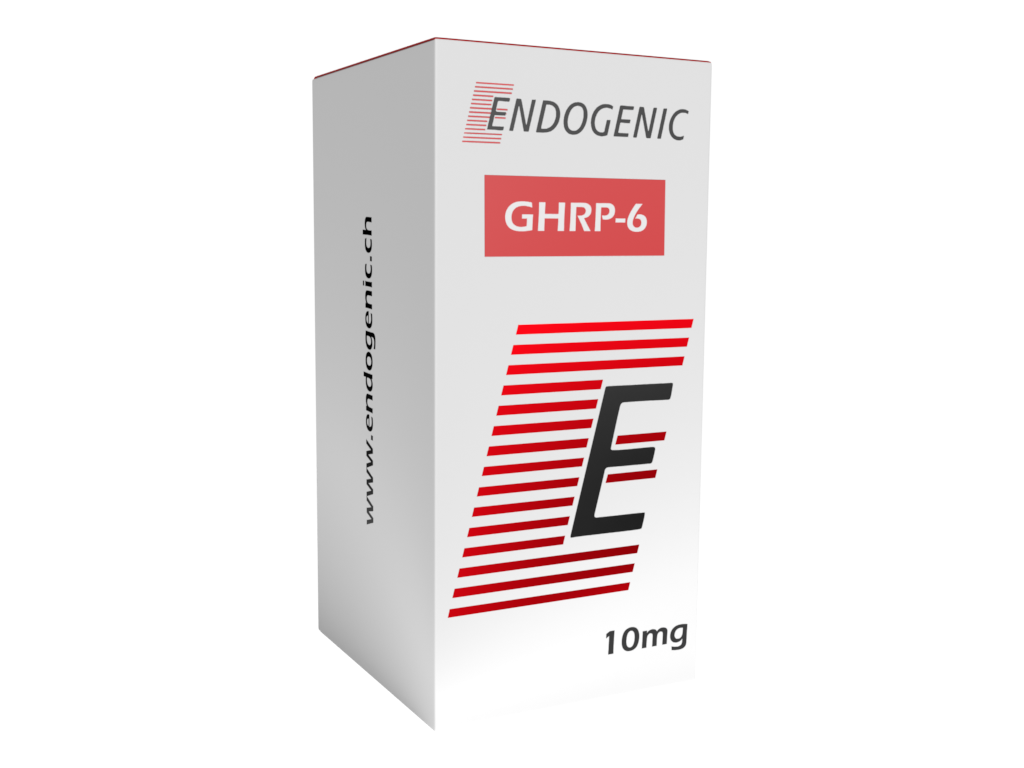
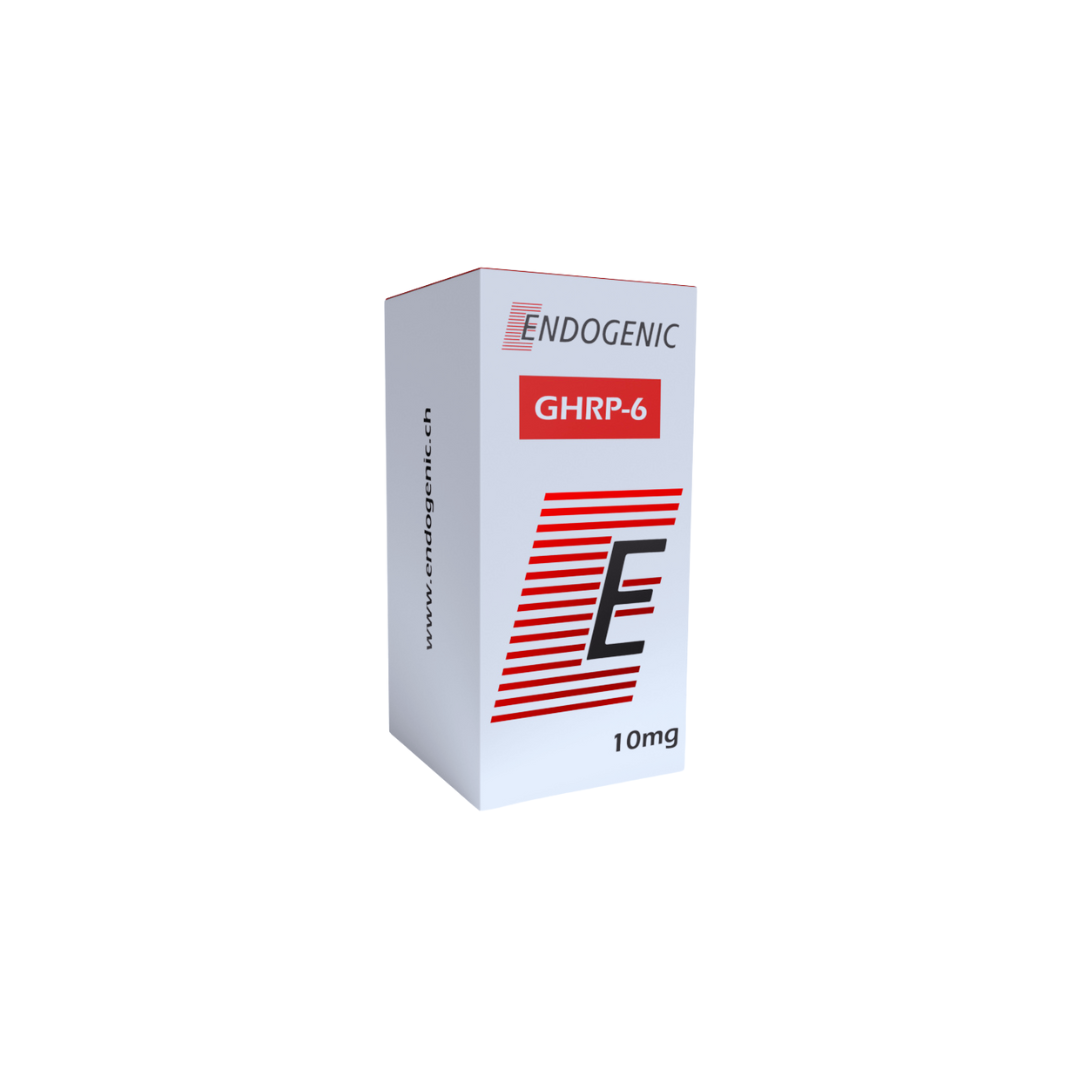
GHRP-6 10mg

Sale!


 26.00

Growth Hormone Releasing Peptide GHRP-6 10 mg

GHRP-6 is a synthetic hexapeptide with a specific amino acid sequence: His-D-Trp-Ala-Trp-D-Phe-Lys-NH2. It belongs to a class of compounds known as Growth Hormone Secretagogues (GHS), which are of interest in scientific research on endocrinological mechanisms. As an agonist of the ghrelin receptor (GHS-R1a), the booster is used in laboratory settings to study signaling pathways related to this receptor. The product is similar to the GHRP-2 peptide.

Growth Hormone Releasing Peptides (GHRPs) represent a class of synthetic compounds developed to study the mechanisms regulating the secretion of somatotropin (GH). GHRP-6, as one of the first and best-characterized members of this family, is a valuable research model. Its action is not based on the somatoliberin (GHRH) pathway, but on the activation of the specific GHSR-1a receptor, which allows for the study of alternative signaling pathways in pituitary cells. Understanding these interactions is fundamental to advances in the fields of biochemistry and molecular biology.
Reviews

There are no reviews yet.

Be the first to review “GHRP-6 10mg”

Your email address will not be published. Required fields are marked *

INTENDED FOR RESEARCH PURPOSES ONLY!

All the aforementioned properties are observed in laboratory tests, not performed on humans, and are for informational purposes only. Any information contained in the descriptions has not been approved by the GIS (Chief Sanitary Inspectorate), GIF (Chief Pharmaceutical Inspectorate), or EFSA (European Food Safety Authority). The substance is not a medicine, food product, or dietary supplement, and consequently, it is not suitable for human consumption. The product is classified as a chemical reagent / reference material approved for trade within the EU. It may only be used for scientific research. Further information about the agent is contained in the chemical safety data sheet, which is available for inspection. The products are available only to institutions or private individuals connected with research or laboratory activity.

What is GHRP-6?

GHRP-6 is a synthetic hexapeptide with a specific amino acid sequence: His-D-Trp-Ala-Trp-D-Phe-Lys-NH2. It belongs to a class of compounds known as Growth Hormone Secretagogues (GHS), which are of interest in scientific research on endocrinological mechanisms. As an agonist of the ghrelin receptor (GHS-R1a), GHRP-6 is used in laboratory settings to study signaling pathways related to this receptor.

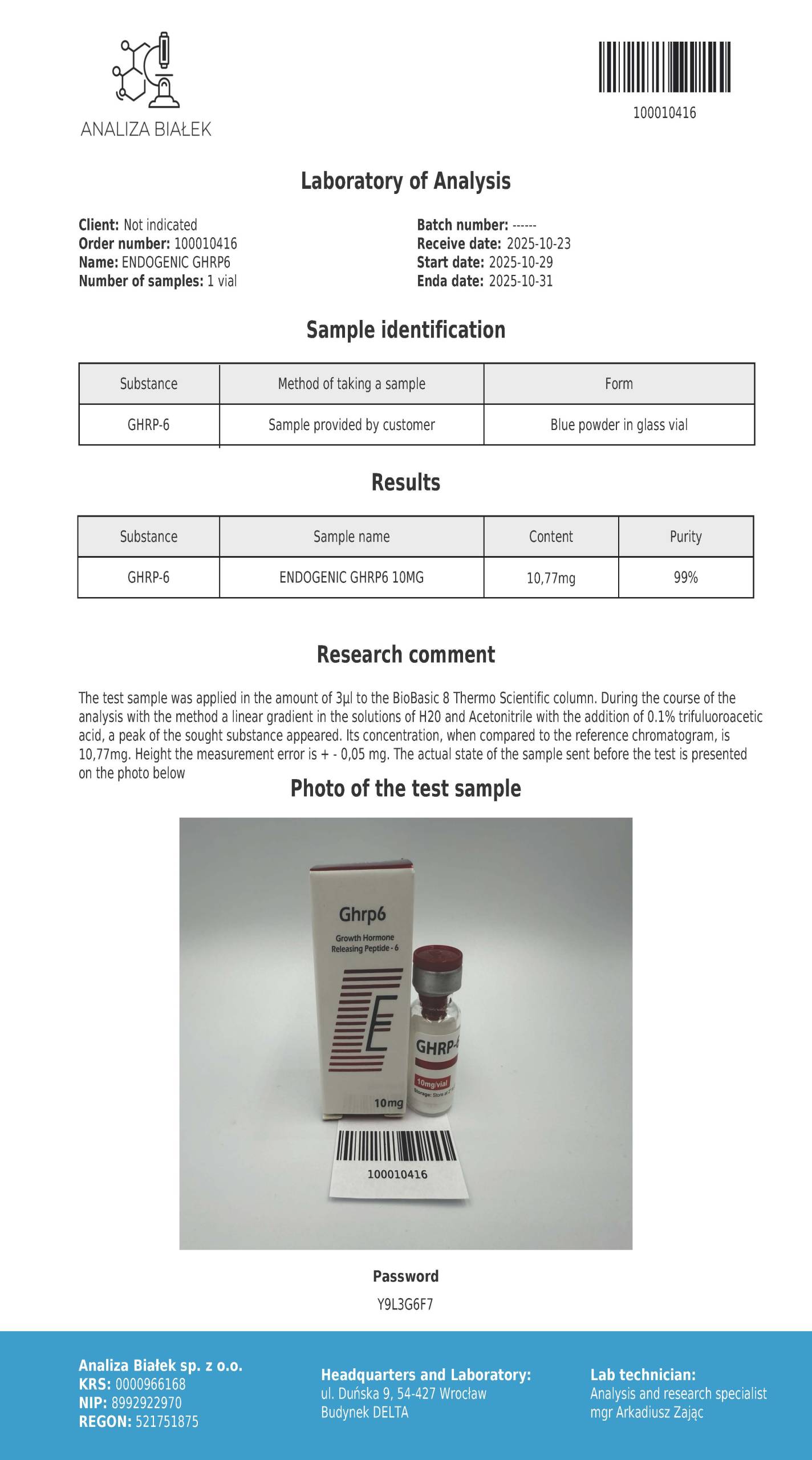
The product is supplied in the form of a lyophilized powder, which ensures its stability and a long shelf life for research purposes. Each vial contains 10 mg of high-purity substance, confirmed by analytical methods (e.g., HPLC), which guarantees the reliability and repeatability of results in scientific experiments.

GHRP-6 properties

GHRP-6 is a hexapeptide with a defined amino acid sequence, which determines its unique spatial properties and its ability to bind to the receptor.

  • Systematic Name: L-Histidyl-D-tryptophyl-L-alanyl-L-tryptophyl-D-phenylalanyl-L-lysinamide
  • Amino Acid Sequence: His-D-Trp-Ala-Trp-D-Phe-Lys-NH2
  • CAS Number: 87616-84-0
  • Molecular Formula: $C_{46}H_{56}N_{12}O_6$
  • Molar Mass: 873.01 g/mol
  • Form: Lyophilized, hygroscopic white powder. Lyophilization (freeze-drying) is a standard procedure ensuring the long-term stability of the peptide in its solid state.
  • Solubility: GHRP-6 is soluble in sterile water and in standard laboratory buffers. The use of bacteriostatic water for reconstitution is recommended to minimize the risk of microbiological contamination during solution storage.

Purity and Analysis: The key quality parameter for any peptide reagent is its purity. The standard verification method is High-Performance Liquid Chromatography (HPLC), which allows for the precise separation of the peptide from any contaminants resulting from the synthesis process. Every batch of the reagent should have a Certificate of Analysis (CoA) with a visible chromatogram, confirming a purity level of ≥99%.

Storage and Handling

Proper storage of the peptide is crucial for maintaining its structure and biological activity.

  • Lyophilized Powder: Should be stored at a temperature of 2°C to 8°C, in a tightly sealed vial, protected from light and moisture.
  • Solution after Reconstitution: After dissolving in the appropriate solvent, the solution should be stored under refrigerated conditions (2°C – 8°C) and used within a specified time (typically 2-4 weeks) to avoid degradation. Freezing and thawing the solution is not recommended as it may damage the peptide’s structure.

Disclaimer: GHRP-6 is a chemical substance intended exclusively for in vitro research purposes. It is not a medicinal product, dietary supplement, or foodstuff. It is not intended for use in humans or animals. Standard personal protective equipment should be used when working with the reagent.

GHRP-6 action

The action of GHRP-6 is based on its high affinity for the GHSR-1a receptor, which is a G-protein coupled receptor (GPCR), mainly located on the surface of somatotropic cells in the anterior pituitary gland.

  • Receptor Binding: The GHRP-6 molecule binds to the active site of the GHSR-1a receptor.
  • G-Protein Activation: This binding initiates a conformational change in the receptor, leading to the activation of the Gαq/11 subunit of the G protein.
  • Signaling Cascade: The activated G protein stimulates Phospholipase C (PLC), which hydrolyzes phosphatidylinositol bisphosphate (PIP2) into two secondary messengers: inositol trisphosphate (IP3) and diacylglycerol (DAG).
  • Calcium Release: IP3 diffuses to the endoplasmic reticulum, where it binds to its receptors, causing a rapid increase in the concentration of calcium ions Ca2+ in the cytosol.

The increase in intracellular Ca2+ concentration is the key signal that triggers the fusion of secretory vesicles (containing stored growth hormone) with the cell membrane and the exocytosis of their contents. This precise mechanism makes GHRP-6 an excellent tool for studying secretory processes in cellular models.

GHRP-6 used

As a standard laboratory reagent, GHRP-6 is used in many areas of basic research:

  • Endocrinological Research: It is used as a stimulant in pituitary cell cultures to analyze the mechanisms of hormone synthesis and release.
  • Molecular Biology: It is used to study gene expression and signaling pathways activated by the GHSR-1a receptor.
  • Neurobiology: Used in studies on the role of ghrelin and its synthetic mimetics in neuronal communication and the regulation of hypothalamic functions.
  • Assay Development: It can be used as a reference substance in the development of new diagnostic assays or analytical methods (e.g., in ELISA tests).

GHRP-6 what is worth remembering?

GHRP-6 (Growth Hormone Releasing Peptide-6) is a synthetic hexapeptide that plays a significant role as a tool in endocrinological research. Due to its properties as a selective agonist of the Growth Hormone Secretagogue Receptor (GHSR-1a), also known as the ghrelin receptor, GHRP-6 is widely used in in vitro studies to analyze signaling pathways regulating cellular homeostasis. This monograph presents a detailed physicochemical characterization of the peptide, describes its mechanism of action at the molecular level, and discusses potential applications as a reagent in scientific experiments. Key aspects such as purity, stability, and proper storage conditions, which are essential for ensuring the repeatability and reliability of research results, are highlighted.

Referenced Citations

  • Camanni, F., Ghigo, E., Arvat, E., & et al. (1998). Growth hormone-releasing peptides and their analogs. Frontiers in Neuroendocrinology, 19(1), 47-72.
  • Laferrère, B., Abraham, C., Russell, C. D., & Bowers, C. Y. (2005). Growth hormone releasing peptide-2 (GHRP-2), like ghrelin, increases food intake in healthy men. The Journal of Clinical Endocrinology & Metabolism, 90(2), 611–614. (Research concerns GHRP-2, whose mechanism of action in the context of appetite is analogous to GHRP-6).
  • Bowers, C. Y. (2001). Unraveling the puzzle of the endogenous growth hormone-releasing peptide. Arquivos Brasileiros de Endocrinologia & Metabologia, 45(Suppl 1), S21-S28.