

Ships within 24 hours Free delivery for orders over 350 EURO Wide selection of high-quality laboratory products Ships within 24 hours Free delivery for orders over 350 EURO Wide selection of high-quality laboratory products Ships within 24 hours Free delivery for orders over 350 EURO Wide selection of high-quality laboratory products Ships within 24 hours Free delivery for orders over 350 EURO Wide selection of high-quality laboratory products Ships within 24 hours Free delivery for orders over 350 EURO Wide selection of high-quality laboratory products Ships within 24 hours Free delivery for orders over 350 EURO Wide selection of high-quality laboratory products Ships within 24 hours Free delivery for orders over 350 EURO

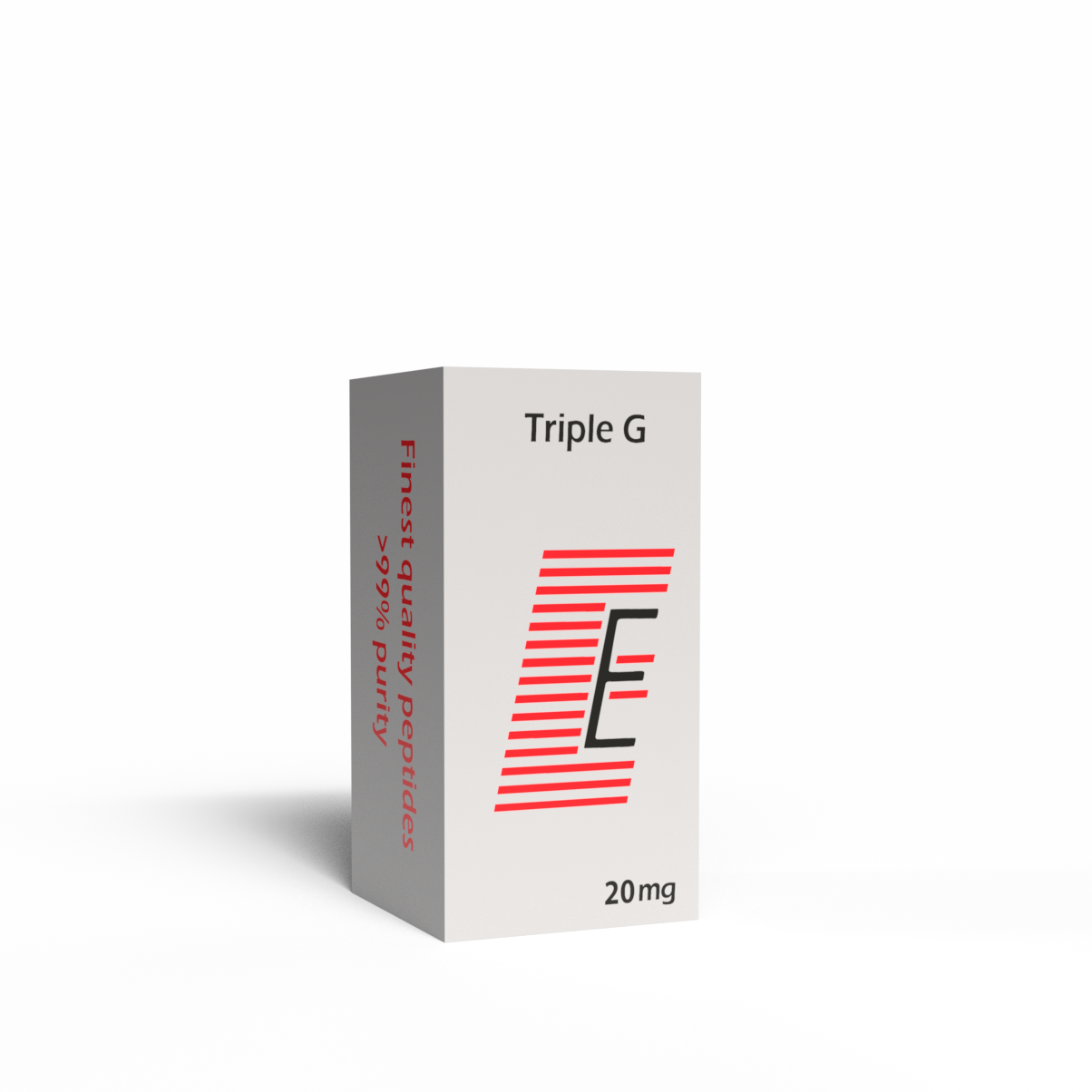
TRIPLE G 20mg

Sale!


 295.00

High-purity triple receptor agonist (GLP-1, GIP, GCGR), representing the latest direction in research on metabolism, obesity, and diabetes. Product intended exclusively for professional use and scientific research (not for human consumption). Guaranteed quality.

Triple G 20 mg (Retatrutide) – Reagent in vial

Contemporary biochemistry and molecular pharmacology continuously strive to discover substances that could comprehensively mimic the body’s natural regulatory processes. Triple G 20 mg, chemically identified as Retatrutide (LY3437943), represents a pinnacle achievement in this field, defining a new category in peptide engineering. It is an advanced, synthetic incretin analog that transcends traditional mono- and dual-agonist paradigms, offering researchers a unique mechanism of triple agonism.

As a single, precisely designed peptide molecule, Retatrutide simultaneously interacts with three key signaling pathways:

  • Glucagon-Like Peptide-1 Receptor (GLP-1),
  • Glucose-Dependent Insulinotropic Polypeptide Receptor (GIP),
  • Glucagon Receptor (GCG).

This innovative structure makes Triple G a reference material of fundamental importance for laboratories focusing on endocrinology and metabolic diseases. This substance enables scientists to explore the complex synergy between the insulinotropic effect of incretins and the energetic influence of glucagon, which has previously been difficult to achieve using separate ligands.

Check out Triple G PEN
Reviews

There are no reviews yet.

Be the first to review “TRIPLE G 20mg”

Your email address will not be published. Required fields are marked *

INTENDED FOR RESEARCH PURPOSES ONLY!

All of the above properties have been observed in laboratory tests, not on humans, and are for informational purposes only. None of the information contained in the descriptions has been approved by the GIS, GIF, or EFSA. The substance is not a medicine, food product, or dietary supplement, and is therefore not suitable for human consumption. The product qualifies as a chemical reagent/reference material approved for sale in the EU. It can only be used for scientific research. Further information on the product is contained in the chemical safety data sheet, which is available for inspection. The products are only available to institutions or individuals associated with research or laboratory activities.

What is Triple G 20 mg (Retatrutide)?

Triple G, chemically identified as Retatrutide (LY3437943), is an advanced, synthetic peptide belonging to a new class of incretin analogs. It is a single peptide molecule designed as a triple agonist of hormonal receptors: Glucagon-Like Peptide-1 Receptor (GLP-1), Glucose-Dependent Insulinotropic Polypeptide Receptor (GIP), and Glucagon Receptor (GCG). This substance serves as a reference material in studies on molecular pharmacology and endocrinology, allowing scientists to delve into the complex interactions between these three signaling pathways. As a chemical reagent, Retatrutide is supplied in the form of a lyophilized powder, ensuring its stability and durability during transport and storage before reconstitution for experimental purposes.

Structure and Chemical Properties

Retatrutide is a polypeptide with a complex primary structure, modified to achieve desired pharmacokinetic and pharmacodynamic properties in the research environment.

  • Amino Acid Sequence: The core of the peptide is based on the GIP sequence, modified to achieve activity towards GLP-1 and glucagon receptors.
  • Chemical Modifications: The molecule contains a fatty acid side chain (often a C20 di-acid) attached to a specific lysine residue. This modification, known as acylation, promotes binding to plasma albumins, which under physiological conditions (in vivo studies) extends the substance’s half-life. Furthermore, in position 2 (Aib2), aminoisobutyric acid has been introduced, which protects the peptide from rapid degradation by the enzyme dipeptidyl peptidase-4 (DPP-4).
  • Molecular Weight: Approx. 4700-4800 Da (depending on the exact salt form).
  • Solubility: The substance is well soluble in bacteriostatic water or sterile physiological buffers after proper reconstitution process.
  • Physical Form: White or off-white lyophilized powder, hygroscopic.

Purity and Analysis

The quality of the chemical reagent is crucial for the reproducibility of scientific research results. Triple G 20 mg undergoes rigorous quality analyses.

  • High-Performance Liquid Chromatography (HPLC): This is the primary method for verifying peptide purity. HPLC analysis allows for the detection of synthesis impurities, such as shortened chain peptides or degradation products. The standard for high-grade research products is a purity exceeding 98% or 99%. HPLC chromatograms supplied with the product confirm the homogeneity of the substance’s main peak.
  • Mass Spectrometry (MS): This method is used to confirm the chemical identity of the substance by accurately determining its molecular mass. The correspondence between the measured mass and the theoretical mass is proof of the correct synthesis of the amino acid sequence.
  • Net Peptide Content Analysis: Determines the actual amount of peptide in the lyophilized product, after subtracting the mass of counterions (e.g., acetates, trifluoroacetates) and residual water.
  • Endotoxin Testing: For reagents intended for cell cultures, ensuring a low level of bacterial endotoxins is crucial to prevent non-specific cell activation.

Storage and Handling

Proper handling of Triple G is essential to maintain its chemical integrity and biological activity in experiments.

  • Lyophilized Product Storage: Before reconstitution, vials should be stored at -20°C or below. Under these conditions, the peptide remains stable for up to 24 months. The product must be protected from light and moisture.
  • Reconstitution: Sterile water for injection or an appropriate buffer should be used to dissolve the lyophilized powder. The process should be carried out carefully, avoiding vigorous shaking, which could lead to peptide aggregation. Gentle swirling of the vial is recommended.
  • Solution Storage: After dissolution, the peptide solution is less stable. It should be stored at 2-8°C and used within a specified period (typically up to 3-4 weeks). For longer storage, it is recommended to aliquot the solution and freeze it at -20°C or -80°C, avoiding multiple freeze-thaw cycles.
  • Safe Handling: The product is a chemical reagent. Standard personal protective equipment (gloves, safety goggles, lab coat) should be used during handling. Contact with skin and mucous membranes and inhalation of dust should be avoided.

Mechanism of Action

Retatrutide is the subject of intensive molecular research due to its unique pharmacological profile as a triple agonist.

  1. GLP-1 Receptor Agonism (GLP-1R): In studies on cell lines expressing the human GLP-1 receptor, Retatrutide shows strong binding affinity, leading to the activation of adenylate cyclase and an increase in intracellular cAMP concentration. This signaling is crucial in studies on glucose-dependent insulin secretion in pancreatic beta cells.
  2. GIP Receptor Agonism (GIPR): This peptide also exhibits high activity towards the GIP receptor. In in vitro models, GIPR activation by Retatrutide can be studied in the context of beta-cell proliferation and lipid metabolism in adipocytes. Studies suggest that the synergy of GIP and GLP-1 may lead to a stronger insulinotropic response than the action of each hormone separately.
  3. Glucagon Receptor Agonism (GCGR): What distinguishes Retatrutide is its significant activity at the glucagon receptor. In molecular studies, the activation of GCGR is observed to stimulate gluconeogenesis and glycogenolysis in hepatocytes (liver cells) and lipolysis in adipose tissue. Scientists are investigating how the balanced activation of this receptor, in the presence of GLP-1 and GIP agonists, affects the cell’s total energy expenditure without causing hyperglycemia.

Receptor Binding Assays show that Retatrutide has balanced potency across all three receptors, making it an ideal model for studying the phenomenon of polypharmacology within a single molecule.

Applications in Scientific Research

Triple G (Retatrutide) finds broad application in various fields of biomedical science as a research tool:

  • Obesity and Metabolism Research: It is a key tool in animal models of diet-induced obesity (DIO mice/rats). Researchers use it to assess the effect of triple agonism on weight reduction, changes in body composition (fat mass to lean mass ratio), and thermogenesis.
  • Type 2 Diabetes Research: It is used to study the mechanisms of improved insulin sensitivity and glycemic control. In vivo experiments allow for the evaluation of the substance’s effect on glycosylated hemoglobin (HbA1c) levels and glucose tolerance tests.
  • Non-Alcoholic Fatty Liver Disease (NAFLD/NASH) Research: Due to the glucagon component, Retatrutide is intensively studied for its ability to reduce liver fat content. Researchers analyze markers of inflammation and liver fibrosis in response to peptide administration.
  • Neuroendocrine Research: These peptides can cross the blood-brain barrier. Studies focus on identifying brain regions activated by Retatrutide (e.g., hypothalamus) and their role in regulating the hunger and satiety center.

Conclusion

Triple G 20 mg (Retatrutide) is a high-grade chemical reagent, representing a milestone in research on peptide regulators of metabolism. Its unique structure as a triple agonist of GLP-1, GIP, and glucagon receptors opens new research avenues, allowing for a deeper understanding of the complex hormonal interactions governing the body’s energy homeostasis. This product, characterized by high purity and a precisely defined structure, is an essential tool for laboratories involved in modern pharmacology, biochemistry, and metabolic physiology. It must be emphasized that, according to the decisions of supervisory bodies, this substance is not approved for marketing as a medicinal product and its use is limited exclusively to the research and development sphere.