

Ships within 24 hours Free delivery for orders over 350 EURO Wide selection of high-quality laboratory products Ships within 24 hours Free delivery for orders over 350 EURO Wide selection of high-quality laboratory products Ships within 24 hours Free delivery for orders over 350 EURO Wide selection of high-quality laboratory products Ships within 24 hours Free delivery for orders over 350 EURO Wide selection of high-quality laboratory products Ships within 24 hours Free delivery for orders over 350 EURO Wide selection of high-quality laboratory products Ships within 24 hours Free delivery for orders over 350 EURO Wide selection of high-quality laboratory products Ships within 24 hours Free delivery for orders over 350 EURO

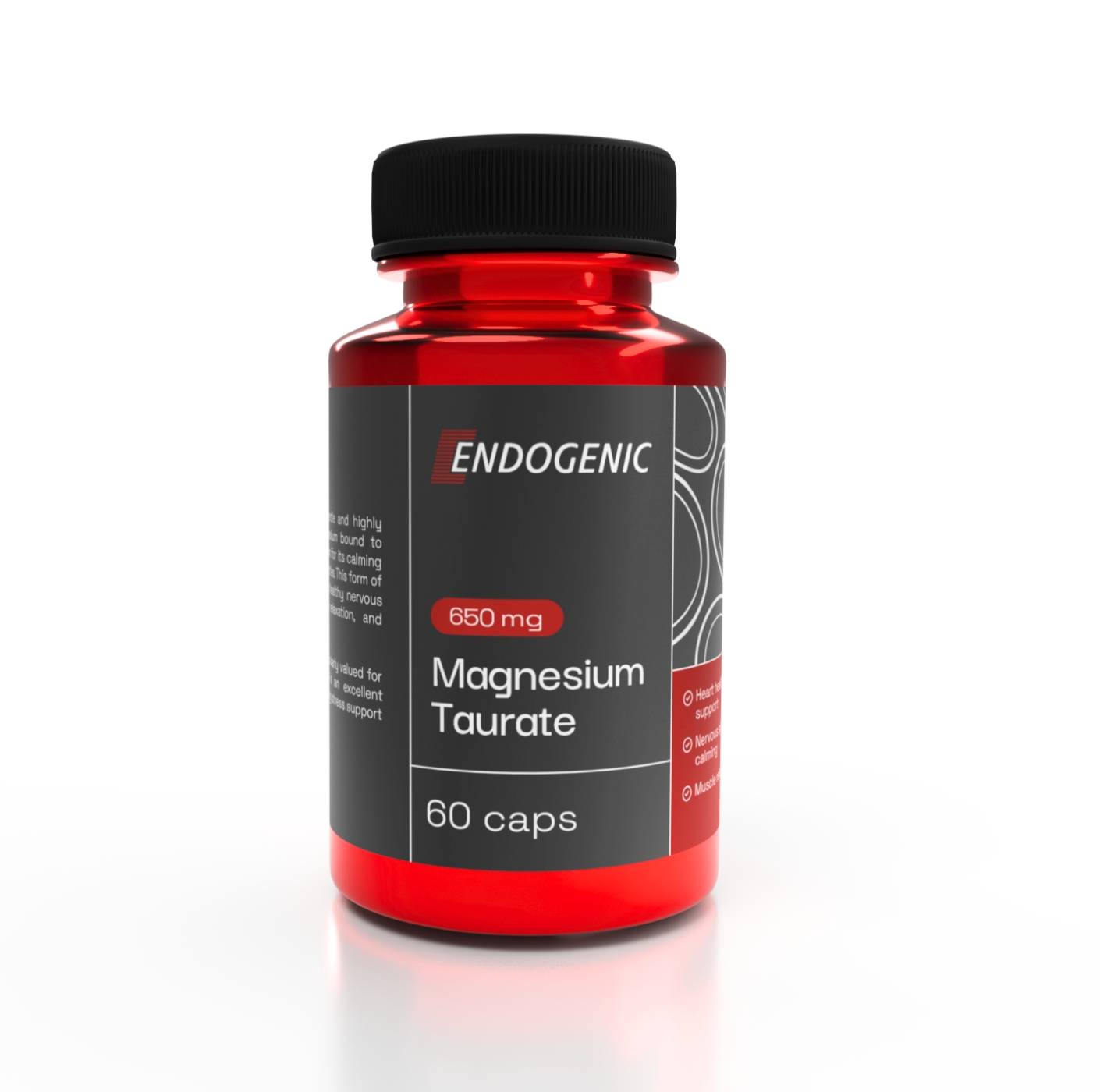
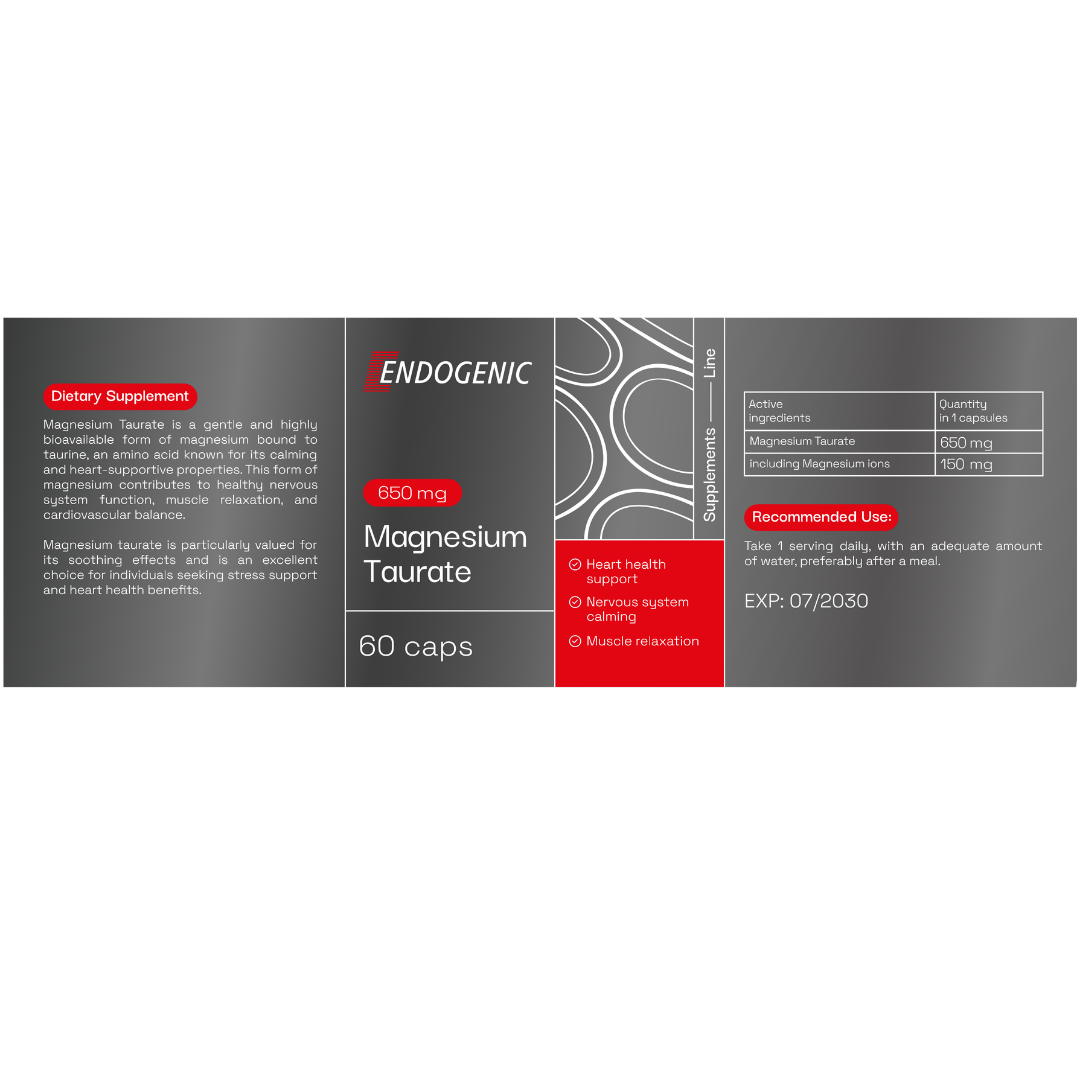
Magnesium Taurate 650mg 60caps

Sale!


 13.00

Endogenic Magnesium Taurate 650 mg is magnesium taurate—a highly bioavailable chelated form that combines magnesium with taurine. It supports the proper functioning of muscles, the nervous system, and the heart, without the laxative effect typical of cheaper forms of magnesium.

Endogenic Magnesium Taurate 650 mg — Magnesium That Works Where You Need It Most

It’s 11 PM. You’re lying in bed, exhausted like after a marathon, but your brain won’t turn off the projector. Work, training, tomorrow’s to-do list — everything spinning in a loop. You close your eyes, and the thoughts speed up. Sound familiar? The alarm goes off in six hours, and you’re still negotiating with your brain for a moment of silence.

Or a different scene: mid-workout, third set of squats. Your calf locks up like a fist, and you stand there grimacing in pain, waiting for the cramp to let go. Again.

These situations share a common denominator — and no, it’s not “stress” or “overwork.” It’s magnesium. Or rather, the lack of it. Endogenic Magnesium Taurate 650 mg is a form of magnesium that reaches exactly where you need it most: your muscles, your nervous system, your brain. No unnecessary filler, no laxative effects, no guesswork.

Why Magnesium Taurate Specifically?

The market offers dozens of magnesium forms. Oxide, citrate, glycinate, pidolate, L-threonate — the list goes on, and each form has its strengths and weaknesses. The problem is that most people reach for the cheapest option (magnesium oxide) and wonder why, after a week of supplementation, the only effect is a looser stomach.

Magnesium taurate is a combination of a magnesium ion with taurine — an amino acid that plays an important role in the body on its own. This isn’t a random “gluing” of two ingredients. It’s a deliberate synergy that translates into three concrete advantages:

  1. High bioavailability — magnesium in chelate form (bound to an amino acid) is absorbed significantly better than inorganic forms. A study by Ates et al. (2019) published in Biological Trace Element Research showed that chelated magnesium forms achieve higher serum levels compared to magnesium oxide.
  2. No laxative effect — magnesium oxide and citrate at higher doses act osmotically in the intestines, resulting in loose stools. Magnesium taurate is gentle on the digestive tract because it’s absorbed in the upper small intestine before reaching the large intestine.
  3. Additional taurine benefits — taurine isn’t just a “carrier” here. It acts as a neuromodulator, supports cardiac muscle function, and helps maintain proper intracellular electrolyte levels.

Reviews

There are no reviews yet.

Be the first to review “Magnesium Taurate 650mg 60caps”

Your email address will not be published. Required fields are marked *

INTENDED FOR RESEARCH PURPOSES ONLY!
All of the above properties have been observed in laboratory tests, not on humans, and are for informational purposes only. None of the information contained in the descriptions has been approved by the GIS, GIF, or EFSA. The substance is not a medicine, food product, or dietary supplement, and is therefore not suitable for human consumption. The product qualifies as a chemical reagent/reference material approved for sale in the EU. It can exclusively be used for scientific research. Further information on the product is contained in the chemical safety data sheet, which is available for inspection. The products are only available to institutions or individuals associated with research or laboratory activities.

What Does Endogenic Magnesium Taurate Do for You?

Muscles That Cooperate Instead of Rebelling

Magnesium is the mineral without which proper muscle contractions are impossible. It acts as the “off switch” — after every contraction, magnesium allows the muscle to return to a state of relaxation. When magnesium is lacking, the muscle can’t fully relax. The result? Cramps, twitches, stiffness, that irritating calf that wakes you up at 3 AM.

Think of your muscles as a band of musicians. Calcium gives the signal to play (contraction), and magnesium gives the signal to pause (relaxation). Without a conductor with a baton (magnesium), the orchestra plays non-stop — that’s exactly what those nighttime cramps and tension are.

Magnesium taurate delivers magnesium in a form that reaches muscle tissue without “getting lost” along the way in the intestines. And taurine? It supports the transport of calcium and potassium ions across cell membranes, further stabilizing muscle function.

If muscle cramps and tension are disrupting your training or sleep — Endogenic Magnesium Taurate may be exactly what you’ve been looking for. Try it and feel the difference within the first week.

The Nervous System — The Brake You Desperately Need

Magnesium is a natural NMDA receptor antagonist in the brain. Sounds complicated? It’s simple: the NMDA receptor is like a “gas pedal” for neuronal excitation. When magnesium levels are optimal, it gently presses the brake, preventing the brain from entering a state of excessive stimulation.

Magnesium deficiency means that brake doesn’t work. The brain runs at full throttle — even when you don’t want it to. Hence the difficulty falling asleep, hypersensitivity to stimuli, irritability, the feeling of a “coiled spring” in your chest.

This is where taurine comes in — the second player in the magnesium taurate composition. Taurine activates GABA receptors in the brain. GABA is the main inhibitory neurotransmitter, responsible for quieting neuronal activity. Magnesium blocks excessive stimulation (NMDA), taurine supports calming (GABA). Two mechanisms, one goal: a calmer, more balanced nervous system.

A study by Schaffer et al. published in the Journal of Biomedical Science (2010) confirmed that taurine exhibits neuroprotective properties and supports proper signal transmission in the nervous system.

Heart and Cardiovascular System — The Unsung Hero

This is discussed less frequently, yet it’s one of the best-documented effects of magnesium taurate. Both magnesium and taurine play important roles in proper cardiac muscle function:

  • Magnesium influences proper heart rhythm, supports blood vessel elasticity, and participates in blood pressure regulation.
  • Taurine is present in high concentrations in the cardiac muscle. A review by Santulli et al. (2023) published in Nutrients confirmed that taurine supports healthy blood pressure and may improve endothelial function.

For physically active individuals, this is an additional argument — intense training puts a strain on the cardiovascular system. Magnesium taurate supports the heart in ways other magnesium forms simply can’t reach. If you’re looking for comprehensive cardiovascular support, consider combining magnesium taurate with a dedicated cardioprotective formula.

A Mind That Finally Works on Your Terms

Do you work with your brain? You know that moment when at 3 PM the text on the screen starts to blur, and reading a single email takes three attempts? That’s not laziness — it’s often the consequence of subclinical magnesium deficiency, which affects 50–80% of the population in developed countries (DiNicolantonio et al., Open Heart, 2018).

Magnesium participates in over 300 enzymatic reactions in the body. Many of them are directly related to energy production in mitochondria (ATP) and neurotransmitter synthesis. When magnesium drops below optimal levels, the brain gets less “fuel” — and you feel it as brain fog, focus problems, and declining productivity.

Magnesium taurate combines both forces here: magnesium supports cellular energy production, taurine supports neuron protection and proper signal transmission — mechanisms well-described among nootropic substances. The result? A clearer head, better ability to focus, and less susceptibility to distractions.

If your work demands a sharp mind all day long — Endogenic Magnesium Taurate is an investment that pays off in productivity. See for yourself.

Endogenic Magnesium Taurate — What Do You Get?

Each capsule contains 650 mg of magnesium taurate. This is an important distinction — 650 mg is the weight of the entire compound (magnesium + taurine), not elemental magnesium alone. The manufacturer chose this dose as the optimal balance between efficacy and convenience — one capsule, full serving, no need to swallow a handful of tablets.

The package contains 60 capsules, which at the recommended dosage of 1–2 capsules daily lasts 1–2 months of supplementation.

Why Capsules, Not Tablets?

Gelatin capsules dissolve faster than pressed tablets, meaning faster release of the active ingredient. They also don’t contain binding and filling agents that can slow absorption in tablets. Cleaner form, faster action — the standard that sets Endogenic supplements apart from the competition.

Who Should Reach for Magnesium Taurate?

Physically Active Individuals

Training is a catalyst for magnesium loss. You sweat — you lose electrolytes, including magnesium. Intense exercise increases magnesium requirements by 10–20% compared to sedentary individuals. If you train 3–5 times a week and don’t supplement magnesium — you likely have a deficiency, even if you eat “healthy.”

Signs of deficiency in active individuals:

  • Muscle cramps (especially calves, feet, toes)
  • Prolonged post-training recovery
  • Greater susceptibility to injuries
  • Feeling of heaviness in the legs
  • Difficulty falling asleep after evening workouts

People Living Under Stress

Stress is a magnesium devourer. The mechanism is simple and brutal: cortisol (the stress hormone) increases urinary magnesium excretion. More stress means less magnesium. Less magnesium means worse stress management. The cycle closes.

Magnesium taurate breaks this vicious cycle from two sides: magnesium reduces excessive HPA axis reactivity (hypothalamus-pituitary-adrenal), while taurine supports GABA activity, translating into a subjective sense of calm and better resilience to daily tensions.

Knowledge Workers

Programmers, analysts, students, entrepreneurs — anyone who earns a living with their mind needs magnesium like an engine needs oil. Without it, everything sort of works, but with creaking, overheating, and breakdown risk. Magnesium taurate is the form that, due to taurine’s properties, has a particular affinity for nervous tissue — reaching where it’s needed most.

Working at full throttle, training after hours, and can’t switch off your mind in the evening? Endogenic Magnesium Taurate 650 mg is one supplement that addresses all three challenges. See for yourself.

Magnesium Taurate - dosage

Dosage: 1–2 capsules daily with a glass of water.

When to take?

  • For sleep and relaxation: 1 capsule 30–60 minutes before bed. Magnesium and taurine support the body’s transition into “rest & digest” mode.
  • For post-training recovery: 1 capsule immediately after your training session, with your post-workout meal.
  • For focus and mental performance: 1 capsule in the morning with your first meal.
  • Full dose (2 capsules): Split into two servings — 1 morning, 1 evening — for stable magnesium levels throughout the day.

Practical tips:

  • Take with food to maximize absorption and avoid stomach discomfort.
  • Don’t combine with large calcium doses in one meal — calcium and magnesium compete for the same absorption pathways. A 2–3 hour gap is the ideal solution.
  • Effects build over time — full tissue saturation with magnesium takes 2–4 weeks of consistent supplementation.

Magnesium Taurate vs. Other Forms — A Quick Comparison

Magnesium Form

Bioavailability

Laxative Effect

Additional Benefits

Best For

Taurate

High

Minimal

Nervous system & heart support (taurine)

Active individuals, stressed, knowledge workers

Citrate

Good

Moderate

Digestive support

Individuals with constipation

Glycinate

High

Low

Sleep support (glycine)

Individuals with sleep issues

Oxide

Low (4–5%)

Strong

None

Not recommended for supplementation

L-Threonate

High

Low

Crosses the blood-brain barrier

Cognitive function

Magnesium taurate holds a unique place in this table — it combines high bioavailability with a broad spectrum of additional benefits, thanks to the presence of taurine. If you’re looking for “one magnesium for everything” for an active lifestyle — this is a strong contender.

FAQ

{ “@context”: “https://schema.org”, “@type”: “FAQPage”, “mainEntity”: [ { “@type”: “Question”, “name”: “How does magnesium taurate differ from citrate or oxide?”, “acceptedAnswer”: { “@type”: “Answer”, “text”: “Magnesium taurate is a chelate — magnesium bound to the amino acid taurine. It absorbs better than oxide (which has a bioavailability of just 4–5%) and doesn’t cause the laxative effect typical of citrate. An additional advantage is the presence of taurine, which supports the nervous system and cardiac muscle on its own.” } }, { “@type”: “Question”, “name”: “Can I take Endogenic Magnesium Taurate with other supplements?”, “acceptedAnswer”: { “@type”: “Answer”, “text”: “Yes. Magnesium taurate pairs well with vitamin D3, vitamin B6, zinc, and omega-3. The only caveat: avoid taking it with a large dose of calcium in one meal (they compete for absorption). A 2–3 hour gap is sufficient.” } }, { “@type”: “Question”, “name”: “How soon will I feel the effects?”, “acceptedAnswer”: { “@type”: “Answer”, “text”: “Improved sleep quality and reduced muscle tension — typically after 5–10 days. Full tissue magnesium saturation and stable effects (better focus, fewer cramps, calmer stress responses) — after 3–4 weeks of consistent use.” } }, { “@type”: “Question”, “name”: “Is magnesium taurate safe?”, “acceptedAnswer”: { “@type”: “Answer”, “text”: “Yes, at recommended doses. Taurine is a naturally occurring amino acid in the human body, and magnesium is a macromineral most people are deficient in. Individuals with kidney disease or those taking cardiac medications should consult a physician before supplementing.” } }, { “@type”: “Question”, “name”: “Is the taurine in magnesium taurate the same taurine as in energy drinks?”, “acceptedAnswer”: { “@type”: “Answer”, “text”: “Yes, it’s the same amino acid. The difference lies in the context: in energy drinks, taurine accompanies large doses of caffeine and sugar. In magnesium taurate, it acts as a magnesium carrier and works synergistically with it — no stimulants, no sugar, no stimulating effects.” } } ] }

FAQ — Frequently Asked Questions

How does magnesium taurate differ from citrate or oxide?

Magnesium taurate is a chelate — magnesium bound to the amino acid taurine. It absorbs better than oxide (which has a bioavailability of just 4–5%) and doesn’t cause the laxative effect typical of citrate. An additional advantage is the presence of taurine, which supports the nervous system and cardiac muscle on its own.

Can I take Endogenic Magnesium Taurate with other supplements?

Yes. Magnesium taurate pairs well with vitamin D3, vitamin B6, zinc, and omega-3. The only caveat: avoid taking it with a large dose of calcium in one meal (they compete for absorption). A 2–3 hour gap is sufficient.

How soon will I feel the effects?

Improved sleep quality and reduced muscle tension — typically after 5–10 days. Full tissue magnesium saturation and stable effects (better focus, fewer cramps, calmer stress responses) — after 3–4 weeks of consistent use.

Is magnesium taurate safe?

Yes, at recommended doses. Taurine is a naturally occurring amino acid in the human body, and magnesium is a macromineral most people are deficient in. Individuals with kidney disease or those taking cardiac medications should consult a physician before supplementing.

Is the taurine in magnesium taurate the same taurine as in energy drinks?

Yes, it’s the same amino acid. The difference lies in the context: in energy drinks, taurine accompanies large doses of caffeine and sugar. In magnesium taurate, it acts as a magnesium carrier and works synergistically with it — no stimulants, no sugar, no stimulating effects.

Referenced Citations

Scientific References

  1. Ates M, Kizildag S, Yuksel O, et al. (2019). Dose-Dependent Absorption Profile of Different Magnesium Compounds. Biological Trace Element Research, 192(2), 244-251. (Comparison of bioavailability across magnesium forms, including chelated vs. magnesium oxide).
  2. Schaffer SW, Jong CJ, Ramila KC, Azuma J. (2010). Physiological roles of taurine in heart and muscle. Journal of Biomedical Science, 17(Suppl 1), S2. (Physiological functions of taurine in cardiac and skeletal muscle — neuroprotection and signal transmission support).
  3. DiNicolantonio JJ, O’Keefe JH, Wilson W. (2018). Subclinical magnesium deficiency: a principal driver of cardiovascular disease and a public health crisis. Open Heart, 5(1), e000668. (Subclinical magnesium deficiency affects 50–80% of the population and is a cardiovascular risk factor).
  4. Santulli G, Kansakar U, Varzideh F, et al. (2023). Functional Role of Taurine in Aging and Cardiovascular Health: An Updated Overview. Nutrients, 15(19), 4236. (Review of taurine’s role in cardiovascular health — effects on blood pressure and endothelial function).
  5. Eby GA 3rd, Eby KL. (2010). Magnesium for treatment-resistant depression: a review and hypothesis. Medical Hypotheses, 74(4), 649-660. (Review of magnesium’s role in mood regulation and neuronal function).