

Ships within 24 hours Free delivery for orders over 350 EURO Wide selection of high-quality laboratory products Ships within 24 hours Free delivery for orders over 350 EURO Wide selection of high-quality laboratory products Ships within 24 hours Free delivery for orders over 350 EURO Wide selection of high-quality laboratory products Ships within 24 hours Free delivery for orders over 350 EURO Wide selection of high-quality laboratory products Ships within 24 hours Free delivery for orders over 350 EURO Wide selection of high-quality laboratory products Ships within 24 hours Free delivery for orders over 350 EURO Wide selection of high-quality laboratory products Ships within 24 hours Free delivery for orders over 350 EURO

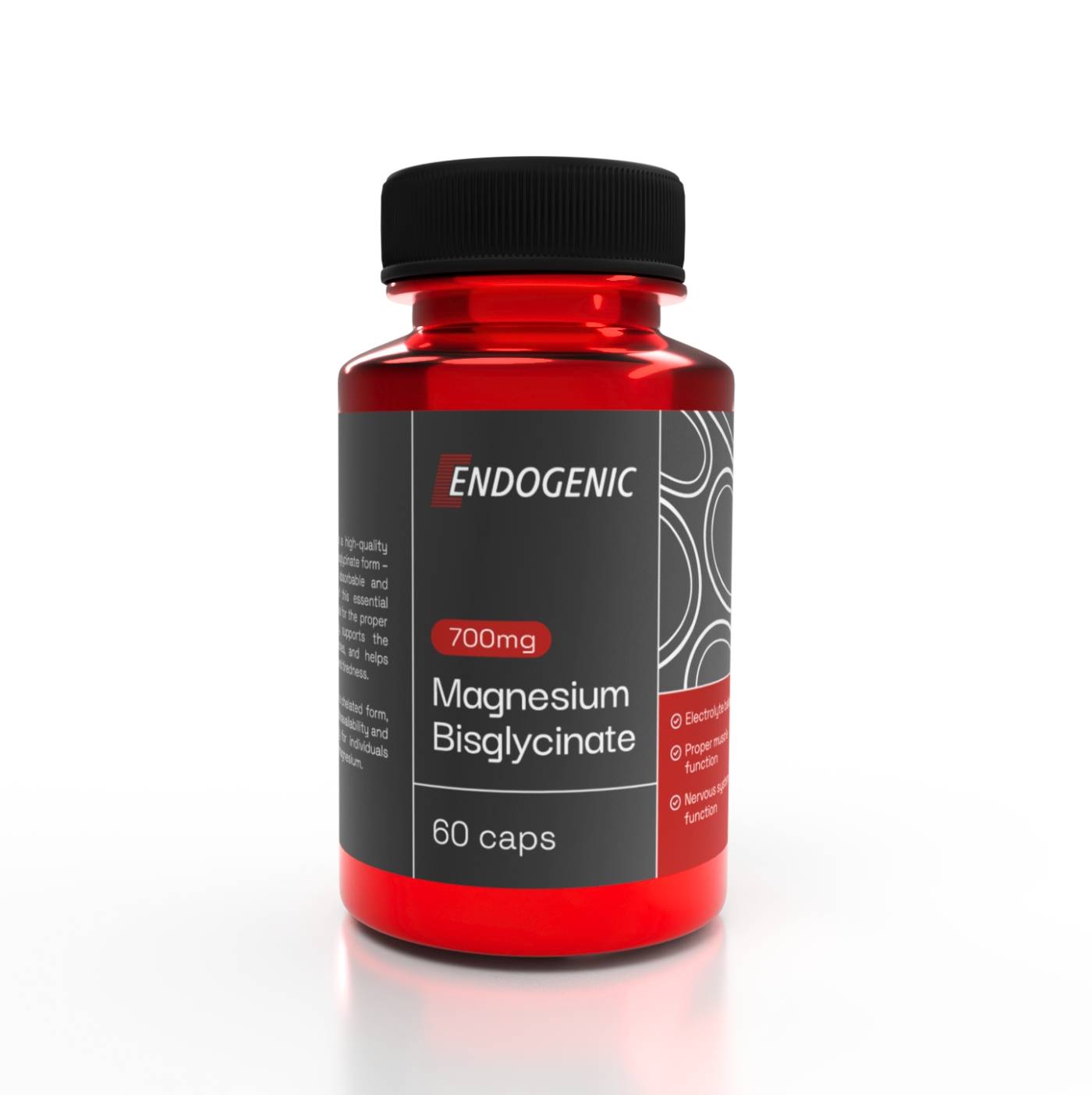
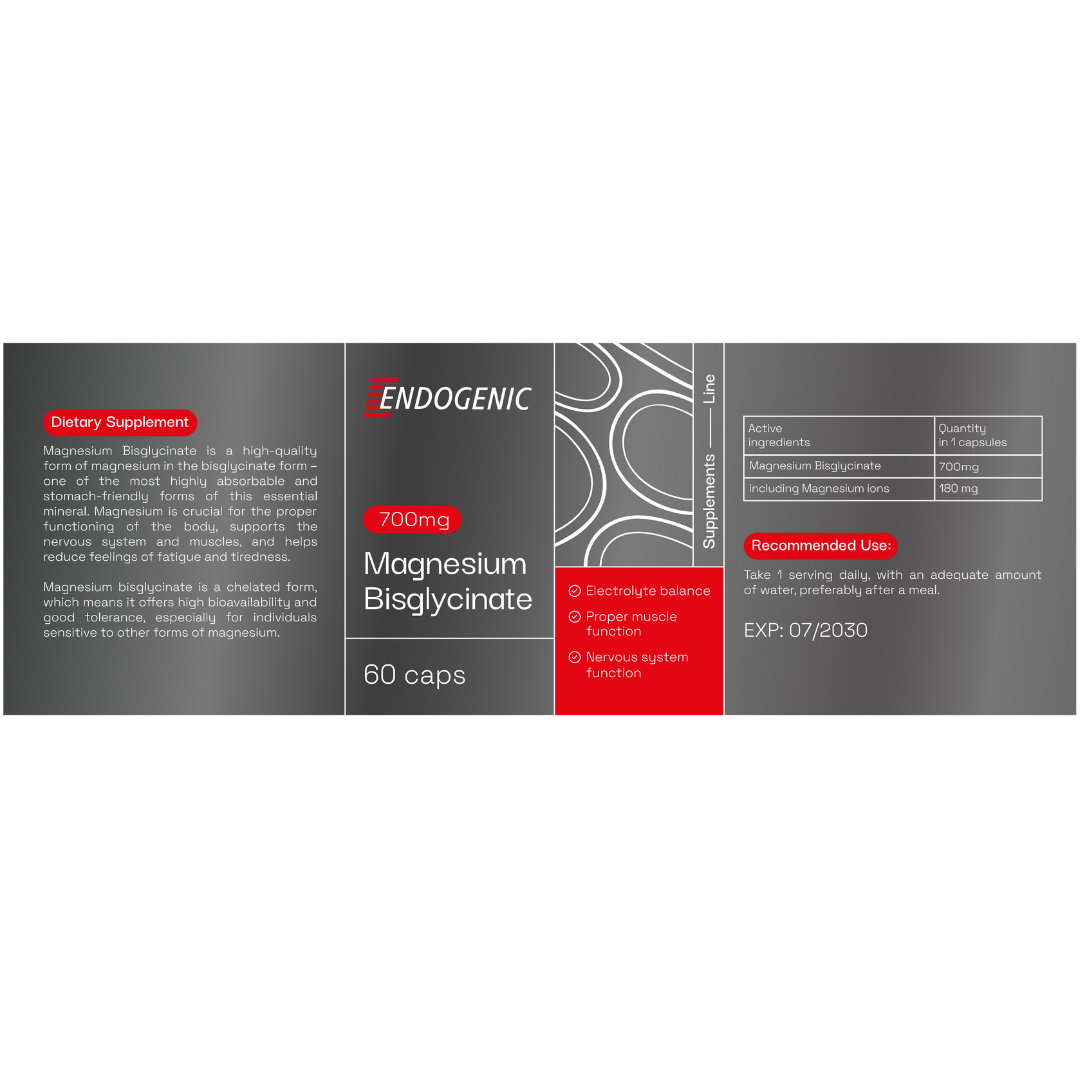
Magnesium Bisglycinate (chelated) 700mg 60caps

Sale!


 13.00

Endogenic Magnesium Bisglycinate 700 mg is a chelated magnesium bisglycinate — the form with the highest bioavailability, absorbed via the amino acid pathway. Supports muscle recovery, sleep quality, and focus, while the glycine in the chelate structure provides additional relaxation support for the nervous system.

Endogenic Magnesium Bisglycinate 700 mg — Chelated Magnesium Glycinate

Magnesium bisglycinate is a chelate — magnesium “wrapped” in two molecules of the amino acid glycine. The word “chelate” comes from the Greek “chele” (pincers). Imagine two arms of glycine gripping a magnesium ion like a crab’s claws — firmly, stably, not letting go during the journey through the digestive system.

This structure translates into three concrete advantages:

1. Absorption via the amino acid pathway, not the mineral pathway

Most magnesium forms (oxide, citrate, carbonate) are absorbed through ion channels in the intestines. The problem is that these channels have limited throughput and easily get “clogged” — especially when other minerals (calcium, zinc, iron) are competing for the same entry points.

Bisglycinate bypasses this bottleneck. Thanks to its chelate structure, it’s absorbed through amino acid transporters — separate “doors” that ordinary mineral salts don’t use. A study by Uysal et al. (2019) published in Biological Trace Element Research confirmed that chelated magnesium forms achieve higher and more sustained bioavailability than inorganic forms, even when consumed alongside other minerals.

2. Zero laxative effects

Magnesium oxide has a bioavailability of 4–5%. The rest — over 95% — reaches the large intestine, draws water osmotically, and… you know the rest. Citrate is better but at higher doses can produce the same effect.

Magnesium bisglycinate is absorbed almost entirely in the upper small intestine. Minimal amounts reach the large intestine, meaning no discomfort, no bloating, no emergency bathroom visits. You can take the full dose without worry — even on an empty stomach.

3. Glycine is more than just “packaging”

This is where bisglycinate stands apart from other chelates. Glycine is an amino acid that plays important roles in the body on its own:

  • Inhibitory neurotransmitter — glycine acts on glycine receptors in the brain and spinal cord, supporting nervous system calming. This is why magnesium bisglycinate has a reputation as the “sleep magnesium.”
  • Glutathione precursor — glycine is one of three amino acids that form glutathione, the most important intracellular antioxidant.
  • Supports collagen synthesis — glycine makes up every third amino acid in the collagen molecule. The extra supply supports joints, tendons, and skin.

You buy magnesium bisglycinate — you get magnesium plus glycine. Two ingredients in one, at no extra cost.

Reviews

There are no reviews yet.

Be the first to review “Magnesium Bisglycinate (chelated) 700mg 60caps”

Your email address will not be published. Required fields are marked *

INTENDED FOR RESEARCH PURPOSES ONLY!
All of the above properties have been observed in laboratory tests, not on humans, and are for informational purposes only. None of the information contained in the descriptions has been approved by the GIS, GIF, or EFSA. The substance is not a medicine, food product, or dietary supplement, and is therefore not suitable for human consumption. The product qualifies as a chemical reagent/reference material approved for sale in the EU. It can exclusively be used for scientific research. Further information on the product is contained in the chemical safety data sheet, which is available for inspection. The products are only available to institutions or individuals associated with research or laboratory activities.

What Does Endogenic Magnesium Bisglycinate Do for You?

Muscle Recovery and the End of Cramps

Magnesium is the guardian of balance between muscle contraction and relaxation. Calcium causes contraction, magnesium allows relaxation. When the ratio shifts against magnesium, muscles lose the ability to fully relax. Hence the nighttime calf cramps, post-training stiffness, neck tension that won’t let up despite stretching.

Think of it as a hydraulic valve. Calcium opens the valve (contraction), magnesium closes it (relaxation). When magnesium is lacking, the valve jams in the “open” position — the muscle contracts and can’t return to normal. Magnesium bisglycinate delivers magnesium in a form that doesn’t get lost along the way and reaches muscle tissue at full strength.

Add to that glycine, which supports collagen synthesis in tendons and ligaments — and you have a supplement that takes care not just of muscles, but of the entire musculoskeletal system.

Muscle cramps, prolonged recovery, morning cardboard-stiff neck — if these symptoms accompany you more often than you’d like, Endogenic Magnesium Bisglycinate can change the rules of your recovery. Try it yourself.

Sleep That No Meditation App Can Deliver

There’s a lot of talk about magnesium bisglycinate and sleep. Here are the facts: both magnesium and glycine have documented effects supporting sleep onset and sleep quality — but through different mechanisms.

Magnesium blocks the NMDA receptor (excitatory) and supports GABA activity (inhibitory). When magnesium levels are optimal, the brain transitions more easily from “active” to “rest” mode. A study by Abbasi et al. published in the Journal of Research in Medical Sciences (2012) showed that magnesium supplementation in elderly individuals with insomnia improved sleep onset time, sleep duration, and serum melatonin levels.

Glycine works from a different angle. A study by Kawai et al. in Neuropsychopharmacology (2015) showed that glycine activates NMDA receptors in the suprachiasmatic nucleus (SCN) — the internal biological clock — lowering core body temperature and facilitating the transition into deep sleep.

Magnesium quiets excitation. Glycine lowers body temperature and synchronizes the clock. Two mechanisms that together create conditions for deep, restorative sleep — without morning grogginess, without pharmacological “hangover.”

Stress Resilience — Not a Promise, but Biochemistry

Chronic stress and magnesium deficiency form a vicious cycle documented by science. The mechanism looks like this:

  1. Stress raises cortisol.
  2. Cortisol increases urinary magnesium excretion.
  3. Lower magnesium lowers the threshold for neuronal excitability.
  4. A lower threshold means a stronger response to the same stressors.
  5. Stronger response = more cortisol. Back to step 1.

Magnesium supplementation breaks this cycle at step 3 — it restores the proper excitability threshold, so the nervous system stops reacting to every stimulus like a fire alarm. A meta-analysis by Boyle et al. in Nutrients (2017) encompassing 18 studies confirmed that magnesium supplementation reduces subjective feelings of anxiety and stress, particularly in individuals with low baseline levels of this mineral.

Glycine adds its own action — as an inhibitory neurotransmitter, it mitigates excessive excitation in the central nervous system. A dual relaxation mechanism in a single capsule.

Living in constant tension? Your body is asking for magnesium louder than you think. Endogenic Magnesium Bisglycinate is the form that works — without side effects, without daytime drowsiness. See what a month of consistent supplementation can change.

Focus and Mental Performance

Magnesium participates in ATP production — the energy currency of every cell, including neurons. When magnesium levels drop, mitochondria produce less ATP, and you experience it as brain fog, declining motivation, and difficulty maintaining attention on a single task.

The data is concerning: according to a review by DiNicolantonio et al. published in Open Heart (2018), 50 to 80% of the Western population fails to meet daily magnesium requirements. This isn’t about people with obvious symptoms — it’s about subclinical deficiency that manifests precisely as: “nothing’s wrong with me, I just can’t focus.”

Magnesium bisglycinate combined with glycine supports cognitive function from two sides: magnesium provides the energy fuel for neurons, glycine supports neurotransmitter synthesis — mechanisms well-recognized among nootropic compounds.

Who Is Magnesium Bisglycinate For?

Active and Physically Training Individuals

Physical exercise increases magnesium requirements by 10–20%. You sweat during training — you lose magnesium through perspiration. Muscles work intensely — they consume magnesium for the proper contraction-relaxation cycle. Recovery requires magnesium for protein synthesis and muscle tissue repair.

If you train 3+ times a week and don’t supplement magnesium — the math is simple: you’re running a deficit. Bisglycinate is a form that doesn’t interfere with other supplements in your stack (protein, creatine, vitamin D3) and doesn’t cause stomach issues that could sabotage your post-workout meal.

People Under Chronic Stress

Deadline after deadline, notifications every three minutes, always “urgent.” Your nervous system operates in fight-or-flight mode most of the day. Cortisol surges in waves, magnesium escapes through urine, and you feel like you’re living on the edge — even though “objectively” nothing bad is happening.

Magnesium bisglycinate isn’t a happiness pill. It’s the replenishment of a mineral your body literally depletes in response to stress. Restoring proper magnesium levels won’t eliminate the source of stress — but it will change how your body responds to it.

Knowledge Workers

Programmer, analyst, student before exams, entrepreneur with twenty browser tabs and five open projects. Your brain is an organ that weighs 2% of your body mass but consumes 20% of all energy. And that energy requires magnesium at every step of ATP production.

Magnesium bisglycinate is a form with confirmed high bioavailability, with additional glycine support for neurotransmission. If your work is a mental marathon — this supplement is water at the next hydration station. And if you’re looking for additional cognitive support, consider pairing it with the Endogenic cognitive booster MINDHUNTER X.

You train, work with your mind, and live under pressure? Endogenic Magnesium Bisglycinate 700 mg addresses all three areas in a single capsule. Try it and see for yourself.

Magnesium Bisglycinate dosage

Dosage: 1–2 capsules daily with a glass of water.

When to take — depending on your goal:

  • Sleep and recovery: 1 capsule 30–60 minutes before bed. Glycine supports core body temperature reduction, magnesium calms the nervous system.
  • Post-training recovery: 1 capsule with your post-workout meal.
  • Mental performance: 1 capsule in the morning with your first meal.
  • Full dose (2 capsules): Split into two servings — morning and evening — for stable magnesium levels over 24 hours.

Practical tips:

  • You can take it on an empty stomach — bisglycinate is gentle on the digestive tract. Still, taking it with a meal maximizes absorption.
  • Avoid combining with large calcium doses in one meal. A 2–3 hour gap is the optimal buffer.
  • Effects build over time. First benefits (better sleep, less muscle tension) after 5–10 days. Full tissue saturation: 3–4 weeks of consistent use.

Bisglycinate vs. Other Magnesium Forms — Comparison

Magnesium Form

Bioavailability

Laxative Effect

Additional Benefits

Best For

Bisglycinate (chelate)Very highNone/minimalSleep & recovery support (glycine)Sleep, stress, recovery, mental work
TaurateHighMinimalHeart & nervous system support (taurine)Cardiovascular health, active individuals
CitrateGoodModerateDigestive supportIndividuals with constipation
OxideLow (4–5%)StrongNoneNot recommended for supplementation
L-ThreonateHighLowCrosses the blood-brain barrierCognitive function, memory

Magnesium bisglycinate is the “Swiss army knife” among magnesium forms — it combines very high bioavailability with a broad benefit profile and virtually zero risk of gastrointestinal side effects. If you had to choose one daily magnesium form from the range of Endogenic dietary supplements — bisglycinate is the safest and most versatile choice.

FAQ

{ “@context”: “https://schema.org”, “@type”: “FAQPage”, “mainEntity”: [ { “@type”: “Question”, “name”: “How does magnesium bisglycinate differ from regular magnesium glycinate?”, “acceptedAnswer”: { “@type”: “Answer”, “text”: “In practice, it’s the same compound. ‘Bisglycinate’ precisely indicates that the magnesium ion is bound to two (bis-) glycine molecules, forming a complete chelate. The term ‘magnesium glycinate’ is used more broadly and sometimes includes products that are a mixture of oxide with a small addition of glycine. The ‘chelated’ label on the Endogenic packaging confirms you’re getting a true chelate.” } }, { “@type”: “Question”, “name”: “Does magnesium bisglycinate cause daytime drowsiness?”, “acceptedAnswer”: { “@type”: “Answer”, “text”: “No. Bisglycinate supports the natural sleep-wake cycle rather than pharmacologically inducing drowsiness. When taken in the morning, it supports focus and calm alertness. The relaxation effect intensifies in the evening, when the body naturally transitions to rest mode — especially with a dose taken 30–60 minutes before bed.” } }, { “@type”: “Question”, “name”: “Can I combine magnesium bisglycinate with other supplements?”, “acceptedAnswer”: { “@type”: “Answer”, “text”: “Yes. Bisglycinate works well with vitamin D3 (which enhances magnesium absorption), vitamin B6, zinc, and omega-3 fatty acids. The only note: avoid simultaneous intake with large doses of calcium or iron — a 2–3 hour gap will eliminate absorption competition.” } }, { “@type”: “Question”, “name”: “How soon will I notice effects?”, “acceptedAnswer”: { “@type”: “Answer”, “text”: “Improved sleep quality and reduced muscle tension: typically 5–10 days. Stable effects in focus, stress resilience, and recovery: 3–4 weeks of consistent use. Magnesium works cumulatively — tissues need time for full saturation.” } }, { “@type”: “Question”, “name”: “Is magnesium bisglycinate safe for long-term use?”, “acceptedAnswer”: { “@type”: “Answer”, “text”: “Yes. Magnesium is a macromineral, and glycine is an endogenous amino acid — both occur naturally in the body. At recommended doses, the risk of side effects is minimal. Individuals with kidney insufficiency or those taking cardiac medications should consult a physician before supplementing.” } } ] }

FAQ — Frequently Asked Questions

How does magnesium bisglycinate differ from regular magnesium glycinate?

In practice, it’s the same compound. “Bisglycinate” precisely indicates that the magnesium ion is bound to two (bis-) glycine molecules, forming a complete chelate. The term “magnesium glycinate” is used more broadly and sometimes includes products that are a mixture of oxide with a small addition of glycine. The “chelated” label on the Endogenic packaging confirms you’re getting a true chelate.

Does magnesium bisglycinate cause daytime drowsiness?

No. Bisglycinate supports the natural sleep-wake cycle rather than pharmacologically inducing drowsiness. When taken in the morning, it supports focus and calm alertness. The relaxation effect intensifies in the evening, when the body naturally transitions to rest mode — especially with a dose taken 30–60 minutes before bed.

Can I combine magnesium bisglycinate with other supplements?

Yes. Bisglycinate works well with vitamin D3 (which enhances magnesium absorption), vitamin B6, zinc, and omega-3 fatty acids. The only note: avoid simultaneous intake with large doses of calcium or iron — a 2–3 hour gap will eliminate absorption competition.

How soon will I notice effects?

Improved sleep quality and reduced muscle tension: typically 5–10 days. Stable effects in focus, stress resilience, and recovery: 3–4 weeks of consistent use. Magnesium works cumulatively — tissues need time for full saturation.

Is magnesium bisglycinate safe for long-term use?

Yes. Magnesium is a macromineral, and glycine is an endogenous amino acid — both occur naturally in the body. At recommended doses, the risk of side effects is minimal. Individuals with kidney insufficiency or those taking cardiac medications should consult a physician before supplementing.

Referenced Citations

Scientific References

  1. Uysal N, Kizildag S, Yuce Z, et al. (2019). Timeline (Bioavailability) of Magnesium Compounds in Hours: Which Magnesium Compound Works Best?. Biological Trace Element Research, 187(1), 128-136. (Comparison of magnesium form bioavailability over time — amino acid chelates vs. inorganic forms).
  2. Abbasi B, Kimiagar M, Sadeghniiat K, et al. (2012). The effect of magnesium supplementation on primary insomnia in elderly: A double-blind placebo-controlled clinical trial. Journal of Research in Medical Sciences, 17(12), 1161-1169. (Magnesium supplementation improves sleep onset time, sleep duration, and melatonin levels in elderly individuals with insomnia).
  3. Kawai N, Sakai N, Okuro M, et al. (2015). The sleep-promoting and hypothermic effects of glycine are mediated by NMDA receptors in the suprachiasmatic nucleus. Neuropsychopharmacology, 40(6), 1405-1416. (Glycine activates NMDA receptors in the suprachiasmatic nucleus, lowering body temperature and promoting sleep onset).
  4. Boyle NB, Lawton C, Dye L. (2017). The Effects of Magnesium Supplementation on Subjective Anxiety and Stress — A Systematic Review. Nutrients, 9(5), 429. (Meta-analysis of 18 studies: magnesium supplementation reduces subjective anxiety and stress, particularly in individuals with low baseline levels).
  5. DiNicolantonio JJ, O’Keefe JH, Wilson W. (2018). Subclinical magnesium deficiency: a principal driver of cardiovascular disease and a public health crisis. Open Heart, 5(1), e000668. (50–80% of Western populations fail to meet daily magnesium requirements — subclinical deficiency as a risk factor).