


Semaglutide: Mechanism, Registration Trial Program and Regulatory Status
Semaglutide has the most extensive evidence base of any compound discussed on this blog.
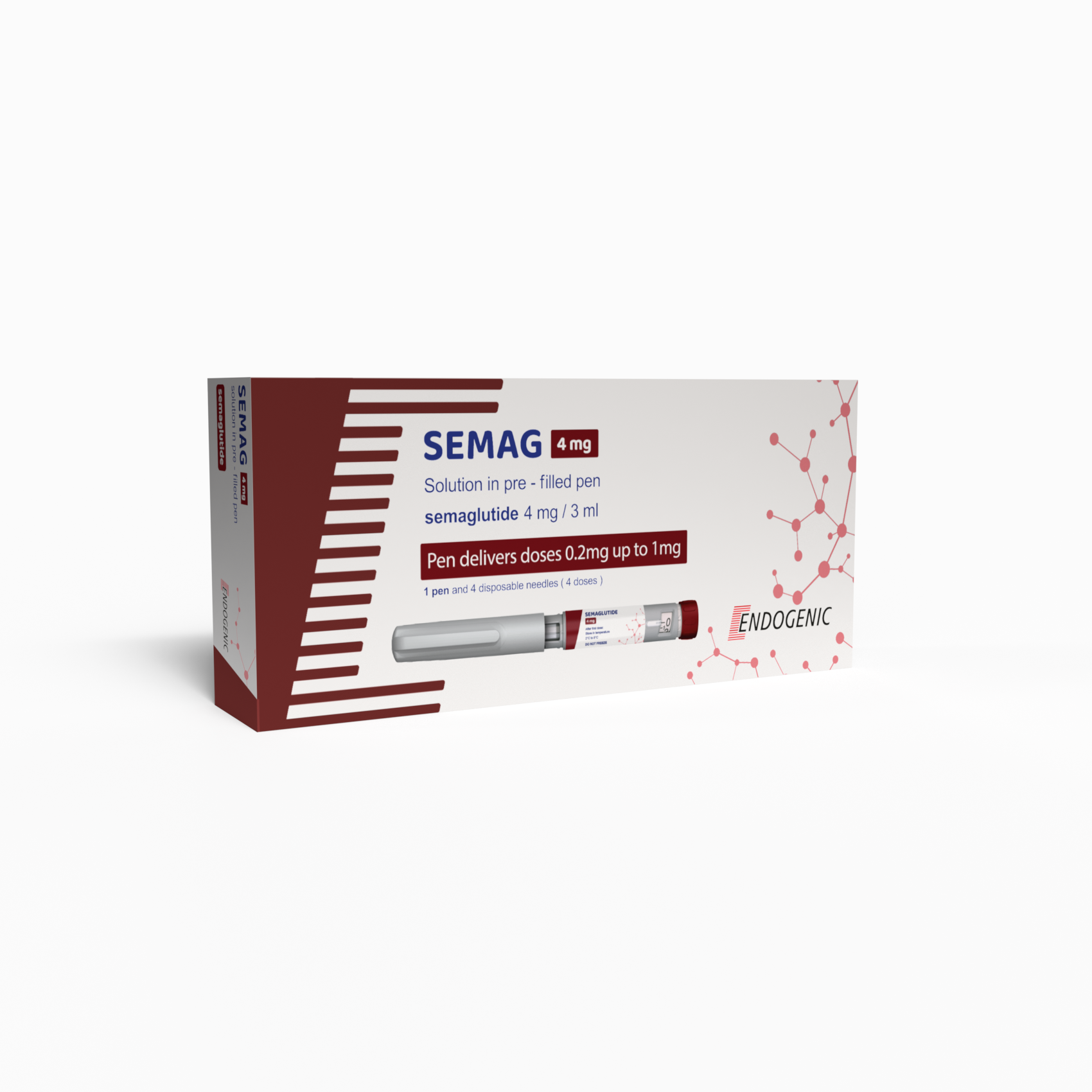
Semaglutide has the most extensive evidence base of any compound discussed on this blog. Its clinical development program enrolled tens of thousands of participants and included an assessment of cardiovascular events, a much harder endpoint than weight reduction alone. This provides a useful example of what a complete evidence pathway looks like and what becomes known after it is completed.
This article reviews the mechanism, development history, registration trial program and regulatory status. A comparison with tirzepatide is available in our separate article on tirzepatide versus semaglutide. The text does not provide doses or protocols for use.
An essential distinction: semaglutide medicinal products are prescription-only and require medical supervision. Research material containing the same active substance is not a substitute for a medicinal product and does not replace medical consultation. All trial results discussed below were obtained with registered medicinal products in diagnosed populations under medical supervision.
Mechanism: the incretin system
Semaglutide is a glucagon-like peptide-1 receptor agonist (GLP-1 RA). Understanding this mechanism begins with the physiological role of GLP-1.
GLP-1 is an incretin hormone released by intestinal cells in response to food. Its effects involve several parallel pathways:
- Glucose-dependent insulin secretion – insulin secretion is enhanced when glucose is elevated. This dependence helps limit the risk of hypoglycemia compared with mechanisms that act independently of glucose concentration.
- Reduced glucagon secretion – glucagon has effects that oppose those of insulin.
- Slower gastric emptying – this prolongs post-meal satiety and also contributes to some gastrointestinal adverse effects.
- Central effects – GLP-1 receptors are present in brain regions involved in appetite regulation, which is associated with reduced appetite.
The final pathway helps explain why this class moved from diabetology into obesity treatment: effects on body weight are not merely secondary to glycemic control but also reflect central appetite regulation.
The problem that had to be solved
Native GLP-1 has a half-life measured in minutes because it is rapidly degraded by dipeptidyl peptidase-4. A molecule suitable for once-weekly administration therefore required structural modification.
Semaglutide uses two principal modifications: amino-acid substitution at the enzyme-recognition site and attachment of a fatty-acid chain, which enables reversible binding to plasma albumin. Albumin binding creates a reservoir from which the compound is released gradually, extending its duration of action. Its pharmacology and development are summarized in a review (Chao et al., 2023, PMID 34942372).
Registration trial program
Semaglutide completed a broad clinical development pathway. The key trials below were all conducted using medicinal products.
Body weight reduction
The pivotal STEP trial evaluated once-weekly semaglutide in adults with overweight or obesity and was published in the New England Journal of Medicine (Wilding et al., 2021, PMID 33567185). Efficacy in obesity without diabetes has also been assessed in a systematic review and meta-analysis (Tan et al., 2022, PMID 36578889).
Maintenance of effect
A separate study compared continued treatment with a switch to placebo. The results were published in JAMA (Rubino et al., 2021, PMID 33755728).
Cardiovascular events
The SELECT trial enrolled people with overweight or obesity and established cardiovascular disease, but without diabetes, and assessed the effect of semaglutide on cardiovascular outcomes (Lincoff et al., 2023, PMID 37952131). These are hard clinical outcomes rather than an intermediate measure such as body weight.
Special populations
- Adolescents with obesity – the STEP TEENS trial (Weghuber et al., 2022, PMID 36322838).
- People with obesity and knee osteoarthritis (Bliddal et al., 2024, PMID 39476339).
What happens after discontinuation?
This is one of the most important sections because promotional materials often omit what happens after treatment ends.
An extension of STEP 1 evaluated weight regain and cardiometabolic changes after withdrawal of semaglutide (Wilding et al., 2022, PMID 35441470). The findings shape expectations for the entire class: the achieved effect does not persist automatically after treatment ends, and changes in cardiometabolic parameters track changes in body weight.
This has two implications:
- This is a long-term treatment strategy, not a short, self-contained intervention.
- Changes in eating habits remain necessary rather than optional; pharmacotherapy does not replace them.
Safety and tolerability
Semaglutide has a characterized safety profile, which distinguishes it from most research compounds discussed on this blog and reflects its progression through the registration process. The profile has been reviewed separately (Smits and Van Raalte, 2021, PMID 34305810). A 2025 review also summarized real-world utilisation, comparative effectiveness and adverse effects of newer GLP-1 RA-based weight-loss therapies (Thomsen et al., 2025, PMID 40196933).
The most frequently reported adverse effects involve the gastrointestinal tract and follow directly from the mechanism, particularly delayed gastric emptying. A characterized safety profile does not mean an absence of risk; it means that contraindications, interactions and situations requiring caution have been documented in the product information available to the treating physician.
Dosage forms and indications are not interchangeable
Semaglutide medicinal products differ by route of administration, strength and authorized indication. Products approved for type 2 diabetes and obesity have separate marketing authorisations even though they contain the same active substance. An oral formulation is also available.
The practical consequence is that a physician selects the appropriate formulation and indication using the summary of product characteristics, not a general article. For the same reason, this article does not provide doses: they depend on a medical decision and the documentation for a specific authorized product.
Regulatory status
Semaglutide is the active substance in registered prescription medicinal products. This differs from most research materials discussed on this blog and requires a clear distinction.
| Medicinal product | Research material | |
|---|---|---|
| Status | Marketing authorisation | Not approved for human use |
| Availability | Prescription only | Laboratory applications only |
| Oversight | Medical supervision | None |
| Authorized dosage | Defined in the product information | Not established |
| Data from STEP and SELECT | Apply to this column | Do not apply |
The distinction between these legal categories is discussed in detail in our material on the regulatory status of research reagents.
Anti-doping note
This is another area in which semaglutide differs from most substances discussed on this blog and one that is sometimes misrepresented in both directions.
Semaglutide is not on the WADA Prohibited List. It has, however, been included in the WADA Monitoring Program since 2024. This means that laboratories track patterns of use in sport. Monitoring is not prohibition: detection of a monitored substance is not an anti-doping rule violation and does not require a Therapeutic Use Exemption.
Tirzepatide was added to the Monitoring Program on 1 January 2026. The distinction between the Monitoring Program and the WADA Prohibited List is important because the two documents are often confused. Inclusion in the Monitoring Program is not necessarily permanent; collected data may inform a future status decision.
Frequently Asked Questions
Does the effect persist after discontinuation?
Not automatically. The STEP 1 extension documented weight regain and cardiometabolic changes after semaglutide withdrawal (PMID 35441470). This supports viewing treatment as a long-term strategy in which changes in eating habits remain necessary.
How does semaglutide differ from tirzepatide?
Semaglutide acts at one incretin receptor, GLP-1. Tirzepatide acts at two, GLP-1 and GIP. A separate article compares the two molecules in detail without duplicating that discussion here.
Is semaglutide prohibited in sports?
No. Semaglutide is not included in the WADA Prohibited List. It has been included in the Monitoring Program since 2024, which means patterns of use are observed; it does not mean the substance is prohibited.
Is research material with the same active substance equivalent to a medicinal product?
No. Results from STEP and SELECT were obtained with registered medicinal products in diagnosed populations under medical supervision. Research material is not a substitute for a medicinal product and does not replace medical consultation.
Why does the article not give doses?
Because the dosage of a medicinal product is determined by its product information and by the treating physician, who considers the indication, contraindications and the patient’s condition. A general article cannot provide that information reliably.
Summary
Semaglutide is a GLP-1 receptor agonist. It enhances glucose-dependent insulin secretion, reduces glucagon secretion, slows gastric emptying and affects central appetite regulation. The final mechanism helps explain the transition of this class from diabetology into obesity treatment. Its prolonged activity results from an amino-acid substitution that protects against enzymatic degradation and attachment of a fatty-acid chain that promotes albumin binding. Semaglutide completed a broad clinical development pathway, including the STEP program and the SELECT trial with cardiovascular outcomes. The STEP 1 extension is especially important for expectations: weight regain and cardiometabolic changes were documented after withdrawal, supporting treatment as a long-term strategy rather than a time-limited course. Semaglutide is the active substance in prescription medicinal products, and the cited clinical evidence applies to those products, not to research material with the same name. It is not on the WADA Prohibited List; since 2024 it has been included in the Monitoring Program, which means observation of use patterns rather than prohibition.
Product documentation
Research material pages with batch-specific analytical documentation are available for vials, the 2 mg pen, the 8 mg pen and the semaglutide and cagrilintide combination. General information about handling lyophilised research material is available on the bacteriostatic water page. These materials are intended for research applications only and are not substitutes for medicinal products.
Bibliography
- Wilding JPH, Batterham RL, Calanna S, et al. Once-Weekly Semaglutide in Adults with Overweight or Obesity. N Engl J Med. 2021;384(11):989–1002. PMID: 33567185
- Wilding JPH, Batterham RL, Davies M, et al. Weight regain and cardiometabolic effects after withdrawal of semaglutide: The STEP 1 trial extension. Diabetes Obes Metab. 2022;24(8):1553–1564. PMID: 35441470
- Rubino D, Abrahamsson N, Davies M, et al. Effect of Continued Weekly Subcutaneous Semaglutide vs Placebo on Weight Loss Maintenance in Adults With Overweight or Obesity: The STEP 4 Randomized Clinical Trial. JAMA. 2021;325(14):1414–1425. PMID: 33755728
- Lincoff AM, Brown-Frandsen K, Colhoun HM, et al. Semaglutide and Cardiovascular Outcomes in Obesity without Diabetes. N Engl J Med. 2023;389(24):2221–2232. PMID: 37952131
- Weghuber D, Barrett T, Barrientos-Pérez M, et al. Once-Weekly Semaglutide in Adolescents with Obesity. N Engl J Med. 2022;387(24):2245–2257. PMID: 36322838
- Bliddal H, Bays H, Czernichow S, et al. Once-Weekly Semaglutide in Persons with Obesity and Knee Osteoarthritis. N Engl J Med. 2024;391(17):1573–1583. PMID: 39476339
- Smits MM, Van Raalte DH. Safety of Semaglutide. Front Endocrinol (Lausanne). 2021;12:645563. PMID: 34305810
- Chao AM, Tronieri JS, Amaro A, Wadden TA. Semaglutide for the treatment of obesity. Trends Cardiovasc Med. 2023;33(3):159–166. PMID: 34942372
- Tan HC, Dampil OA, Marquez MM. Efficacy and Safety of Semaglutide for Weight Loss in Obesity Without Diabetes: A Systematic Review and Meta-Analysis. J ASEAN Fed Endocr Soc. 2022;37(2):65–72. PMID: 36578889
- Thomsen RW, Mailhac A, Løhde JB, Pottegård A. Real-world evidence on the utilization, clinical and comparative effectiveness, and adverse effects of newer GLP-1RA-based weight-loss therapies. Diabetes Obes Metab. 2025;27 Suppl 2:66–88. PMID: 40196933
- Frías JP, Davies MJ, Rosenstock J, et al. Tirzepatide versus Semaglutide Once Weekly in Patients with Type 2 Diabetes. N Engl J Med. 2021;385(6):503–515. PMID: 34170647