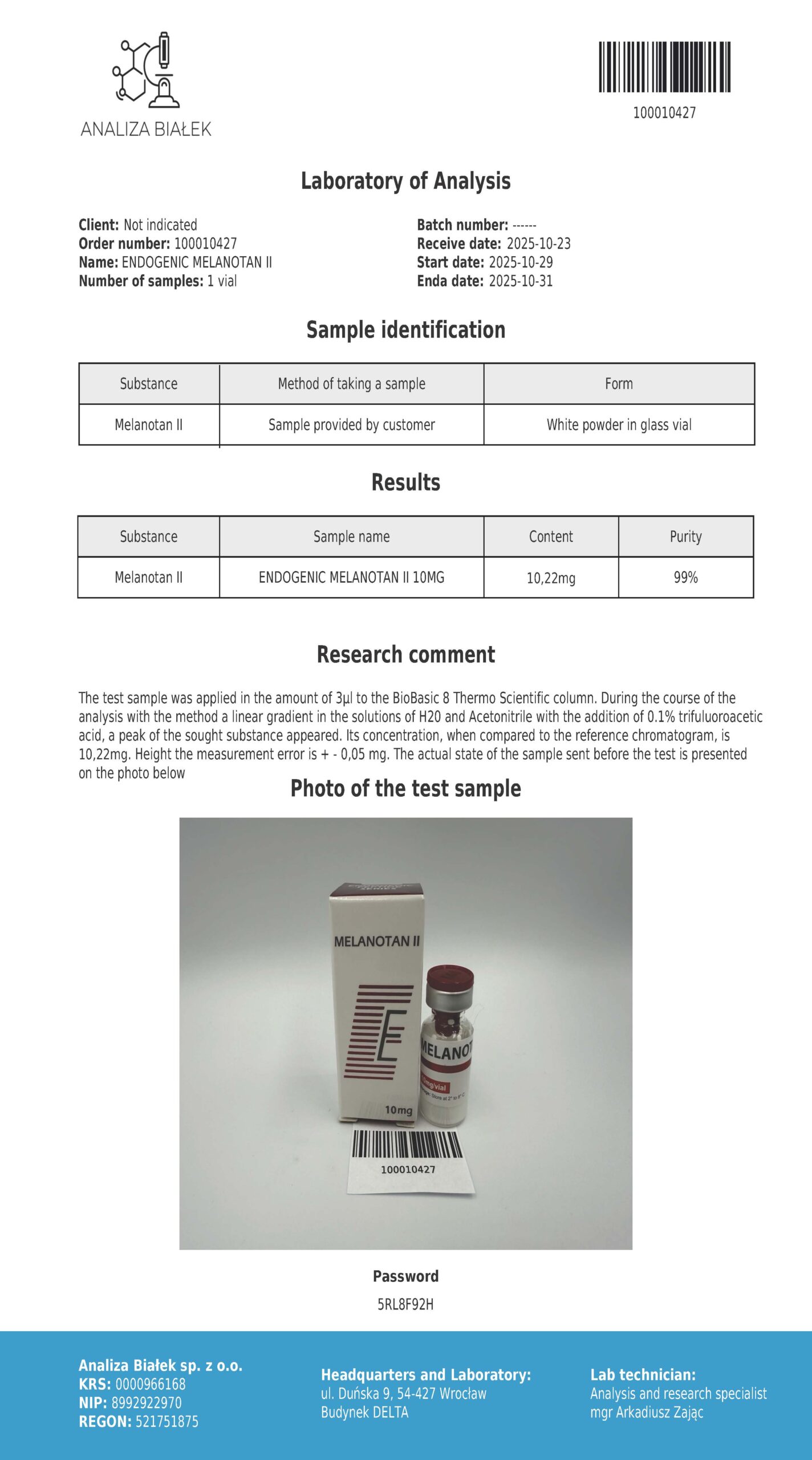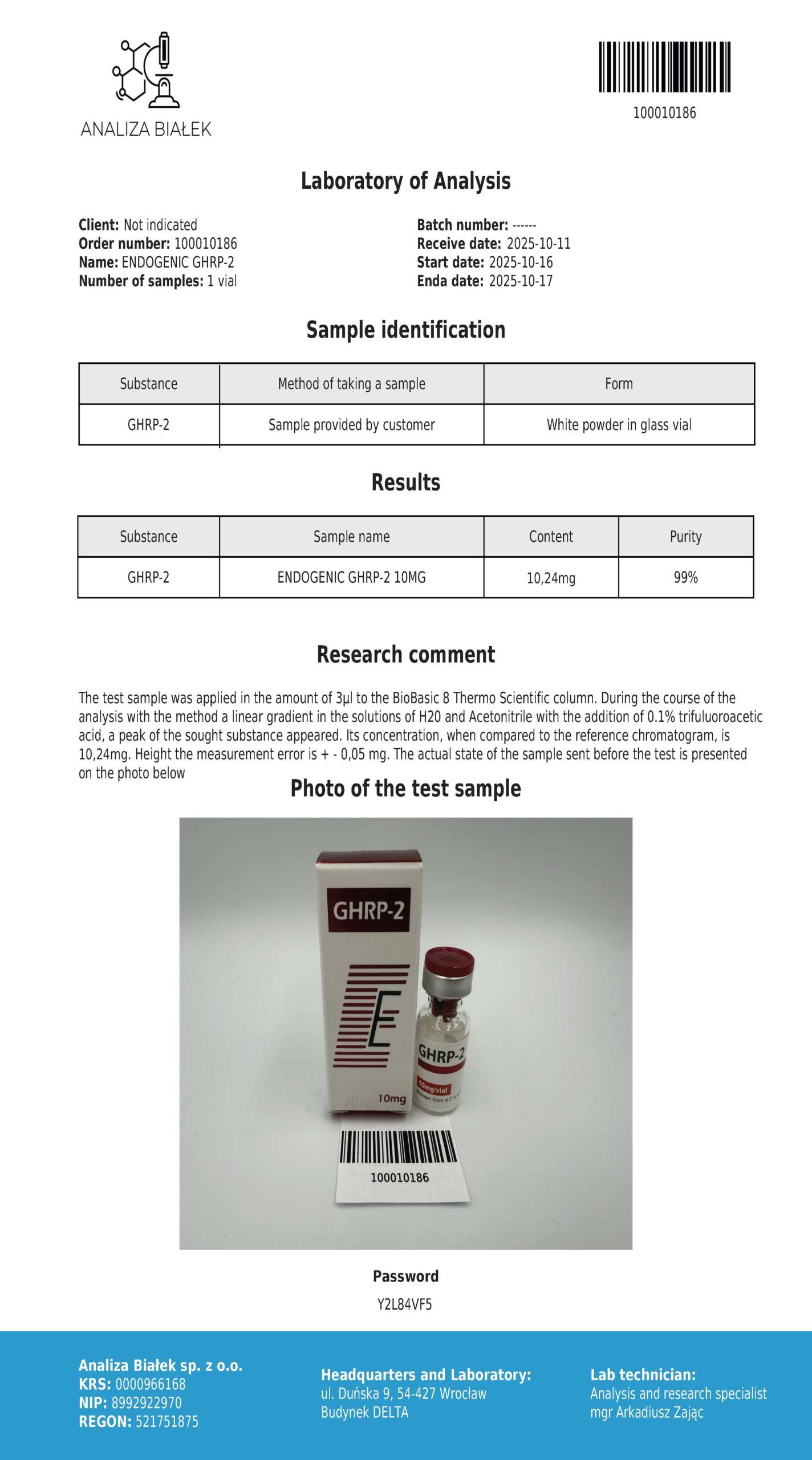


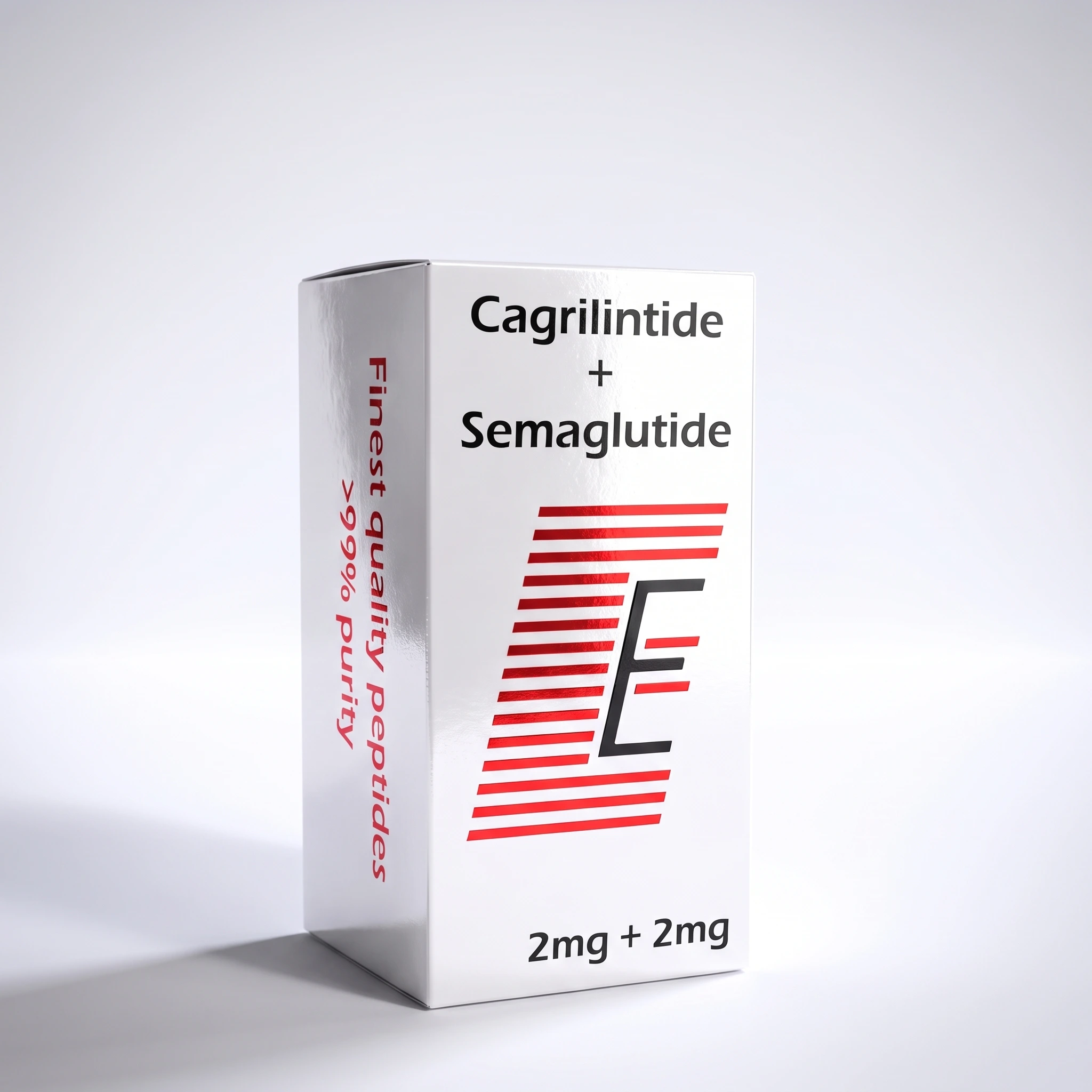
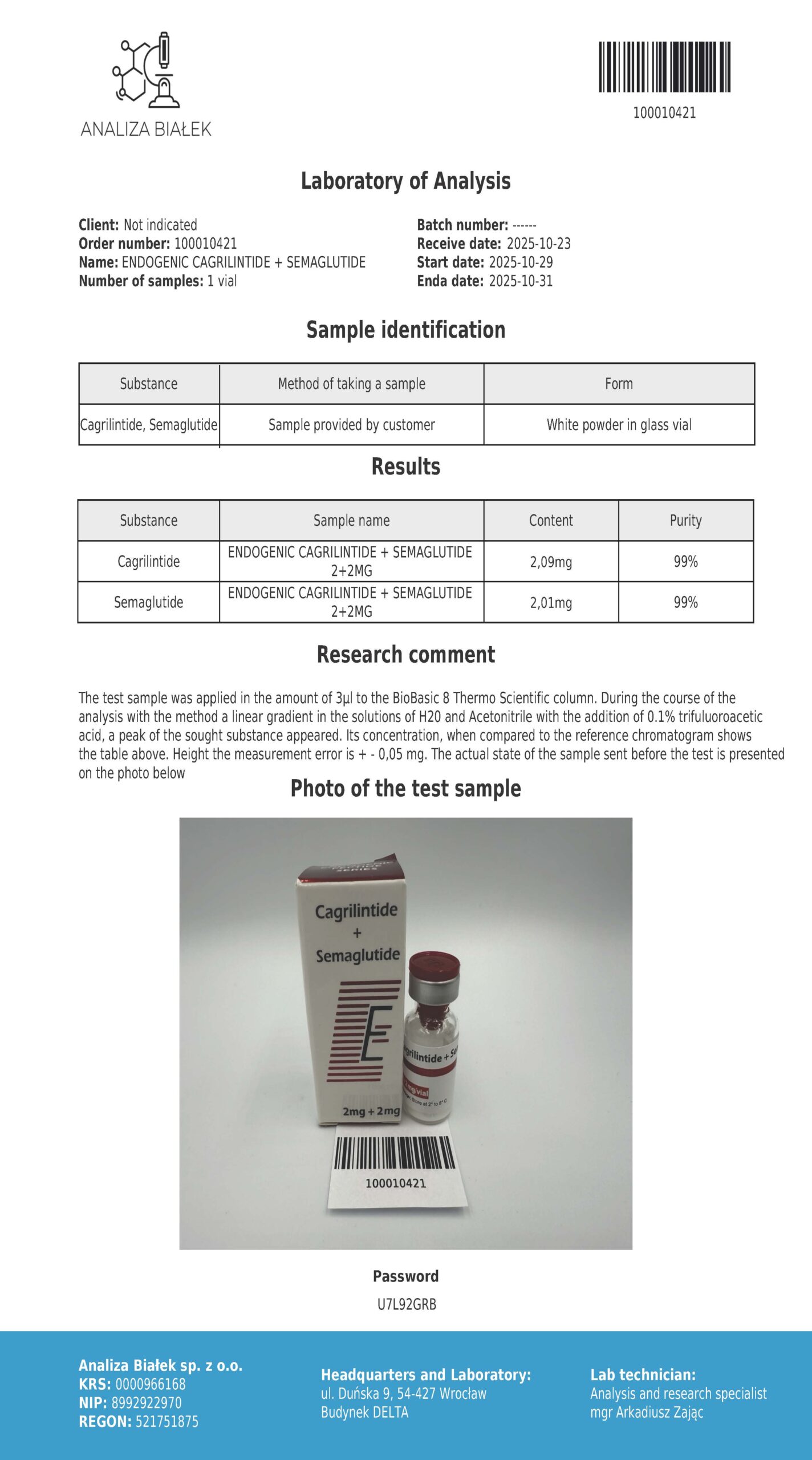
The pair of molecules is the same – semaglutide + cagrilintide. They differ in the regulatory framework. CagriSema® is clinically tested drug by Novo Nordisk (phase III, REDEFINE program), unregistered, available only as part of controlled studies under medical supervision. Semaglutide + Cagrilintide 2+2 mg is a Research Use Only reagent in the form of a lyophilized product with analytical documentation (COA, HPLC, MS Q-TOF), intended only for further laboratory tests. The RUO reagent is not a substitute for an investigational drug or a registered drug and does not replace medical consultation.
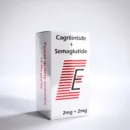
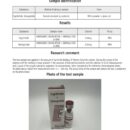
Semaglutide + Cagrilintide 2+2mg
Semaglutide + Cagrilintide 2+2 mg — two-component RUO reagent in a lyophilized vial: semaglutide (GLP-1 analogue) plus cagrilintide (amylin analogue), nominal weight 4 mg total, reconstitution with bacteriostatic water. Two independent satiety pathways (GLP-1R + amylin receptors) in one research tool, with full control over stock concentration.
94,99 €
Fast shipping
Delivery options
Returns policy
Semaglutide + Cagrilintide 2+2 mg - semaglutide + cagrilintide - reagent in a vial
- Semaglutide + cagrilintide: two distinct peptide molecules.
- Vial of lyophilisate: nominally 2 mg + 2 mg, or 4 mg in total.
- Research Use Only reagent, not a medicinal product or a substitute for a medicine.
Semaglutide + Cagrilintide 2+2 mg is two-component research reagent in the form of a lyophilisate in a vial, containing semaglutide (GLP-1 analogue) and cagrilintide (amylin analogue) with a total nominal weight of 4 mg per vial. The three separate regulatory frameworks cover the same two molecules – neither of which makes this reagent a drug.
Frame 1 – registered drug. Semaglutide is marketed as a drug approved by the EMA and FDA under the following names Ozempic® (type 2 diabetes), Wegovy® (obesity) and Rybelsus® (oral form). Available only by prescription, under medical supervision.
Frame 2 – investigational drug. The cagrilintide + semaglutide combination is being clinically investigated by Novo Nordisk under the working name CagriSema® in the program REDEFINE (phase III, obesity and type 2 diabetes) — and as of the date of description, it is not registered as a drug in any jurisdiction. Only available in controlled studies.
Frame 3 – RUO reagent. This reagent Semaglutide + Cagrilintide 2+2 mg (RUO) is not a substitute for Ozempic®/Wegovy® or the investigated CagriSema®, is not a medicinal product and does not replace medical consultation. Communication that suggests interchangeability with a drug or use in humans for weight loss is inconsistent with the Research Use Only framework and is unacceptable. The identity of molecules with clinically tested substances does not break this boundary.
Introduction
For the entire past decade, metabolic pharmacology revolved around a single receptor: GLP-1. Semaglutide set the bar, tirzepatide added a second axis (GIP), and the next research question was: what will be the difference between adding an analogue to a GLP-1 agonist? amylin — a second satiety hormone, acting through a completely separate receptor pathway?
This is how the concept behind the cagrilintide + semaglutide combination was created: two independent “enough food” signal channels stimulated simultaneously. The reference literature in this direction describes work on cagrilintide as monotherapy and early combination studies, and the REDEFINE registration program (phase III) is conducted by Novo Nordisk. In the Pro-Body catalog the same pair of molecules appears in separate regulatory framework — as a two-component RUO research reagent, one of peptides for burning fat tissue used in metabolic research on obesity.
The present variant provides both molecules in the form of lyophilisate in a vial with a total nominal weight of 4 mg, unlike the applicator variant SEMA+CAGRI 2 mg / 2 mg PEN with factory solution. The lyophilisate expands the room for maneuver in laboratory work: it allows the researcher to independently determine the volume and concentration of the stock by reconstitution with bacteriostatic water.
This is a technical solution for laboratories working with the incretin-amylin axis in models in vitro and in vivo — not a medicinal form, not a therapeutic analogue for administration to humans. The single-component line remains available in parallel: SEMA G – Semaglutide alone as a GLP-1 monoagonist, constituting a reference point for a single satiety signal axis.
Incretins and amylin - two pathways for the same satiety
To understand why two molecules are combined, you need to see that the body signals satiety through more than one channel. Incretin axis (GLP-1, GIP) and amylin these are two distinct systems that evolutionarily contribute to the same effect — the “enough” message — but they do so through different receptors and different populations of neurons.
GLP-1 (glucagon-like peptide 1) is secreted in the intestine after a meal. It acts on pancreatic β-cells (glucose-dependent insulin secretion), on α-cells (glucagon inhibition) and centrally – in the arcuate nucleus of the hypothalamus – it modulates appetite and slows down gastric emptying. This is the channel on which semaglutide is based. Amylin is, in turn, a hormone secreted by the same pancreatic β cells along with insulin, in response to a meal.
It signals satiety mainly through the brain stem (area postrema, nucleus of the solitary tract) via amylin receptors – calcitonin receptor (CTR) complexes with receptor activity-modifying proteins (RAMP). This a different pathway than GLP-1, which makes amylin a complementary, not redundant, regulator of food intake. Cagrilintide is a long-acting, acylated amylin analogue. The research hypothesis behind the combination is simple: if we stimulate two independent satiety pathways simultaneously, the effect on markers of food intake and body weight in the models may be greater than for either pathway alone.
Early clinical data with the cagrilintide + semaglutide combination and the REDEFINE program are testing exactly this idea – in patient cohorts, under medical supervision, with investigational drugs rather than with the RUO reagent.
What is Semaglutide + Cagrilintide 2+2 mg - two active ingredients
Semaglutide + Cagrilintide 2+2 mg is a combination of two distinct peptides in one vial in the form of lyophilisate, with a total nominal weight of 4 mg. The nominal content is 2 mg of semaglutide and 2 mg of cagrilintide, or 4 mg in total. The actual content of both components must be confirmed in the batch COA. Below is the description of each ingredient separately.
Component 1 – semaglutide (GLP-1 analogue)
Semaglutide is GLP-1 receptor monoagonist (GLP-1R) — stabilized analogue of endogenous glucagon-like peptide 1. The molecule has 31 amino acids, molecular mass of approximately 4113 Da. For human GLP-1, structural modifications have been introduced to stabilize the peptide against enzymatic degradation and acylation with C18 fatty acid, which enables reversible binding to serum albumin – albumin acts as a reservoir, thanks to which the half-life in serum is approximately 7 days (weekly schedule in Ozempic® and Wegovy® clinical protocols).
For a complete breakdown of the GLP-1R receptor cascade, see SEMA G – Semaglutide itself; here we treat this component as one of the two combination axes.
| Parameter | Value |
|---|---|
| Common name | Semaglutide (semaglutide) |
| Pharmacological class | GLP-1 receptor monoagonist (GLP-1R) |
| CAS number | 910463-68-2 |
| Molecular formula | C₁₈₇H₂₉₁N₄₅O₅₉ |
| Molecular mass | ~4113.58 g/mol |
| Number of amino acids | 31 |
| Structural modifications | Acylation with C18 fatty acid, reversible binding to albumin |
| Serum half-life | ~7 days (weekly schedule in Ozempic®/Wegovy® clinical protocols) |
| Share per vial | Nominally 2 mg; 4 mg total per vial – confirmation in the batch COA |
| HPLC purity | ≥98% |
| Identity confirmation | Q-TOF mass spectrometry (MS) |
Ingredient 2 – cagrilintide (amylin analogue)
Cagrilintide is long-acting, acylated amylin analogue — a human hormone secreted by pancreatic β cells together with insulin. Class: agonist of amylin receptors (AMY1–3, calcitonin receptor CTR complexes with RAMP proteins) and calcitonin receptor. Acylation enables reversible binding to albumin, which prolongs the duration of action and translates into a weekly schedule in clinical protocols of the investigational drug – analogous to the retention mechanism described for semaglutide.
Mechanism reported in the literature: enhancement of satiety signaling in the brainstem (complementary to GLP-1, but through a separate receptor), slowing down of gastric emptying and inhibition of postprandial glucagon secretion.
| Parameter | Value |
|---|---|
| Common name | Cagrilintide (cagrilintide) |
| Pharmacological class | Long-acting amylin analogue; agonist of amylin receptors (AMY1–3) and calcitonin receptor |
| CAS number | 1415456-99-3 (to be verified in the batch COA) |
| Origin of the molecule | Acylated analogue of human amylin |
| Structural modifications | Fatty acid acylation, reversible binding to albumin (prolonged action) |
| Performance profile | Long-acting (weekly regimen in study drug clinical protocols) |
| Share per vial | Nominally 2 mg; 4 mg total per vial – confirmation in the batch COA |
| HPLC purity | ≥98% |
| Identity confirmation | Q-TOF mass spectrometry (MS) |
Two-component mechanism - GLP-1R plus amylin receptors
The operation of the combination is based on simultaneous stimulation of two independent satiety signaling pathways. This distinguishes Semaglutide + Cagrilintide from a pure GLP-1 monoagonist and from a GLP-1/GIP dual-agonist – here the second axis is not another incretin receptor, but the amylin system.
GLP-1 axis (semaglutide). Activation of GLP-1R—a G-protein-coupled receptor—elevates intracellular cAMP and triggers PKA kinase-dependent pathways. In the β cells of the pancreas, it potentiates the glucose-dependent secretion of insulin (a molecular “fuse” – the signal is amplified only when glucose is increased), in the α cells it inhibits postprandial glucagon, and centrally, in the arcuate nucleus of the hypothalamus, it modulates appetite (activation of POMC neurons) and slows down gastric emptying. In a working analogy: semaglutide prolongs the “enough food” signal – like a button being held down longer.
Amylin axis (cagrilintide). Activation of amylin receptors in the brainstem (area postrema, solitary tract nucleus) signals satiety by a different receptor and a different population of neurons than GLP-1. It also slows down gastric emptying and inhibits glucagon secretion. In an analogy: it is a second, independent “enough food” button – pressed in parallel with the first one.
Complementarity, not redundancy. Since both pathways share a common effect (limiting food intake, postprandial glycemia control), but start from different receptors, the research hypothesis assumes an effect additive or synergistic on body mass and composition markers in models. Early studies of the cagrilintide + semaglutide combination (Enebo et al. 2021) reported a profile in humans that supports further development of this pair, and the Phase III REDEFINE program is testing weight loss endpoints in obesity and type 2 diabetes cohorts – with investigational drugs under medical supervision.
In this context, it was reported that the body weight reduction for the tested combination exceeded the result of semaglutide alone – which constitutes substantive justification for research work on the GLP-1 + amylin pair.
Applications in scientific research
Semaglutide + Cagrilintide 2+2 mg as a two-component RUO reagent is used where the subject of the study is interaction of the GLP-1 axis with the amylin axis. The lyophilized form gives the researcher full control over the stock concentration – a practical advantage over the applicator variant where the protocol requires non-standard volumes.
Pharmacology of the GLP-1 + amylin combination. Analyzes of receptor activity for both pathways in parallel, profiling of GLP-1R and amylin receptors (CTR/RAMP) selectivity, EC50 measurements in cell cultures with cAMP reporters. After reconstitution, the researcher determines the working concentration and serial dilutions of the stock while retaining the component ratio specified for the batch.
Animal models of obesity and insulin resistance. DIO mice, ob/ob and db/db models, Zucker rats. Endpoints: body weight, composition (DEXA, NMR), food intake, OGTT/ITT, HOMA-IR, lipid profile. The combination functions as a tool to test for additive effects relative to the GLP-1 monoagonist.
Comparative studies of central satiety signaling. Activation of POMC neurons in the arcuate nucleus (GLP-1 axis) vs. activation of the brainstem (area postrema, amylin axis) – mapping which pathway is responsible for which component of the effect on food intake in behavioral models.
Analyzes of structure-activity relationships. Semaglutide + Cagrilintide (GLP-1 + amylin) as a reference point against a GLP-1 monoagonist and against a dual GLP-1/GIP agonist, which is Tirzepatide 5 mg, in work on the architecture of multi-target metabolic analogues – and also towards the SEMA+CAGRI PEN applicator variant, where the lyophilized format is compared with the factory solution.
Regulatory status - synthesis
Semaglutide + Cagrilintide 2+2 mg (this product) – two-component research reagent Research Use Only in the trade of chemical reagents in the EU. Label “For research use only. Not for human use”. It is not a medicinal product, dietary supplement or food. It is not approved by the EMA, EFSA or FDA as a medicine.
Semaglutide as a drug (Novo Nordisk): Ozempic® – injection pen, type 2 diabetes (FDA 2017, EMA 2018); Wegovy® – injection pen, obesity (FDA 2021, EMA 2022); Rybelsus® – oral form, type 2 diabetes (FDA 2019). Cagrilintide + semaglutide combination (CagriSema®, Novo Nordisk): in phase III of registration studies (REDEFINE program) in the indications of obesity and type 2 diabetes.
Not registered as a medicine — as of the date of description, it does not have marketing authorization in any jurisdiction.
Neither of these pathways confers drug status on the RUO reagent. Semaglutide + Cagrilintide 2+2 mg is a chemical reagent with analytical documentation – not a replacement for Ozempic®/Wegovy®, not a “home version of CagriSema®” and not a product for weight loss in humans. Compliance – the most important caveats:
- Material intended only for laboratory tests
- Sales to registered research units, universities, R&D laboratories
- Communication such as “CagriSema for weight loss”, “cheaper substitute for Wegova®”, “satiety combination for everyone” – contrary to the RUO framework and unacceptable
- DRAWBACK: GLP-1 and amylin analogues are not currently included directly in the prohibited list; status may change – it is the researcher’s responsibility to verify current guidelines
Summary
Semaglutide + Cagrilintide 2+2 mg is a vial-lyophilized variant of a two-component reagent combining two distinct satiety signaling pathways: the GLP-1 axis (semaglutide) and the amylin axis (cagrilintide). Compared to the applicator SEMA+CAGRI PEN, it differs in the form of the material – 4 mg total in the lyophilisate gives the researcher full control over the concentration of the stock after reconstitution.
The pair of molecules is identical to the clinically tested CagriSema® combination (Novo Nordisk, phase III, REDEFINE program), but the RUO reagent operates in a separate regulatory framework: it is not a registered drug, an investigational drug or their substitute. Check store availability and plan your reconstitution protocol around your experiment assumptions.
Main research conclusions
- Semaglutide + Cagrilintide 2+2 mg is two-component RUO reagent in a lyophilized vial — semaglutide (GLP-1 analogue) plus cagrilintide (amylin analogue), nominally 2 mg + 2 mg, or 4 mg in total; content confirmed in the batch COA
- The lyophilized form requires reconstitution with bacteriostatic water (6-step protocol) and gives the researcher full control over the stock concentration – an advantage over the factory applicator solution for non-standard volumes
- The combination excites two independent satiety pathways: GLP-1 axis (POMC in the arcuate nucleus) and amylin axis (CTR/RAMP receptors in the brainstem) – complementary, not redundant
- Cagrilintide is a long-acting, acylated analogue of amylin – a hormone secreted by pancreatic β-cells along with insulin; semaglutide is a stabilized GLP-1R monoagonist (~4113 Da, C18 acylation, half-life ~7 days)
- Literature context: early studies of the cagrilintide + semaglutide combination (Enebo et al. 2021) and the REDEFINE phase III program (CagriSema®, Novo Nordisk) – combination clinically tested, unregistered as medicine
- Three distinct regulatory frameworks cover the same pair of molecules: an approved drug (semaglutide), an investigational drug (CagriSema®) and an RUO reagent – molecular identity does not abolish distinction
- Solution stability after reconstitution: typically 30-45 days at 2-8°C; status: Research Use Only; GLP-1/amylin analogues outside the current WADA list – verification is the responsibility of the investigator
Bibliography
- Lau J, Bloch P, Schäffer L, Pettersson I, Spetzler J, Kofoed J, et al. (2015). Discovery of the Once-Weekly Glucagon-Like Peptide-1 (GLP-1) Analogue Semaglutide. PubMed
- Wilding JPH, Batterham RL, Calanna S, Davies M, Van Gaal LF, Lingvay I, et al. (2021). Once-Weekly Semaglutide in Adults with Overweight or Obesity. PubMed
- Lau DCW, Erichsen L, Francisco AM, Satylganova A, le Roux CW, McGowan B, et al. (2021). Once-weekly cagrilintide for weight management in people with overweight and obesity: a multicentre, randomized, double-blind, placebo-controlled and active-controlled, dose-finding phase 2 trial. PubMed
- Enebo LB, Berthelsen KK, Kankam M, Lund MT, Rubino DM, Satylganova A, et al. (2021). Safety, tolerability, pharmacokinetics, and pharmacodynamics of concomitant administration of multiple doses of cagrilintide with semaglutide 2·4 mg for weight management: a randomized, controlled, phase 1b trial. PubMed
- Frías JP, Deenadayalan S, Erichsen L, Knop FK, Lingvay I, Macura S, et al. (2023). Efficacy and safety of co-administered once-weekly cagrilintide 2·4 mg with once-weekly semaglutide 2·4 mg in type 2 diabetes: a multicentre, randomized, double-blind, active-controlled, phase 2 trial. PubMed
- Hay DL, Chen S, Lutz TA, Parkes DG, Roth JD (2015). Amylin: Pharmacology, Physiology, and Clinical Potential. PubMed
FAQ
Because that’s two independent satiety signaling systems. GLP-1 works, among others: centrally by POMC neurons in the arcuate nucleus, amylin – by receptors in the brain stem (area postrema). The research hypothesis assumes that simultaneous stimulation of both pathways produces an additive or synergistic effect on markers of food intake and body weight in the models – greater than for each pathway separately. Early clinical data on the combination supported further development of this pair.
The GLP-1 (semaglutide) axis signals satiety mainly through the hypothalamus (arcuate nucleus, POMC neurons) and contributes to glucose-dependent insulin secretion and glucagon inhibition in the pancreas. The amylin axis (cagrilintide) signals satiety through the brainstem, through amylin receptors that are complexes of the calcitonin receptor (CTR) with RAMP proteins. Different receptors, different neuronal populations, a common end result – that’s why we talk about complementarity, not redundancy.
The difference lies in the form of the material, not in its nominal content. The SEMA+CAGRI PEN applicator variant delivers both molecules in a factory solution, ready for collection without reconstitution, in the proportion of 2 mg + 2 mg. Semaglutide + Cagrilintide 2+2 mg is a lyophilisate with a total weight of 4 mg total, which requires reconstitution with bacteriostatic water – in return, the researcher determines the volume and concentration of the stock himself. The applicator variant simplifies routine work; The vial variant provides flexibility where the protocol requires non-standard concentrations.
The lyophilisate and bacteriostatic water are brought to room temperature, the stoppers are disinfected with isopropanol, and the solvent is introduced slowly down the wall of the vial – not in a stream onto the sediment. Vials it doesn’t shake; dissolution occurs at rest or with gentle rotation. After reconstitution, the solution must be clear and colorless. The researcher selects the volume of the solvent for the target concentration of both components, using the Peptide Calculator and the proportion from the COA of the batch.
Typical 30–45 days at 2–8°C from reconstitution, protected from light. Detailed stability data for both ingredients can be found in the batch COA. Avoid freezing and thawing cycles of the solution – both peptides are acylated and sensitive to thermal denaturation; for longer-term archiving, consider aliquoting and single freezing.
The current WADA Prohibited List does not directly list GLP-1 agonists or amylin analogues as a separate category. The status may change in subsequent editions – it is the researcher’s responsibility to verify the current guidelines. Registered Athletes (ADAMS) should check the current list and Monitoring Program before making any decision.
5.0
1 review
-
Angel
 Polski
Product review
Fajny produkt. Polecam.
Related products