

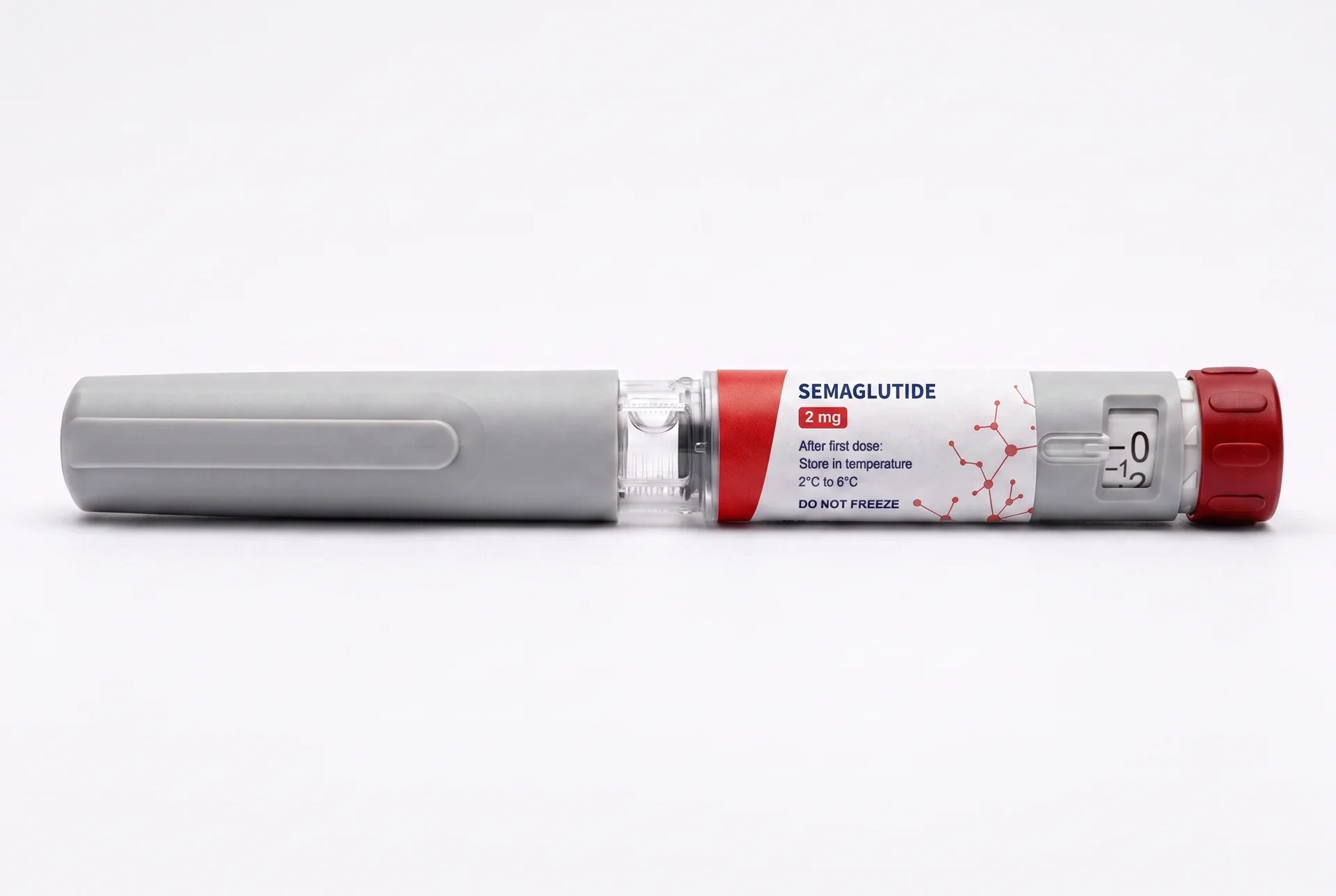
The active substance is the same — semaglutide. The differences concern the regulatory framework. SEMA G 2 mg PEN is a Research Use Only reagent with analytical documentation (COA, HPLC, MS). Ozempic® and Wegovy® are Novo Nordisk drugs with full EMA/FDA registration documentation, available by prescription only under the supervision of a physician. The RUO applicator is not a medicinal form and does not replace medical consultation.
SEMA G 2mg PEN
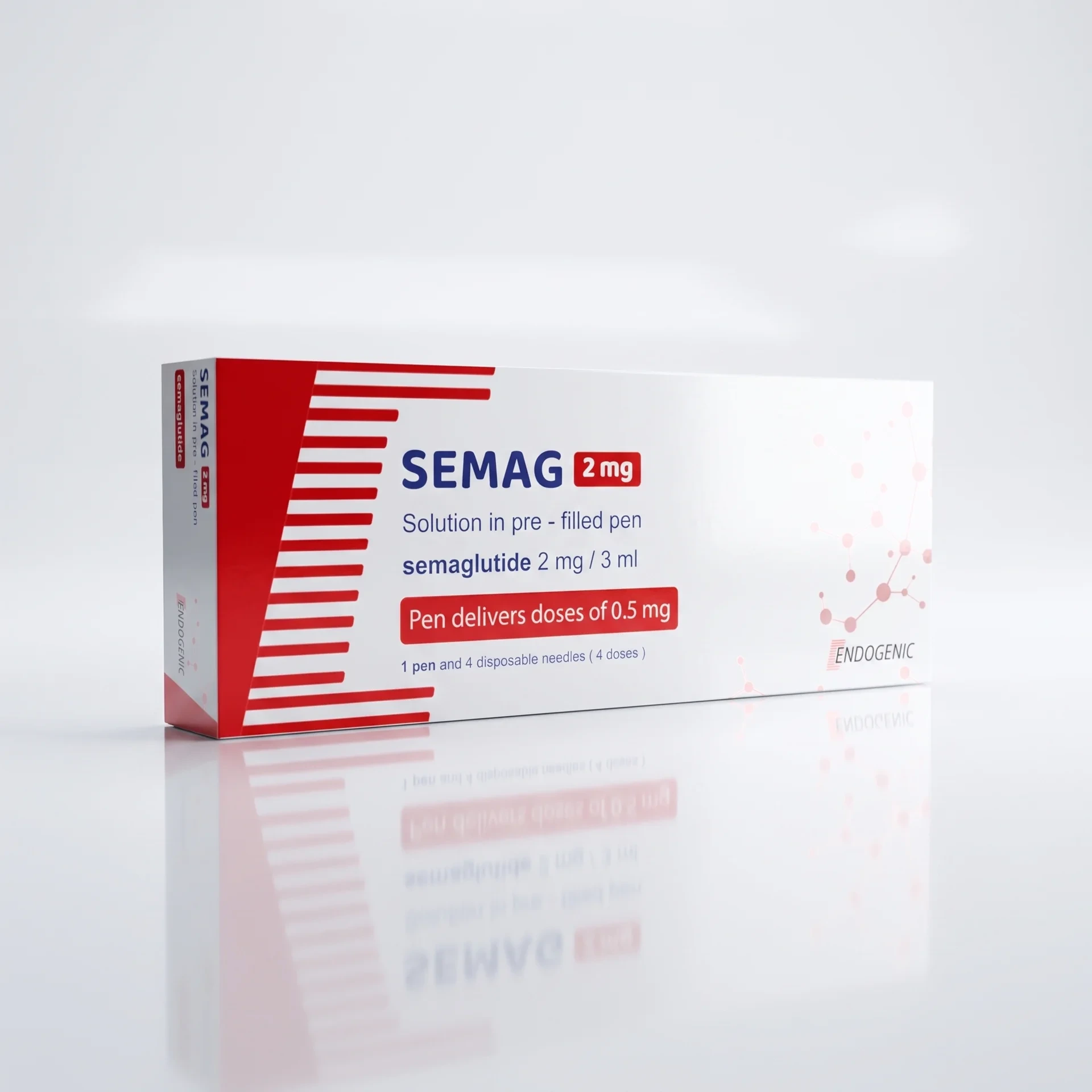
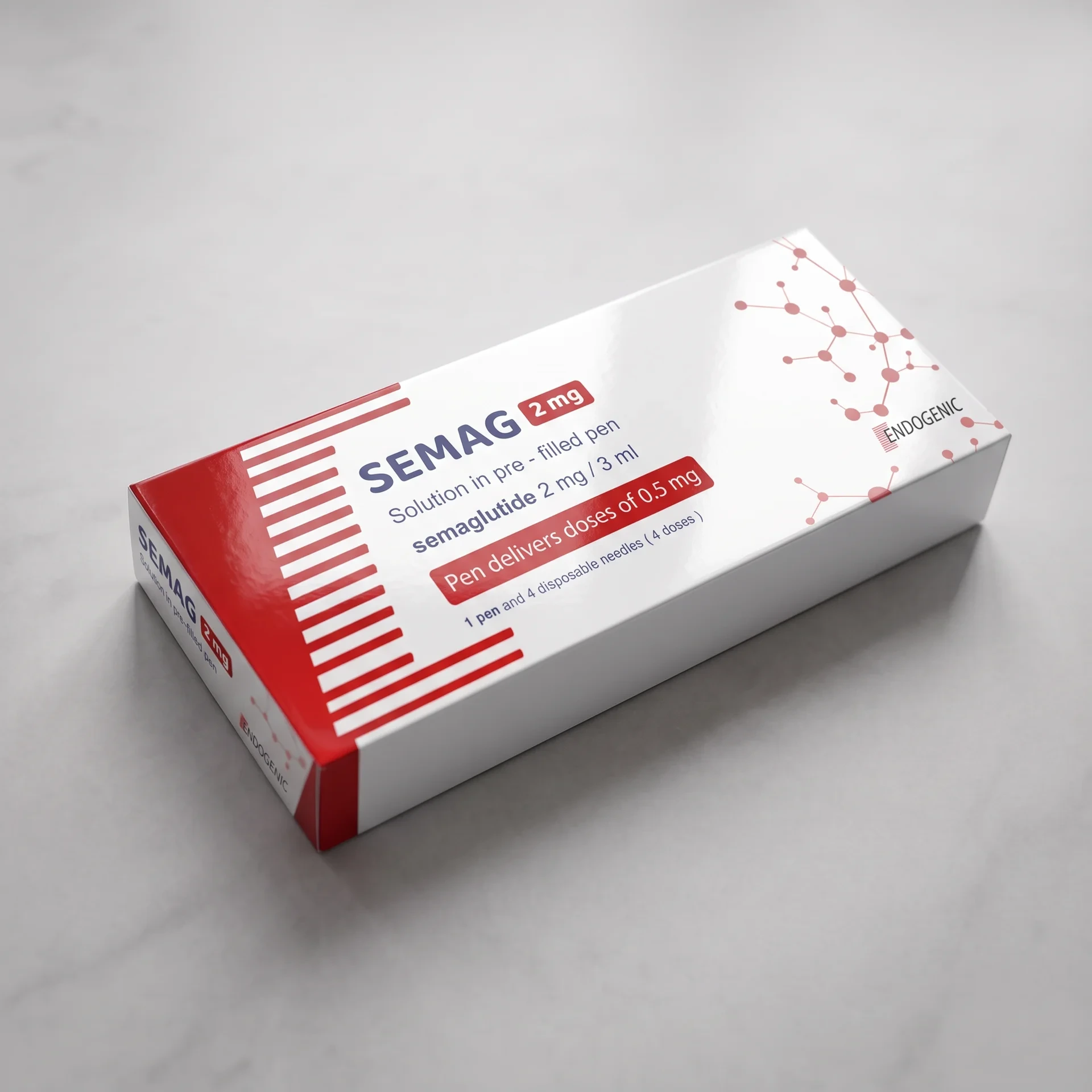
SEMA G 2 mg PEN — semaglutide, a GLP-1 receptor monoagonist, in a pen filled with a ready-to-use solution for laboratory testing. The starter/titration variant of the product line (lowest nominal concentration: 2 mg), requiring no reconstitution of a lyophilized powder.
75,99 €
Fast shipping
Delivery options
Returns policy
SEMA G 2 mg PEN — semaglutide in factory-made solution (pen applicator), research reagent
- Semaglutide: a GLP-1R agonist.
- Format: PEN applicator with a factory-made solution, 2 mg.
- Research Use Only laboratory reagent.
Sema G – Chemical reagent intended exclusively for laboratory research (Research Use Only). It is not a medicinal product, dietary supplement or foodstuff. It is not intended for use in humans or animals. Sold exclusively to registered research entities and laboratories.
SEMA G 2 mg PEN is a research reagent in the form of an applicator with a factory-made solution. The active substance — semaglutide — is also marketed as a medicinal product registered by the EMA and FDA under the trade names Ozempic® (type 2 diabetes), Wegovy® (obesity) and Rybelsus® (oral form), likewise in a pen format.
These two occurrences of the same peptide represent two distinct regulatory frameworks. The RUO applicator in the Pro-Body catalogue is not a medicinal product, is not intended for use in humans and is not subject to pharmaceutical regulation. The Novo Nordisk pen derives from EMA/FDA registration, is available by prescription only and requires medical supervision.
The Semaglutide RUO reagent is not a substitute for a medicinal product and does not replace medical consultation. The identity of the active substance does not abolish this boundary.
In 2021 the FDA approved semaglutide as a drug for chronic overweight — a year later search-engine queries for this peptide soared. The reason is simple: semaglutide is one of the most clinically well-documented peptides of the past decade. A GLP-1 receptor monoagonist on which the entire contemporary landscape of incretin pharmacology is based. The reference literature lists the SUSTAIN (type 2 diabetes) and STEP (obesity) programs, with endpoints reported in the NEJM and Lancet.
The molecule was developed by Novo Nordisk, and it is this company that holds the registration of Ozempic®, Wegovy® and Rybelsus®. In metabolic research on obesity, semaglutide remains the prototype for an entire generation of weight-loss peptides based on the incretin axis. This reagent is supplied in the format of an applicator with a factory-made solution, nominal concentration of 2 mg of semaglutide per applicator.
This is the starting/titration variant in the Pro-Body line — the lowest nominal peptide concentration, dedicated to low-dose protocols and titration series in which the researcher builds a concentration–response curve from a low baseline value. The line also offers, in parallel, the standard variant SEMA G 4mg as well as higher variants.
What semaglutide is — sequence and class
Semaglutide is a GLP-1 receptor (GLP-1R) monoagonist — a stabilized analogue of the endogenous glucagon-like peptide 1. The molecule comprises 31 amino acids, molecular mass of approximately 4113 Da. Relative to human GLP-1, structural modifications were introduced to stabilize the peptide against enzymatic degradation and to prolong the half-life. C18 fatty-acid acylation — the attached chain enables reversible binding to serum albumin.
Albumin acts as a reservoir: the molecule circulates partly bound, is gradually released and degraded. The effect is a serum half-life of approximately 7 days (weekly regimen in the clinical protocols of Ozempic® and Wegovy®). The substance was developed by Novo Nordisk. FDA registrations: Ozempic® 2017 (T2 diabetes), Rybelsus® 2019 (oral form), Wegovy® 2021 (obesity). The EMA approved analogous indications in the EU.
Chemical characteristics
| Parameter | Value |
|---|---|
| Pharmacological class | GLP-1 receptor (GLP-1R) monoagonist |
| Number of amino acids | 31 |
| Molecular mass | ~4113 Da |
| CAS number | 910463-68-2 |
| Structural modifications | C18 fatty-acid acylation, reversible binding to albumin |
| Serum half-life | ~7 days (weekly regimen in the clinical protocols of Ozempic®/Wegovy®) |
| Physical form | Factory-made solution in an applicator (pen) |
| Nominal concentration | 2 mg of semaglutide / applicator (starting/titration variant) |
| HPLC purity | ≥98% |
| Identity confirmation | Mass spectrometry (MS) |
Mechanism of action at the molecular level
Activation of the GLP-1 receptor triggers a cascade of four complementary mechanisms reported in the clinical and preclinical literature. GLP-1R is a G protein-coupled receptor — in practice this means that agonist binding translates into an increase in intracellular cAMP and the activation of signalling pathways dependent on the kinase PKA.
- Glucose-dependent insulin secretion. In pancreatic β cells, GLP-1R activation increases the cAMP concentration, which potentiates insulin release in response to a glucose load. The mechanism is glucose-dependent — under normoglycemia, insulin secretion is not significantly stimulated. This is a molecular “fuse”: the signal is amplified only when glucose is already elevated.
- Inhibition of glucagon secretion postprandially in pancreatic α cells — combined with insulin stimulation it provides two-point control of postprandial glycemia.
- Central action — appetite modulation. GLP-1R in the arcuate nucleus of the hypothalamus mediates satiety signalling (POMC neuron activation). In experimental practice: semaglutide prolongs the satiety signal — like a “enough eating” button held down longer.
- Slowing of gastric emptying additionally prolongs satiety after a meal.
Reference data come from Novo Nordisk research programs: SUSTAIN (Marso et al. 2016, SUSTAIN-6 — cardiovascular endpoints in type 2 diabetes) and STEP (Wilding et al. 2021, STEP-1 — obesity). In STEP-1 (a multicenter RCT, phase 3) a mean reduction in body weight of approximately 14.9% was reported at 68 weeks of intervention with semaglutide 2.4 mg weekly vs placebo.
SEMA G PEN (RUO) vs pharmaceutical pen (Ozempic®, Wegovy®) — fundamental difference
| Feature | SEMA G 2 mg PEN (RUO) | Ozempic® Pen / Wegovy® Pen (drug) |
|---|---|---|
| Regulatory status | Research reagent (Research Use Only) | Registered medicinal product (EMA, FDA) |
| Active substance | Semaglutide (the same peptide) | Semaglutide (the same peptide) |
| Manufacturer | Pro-Body | Novo Nordisk |
| Documentation | COA per batch, HPLC ≥98%, MS | Full EMA/FDA registration documentation, SmPC |
| Intended use | Laboratory research | Type 2 diabetes (Ozempic®), obesity (Wegovy®) |
| Sale | Chemical reagent trade | Prescription only |
| Supervision | No medical supervision | Attending physician, pharmacovigilance |
| Label | “For research use only. Not for human use” | Full drug package leaflet |
The active substance is the same (semaglutide); the products come from two distinct regulatory lines with different documentation and intended use. The Novo Nordisk pen is a medicinal product with a patient package leaflet, SmPC and EMA pharmacovigilance supervision. The RUO applicator in the Pro-Body catalogue is a chemical reagent with analytical documentation (COA, HPLC, MS). The identity of the peptide does not abolish the distinction of regulatory frameworks.
Applications in scientific research
SEMA G PEN as an RUO reagent finds use in several directions. The format of an applicator with a factory-made solution and, in the case of the 2 mg variant, with the lowest nominal peptide concentration in the line, is particularly well suited to low-dose protocols and titration series, where the researcher builds a concentration–response curve from a low baseline value.
- Pharmacology of the GLP-1 axis. Analyses of receptor activity, profiling of GLP-1R selectivity, EC50 measurements in cell cultures with cAMP and β-arrestin reporters. The applicator format facilitates precise withdrawal of solution for serial dilutions.
- Animal models of insulin resistance and obesity. DIO mice, ob/ob and db/db models, Zucker rats. Endpoints: body weight, composition (DEXA, NMR), OGTT/ITT, HOMA-IR, lipid profile. Semaglutide functions as a reference GLP-1R mono-agonist for comparisons with newer analogues.
- Pharmacokinetics and central action on appetite. PK profile of acylated GLP-1 analogues, kinetics of albumin binding, behavioural models of satiety, POMC neuron activation in the arcuate nucleus.
- Comparative analyses with other GLP-1 analogues — liraglutide, dulaglutide, exenatide, tirzepatide (dual GLP-1R/GIPR). Semaglutide as a reference mono-agonist for SAR work (structure–activity relationship); in head-to-head protocols a frequent point of reference is the dual incretin agonist Tirzepatide 5mg.
REGULATORY STATUS
Semaglutide as a drug (Ozempic®, Wegovy®, Rybelsus®) is registered by the EMA and FDA and available by prescription only. SEMA G 2 mg PEN (RUO) does not have the status of a medicinal product or EMA/FDA authorization as a drug. Peptides from the class of GLP-1 agonists are not currently listed directly as a separate category on the current WADA prohibited list — the status may change in subsequent editions. Registered athletes (ADAMS) must check the current list of prohibited substances before any decision regarding use.
Related reading
A direct comparison of semaglutide with a dual GIP/GLP-1 agonist — including the results of head-to-head studies — is discussed in the article Tirzepatide vs Semaglutide — which is better for weight loss. The mechanism of the next-generation triple GLP-1/GIP/GCG agonist, available in the Pro-Body catalogue as Retatrutide pen 5mg, is described in the publication Retatrutide for obesity — action and effects of use.
Bibliography
- Wilding JPH, Batterham RL, Calanna S, Davies M, Van Gaal LF, Lingvay I, et al. (2021). Once-Weekly Semaglutide in Adults with Overweight or Obesity. PubMed
- Marso SP, Bain SC, Consoli A, Eliaschewitz FG, Jódar E, Leiter LA, et al. (2016). Semaglutide and Cardiovascular Outcomes in Patients with Type 2 Diabetes. PubMed
- Frías JP, Davies MJ, Rosenstock J, Pérez Manghi FC, Fernández Landó L, Bergman BK, et al. (2021). Tirzepatide versus Semaglutide Once Weekly in Patients with Type 2 Diabetes. PubMed
- Davies M, Færch L, Jeppesen OK, Pakseresht A, Pedersen SD, Perreault L, et al. (2021). Semaglutide 2·4 mg once a week in adults with overweight or obesity, and type 2 diabetes (STEP 2). PubMed
- Lau J, Bloch P, Schäffer L, Pettersson I, Spetzler J, Kofoed J, et al. (2015). Discovery of the Once-Weekly Glucagon-Like Peptide-1 (GLP-1) Analogue Semaglutide. PubMed
FAQ
The difference is the nominal concentration of semaglutide in the applicator. 2 mg is the starting/titration variant — the lowest nominal concentration, dedicated to low-dose protocols and to building the lower range of the concentration–response curve. 4 mg is the standard variant, 8 mg — the high-dose one.
No. It is an RUO reagent for laboratory research. The drug registered in the EU for the obesity indication is Wegovy® (Novo Nordisk) — and only this product is subject to pharmaceutical regulation as a therapy, available by prescription under medical supervision.
No. The applicator format is a factory-made solution of semaglutide — ready for withdrawal with a syringe or dosing applicator, without adding a solvent. This is a fundamental difference relative to lyophilizates in vials, which require reconstitution with bacteriostatic water.
Typically up to 28 days at 2–8°C from first withdrawal. Detailed stability data in the batch COA. Avoid freeze-thaw cycles.
The current WADA prohibited list does not directly list GLP-1 agonists as a separate category. The status may change in subsequent editions — verification of current guidelines rests with the researcher. Registered athletes (ADAMS) should check the current list before any decision.
5.0
1 review
-
Anka
 Polski
Product review
Jak dla mnie wszystko super. Polecam!
Related products