


Yohimbine HCL for Weight Loss – How to Dose and What to Combine It With?
Yohimbine is one of the few compounds in this category for which the mechanism has been confirmed directly in human adipose tissue.
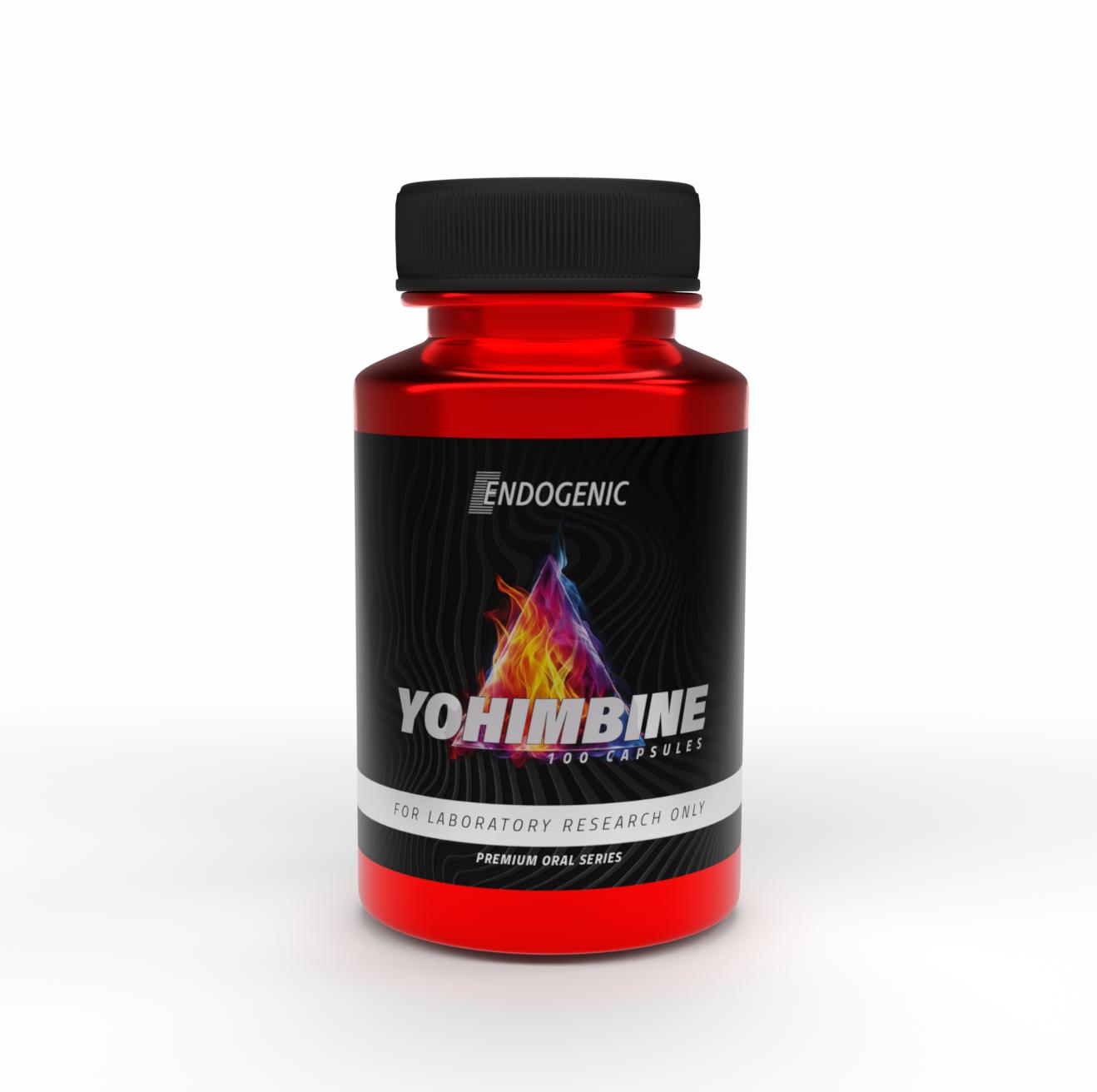
Yohimbine is one of the few compounds in this category for which the mechanism has been confirmed directly in human adipose tissue. This is rare and worth noting. However, the other side must be described equally reliably: the documented profile of effects on the circulatory system and the central nervous system and the regulatory situation in which the European Food Safety Authority was unable to rule on the safety of this raw material as a food ingredient. This article covers both – without doses, body weight conversions or combination regimens.
All substances discussed in the article are of research nature and are not intended for human consumption. The description of their action is based solely on laboratory test results and experimental observations, not on clinical tests.
What is yohimbine HCl?
Yohimbine is an indole alkaloid found in the bark of Pausinystalia yohimbe, a tree growing in West Africa. Yohimbine HCL is its hydrochloride – a form of salt with better solubility and a defined content of active substance, unlike bark extracts in which the alkaloid content may vary.
Pharmacologically, it is an α2-adrenergic receptor antagonist. This one feature explains both the mechanism for which it is being studied and the side effect profile – both of which result from the same pharmacological target, which is worth keeping in mind as you read on.
Mechanism: why alpha-2 receptors matter
The breakdown of triglycerides in fat cells is subject to opposing adrenergic regulation. β receptors intensify lipolysis, while α2 receptors inhibit it. In adipose tissue with a high density of α2 receptors, lipid mobilization is therefore slower – and the mechanism of α2 antagonists is based on the abolition of this inhibition.
The role of α2 receptors in regulating lipid mobilization from human adipose tissue has been described directly (Galitzky et al., 1993, PMID 8387538). A lipid-mobilizing effect after oral administration was observed in healthy male volunteers (Galitzky et al., 1988, PMID 2906290), and the pharmacological profile of the molecule itself and its hydroxylated metabolites were characterized separately (Berlan et al., 1993, PMID 8097957).
This puts yohimbine in an unusual position: its mechanism is not a hypothesis transferred from an animal model, but an observation confirmed in human tissue. This distinguishes it from most “fat burner” compounds, for which the evidence ends with cellular models.
What the study involving athletes showed
However, mechanism is not the same as effect in body composition. Here the data are much more modest and in practice they come down to single studies.
A study involving football players assessed the effect of yohimbine on body composition and performance parameters (Ostojić, 2006, PMID 17214405). The study involved a small group of trained athletes and lasted several weeks – its results do not allow for generalizations regarding the general population or longer-term conclusions.
It is worth maintaining the proportions: increased mobilization of fatty acids does not mean their oxidation. The fatty acids released into circulation can be used as an energy substrate or re-esterified. The final balance is determined by the energy deficit, and not by the fact of the release of lipids from the adipocyte.
Risk profile – two axes
This is the most important section of this article. Antagonism of α2 receptors does not selectively affect adipose tissue – these receptors are also found in blood vessels and in the central nervous system, where they act as a brake on the noradrenergic system. Removing this inhibition has predictable consequences.
Circulatory system
α2 receptors participate in the regulation of vascular tone and reflex pressure control. Blocking them leads to an increase in peripheral noradrenergic activity – hence the reported increase in heart rate and blood pressure. The effect is combined with other stimulant compounds, which has a direct impact on practice: combining yohimbine with caffeine or other stimulants accumulates the burden on the circulatory system and does not just “enhance the effect”.
Central nervous system
This thread is better documented than you might think – yohimbine has been used in experimental psychiatry for decades as a tool for inducing an anxiety response in controlled conditions.
- Anxiogenic effect has been described in healthy people, compared to caffeine (Mattila et al., 1988, PMID 3153710).
- The study in healthy adults assessed the effect of yohimbine on panic symptoms, autonomic response and attention to threatening stimuli (Vasa et al., 2009, PMID 19266185).
- Noradrenergic mechanisms in stress and anxiety, including the role of yohimbine as a pharmacological probe, are discussed in clinical papers (Bremner et al., 1996, PMID 8723134).
- The neuroendocrine response to yohimbine has also been studied in trained endurance athletes compared to untrained individuals (Sommer et al., 2011, PMID 21710402).
A practical conclusion is inconvenient for the “natural burner” narrative: the compound used in research to deliberately induce anxiety symptoms in healthy volunteers is not an inert substance. People with anxiety disorders, hypertension or taking drugs that affect the noradrenergic system are at particular risk of interactions.
Regulatory status – what the term “supplement” doesn’t say
Yohimbine is sometimes described as a dietary supplement. However, the regulatory situation in the European Union is clearly more complex.
The European Food Safety Authority (EFSA) stated in an opinion from 2013 that the chemical and toxicological characteristics of yohimbe bark and its preparations are not sufficient to determine their safety as a food ingredient – including dietary supplements. The panel was unable to identify a daily intake that would not raise concerns about health effects. It was also noted that the theoretical maximum daily intake of yohimbine from supplements may exceed the maximum approved daily dose of yohimbine when used as a medicinal product.
Consequently, Commission Regulation (EU) 2015/403 included yohimbe bark and its preparations in Annex III to Regulation 1925/2006, in the part covering substances under Community supervision. Regardless, several countries have introduced their own trade restrictions.
This is an important distinction: the term “dietary supplement” suggests a category with an established safety profile and approved consumption level. For this raw material, neither one nor the other has been established – the evaluating body explicitly stated the lack of sufficient data.
What’s actually in the product
In addition, there is the problem of compliance of the composition with the declaration. An analysis of products available on the American market showed that some of them contained amounts of yohimbine corresponding to pharmaceutical doses, and the actual alkaloid content often differed from the information on the label (Cohen et al., 2016, PMID 26391406).
This has a direct impact on risk assessment: the action profile described in the literature concerns specific amounts of the active substance. If the actual content differs from the declared content, the assessment based on the label is no longer reliable. The certificate of analysis assigned to a specific batch remains decisive.
Anti-doping notice
Yohimbine does not appear by name on the WADA Prohibited List as a prohibited substance. This does not mean, however, that the topic is closed for the player, for two reasons.
First of all, section S6 of the Prohibited List covers stimulants and many compounds with a similar stimulant profile are included therein – combining yohimbine with other substances in this category requires checking each one individually. Secondly, the problem of compliance of the composition with the label described above means a real risk of the presence of undeclared ingredients, including those that appear on the List.
Anti-doping regulations are not limited to professionals: in Poland, the Prohibited List is in force through the Polish Anti-Doping Agency (POLADA), and amateur competitors taking part in competitions covered by these regulations are also subject to control. A competitor registered in the ADAMS system should always verify the current version of the Prohibited List – the status of individual substances is updated annually.
Harm reduction
A few points resulting directly from the mechanism described above.
- Adrenergic stimulation is additive. Yohimbine, caffeine and other stimulants act in the same direction on the circulatory system. Putting them together increases the load, not just the metabolic effect.
- The absence of felt symptoms is not a measure of safety. The popular recommendation “find your dose by feeling” assumes that the subjective reaction is a reliable indicator. This is not the case with adrenergic compounds – an increase in blood pressure and heart rate can occur without any obvious subjective symptoms.
- The interaction profile is real. This applies especially to drugs that act on the noradrenergic system and are used to treat hypertension and anxiety disorders. The direction of action of yohimbine is opposite to some of them.
- Special risk groups. People with hypertension, arrhythmias, anxiety disorders or panic attacks – due to the documented anxiogenic and cardiovascular profile.
- The identity of the material is determined by the COA. Due to documented discrepancies between the label and the contents, the batch analysis certificate is the only document on which the assessment can be based.
Frequently asked questions
Does yohimbine really work on resistant adipose tissue?
The mechanism is confirmed in human tissue: α2 receptors inhibit lipolysis, and blocking them increases the mobilization of fatty acids (PMID 8387538, PMID 2906290). However, it is worth distinguishing between mobilization and oxidation – the released fatty acids can be used as a substrate or esterified again. The balance is determined by the energy deficit.
Is yohimbine a dietary supplement?
It is sometimes called that, but EFSA in its opinion from 2013 stated that the available data do not allow to conclude on the safety of yohimbe bark as a food ingredient or to indicate a safe daily intake. Regulation (EU) 2015/403 included this raw material in Annex III of Regulation 1925/2006.
What are the main risks?
Cardiovascular (increase in blood pressure and heart rate) and central nervous system – yohimbine is used in research as a tool to induce anxiety and panic symptoms in healthy volunteers (PMID 3153710, PMID 19266185). There is also an interaction profile with drugs acting on the noradrenergic system.
Is yohimbine banned in sports?
It is not on the WADA Prohibited List by name. However, Section S6 covers stimulants, and documented discrepancies between the composition and the label create a risk of undeclared substances being present. The current status should be checked in the current version of the List.
Why does the article not provide doses or body weight conversions?
Because no safe consumption level has been established for this raw material – this was stated directly by the assessing body. The conversion rate per kilogram of body weight suggests a precision that is not covered by the data in this case, and with documented discrepancies in the content from the label, it is additionally misleading.
Summary
Yohimbine is an antagonist of α2-adrenergic receptors, and its mechanism – abolition of inhibition of lipolysis in fat cells – was confirmed directly in human adipose tissue, which distinguishes it from most compounds of this category. Data on the effect on body composition are much more modest and come down to single studies on small groups. The same mechanism is responsible for the risk profile: α2 antagonism increases noradrenergic activity, which is why yohimbine is used in experimental psychiatry as a tool to induce anxiety and panic symptoms in healthy volunteers. The regulatory situation is different from that suggested by the term “supplement”: EFSA was unable to rule on the safety of yohimbe bark as a food ingredient or indicate a safe daily intake, and Regulation (EU) 2015/403 included this raw material in Annex III. In addition, there is a documented problem of compliance of the actual alkaloid content with the declaration on the label.
Product documentation
Product pages for research materials, together with batch analytical documentation are available in the burners category. We discuss the broader context of the mechanisms of this group of compounds in the effective fat burners guide. Materials intended for research use only.
Bibliography
- Galitzky J, Lafontan M, Nordenström J, Arner P. Role of vascular alpha-2 adrenoceptors in regulating lipid mobilization from human adipose tissue. J Clin Invest. 1993;91(5):1997-2003. PMID: 8387538
- Galitzky J, Taouis M, Berlan M, et al. Alpha 2-antagonist compounds and lipid mobilization: evidence for a lipid mobilizing effect of oral yohimbine in healthy male volunteers. Eur J Clin Invest. 1988;18(6):587-594. PMID: 2906290
- Berlan M, Le Verge R, Galitzky J, Le Corre P. Alpha 2-adrenoceptor antagonist potencies of two hydroxylated metabolites of yohimbine. Br J Pharmacol. 1993;108(4):927-932. PMID: 8097957
- Ostojić SM. Yohimbine: the effects on body composition and exercise performance in soccer players. Res Sports Med. 2006;14(4):289-299. PMID: 17214405
- Mattila M, Seppälä T, Mattila MJ. Anxiogenic effect of yohimbine in healthy subjects: comparison with caffeine and antagonism by clonidine and diazepam. Int Clin Psychopharmacol. 1988;3(3):215-229. PMID: 3153710
- Vasa RA, Pine DS, Masten CL, et al. Effects of yohimbine and hydrocortisone on panic symptoms, autonomic responses, and attention to threat in healthy adults. Psychopharmacology (Berl). 2009;204(3):445-455. PMID: 19266185
- Bremner JD, Krystal JH, Southwick SM, Charney DS. Noradrenergic mechanisms in stress and anxiety: II. Clinical studies. Synapse. 1996;23(1):39-51. PMID: 8723134
- Sommer M, Braumann M, Althoff T, et al. Psychological and neuroendocrine responses to social stress and to the administration of the alpha-2-receptor antagonist, yohimbine, in highly trained endurance athletes. Pharmacopsychiatry. 2011;44(4):129-134. PMID: 21710402
- Cohen PA, Wang YH, Maller G, DeSouza R, Khan IA. Pharmaceutical quantities of yohimbine found in dietary supplements in the USA. Drug Test Anal. 2016;8(3-4):357-369. PMID: 26391406
- EFSA Panel on Food Additives and Nutrient Sources added to Food (ANS). Scientific Opinion on the evaluation of the safety in use of Yohimbe (Pausinystalia yohimbe (K. Schum.) Pierre ex Beille). EFSA Journal. 2013;11(7):3302. efsa.europa.eu
- Commission Regulation (EU) 2015/403 of 11 March 2015 amending Annex III to Regulation (EC) No 1925/2006 of the European Parliament and of the Council as regards the species Ephedra and yohimbe (Pausinystalia yohimbe). eur-lex.europa.eu