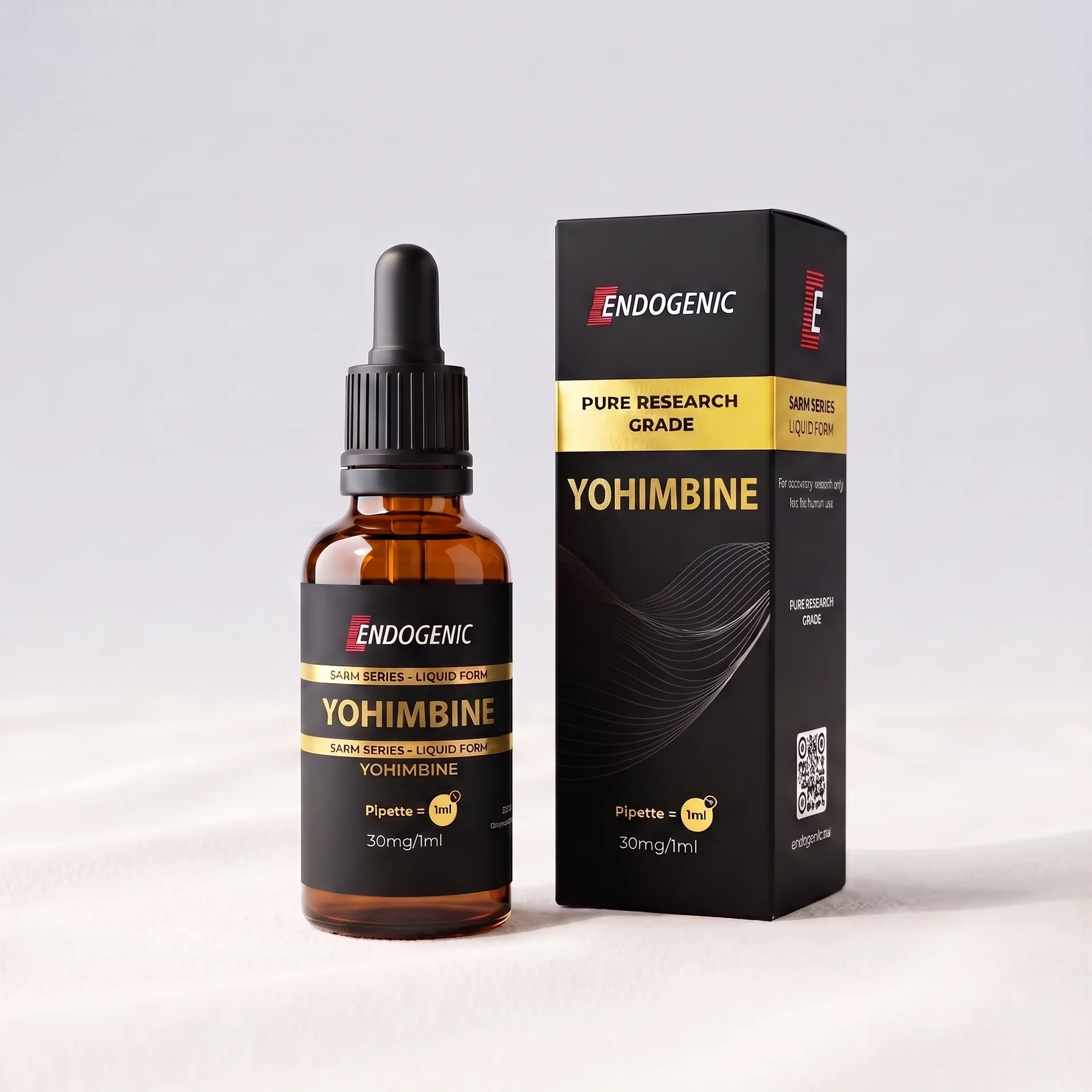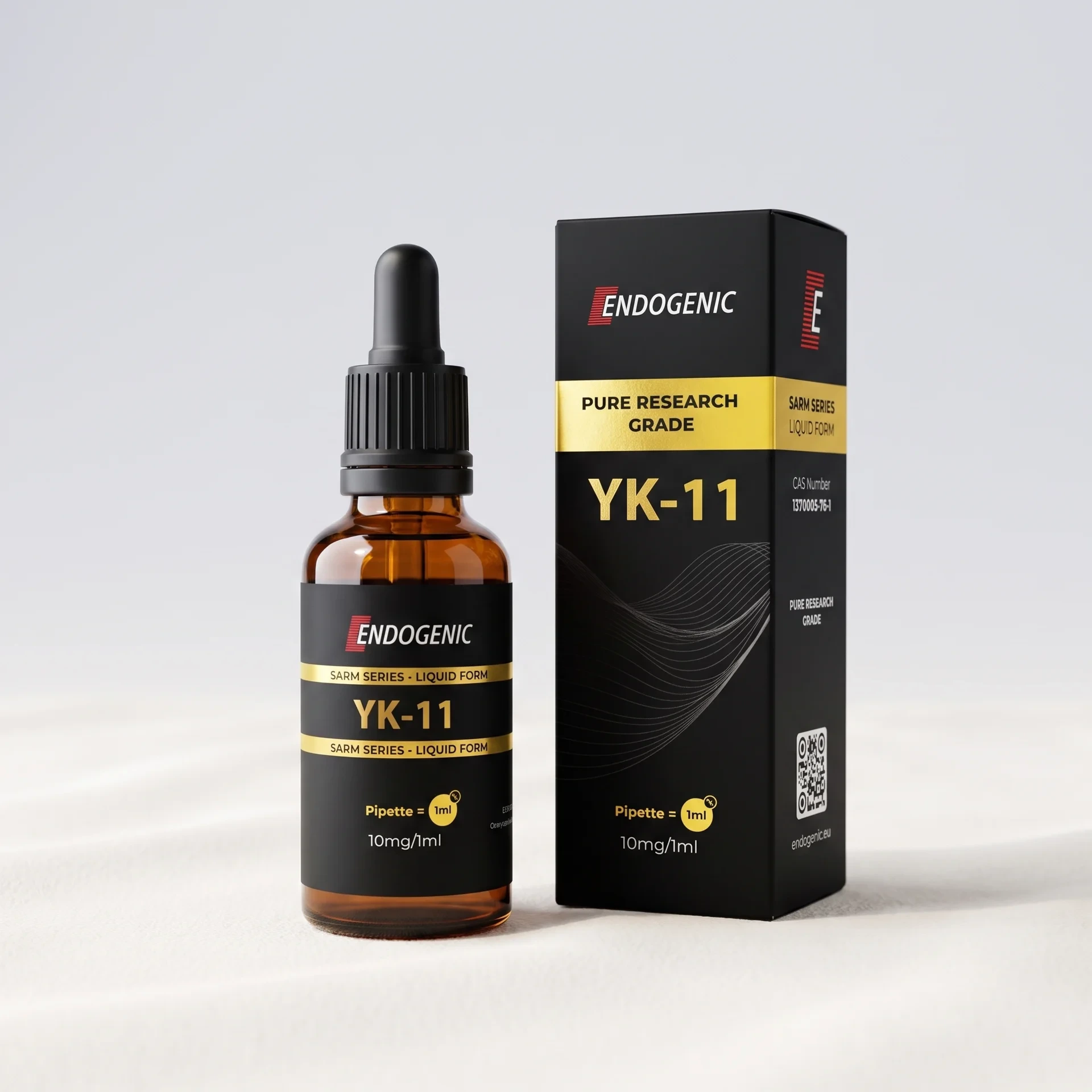


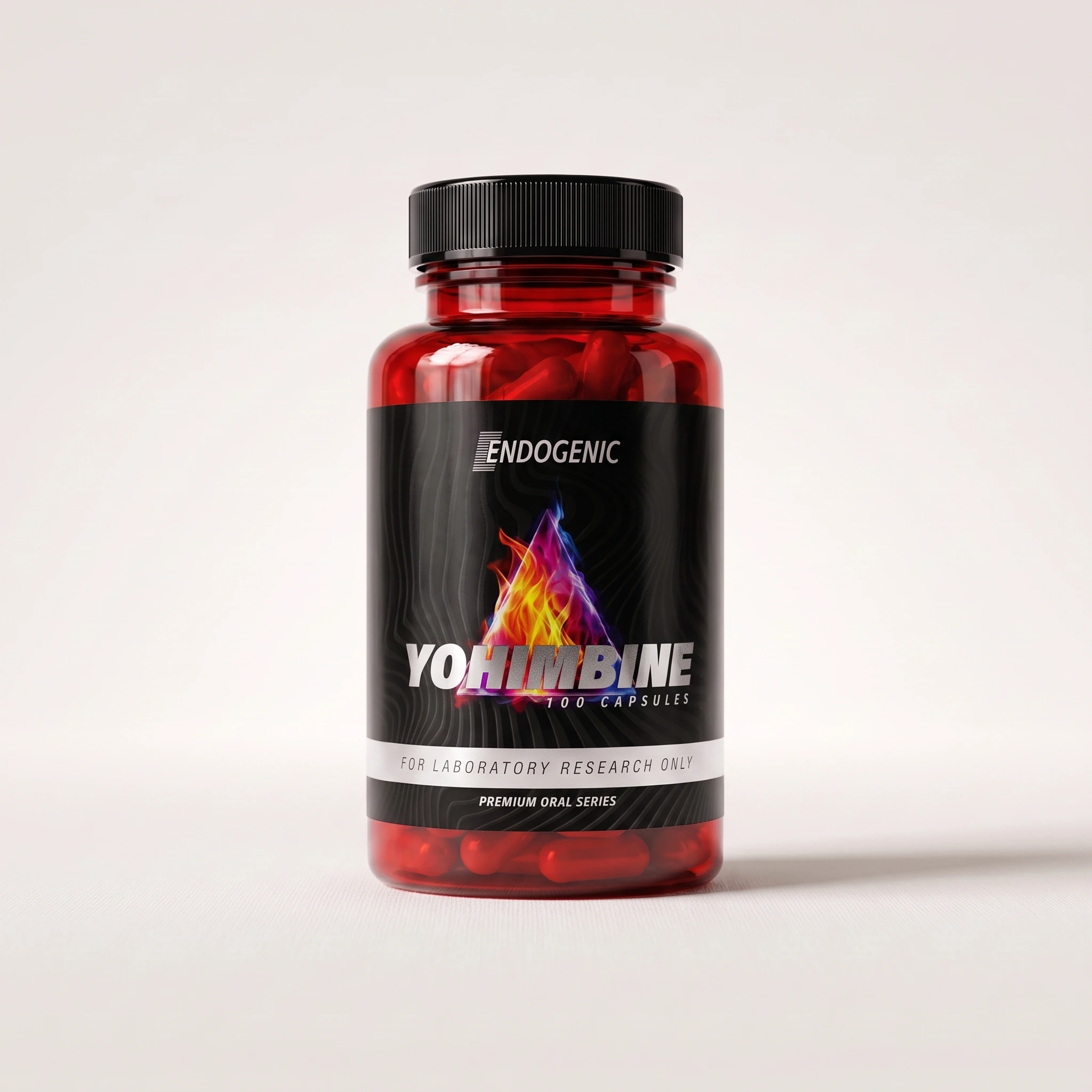
Pure yohimbine HCl is a single, defined compound – indole alkaloid hydrochloride with a specific dose (here 5 mg per capsule). Bark extract Pausinystalia yohimbe is a plant raw material containing yohimbine variable and often undeclared, and next to it there are related yohimban alkaloids – including corinanthine and rauwolscine. These are two different categories of material: reagent with known concentration and HPLC purity ≥98% versus extract with variable composition. For studies on the α2 receptor and lipolysis, the distinction is crucial – the model requires a known concentration of the agent.

Yohimbine 5mg – 100 caps
Yohimbine HCl 5 mg × 100 capsules is an indole alkaloid from the class of α2-adrenergic receptor antagonists, originally obtained from the bark Pausinystalia yohimbe. Blockade of presynaptic α2 receptors abolishes the feedback brake and increases norepinephrine release in models; in adipose tissue with high α2 density (thigh, buttock, abdomen) it facilitates lipolysis – a direction studied in the treatment of “resistant fat”. Research Use Only reagent
25,99 €
Fast shipping
Delivery options
Returns policy
Yohimbine HCl 5 mg 100 caps - α2-adrenergic receptor antagonist, reagent
- Yohimbine hydrochloride: an indole alkaloid.
- 5 mg per capsule, 100 capsules.
- Research Use Only reagent, not for human use.
Product status information
Chemical reagent intended exclusively for laboratory tests (Research Use Only). It is not a medicinal product, dietary supplement or food. It is not intended for use on humans or animals. Sales only to registered research units and laboratories.
SUBSTANCE STATUS – DRUG IN SOME JURISDICTIONS + EFSA RESTRICTIONS
Yohimbine hydrochloride has a dual regulatory status that must be understood from the beginning. On the one hand, in some jurisdictions (including the United States), yohimbine HCl was registered as a prescription drug under the trade name Yocon in the indication of erectile dysfunction – this registration does not cover all markets and concerns a strictly defined pharmaceutical form.
On the other hand, in the European Union, yohimbine and Pausinystalia yohimbe bark extracts are subject to restrictions as a food ingredient – the European Food Safety Authority (EFSA) has indicated that, based on available data, a safe level of yohimbine consumption in food cannot be established, and its presence in food products raises safety concerns.
Yohimbine HCl Pro-Body reagent is provided only as research material outside both of these frameworks – it is not a medicine or a food ingredient.
Introduction
Fat tissue mobilization in areas with a high density of lipolysis-inhibitory receptors—the thighs, buttocks, and lower abdomen—has remained one of the most difficult issues in the physiology of lipid metabolism to model for decades. Classic catecholamines stimulate the breakdown of fat through beta-adrenergic receptors, but in the same fat cells, an opposite mechanism operates in parallel – α2-adrenergic receptors, which they brake.
In regions considered “resistant to reduction”, the density of α2 receptors is particularly high, which makes them a natural point of interest in pharmacology. An alkaloid that blocks these receptors has become a model tool for studying this axis. Yohimbine (yohimbine hydrochloride) is one of the best described alkaloids with an α2-adrenergic antagonist profile. Pro-Body supplies it in-line Endogenous as a research reagent in format 5 mg × 100 capsules.
Chemically, it is an indole alkaloid originally obtained from the bark of a West African tree Pausinystalia yohimbe. In terms of mechanism, it is α2-adrenergic receptor antagonist — blocks presynaptic α2 receptors, abolishing the feedback brake that limits the release of norepinephrine. In the Pro-Body catalog this alkaloid belongs to a category fat burners — although it remains on the market only as a research reagent, and not as a reduction agent.
Yohimbine was described in pharmacology at the turn of the 20th century, initially in the context of a historical aphrodisiac, and later as an experimental tool for studying the adrenergic system and a registered drug (Yocon) for the indication of erectile dysfunction in some jurisdictions. In research terms, yohimbine HCl remains a model α2 antagonist – a reference point in the study of lipolysis in resistant adipose tissue, noradrenergic regulation, circulatory modulation and anxiety reactivity. Purity verified by HPLC ≥98%, identity confirmed by mass spectrometry, COA available for each batch.
Indole alkaloid and the α2-adrenergic axis
Indole alkaloids are an extensive family of plant compounds built around an indole skeleton, including: reserpine, vinblastine or strychnine. Yohimbine belongs to the subgroup of yohimbene alkaloids – its core is the pentacyclic system of yohimbene with an indole group, characteristic of alkaloids obtained from the bark. Pausinystalia yohimbe and from plants of the genus Rauwolfia.
It is a pure, single compound with a specific structure – unlike the raw bark extract, in which the alkaloid content is variable and, next to yohimbine, there are related isomers (including corinanthine and rauwolscine). The central point of yohimbine’s pharmacology is its affinity for α2-adrenergic receptors. These receptors act in the noradrenergic system as part of a feedback loop: when there is a lot of noradrenaline in the synapse, stimulation of presynaptic α2 receptors inhibits its further release – this is a physiological brake on the sympathetic drive.
Yohimbine blocks this brake. By antagonizing presynaptic α2 receptors, it abolishes the feedback mechanism, which in models translates into increased norepinephrine release and increased sympathetic activity. The world of pharmacology is watching yohimbine for several reasons. First, as a model α2 antagonist – a reference tool for studying the role of α2-adrenergic receptors in the regulation of norepinephrine release and sympathetic drive.
Secondly, as a compound with a documented effect on lipolysis in adipose tissue with a high density of α2 receptors – an important direction for research on lipid metabolism in areas “resistant to reduction”. Third, as a molecule with effects on circulation, blood pressure and anxiety reactivity – useful in cardiovascular and stress axis models.
What is yohimbine HCl?
Chemically, yohimbine HCl is an indole alkaloid hydrochloride with a pentacyclic yohimbene skeleton.
- Common name: Yohimbine HCl, yohimbine hydrochloride, yohimbine
- Trade name (drug): Yocon (yohimbine HCl, historical indication – erectile dysfunction, in some jurisdictions)
- Synonyms / nomenclature: yohimbine hydrochloride, quebrachine (historical name)
- Pharmacological class: indole alkaloid; α2-adrenergic receptor antagonist; indirect sympathomimetic
- Natural source: bark Pausinystalia yohimbe (West African tree); also genus plants Rauwolfia
- CAS number (HCl): 65-19-0 (in case of uncertainty – “to be verified in the batch COA”)
- Summary formula (HCl): C₂₁H₂₆N₂O₃·HCl (to be verified in the batch COA)
- Molar mass (HCl): ~390.90 g/mol (to be verified in the batch COA)
- Delivered form: hard capsule, 5 mg of active substance per capsule, 100 capsules; pharmaceutical grade ≥98% HPLC
Table of physicochemical characteristics
| Parameter | Value | Attention |
|---|---|---|
| Name | Yohimbine HCl, yohimbine hydrochloride | quebrachine (hist.) |
| Chemical grade | indole alkaloid (yohimbene skeleton) | a small molecule, not a peptide |
| Pharmacological class | α2-adrenergic receptor antagonist | indirect sympathomimetic |
| Source | bark Pausinystalia yohimbe; Rauwolfia | plant alkaloid |
| CAS (HCl) | 65-19-0 | for verification in the batch COA |
| Summary formula (HCl) | C₂₁H₂₆N₂O₃·HCl | for verification in the batch COA |
| Molar mass (HCl) | ~390.90 g/mol | for verification in the batch COA |
| Cleanliness | ≥98% HPLC | UV detection, per batch verification |
| Character | capsule, 5 mg/capsule, 100 capsules | constant weight per capsule |
| Molecular target | α2-adrenergic receptors | presynaptic and postsynaptic antagonism |
| Clinical status | registration as a medicine (Yocon) in part of the jurisdiction | historical indication – erectile dysfunction |
| EFSA status | security concerns; no established safe level in food | restrictions as a food ingredient |
Origin: Yohimbine was isolated from the bark Pausinystalia yohimbe at the turn of the 19th and 20th centuries – the first chemical and pharmacological characteristics of the alkaloid appeared in European literature of that period, and the name itself comes from the local name of the tree. The raw bark has long functioned in West African tradition as a historical aphrodisiac, but only the isolation of the pure alkaloid allowed for precise pharmacological tests.
In the 20th century, yohimbine became one of the basic tools for characterizing α2-adrenergic receptors in experimental pharmacology, and in some jurisdictions it was registered as a drug (Yocon) for the indication of erectile dysfunction. The modern reagent is supplied as pure yohimbine hydrochloride with a specific dose – which distinguishes it from historical preparations from bark extract with variable alkaloid content.
Mechanism of action at the molecular level
Yohimbine acts in research models through several related pathways, the common denominator of which is α2-adrenergic receptor antagonism and the resulting enhancement of noradrenergic drive. Pharmacological profile observed in research models:
- Antagonism of α2-adrenergic receptors and increased release of norepinephrine. The main direct mechanism of yohimbine. Presynaptic α2 receptors act as a feedback brake – their stimulation limits further release of noradrenaline into the synapse. Yohimbine, as an antagonist, blocks this brake, which in models translates into increased release of norepinephrine and increased sympathetic activity (Tam et al. 2001). This is the original molecular effect from which the remaining observations arise.
- Effect on lipolysis in resistant adipose tissue. α2-adrenergic receptors in fat cells they brake lipolysis, acting opposite to beta receptors. In areas with a high density of α2 receptors – thighs, buttocks, lower abdomen – this inhibition is particularly strong, which is sometimes associated with the resistance of these areas to fat mobilization. Blockade of α2 receptors by yohimbine removes the inhibition, which was studied in models as a mechanism for disinhibiting lipolysis in adipose tissue with a “resistant” profile (Galitzky et al. 1988).
- Circulation and pressure modulation. As an indirect sympathomimetic, yohimbine affects the cardiovascular system – increased noradrenergic drive translates into changes in heart rate and blood pressure in models. This component is both the subject of vascular research and the basis of the most important safety concerns for the alkaloid.
- Effect on serotonin and dopamine receptors – anxiety component. In addition to the main α2-adrenergic axis, yohimbine has affinity for some serotonin and dopamine receptors. An anxiogenic (anxiety-producing) component was observed in higher concentrations in behavioral models – yohimbine is even used as a pharmacological tool to induce an anxiety reaction in stress axis studies.
- Research on sexual function. The historical interest in yohimbine as an aphrodisiac has been characterized pharmacologically – increased sympathetic drive and the effect on vascular innervation were the basis for the registration of the drug (Yocon) for the indication of erectile dysfunction in some jurisdictions. Reviews of this direction (Ernst and Pittler 1998) summarize the available historical data.
IMPORTANT DISTINCTION – narrow safety window, yohimbine vs. yohimbe extract, capsules vs. solution
“α2 antagonism, effects on lipolysis and circulatory modulation” in the context of this description refer only to observations in preclinical models and historical clinical practice in the drug registration jurisdiction. This is not a guarantee or suggestion of effect in humans using the RUO reagent. Three distinctions should be highlighted.
Narrow safety window. Yohimbine, as an indirect sympathomimetic, has a narrow margin described in the literature between the tested concentrations and the concentrations at which side effects were observed in models and historical practice: increased heart rate (tachycardia), increase in blood pressure, agitation, anxiety and panic attacks, and insomnia. The literature describes interactions with monoamine oxidase inhibitors (MAOIs), antihypertensive drugs and other stimulant compounds, as well as contraindications in the context of cardiovascular and psychiatric diseases. This is a research safety context – yohimbine is not an inert molecule and requires caution in handling the reagent.
Yohimbine HCl and yohimbe extract. Pure yohimbine hydrochloride (like this reagent) is a single compound with a specific weight. Pausinystalia johimbe bark raw extract contains yohimbine o variable, often undeclared content, next to related alkaloids (corinanthine, rauwolscine). These are two different categories of material – a reagent of known concentration versus an extract of variable composition.
Capsules and solution. This reagent is capsules o constant dose of 5 mg per capsule — unlike the variant Yohimbine HCL liquid 30ml, where the content is expressed in mg/ml. The capsule form simplifies the handling of a solid portion of powder in laboratory conditions; the form of the solution allows for smooth volume measurement. Yohimbine is a small alkaloid molecule – not a peptide, not a SARM – and its identity is determined by the batch COA.
Important distinction - α2 antagonist and stimulant and yohimbe extract
Understanding yohimbine’s position on the pharmacological map is the focus of this brief:
- Mechanism of action — yohimbine is not a classic catecholamine releaser or a beta receptor agonist. Works by α2-adrenergic receptor antagonism — blocks the feedback brake, which indirectly increases the release of norepinephrine. This is a “disinhibition” mechanism, not direct stimulation.
- Substance and raw material — pure yohimbine HCl with a specific weight is fundamentally different from the bark extract Pausinystalia yohimbe, in which the alkaloid content is variable and related isomers co-occur. This distinction is important both analytically and in the design of research models – a reagent of known concentration versus a raw material of variable composition.
- Chemical grade — yohimbine is an indole alkaloid with a yohimbene skeleton, a small plant molecule, not a peptide or a synthetic catecholamine. Its chemical profile distinguishes it from these families.
- The context of lipolysis — the effect of yohimbine on fat mobilization in areas “resistant to reduction” results from the blockade of α2 receptors that inhibit lipolysis, and not from direct activation of fat breakdown – it is a disinhibition of the existing mechanism, not its stimulation.
This distinction is of both mechanistic and compliance importance: yohimbine is sometimes mistakenly identified with raw yohimbe extract or classified as simple “burners”, while its pharmacology is precisely defined as α2-adrenergic antagonism.
Applications in scientific research
Yohimbine HCl is used in research in several areas. In in vivo models (rat, mouse), its effect on the release of noradrenaline, lipolysis in adipose tissue with a high density of α2 receptors, on circulatory parameters and on anxiety reactions in behavioral tests is examined. Receptor affinity, lipolytic activity and vascular response are measured in in vitro and ex vivo models (isolated adipocytes, tissue preparations, cell cultures). Specific research directions include:
- Pharmacology of α2-adrenergic receptors — yohimbine as a model reference antagonist in characterizing the function of α2 receptors and regulating norepinephrine release
- Lipolysis in resistant adipose tissue — research on the disinhibition of fat breakdown in areas with a high density of α2 receptors (thigh, buttock, abdomen)
- Lipid metabolism and body composition — yohimbine in research models on fat mobilization and body parameters (Ostojic 2006); in comparative work on metabolism, it is compared with other compounds tested for reduction, such as GW-501516
- Modulation of the cardiovascular system — influence on heart rhythm, pressure and sympathetic reactivity in vascular models
- The stress axis and anxiety reactivity — yohimbine as a pharmacological tool for inducing anxiety reactions in behavioral studies
- Research on sexual function — historical direction related to the registration of a drug (Yocon) for the indication of erectile dysfunction
Summary
Yohimbine HCl (yohimbine hydrochloride, 5 mg × 100 capsules) is an indole alkaloid from the class α2-adrenergic receptor antagonists — originally obtained from the bark of a West African tree Pausinystalia yohimbe, supplied in the Endogenic line as pure hydrochloride with a fixed dose. Its central mechanism is blockade of presynaptic α2-adrenergic receptors, removing the feedback brake and increasing the release of noradrenaline in the models.
In adipose tissue with a high density of α2 receptors (thigh, buttock, abdomen), α2 antagonism disinhibits lipolysis – a field of study for “resistant fat”. Yohimbine also affects circulation and blood pressure (indirect sympathomimetic) and has an anxiety component in higher concentrations; historically, it remains an aphrodisiac and drug (Yocon) for the indication of erectile dysfunction.
It’s an alkaloid o narrow security window, different from raw yohimbe extract with variable content. HPLC purity ≥98%, MS, COA for each batch. Regulatory Status – Research Use Only; in some jurisdictions a prescription drug (Yocon), in the EU restrictions as a food ingredient and EFSA reservations; for WADA, it is not currently on the Prohibited List.
The rules of dosage and the context of using the alkaloid in the treatment of stubborn fat are discussed in the guide yohimbine HCL dosage; the issue of combining yohimbine with other compounds in reduction protocols is discussed in the entry Yohimbine HCL for weight loss.
Bibliography
- Tam SW, Worcel M, Wyllie M (2001). Yohimbine: a clinical review. PubMed
- Ostojic, S. M. (2006). Yohimbine: the effects on body composition and exercise performance in soccer players. PubMed
- Galitzky J, Taouis M, Berlan M, Rivière D, Garrigues M, Lafontan M (1988). Alpha 2-antagonist compounds and lipid mobilization: evidence for a lipid mobilizing effect of oral yohimbine in healthy male volunteers. PubMed
- Kucio C, Jonderko K, Piskorska D (1991). Does yohimbine act as a slimming drug?. PubMed
- Ernst E, Pittler MH (1998). Yohimbine for erectile dysfunction: a systematic review and meta-analysis of randomized clinical trials. PubMed
DISCLAIMER – Research reagent (Research Use Only) Product Yohimbine HCl 5 mg – 100 capsules is sold exclusively as chemical reagent for laboratory tests in vitro, ex vivo and on animal models.
It is not a medicine, is not a dietary supplement and is not a product intended for human consumption. It is not intended to diagnose, treat, alleviate or prevent any disease, including erectile dysfunction or excess weight. In some jurisdictions (including the USA), yohimbine HCl was registered as a prescription drug (Yocon) – this registration does not cover all markets.
In the European Union, yohimbine and extracts from Pausinystalia yohimbe are restricted as a food ingredient and safety concerns have been raised by EFSA. Yohimbine has a narrow safety window – tachycardia, increased blood pressure, anxiety, panic attacks and interactions with MAOIs, blood pressure medications and stimulants have been reported in the literature. Sales addressed to qualified research personnel, scientific units and pharmacological laboratories.
The buyer assumes full responsibility for the legal and safe use of the reagent under laboratory conditions consistent with applicable regulations and institutional guidelines.
FAQ
Yohimbine is an α2-adrenergic receptor antagonist. Presynaptic α2 receptors act as a feedback brake – when stimulated, they limit further norepinephrine release. Yohimbine blocks this brake, which in models increases norepinephrine release and sympathetic drive (Tam et al. 2001). In fat cells, α2 receptors inhibit lipolysis, and their density is particularly high in the thighs, buttocks and lower abdomen – areas considered “resistant to reduction”. α2 blockade abolishes this inhibition, disinhibiting lipolysis in these areas (Galitzky et al. 1988). Observations relate to research models and do not constitute a suggestion for use of the RUO reagent in humans.
Yohimbine has been described in the literature narrow margin of safety. At higher concentrations, increased heart rate (tachycardia), increased blood pressure, agitation, anxiety, panic attacks, and insomnia have been observed in models and historical clinical practice. Interactions with monoamine oxidase inhibitors (MAOIs), antihypertensive drugs and other compounds with a stimulating profile have been described, as well as contraindications in the context of cardiovascular and psychiatric diseases. This is a research safety context – yohimbine is not an inert molecule and requires caution when handling the reagent in a laboratory setting.
These are two forms of the same alkaloid. Capsule variant contains a constant dose of 5 mg yohimbine HCl per capsule (100 capsules) – the portion is standardized, which simplifies the handling of the weighed amount of powder. The 30 ml solution variant expresses the content in mg/ml and allows for smooth measurement of volume for a specific model. The choice of form depends on the laboratory work pattern: capsules for a fixed portion, solution for volumetric measurement. In both cases, identity and purity are determined by the batch COA – mass confirmed by MS and HPLC purity.
The status of yohimbine HCl varies by jurisdiction. In some countries (including the USA) it was registered as a prescription drug called Yocon in the indication of erectile dysfunction – this registration does not cover all markets and concerns a strictly defined pharmaceutical form. In the European Union, yohimbine and extracts from Pausinystalia yohimbe subject to restrictions as a food ingredient — EFSA indicated that a safe level of consumption of yohimbine in food cannot be established based on the available data.
Pro-Body reagent is provided outside of both of these frameworks as a Research Use Only material – it is not a drug or food ingredient.
No – yohimbine is not currently on the Prohibited List World Anti-Doping Agency. This does not change its Research Use Only status or the safety concerns due to its narrow alkaloid window. WADA lists are updated annually, therefore registered athletes (ADAMS) and persons covered by anti-doping programs should verify current guidelines on their own. The identity of the reagent is determined by the batch COA – mass confirmed by MS (~390.90 g/mol for the HCl form) and HPLC purity ≥98%.
5.0
2 reviews
-
Kamil z Rybnika
 Polski
Product review
Top klasa polecam!
-
Andeu
Polski
Product review
Nie wiem, czy nie powiedzieć, że jest to najlepsza joha na rynku. Produkt w 100% spełnia moje oczekiwania i co sezon wybieram go właśnie od pro-peptydy. Szczerze polecam.