

Serotonin syndrome is a potentially dangerous condition resulting from excess serotonin – its symptoms include: agitation, tremors, rapid heart rate, increased blood pressure, fever and muscle stiffness. With 5-HTP, the risk occurs when you combine it with drugs or ingredients that also increase serotonergic activity: SSRIs, SNRIs, MAOIs, triptans, tramadol, tryptophan, St. John’s wort. The only sure way to avoid it is not to combine 5-HTP with any of these preparations and consult supplementation with your doctor if you are taking prescription drugs.
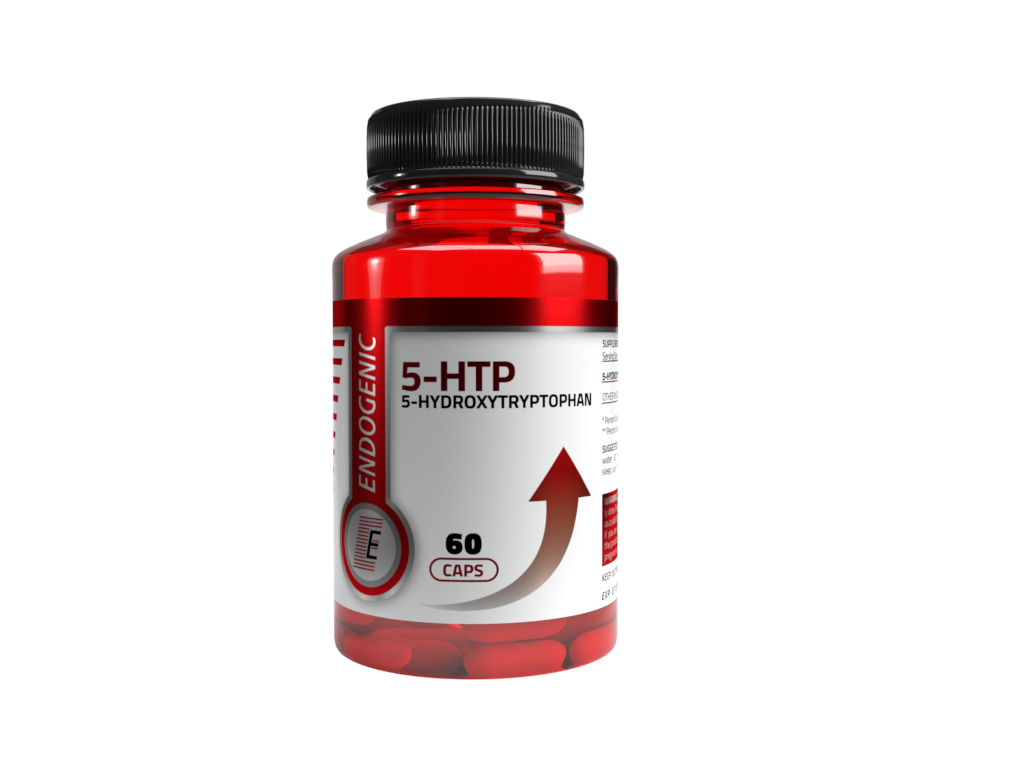
5-HTP 200 mg 60 caps
5-HTP 200 mg × 60 capsules is a dietary supplement made from standardized seed extract Griffonia simplicifolia, providing 5-hydroxytryptophan – a direct precursor of serotonin. Supports mood, sleep (via the melatonin axis) and appetite control (satiety signal). Portion 200 mg, timing adjusted to the goal.
30,99 €
Fast shipping
Delivery options
Free delivery from 350 €
Returns policy
5-HTP 200 mg 60 capsules - 5-hydroxytryptophan precursor of serotonin
- 5-hydroxytryptophan from standardized Griffonia simplicifolia extract.
- 200 mg, 60 capsules.
- Dietary supplement for adults, not a medicine.
5-HTP 200 mg is a dietary supplement intended for adults. The active substance is 5-hydroxytryptophan from a standardized Griffonia simplicifolia seed extract. The product is not a medicine and does not replace a varied diet or medical consultation. Do not use during pregnancy and breastfeeding. 5-HTP should absolutely not be combined with serotonergic drugs (SSRIs, SNRIs, MAOIs, triptans, tramadol) – risk of serotonin syndrome. Details in the “Safety” section.
Serotonin (5-HT) is a neurotransmitter that the brain uses to regulate mood, sleep-wake rhythm, and the feeling of satiety after a meal. The problem lies in its production: the body synthesizes serotonin from the amino acid tryptophan, and the rate-limiting step of the entire pathway is the hydroxylation of tryptophan by the enzyme tryptophan hydroxylase.
This bottleneck depends on the availability of tryptophan, which additionally competes with other large neutral amino acids (LNAA) for the same transporter at the blood-brain barrier. In practice, this means that simply increasing the supply of tryptophan in the diet does not translate directly into higher serotonin synthesis in the central nervous system. 5-Hydroxytryptophan (5-HTP, oxitriptan) enters this pathway one step further – after the limiting stage.
It is a direct intermediate metabolite between tryptophan and serotonin, so its supplementation bypasses the slowest part of the process. It is one of the best characterized serotonin precursors available as a dietary supplement ingredient, with research achievements dating back to the 1970s and clinical reviews covering mood, sleep and appetite regulation. This product delivers 60 capsules of 200 mg 5-HTP from standardized seed extract Griffonia simplicifolia — an African plant that accumulates 5-HTP in naturally high concentrations.
The HPMC capsule form allows you to measure a repeat portion without using a scale, and the declared 5-HTP content is confirmed analytically. In the Pro-Body offer, this is an item from the group dietary supplements supporting neurotransmission – check the full specification of the raw material before planning the cycle.
SCIENTIFIC PERSPECTIVE
5-HTP has undergone human trials, including randomized, placebo-controlled trials – this distinguishes it from many nootropic “research compounds”. However, some of the data concerns clinical populations (people with low mood, overweight), so the translation to a healthy adult looking for sleep support or peace of mind is an extrapolation. If you want to put this component into a broader context, how they work and when they make sense nootropic substances, take this supplement with realistic expectations: it is a support for serotonin synthesis from the precursor supply side, not a “mood switch”.
What is 5-HTP and where does it come from?
5-Hydroxytryptophan is a naturally occurring amino acid that the body does not absorb from dietary proteins in significant amounts – it is produced endogenously from tryptophan as an intermediate product. In supplementation, it is obtained from a rich plant source, not from chemical synthesis.
- Name: 5-HTP, 5-hydroxytryptophan (5-Hydroxytryptophan), oxitriptan
- Natural source: seed extract Griffonia simplicifolia (West African plant)
- CAS number: 4350-09-8
- Summary formula: C₁₁H₁₂N₂O₃
- Molecular weight: 220.22 g/mol
- Compound Class: hydroxylated amino acid derivative (intermediate metabolite of the serotonin pathway)
- Delivered form: HPMC capsule, 200 mg 5-HTP from a standardized extract Griffonia simplicifolia, 60 capsules
Seeds Griffonia simplicifolia they contain 5-HTP at a concentration of several percent by weight – this is one of the few plant raw materials in which this compound is abundant enough that the standardized extract becomes a practical source for a supplement. Standardization is the point at which the quality of the raw material determines the repeatability of the portion: a non-standardized extract would mean an unpredictable 5-HTP content in each capsule.
Why Serotonin Matters - Neurotransmitter Context
Serotonin is a neurotransmitter with an extremely wide range of action. In the central nervous system, it participates in the regulation of mood, sense of calm and emotional balance, and its deficiency in synaptic transmission has been associated with depressed mood. However, the same serotonin is also a substrate for production melatonin — a hormone that regulates the circadian rhythm — which explains the relationship between the serotonergic axis and sleep.
The third area is appetite. Serotonin participates in satiety signaling in the hypothalamus: higher serotonergic activity promotes an earlier feeling of satiety and limits episodes of snacking, especially carbohydrate snacking. It is for this reason that serotonin precursors have been studied in the context of weight management. The common denominator of all three axes – mood, sleep and appetite – is the availability of serotonin in the brain.
And this depends directly on the rate of its synthesis, which, as described above, is limited at the tryptophan stage. This is where 5-HTP comes into play.
Mechanism of action of 5-HTP
A direct precursor of serotonin that bypasses the limiting stage
Serotonin synthesis takes place in two stages: tryptophan → 5-HTP → serotonin. The first step (hydroxylation of tryptophan by tryptophan hydroxylase) is the slowest and sets the pace of the entire pathway. Supplemental 5-HTP begins the pathway beyond this bottleneck – its conversion to serotonin is catalyzed by aromatic amino acid decarboxylase (AADC), an enzyme that is highly active and unsaturated under typical conditions. In practice, this means that the supplied 5-HTP efficiently translates into the production of serotonin, regardless of the slowest stage.
It crosses the blood-brain barrier and does not compete for the LNAA transporter
Serotonin itself does not cross the blood-brain barrier, so its oral administration would not increase concentrations in the central nervous system. 5-HTP overcomes this barrier. Importantly, unlike tryptophan, it does not use the large neutral amino acid (LNAA) transporter and does not compete with amino acids from a protein meal for entry into the brain. Thanks to this, its transport to the central nervous system is less dependent on the composition of the diet, and the supply of the precursor is more predictable.
Serotonin as a precursor of melatonin – sleep axis
After being converted into serotonin, part of the pool enters the further pathway leading to melatonin. The evening increase in the availability of serotonin in the pineal gland promotes the synthesis of melatonin, which provides a mechanistic justification for the evening use of 5-HTP to support the natural rhythm of falling asleep. This is one of the reasons why the same relationship is associated with both mood during the day and sleep in the evening.
Modulation of appetite and satiety
Increased serotonergic activity intensifies the satiety signal. In studies on serotonin precursors, an earlier feeling of satiety and reduced consumption were observed, which resulted in easier appetite control. This is a central mechanism – serotonin inhibits the drive to eat at the level of the hypothalamus, and does not “burn” anything peripherally.
What the research shows
5-HTP is among the better documented neurotransmitter precursors available as a supplement ingredient, with a track record of clinical reviews and randomized controlled trials. A clinical review by Birdsall 1998 described the pharmacological logic of 5-HTP: bypassing the limiting step in serotonin synthesis and good oral bioavailability. The author collected data suggesting a favorable direction in the areas of mood, sleep and snacking related to overweight, while formulating a cautious conclusion about the quality of some of the trials.
An extensive pharmacological review by Turner, Loftis and Blackwell 2006 systematized knowledge about supplementation with serotonin precursors – tryptophan and 5-HTP. The authors confirmed the mechanism of the increase in serotonin synthesis and discussed the safety profile, emphasizing interactions with serotonergic drugs as the main risk area. This is central to understanding why the serotonin syndrome warning is non-negotiable here.
A Cochrane review (Shaw, Turner, Del Mar 2002) assessed tryptophan and 5-HTP in the context of depressed mood. The authors noted a favorable signal compared to placebo, but at the same time drew attention to the small numbers and limited methodological quality of the included studies – hence the conclusion that the evidence is promising, but requires trials of a higher standard.
This is a typical picture for a component with a real mechanism and an incomplete database of large RCTs. In the area of appetite, a randomized, placebo-controlled trial by Rondanelli et al. 2012 showed that the extract from Griffonia simplicifolia increased the feeling of satiety in overweight women, which was accompanied by an increase in the excretion of 5-HIAA (a serotonin metabolite) in urine – biochemical confirmation of the increase in serotonin turnover.
This is a direct link to the raw material Griffonia with a measurable effect on the satiety axis. The safety profile was summarized by Das et al. 2004, describing 5-HTP as well tolerated in reasonable doses, with the most common side effects being transient (mainly gastrointestinal) and with drug interactions being the main real threat.
We need to keep things in balance: the strongest data are in clinical populations, and transfer to a healthy, exercised adult looking for better sleep or peace of mind is an area where large trials are lacking. The literature suggests a real serotonergic mechanism – it does not promise a sudden change in a healthy person.
How to dose 5-HTP
It is best to introduce 5-HTP gradually, choosing the time of intake depending on the goal – different timing works to support sleep, different timing works to support mood or appetite.
- Starting portion: start with 1 capsule (200 mg) daily to assess your tolerance before considering a higher dose. Gentle introduction reduces the risk of temporary nausea
- Sleep Support: serving in the evening, 30-45 minutes before bedtime – in accordance with the mechanism of converting serotonin into melatonin. This is the most common time window for 5-HTP
- Mood support during the day: a serving can be taken during the day, preferably between meals, to reduce metabolic competition and improve absorption
- Appetite control support: portion 20-30 minutes before a meal so that the satiety signal increases while eating
- Taking outside a protein meal — a large protein meal may affect the absorption profile; 5-HTP is usually taken on a light stomach or with a small carbohydrate snack
- Do not exceed recommended dose without a clear need – a higher serotonergic supply increases the risk of side effects and interactions
Start with a single serving and observe your body’s reaction for a few days before adding 5-HTP to a wider stack. This is a reasonable approach for any ingredient that affects neurotransmission. Choose the time of intake according to your goal and observe how your body reacts.
What to combine with 5-HTP - stack
5-HTP works well with ingredients that support the same pathway from the side of enzymatic conversion or the complementary silencing axis. The connections below make mechanistic sense – but remember that the restrictions in the “Safety” section apply to each of them.
- Vitamin B6 (pyridoxine / P-5-P) — it is a cofactor of aromatic amino acid decarboxylase (AADC), an enzyme that converts 5-HTP into serotonin. An adequate supply of B6 supports the efficiency of this conversion, which is why many people combine 5-HTP with vitamin B6 as a logical enzymatic partner
- Magnesium — participates in hundreds of enzymatic reactions of the nervous system and is sometimes combined with 5-HTP in evening protocols aimed at calmness and sleep quality
- GABA — as a component of the calming axis, it is sometimes combined with 5-HTP in stacks “for calm in the evening”; it works on a different (inhibitory) transmitter, so it complements, rather than duplicates, the serotonergic mechanism
- EndoSleep — if you’re building an evening sleep protocol, check out the proprietary formula Endosleep for sleep, which combines ingredients that support falling asleep in one recipe
- Peptide mood axis — if you are interested in complementary, non-serotonin support for well-being, this category includes, among others: MIF-1 peptide on mood; it works by a different mechanism than the serotonin precursor, so it complements the picture and does not duplicate 5-HTP
Each time you combine, start with a low, single serving and watch your body’s reaction. A wider range of products from the group mood peptides worth knowing separately. Do not combine 5-HTP with any ingredient or drug with serotonergic effects — this is not a stack to experiment in this direction.
Safety and contraindications
The safety profile of 5-HTP when maintaining the supplementation dose is usually good, and the most common side effects are transient. However, there is one risk that distinguishes this ingredient from most supplements and requires absolute attention. RISK OF SEROTONIN SYNDROME – READ BEFORE PURCHASING 5-HTP increases serotonin synthesis. When combined with medications that also increase serotonergic activity, excess serotonin and serotonin syndrome — a potentially dangerous condition manifesting itself, among others, agitation, tremors, rapid heart rate, increased blood pressure, fever, muscle stiffness and impaired consciousness. DO NOT combine 5-HTP with:
- antidepressants from the SSRI group (e.g. sertraline, fluoxetine, escitalopram, paroxetine)
- SNRI drugs (e.g. venlafaxine, duloxetine)
- MAO inhibitors (MAOI)
- triptans used for migraine (e.g. sumatriptan)
- tramadol and other opioids with serotonergic effects
- other serotonergic supplements (tryptophan, St. John’s wort)
If you are taking any of these medications or have any doubts, consult your doctor before taking 5-HTP. This rule is not circumvented by “careful dosing.” Other security issues:
- Temporary nausea — the most common side effect, usually mild and disappearing after a few days or when taken with a small snack; gentle introduction of the starting portion limits them
- Possible gastrointestinal symptoms — discomfort, feeling of fullness, less often diarrhea, mainly with higher dosage
- Somnolence — when used daily, 5-HTP may cause drowsiness in some people; do not drive until you know your reaction
- Caution with carbidopa — in people taking carbidopa (a drug used, among others, in Parkinson’s disease), the metabolism of 5-HTP is significantly changed; such a combination only under medical supervision
Absolute contraindications and situations requiring medical consultation:
- Pregnancy and breastfeeding — lack of sufficient safety data, do not use
- Taking serotonergic medications (SSRI, SNRI, MAOI, triptans, tramadol) – see box above
- Down syndrome — increased sensitivity to 5-HTP and the risk of seizures have been reported; use only under medical supervision
- Liver diseases, planned surgical procedures (due to interactions with serotonergic anesthesia) – consult your doctor
5-HTP is not on the WADA list of prohibited substances, which is important for registered athletes. Nevertheless, every athlete subject to anti-doping control should verify the current status of all preparations taken.
Summary of benefits
5-HTP 200 mg × 60 capsules is a dietary supplement based on a standardized seed extract Griffonia simplicifolia, providing 5-hydroxytryptophan – a direct precursor of serotonin. The mechanism is clear: 5-HTP enters the serotonin synthesis pathway already at the limiting stage, crosses the blood-brain barrier and does not compete for the transporter with amino acids from the diet, thus efficiently supporting serotonin production in the central nervous system.
Serotonin regulates mood, is a precursor of melatonin (sleep axis) and increases the satiety signal (appetite axis). The Cochrane review, Birdsall 1998 and Turner 2006, and the Rondanelli 2012 randomized trial point in a favorable direction, with some fair quality limitations in some studies. A starting dose of 200 mg, timing matched to the goal, awareness of the serotonergic mechanism and – above all – an absolute prohibition on combining it with serotonergic drugs is a reasonable framework for use.
Bibliography
- Birdsall, T. C. (1998). 5-Hydroxytryptophan: a clinically-effective serotonin precursor. PubMed
- Turner EH, Loftis JM, Blackwell AD (2006). Serotonin a la carte: supplementation with the serotonin precursor 5-hydroxytryptophan. PubMed
- Shaw K, Turner J, Del Mar C (2002). Tryptophan and 5-hydroxytryptophan for depression. PubMed
- Rondanelli M, Opizzi A, Faliva M, Bucci M, Perna S (2012). Relationship between the absorption of 5-hydroxytryptophan from an integrated diet, by means of Griffonia simplicifolia extract, and the effect on satiety in overweight females. PubMed
- Das YT, Bagchi M, Bagchi D, Preuss HG (2004). Safety of 5-hydroxy-L-tryptophan. PubMed
FAQ
The time depends on the goal. For sleep support – in the evening, 30-45 minutes before bedtime, in line with the conversion of serotonin into melatonin. For mood support – during the day, between meals. To control appetite – 20-30 minutes before a meal. In each variant, start with a starting dose of 200 mg and assess your own tolerance.
Mechanistically sensible partners include vitamin B6 (a cofactor for the enzyme that converts 5-HTP into serotonin), magnesium, and GABA in evening protocols. When combining, start with a small portion and observe the reaction. What you must not combine: any drugs or supplements with serotonergic effects – due to the risk of serotonin syndrome.
The transformation of 5-HTP into serotonin is catalyzed by aromatic amino acid decarboxylase (AADC), and vitamin B6 (in the active form of pyridoxal-5-phosphate) is a cofactor of this enzyme. An adequate supply of B6 supports the efficiency of the conversion of the precursor into a neurotransmitter, which is why B6 is a common and logical partner of 5-HTP in the stack.
Transient nausea is the most common side effect of 5-HTP, usually mild and disappearing after a few days. You can reduce these by starting with a starting dose of 200 mg and taking the capsule with a small snack instead of on a completely empty stomach. If discomfort persists, discontinue use.
Tryptophan is an amino acid from which the body produces 5-HTP and only then serotonin. The first stage (tryptophan → 5-HTP) is the slowest and limits the entire pathway, and tryptophan additionally competes for the transporter on the blood-brain barrier. 5-HTP begins the pathway behind this bottleneck and does not use this transporter, so its conversion to serotonin is more efficient and less dependent on diet. In practice, 5-HTP is a more direct way to increase serotonin synthesis.
0.0
0 reviews
This product has no reviews yet.