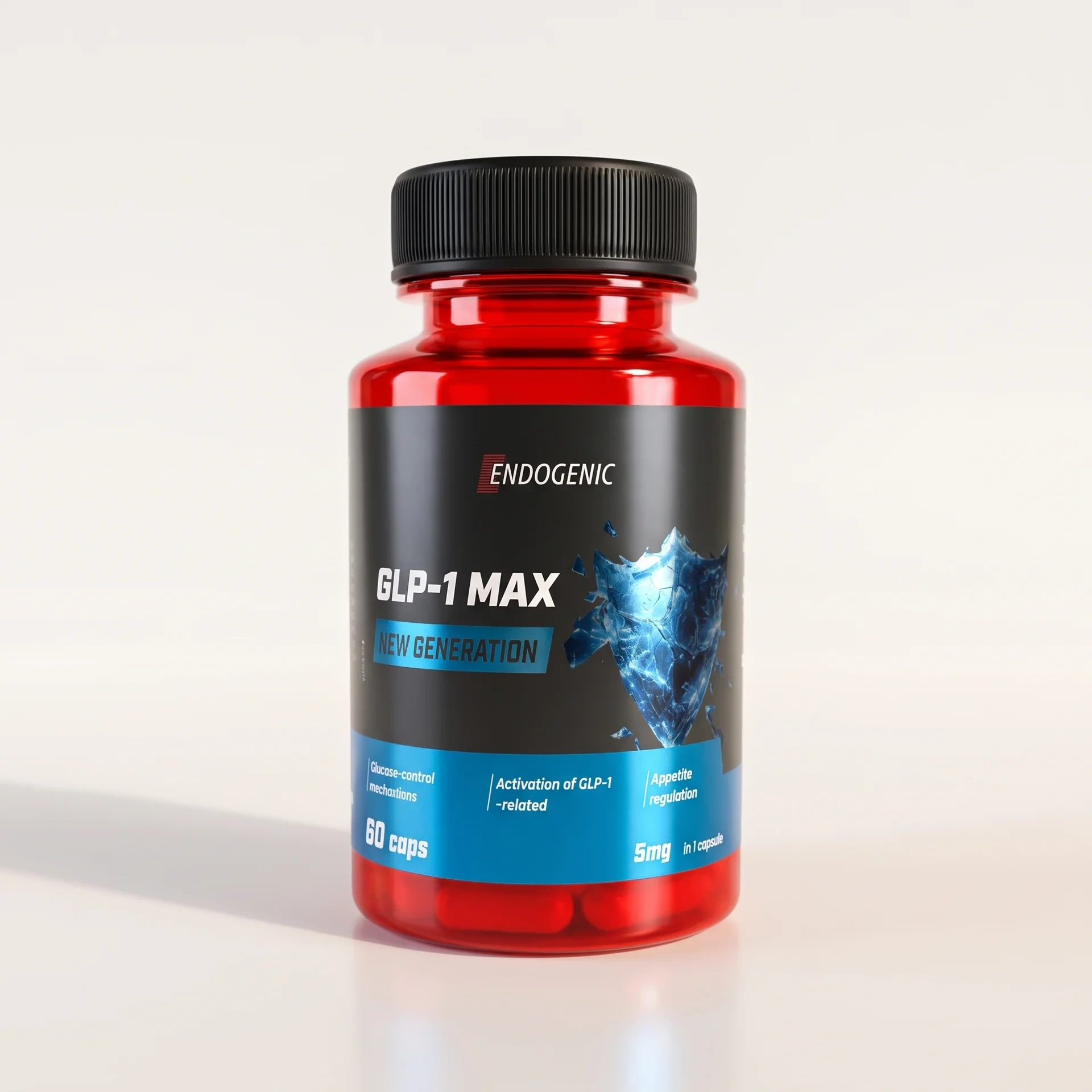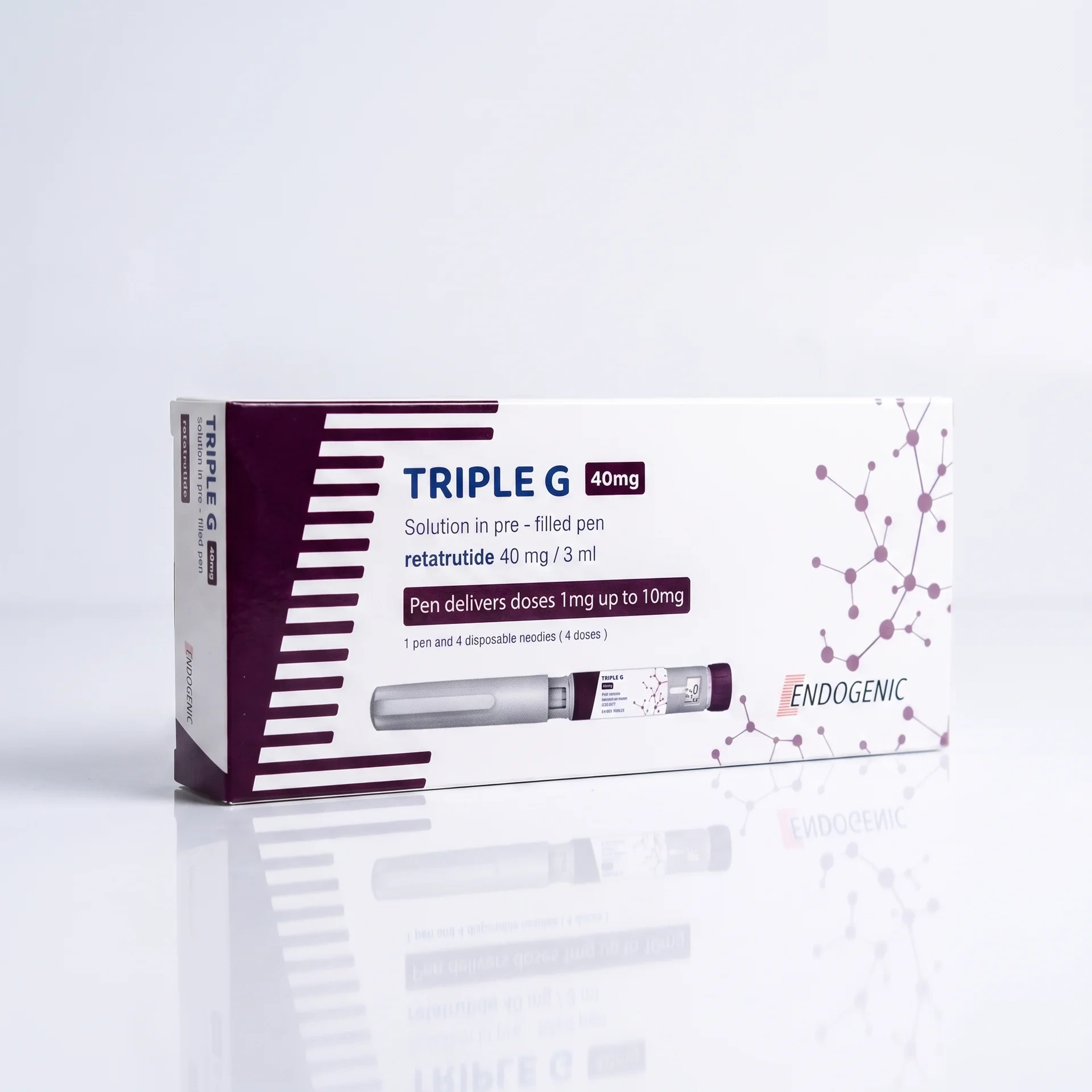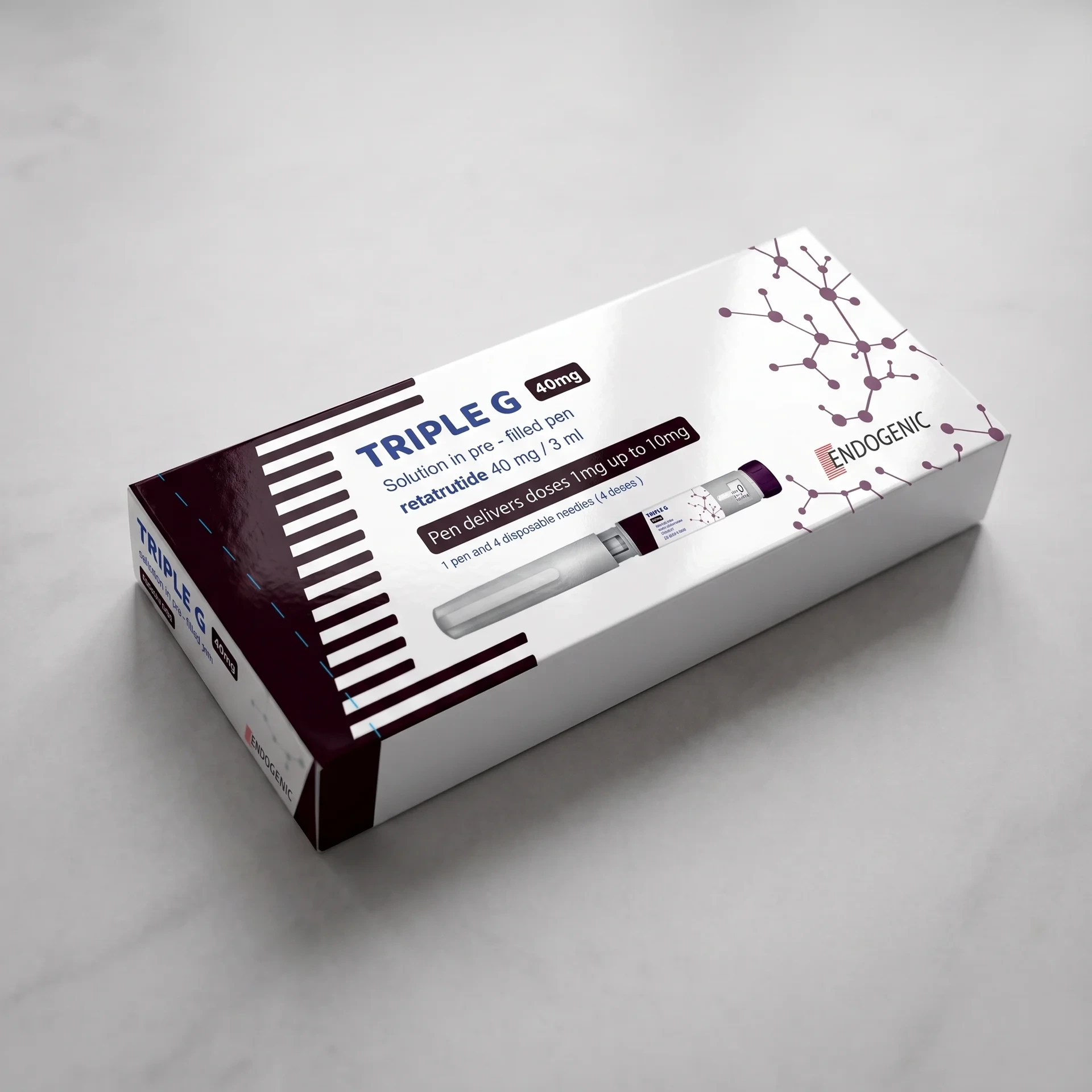


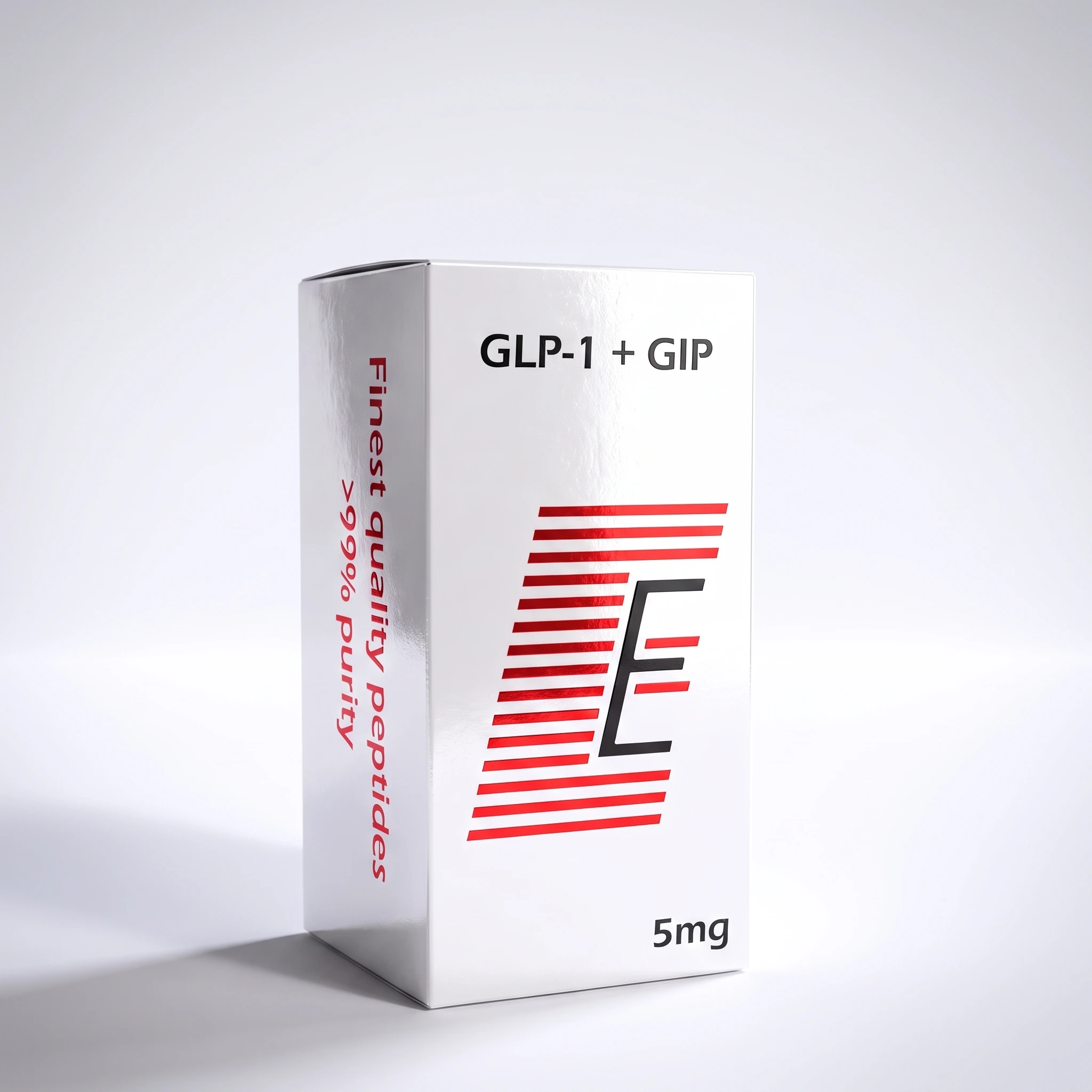
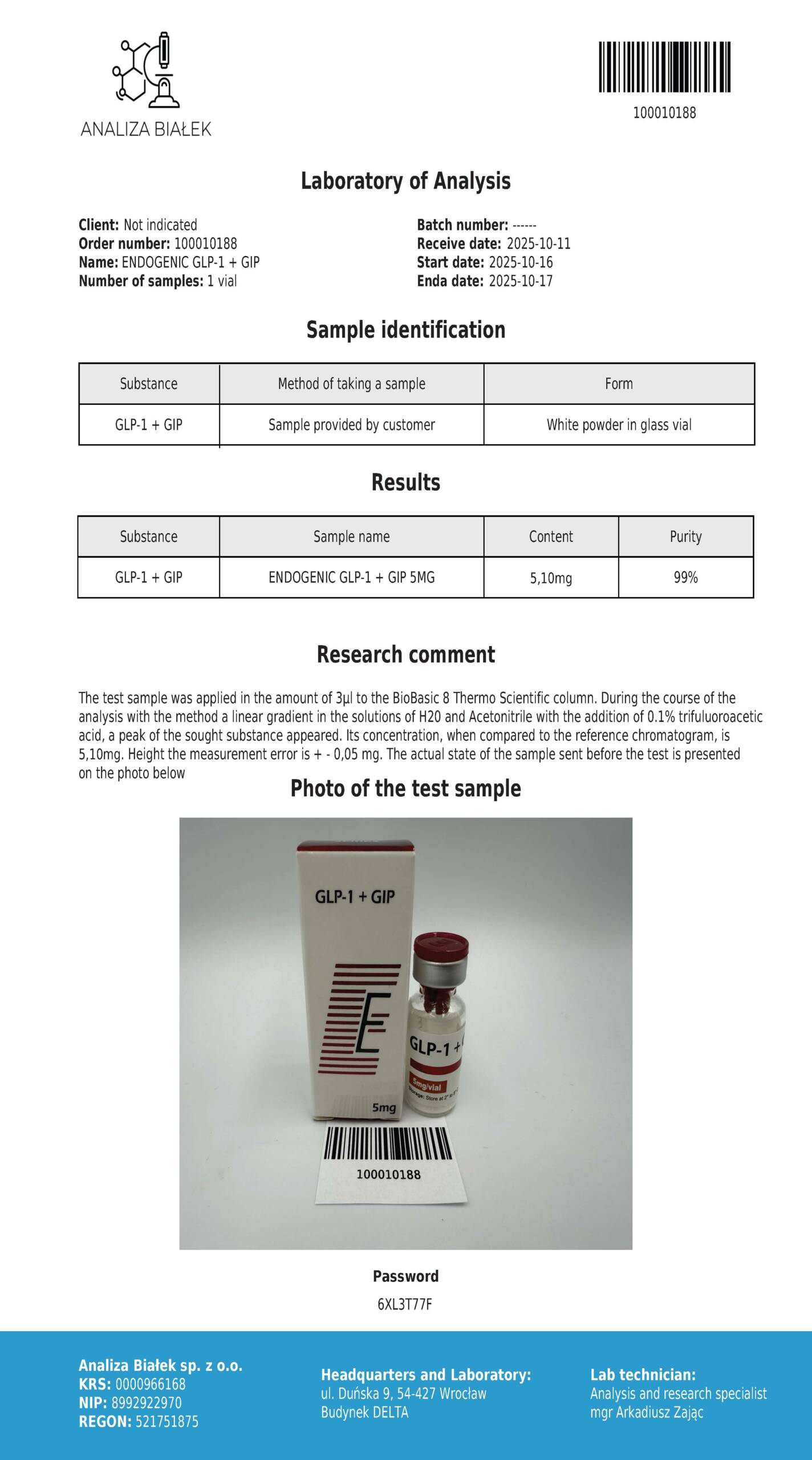
GLP-1/GIP dual-agonist is a synthetic peptide designed as an agonist of two incretin receptors simultaneously: the GLP-1 receptor (GLP-1R) and the GIP receptor (GIPR). “Dual agonism” means the activation of two receptors at once – as opposed to a mono-agonist (one receptor) and a triple-agonist (three). Structurally, the molecule is a chain of 39 amino acids with albumin-binding acylation, with a mass of ~4813.5 g/mol. In the Pro-Body catalog it is a RUO reagent, for laboratory tests only – not a medicinal product. Its medicinal equivalent is tirzepatide.
GLP-1 + GIP 5mg
GLP-1 + GIP is a high-quality synthetic incretin peptide intended only for in vitro laboratory tests. The preparation combines the sequences of two key incretin hormones – GLP-1 and GIP – enabling simultaneous activation of GLP-1R and GIPR receptors and analysis of their synergistic effects in experimental conditions. GLP-1 + GIP is used, among others: in research on the biology of pancreatic islets, adipocyte metabolism, neurobiology and in pharmaceutical screening of new incretin analogues.
71,99 €
Fast shipping
Delivery options
Returns policy
GLP-1 + GIP 5 mg - dual-agonist of GLP-1 and GIP receptors, research reagent
- GLP-1 + GIP: dual agonist of GLP-1R and GIPR.
- Vial of lyophilisate with a nominal content of 5 mg, not a PEN format.
- Research Use Only reagent, not a substitute for a registered medicine.
Product status information
Chemical reagent intended exclusively for laboratory tests (Research Use Only). It is not a medicinal product, dietary supplement or food. It is not intended for use on humans or animals. Sales only to registered research units and laboratories.
Regulatory status (critical) – dual-agonist reagent RUO vs. the registered drug tirzepatide
The GLP-1/GIP dual-agonist described on this page is synthetic research peptide with a profile similar to tirzepatide — active substance of registered medicines Mounjaro® (type 2 diabetes) and Zepbound® (obesity). Tirzepatide is available as a pharmaceutical drug only on prescription and requires medical supervision. GLP-1/GIP dual-agonist reagent in the Pro-Body catalog is not tirzepatide in the form of a medicine, is not a substitute for a medicinal product, is not authorized for administration to humans and does not replace medical consultation.
These are two different worlds: a registered drug with full pharmaceutical documentation (GMP, clinical trials, characteristics of the medicinal product) and a chemical reagent for laboratory work. Confusing them is a health and legal mistake.
Introduction
The incretin axis – a system of intestinal hormones released in response to food, regulating glycemia, insulin secretion and satiety signals – is one of the most intensively studied endocrine pathways of the last decade. Its two central hormones are GLP-1 (glucagon-like peptide 1) and GIP (glucose-dependent insulinotropic peptide). Dual-agonist GLP-1/GIP 5 mg from the line Endogenic is a synthetic research peptide that activates both incretin receptors simultaneously – GLP-1R and GIPR – combining two pathways of this axis in one molecule.
In the Pro-Body catalog, this molecule belongs to a group peptides for burning fat tissue used in metabolic research on obesity and the incretin axis. The Endogenic line in the Pro-Body catalog groups peptides that represent endogenous molecules or their analogues – signalers that the body produces on its own and which researchers synthetically recreate and modify as molecular tools.
The GLP-1/GIP dual-agonist belongs to this family due to its peptide chain mapping incretin motifs with acylation that extends the half-life. Its medicinal equivalent is tirzepatide — the active substance of the drugs Mounjaro® and Zepbound® — which also performs double GLP-1/GIP agonism. This reagent however, it is not that medicine: it is a material for laboratory work with a profile similar to tirzepatide, consistently described as a dual GLP-1/GIP agonist.
The molecule occupies a middle stage in the logical sequence of development of incretin pharmacology. First, single GLP-1 agonists (mono) were tested, then double GLP-1 and GIP agonists (dual), and the latest work adds a third vector – glucagon receptor agonism (triple). The GLP-1/GIP dual-agonist is the middle stage: two incretin receptors at once, a broader profile than the mono-agonist, but without the glucagon arm of the triple molecules.
This reagent is supplied in a vials with lyophilisate with a nominal content of 5 mg. The lyophilized form – a dry, sublimated powder – is the classic format of the peptide reagent with the highest stability in stock: the peptide without water remains stable for many months, and the researcher independently determines the working concentration at the reconstitution stage.
IMPORTANT DISTINCTION – lyophilisate vial vs GLP-1+GIP PEN vs 10 mg variant
The GLP-1/GIP dual-agonist is available in the catalog in several forms. This product is 5 mg lyophilisate vial — dry powder for self-reconstitution, giving the researcher full freedom in selecting the working concentration. Variant GLP-1+GIP 5 mg PEN is the format of a ready-made applicator with a factory-prepared solution, a GLP-1+GIP 10 mg is a vial of lyophilisate with a higher nominal content.
These are differences in the form and content of the reagent, not in the class of the molecule. The identity of a batch is always determined by the sequence and mass confirmed by mass spectrometry at COA.
GLP-1, GIP and mono → dual → triple evolution
To understand what this reagent is, you must first separate two concepts: incretins and receptor agonism. Incretins are intestinal hormones released in response to food intake, which enhance glucose-dependent insulin secretion – that is, they enhance the insulin response after a meal more strongly than would result from the increase in blood glucose concentration alone.
The two main incretins are GLP-1 (glucagon-like peptide 1), secreted by L cells of the intestine, and GIP (glucose-dependent insulinotropic peptide), secreted by K cells. The incretin effect – the phenomenon in which glucose administered orally produces a greater insulin response than the same amount administered intravenously – was one of the starting points for the entire program of research on incretin analogues.
Receptor agonist is a molecule that binds to the receptor and activates it, reproducing the natural hormone signal. The GLP-1/GIP dual agonist binds to two incretin receptors at once – the GLP-1 receptor (GLP-1R) and the GIP receptor (GIPR) – and activates both. This is the central feature that distinguishes it from mono-agonist Semaglutide, which acts selectively on one receptor (GLP-1R), and from triple-agonist Retatrutide 5mg, which adds a third receptor – glucagon.
Incretin pharmacology developed in stages. Mono stage — single GLP-1 receptor agonists, activating one receptor. Dual stage — dual agonists of GLP-1 and GIP, activating two receptors at once; this reagent belongs to this class, and its medicinal equivalent is tirzepatide. Triple stage — molecules adding glucagon receptor agonism. Each subsequent stage expands the number of simultaneously modulated metabolic pathways – and each generates a distinct body of research on the body’s metabolic response.
In the Pro-Body catalog, GLP-1/GIP dual-agonist falls into the category GLP-1 peptides (RUO critical) — a group of reagents requiring additional communication discipline due to the proximity of registered metabolic drugs. The format of the lyophilized vial is both technical and strategic. Dry powder is the most stable form of peptide storage – without water, there are no hydrolysis or aggregation reactions in the solution, so the material endures long periods of storage much better than a ready-made solution.
What is a GLP-1/GIP dual agonist - dual agonism in one molecule
Dual GLP-1/GIP agonist is a synthetic peptide designed as an agonist of two incretin receptors simultaneously: GLP-1 receptor (GLP-1R) and GIP receptor (GIPR). Structurally, the molecule is a chain of 39 amino acids with structural modifications and acylation with a fatty acid chain, which binds the peptide to plasma albumin after administration – this is the mechanism responsible for the prolonged half-life in the literature and is the basis for the weekly research regimen.
The molecular weight is approx 4813.5 g/mol. The therapeutic equivalent with the same GLP-1/GIP dual agonism profile is tirzepatide — active substance of registered drugs Mounjaro® (type 2 diabetes) and Zepbound® (obesity), authorized by EMA and FDA. This distinguishes this reagent from molecules in abandoned or still pre-registration development: its therapeutic counterpart has full registration and an extensive clinical trial program. However, this material remains an RUO reagent with a profile similar to tirzepatide, not the drug itself.
Physicochemical characteristics
| Parameter | Value |
|---|---|
| Name | Dual-agonist of GLP-1 and GIP receptors (synthetic incretin peptide) |
| Line | Endogenic |
| Class | Synthetic dual-agonist of GLP-1/GIP receptors (incretin analogue) |
| Mechanism | GLP-1R + GIPR dual agonism |
| Medicinal equivalent | Tirzepatide (active substance Mounjaro®, Zepbound®) |
| Chain length | 39 amino acids |
| Extension modification | Acylation with a fatty acid chain, albumin binding |
| Molecular weight | ~4813.5 g/mol |
| Half-life | Long (acylation + albumin binding – basis of weekly regimen in research) |
| Nominal content | 5 mg/vial |
| Physical form | Lyophilisate (sublimated powder) |
| HPLC purity | ≥98% |
| Identity confirmation | Q-TOF mass spectrometry |
Molecular mechanism - GLP-1/GIP dual agonism
In the metabolic literature, GLP-1/GIP dual-agonism is described as a profile with five complementary mechanistic dimensions. Below each with the name of the pathway/receptor and the ratio observed in models and studies on the active substance.
Dual receptor agonism – two incretin vectors at once
A central feature of a molecule. The dual-agonist activates two incretin receptors with separate metabolic roles. GLP-1 receptor (GLP-1R) — mediates glucose-dependent insulin secretion and the satiety signal in the central nervous system. GIP receptor (GIPR) — has an insulinotropic effect and is associated in the literature with the metabolism of adipose tissue. Simultaneous activation of both receptors is the molecular essence of dual-agonism – and the point that distinguishes this molecule from mono-agonists that activate only GLP-1R.
Synergy of two incretin pathways
Activation of GLP-1R and GIPR in parallel produces a profile described in the literature as synergy of the two arms of the incretin axis in the regulation of glycemia and energy balance. The GLP-1 arm contributes to glucose-dependent insulin secretion and the satiety signal, while the GIP arm contributes to the insulinotropic component and influences the metabolism of adipose tissue. The models analyzed how the combination of both signals produces a profile different from GLP-1 agonism alone – the subject of a separate line of research on dual molecules.
Central action on satiety centers
The GLP-1 component of the molecule binds to receptors in the central nervous system involved in the regulation of appetite and satiety. This is the central axis of the profile – the satiety signal generated at the level of the hypothalamus, described in the incretin literature as one of the main mechanisms of the influence of GLP-1 agonists on energy balance. In the research context, it is analyzed as an element of appetite regulation observed in models, not as a declared effect in humans.
Long half-life – acylation and albumin binding
Acylation with a fatty acid chain causes the molecule to bind to plasma albumin after administration, which significantly prolongs its presence in the bloodstream. This prolonged half-life is reported in the literature the basis of a weekly regimen in clinical trials over the active substance (tirzepatide). This is the same design strategy used in other long-acting incretin analogues – modifying the pharmacokinetics by binding plasma proteins, not by changing the receptor core.
Research on metabolism, glycemia and body weight
Program SURPASS (glycemic endpoints) and program SURMOUNT (body weight endpoints) are extensive literature contexts describing the effects of tirzepatide as the active substance of registered drugs. We cite them as the context of the literature on the medicinal equivalent, not as a recommendation or suggestion for use — the RUO reagent remains a laboratory tool with a profile similar to tirzepatide, and not a drug itself.
An important distinction - three axes that must not be confused
Working with a GLP-1/GIP dual-agonist as a reagent requires conceptual rigor on three separate dimensions. Confusing them leads to misinterpretation of data – and, in the case of the drug axis, to health-related errors.
IMPORTANT DISTINCTION – dual vs mono vs triple
Dual-agonist GLP-1/GIP activates two incretin receptors (GLP-1R + GIPR). This distinguishes it from the two other classes examined in the catalog. Mono-agonist Semaglutide it acts selectively on one receptor (GLP-1R). Triple-agonist Retatrutide 5mg activates three receptors (GLP-1R + GIPR + glucagon receptor), adding a glucagon arm. The more receptors, the broader and more complex the profile – the dual-agonist occupies the middle of this sequence: two incretin arms at once, without the glucagon vector.
First axis – dual vs mono vs triple. The difference in the number of activated receptors described above. Mono-agonist (1 receptor – GLP-1R) is the reference point of the entire family; dual adds a GIP arm (2 receptors); triple also adds a glucagon receptor (3 receptors). Each level is a different receptor profile studied in separate lines of literature. The GLP-1/GIP dual-agonist, whose therapeutic equivalent is tirzepatide, is the middle member of this sequence.
Second axis – lyophilized vial vs. GLP-1+GIP PEN vs. 10 mg variant. This product is 5 mg lyophilisate vial — dry powder requiring reconstitution, in which the researcher independently selects the working concentration. Variant GLP-1+GIP PEN 10 mg is a ready-made applicator with a factory-prepared solution, and the vial variant GLP-1+GIP 10 mg is a vial of lyophilisate with a higher nominal content.
The differences are practical: the vial gives you the freedom to choose molarity and the highest shelf life (dry powder), the applicator – ready for use without a reconstitution step, and the 10 mg variant – a higher peptide content per vial.
Third axis – RUO reagent vs tirzepatide (registered drug Mounjaro/Zepbound). This is the most important distinction. The therapeutic equivalent of GLP-1/GIP dual-agonism is tirzepatide — active substance of drugs Mounjaro® (type 2 diabetes) and Zepbound® (obesity). These drugs have undergone full clinical trials, have a summary of medicinal product characteristics, are produced under the GMP regime and are available only on prescription under medical supervision.
The GLP-1/GIP RUO dual-agonist reagent is not this drug — it does not have its documentation, pharmaceutical quality or authorization for human administration. It is not a replacement for Mounjaro or Zepbound and does not replace a medical consultation.
Applications in scientific research
Dual-agonist GLP-1/GIP as an RUO reagent is used in research areas on incretin pharmacology. The lyophilized vial format is particularly useful when the researcher needs to independently define the starting concentration of the mother solution – reconstitution to a selected volume allows the molarity to be adjusted to a specific receptor or metabolic test.
Pharmacology of dual receptor agonism. Cell models of lines expressing GLP-1R and GIPR receptors – examination of the affinity, selectivity and activation strength of each of the two receptors separately and in a simultaneous system. Endpoints: cAMP activation, receptor internalization, signaling profile. This is the direction for which a dual-agonist is a dedicated tool – it allows for examining the distribution of activity on two incretin receptors at once.
GLP-1/GIP synergy in in vivo metabolic models. Animal models of obesity, insulin resistance and glucose metabolism disorders. Endpoints: body weight in the model, glycemia, lipid profile, fat tissue metabolism. The GIP arm is a particularly interesting variable here – it allows you to compare the dual profile with the mono profile (GLP-1 alone) in one experimental setup and analyze how the addition of the GIP signal changes the metabolic response.
Comparative profiles of incretin agonists. Comparison of dual-agonist (GLP-1 + GIP) with mono- (semaglutide) and triple-agonists (retatrutide) in one arm of the experiment – analysis of how the number of activated receptors changes the profile of metabolic endpoints. The lyophilisate allows you to prepare a mother solution with a concentration selected for serial dilutions.
Pharmacokinetics of long-acting incretin analogues. Studies of the time profile of an acylated albumin-binding molecule – the role of acylation, the dynamics of plasma protein binding, the basis of the weekly regimen in relation to molecules with a shorter profile. The GLP-1/GIP dual-agonist is one of the reference compounds here for modifying pharmacokinetics by binding albumin.
The batch COA is the binding source of identity and purity information – a researcher planning work should start by verifying the sequence and mass in the batch documentation. The same chemical identity is also available in a higher content variant as GLP-1+GIP 10 mg and in a ready-made applicator GLP-1+GIP 5 mg PEN — all variants meet the same analytical control standards.
Summary
GLP-1/GIP dual-agonist 5 mg from the Endogenic line is a synthetic incretin peptide that simultaneously activates two metabolic receptors – GLP-1 and GIP – delivered in a lyophilized vial for laboratory tests. The molecule is a chain of 39 amino acids with fatty acid chain acylation, has a mass of approximately 4813.5 g/mol, and its long half-life (albumin binding) forms the basis of a weekly regimen in research on the therapeutic equivalent.
The mechanism includes five dimensions: dual receptor agonism, synergy of two incretin pathways, central satiety axis, prolonged pharmacokinetics and the context of metabolic studies from the SURPASS and SURMOUNT programs on tirzepatide. Working with this reagent requires the separation of three axes: dual vs. mono vs. triple (number of modulated receptors); lyophilisate vial vs. GLP-1+GIP PEN vs. 10 mg variant (form and content); and – most importantly – the RUO reagent from the registered drug.
The medicinal equivalent of GLP-1/GIP double agonism is tirzepatide – the active substance of Mounjaro® and Zepbound®, available only by prescription under medical supervision.
RUO reagent is not this medicine or its substitute. A head-to-head comparison of a GLP-1/GIP dual-agonist with a GLP-1 mono-agonist—including results from the head-to-head SURPASS study—discusses the article Tirzepatide and Semaglutide. The dosage profile and effects of the dual molecule in the context of weight reduction are described in the entry Tirzepatide for weight loss, and comparison with a triple agonist – article Retatrutide for obesity.
Bibliography
- Frías JP, Davies MJ, Rosenstock J, Pérez Manghi FC, Fernández Landó L, Bergman BK, et al. (2021). Tirzepatide versus Semaglutide Once Weekly in Patients with Type 2 Diabetes. PubMed
- Jastreboff AM, Aronne LJ, Ahmad NN, Wharton S, Connery L, Alves B, et al. (2022). Tirzepatide Once Weekly for the Treatment of Obesity. PubMed
- Coskun T, Sloop KW, Loghin C, Alsina-Fernandez J, Urva S, Bokvist KB, et al. (2018). LY3298176, a novel dual GIP and GLP-1 receptor agonist for the treatment of type 2 diabetes mellitus: From discovery to clinical proof of concept. PubMed
- Nauck MA, Quast DR, Wefers J, Meier JJ (2021). GLP-1 receptor agonists in the treatment of type 2 diabetes — state-of-the-art. PubMed
- Drucker D. J. (2018). Mechanisms of Action and Therapeutic Application of Glucagon-like Peptide-1. PubMed
FAQ
The GLP-1 receptor and the GIP receptor are two arms of the incretin axis with distinct roles. The GLP-1 arm is responsible for glucose-dependent insulin secretion and the satiety signal in the central nervous system; The GIP arm has an insulinotropic effect and is associated with the metabolism of adipose tissue in the literature. Simultaneous activation of both produces a profile described in studies as synergy – a combination of signals different from GLP-1 agonism alone. This is an observation from research models of the molecule and its medicinal equivalent, not a declaration of effect in humans.
The number and type of modulated receptors. Mono-agonist (like semaglutide) activates one receptor – GLP-1R. Dual-agonist GLP-1/GIP activates two – GLP-1R and GIPR. Triple-agonist (like retatrutide) activates three – adding the glucagon receptor. These are three distinct receptor profiles studied in different lines of the metabolic literature. Compare reagents: Semaglutide and Retatrutide 5mg. The difference is mechanistic (which receptors), not evaluative.
The form and content, not the class of the molecule. This product is 5 mg lyophilisate vial — dry powder for self-reconstitution, giving the researcher full freedom in selecting the working concentration. Variant GLP-1+GIP 5 mg PEN is the format of a ready-made applicator with a factory-prepared solution, a GLP-1+GIP 10 mg is a vial of lyophilisate with a higher nominal content.
In each case, it is the same GLP-1/GIP dual-agonist profile – the difference is the form of reagent preparation and peptide content, not chemical identity. The identity of the party is determined by the sequence and mass in the COA.
These are two different worlds with a similar pharmacological profile. Tirzepatide is the active substance of registered medicines – Mounjaro® (type 2 diabetes) and Zepbound® (obesity) – which have undergone full clinical trials, have a summary of medicinal product characteristics, are manufactured under the GMP regime and are available only on prescription under medical supervision. The GLP-1/GIP RUO dual-agonist described here is a laboratory material with a profile similar to tirzepatide: it does not have pharmaceutical documentation, injection quality or authorization for administration to humans.
Tirzepatide is not a drug, is not a substitute for Mounjaro or Zepbound and does not replace medical consultation. Confusing them is a health and legal mistake.
In short: bring the vial to room temperature, adjust the volume of bacteriostatic water to the target concentration of the mother solution (e.g. 2 ml for a 5 mg vial gives 2.5 mg/ml), direct the solvent stream at the wall of the vial (not on the precipitate), dissolve with gentle swirling without shaking, check the clarity of the solution, and then prepare working concentrations by serial dilutions.
For molar conversions, take into account the molecular mass of ~4813.5 g/mol. After reconstitution, store the solution at 2–8°C or aliquot and freeze at −20°C. The full six-step description can be found in the “Lyophilisate Reconstitution Protocol” section. This is a laboratory procedure, not instructions for human administration – RUO reagent is not an injectable pharmaceutical form.
5.0
3 reviews
-
GLP1
 Polski
Verified purchase
Polski
Verified purchase
Product review
Jestem bardzo zadowolona.
-
Duża dziewczyna
Polski
Verified purchase
Product review
Produkt super.
-
Mary
Polski
Product review
Uwielbiam ten produkt.
Related products