Working with this blend requires conceptual discipline on three levels. Each of them can lead to misinterpretation of results if omitted.
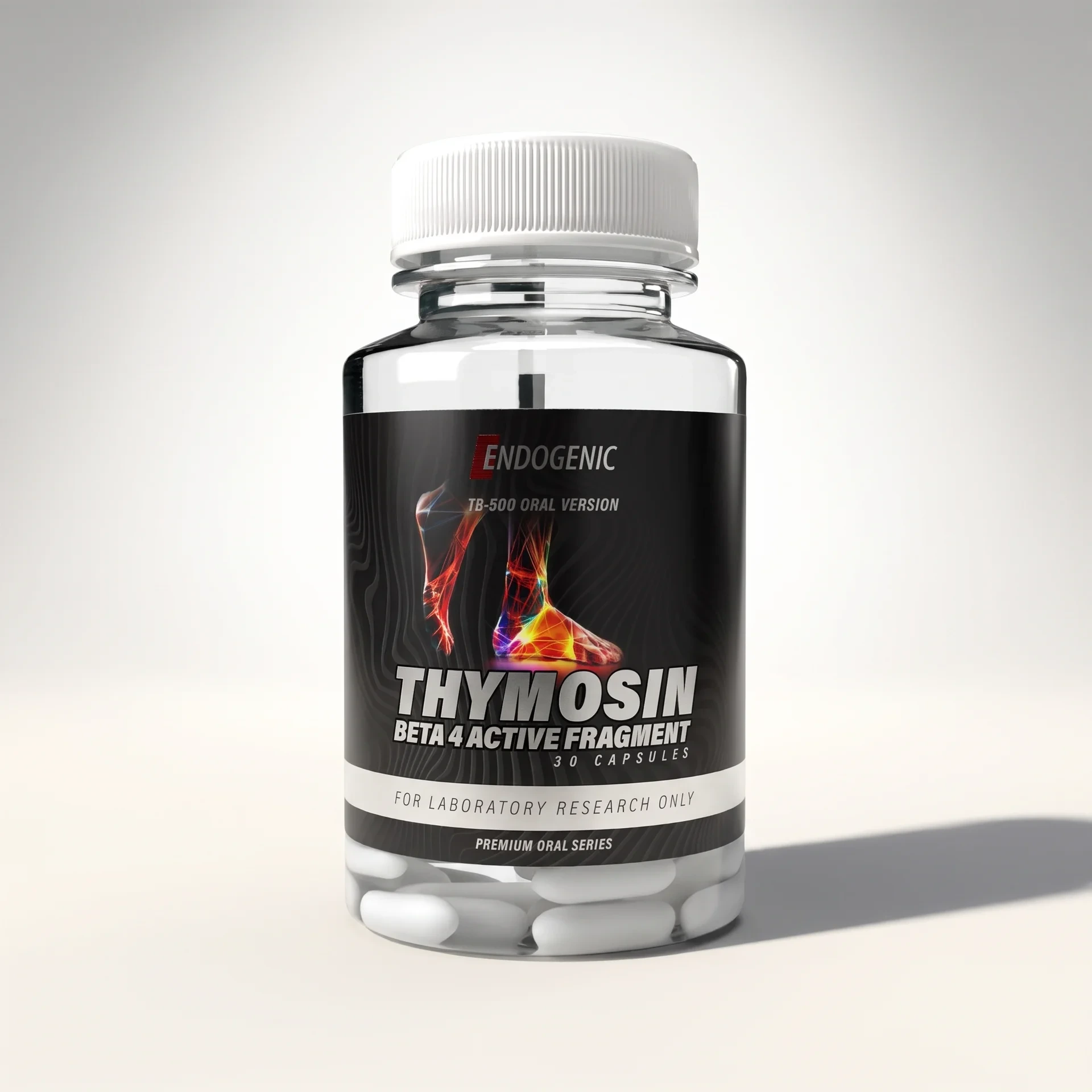
First – TB-500 fragment vs full Thymosin Beta-4. “TB-500” is a trade name, not the name of one defined molecule. RUO is most often marketed under this name active fragment of LKKTETQ (7 amino acids, ~889 g/mol) – actin binding motif itself. Full-molecule Thymosin Beta-4 is a protein with 43 amino acids (~4963 g/mol), carrying additional activity domains.
These are two different molecules with different masses, different pharmacokinetic profiles and partly different biological activity repertoire. Most of the literature cited below describes the whole protein – when interpreting each observation, the question must be asked whether we are talking about full Tβ4 or a fragment.
Secondly – ARG BPC-157 (arginine salt) vs BPC-157 acetate. “BPC-157” is a peptide sequence (GEPPPGKPADDAGLV), but is marketed as different salts. ARG BPC-157 is an arginine salt – BPC-157 with arginine as a counterion, which increases stability and solubility. BPC-157 acetate (acetate) is a variant with acetate as a counterion. The peptide sequence is identical in both cases – only the counterion differs.
Consequence: the mass measured by spectrometry for the salt differs from the mass of the free peptide by the contribution of the counterion, and the physicochemical properties (stability, solubility, hygroscopicity) depend on the type of salt. Salt doesn’t change that What makes a peptide, but it affects How behaves in storage and in solution.
Third – oral bioavailability of peptides. This is a distinction specific to this form. Peptides administered orally encounter proteolytic enzymes in the gastrointestinal tract (pepsin, trypsin, intestinal peptidases), which break down the amino acid chain before the molecule enters the circulation. This is why the oral bioavailability of most peptides is low — a significant part of the dose is digested.
BPC-157 is a partial exception here: its term “stable gastric pentadecapeptide” refers to above-average proteolytic stability in the gastric environment, described in the preclinical literature – this is a feature that makes it an interesting subject of research on oral administration. However, for the Thymosin Beta-4 fragment, oral bioavailability is available subject to verification — there are no grounds to assume high systemic availability of heptapeptide administered orally.
The capsule form of this blend is therefore honestly positioned as research reagent, where the bioavailability of each ingredient is a separate experimental question rather than a predefined property.