

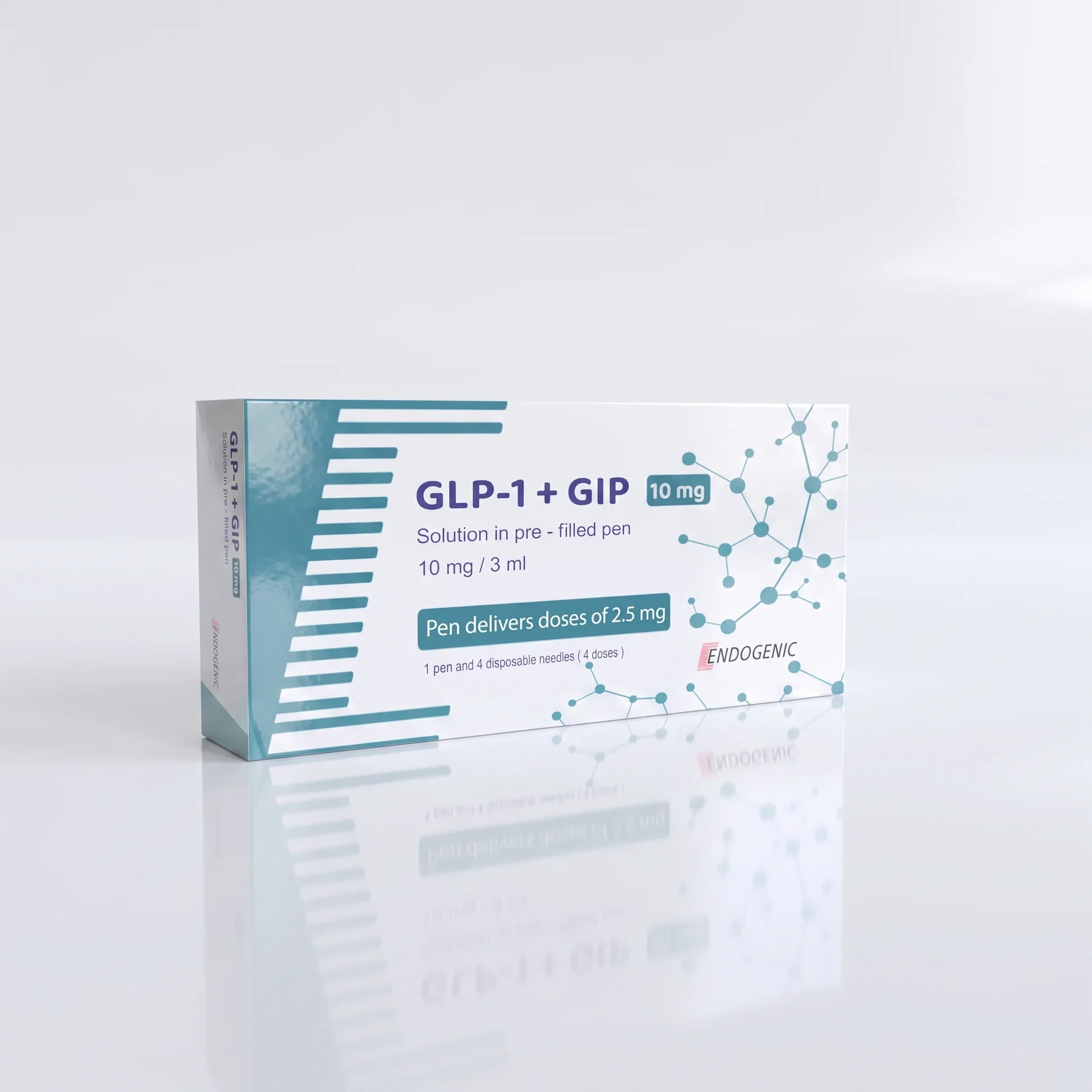
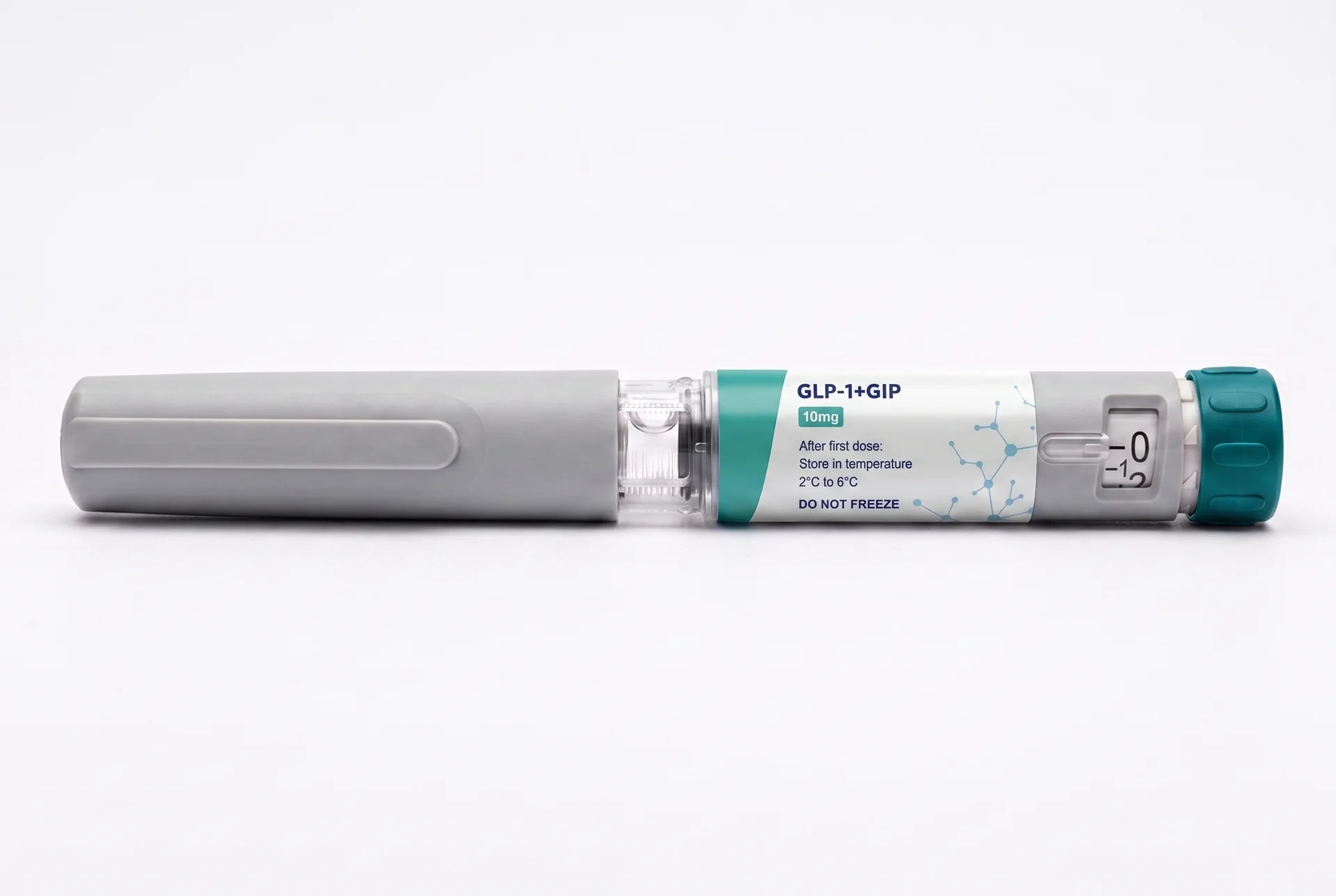
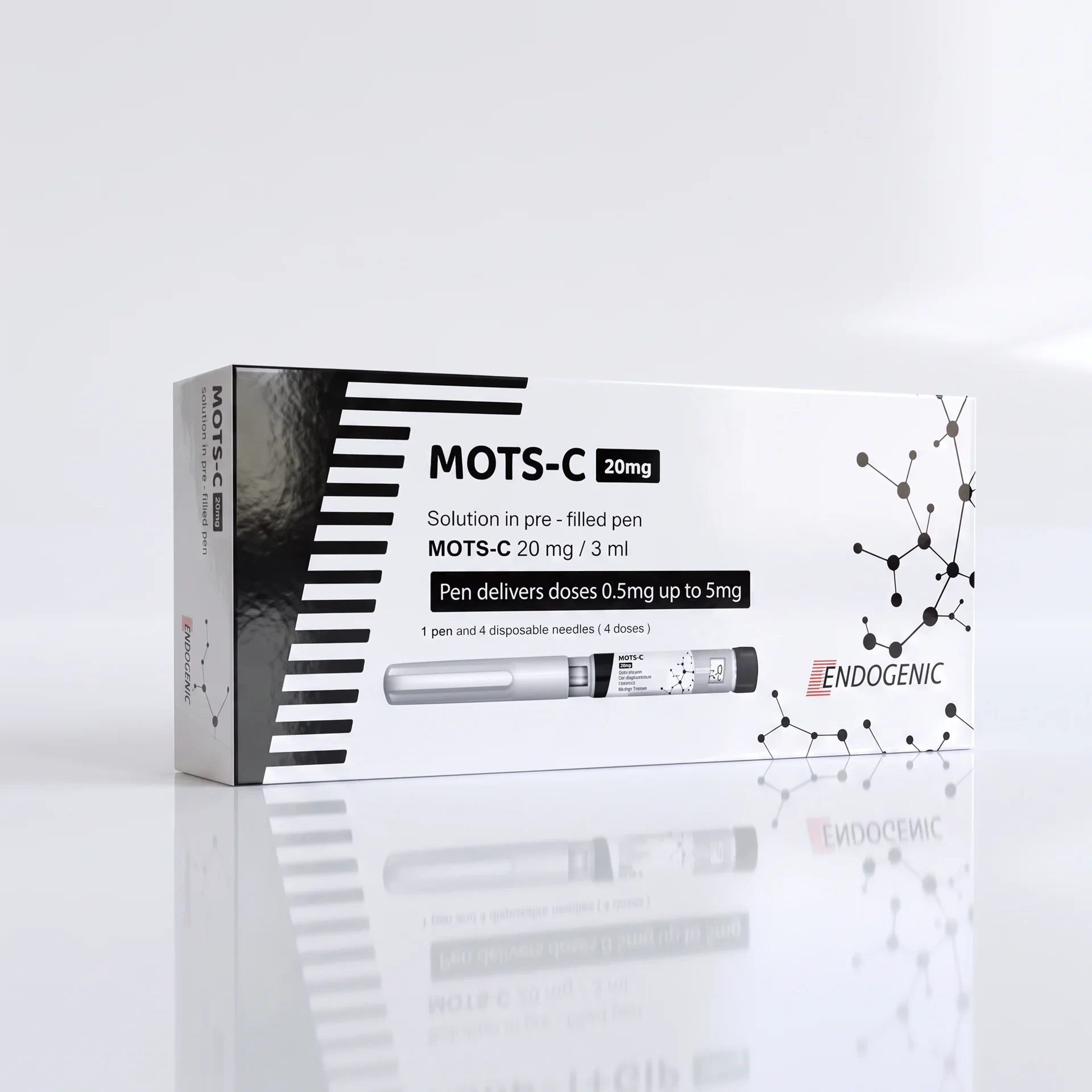
GLP1+GIP 10mg PEN
GLP1 + GIP pen is a high-quality synthetic incretin peptide intended exclusively for in vitro laboratory research. This preparation combines the sequences of two key incretin hormones – GLP-1 and GIP – enabling simultaneous activation of the GLP-1R and GIPR receptors and analysis of their synergistic effects in experimental settings. GLP-1 + GIP is used in research on pancreatic islet biology, adipocyte metabolism, neurobiology, and pharmaceutical screening of new incretin analogues, among other applications.
123,99 €
Fast shipping
Delivery options
Returns policy
GLP1 + GIP PEN 10mg - research reagent
- PEN format; nominal content: 10 mg.
- Ready-made solution; no lyophilisate reconstitution.
- Reagent exclusively for in vitro laboratory research.
What is GLP-1 + GIP?
GLP-1 + GIP is a chemical reagent containing a synthetically produced combination of amino acid sequences corresponding to the active forms of the peptides GLP-1 and GIP. The product is supplied in PEN format with a nominal content of 10 mg, as a ready-made solution for laboratory research that does not require dissolving a lyophilized powder. The solution volume, concentration and vehicle composition must be checked in the documentation for the specific batch.
In the Pro-Body offer other variants of this peptide are also available: GLP-1 + GIP 5 mg, GLP-1 + GIP 10 mg and GLP-1 + GIP PEN 10 mg.
Structure and chemical properties
GLP-1 in its active form (GLP-1(7-36)amide or GLP-1(7-37)) is a peptide consisting of 30-31 amino acids. It is secreted in the process of post-translational processing of proglucagon by the prohormone convertase PC1/3 in the L cells of the small intestine and colon. The native form of GLP-1 is characterized by a very short plasma half-life (approximately 1.5-2 minutes), because it undergoes rapid degradation by the enzyme dipeptidyl peptidase IV (DPP-IV), which cleaves off two N-terminal amino acids.
GIP (glucose-dependent insulinotropic polypeptide) is a peptide composed of 42 amino acids, secreted by the K cells of the duodenum and jejunum. Like GLP-1, it is subject to degradation by DPP-IV, which results in a biological half-life of approximately 5-7 minutes.
Synthetic GLP-1 + GIP PEN 10 mg may contain structural modifications intended to increase stability against enzymatic degradation under experimental conditions. Typical modifications include:
- Substitution of the amino acid alanine at position 2 (the DPP-IV cleavage site)
- Acylation with a fatty acid to increase affinity for plasma albumin
- C-terminal modifications affecting the conformation of the peptide
Purity and analysis
Peptides offered for research purposes by Pro-Body undergo rigorous quality control. Key analytical parameters include:
- HPLC purity – measured by high-performance liquid chromatography (HPLC) with UV detection. Expected purity ≥98%.
- Mass spectrometry (MS) – confirmation of peptide identity by analysis of molecular mass using ESI-MS or MALDI-TOF.
- PEN solution parameters – establish the volume, concentration and vehicle composition from the documentation for the specific batch. Residual moisture specifications for a lyophilisate do not describe a ready-made PEN solution.
- Peptide content – determined by amino acid analysis (AAA) or based on UV absorption.
- Endotoxins – testing for the presence of bacterial endotoxins by the LAL (Limulus Amebocyte Lysate) method.
Each batch of the product should be accompanied by a Certificate of Analysis (CoA) containing the results of the above tests, the batch number, and the date of production.
Storage and handling
PEN format. GLP-1 + GIP PEN 10 mg is supplied as a ready-made solution and does not require reconstitution of a powder.
Storage and stability. Follow the manufacturer’s documentation for the specific batch, including the label, certificate of analysis and safety data sheet. Storage temperature, suitability for freezing and the period of use after opening must not be inferred from data for a lyophilized product.
Handling in the laboratory. Work with the reagent under appropriate laboratory conditions, using protective equipment and the procedures specified for the batch.
Mechanism of action in vitro
Under laboratory in vitro conditions, the mechanisms by which GLP-1 and GIP act on target cells have been studied in detail:
Activation of the GLP-1R receptor
GLP-1 binds to the GLP-1R receptor – a G protein-coupled receptor (GPCR) of class B1. After ligand binding, the Gαs protein is activated, which leads to an increase in the intracellular concentration of cAMP (cyclic adenosine monophosphate) through the activation of adenylyl cyclase. The increased concentration of cAMP activates protein kinase A (PKA) and the guanine nucleotide exchange factor Epac2 (Exchange protein directly activated by cAMP). In the β cells of the pancreatic islets (studied in vitro) this leads to:
- Closure of ATP-dependent potassium channels (KATP)
- Depolarization of the cell membrane
- Opening of voltage-dependent calcium channels
- Increase in the intracellular concentration of Ca²⁺ ions
- Exocytosis of granules containing insulin
Activation of the GIPR receptor
GIP acts on the GIPR receptor – also a receptor of the GPCR class B1 family. The signal transduction mechanism is analogous to GLP-1R and involves the cAMP/PKA pathway. However, GIPR exhibits a different tissue expression profile – in addition to the β cells of the pancreas, it also occurs in adipocytes (fat cells), osteoblasts, and neurons. In vitro studies on adipocytes have shown that activation of GIPR affects:
- Lipid metabolism in adipose tissue
- Stimulation of lipogenesis under conditions of hyperinsulinemia
- Modulation of the expression of genes associated with thermogenesis in brown adipose tissue
Synergy of GLP-1 and GIP in in vitro studies
Experiments on isolated islets of Langerhans and on cell lines (INS-1, MIN6) have shown that simultaneous activation of GLP-1R and GIPR leads to an additive or synergistic increase in insulin secretion compared with activation of each receptor separately. The mechanism of this synergy involves the convergence of cAMP pathways within the submembrane microdomain and the mutual modulation of receptor desensitization.
Applications in research
GLP-1 + GIP PEN 10 mg finds application in many areas of biomedical research conducted under in vitro and in silico conditions:
Research on the biology of pancreatic islets
The peptide is used to study the mechanisms of insulin and glucagon secretion in isolated human and animal pancreatic islets. It allows the analysis of the effect of dual incretin stimulation on the kinetics of insulin secretion (the first and second phase of secretion) and on the survival of β cells under conditions of glucolipotoxicity.
Research on adipocyte metabolism
In primary adipocyte cultures and cell lines (3T3-L1), GLP-1 + GIP is used to study the effect on lipogenesis, lipolysis, and the expression of thermogenic genes (e.g., UCP-1 in brown adipose tissue). These studies help to understand the molecular basis of the effect of incretins on adipose tissue metabolism.
Neurobiological research
The GLP-1R and GIPR receptors are expressed in many areas of the brain, including the hypothalamus, hippocampus, and cerebral cortex. Studies on neuronal cultures (e.g., SH-SY5Y, primary hippocampal neurons) allow the analysis of the potential neuroprotective action of these peptides – in particular their effect on oxidative stress, apoptosis, and inflammatory processes within nervous tissue.
Research on insulin resistance
In in vitro models of insulin resistance (e.g., HepG2 hepatocytes treated with palmitate), GLP-1 + GIP is used to analyze its effect on the insulin signaling pathway (IRS-1/PI3K/Akt) and on the expression and activity of the GLUT4 glucose transporters.
Pharmaceutical screening
GLP-1 + GIP PEN 10 mg serves as a reference substance in research on new analogs of incretin peptides. It allows the comparison of the strength of action (potency), receptor selectivity, and metabolic stability of new compounds in receptor-ligand binding assays and functional assays (cAMP measurement, insulin secretion).
Summary
GLP-1 + GIP PEN 10 mg is a high-quality research peptide combining two key incretin sequences. It constitutes a valuable tool in the hands of scientists working in metabolic endocrinology, pancreatic islet biology, neurobiology, and pharmacology. Its application is limited solely to in vitro studies conducted under laboratory conditions. It is not a medicinal product, a dietary supplement, or a cosmetic, and it is not intended for use in humans or animals.
Scientific references
- Nauck MA, Meier JJ. “Incretin hormones: Their role in health and disease.” Diabetes, Obesity and Metabolism, 2018. – https://pubmed.ncbi.nlm.nih.gov/29364588/
- Frontiers in Endocrinology (2024) – “Mechanisms of action and therapeutic applications of GLP-1 and dual GIP/GLP-1 receptor agonists.” – Frontiers in Endocrinology
- Campbell JE, Drucker DJ. “Pharmacology, physiology, and mechanisms of incretin hormone action.” Cell Metabolism, 2013. – https://pubmed.ncbi.nlm.nih.gov/23823483/
5.0
6 reviews
-
m.marta
 Polski
Verified purchase
Polski
Verified purchase
Product review
Duży plus za bardzo łatwe i wygodne użycie. Polecam!
-
m.marta
Polski
Verified purchase
Product review
Duży plus za komfort stosowania. Jeśli ktoś waha się, czy spróbować – warto!
-
Meg
Polski
Product review
Posiadam 5 mg teraz będę zamawiała 10. Szybka wysyłka, łatwe w użyciu
-
Sana
Polski
Verified purchase
Product review
Produkt jak najbardziej w porządku. W razie wątpliwości wystarczy napisać do sklepu korzystając z formularza w zakładce "kontakt" - otrzymałam odpowiedzi na wszystkie nurtujące mnie pytania odnośnie produktu. Polecam :)
-
Ela
Polski
Product review
Polecam z całego serca! Szybka wysyłka, miła obsługa, zero stresu. Produkt wygląda rewelacyjnie – minimalistyczny design i bardzo estetyczne opakowanie. Cały proces zakupowy był szybki, przejrzysty i bezproblemowy. Tak powinno być wszędzie!
-
Ania
Polski
Product review
Największy plus to wygoda stosowania. Dla osob ktore boja sie igiel jest to opcja najlepsza. Polecam
Related products