

Orforglipron is a synthetic small molecule (approximately 883 g/mol, C₄₈H₄₈F₂N₁₀O₅) that activates the GLP-1 receptor as a biased agonist, without a peptide structure reproducing native GLP-1. Semaglutide (approximately 4114 g/mol) and tirzepatide (approximately 4814 g/mol) are peptide analogues of native incretin hormones, requiring subcutaneous injection or a specific formulation with SNAC in the case of oral semaglutide. Orforglipron allows oral dosing in a standard capsule format without co-formulation with an absorption enhancer.
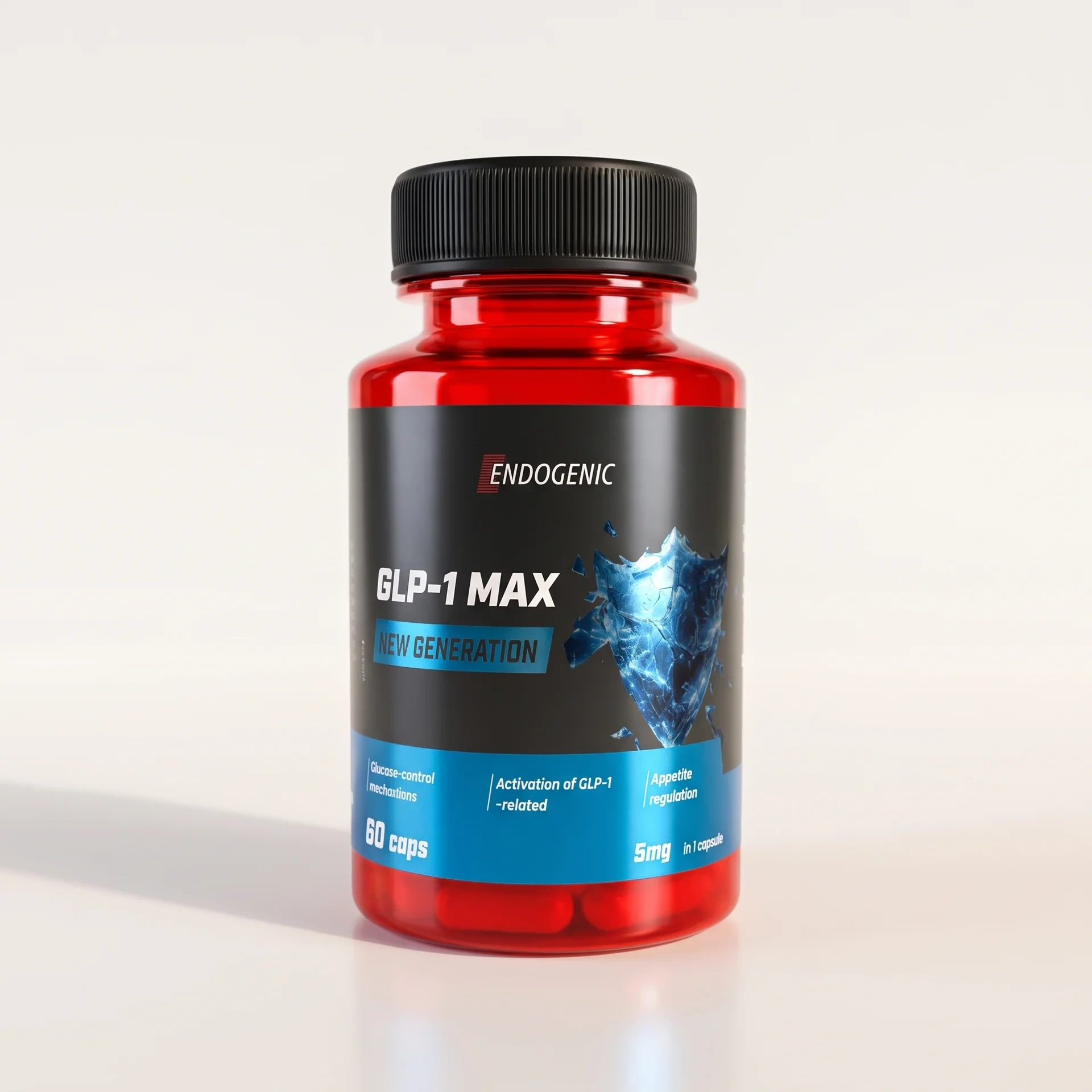
GLP-1 MAX 5mg 60 caps
GLP-1 MAX orforglipron is a small-molecule oral GLP-1 receptor agonist supplied as 5 mg capsules in a pack of 60. The substance is a molecular tool for research into GLP-1 receptor pharmacology, the oral bioavailability of small-molecule peptidomimetics, glucose metabolism and appetite regulation in animal models and in vitro systems.
123,99 €
Fast shipping
Delivery options
Returns policy
GLP-1 MAX (orforglipron) 5 mg 60 caps - Endogenic
- GLP-1 MAX: orforglipron, a small-molecule GLP-1 receptor agonist.
- 5 mg per capsule; pack of 60 capsules.
- Research Use Only reagent, not a medicinal product.
GLP-1 MAX (orforglipron) is a small-molecule GLP-1 receptor agonist supplied in 5 mg capsules, in packs of 60. The reagent is intended for laboratory research into GLP-1 receptor pharmacology, oral bioavailability, glucose metabolism and appetite regulation in animal models and in vitro systems. It is not a medicinal product and is not intended for human use.
In the Pro-Body range, GLP-1 MAX is supplied as hard capsules containing 5 mg of orforglipron per capsule, in packs of 60 capsules, a configuration corresponding to titration protocols in the clinical research literature. This format falls within the catalog of peptides in capsules used in research protocols involving oral dosing.
What are oral non-peptide GLP-1 agonists?
Orforglipron belongs to a new generation of oral small-molecule GLP-1 agonists. Its activity does not depend on a peptide structure reproducing native GLP-1(7-36)NH₂, but on a small molecule capable of activating the receptor without mimicking its amino acid sequence. This class differs fundamentally from the two earlier generations of GLP-1 agonists:
First generation: injectable peptide agonists
Exenatide, liraglutide, dulaglutide, injectable semaglutide and tirzepatide. These peptide molecules are based on the exendin-4 sequence or modified native GLP-1 and require subcutaneous injection (once daily or once weekly) because of proteolytic degradation in the gastrointestinal tract. The article Tirzepatide vs semaglutide: which is better for weight loss? discusses a direct comparison of the most frequently discussed members of this generation.
Second generation: an oral peptide agonist
Oral semaglutide (Rybelsus®). A peptide molecule co-formulated with SNAC (sodium N-(8-[2-hydroxybenzoyl]amino)caprylate), a gastric absorption enhancer. Despite this advance, oral bioavailability remains limited (approximately 1%), with strict dosing conditions (on an empty stomach, one hour before food).
Third generation: small-molecule oral agonists, the orforglipron class
Small molecules capable of activating the GLP-1 receptor with greater oral bioavailability than peptide forms. Specific values vary between model species and have not been fully disclosed publicly for orforglipron; Eli Lilly reports substantial serum concentrations after oral administration without co-formulation with an absorption enhancer and without meal restrictions.
The class opens up the possibility of daily oral dosing without injections and substantially less expensive production (small-molecule chemical synthesis versus peptide synthesis). In the literature, orforglipron is described as a biased agonist: it preferentially activates the cAMP signaling pathway while limiting β-arrestin-dependent receptor internalization. This profile may have implications for long-term receptor desensitization and therapeutic tolerance, an active area of preclinical and clinical research.
SCIENTIFIC PERSPECTIVE
Most published data on orforglipron come from Eli Lilly’s development program: preclinical studies in HEK293 cells transfected with the GLP-1 receptor, mouse and rat models of diabetes/obesity, and phase I and II clinical trials published in The Lancet (Frias et al., 2023) and NEJM (Wharton et al., 2023). Selected phase III results from ATTAIN-1 (obesity) and ACHIEVE (T2DM) were published in NEJM in 2025.
The status of EMA/FDA regulatory decisions is changing dynamically; the substance description reflects the state of the literature at the date of the latest COA update. Every claim in this description refers to preclinical data or published clinical trial results. The full pharmacological and safety profile will be updated as further phase III publications become available.
What is orforglipron?
- Chemical name (IUPAC): a small-molecule non-peptide peptidomimetic structure
- Development code: LY3502970 (Eli Lilly), formerly OWL833 (Chugai Pharmaceutical)
- International nonproprietary name (INN): orforglipron
- Compound class: small-molecule oral GLP-1 receptor agonist, a biased agonist preferentially activating the cAMP pathway
- Molecular formula: C₄₈H₄₈F₂N₁₀O₅
- Molar mass: approximately 883 g/mol (PubChem CID 137319706)
- Pharmacokinetic characteristics: half-life in human serum approximately 29–49 h (allowing once-daily dosing), Tmax approximately 6–10 h
- Physical form: hard capsules containing powder with 5 mg of orforglipron (5 mg API per capsule × 60 capsules per pack)
The molecule is a small-molecule peptidomimetic with a heterocyclic structure and affinity for an allosteric binding site on the GLP-1 receptor. Pro-Body supplies GLP-1 MAX synthesized to research-grade standards, with identity verified by high-resolution tandem mass spectrometry (HRMS) and purity measured by HPLC with UV detection at 254 nm and 280 nm.
Table of chemical characteristics
| Parameter | Value |
|---|---|
| International nonproprietary name | orforglipron |
| Development code | LY3502970 (Eli Lilly), OWL833 (Chugai) |
| Compound class | small-molecule oral GLP-1 receptor agonist |
| Molecular formula | C₄₈H₄₈F₂N₁₀O₅ |
| Molar mass | approximately 883 g/mol |
| PubChem CID | 137319706 |
| Purity (HPLC) | ≥98% |
| Identity confirmation | high-resolution tandem mass spectrometry (HRMS) |
| Form | hard capsules, pack of 60 |
| API content per capsule | 5 mg of orforglipron |
| API content per pack | 300 mg of orforglipron (60 × 5 mg) |
| Excipients | microcrystalline cellulose, colloidal silica, magnesium stearate, HPMC capsule |
| Storage conditions | 15–25°C, dry location, protect from light |
| Stability | 24 months from the production date in the original packaging |
| Half-life (literature) | approximately 29–49 h (phase I pharmacokinetic studies) |
| COA per batch | PDF displayed inline on the product page |
Structure and physicochemical properties
Orforglipron is a small-molecule peptidomimetic with a molar mass of approximately 883 g/mol and molecular formula C₄₈H₄₈F₂N₁₀O₅ (PubChem CID 137319706). Its molecular weight exceeds the classical threshold in Lipinski’s Rule of Five (≤500 Da), placing it in the emerging Beyond Rule of Five (bRo5) class: small-molecule drugs with a mass above 500 Da for which oral bioavailability is achievable through additional structural features, including conformational rigidity and exposure of polar domains.
Compared with peptide GLP-1 agonists (semaglutide: approximately 4114 g/mol; tirzepatide: approximately 4814 g/mol), the molecule is about five times smaller, which determines its potential for passive diffusion across the small-intestinal epithelial membrane.
Physicochemical characteristics
- Lipophilicity (logP): moderate, within a range favorable for small-molecule oral bioavailability (typically logP 2–4 for this class of molecules)
- Water solubility: limited at neutral pH, better in an acidic environment (pH 1–3, corresponding to gastric juice)
- Solubility in organic solvents: good in DMSO (up to 50 mg/ml), moderate in ethanol and methanol
- Thermal stability: stable at room temperature in the solid phase; storage at 2–8°C is preferred for aqueous solutions
- Hydrolysis sensitivity: limited at neutral pH; exposure to extreme pH (<2 or >10) may cause degradation of bonds in the heterocyclic ring
Oral bioavailability
The small-molecule GLP-1 agonist class is distinguished by substantially greater oral bioavailability than peptide forms. According to pharmacokinetic data from phase I studies (Pratt et al., 2023), orforglipron reaches substantial serum concentrations after oral administration without co-formulation with an absorption enhancer (such as SNAC in oral semaglutide) and without meal restrictions.
This provides a practical advantage over oral semaglutide, whose protocol requires administration on an empty stomach, at least 30 minutes before the first meal. Specific values for the absolute bioavailability of orforglipron have not been fully disclosed publicly and may differ between model species.
Mechanism of action
Orforglipron functions as a biased GLP-1 receptor agonist: it preferentially activates the cAMP/PKA signaling pathway while limiting recruitment of β-arrestins 1 and 2 to the receptor. This profile has important implications for long-term receptor signaling dynamics and the potential therapeutic tolerance profile.
GLP-1 receptor activation: the cAMP/PKA pathway
The GLP-1 receptor is a class B G-protein-coupled receptor (GPCR, family B/secretin-like receptor). After binding an agonist, the receptor activates Gαs, which activates adenylyl cyclase and increases intracellular cAMP. Increased cAMP activates PKA and EPAC2, resulting in increased glucose-dependent insulin secretion in pancreatic β cells (the glucose-dependent insulinotropic effect).
In vitro studies in HEK293 cell lines transfected with the GLP-1 receptor and in isolated pancreatic islets observed:
- Increased intracellular cAMP following exposure to orforglipron (EC₅₀ in the nanomolar range)
- Glucose-concentration-dependent increases in insulin secretion
- A signaling profile characteristic of an agonist preferentially activating cAMP
Biased agonism: limiting β-arrestin recruitment
Classical full GLP-1 receptor agonists (peptide agonists) activate two pathways in parallel: cAMP (signaling) and β-arrestin (receptor internalization and desensitization). As a biased agonist, orforglipron favors the cAMP pathway with limited activation of the β-arrestin pathway. In vitro, this means:
- Preservation of cAMP signaling at a full-agonist level
- Limited receptor internalization after exposure
- Potentially reduced receptor desensitization over time
This profile may have implications for long-term therapeutic efficacy: a receptor that remains at the cell surface longer retains its capacity for continued signaling.
Effects on glucose metabolism in animal models
In animal models of diet-induced obesity (DIO C57BL/6 mice on a high-fat diet) and type 2 diabetes (db/db mice, Zucker Diabetic Fatty rats), administration of orforglipron led to observations of:
- Reduced fasting glucose concentrations
- Improved oral glucose tolerance test (OGTT) parameters
- Reduced HbA1c levels in multi-week protocols
- Leptin- and CCK (cholecystokinin)-dependent reductions in food intake
Effects on body weight and appetite regulation
The GLP-1 receptor is expressed in hypothalamic nuclei responsible for appetite regulation (the arcuate and ventromedial nuclei). Activation of the central GLP-1 receptor in animal models leads to:
- Increased POMC (proopiomelanocortin) expression
- Inhibition of NPY (neuropeptide Y) expression
- Prolonged satiety (delayed gastric emptying)
Animal models showed dose-dependent body-weight reduction, with preferential reduction of visceral adipose tissue, a mechanism similar to that used by other peptides for fat reduction studied in animal models of obesity.
Phase II clinical trial data, supplemented by phase III results from 2025
In the phase II study published in NEJM (Wharton et al., 2023, n=272 participants with BMI ≥30 kg/m² or BMI ≥27 with a comorbidity), orforglipron at doses of 12, 24, 36 and 45 mg/day led to body-weight reductions:
- Primary endpoint at week 26: −8.6% to −12.6% (placebo: −2.0%)
- Secondary endpoint at week 36: −9.4% to −14.7% (placebo: −2.3%)
The safety profile was consistent with the GLP-1 agonist class. The most common adverse events were nausea, diarrhea, constipation and vomiting, typically mild to moderate and most pronounced during titration. Phase III results from ATTAIN-1 (Aronne et al., NEJM 2025, PMID:40960239) and ACHIEVE (Rosenstock et al., NEJM 2025, PMID:40544435) confirm and extend the phase II observations.
IMPORTANT DISTINCTION
In this description, the phrase “effects on body weight and glucose metabolism” means: “In preclinical in vivo animal-model studies and published results from phase II clinical trials (Wharton et al., 2023), modulation of the GLP-1 receptor cAMP pathway, reductions in glycemic parameters and dose-dependent body-weight reductions were observed.” This does not guarantee an effect outside clinical conditions and does not constitute a claim of therapeutic efficacy for an approved indication; the substance is undergoing studies supporting regulatory approval.
Applications in scientific research
GLP-1 MAX (orforglipron) is used as a molecular tool in several distinct research areas. The 5 mg hard-capsule format corresponds to titration protocols in the literature from Eli Lilly’s clinical program and enables precise reproduction of research dosing schedules.
Characterization of GLP-1 receptor biased agonism
HEK293 cell cultures transfected with the GLP-1 receptor and pancreatic β-cell lines (INS-1, MIN6): orforglipron serves as a reference small-molecule biased agonist in comparative studies with peptide GLP-1 agonists. Measurements include cAMP kinetics (FRET-based biosensors), β-arrestin recruitment (BRET assay) and receptor internalization (confocal immunofluorescence).
Oral pharmacokinetic studies of small-molecule peptidomimetics
Animal models (mice, rats, Göttingen minipigs): orforglipron serves as a tool for studying oral bioavailability in the small-molecule peptidomimetic class. Measurements include AUC, Cmax, Tmax, T1/2, clearance and tissue distribution after oral and comparative intravenous administration.
Research into glucose metabolism and type 2 diabetes
Genetic db/db and ob/ob models, streptozotocin models and DIO models: orforglipron serves as a tool for studying the mechanism of glucose-dependent insulin secretion and protocols addressing long-term efficacy/tolerance.
Research into appetite regulation and central GLP-1 signaling
Mouse models with access to ad libitum studies and food-intake protocols: orforglipron serves as a tool for studying the central effects of GLP-1 agonists on hypothalamic centers regulating appetite (POMC, NPY, CART).
Comparative studies of GLP-1 agonist classes
Cell cultures and animal models: comparison of pharmacological profiles of orforglipron (small-molecule biased agonist), semaglutide (peptide full agonist), tirzepatide (dual GLP-1/GIP agonist) and liraglutide. Measurements include receptor kinetics, long-term desensitization, tachyphylaxis and tissue-specific profiles.
Research into oral-formulation bioavailability
Comparative protocols: orforglipron (a formulation without SNAC), oral semaglutide (with SNAC) and injectable forms provide tools for researching formulation strategies for peptides and peptidomimetics with limited oral bioavailability.
Summary
GLP-1 MAX (orforglipron, development code LY3502970, molecular weight approximately 883 g/mol, formula C₄₈H₄₈F₂N₁₀O₅, PubChem CID 137319706) is a small-molecule oral GLP-1 receptor agonist with a biased profile, preferentially activating cAMP with limited β-arrestin recruitment. The substance is a molecular tool for research into GLP-1 receptor pharmacology, oral bioavailability of small-molecule peptidomimetics, glucose metabolism and appetite regulation in animal models and in vitro systems.
The 5 mg hard-capsule format in packs of 60 corresponds to titration protocols in the literature from Eli Lilly’s clinical program. Orforglipron has undergone phase III studies (the ACHIEVE program for T2DM and ATTAIN for overweight and obesity); selected results were published in NEJM in 2025 (PMID:40960239, ATTAIN-1, Aronne et al.; PMID:40544435, ACHIEVE, Rosenstock et al.). The status of EMA/FDA regulatory decisions is dynamic and should be verified directly with the manufacturer when the description is updated. All approved pharmaceutical GLP-1 receptor agonists require a prescription and medical supervision.
GLP-1 MAX is supplied with a certificate confirming HPLC purity ≥98%, identity confirmation by high-resolution tandem mass spectrometry (HRMS), and batch documentation (COA per batch). Each pack bears a unique batch number enabling batch traceability.
References
- Wharton S, Blevins T, Connery L, Rosenstock J, Raha S, Liu R, Ma X, Mather KJ, Haupt A, Robins D, Pratt E, Kazda C, Konig M; GZGI Investigators. Daily Oral GLP-1 Receptor Agonist Orforglipron for Adults with Obesity. N Engl J Med. 2023 Sep 7;389(10):877–888. doi:10.1056/NEJMoa2302392. PMID: 37351564. PubMed
- Frias JP, Hsia S, Eyde S, Liu R, Ma X, Konig M, Kazda C, Mather KJ, Haupt A, Pratt E, Robins D. Efficacy and safety of oral orforglipron in patients with type 2 diabetes: a multicentre, randomised, dose-response, phase 2 study. Lancet. 2023 Aug 5;402(10400):472–483. doi:10.1016/S0140-6736(23)01302-8. PMID: 37369232. PubMed
- Pratt E, Ma X, Liu R, Robins D, Coskun T, Sloop KW, Haupt A, Benson C. Orforglipron (LY3502970), a novel, oral non-peptide glucagon-like peptide-1 receptor agonist: A Phase 1a, blinded, placebo-controlled, randomized, single- and multiple-ascending-dose study in healthy participants. Diabetes Obes Metab. 2023;25(9):2634–2641. doi:10.1111/dom.15184. PMID: 37344954. PubMed
- Kawai T, Sun B, Yoshino H, Feng D, Suzuki Y, Fukazawa M, Nagao S, Wainscott DB, Showalter AD, Droz BA, Kobilka TS, Coghlan MP, Willard FS, Kawabe Y, Kobilka BK, Sloop KW. Structural basis for GLP-1 receptor activation by LY3502970, an orally active nonpeptide agonist. Proc Natl Acad Sci USA. 2020 Nov 24;117(47):29959–29967. doi:10.1073/pnas.2014879117. PMID: 33177239. PubMed
- Pratt E, Ma X, Liu R, Robins D, Haupt A, Benson C, Hennige AM. Orforglipron (LY3502970), a novel, oral non-peptide glucagon-like peptide-1 receptor agonist: A Phase 1b, multicentre, blinded, placebo-controlled, randomized, single- and multiple-ascending-dose study in healthy adults. Diabetes Obes Metab. 2023;25(9):2642–2649. doi:10.1111/dom.15150. PMID: 37264711. PubMed
- Knerr PJ, Mowery SA, Douros JD, Premdjee B, Hjøllund KR, He Y, Kruse Hansen AM, Olsen AK, Perez-Tilve D, DiMarchi RD, Finan B. Next generation GLP-1/GIP/glucagon triple agonists normalize body weight in obese mice. Mol Metab. 2022 Sep;63:101533. doi:10.1016/j.molmet.2022.101533. PMID: 35809773. PubMed
- Drucker DJ. The benefits of GLP-1 drugs beyond obesity. Science. 2024 Jul 19;385(6710):258–260. doi:10.1126/science.adn4128. PMID: 39024455. PubMed
- Aronne LJ, Horn DB, le Roux CW, et al. Orforglipron, an Oral Small-Molecule GLP-1 Receptor Agonist for Obesity Treatment (ATTAIN-1). N Engl J Med. 2025 Nov 6. PMID: 40960239. PubMed
- Rosenstock J, Hsia S, Nevarez Ruiz L, Eyde S, Cox D, et al. Orforglipron, an Oral Small-Molecule GLP-1 Receptor Agonist, in Early Type 2 Diabetes (ACHIEVE). N Engl J Med. 2025 Sep 18;393(11):1065–1076. doi:10.1056/NEJMoa2505669. PMID: 40544435. PubMed
FAQ
Moderate in water (better at acidic pH), good in DMSO (up to 50 mg/ml), and moderate in ethanol and methanol. This is a solubility profile typical of small-molecule peptidomimetics with moderate lipophilicity. In laboratory conditions, DMSO is generally used for stock solutions, followed by dilution in buffer according to the in vitro protocol.
In human serum (phase I pharmacokinetic studies), the half-life ranges from 29 to 49 h, allowing once-daily dosing. Tmax typically occurs 6–10 h after oral administration. The pharmacokinetic profile was stable regardless of whether the stomach was full, with no meal restrictions before administration.
Avoid strongly acidic (pH <2) and strongly alkaline (pH >10) aqueous environments because bonds in the heterocyclic ring may undergo hydrolysis. Avoid direct UV light, high temperatures (>30°C) and moisture (>65% RH), which accelerate solid-phase API degradation. Freeze-thaw cycles of stock solutions in DMSO at −20°C are permissible (up to three cycles in accordance with good laboratory practice).
5.0
1 review
-
Paula
 Polski
Product review
Bardzo lubię ten produkt. Do tego szybka wysyłka i świetny kontakt ze sprzedającym.
Related products