

Huperzine A is a sesquiterpene alkaloid isolated from the Chinese club moss Huperzia serrata. It acts as a reversible, selective inhibitor of acetylcholinesterase — the enzyme that breaks down acetylcholine. By inhibiting this enzyme, huperzine A prolongs the presence of the cholinergic transmitter at the synapse.
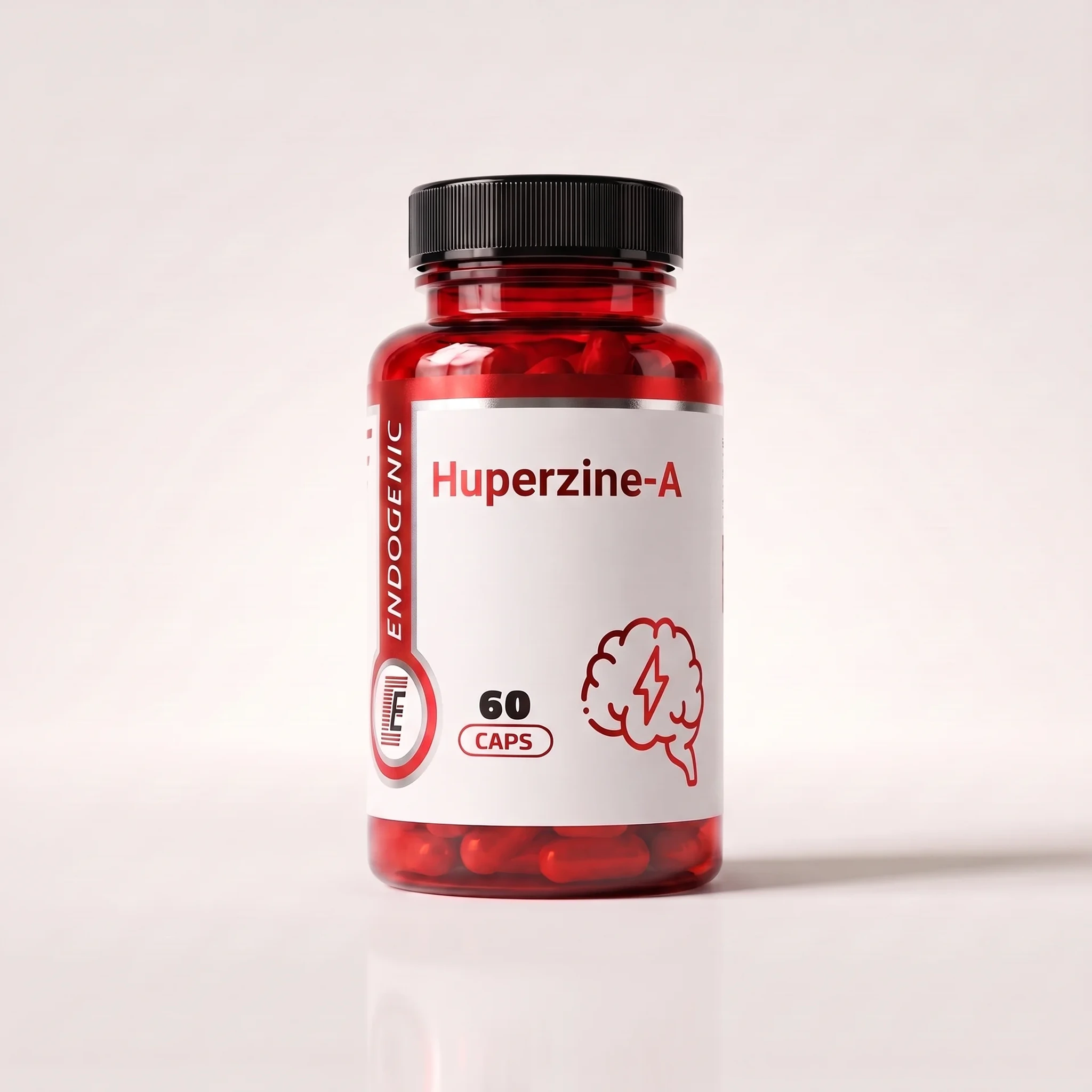
Huperzine-A 250mcg 60caps
Huperzine-A 250 mcg × 60 capsules is a dietary supplement made from a standardized extract of the clubmoss Huperzia serrata, providing a natural, reversible inhibitor of acetylcholinesterase. It supports cholinergic transmission associated with memory, concentration, and mental clarity. Serving size: 250 mcg per day; cyclical use is recommended.
18,99 €
Fast shipping
Delivery options
Returns policy
Huperzine-A 250 mcg 60 caps — a natural acetylcholinesterase inhibitor, a dietary supplement supporting memory and concentration
- Huperzine-A: huperzine A from Huperzia serrata.
- 250 mcg, 60 capsules.
- Dietary supplement according to the source description.
Acetylcholine is a neurotransmitter behind the brain’s ability to learn, remember and maintain attention on a single task. The problem is that an enzyme called acetylcholinesterase (AChE) breaks it down in the synaptic cleft within a fraction of a second — an elegant “off-switch” mechanism, but during periods of intense mental work it can become a bottleneck. Huperzine-A acts precisely at this point: it slows the breakdown of acetylcholine, so that the transmitter remains active at the cholinergic synapse for longer.
Huperzine-A (huperzine A) is a sesquiterpene alkaloid isolated from the Chinese club moss Huperzia serrata — a plant used in traditional Chinese medicine for centuries under the name Qian Ceng Ta. Modern pharmacology described it in the 1980s as one of the most potent natural, reversible inhibitors of acetylcholinesterase. It is a rare case of a plant-derived ingredient whose mechanism is characterized at the structural level — we know the way in which the molecule binds to the active pocket of the enzyme.
This product delivers a standardized extract in a format of 60 capsules of 250 mcg (0.25 mg) huperzine A — a dose within the typical supplementation range for supporting cognitive functions. The capsule form makes it possible to precisely measure out a portion without operating a microscale, which has real practical significance for an active substance in the microgram range. The raw material is subjected to purity and identity control, and the declared content of huperzine A is confirmed analytically.
What is huperzine A and where does it come from
Chemically, huperzine A is an alkaloid with a sesquiterpene structure incorporating a pyridone system — a small, lipophilic molecule that easily crosses the blood-brain barrier. This ability to penetrate the central nervous system distinguishes it from many synthetic AChE inhibitors and explains why the effect is felt centrally, and not only peripherally.
- Common name: huperzine A (Huperzine-A, Hup-A)
- Natural source: club moss Huperzia serrata (Chinese club moss, Qian Ceng Ta)
- Compound class: sesquiterpene alkaloid
- Primary mechanism: reversible, selective inhibitor of acetylcholinesterase (AChE)
- Molecular weight: ~242 Da
- Delivered form: capsule, 250 mcg (0.25 mg) huperzine A from standardized extract, 60 capsules
Huperzia serrata grows slowly and contains huperzine A in trace amounts, which is why modern supplementation raw material is obtained from extracts standardized to a defined alkaloid concentration (typically 1%). Standardization is the point at which the quality of the raw material determines the reproducibility of the dose — a non-standardized extract would mean an unpredictable content of active substance in each capsule.
Mechanism of action — why acetylcholine matters
Acetylcholine is a neurotransmitter of the cholinergic system, which plays a role in the processes of working memory, consolidation of the memory trace, attention and alertness. After being released into the synaptic cleft, acetylcholine activates postsynaptic receptors and is then rapidly hydrolyzed by acetylcholinesterase into choline and acetate. The higher the activity of this enzyme, the shorter the “lifespan” of the cholinergic signal.
Huperzine A binds to the catalytic pocket of AChE and blocks acetylcholine’s access to the enzyme’s active site. In practice, this means a longer presence of the transmitter at the synapse and intensification of cholinergic transmission. In contrast to irreversible inhibitors (e.g. certain organophosphorus compounds), the blockade is reversible — the molecule leaves the enzyme over time, and AChE activity returns to normal. This is an important argument for the safety profile while maintaining the proper portion.
The mechanism of huperzine A is not limited solely to inhibition of AChE. In preclinical models, two additional directions have been described:
- Modulation of NMDA receptors — huperzine A exhibits moderate antagonistic affinity toward the glutamatergic NMDA receptor, which in cellular studies was linked to a limitation of glutamate excitotoxicity
- Neuroprotective action — in neuronal cultures, a limitation of oxidative stress and apoptosis induced by various factors was observed; the mechanism was associated, among others, with an influence on mitochondrial function
It must be honestly noted where the boundary lies: the NMDA and neuroprotection directions come mainly from in vitro studies and animal models and have the character of a mechanism, not a proven clinical effect in a healthy human. The truly confirmed axis is the inhibition of acetylcholinesterase.
IMPORTANT DISTINCTION
“Support for memory and concentration” in the context of this supplement means modulation of cholinergic transmission through reversible inhibition of AChE. It does not mean the treatment of memory disorders, dementia or Alzheimer’s disease. People with a neurological diagnosis or taking medications acting on the cholinergic system should consult supplementation with a physician before reaching for the product.
What the scientific literature says
Huperzine A belongs to the better-studied nootropic ingredients of plant origin, with a body of work that includes meta-analyses.
The meta-analysis by Yang et al. 2013 (PLoS One) covered randomized controlled trials involving patients with cognitive function disorders. The authors reported improvement on standardized scales for assessing cognitive function (including MMSE) relative to placebo, while simultaneously signaling methodological limitations of the included trials — small group sizes and varied quality of reporting. The conclusion was cautious: a beneficial signal exists, but it requires trials of higher quality.
The later meta-analysis by Xing et al. 2014 (Evid Based Complement Alternat Med) confirmed the direction of observation — the influence of huperzine A on cognitive test results in populations with memory deficits — with a similar reservation regarding the heterogeneity of the source studies. Both works consistently point to the cholinergic profile as the mechanism underlying the observed changes.
Earlier pharmacological works (including Wang et al. 2006, Acta Pharmacol Sin) described huperzine A as a selective, reversible AChE inhibitor with good penetration of the central nervous system and a favorable profile compared with other inhibitors of this class. It is from this line that the well-grounded description of the structural mechanism comes. Huperzine A is also sometimes combined into broader sets acting on cognitive functions — from choline sources to other nootropic substances with a complementary mechanism.
In the context of an athlete and a person working mentally, it is worth keeping things in proportion: the strongest data concern populations with cognitive deficits, and the transfer to a healthy, well-trained brain is an area in which large trials are lacking. The literature suggests a real cholinergic mechanism — it does not promise a sudden improvement in results in a healthy person.
Who is Huperzine-A for
The profile of this supplement is fairly specific. Huperzine-A 250 mcg may be of interest to people who use nootropic supplementation consciously, with an emphasis on the mechanism rather than on hype:
- People working mentally during periods of increased cognitive load (study, projects requiring sustained attention), looking for support for mental clarity
- Athletes paying attention to the neuromuscular component and the neuromuscular junction (acetylcholine is also the transmitter of the neuromuscular endplate) — with the awareness that these are not endurance data in the strict sense
- People building a nootropic stack — huperzine A is sometimes combined with choline sources (e.g. alpha-GPC, citicoline) as an ingredient influencing cholinergic transmission both from the side of precursor supply and from the side of inhibiting transmitter breakdown; a natural neighbor in such a set is MINDHUNTER X, combining racetams with alpha-GPC
People who are building a broader cognitive protocol may also consider peptide tools from the category of peptides for brain function — acting via a different track than AChE inhibition, such as DIHEXA influencing neurotrophic factors.
This is not a product for everyone. People with heart disease, asthma, epilepsy, peptic ulcer disease, cardiac arrhythmias, and those taking cholinergic or anticholinergic medications should exercise particular caution and consult use with a physician.
How to dose Huperzine-A
Huperzine A works already in the microgram range — this is one of the reasons why the capsule form with a measured portion has an advantage over weighing out powder.
- Standard portion: 1 capsule (250 mcg) daily, preferably in the first half of the day due to the profile of cholinergic stimulation
- Time of intake: in the morning or before work requiring focus; avoid late hours if you observe an influence on your sleep (more vivid dreams are a described effect of the cholinergic mechanism)
- Cyclical use: due to the long half-life and the mechanism of enzyme inhibition, a cyclical approach is advisable — e.g. 2–3 weeks of use, then a break. This makes it possible to limit receptor adaptation and maintain the perceptibility of the effect
- Do not exceed the recommended portion — more does not mean better, and intensified cholinergic activity may produce adverse symptoms (see below)
Start by assessing your own tolerance with a single portion before weaving Huperzine-A into a broader nootropic stack. This is a sensible approach with any ingredient acting on neurotransmission.
Bibliography
- Yang G, Wang Y, Tian J, Liu JP (2013). Huperzine A for Alzheimer’s disease: a systematic review and meta-analysis of randomized clinical trials. PubMed
- Xing SH, Zhu CX, Zhang R, An L (2014). Huperzine A in the treatment of Alzheimer’s disease and vascular dementia: a meta-analysis. PubMed
- Wang R, Yan H, Tang XC (2006). Progress in studies of huperzine A, a natural cholinesterase inhibitor from Chinese herbal medicine. PubMed
- Zangara A (2003). The psychopharmacology of huperzine A: an alkaloid with cognitive enhancing and neuroprotective properties of interest in the treatment of Alzheimer’s disease. PubMed
- Ha GT, Wong RK, Zhang Y (2011). Huperzine A as potential treatment of Alzheimer’s disease: an assessment on chemistry, pharmacology, and clinical studies. PubMed
FAQ
The mechanism is based on the cholinergic system. Acetylcholine participates in working memory, consolidation of the memory trace and maintenance of attention. By slowing its breakdown, huperzine A prolongs the cholinergic signal — which in studies on populations with cognitive deficits was linked to better cognitive function test results.
The standard portion is 1 capsule (250 mcg) daily, preferably in the first half of the day. Due to the long half-life and the mechanism of enzyme inhibition, cyclical use is advisable — e.g. 2–3 weeks, then a break. Start by assessing your own tolerance and do not exceed the recommended portion.
Huperzine A is sometimes an ingredient of a nootropic stack together with choline sources (e.g. Alpha-GPC, citicoline) — the former delivers the transmitter precursor, the latter limits its breakdown. The combination acts on opposite ends of the same axis. With any combination, start from a low, single portion and observe the body’s reaction.
When the supplementation portion is maintained, it is usually well tolerated. Adverse symptoms result from intensified cholinergic activity — mainly when the portion is exceeded: nausea, headaches, sweating, muscle cramps, slowing of the heart rate. Contraindications include, among others, pregnancy, heart disease, asthma, epilepsy and peptic ulcer disease.
Huperzine A has a long half-life, and continuous inhibition of the enzyme favors receptor adaptation and a decline in the perceptibility of the effect. Breaks in the cyclical scheme help maintain the sensitivity of the cholinergic system and a perceptible effect upon returning to supplementation.
0.0
0 reviews
This product has no reviews yet.
Related products