Both share a common molecular origin — ARA-290 replicates a fragment of the EPO helix B. The difference, however, is fundamental at the receptor level. Full EPO binds the EPO receptor homodimer (EPOR/EPOR) on bone marrow progenitor cells and stimulates erythropoiesis (production of red blood cells), raising hematocrit. ARA-290 binds a different complex — the innate repair receptor (heterocomplex of EPOR + β-common receptor/CD131) — and activates exclusively tissue-protective, anti-inflammatory pathways, without affecting erythropoiesis. In preclinical models ARA-290 did not raise hematocrit, which distinguishes it from EPO and from its erythropoietic thrombotic risk.
ARA-290 5mg
ARA-290 (Cibinetide) 5 mg is a lyophilized 11-amino acid peptide derived from erythropoietin—a selective agonist of the innate repair receptor (EPOR + CD131)—which, in animal models, exhibits anti-inflammatory and neuroprotective effects without stimulating erythropoiesis.
- Research Use Only reagent
- Molecular formula: C₅₁H₈₄N₁₆O₂₁
- Molar mass: 1257.3 g/mol
- CAS number: 1208243-50-8
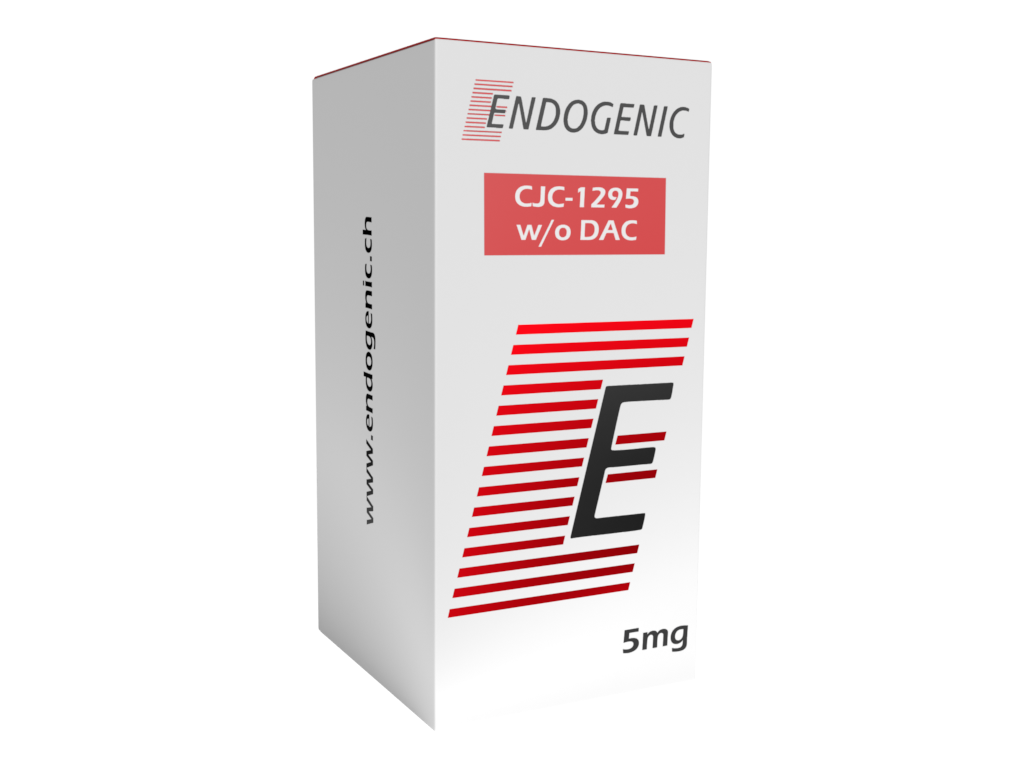
- Form: lyophilisate in a vial, 5 mg
- Purity: ≥98% (HPLC)
25,99 €
With code BLACK: 20,79 €
Lowest price in the 30 days before the discount:
25,99 €
Fast shipping
Free delivery from 350 €
Returns policy
ARA-290 5 mg (Cibinetide) — non-hematopoietic EPO peptide, research reagent in a vial
- ARA-290 (Cibinetide): 11-amino acid peptide derived from EPO.
- Vial of lyophilisate with a nominal content of 5 mg.
- Research Use Only reagent, not a medicinal product.
ARA-290 – Chemical reagent intended exclusively for laboratory research (Research Use Only). It is not a medicinal product, dietary supplement, or foodstuff. It is not intended for use in humans or animals. Sold exclusively to registered research institutions and laboratories.
Erythropoietin (EPO) has for decades been understood as the hormone driving red blood cell production — and as one of the most notorious doping agents in the history of cycling. In the shadow of this erythropoietic fame, the team of Anthony Cerami and Michael Brines asked a different question: if EPO receptors are also found in neurons, blood vessels, and connective tissue — where no erythropoiesis takes place — then what do they actually serve? The answer turned out to be a distinct, tissue-protective EPO pathway, independent of erythrocyte production.
ARA-290 (Cibinetide) is a synthetic 11-amino-acid peptide designed precisely to isolate this pathway. The molecule replicates a fragment of the EPO helix B — the region that activates the tissue-protective receptor, but does not bind the classical EPO receptor responsible for erythropoiesis. For the researcher, this means a molecular tool that allows the “reparative” function of EPO to be separated from its action on bone marrow.
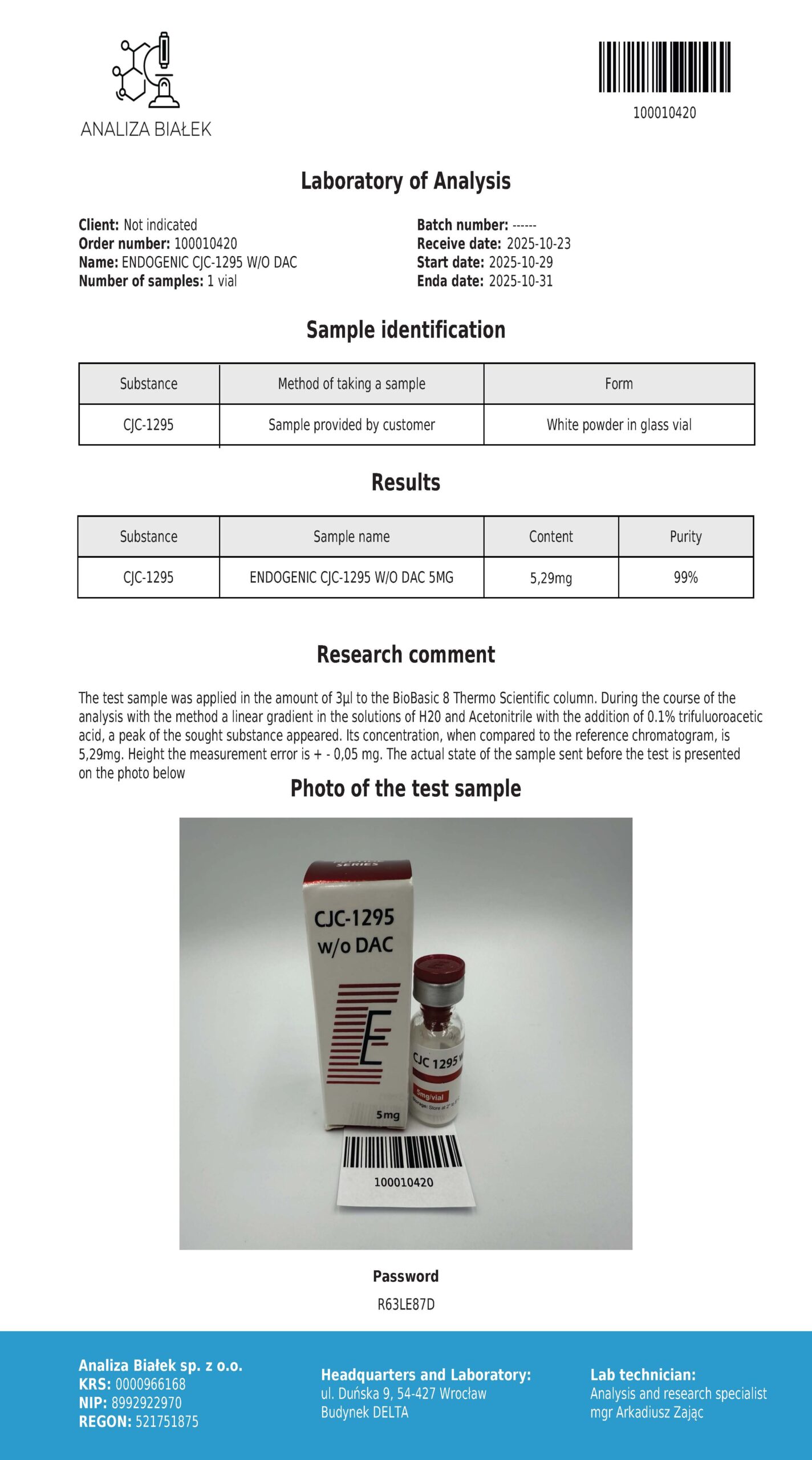
This reagent is supplied as a lyophilizate in a vial, 5 mg ARA-290, for reconstitution with bacteriostatic water. Purity verified by HPLC ≥98%, identity confirmed by mass spectrometry, COA available for each batch.
Regulatory status
ARA-290 (Cibinetide) completed early phases of clinical trials (phase I/II) in diabetic small fiber neuropathy, sarcoidosis, and neuropathic pain, however it has not obtained registration as a medicinal product in the EU, the USA, or anywhere in the world. No EMA or FDA authorization. No EFSA authorization as a dietary supplement ingredient. Communicating the product as an “anti-inflammatory peptide for athletes,” a “remedy for neuropathy,” or “support for nerve regeneration” for humans is inconsistent with the Research Use Only framework.
General description — the tissue-protective erythropoietin pathway
Erythropoietin fulfills two distinct roles in the body, which for a long time were treated as one. The first, well known, is stimulation of erythropoiesis — binding of the EPO receptor homodimer (EPOR/EPOR) on erythroid progenitor cells in the bone marrow and an increase in red blood cell production. The second, described only in the 2000s, is cytoprotection and tissue repair — activation of a completely different receptor complex in non-erythroid tissues (nervous system, endothelium, kidneys, heart, connective tissue).
This second pathway acts through the innate repair receptor (IRR) — a heterocomplex built from a subunit of the EPO receptor and the β-common receptor (βcR, CD131), shared across the GM-CSF/IL-3/IL-5 cytokine family. Brines, Cerami, and colleagues demonstrated that it is precisely this heterocomplex, and not the EPOR homodimer, that is responsible for the anti-inflammatory and regenerative action of EPO in injured tissue (Brines & Cerami, 2008).
The problem with using EPO itself to study (let alone for potential applications of) this function is obvious: the full EPO molecule raises hematocrit, increases blood viscosity, and the risk of thromboembolic events. The erythropoietic activity “contaminates” an experiment concerned solely with tissue repair. Hence the need for a non-hematopoietic analog — a molecule that activates the IRR but bypasses the erythropoietic receptor.
ARA-290 is precisely such an analog. The peptide corresponds to the region of the EPO helix B, exposed on the molecule’s surface — a fragment that participates in IRR binding but does not make contact with the EPOR homodimer. This separation of the two functions makes ARA-290 a model ligand for studying the tissue-protective arm of EPO signaling. In practice, the reagent falls within the broader group of peptides for regeneration studied in the context of tissue repair independent of erythropoiesis.
What is ARA-290?
Chemically, ARA-290 is a short, linear peptide derived from erythropoietin.
- Common name: ARA-290, Cibinetide
- Synonyms: pHBSP (pyroglutamate Helix B Surface Peptide), Helix B Surface Peptide
- Class: synthetic 11-amino-acid peptide derived from EPO; agonist of the innate repair receptor (IRR — heterocomplex of EPOR + β-common receptor / CD131)
- Sequence (11 aa): Pyr-Glu-Gln-Leu-Glu-Arg-Ala-Leu-Asn-Ser-Ser (region of the EPO helix B; sequence per batch COA)
- CAS number: 1208243-50-8 (if uncertain — “to be verified in the batch COA”)
- Molecular mass: ~1257 g/mol (11-aa peptide; exact mass to be verified in the batch COA)
- Chemical class: linear oligopeptide with an N-terminal pyroglutamate residue
- Supplied form: lyophilizate in a vial, 5 mg of substance, for reconstitution with bacteriostatic water; pharmaceutical grade ≥98% HPLC
Origin:
ARA-290 was developed by Araim Pharmaceuticals and advanced by the team of Michael Brines and Anthony Cerami — the researchers who first described the tissue-protective, erythropoiesis-independent action of erythropoietin. The starting point was the observation that EPO receptors occur in tissues where no blood cell production takes place, along with the hypothesis that EPO released locally in response to injury serves as a reparative signal.
Mapping the surface of the EPO molecule allowed the helix B region to be identified as the fragment responsible for binding the tissue-protective receptor — and on this basis Cibinetide was designed. The peptide subsequently underwent early clinical trials (phase I/II) in diabetic small fiber neuropathy, neuropathy and pain in the course of sarcoidosis, and other conditions with an inflammatory-neuropathic component.
Mechanism of action at the molecular level
ARA-290 acts as a selective agonist of the tissue-protective arm of EPO signaling. The signal is initiated through a receptor heterocomplex and then propagates along several parallel intracellular pathways observed in preclinical models.
Pharmacological profile observed in preclinical models:
- Agonism of the innate repair receptor (IRR) — ARA-290 binds the heterocomplex built from an EPOR subunit and the β-common receptor (CD131), activating tissue-protective signaling pathways. Critically: the peptide does not bind the EPOR homodimer responsible for erythropoiesis, which is why in models it does not raise hematocrit or reticulocyte counts (Brines et al. 2008). This is the principal distinction from the full EPO molecule and the foundation of the entire class of “non-hematopoietic” derivatives
- Anti-inflammatory action — IRR activation suppresses NF-κB signaling and reduces production of pro-inflammatory cytokines (TNF-α, IL-6) in models of inflammation in vitro and in vivo. The mechanism leads to quieting of the local inflammatory response in injured tissue
- Neuroprotection and regeneration of nerve fibers — in models of neuropathy (including small fiber neuropathy) ARA-290 promoted regeneration of thin cutaneous nerve fibers; in phase II clinical trials an increase in nerve fiber density was observed (among others corneal innervation, corneal nerve fiber density) along with a reduction in neuropathic symptoms reported in questionnaires (Dahan et al. 2013; Brines et al. 2015)
- Tissue cytoprotection — IRR activation triggers anti-apoptotic pathways (PI3K/Akt, STAT3, ERK1/2), increasing cell survival in models of ischemia-reperfusion injury. A mechanism typical of the tissue-protective action of EPO independent of erythropoiesis
- Modulation of macrophage phenotype — in models of healing a shift of the macrophage population from the pro-inflammatory M1 phenotype toward the anti-inflammatory, reparative M2 was observed — which favors resolution of the inflammatory state and tissue remodeling
IMPORTANT DISTINCTION
Erythropoietin and ARA-290 share a common molecular origin, yet they act through two different receptor pathways — and this distinction is the essence of this reagent.
- EPO (full molecule) binds the EPOR homodimer → stimulates erythropoiesis → raises hematocrit → increases blood viscosity and thrombotic risk.
- ARA-290 (Cibinetide) binds the IRR heterocomplex (EPOR + CD131) → tissue protection and anti-inflammatory action → without stimulation of erythropoiesis.
The phrasing “neuroprotective and anti-inflammatory action” in the context of this description refers exclusively to observations in preclinical models and early phase I/II clinical trials. It does not imply a guarantee of effect in a human using the RUO reagent, nor a suggestion of using ARA-290 as a “drug for neuropathy” or a “regenerative peptide for athletes.”
ARA-290 among non-hematopoietic EPO derivatives — pharmacological position:
In research on the tissue-protective EPO pathway, several strategies for separating tissue repair from erythropoiesis have been described. ARA-290 represents the most far-reaching of these approaches — a minimalist peptide instead of an entire protein:
- Recombinant EPO (epoetin) — full erythropoietic and tissue-protective activity together; unsuitable for isolating repair alone due to raising hematocrit
- Carbamylated EPO (CEPO) and EPO mutants — modified proteins with reduced erythropoietic activity while retaining tissue-protective activity; larger and more difficult to produce than a peptide
- ARA-290 / pHBSP (Cibinetide) — a short 11-aa peptide replicating only the helix B region; selective IRR agonist without binding the EPOR homodimer; a model ligand for studying the tissue-protective arm of EPO
Applications in scientific research
ARA-290 is used in research work on the tissue-protective erythropoietin pathway and its role in inflammation, neuropathy, and tissue repair. In in vivo models (mouse, rat, models of diabetic neuropathy and ischemia-reperfusion injury), its effect on nerve fiber regeneration, inflammatory markers, cell survival, and behavioral parameters associated with neuropathic pain is studied. In in vitro models (cultures of neurons, macrophages, endothelial cells), studies are conducted on signaling through the IRR heterocomplex and the kinetics of the Akt/STAT3/ERK pathways.
Specific research directions include:
- Small fiber neuropathy and neuropathic pain — models of diabetic neuropathy and sarcoidosis; assessment of skin/corneal innervation density (IENFD, corneal nerve fiber density) and pain markers
- Innate repair receptor (IRR) signaling — characterization of the EPOR/CD131 heterocomplex, comparison with the EPOR homodimer, studies of agonist selectivity
- Inflammatory states and the shift in macrophage phenotype — models of inflammation with assessment of TNF-α, IL-6, M1→M2 polarization, and NF-κB signaling
- Cytoprotection in ischemia-reperfusion injury — models of heart, kidneys, and CNS; assessment of the anti-apoptotic Akt/STAT3/ERK pathways
- Non-hematopoietic EPO derivatives — comparative studies of ARA-290, CEPO, and EPO mutants in terms of dissociation of erythropoietic and tissue-protective activity
ARA-290 is also sometimes paired in research protocols with other tissue-protective peptides — e.g. BPC-157 10mg (VEGF/FAK pathway, angiogenesis) or TB-500 5mg (actin, cell migration) — when the goal is to compare different mechanisms of tissue repair. Such combinations fall within the area of peptides for injuries studied in the context of soft tissue healing; every such combination remains within the framework of preclinical models.
REGULATORY STATUS
ARA-290 (Cibinetide) is not registered as a medicinal product in the EU or USA — the peptide completed early phases of clinical trials (I/II), without market registration. The WADA matter requires attention: ARA-290 does not stimulate erythropoiesis (it does not bind the EPOR homodimer, it does not raise hematocrit), so it does not act like a classical doping agent from the class of “erythropoiesis-stimulating agents” (ESA).
Nevertheless, ARA-290 is prohibited at all times: the 2026 WADA Prohibited List covers innate repair receptor agonists in section S2.1.5, and ARA-290 is an agonist of exactly this receptor. Registered athletes (ADAMS) check the current version of the List before any decision.
Summary
ARA-290 (Cibinetide) is a synthetic 11-amino-acid peptide derived from erythropoietin, developed by Araim Pharmaceuticals and advanced by the team of Brines and Cerami as a model agonist of the tissue-protective arm of EPO signaling. The peptide replicates the EPO helix B region and selectively activates the innate repair receptor (heterocomplex of EPOR + CD131), without binding the EPOR homodimer responsible for erythropoiesis — which is why in models it exhibits anti-inflammatory, neuroprotective, and cytoprotective action without raising hematocrit.
In early clinical trials (phase I/II) in diabetic small fiber neuropathy and sarcoidosis, regeneration of thin nerve fibers and reduction of neuropathic symptoms were observed. Form: lyophilizate in a vial 5 mg, HPLC purity ≥98%, MS confirmation, COA for each batch. Regulatory status — Research Use Only exclusively; no registration as a medicinal product; WADA: section S2.1.5 (innate repair receptor agonists), prohibited at all times.
Bibliography
- Brines M, Patel NSA, Villa P, et al. (2008). Nonerythropoietic, tissue-protective peptides derived from the tertiary structure of erythropoietin. PubMed
- Brines M, Dunne AN, van Velzen M, et al. (2015). ARA 290, a nonerythropoietic peptide engineered from erythropoietin, improves metabolic control and neuropathic symptoms in patients with type 2 diabetes. PubMed
- Dahan A, Dunne A, Swartjes M, et al. (2013). ARA 290 improves symptoms in patients with sarcoidosis-associated small nerve fiber loss and increases corneal nerve fiber density. PubMed
- Brines M, Cerami A (2008). Erythropoietin-mediated tissue protection: reducing collateral damage from the primary injury response. PubMed
- Collino M, Thiemermann C, Cerami A, Brines M (2015). Flipping the molecular switch for innate protection and repair of tissues: long-lasting effects of a non-erythropoietic small peptide engineered from erythropoietin. PubMed
FAQ
The IRR is a receptor heterocomplex built from a subunit of the EPO receptor and the β-common receptor (βcR, CD131 — shared across the GM-CSF/IL-3/IL-5 cytokine family). Unlike the EPOR homodimer, which drives erythropoiesis, the IRR mediates the tissue-protective and anti-inflammatory action of erythropoietin in non-erythroid tissues (nervous system, endothelium, kidneys, heart). ARA-290 was designed as a selective agonist of precisely this complex (Brines & Cerami, 2008).
In preclinical models ARA-290 did not raise hematocrit or reticulocyte counts — it does not bind the EPOR homodimer responsible for erythropoiesis, so it does not act like classical erythropoiesis-stimulating agents (ESA), which are the canonical blood doping. Despite this mechanistic distinction, ARA-290 is prohibited at all times: the 2026 WADA Prohibited List covers innate repair receptor agonists in section S2.1.5, and ARA-290 is an agonist of exactly this receptor.
ARA-290 (Cibinetide) underwent early phases of clinical trials (I/II) in diabetic small fiber neuropathy, neuropathy and pain in the course of sarcoidosis, and in type 2 diabetes. Among others, an increase in corneal innervation density (corneal nerve fiber density), regeneration of thin cutaneous nerve fibers, and reduction of neuropathic symptoms reported in questionnaires were observed (Dahan et al. 2013; Brines et al. 2015). The cohorts were small, and the peptide did not obtain registration as a medicinal product — the data were not confirmed in large phase III trials.
The lyophilizate is dissolved with bacteriostatic water introduced down the wall of the vial, without a forceful stream onto the powder and without shaking — the detailed procedure is found in the “Reconstitution protocol” section above. The volume of solvent is selected to match the target working concentration (e.g. 1 ml of water per 5 mg = 5 mg/ml). The solution should be clear and colorless; store it in the refrigerator, protected from light.
ARA-290 (Cibinetide) has no registered medicinal form — the peptide completed early phases of clinical trials (I/II), but has not been approved for marketing as a medicinal product in any jurisdiction. All available data come from preclinical models and small clinical cohorts. The Pro-Body RUO reagent is intended exclusively for further laboratory research on the tissue-protective EPO pathway — it is not a medicinal product and does not replace medical consultation.
5.0
1 review
-
Anita
 Polski
Product review
Bardzo szybka wysyłka i bezproblemowy kontakt ze sprzedawcą. Polecam
Related products