

Dihexa is a structurally modified derivative of Ang-IV — the addition of lipophilic residues increased its metabolic stability and lipophilicity relative to the native hexapeptide, whose short half-life hindered experimental use. In animal models, analogs of this class exhibited prosynaptic activity at concentrations many orders of magnitude lower than the parent peptide. Mechanistically, both molecules are linked by their derivation from the Ang-IV/IRAP system, however for Dihexa the central proposed mechanism of the prosynaptic effect is augmentation of the HGF/c-Met axis.
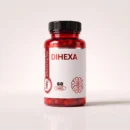
DIHEXA 5mg 60caps
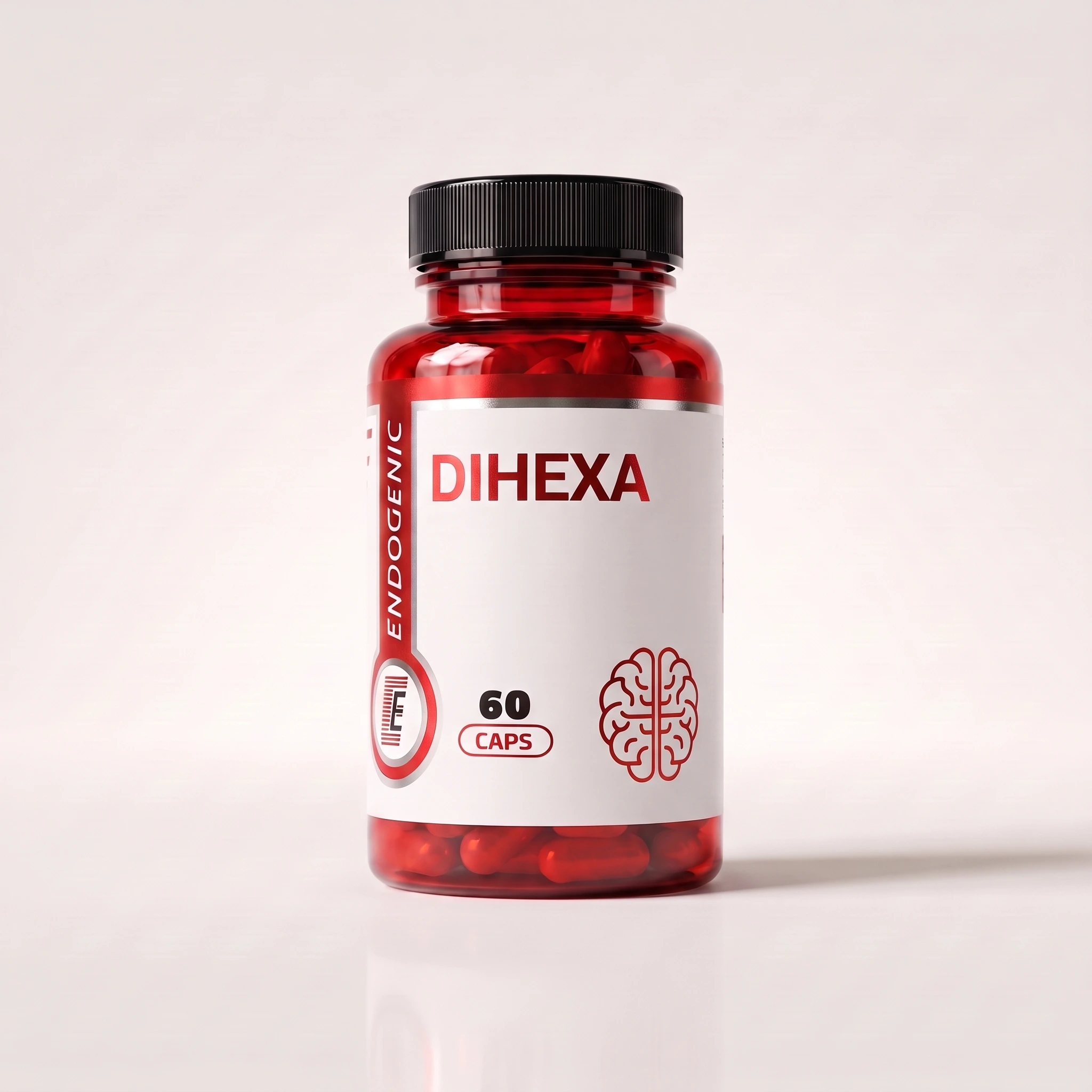
Dihexa 5 mg × 60 capsules is a modified angiotensin IV analog (PNB-0408, CAS 1401708-83-5) from Joseph Harding’s laboratory (Washington State University), studied as a highly promising prosynaptic compound that acts by augmenting the HGF/c-Met axis and inducing synaptogenesis. HPLC purity ≥98%, MS confirmation, COA for each batch. Research Use Only.
118,99 €
Fast shipping
Delivery options
Returns policy
Dihexa 5 mg 60 caps — research reagent in capsules responsible for synaptogenesis
- Dihexa: research reagent associated with the HGF/c-Met axis.
- 5 mg, 60 capsules.
- Research Use Only reagent, not a medicinal product.
Dihexa is a synthetic modified analog of angiotensin IV (Ang-IV) — a small oligopeptide molecule designed in the laboratory of Joseph Harding at Washington State University as a tool for studying the Hepatocyte Growth Factor / c-Met (HGF/c-Met) pathway in the central nervous system. Its full chemical name is N-hexanoyl-Tyr-Ile-(6) aminohexanoic amide; in the literature it is also known as PNB-0408.
The molecule was created through a deliberate modification of the native Ang-IV hexapeptide — the addition of lipophilic residues improving metabolic stability and penetration across biological barriers — and it is precisely this modification that distinguishes Dihexa from the parent peptide with its short half-life. The classic work of the Harding team — Benoist et al. 2011 — described, in rodent models, the effect of this class of Ang-IV analogs on synaptogenesis (the formation of new synaptic connections) as well as on cognitive abilities in memory tests.
In an animal model with cholinergic deficit (scopolamine) and in models of neurodegeneration, improvements were reported in the Morris water maze at working concentrations on the order of nanograms per kilogram of body weight — values many orders of magnitude lower than for most studied nootropic small molecules. As a research reagent, Dihexa belongs to the class of peptides for brain function — compounds studied in terms of cognitive functions under laboratory conditions.
In a chemical context, Dihexa belongs to the class of oligopeptide derivatives of Ang-IV acting through the HGF/c-Met system — an important distinction from classical regenerative peptides (BPC-157, TB-500) and from receptor metabolic modulators. The central axis of the mechanism is the augmentation of HGF/c-Met signaling, one of the best-described pathways governing synaptic plasticity, angiogenesis, and neuronal survival.
Regulatory status
Dihexa has not completed any phase of clinical trials in humans. The compound remains at the preclinical research stage (rodent models, cell cultures, in vitro neuronal systems). There is no registration as a medicinal product with the EMA, FDA, or anywhere else in the world. There is no EFSA authorization as a dietary supplement ingredient. Communicating the product as a “memory nootropic,” a “cognitive function enhancer,” or an agent “for neurogenesis in humans” is inconsistent with the Research Use Only framework.
General overview — context of the HGF/c-Met axis and angiotensin IV
To understand why Dihexa became a subject of interest in neuropharmacology, one must go back to two related systems: the peptide fragment of the renin–angiotensin system in the brain and the hepatocyte growth factor pathway. Angiotensin IV (Ang-IV) is a hexapeptide (Val-Tyr-Ile-His-Pro-Phe) formed from longer precursors of the renin–angiotensin system. Although this system is classically associated with blood pressure regulation, Ang-IV performs a distinct function in the central nervous system — it binds to the protein IRAP (Insulin-Regulated Aminopeptidase), historically called the “AT4 receptor.”
Activation of this axis in the hippocampus and cortex is linked to processes of learning and memory consolidation. The research problem of native Ang-IV lay in its very short half-life and poor penetration of biological barriers — which made it a difficult experimental tool. The HGF/c-Met pathway is the second pillar of the mechanism. Hepatocyte Growth Factor (HGF) is a growth factor acting through a receptor with tyrosine kinase activity — c-Met (encoded by the MET proto-oncogene). In the central nervous system, HGF/c-Met signaling participates in:
- Synaptogenesis — the formation and maturation of dendritic spines and new synaptic connections
- Neuronal survival — activation of antiapoptotic pathways (PI3K/Akt, MAPK)
- Angiogenesis and tissue regeneration — repair processes following injury
- Synaptic plasticity — modulation of processes underlying learning
The hypothesis of the Harding group linked these two systems: Dihexa, as a modified derivative of Ang-IV, would act not so much through IRAP itself as through strengthening (augmentation) of HGF/c-Met signaling — increasing the system’s sensitivity to endogenous HGF and intensifying synaptogenesis. In the review by Wright & Harding 2015, the HGF/c-Met axis in the brain was described as a proposed therapeutic target linked to synaptic plasticity, which placed this pathway at the center of the discussed mechanism.
What is Dihexa?
Chemically, Dihexa is a synthetic small oligopeptide molecule, a derivative of Ang-IV with increased metabolic stability.
- Common name: Dihexa
- Synonym: PNB-0408; N-hexanoyl-Tyr-Ile-(6) aminohexanoic amide
- CAS number: 1401708-83-5
- Molecular formula: C₃₃H₅₆N₄O₅
- Molecular weight: ~588.8 g/mol
- Pharmacological class: modified analog of Ang-IV; augmentor of HGF/c-Met signaling
- Laboratory of origin: Joseph Harding, Washington State University
- Molecular type: oligopeptide small molecule (derivative of Ang-IV) — NOT a classical peptide lyophilized for injection, NOT a steroid
- Supplied form: hard HPMC capsule (vegan), 5 mg of active substance per capsule, 60 capsules; pharmaceutical grade ≥98% HPLC
Origin: Dihexa was created as part of a systematic program searching for metabolically stable analogs of Ang-IV conducted in the laboratory of Joseph Harding — a team specializing in the neuropharmacology of the renin–angiotensin system in the brain and its relationship with cognitive processes. The starting point was the observation that native Ang-IV improves learning in animal models, but its short half-life precludes practical experimental application.
Structural modifications (lipophilic residues at the ends of the molecule) were intended to solve this problem, and the resulting compound was described as active at working concentrations many orders of magnitude lower than the parent peptide. The wave of interest in popular science media (“the most potent memory molecule”) is, however, a journalistic oversimplification — full characterization in humans has never been carried out.
SCIENTIFIC PERSPECTIVE
All pharmacological data on Dihexa come from preclinical models (rat, mouse, neuronal cultures, in vitro systems). All observations concerning synaptogenesis, plasticity, and cognitive abilities require confirmation in clinical trials in humans — no such studies have been published. Extrapolation of PK/PD profiles to humans requires caution; oral bioavailability and blood–brain barrier penetration in humans remain unknown. The working concentration values reported as “effective” refer to animal models, not to any regimen in humans.
Mechanism of action at the molecular level
The proposed mechanism of Dihexa is based on three related elements: its derivation from Ang-IV, affinity for the IRAP axis, and — most importantly for the prosynaptic effect — augmentation of HGF/c-Met signaling. Pharmacological profile observed in preclinical models:
- Augmentation of HGF/c-Met signaling — Dihexa intensifies the system’s response to endogenous hepatocyte growth factor (HGF), increasing activation of the c-Met receptor with tyrosine kinase activity. This is the proposed central axis of the prosynaptic effect, discussed in the review by Wright & Harding 2015 as a key element of the mechanism of this class of Ang-IV analogs
- Induction of synaptogenesis — in hippocampal neuron cultures, an increase in dendritic spine density and the number of functional synapses was reported following exposure to metabolically stabilized Ang-IV analogs (McCoy et al. 2013)
- Derivation from Ang-IV and affinity for IRAP — as an Ang-IV analog, Dihexa exhibits affinity for IRAP (insulin-regulated aminopeptidase, the “AT4 receptor”); the role of this axis in the prosynaptic effect itself is a subject of discussion in light of the dominant HGF/c-Met signal
- Improved performance in memory tests (rodent model) — in a cholinergic deficit model (scopolamine) and in models of neurodegeneration, an improvement in spatial learning in the Morris water maze was reported (Benoist et al. 2011)
- High potency in the animal model — the procognitive effect was reported at working concentrations on the order of nanograms per kilogram of body weight in rodents, which was described as one of the highest potency profiles in the class of studied prosynaptic compounds
Pharmacokinetic profile (based on preclinical models):
- Oral bioavailability in humans: unknown (data limited to animal models)
- Blood–brain barrier penetration in humans: uncharacterized
- Human PK profile: uncharacterized — no phase I studies
- Molecular target: augmentation of the HGF/c-Met axis; affinity for IRAP as an Ang-IV derivative
The HGF/c-Met axis activates one node of the extensive network of processes governing cognitive function. Memory and learning depend in parallel on the cholinergic, glutamatergic systems, the management of growth factors (BDNF), sleep, hormonal balance, and the inflammatory profile. Pharmacological augmentation of HGF/c-Met models a fragment of the synaptogenesis machinery — and nothing more. Dihexa among procognitive compounds — pharmacological position: In experimental neuropharmacology, several classes of compounds are studied in terms of intensifying synaptic plasticity — they differ in mechanism, research status, and evidentiary profile:
| Class | Example | Mechanism | Status |
|---|---|---|---|
| Modified Ang-IV analog | Dihexa (PNB-0408) | Augmentation of the HGF/c-Met axis, synaptogenesis | RUO research chemical (preclinical research, Harding lab) |
| Regulatory peptide ACTH(4-10) | Semax | BDNF modulation, melanocortin system | RUO research peptide |
| Tuftsin analog | Selank | GABA/serotonin modulation, immune system | RUO research peptide |
| Pyrrolidone derivative | Racetams (e.g. piracetam) | Modulation of cholinergic/glutamatergic receptors | outside the scope of RUO (separate category) |
Dihexa stands out in that it targets the synaptogenesis machinery through a growth factor (HGF/c-Met) — unlike regulatory peptides that mainly modulate neurotransmitters and neurotrophic factors of the BDNF type. Mechanistically related in terms of research interest in cognitive function is Semax 50mg — a research reagent with a distinct mechanistic profile (BDNF regulation), which serves as a point of reference in comparative neuropharmacological analyses. Another comparative direction is NSI-189 for neurogenesis — a small molecule studied as a stimulator of hippocampal neurogenesis, as well as Methylene Blue as a nootropic with a mitochondrial profile.
Applications in scientific research
Dihexa is used in research work in several areas of neuropharmacology. In in vivo models (rat, mouse) its effect on spatial learning (Morris water maze), markers of synaptogenesis, and the reversibility of cognitive deficits induced pharmacologically (scopolamine) or in models of neurodegeneration is studied. In in vitro models (hippocampal neuron cultures, neuronal systems), measurements of dendritic spine density, the number of functional synapses, and analyses of the dependence of the effect on c-Met activation are carried out. Specific research directions include:
- Research on the HGF/c-Met axis in the central nervous system — characterization of the role of hepatocyte growth factor signaling in synaptic plasticity, mapping the dependence of the prosynaptic effect on c-Met activation
- Rodent models of learning and memory — tests in the Morris water maze, cholinergic deficit models, models of neurodegeneration
- In vitro synaptogenesis experiments — measurements of dendritic spine density and synapse functionality in hippocampal neuron cultures
- Structure-activity relationship (SAR) analyses — Dihexa as a reference, highly potent Ang-IV analog in studies of new derivatives
- Research on the Ang-IV/IRAP system — characterization of affinity for insulin-regulated aminopeptidase and its involvement in cognitive processes
Summary
Dihexa (5 mg × 60 capsules) is a modified analog of angiotensin IV (PNB-0408, CAS 1401708-83-5) from the laboratory of Joseph Harding (Washington State University), characterized in rodent models as a highly potent prosynaptic compound acting through augmentation of the HGF/c-Met axis. In the work of Benoist et al. 2011, in the studies of McCoy et al. 2013, and in the review by Wright & Harding 2015, induction of synaptogenesis and improvement of spatial learning at very low working concentrations in animals were described.
As an Ang-IV derivative, it exhibits affinity for IRAP, however the central mechanism of the prosynaptic effect remains HGF/c-Met signaling. HPLC purity ≥98%, MS confirmation, COA for each batch. Regulatory status — Research Use Only exclusively; no clinical phase in humans; the fundamental safety reservation stems from the oncogenic potential of chronic c-Met activation (MET proto-oncogene).
References
- Benoist CC, Wright JW, Zhu M, Appleyard SM, Wayman GA, Harding JW (2011). Facilitation of hippocampal synaptogenesis and spatial memory by C-terminal truncated Nle1-angiotensin IV analogs. PubMed
- McCoy AT, Benoist CC, Wright JW, Kawas LH, Bule-Ghogare JM, Zhu M, Appleyard SM, Wayman GA, Harding JW (2013). Evaluation of metabolically stabilized angiotensin IV analogs as procognitive/antidementia agents. PubMed
- Wright JW, Harding JW (2015). The brain hepatocyte growth factor/c-Met receptor system: a new target for the treatment of Alzheimer’s disease. PubMed
DISCLAIMER — research reagent (Research Use Only)
The product Dihexa 5 mg — 60 capsules is sold exclusively as a chemical reagent for in vitro laboratory research and research on animal models. It is not a medicine, it is not a dietary supplement, and it is not a product intended for human consumption. It is not intended to diagnose, treat, alleviate, or prevent any diseases.
There is no clinical data in humans — the entire body of literature concerns animal models and cell cultures. The proposed mechanism of action is based on augmentation of the HGF/c-Met axis; the c-Met receptor is a product of the MET proto-oncogene, and chronic activation of this axis carries a theoretical oncological risk that cannot be assessed in humans due to the lack of clinical trials — this constitutes an absolute contraindication to extrapolation to use in humans.
Sales are addressed to qualified research personnel, scientific institutions, and pharmacological laboratories. The buyer assumes full responsibility for the lawful and safe use of the reagent under laboratory conditions in compliance with applicable regulations and institutional guidelines.
FAQ
HGF (hepatocyte growth factor) acts through the c-Met receptor with tyrosine kinase activity. “Augmentation” means that Dihexa intensifies the system’s response to endogenous HGF — it increases the sensitivity of c-Met signaling and thereby induces synaptogenesis in preclinical models. The review by Wright & Harding 2015 places the HGF/c-Met axis in the brain as a central element of the proposed mechanism of this class of Ang-IV analogs (in the animal model, not in humans).
No. Publicly available clinical data (phase I/II/III) in humans does not exist. The entire evidence base rests on rodent models and neuronal cultures. Oral bioavailability and blood–brain barrier penetration in humans remain unknown, and the long-term safety profile has not been characterized in any human population.
The c-Met receptor is encoded by the MET proto-oncogene. Excessive, abnormal signaling of the HGF/c-Met axis is a well-documented mechanism in the biology of many cancers (proliferation, tumor angiogenesis, invasiveness, metastasis). A molecule whose proposed mechanism consists of chronic augmentation of this very axis therefore carries a theoretical oncological risk that cannot currently be assessed in humans due to the lack of clinical trials. This is a fundamental safety reservation and an absolute contraindication to extrapolation to use in humans.
Only partly. Dihexa is derived from the Ang-IV hexapeptide, but it is a modified oligopeptide small molecule (with lipophilic residues), supplied in capsules as a powder — unlike classical regenerative peptides BPC-157 or TB-500, which are lyophilizates for reconstitution. They are also differentiated by mechanism: BPC-157/TB-500 act mainly through angiogenic pathways and the cytoskeleton in the context of tissue regeneration, whereas Dihexa targets synaptogenesis through the HGF/c-Met axis in the central nervous system.
“Dihexa” is a common name referring to the structure of the molecule (N-hexanoyl-Tyr-Ile-(6) aminohexanoic amide). PNB-0408 is the developmental code of the compound associated with work on Ang-IV analogs. The CAS number is 1401708-83-5.
The compound has no therapeutic form — Dihexa has not undergone any phase of clinical trials in humans and is not registered as a medicinal product in any jurisdiction. All available data come from preclinical models (rodents, neuronal cultures). The Pro-Body RUO reagent is intended exclusively for further laboratory research — in the identical category in which it has functioned in scientific circulation since the moment of its first characterization by the Harding team.
A broader context of the classification and mechanisms of nootropic compounds is discussed in the review nootropic substances — what are they and when to use them.
5.0
1 review
-
Dorota
 Polski
Product review
Super
Related products