Skip to content

Free delivery on orders over €400. Fast delivery.

Search

What are you looking for?

Type at least 2 characters to see suggestions.

LGD-4033 60 caps

LGD-4033 60 caps

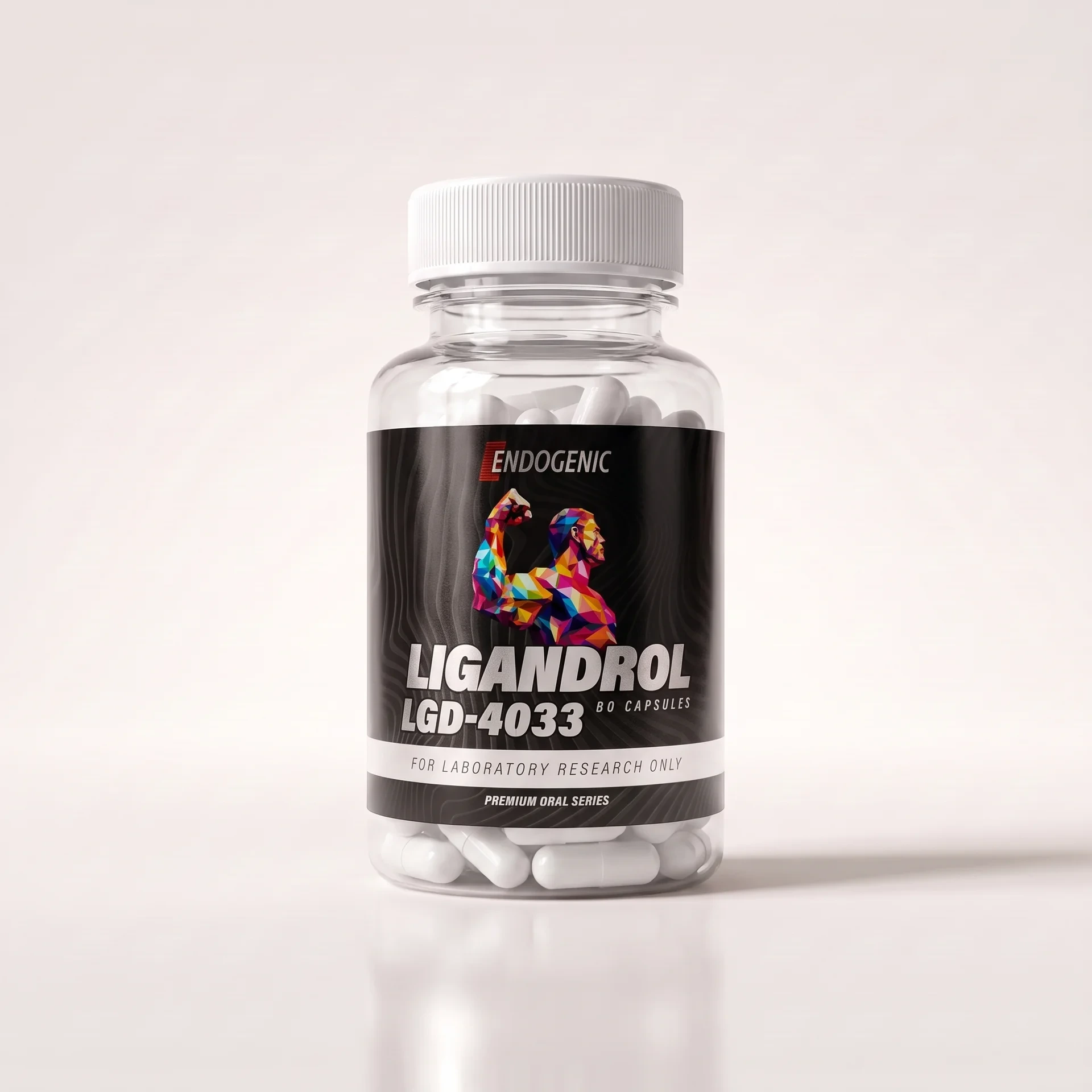
LGD-4033 (Ligandrol, VK5211) 10 mg × 60 capsules is a non-steroidal SARM from the anilide derivative class – a high-affinity androgen receptor modulator, full agonist in muscle, one of the few SARMs with published data from early phase studies in humans. Research Use Only reagent for studies on androgen receptor signaling, bone markers and HPG axis suppression.

42,99 €
Fast shipping
Delivery options
Returns policy

LGD-4033 (Ligandrol) 10 mg 60 caps - SARM

  • LGD-4033 (Ligandrol, VK5211): a selective androgen receptor modulator.
  • 10 mg per capsule; pack of 60 capsules.
  • Research Use Only reagent, not a medicinal product.

Chemical reagent intended exclusively for laboratory tests (Research Use Only). It is not a medicinal product, dietary supplement or food. It is not intended for use on humans or animals. Sales only to registered research units and laboratories.

LGD-4033 (also known as Ligandrol or VK5211) is a non-steroidal selective androgen receptor modulator (SARM) originally developed by Ligand Pharmaceuticals, and then clinically developed by Viking Therapeutics under the code VK5211. Compound holds a special position in the SARM catalog – as one of the best-characterized androgen receptor ligands in early-phase human trials, with a published Phase I study in healthy young men (Basaria et al. 2013) and a Phase II program on hip fracture recovery.

In a chemical context, LGD-4033 does not belong to the arylpropionamide family (like Andarine/S-4 or S-23), but represents a separate structural class – anilide derivative built around a pyrrolidine-benzonitrile core. This skeletal dissimilarity translates into one of the highest androgen receptor (AR) affinities reported in the entire SARM class – with Ki on the order of a single nanomolar – while maintaining a full agonist profile in skeletal muscle.

This makes it a model reagent among SARMs for muscle mass tested for anabolism in skeletal muscle. This reagent is supplied in a 60 capsules of 10 mg LGD-4033 — form adapted to oral exposure protocols in in vivo models and to standardize the dose in studies on androgen signaling and bone markers. Purity verified by HPLC ≥98%, identity confirmed by mass spectrometry, COA available for each batch.

Regulatory status

LGD-4033 has reached early phase clinical trials (phase I – Basaria et al. 2013; phase II VK5211 on fracture recovery), but has not been registered as a medicine in any jurisdiction – Viking Therapeutics has not brought the program to market approval. No registration as a drug with the EMA, FDA or anywhere in the world.

Not authorized by EFSA as an ingredient of a dietary supplement. LGD-4033 as a SARM has been on the WADA Prohibited List in category S1.2 (other anabolic agents) since 2008 – a permanently prohibited substance, both in competition and out of competition. Compound has been involved in high-profile doping cases (including Will Grier, NCAA 2015; Joakim Noah, NBA 2017).

Communicating a product as an “oral muscle gainer”, “an alternative to testosterone” or a “safer alternative to steroids” is contrary to the Research Use Only framework.

What are SARMs and tissue-selective profile

Selective androgen receptor modulators (SARMs) are a class of nonsteroidal binding ligands androgen receptor (AR) — a nuclear transcription factor that, after binding androgen (testosterone, dihydrotestosterone), regulates the expression of genes responsible for the development and maintenance of androgen-dependent tissues: skeletal muscles, bones, prostate, gonads, hair follicles. The assumption of the SARM program, conducted since the 1990s, includes, among others: by Ligand Pharmaceuticals and GTx Inc., was to obtain tissue selectivity — an anabolic compound in muscle and bone, but with limited action in the prostate and skin, which would theoretically reduce the side effect profile of classic androgenic-anabolic steroids. Mechanistically, the tissue selectivity of SARMs results from several molecular phenomena:

  • Receptor conformation after ligand binding — non-steroidal SARMs stabilize the conformation of the AR ligand-binding domain different from that induced by testosterone or dihydrotestosterone (DHT), which translates into a differential set of recruited coactivators and corepressors
  • Tissue-specific expression of transcription cofactors — the same ligand-AR complex activates different gene programs depending on the repertoire of accessory proteins available in a given tissue
  • No metabolic conversion to stronger androgens — unlike testosterone, which is subject to 5α-reduction to DHT (a highly active androgen in the prostate and skin), non-steroidal SARMs are not substrates of 5α-reductase or aromatase
  • Tissue-dependent partial vs. full agonism — in skeletal muscle and bone, many SARMs act as (close to) full AR agonists, while in the prostate they behave as partial agonists/antagonists

The classic, best characterized non-steroidal SARMs include LGD-4033 (Ligandrol), RAD-140 (Testolone), MK-2866 (Ostarine/Enobosarm), S-23, S-4 (Andarine) and YK-11 (a compound with a separate, steroid-like myostatin skeleton). LGD-4033 has a distinguished position in this catalog – it is a compound o one of the highest affinities for AR and at the same time one of the few SARMs for which there is published data from early-phase human trials.

The world of androgen pharmacology is watching LGD-4033 for three reasons. First, as a high-affinity model ligand to study tissue-selective androgen signaling — Ki of the order of a single nanomolar makes it a useful tool in structure-activity studies. Secondly, as a compound with a documented (in phase I) impact on lean body mass in healthy volunteers (Basaria et al. 2013).

Third, as a ligand studied in context bone regeneration and preventing the loss of muscle mass — a direction developed in the phase II program VK5211 (Viking Therapeutics) on recovery after a hip fracture.

What is LGD-4033/Ligandrol?

Chemically, LGD-4033 is a non-steroidal androgen receptor ligand with an anilide derivative structure – a class distinct from arylpropionamides.

  • Common name: LGD-4033, Ligandrol, VK5211
  • Synonyms: lgd4033, Ligandrol, VK5211 (Viking Therapeutics clinical code)
  • Pharmacological class: non-steroidal SARM (selective androgen receptor modulator); anilide derivative – a class separate from arylpropionamides (S-4, S-23)
  • Receptor profile: high-affinity AR ligand, full agonist in skeletal muscle; Ki of ~1 nM (one of the highest affinities in the class)
  • CAS number: 1165910-22-4 (in case of uncertainty – “to be verified in the batch COA”)
  • Molecular formula: C₁₄H₁₂F₆N₂O
  • Molar mass: 338.25 g/mol
  • Laboratory of origin: Ligand Pharmaceuticals → Viking Therapeutics clinical development (VK5211)
  • Delivered form: HPMC hard capsule, 10 mg of active substance per capsule, 60 capsules; pharmaceutical grade ≥98% HPLC

Table of physicochemical characteristics

Parameter Value
Name LGD-4033 (Ligandrol, VK5211)
Chemical class anilide derivative (non-steroidal SARM)
Pharmacological profile high affinity AR ligand; full agonist in skeletal muscle
AR affinity Ki ~1 nM (one of the highest among SARMs)
CAS 1165910-22-4
Molecular formula C₁₄H₁₂F₆N₂O
Molar mass 338.25 g/mol
Purity ≥98% HPLC
Form HPMC capsule, 10 mg/capsule, 60 capsules
Half-life T½ ~24–36 h
Conversion to estrogen none (non-steroidal compound, not an aromatase substrate)
Clinical status phase I (Basaria 2013) + phase II (VK5211); no registration as a medicine
WADA status Prohibited List, Category S1.2 – Permanently prohibited

Origin: LGD-4033 was developed by the company Ligand Pharmaceuticals as a candidate for an AR ligand with high affinity and a favorable oral profile, for indications in the loss of muscle mass (sarcopenia, cachexia) and in conditions associated with bone weakness. He took over the rights to further clinical development Viking Therapeutics, who ran compound under code VK5211 – including in a Phase II program on hip fracture recovery in postoperative patients.

The team published the first detailed data from a phase I study in healthy young men Basaria et al. 2013 (J Gerontol A Biol Sci Med Sci), characterizing the safety, pharmacokinetics and effect on lean body mass when administered with increasing doses.

Mechanism of action at the molecular level

LGD-4033 binds directly to the ligand-binding domain of the androgen receptor (AR), stabilizing the activating conformation for the recruitment of transcriptional coactivators. Very high affinity (Ki of ~1 nM) and a full agonist profile in skeletal muscle make this compound one of the strongest binding ligands in the SARM class. The mechanism can be described in six axes. Pharmacological profile observed in preclinical models and early human studies:

  1. Selective, high-affinity AR modulator — LGD-4033 binds the androgen receptor with one of the highest affinities reported for the class (Ki of ~1 nM). Ligand binding stabilizes the receptor conformation activating nuclear translocation and binding to androgen response elements (AREs) in the promoters of target genes – the affinity profile is among the strongest among characterized SARMs
  2. Full agonism in skeletal muscle — in muscle LGD-4033 behaves as a full AR agonist. In a phase I study (Basaria et al. 2013), a low dose (1 mg/day for 21 days) was associated with an increase in lean body mass of approximately +1.2 kg compared to placebo – an observation in healthy young men, illustrating anabolic activity in the muscle at a relatively low exposure
  3. Anti-resorption effect in bone — in the direction developed in the VK5211 phase II program (regeneration after hip fracture), the effect of the compound on bone turnover markers was tested, including P1NP (bone formation marker) i osteocalcin; AR activation in bone tissue is associated with modulation of the balance between bone formation and resorption – this is a premise for research on bone regeneration
  4. Dose-dependent suppression of gonadotropins LH/FSH — through feedback, LGD-4033 inhibits the hypothalamic-pituitary-gonadal (HPG) axis; in a phase I study, a dose-dependent reduction of free testosterone of 30–50% was observed at 1 mg/day, accompanied by a decrease in LH/FSH. In the literature on androgen protocols, this is a factor for which pericycle restorative treatment (PCT) is considered in chronic protocols – pharmacological observation, not instructions for use in humans
  5. No conversion to estrogen — as a non-steroidal compound, LGD-4033 is not an aromatase substrate, so it is not converted to estradiol (unlike testosterone and some anabolic steroids); it is also not a substrate of 5α-reductase
  6. Pharmacokinetic profile — half-life T½ of ~24–36 h allows an exposure profile consistent with once-daily oral administration in research protocols; compound well absorbed after oral administration, hepatic metabolism

Pharmacokinetic profile (based on Phase I study and preclinical models):

  • Half-life (T½): ~24–36 h
  • Oral bioavailability: good (compound well absorbed; detailed parameters from phase I)
  • Conversion to estrogens: none (non-steroidal, not a substrate of aromatase or 5α-reductase)
  • HPG axis suppression: dose-dependent (reduction of free testosterone by 30-50% with just 1 mg/day in phase I)
  • Molecular target: androgen receptor (AR) ligand-binding domain; full activation of androgen-dependent transcription in the muscle

IMPORTANT DISTINCTION

“Increase in lean body mass, effects on bone markers and HPG axis suppression” in the context of this description refers to observations in limited early human studies (Phase I – Basaria et al. 2013; Phase II VK5211) and preclinical models. This is not a guarantee or suggestion of effect in humans using the RUO reagent.

The main distinction in the class: LGD-4033 is a high-affinity, full AR agonist in muscle with one of the highest affinities (Ki ~ 1 nM), located between the milder, very tissue-selective Ostarine MK-2866 and the strong, anabolic-selective RAD-140 Testolone. In human studies, LGD-4033 shows marked, dose-dependent suppression of the HPG axis (decrease in LH/FSH and free testosterone even at low weights) – for this reason, restorative treatment (PCT) is considered in the literature on chronic androgen protocols.

Compound remains an investigational tool – the long-term safety profile in humans is uncharacterized and cases of hepatotoxicity associated with LGD-4033 use outside the research setting have been reported in the literature.

LGD-4033 among SARMs – position on the affinity and selectivity spectrum: In the SARM compound class, they differ in their affinity for AR, the strength of agonism and the degree of tissue selectivity – from mild to strong, high-affinity ligands:

Compound AR profile Affinity Status
MK-2866 (Ostarine) partial/moderate agonist moderate RUO; WADA S1.2
LGD-4033 (Ligandrol) high affinity, full agonist in muscle Ki ~1 nM (one of the highest) RUO; WADA S1.2
RAD-140 (Testolone) strong agonist, anabolic-selective Ki ~7 nM RUO; WADA S1.2
RAD-150 (TLB-150) benzoate prodrug of RAD-140 active form: RAD-140 RUO; WADA S1.2
YK-11 (5 mg) steroid-like myostatin modulator separate mechanism RUO; WADA S1.2

LGD-4033 stands out because it connects one of the highest AR affinity in the class With the most extensive database of early-phase human trials among SARMs. This makes it a model reagent for studying high-affinity androgen signaling and bone markers. The mechanistically related myostatin pathway modulator YK-11 is sometimes combined with LGD-4033 in anabolic compound RUO analyses, and the prodrug RAD-150 (TLB-150) represents a related strategy for optimizing pharmacokinetics within the same class.

Applications in scientific research

LGD-4033 is used in research work in several areas. In vivo models (rat, mouse) examine its effect on lean body mass and muscle mass, on markers of bone turnover (P1NP, osteocalcin), on the levels of LH/FSH gonadotropins and free testosterone (HPG axis suppression), and on liver and lipid parameters (safety profile). In vitro models (androgen-dependent cell lines, AR transcription reporter tests) measure receptor affinity, transcription activation kinetics and analyze structure-activity relationships for anilide derivatives. Specific research directions include:

  • Pharmacology of high-affinity AR signaling — characterization of the agonist profile of LGD-4033 in muscle vs prostate, mapping of recruited transcription cofactors for a ligand with Ki ~1 nM
  • Models of muscle anabolism — effect on lean body mass, muscle protein synthesis and AR-dependent gene expression in rodent models; reference to observations from phase I (lean mass increase)
  • Research on bone regeneration — direction of the VK5211 phase II program: the impact of AR activation on bone formation markers (P1NP, osteocalcin) and resorption-formation balance in post-fracture recovery models
  • HPG axis and gonadotropin suppression studies — modeling of dose-dependent reduction of LH/FSH and free testosterone, useful in restorative treatment studies (PCT) in androgen protocols
  • Structure-activity analyzes (SAR) of anilide derivatives — comparison of LGD-4033 with arylpropionamides (S-4, S-23) in terms of the influence of the structural skeleton on the affinity and agonist profile

The product is available in the category SARMs in capsules, where the capsule format simplifies the standardization of the sample in laboratory protocols.

Summary

LGD-4033 (Ligandrol, VK5211) 10 mg × 60 capsules is a non-steroidal SARM from the anilide derivative class, developed by Ligand Pharmaceuticals and clinically developed by Viking Therapeutics. Compound stands out one of the highest androgen receptor affinities in the class (Ki of ~1 nM) and the most extensive database of early-phase human trials among SARMs.

In a phase I study in healthy young men (Basaria et al. 2013), a low dose (1 mg/day for 21 days) was associated with an increase in lean body mass by approximately +1.2 kg and with a dose-dependent suppression of the HPG axis (reduction of free testosterone by 30–50%, decrease in LH/FSH). In the VK5211 phase II program, the direction of bone regeneration (P1NP markers, osteocalcin) after hip fracture was investigated.

As a non-steroidal compound, LGD-4033 is not subject to aromatization or 5α-reduction; half-life T½ ~24–36 h. HPLC purity ≥98%, MS Q-TOF, COA for each batch. Regulatory Status – Research Use Only; lack of registration as a medicine; SARMs permanently banned by WADA (S1.2) since 2008; cases of hepatotoxicity outside the research framework have been reported.

Bibliography

  1. Basaria S, Collins L, Dillon EL, Orwoll K, Storer TW, Miciek R, et al. (2013). The safety, pharmacokinetics, and effects of LGD-4033, a novel nonsteroidal oral, selective androgen receptor modulator, in healthy young men. PubMed
  2. Solomon ZJ, Mirabal JR, Mazur DJ, Kohn TP, Lipshultz LI, Pastuszak AW (2019). Selective androgen receptor modulators: current knowledge and clinical applications. PubMed
  3. Narayanan R, Mohler ML, Bohl CE, Miller DD, Dalton JT (2008). Selective androgen receptor modulators in preclinical and clinical development. PubMed
  4. Mohler ML, Bohl CE, Jones A, Coss CC, Narayanan R, He Y, et al. (2009). Nonsteroidal selective androgen receptor modulators (SARMs): dissociating the anabolic and androgenic activities of the androgen receptor for therapeutic benefit. PubMed
  5. Bhasin S, Jasuja R (2009). Selective androgen receptor modulators as function promoting therapies. PubMed