

Dual-agonist (e.g. tirzepatide) activates two incretin receptors – GLP-1R and GIPR – and acts mainly on the side supply: limits food intake by satiety and delayed gastric emptying. Triple-agonist (retatrutide) adds a third receptor – glucagon (GCGR) – and thus adds a side expense energy: greater energy burning, liver fat oxidation and thermogenic component. The combination of a reduction in supply with an increase in expenditure per molecule is the mechanistic basis why the strongest effects on body weight in the incretin class were observed in clinical trials with retatrutide. This is a mechanistic effect described for the test compound – not a declaration of an RUO reagent effect.
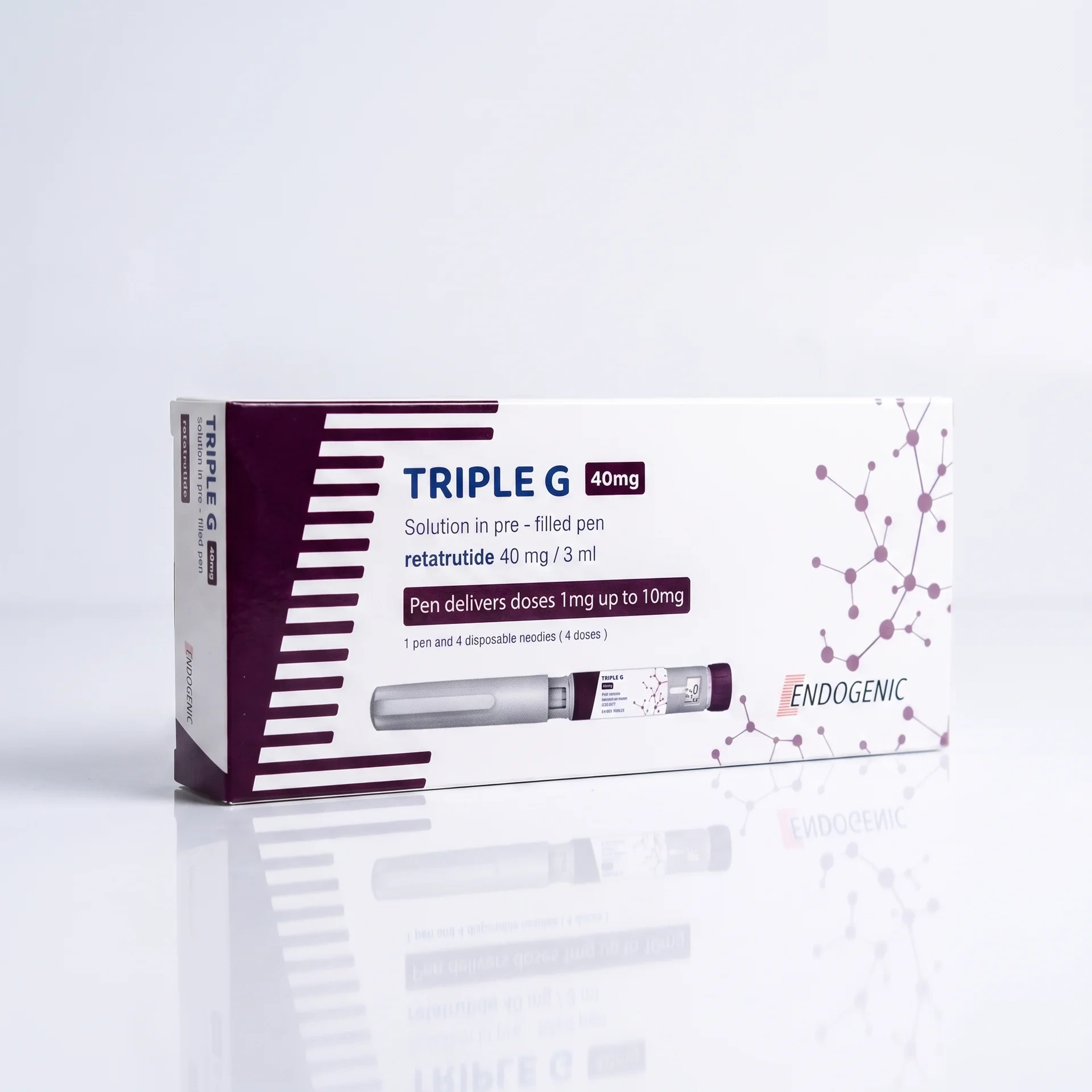
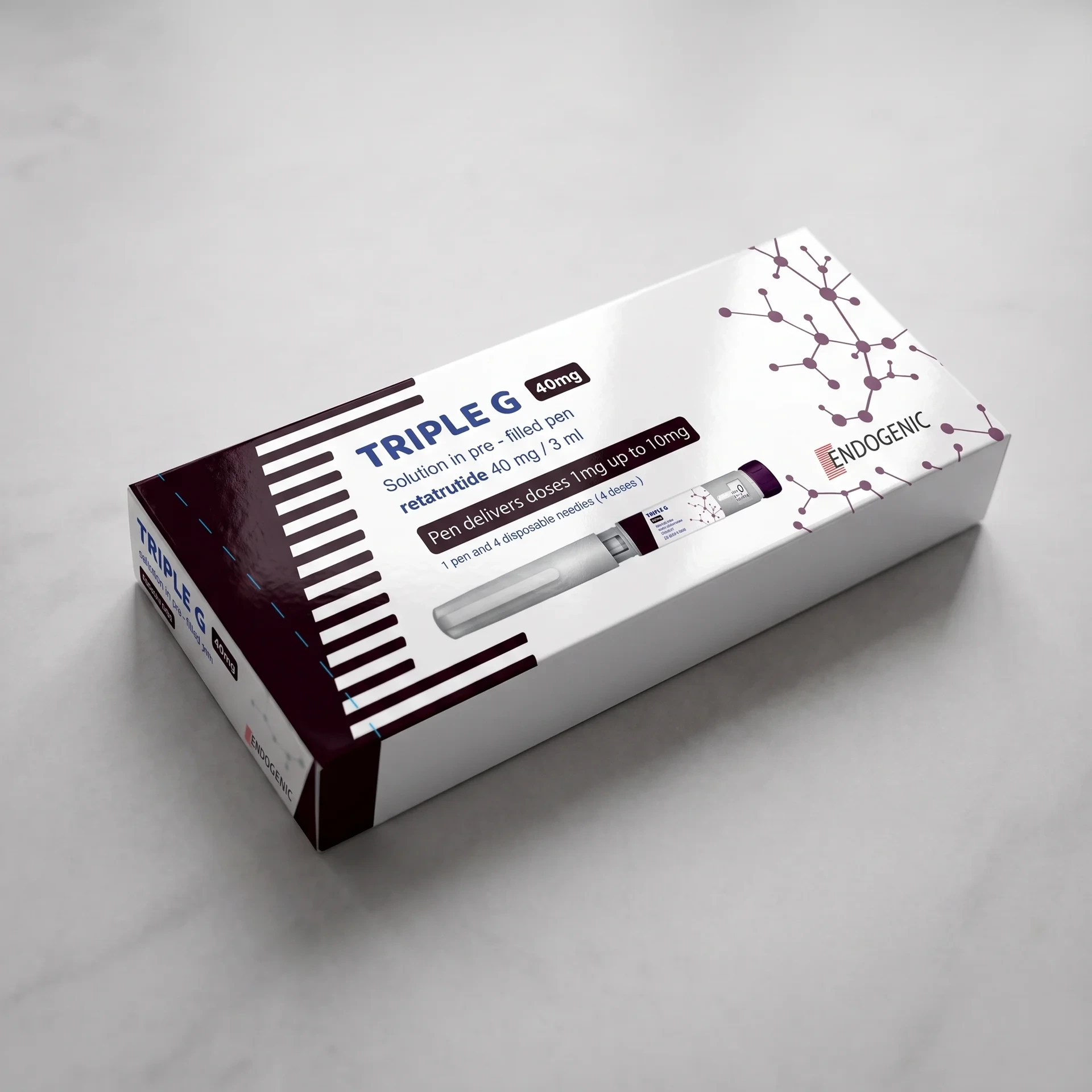
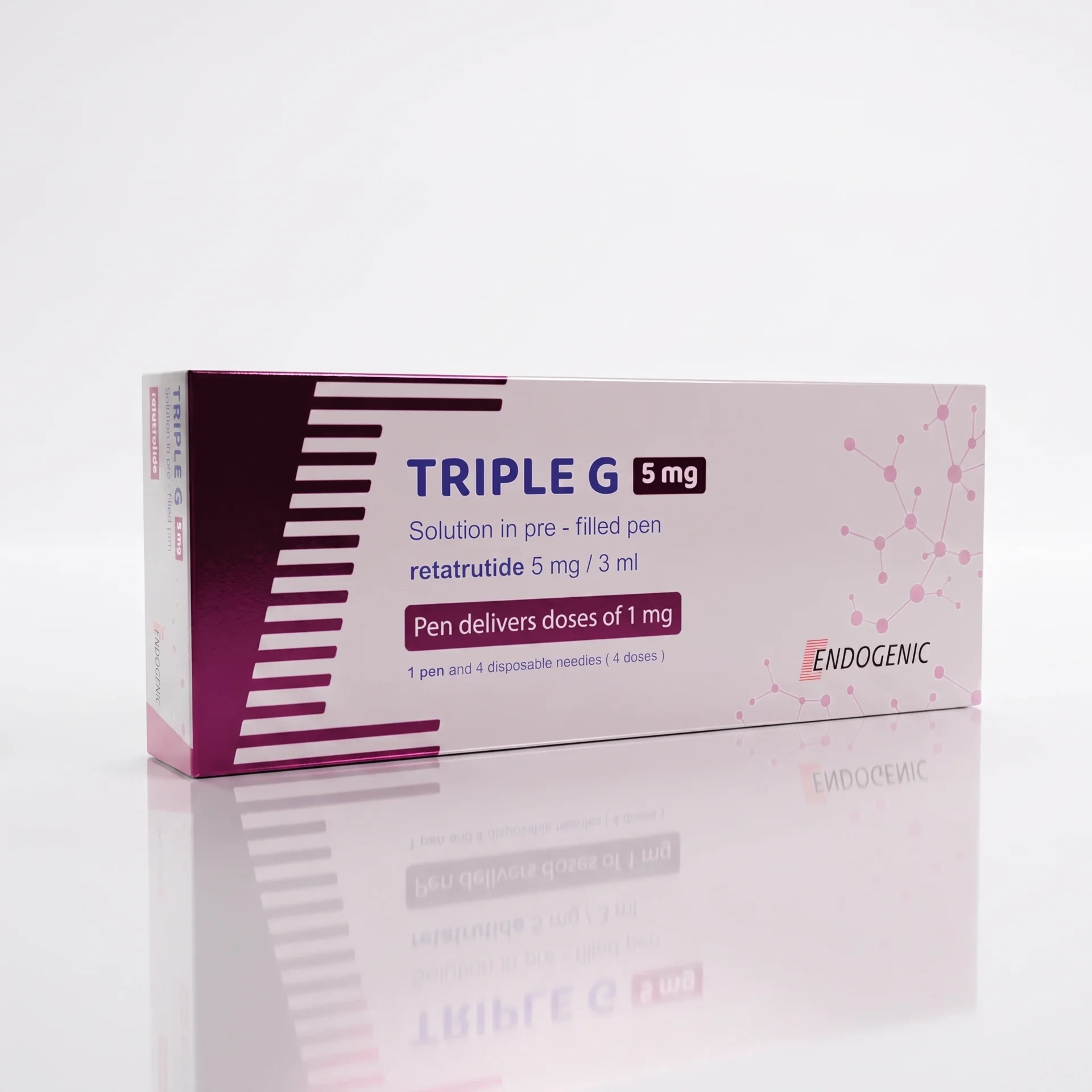
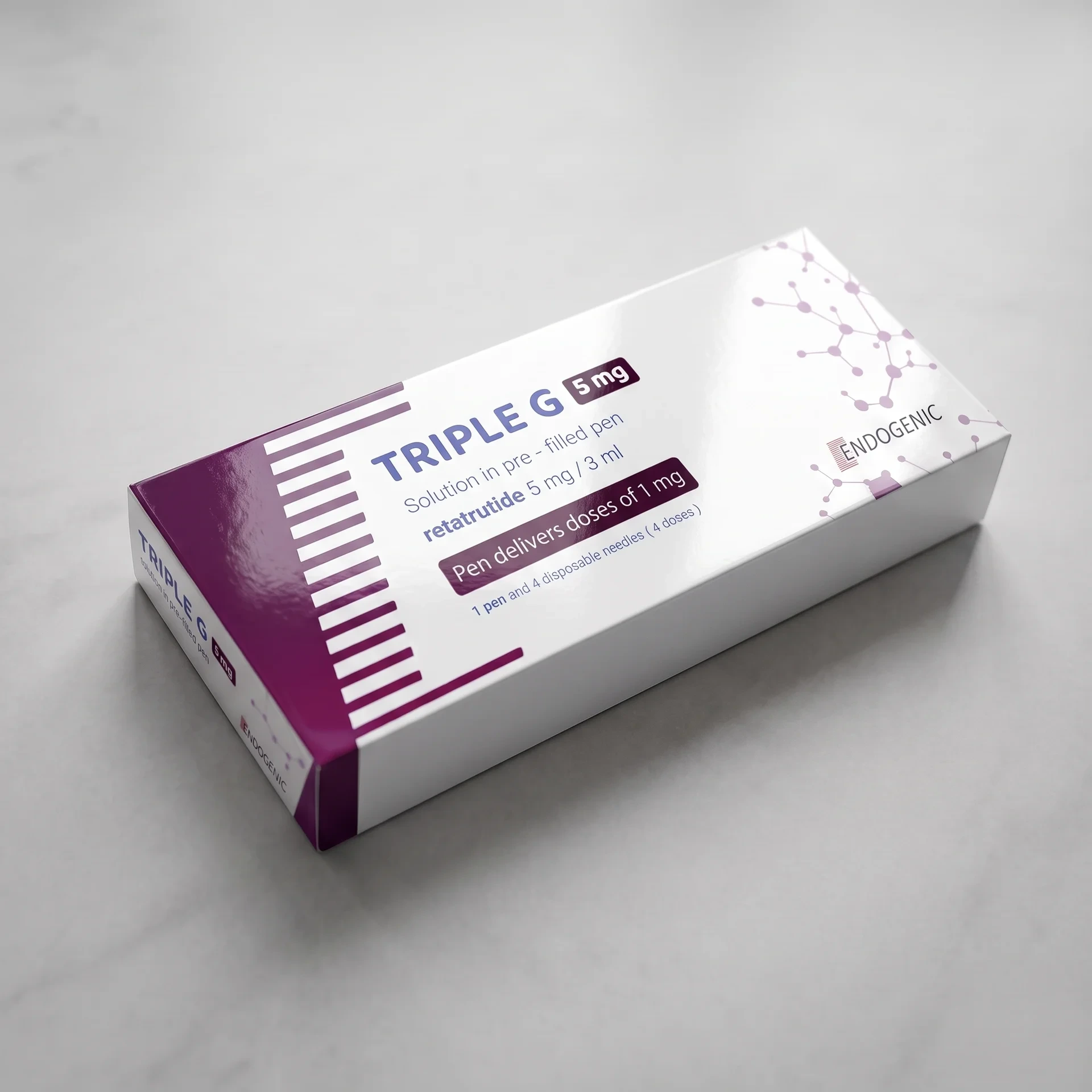
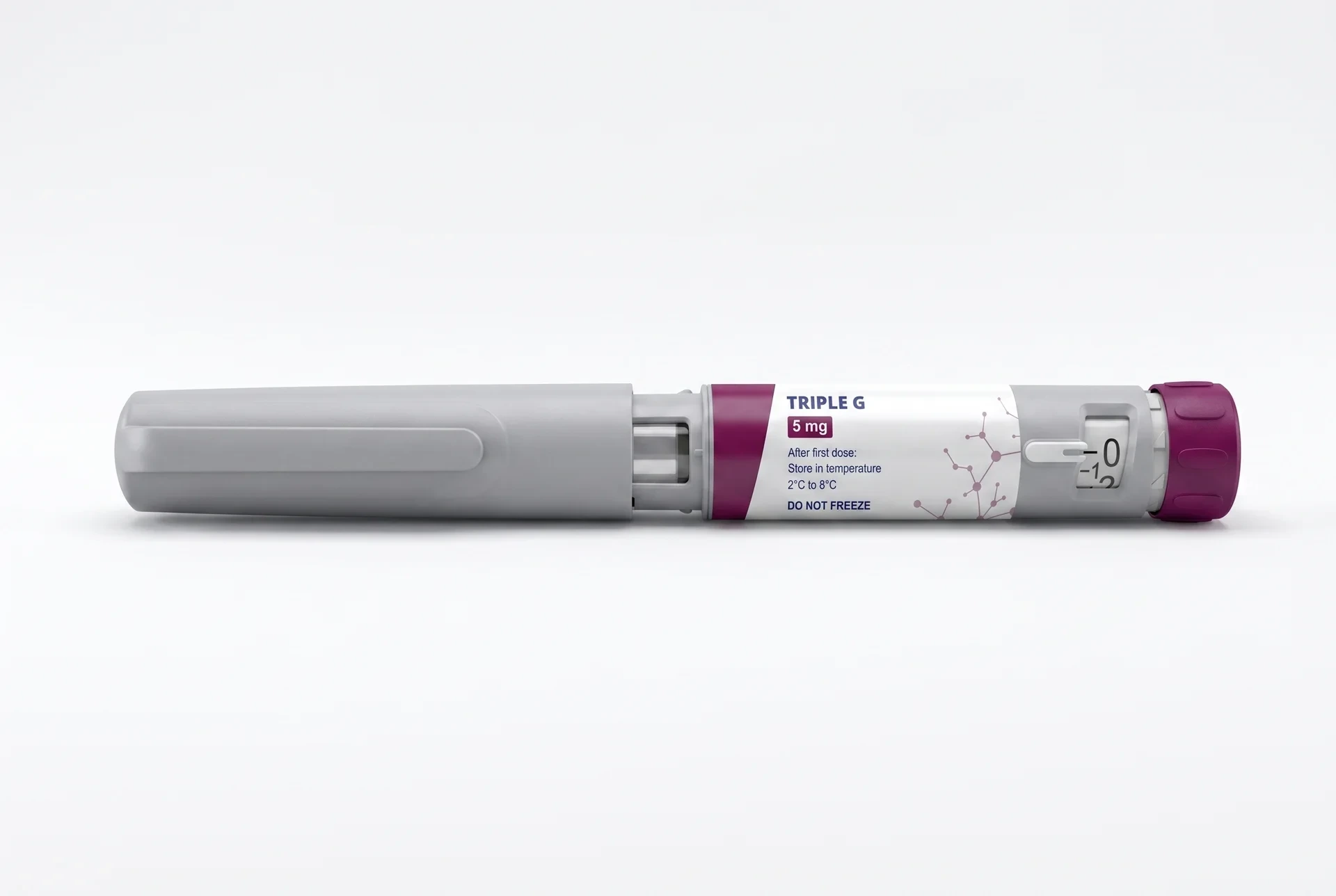
TRIPLE G 5mg PEN
TRIPLE G 5 mg PEN — triple-agonist of GLP-1R/GIPR/GCGR receptors (retatrutide, LY3437943) in a multi-dose applicator with a factory solution for laboratory tests. The third axis – glucagon (GCGR) – adds energy expenditure and thermogenesis to the incretin effect itself, which distinguishes triple from dual-agonists. The pen format eliminates reconstitution and standardizes the starting concentration. RUO reagent
114,99 €
Fast shipping
Delivery options
Returns policy
TRIPLE G 5 mg PEN — triple-agonist GLP-1R/GIPR/GCGR (retatrutide) in factory solution (pen applicator)
- Triple agonist of GLP-1R, GIPR and GCGR.
- PEN format with a factory-prepared solution; 5 mg content.
- Research Use Only reagent for laboratory research.
Product status information
Chemical reagent intended exclusively for laboratory tests (Research Use Only). It is not a medicinal product, dietary supplement or food. It is not intended for use on humans or animals. Sales only to registered research units and laboratories.
Regulatory status – critical distinction (GLP-1/GIP/glucagon triple-agonist category)
TRIPLE G 5 mg PEN is research reagent in the form of an applicator with a factory solution. The molecule responds structurally retatrutide (development code LY3437943) – a synthetic peptide from the class triple-agonists of GLP-1R / GIPR / GCGR receptors (glucagon receptor). Retatrutide is Eli Lilly development compound in Phase III clinical trials (program TRIUMPH) i as of the date of description, it is not registered as a drug in any jurisdiction — neither as a medicine, nor as a supplement, nor as a food.
It is not authorized by EMA, FDA or EFSA. TRIPLE G RUO reagent is not a substitute for the tested retatrutide, is not a substitute for registered incretin analogues (Ozempic®, Mounjaro®, Wegovy®, Zepbound®), is not a medicinal product and does not replace medical consultation. Communication suggesting that the RUO reagent is a “fat burner”, “weight loss drug” or a substitute for an investigational/registered drug is contrary to the Research Use Only framework and is unacceptable. The identity of a molecule with a clinically tested compound does not abolish this boundary.
Entry
For a decade, metabolic pharmacology added receptors one at a time. First there was GLP-1 – semaglutide set the bar. Then came the second incretin axis, GIP – tirzepatide beat the monoagonist in a direct head-to-head comparison. The next research question was bold: what will happen when we add a third incretin receptor to two incretin receptors, acting in the opposite metabolic direction – the glucagon? This is how the concept of the triple-agonist was created. Retatrutide (LY3437943) is the first compound of this class to enter advanced clinical trials, and the published Phase II data has attracted attention from across the field: to 24.2% weight reduction at 48 weeks at the highest dose – the highest result reported so far for a single incretin molecule (Jastreboff et al. 2023, NEJM).
In the Pro-Body catalog the same molecule appears in separate regulatory framework — as an RUO research reagent in applicator format with factory solution. It belongs to a wider family peptides for burning fat tissue used in metabolic research on obesity. This format simplifies laboratory work: it eliminates the variable of lyophilized reconstitution, provides the peptide in a clear solution with a known starting concentration, and allows for precise collection for further dilutions under controlled conditions. This is a technical solution for researchers working with triple incretin agonists in models in vitro and in vivo — not a medicinal form, not a therapeutic analogue for administration to humans, not a pharmaceutical retatrutide within the meaning of an investigational drug.
This reagent is supplied in a multidose applicator with factory solution, nominal concentration of 5 mg triple-agonist per applicator. For comparison to the dual-receptor approach, a dual GLP-1/GIP agonist format is available GLP-1+GIP PEN 10mg, and a purely freeze-dried variant of the same molecule offers Retatrutide 5mg in the form of lyophilisate.
Incretins and the glucagon arm - three metabolic axes in one molecule
To understand why a third was added to two incretin receptors, you need to see that the body regulates body weight and energy metabolism through more than one channel – and at first glance, some of these channels seem to work in opposite ways. Incretins are intestinal hormones secreted after a meal, whose function is to enhance the insulin response. The two main ones are GLP-1 (glucagon-like peptide 1, secreted by L cells of the ileum) and GIP (gastric insulinotropic peptide, secreted by K cells of the duodenum).
Together they are responsible for incretin effect — stronger insulin secretion after oral than intravenous glucose administration. Dual-agonists such as tirzepatide are based on these two axes. Glucagon is, in turn, a hormone secreted by α cells of the pancreas – classically associated with raising blood glucose (mobilization of liver glycogen), i.e. with an effect opposite to insulin. There is an apparent paradox here: why need an agonist of the glucagon receptor (GCGR) in a molecule that is supposed to reduce body weight? The answer lies beyond glycemia.
Activation of GCGR in the liver increases energy expenditure, intensifies hepatic fat oxidation and contributes a component thermogenic — the body burns more energy. A simultaneous strong incretin signal (GLP-1 + GIP) potentiates glucose-dependent insulin secretion, which neutralizes the hyperglycemic effect of the glucagon arm and leaves its metabolic benefit: greater energy expenditure over and above the satiety effect. That’s it glucagon arm (GCGR) distinguishes triple-agonist from dual incretin agonists. Dual-agonist (GLP-1 + GIP) acts mainly on the side supply — limits food intake by satiety and delayed gastric emptying.
The triple-agonist adds a side to this expense — increases how much energy the body uses. The combination of a reduction in supply and an increase in expenditure in one molecule is the mechanistic basis why the strongest effects on body weight of the entire incretin class have been observed in models and clinical trials with retatrutide (Coskun et al. 2022; Jastreboff et al. 2023).
What is a GLP-1R/GIPR/GCGR triple-agonist - class and structure
Triple-agonist incretin-glucagon is single acylated peptide, which binds and activates three distinct G-protein-coupled receptors: the GLP-1 receptor (GLP-1R), the GIP receptor (GIPR), and the glucagon receptor (GCGR). Retatrutide is a counting peptide 39 amino acids, designed for balanced affinity for all three receptors – SAR (structure-activity relationship) work has shown that one amino acid backbone can achieve activity on three targets at once, with the profile tuned so that the glucagon arm contributes energy expenditure without destabilizing glycemia (Coskun et al. 2022). The common feature of this class is fatty acid acylation — the attached lipid chain enables reversible binding to serum albumin.
Albumin acts as a reservoir: the molecule circulates partially bound, is gradually released and degraded. The effect is an extended half-life of the order about 6 days, compatible with the weekly schedule in clinical reference protocols. The molecular weight of the lipid-modified peptide core is in the vicinity ~4731 g/mol (to be verified in the batch COA). The CAS number assigned to retatrutide is 2381089-83-2 (to be verified in the batch COA).
Physicochemical characteristics
| Parameter | Value |
|---|---|
| Common name | Triple G (triple agonist); retatrutide |
| Development code | LY3437943 |
| Pharmacological class | Triple-agonist of GLP-1R/GIPR/GCGR receptors (acylated incretin-glucagon peptide) |
| Mechanism | Triple agonism: GLP-1 receptor + GIP receptor + glucagon receptor |
| Number of amino acids | 39 |
| Molecular weight | ~4731 g/mol (to be verified in the batch COA) |
| CAS number | 2381089-83-2 (to be verified in the batch COA) |
| Structural modifications | Fatty acid acylation, reversible binding to albumin |
| Half-life (class) | ~6 days (compatible with weekly schedule in clinical reference protocols) |
| Physical form | Factory solution in a multi-dose applicator (pen) |
| Nominal concentration | 5 mg triple-agonist / applicator |
| Solvent | Water for injection + phenol + phosphate/citrate buffer, pH 7.0–7.6 |
| HPLC purity | ≥98% |
| Identity confirmation | Q-TOF mass spectrometry |
Mechanism of action at the molecular level - five axes
Activation of three receptors at once triggers a cascade of complementary mechanisms reported in the preclinical and clinical literature. All three receptors – GLP-1R, GIPR and GCGR – are coupled to G protein, so binding of the agonist translates into an increase in intracellular cAMP and activation of PKA kinase-dependent pathways. The difference with a dual-agonist is the addition of a third receptor pathway – glucagon – which shifts the profile of the molecule from the “supply” side to the energy “expenditure” side.
- Axis 1 – GLP-1R agonism. In pancreatic β-cells, GLP-1R activation increases cAMP and potentiates glucose-dependent insulin release. The mechanism is glucose-dependent – in normoglycemia, insulin secretion is not significantly stimulated, which constitutes a molecular “fuse”. At the same time, GLP-1R in the arcuate nucleus of the hypothalamus mediates satiety signaling (activation of POMC neurons), and in the gastrointestinal tract it slows down gastric emptying, which prolongs the feeling of satiety after a meal.
- Axis 2 – GIPR agonism. Activation of the GIP receptor enhances insulinotropism – in the presence of a simultaneous GLP-1 signal, the contribution of GIP to insulin secretion is restored and summed up. Additionally, GIPR participates in lipid metabolism in adipocytes, modulating the storage and turnover of fatty acids in adipose tissue (Holst and Rosenkilde 2020). This is the second incretin axis, shared with dual-agonists.
- Axis 3 – GCGR agonism (glucagon arm). This is the axis that distinguishes triple from dual. Activation of the glucagon receptor in the liver increases energy expenditure, intensifies oxidation of fatty acids and lowers the liver fat content by contributing the component thermogenic. Glucagon classically raises glucose – but in the triple molecule, the simultaneous strong incretin insulinotropism (GLP-1 + GIP) neutralizes this effect, leaving a metabolic benefit: energy burning beyond the satiety effect itself. In preclinical models, the glucagon arm has also been associated with the separation of liver steatosis and fibrosis (Boland et al. 2020). This is a pathway that the GLP-1/GIP dual agonist does not activate.
- Axis 4 – triple synergy. The combination of three signals produces an effect on body weight that is stronger than the agonism of two receptors. The supply side (reduction in food intake: GLP-1 + GIP) adds up to the expenditure side (increase in energy burning: GCGR). Reference context: in a phase II study, a mean weight reduction of up to 24.2% at the highest dose at 48 weeks — the highest result reported so far for a single incretin molecule (Jastreboff et al. 2023). Parallel improvements in glycemic control were reported in the type 2 diabetes cohort (Rosenstock et al. 2023).
- Axis 5 – acylation and pharmacokinetics. The albumin-binding fatty acid chain is responsible for the prolonged half-life (~6 days). This is a factor that allows maintaining receptor exposure in PK models with a rare administration schedule – important when designing comparative protocols compared to analogues with a shorter T½ and when assessing the balance of activity on three receptors over time.
Applications in scientific research
TRIPLE G PEN as an RUO reagent is used in several directions. The applicator format with a factory solution – eliminating the reconstitution variable and standardizing the protocol between batches – works particularly well where repeatability of the initial concentration is a condition for comparability of results, and the subject of the study is the contribution of the third, glucagon arm, above the incretin agonism itself. Tri-receptor pharmacology. Analyzes of receptor activity in parallel on GLP-1R, GIPR and GCGR, profiling of selectivity and affinity balance for three targets, EC50 measurements in cell cultures with cAMP reporters for each receptor separately.
The applicator format facilitates precise collection of the solution for serial dilutions, and the triple-agonist functions as a reference tool for isolating the glucagon component in a multi-receptor system. Animal models of obesity, insulin resistance and fatty liver disease. DIO mice, ob/ob and db/db models, Zucker rats, NAFLD/NASH models. Endpoints: body weight, composition (DEXA, NMR), energy expenditure (indirect calorimetry), OGTT/ITT, HOMA-IR, lipid profile, liver fat content, fibrosis markers. The glucagon arm makes the triple-agonist a particularly important tool for models that assess energy expenditure and hepatic metabolism, rather than just caloric intake.
Pharmacokinetics of acylated triple-agonists. PK profile, kinetics of binding to albumin, models of receptor exposure at long T½, comparisons with dual-agonists and monoagonists with different half-lives. Comparative analyzes of the incretin class. Triple-agonist (GLP-1R/GIPR/GCGR) as a reference point against the dual-agonist tirzepatide, GLP-1 monoagonists and the GLP-1 + amylin combination in SAR work on the architecture of multi-target metabolic analogues and the balance of activity on an increasing number of receptors.
REGULATORY STATUS
Retatrutide (LY3437943) is Eli Lilly development compound in Phase III clinical trials (TRIUMPH program) i is not registered as a medicine in any jurisdiction – not authorized by the EMA, FDA or EFSA. TRIPLE G 5 mg PEN (RUO) is not this study drug and does not have status of a medicinal product. Incretin agonist peptides are not currently listed directly as a separate category on the current WADA Prohibited List – status may change in subsequent editions. Registered athletes (ADAMS) must check the current list of prohibited substances before making any decision regarding use.
Applicator mold specification
The following description concerns the technical operation of the applicator in the context of a laboratory research reagent. It does not constitute instructions for administration to humans or animals – the applicator marketed by RUO is not a pharmaceutical form for injection into humans. The applicator format is technical: it provides a stable, pre-dissolved source of peptide for further experimental work. Factory solution instead of lyophilisate. TRIPLE G 5 mg PEN contains 5 mg of triple-agonist pre-dissolved in a multi-dose applicator – ready for collection without adding solvent. These are three technical advantages over the lyophilisate in a vial:
- Elimination of the reconstitution variable — the researcher does not introduce his own solvent or volume error; the starting concentration is factory defined and uniform from batch to batch.
- Micro-volumes without disturbing the tightness — the design of the multi-dose applicator allows you to withdraw small portions of the solution multiple times, without opening the entire vial and without exposing the entire contents to air each time.
- Protocol standardization — a repeatable starting concentration simplifies the comparison of results between experimental runs and between laboratories.
Taking the solution is performed using a laboratory syringe or a dosing applicator with microliter precision. The solution should be clear – turbidity, sediment or color change are a signal that the batch is not suitable for further work. Working concentrations. For receptor tests in vitro Typically, we work on the picomolar to nanomolar scale. Working concentrations are prepared by serial dilution in PBS at pH 7.4 or in buffers compatible with the particular experimental system. The nominal concentration of 5 mg provides a wide range of dilutions with a single applicator. When assessing concentration-response curves for three receptors at once (GLP-1R, GIPR, GCGR), the calculation is performed in parallel for each axis.
Summary
TRIPLE G 5 mg PEN is an RUO reagent from the class of triple-agonists of GLP-1R/GIPR/GCGR receptors – an acylated incretin-glucagon peptide structurally corresponding to retatrutide (LY3437943, 39 amino acids). The molecule activates three hormonal receptors at once: two incretin axes (GLP-1 + GIP) on the side of food restriction and the third axis – glucagon (GCGR) – on the side of energy expenditure, fat oxidation and thermogenesis. This glucagon arm distinguishes triple from dual-agonists and adds an energy burning component, which in phase II clinical trials on retatrutide resulted in the strongest effect on body weight in the incretin class (up to 24.2% at 48 weeks).
The factory solution applicator format eliminates the reconstitution variable and standardizes the starting concentration between lots. Retatrutide remains an Eli Lilly Phase III development compound (TRIUMPH), unregistered as a drug — making distinguishing regulatory frameworks a prerequisite for any product communication. A direct comparison of two leading incretin analogues – a dual GIP/GLP-1 agonist with a GLP-1 monoagonist, including the results of head-to-head studies – is discussed in the article Tirzepatide and Semaglutide – which is better for weight loss. The mechanism of the new generation GLP-1/GIP/GCG triple agonist and phase II clinical data are described in the publication Retatrutide for obesity – action and effects of use.
Bibliography
- Jastreboff AM, Kaplan LM, Frías JP, Wu Q, Du Y, Gurbuz S, et al. (2023). Triple-Hormone-Receptor Agonist Retatrutide for Obesity – A Phase 2 Trial. PubMed
- Coskun T, Urva S, Roell WC, Qu H, Loghin C, Moyers JS, et al. (2022). LY3437943, a novel triple glucagon, GIP, and GLP-1 receptor agonist for glycemic control and weight loss: From discovery to clinical proof of concept. PubMed
- Rosenstock J, Frías J, Jastreboff AM, Du Y, Lou J, Gurbuz S, et al. (2023). Retatrutide, a GIP, GLP-1 and glucagon receptor agonist, for people with type 2 diabetes: a randomized, double-blind, placebo and active-controlled, parallel-group, phase 2 trial. PubMed
- Müller TD, Finan B, Bloom SR, D’Alessio D, Drucker DJ, Flatt PR, et al. (2019). Glucagon-like peptide 1 (GLP-1). PubMed
- Boland ML, Laker RC, Mather K, Nawrocki A, Oldham S, Boland BB, et al. (2020). Resolution of NASH and hepatic fibrosis by the GLP-1R/GcgR dual-agonist Cotadutide via modulating mitochondrial function and lipogenesis. PubMed
- Holst JJ, Rosenkilde MM (2020). GIP as a Therapeutic Target in Diabetes and Obesity: Insight From Incretin Co-agonists. PubMed
FAQ
Glucagon classically raises blood glucose, so at first glance it seems counterproductive to the goal of weight loss. However, the benefit lies beyond glycemia: activation of the glucagon receptor (GCGR) in the liver increases energy expenditure, intensifies oxidation of fatty acids and lowers liver fat content – the body burns more energy. In the triple molecule, a simultaneous strong incretin signal (GLP-1 + GIP) potentiates glucose-dependent insulin secretion, which neutralizes the hyperglycemic effect of glucagon and leaves its metabolic component. It is this axis that distinguishes a triple-agonist from dual incretin agonists.
Retatrutide (development code LY3437943) is an Eli Lilly development compound in the GLP-1R/GIPR/GCGR triple-agonist class. It has completed Phase II with the publication of results (Jastreboff et al. 2023 – obesity, up to 24.2% body weight reduction at 48 weeks; Rosenstock et al. 2023 – type 2 diabetes) and is in phase III clinical trials (TRIUMPH program). As of the date of description, it is not registered as a drug in any jurisdiction — is not authorized by the EMA, FDA or EFSA and is not commercially available as a medicinal product. TRIPLE G 5 mg PEN is a Research Use Only reagent structurally corresponding to this molecule – not an investigational drug, not a medicinal product and not its substitute.
The multidose applicator format with pre-dissolved peptide offers three technical advantages: it eliminates the reconstitution variable (the researcher does not introduce his own solvent or volume error), allows micro-volumes to be collected multiple times without compromising the integrity of the entire contents, and standardizes the output concentration between batches and laboratories. The freeze-dried retatrutide variant requires dissolution with water before use – the applicator skips this step.
The half-life of retatrutide is approximately 6 days, compatible with the weekly regimen in clinical reference protocols. It results from acylation – the attached fatty acid chain allows the peptide to reversibly bind to serum albumin. Albumin acts as a reservoir: the molecule circulates partially bound, is gradually released and degraded, which prolongs receptor exposure. In PK models, this long T½ allows activity to be maintained at three receptors with an infrequent administration schedule.
Unopened applicator: typically up to 24 months at 2-8°C. After first collection: typically up to 6 weeks at 2–8°C. The solvent (water for injection + phenol + phosphate/citrate buffer, pH 7.0–7.6) stabilizes the peptide in solution. Absolutely no freezing – freeze-thaw cycles denature acylated peptides. Detailed stability data in the batch COA.
The current WADA Prohibited List does not directly list incretin agonists or triple agonists as a separate category. The status may change in subsequent editions – it is the researcher’s responsibility to verify the current guidelines. Registered Athletes (ADAMS) should check the current Prohibited Substances List and Monitoring Program before making any decision regarding use.
5.0
3 reviews
-
Iwona
 Polski
Verified purchase
Polski
Verified purchase
Product review
Sklep i obsługa na 6+.
-
Magda
Polski
Verified purchase
Product review
Polecam produkt.
-
Ola
Polski
Product review
Jestem zadowolona. Cena adekwatna do jakości produktu :)
Related products