Skip to content

Free delivery on orders over €400. Fast delivery.

Search

What are you looking for?

Type at least 2 characters to see suggestions.

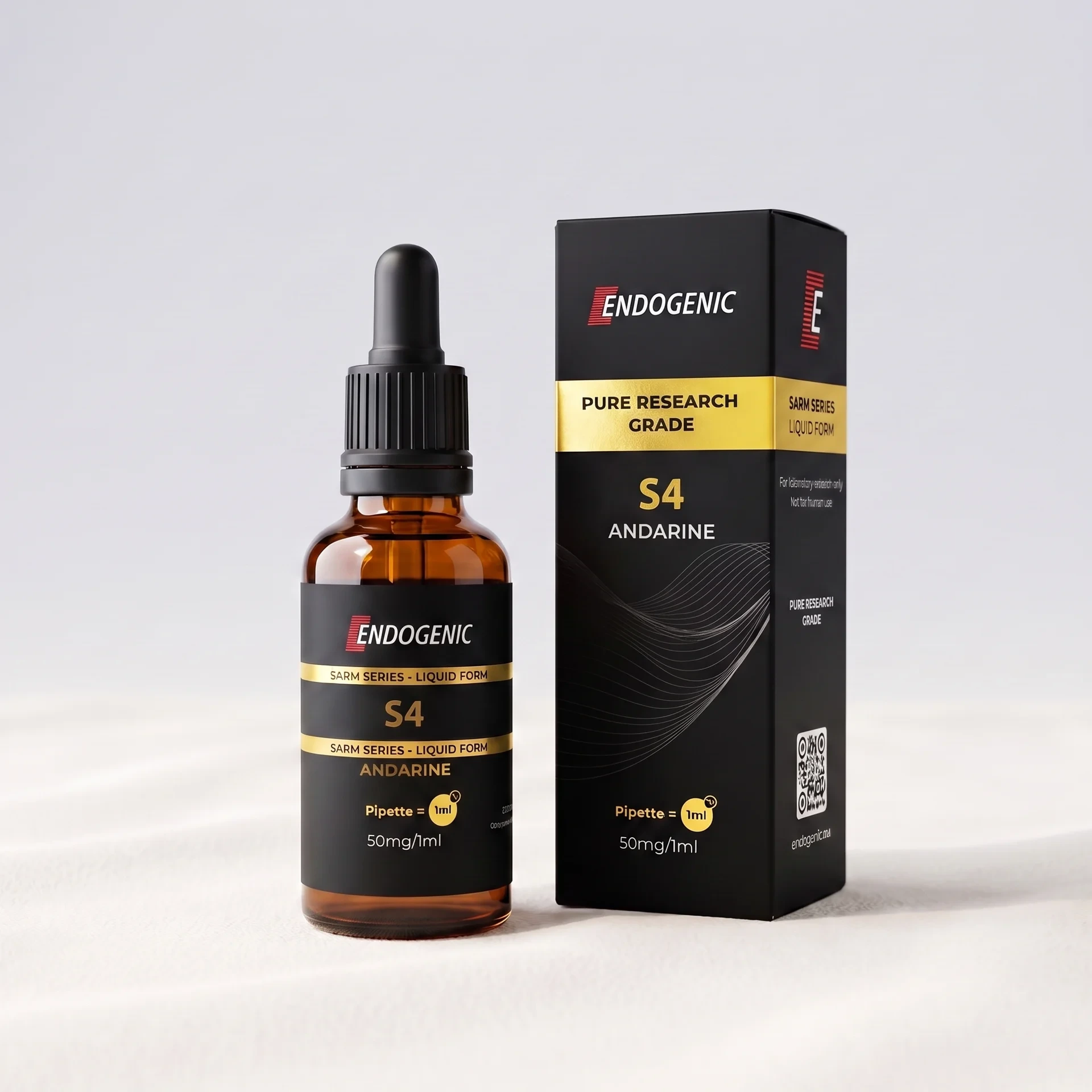
S4 50mg/1ml LIQUID

S4 50mg/1ml LIQUID

S4 (Andarine, GTx-007) — oral solution in a 30 ml dropper bottle (Endogenic line). SARM from the arylpropionamide class, the first generation of tissue-selective androgen receptor ligands from the GTx laboratory. Partial AR agonist with a favorable anabolic-androgenic index. Research Use Only

42,99 €
Fast shipping
Delivery options
Returns policy

S4 (Andarine) 30 ml solution - arylpropionamide SARM, research reagent

  • S4 (Andarine, GTx-007): a selective androgen receptor modulator.
  • Solution in a 30 ml dropper bottle; batch parameters in the COA.
  • Research Use Only reagent, not a medicinal product.

S4 (Andarine, S-4, GTx-007) is a non-steroidal selective androgen receptor modulator (SARM) from the arylpropionamide class – the first generation of compounds of this family, structurally derived from the antiandrogen bicalutamide. The compound was synthesized and characterized in the laboratory GTx Inc. by the team of James Dalton and Duane Miller (Memphis, 2003–2005), as part of a systematic program of searching for tissue-selective androgen receptor (AR) ligands.

Classic work – Gao et al. 2005 (Endocrinology) – showed in a model of rats after orchidectomy that Andarine preserves the mass and strength of the levator ani muscle and bone parameters at a level similar to testosterone, with a noticeably weaker effect on glandular tissues (prostate, seminal vesicles). This reagent is supplied in the Endogenic line in the form of oral solution in a 30 ml dropper bottle (concentration mg/ml declared in the batch COA).

This is one of the reagents from the group SARMs liquid, for which the form of a dropper solution is adapted to laboratory research protocols operating with working concentrations in vitro on AR-expressing cell lines and in vivo on rodent models – the dropper simplifies the measurement of repeatable volumes of solution with a known concentration of mg/ml without the need to weigh the powder for each test.

This is important considering the short half-life of arylpropionamides, which in research models requires multiple exposure patterns within a 24-hour period. Purity verified by HPLC ≥98%, identity confirmed by mass spectrometry, COA available for each batch. The central axis of the mechanism is tissue selectivity: the compound binds the androgen receptor with high affinity (Ki in the single nanomolar range, ~4 nM), but induces receptor conformations leading to an anabolic response in muscle and bone that is much stronger than in reproductive tissues.

The second – and unique – pharmacological signature of S4 is color vision disorder (yellow tint vision): reversible opsin effect resulting from the binding of the compound to retinal photoreceptors, mechanistically completely independent of the androgen receptor and specific for the arylpropionamide class.

Regulatory status

S4 (Andarine) completed Phase I clinical trials conducted by GTx, but clinical development was abandoned at the early clinical stage – mainly due to impaired yellow tint vision and lower effectiveness than its sister enobosarm (Ostarine, GTx-024). The compound is not registered as a medicine in the EU, USA or anywhere in the world. Not authorized by EFSA as an ingredient of a dietary supplement.

S4 has been on the WADA prohibited substances list (category S1.2 – other anabolic agents, SARMs) since 2008. Communication of the product as a “SARM for body recomposition”, a “dry mass preparation” or a “burner for athletes” is contrary to the Research Use Only framework.

Context of selective androgen receptor modulators

Selective androgen receptor modulators (SARMs) are a class of compounds that bind the androgen receptor (AR) and induce tissue-selective transcriptional response — anabolic in skeletal muscle and bone, with reduced impact on glandular tissues (prostate, seminal vesicles) and with the absence – or significant limitation – of pathways typical of androgenic steroids (aromatization to estrogens, 5α-reduction to stronger androgens).

The concept of SARMs comes from the analogy to selective estrogen receptor modulators (SERMs, e.g. tamoxifen, raloxifene), where the same receptor induces different tissue responses depending on the conformation induced by the ligand and the recruited set of coregulators. SARMs are divided into several chemical classes, the best characterized of which are:

  • Arylpropionamides — first generation, derived from the antiandrogens bicalutamide and hydroxyflutamide; they belong to this class S4 (Andarine) and enobosarm (Ostarine, MK-2866, GTx-024)
  • Bicyclic derivatives and hydantoins – e.g. BMS-564929
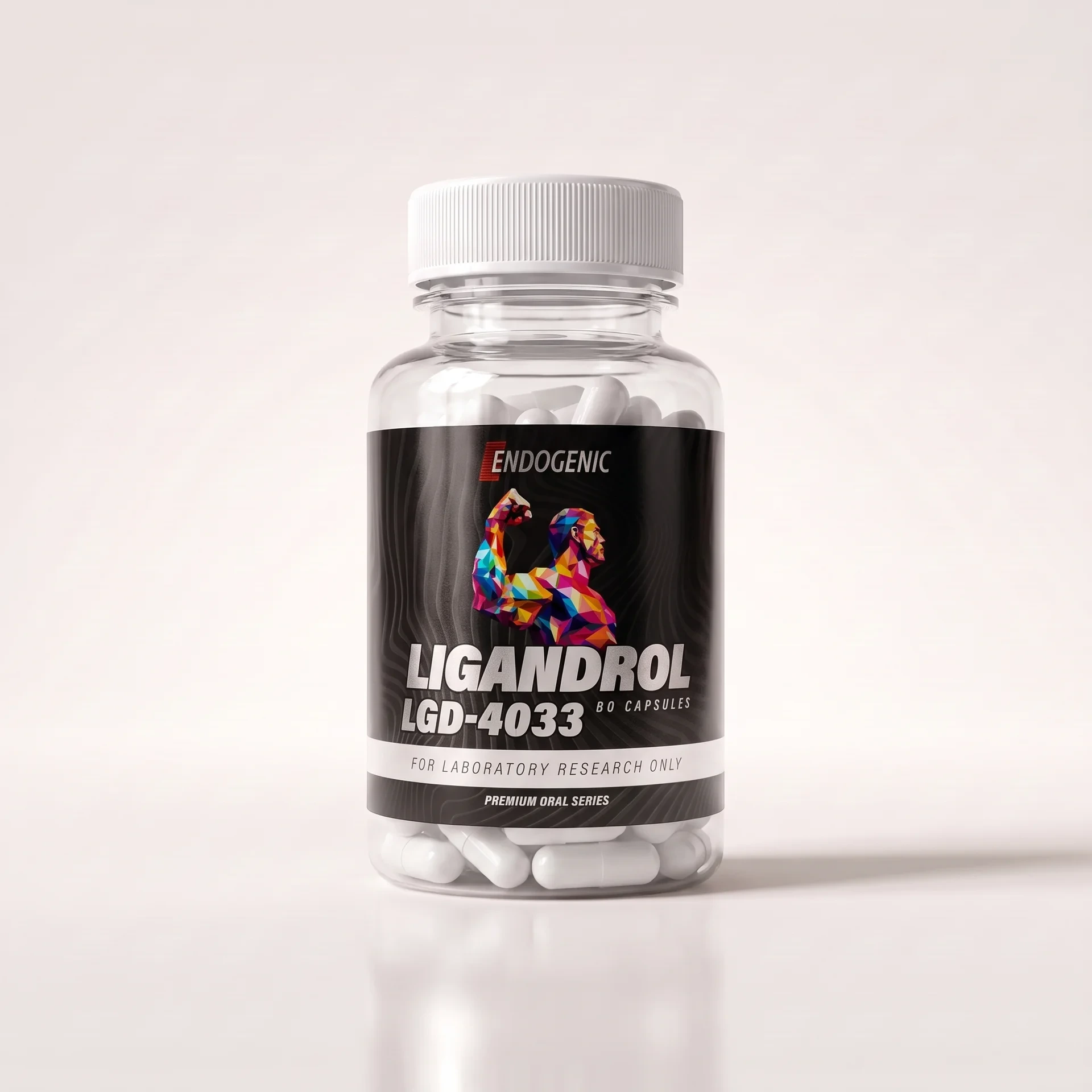
  • Quinoline derivatives — e.g. LGD-4033 (Ligandrol), LGD-2226
  • Compounds with distinct skeletons — e.g. RAD-140 (Testolone), S-23

The mechanism of action of SARM is based on conformational selectivity: the ligand stabilizes a specific conformation of the androgen receptor’s ligand-binding domain (LBD), which determines the recruitment of coactivators or corepressors in a given tissue type. In skeletal muscle and bone tissue, coactivator recruitment and anabolic response dominate; in the prostate, the coregulator profile and local enzymatic conversion lead to weaker stimulation.

This tissue dissociation is the pharmacological foundation of the entire class. The world of pharmacology is watching S4 for three reasons. Firstly, as a first-generation model arylpropionamide – a reference reagent in comparative studies on AR tissue selectivity. Secondly, as a compound with a unique side effect – reversible color vision impairment, a mechanism completely unrelated to the androgen receptor, making S4 an interesting tool in the study of ligand-opsin interactions.

Thirdly, as a historical reference point in the development of the SARM class – a compound whose limitations (short half-life, visual disturbances) guided the design of subsequent generations of AR ligands.

What is S4 (Andarine)?

Chemically, S4 is a non-steroidal androgen receptor ligand from the arylpropionamide class.

  • Common name: S4, S-4, Andarine
  • Synonyms/development codes: GTx-007, Acetamidoxolutamide
  • Chemical name (descriptive): arylpropionamide derivative with a structure related to bicalutamide, with nitro- and acetamido- substituents on aromatic rings
  • Laboratory of origin: GTx Inc., Dalton and Miller’s team (Memphis)
  • Chemical class: non-steroidal SARM, arylpropionamide (first generation); a structural analog of the antiandrogen bicalutamide
  • AR affinity: Ki in the single nanomolar range (~4 nM); partial agonist of the androgen receptor
  • Delivered form: oral solution in a 30 ml dropper bottle; mg/ml concentration declared in the batch COA; pharmaceutical grade ≥98% HPLC

Table of physicochemical characteristics

Parameter Value
Name S4 (Andarine, GTx-007)
Chemical class Non-steroidal SARM, arylpropionamide (1st generation)
CAS number 401900-40-1
Molecular formula C₁₉H₁₈F₃N₃O₆
Molar mass 441.36 g/mol
AR affinity Ki ~4 nM; partial agonist
Purity ≥98% (HPLC)
Form Oral solution, 30 ml dropper bottle; mg/ml concentration – see COA
Identity confirmation Mass spectrometry (MS Q-TOF)
Storage conditions Room temperature (15-25°C), protect from light
Shelf life 24 months (lot details – COA)

Origin: Arylpropionamides as a class of SARMs derive directly from research on antiandrogens – bicalutamide and hydroxyflutamide (AR-blocking compounds used in prostate oncology). Duane Miller and James Dalton’s team at the GTx Inc. lab. (Memphis) found that appropriate modifications of the arylpropionamide core convert the AR antagonist into tissue-selective partial agonist — which gave rise to the first generation of SARMs.

S4 (Andarine) was characterized in a series of works from 2003–2005, in parallel with its sister enobosarm (Ostarine). The main preclinical data come from an orchidectomized rat model (Gao et al. 2005), where a dissociation of anabolic (muscle, bone) from androgenic (prostate) effects was demonstrated.

Mechanism of action at the molecular level

S4 acts as a partial androgen receptor agonist with marked tissue selectivity. It binds the AR receptor’s ligand-binding domain with high affinity and induces a conformation leading to an anabolic transcriptional response in muscle and bone, with reduced effects on glandular tissues. Pharmacological profile observed in preclinical models – six axes:

  1. Partial androgen receptor agonism, tissue selective — S4 binds AR with a Ki of ~4 nM and acts as a partial agonist. In the orchidectomy rat model, the anabolic-androgenic index (the ratio of the response of the levator ani muscle to the response of the prostate) is significantly more favorable than for testosterone – the foundation of tissue selectivity of the arylpropionamide class (Gao et al. 2005).
  2. Anabolism in skeletal muscle — in the S4 orchidectomy model, it maintained the mass and strength of the levator ani muscle at a level similar to testosterone, with a much weaker effect on reproductive tissues; observations include effects on muscle protein synthesis and anabolic markers
  3. Anti-resorption effect in bone — in rodent models, S4 influenced bone mass and parameters of trabecular microarchitecture (maintaining bone mineral density after castration), which became the basis for research on arylpropionamides in the context of models of osteoporosis and sarcopenia
  4. Visceral fat reduction in rodent models — in some preclinical protocols, an effect on body composition with a reduction in visceral fat mass was observed; mechanism related to androgenic regulation of lipid metabolism in adipose tissue
  5. Yellow tint vision disorder – axis not related to AR — S4 and its metabolites bind to opsins/rhodopsin in retinal photoreceptors, which leads to reversible color vision impairment (yellowish tint of the visual field, delayed adaptation to darkness, “night blindness”). This is a phenomenon specific for arylpropionamides and mechanistically completely independent of the androgen receptor – distinguishes S4 from SARMs of other classes (RAD-140, LGD-4033) that do not show this effect
  6. No conversion to estrogen — as a non-steroidal AR ligand, S4 is not subject to aromatization to estradiol or 5α-reduction; the transcriptional profile remains within the androgen axis without estrogen metabolites

Pharmacokinetic profile (based on preclinical models):

  • Half-life (T½): estimated ~3–4 h — short, which in research models forces multiple exposure patterns within a 24-hour period
  • Oral bioavailability in rodent models: estimated ~30–50% (moderately lipophilic compound)
  • Metabolism: phase I (hydrolysis, reduction of the nitro group) and phase II (conjugation); elimination via hepatic pathways
  • Human PK profile: uncharacterized under controlled conditions beyond early GTx data

S4 in the SARM class – pharmacological position: In the family of selective androgen receptor modulators, S4 occupies the position of a first-generation model arylpropionamide, different from newer ligands with different skeletons:

  • S4 (Andarine), arylpropionamide — partial AR agonist (Ki ~4 nM), short T½ (~3–4 h), yellow tint vision signature (interaction with opsins); historic first generation GTx compound
  • Enobosarm (Ostarine, MK-2866), arylpropionamide — sister compound of the same class; better characterized in phase II, weaker effect on color vision than S4. Solution variant available as MK-2866 liquid
  • LGD-4033 (Ligandrol), quinolinone derivative — higher affinity for AR, longer T½, no effect on vision
  • RAD-140 (Testolone), distinct scaffold — high tissue selectivity and anabolic potency in models, no interaction with retinal opsins; solution variant as RAD-140 liquid
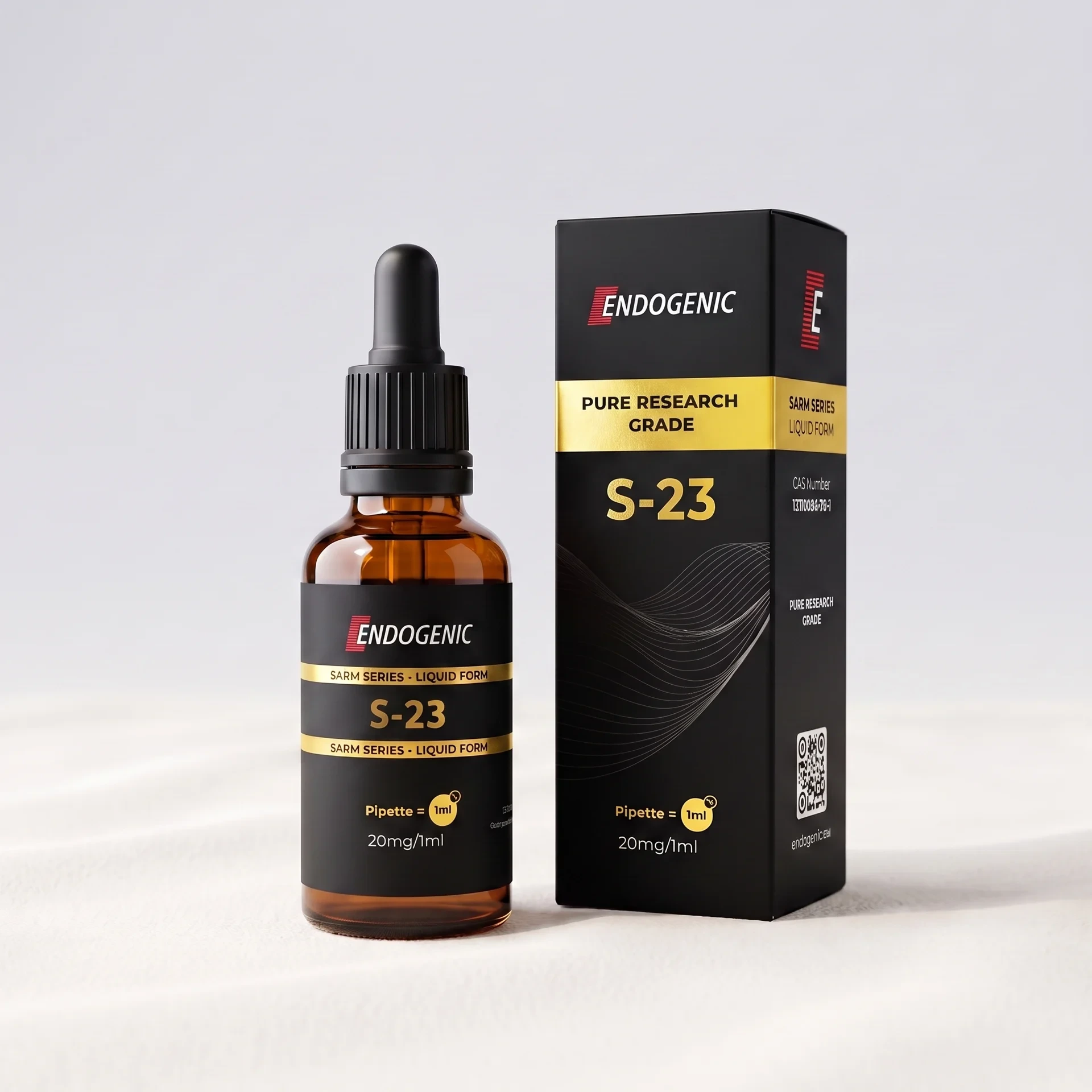
  • S-23, distinct scaffold — strong SARM with high affinity to AR; solution variant as S-23 liquid

Applications in scientific research

S4 is used in research work in several areas. In in vivo models (orchidectomized Sprague-Dawley rat, mouse), researchers analyze its effect on the mass and strength of skeletal muscle, bone parameters (mineral density, trabecular microarchitecture), body composition and the anabolic-androgenic selectivity index. In vitro models (cell lines expressing androgen receptor, AR transcription reporter tests) examine receptor affinity, agonist-antagonist profile and co-regulator recruitment. Specific research directions include:

  • Models of sarcopenia and muscle atrophy — assessment of the anabolic potential of arylpropionamides in catabolic-degenerative states of skeletal muscle (orchidectomy, immobilization, cachexia model)
  • Models of osteoporosis and bone metabolism — study of the effect on bone mass, mineral density and trabecular microarchitecture after castration
  • Tissue selectivity of the androgen receptor — S4 as a reference reagent in comparative analyzes of muscle/bone vs. prostate selectivity; mapping of AR conformations and coregulator recruitment. In comparative studies on the recomposition and hardening of the silhouette, S4 is compared with others SARMs to harden your figure as reference arylpropionamide
  • Ligand-opsin interaction studies — yellow tint vision as a model phenomenon of the interaction of a small molecule with retinal photoreceptors, independent of the original molecular target (AR); S4 as a tool for studying the opsin mechanism
  • Analytical and anti-doping methods — S4 as a reference analyte in the development of SARM detection methods (LC-MS/MS) in the context of anti-doping control; identification of urinary metabolites

Summary

S4 (Andarine, GTx-007, oral solution 30 ml, Endogenic line) is a non-steroidal SARM from the arylpropionamide class, the first generation of tissue-selective androgen receptor ligands from the GTx Inc. laboratory. (Dalton, Miller, 2003–2005), structurally derived from the antiandrogen bicalutamide. In rodent models after orchidectomy (Gao et al. 2005), Andarine preserved skeletal muscle mass and strength and bone parameters with a favorable anabolic-androgenic selectivity index and a weaker effect on reproductive tissues.

The compound is distinguished by its pharmacological signature in the form reversible color vision impairment (yellow tint vision) — an effect resulting from binding to retinal opsins, unrelated to the androgen receptor and specific for arylpropionamides (distinguishes S4 from RAD-140 and LGD-4033). Short half-life (~3–4 h), no conversion to estrogens. Solution form in a 30 ml dropper bottle, mg/ml concentration in COA, HPLC purity ≥98%, MS Q-TOF, COA for each batch. Regulatory Status – Research Use Only; clinical development abandoned; WADA S1.2 (SARM) – permanently banned since 2008.

Bibliography

  1. Gao W, Reiser PJ, Coss CC, Phelps MA, Kearbey JD, et al. (2005). Selective androgen receptor modulator treatment improves muscle strength and body composition and prevents bone loss in orchidectomy rats. PubMed
  2. Chen J, Kim J, Dalton JT (2005). Discovery and therapeutic promise of selective androgen receptor modulators. PubMed
  3. Dalton JT, Barnette KG, Bohl CE, Hancock ML, Rodriguez D, et al. (2011). The selective androgen receptor modulator GTx-024 (enobosarm) improves lean body mass and physical function in healthy elderly men and postmenopausal women: results of a double-blind, placebo-controlled phase II trial. PubMed
  4. Solomon ZJ, Mirabal JR, Mazur DJ, Kohn TP, Lipshultz LI, Pastuszak AW (2019). Selective Androgen Receptor Modulators: Current Knowledge and Clinical Applications. PubMed
  5. Narayanan R, Mohler ML, Bohl CE, Miller DD, Dalton JT (2008). Selective androgen receptor modulators in preclinical and clinical development. PubMed