

MK-677 and peptide GHRPs act on the same receptor – GHS-R1a (ghrelin receptor) – but differ in structure and pharmacokinetics. MK-677 is a non-peptide, low molecular weight molecule resistant to degradation in the gastrointestinal tract, active after oral administration, with a half-life of about a day. Peptide GHRPs (GHRP-2, GHRP-6, Ipamorelin, Hexarelin) undergo proteolysis in the gastrointestinal tract, require injection and have a much shorter half-life (minutes to single hours). The related Ipamorelin is the subject of comparative analyzes of GH axis pharmacology.
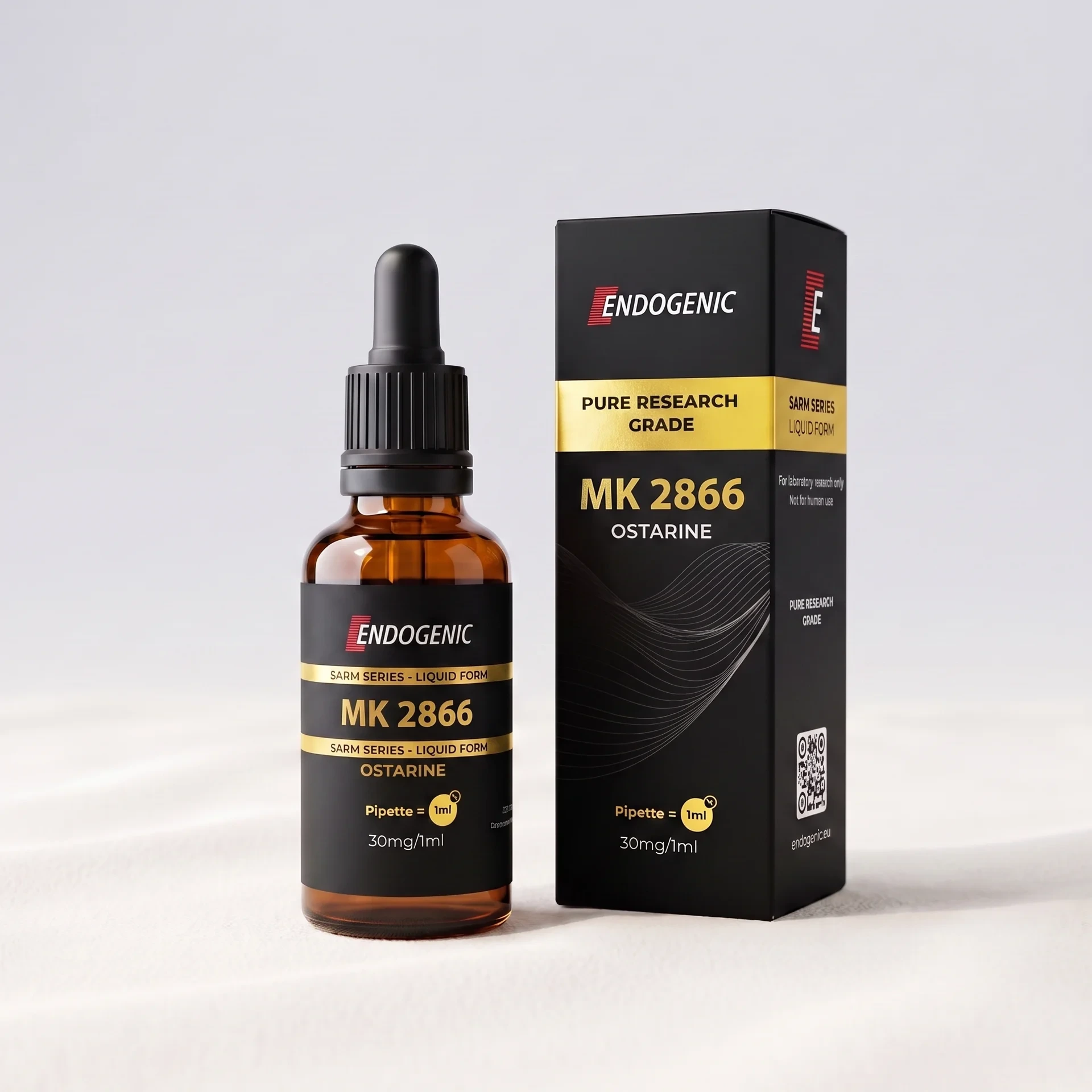
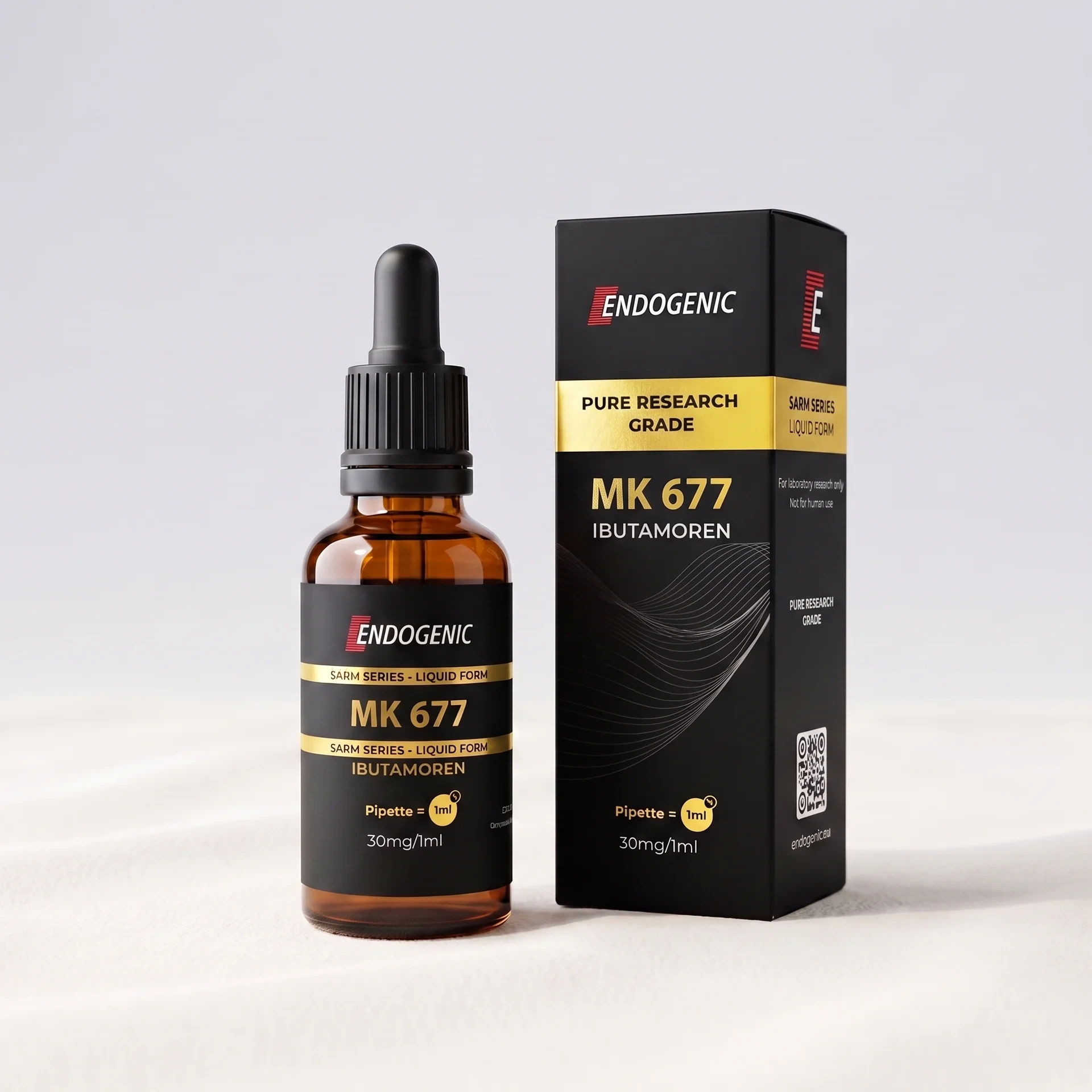
MK 677 30mg/1ml LIQUID
MK-677 (Ibutamoren) 30 ml oral solution (Endogenic line) is a synthetic, non-peptide and orally active growth hormone secretagogue. A GHS-R1a ghrelin receptor agonist with a long half-life (~24 h), characterized in studies on the GH/IGF-1 axis and sarcopenia. Research Use Only
47,99 €
Product unavailable
MK-677 (Ibutamoren) 30 ml solution - oral GH secretagogue, research reagent
- MK-677 (Ibutamoren): a non-peptide GHS-R1a receptor agonist.
- Solution in a 30 ml dropper bottle; concentration according to the batch COA.
- Research Use Only reagent, not a medicinal product.
Product status information
Chemical reagent intended exclusively for laboratory tests (Research Use Only). It is not a medicinal product, dietary supplement or food. It is not intended for use on humans or animals. Sales only to registered research units and laboratories.
MK-677 (Ibutamoren, MK-0677) is a synthetic, non-peptide and orally active growth hormone secretagogue (GH secretagogue) — compound developed by Merck in the 1990s as a ghrelin mimetic acting on the GHS-R1a receptor. Unlike peptide secretagogues (GHRP-2, GHRP-6, Ipamorelin, Hexarelin), which require injection due to degradation in the gastrointestinal tract, MK-677 remains active after oral administration and is characterized by a long half-life of about a day.
A classic publication by the Merck team – Chapman et al. 1996 (J Clin Endocrinol Metab) – described stimulation of the GH/IGF-1 axis in humans after once-daily oral administration of MK-677, which made the compound a model tool for studying pharmacological stimulation of GH secretion without direct administration of the recombinant hormone. In a chemical context, MK-677 belongs to a class low molecular weight spiroindane ghrelin mimetics — this is an important distinction from peptide GHRPs.
The central axis of the mechanism is the growth hormone secretion receptor GHS-R1a (ghrelin receptor) in the pituitary and hypothalamus, the activation of which intensifies pulsatile GH secretion while maintaining the physiological rhythm of the somatotropic axis.
For this reason, MK-677 remains the subject of research on the mechanisms of regulation of the GH/IGF-1 axis, sarcopenia and energy metabolism and is classified among growth hormone-increasing peptides next to the peptide secretagogues GHS-R1a. This reagent is supplied in a oral solution in a 30 ml dropper bottle within the line Endogenic — a form ready for laboratory work, not requiring reconstitution (the compound is low molecular weight and stable in solution, unlike lyophilized peptides).
The exact concentration of the active substance (mg/ml) is given in the certificate of analysis (COA) of a specific batch. Purity verified by HPLC ≥98%, identity confirmed by mass spectrometry, COA available for each batch.
Regulatory status
MK-677 is not registered as a drug in the EU, the US or anywhere in the world – Merck’s clinical program (phase II studies on sarcopenia and GH deficiency in the elderly) has been abandoned. MK-677 is listed directly on the WADA Prohibited List (category S2 – peptide hormones, growth factors and related substances, as a GH secretagogue) and remains a permanently prohibited substance (in- and out-of-competition). Communication of the product as a “muscle gainer”, “GH booster for athletes” or “sleep regeneration compound” is contrary to the Research Use Only framework.
MK-677 and the context of the GH/ghrelin axis
Growth hormone (GH, somatotropin) is secreted in a pulsatile manner by the somatotropic cells of the anterior pituitary under the control of two opposing hypothalamic signals: GHRH (Growth Hormone-Releasing Hormone, stimulant) and somatostatin (inhibitory). Independently of this classical axis, there is a third, separate regulatory pathway – ghrelin/GHS-R1a axis. Ghrelin, a hormone produced mainly in the stomach, binds to the GHS-R1a receptor in the pituitary and hypothalamus, increasing GH secretion and acting as an orexigenic signal (stimulating appetite) and a regulator of energy balance.
The GHS-R1a receptor was identified as a molecular target of synthetic GH secretagogues before the discovery of ghrelin as its endogenous ligand – it was the search for orally active GH secretagogue mimetics that led to Merck’s characterization of the receptor. Pharmacological activation of GHS-R1a differs from direct administration of recombinant GH in several important features:
- Pulsatility behavior — the secretagogue increases the amplitude of natural GH pulses, instead of creating a constant, non-physiological level of the hormone
- Feedback behavior — the axis remains sensitive to somatostatin inhibition and negative IGF-1 coupling, which theoretically limits excessive exposure
- Stimulation of secondary growth of IGF-1 — prolonged stimulation of GH secretion increases the level of insulin-like growth factor 1 (IGF-1), the main mediator of peripheral GH effects
- Orexigenic component — activation of the ghrelin receptor is associated with modulation of appetite and energy metabolism
For this reason, orally active GHS-R1a secretagogues have been treated for years as interesting tools in research on sarcopenia, age-related GH deficiency, energy management and sleep quality – areas in which MK-677 was tested in the preclinical and early clinical phases.
What is MK-677?
Chemically, MK-677 is a synthetic small-molecule spiroindane molecule designed for affinity for the GHS-R1a receptor and activity following oral administration.
- Common name: MK-677, Ibutamoren
- Synonyms: Ibutamoren mesylate, MK-0677, L-163,191
- CAS number: 159752-10-0 (mesylate); 159634-47-6 (free form)
- Summary formula: C₂₇H₃₆N₄O₅S (free form)
- Molar mass: 528.66 g/mol (free form)
- Pharmacological class: non-peptide, orally active growth hormone secretagogue receptor agonist (GHS-R1a); ghrelin mimetic with long half-life
- Delivered form: oral solution in a 30 ml dropper bottle; active substance concentration (mg/ml) declared in the batch COA; pharmaceutical grade ≥98% HPLC
Origin: MK-677 was created as part of the Merck program searching for orally active peptide substitutes for GH secretagogues (GHRP-6 as a structural standard). The goal was to obtain a non-peptide molecule resistant to proteolytic degradation in the gastrointestinal tract and with a prolonged pharmacokinetic profile allowing once-daily administration. Compound advanced to Phase II trials for sarcopenia, GH deficiency in the elderly and complications of hip fractures, but the clinical program did not lead to drug registration.
Since then, MK-677 has been used in scientific circles as a research reagent and is one of the best characterized non-peptide GH secretagogues.
SCIENTIFIC PERSPECTIVE
Some of the pharmacological data on MK-677 comes from preclinical studies (animal models, cell lines), some from early phase I/II clinical trials conducted by Merck in the 1990s and 2000s (Chapman et al. 1996, Nass et al. 2008). However, Compound has not been approved as a drug and its long-term safety profile has not been characterized in the setting of chronic non-clinical use. All references to research schemes are provided in the context of the literature, not as instructions for use.
Mechanism of action at the molecular level
MK-677 binds to the GHS-R1a receptor in the pituitary and hypothalamus, mimicking the effects of endogenous ghrelin. Receptor activation stabilizes the G protein coupling conformation (mainly the Gq/PLC pathway, intracellular calcium mobilization), which enhances the release of growth hormone from somatotropic cells. Pharmacological profile observed in preclinical and clinical studies:
- GHS-R1a agonism and intensity of pulsatile GH secretion — MK-677, as a ghrelin receptor agonist, increases the amplitude of natural GH pulses from the pituitary, while maintaining the physiological rhythm of secretion. In studies on the somatotropic axis, an increase in integrated GH concentration was observed without abolishing the pulsatility characteristic of direct administration of recombinant hormone.
- Oral activity and long half-life — unlike peptide GHRPs, MK-677 is resistant to degradation in the gastrointestinal tract and has a half-life of ~24 h, which allowed for a once-daily regimen in clinical trials. This is the distinguishing feature of non-peptide ghrelin mimetics and the reason why MK-677 has become a model compound for testing chronic GH axis stimulation.
- Secondary increase in IGF-1 — prolonged stimulation of GH secretion leads to an increase in the level of insulin-like growth factor 1 (IGF-1), the main mediator of the peripheral effects of somatotropin. In the study by Chapman et al. and Nass et al. a persistent increase in GH/IGF-1 axis markers was observed during chronic exposure
- Appetite modulation (ghrelin component) — activation of the ghrelin receptor is associated with the orexigenic effect; studies reported an increase in appetite and energy intake, consistent with the physiological function of ghrelin as a hunger signal and energy balance regulator
- Effect on deep sleep and tissue parameters — in studies on sarcopenia and the GH/IGF-1 axis, effects on sleep architecture (slow wave phase) and markers of bone metabolism and body composition (nitrogen retention, fat-free mass) were observed — effects secondary to increased activity of the somatotropic axis
Pharmacokinetic profile (based on literature studies):
- Oral bioavailability: high – compound active after oral administration (distinguishing feature from peptide GHRPs)
- Half-life: ~24 h – enabled once-daily regimens in clinical trials
- Molecular target: GHS-R1a receptor (ghrelin receptor) in the pituitary and hypothalamus
- Metabolism: hepatic; the detailed profile in non-clinical populations is not fully characterized
The GHS-R1a mechanism activates one axis regulation of GH secretion. The somatotropic axis is under the parallel control of GHRH, somatostatin and the negative feedback of IGF-1 – pharmacological stimulation of the ghrelin receptor modulates a part of this network, without replacing its physiological regulation.
IMPORTANT DISTINCTION
MK-677 is orally active, non-peptide ghrelin mimetic — must be distinguished from peptide GH secretagogues (GHRP-2, GHRP-6, Ipamorelin, Hexarelin), which act on the same GHS-R1a receptor, but require injection due to proteolytic degradation in the gastrointestinal tract and have a much shorter half-life (minutes to single hours). MK-677 should not be confused with GHRH analogues (CJC-1295, Sermorelin), which act on a separate GHRH-R receptor. “Intensification of GH secretion and increase in IGF-1” in the context of this description refers to observations in preclinical and early clinical studies – it does not constitute a guarantee of effect or a suggestion of the use of MK-677 as a “growth hormone booster” in people using the reagent.
Compound remains a research tool; its safety profile in chronic non-clinical use (insulin resistance, fluid retention, increase in fasting glucose reported in studies) is not fully characterized.
MK-677 among GH secretagogues – pharmacological position: In the pharmacology of the somatotropic axis, several classes of compounds enhance GH secretion through different receptor mechanisms and with different pharmacokinetic profiles:
| Class | Example | Receptor/mechanism | Route of administration |
|---|---|---|---|
| Non-peptide ghrelin mimetic | MK-677 (Ibutamoren) | GHS-R1a agonist, long T½ (~24 h) | Oral |
| Peptide GHRP | GHRP-2, GHRP-6, Ipamorelin, Hexarelin | GHS-R1a agonist, short T½ | Injection |
| GHRH analogue | CJC-1295, Sermorelin, Tesamorelin | GHRH-R receptor agonist | Injection |
MK-677 stands out because as the only one in practice that is orally active GH secretagogue targets the GHS-R1a ghrelin receptor with a prolonged pharmacokinetic profile – unlike peptide GHRPs requiring injection. Mechanistically related peptide secretagogue Ipamorelin it acts on the same receptor, but as a selective short-acting agonist, which makes both reagents the subject of comparative analyzes of the pharmacology of the GH axis. A separate node of this axis handles the GHRH analogue CJC-1295 with DAC, acting on the GHRH-R receptor.
Applications in scientific research
MK-677 is used in research on the pharmacology of the somatotropic axis. In vivo models examine its effect on pulsatile GH secretion, integrated GH/IGF-1 concentration, bone metabolism, body composition and sleep architecture. In vitro models (somatotropic cell lines, GHS-R1a receptor expression systems) measure the kinetics of receptor activation, Gq/PLC signaling and structure-activity relationship (SAR) analyzes of GHS-R ligands. Specific research directions include:
- GHS-R1a receptor pharmacology — characterization of ghrelin receptor agonists, mapping of intracellular signaling, SAR analyzes of low-molecular-weight ligands
- Models of sarcopenia and the GH/IGF-1 axis — research on pharmacological stimulation of GH secretion as a tool in the context of age-related loss of fat-free mass (literature context: Nass et al. 2008)
- Research on energy management and appetite — modulation of the orexigenic signal by activation of the ghrelin receptor; the peptide component is also used for comparative analyzes of the orexigenic component GHRP-6, known for its strong effect on appetite
- Research on sleep architecture — influence of GH axis activation on the slow-wave sleep phase
- Comparative analyzes of GH secretagogues — MK-677 as a reference oral ghrelin mimetic in combination with peptide GHRPs and GHRH analogues
The form of the oral solution with a dropper (30 ml) facilitates precise measurement of working volumes in dose-response protocols on in vivo models – using a solution with a known concentration of mg/ml eliminates the need to dissolve the solid substance before each experiment. MK-677 is also available in the Endogenic line in solid form MK-677 in capsules (10 mg, 60 pieces) – portion-dosed variant when the protocol does not require measuring the volume of the solution.
Summary
MK-677 (Ibutamoren, 30 ml oral solution, Endogenic line) is a synthetic, non-peptide and orally active growth hormone secretagogue developed by Merck – a GHS-R1a ghrelin receptor agonist, characterized in preclinical and early clinical studies (Chapman et al. 1996, Nass et al. 2008) as a compound intensifying pulsatile GH secretion and increasing IGF-1 levels after oral administration once a day, thanks to a long half-life of ~24 h.
Compound stands out for its oral activity among GH secretagogues – unlike peptide GHRPs requiring injection. Oral solution form with dropper, exact mg/ml concentration in batch COA, HPLC purity ≥98%, MS Q-TOF confirmation. Regulatory Status – Research Use Only; lack of registration as a drug (phase II abandoned); MK-677 is listed directly on the WADA Prohibited List (category S2, secretagogue GH).
Bibliography
- Chapman IM, Bach MA, Van Cauter E, Farmer M, Krupa D, Taylor AM, et al. (1996). Stimulation of the growth hormone (GH)-insulin-like growth factor I axis by daily oral administration of a GH secretagogue (MK-677) in healthy elderly subjects. PubMed
- Nass R, Pezzoli SS, Oliveri MC, Patrie JT, Harrell FE Jr, Clasey JL, et al. (2008). Effects of an oral ghrelin mimetic on body composition and clinical outcomes in healthy older adults: a randomized trial. PubMed
- Murphy MG, Plunkett LM, Gertz BJ, He W, Wittreich J, Polvino WM, et al. (1998). MK-677, an orally active growth hormone secretagogue, reverses diet-induced catabolism. PubMed
- Sigalos JT, Pastuszak AW (2018). The safety and efficacy of growth hormone secretagogues. PubMed
- Adunsky A, Chandler J, Heyden N, Lutkiewicz J, Scott BB, Berd Y, et al. (2011). MK-0677 (ibutamoren mesylate) for the treatment of patients recovering from hip fracture: a multicenter, randomized, placebo-controlled phase IIb study. PubMed
- Kojima M, Kangawa K (2005). Ghrelin: structure and function. PubMed
FAQ
MK-677 was designed by Merck as a non-peptide replacement for GHRP – the spiroindane backbone is resistant to gastrointestinal proteolytic enzymes that break down peptides. Thanks to this, the compound is absorbed after oral administration and maintains activity with a half-life of ~24 h, which allowed for a once-daily regimen in clinical trials. This is a feature that distinguishes MK-677 from GH secretagogues and the reason why it has become a model compound for the study of chronic stimulation of the somatotropic axis.
MK-677 is a mimetic of ghrelin – a hormone produced mainly in the stomach, which, in addition to intensifying GH secretion, acts as a hunger signal (orexigenic effect). Activation of the GHS-R1a receptor by MK-677 recreates this ghrelin component, which is why studies have reported an increase in appetite and energy supply. This is a direct consequence of the molecular target, the ghrelin receptor, and not a side effect unrelated to the mechanism.
Yes. MK-677 (Ibutamoren) is listed directly on the WADA Prohibited List in category S2 (Peptide Hormones, Growth Factors, Related Substances and Mimetics) as a growth hormone secretagogue. The substance is prohibited permanently, both during and beyond the launch period. Registered Athletes (ADAMS) must check the current Prohibited List before making any decision regarding use.
MK-677 is a compound low molecular weight (mass 528.66 g/mol, free form) and chemically stable in solution – unlike peptides, which as lyophilisates require reconstitution in bacteriostatic water just before work and lose stability after dissolution. The form of a ready-made oral solution with a dropper with a known concentration of mg/ml (declared in the COA) facilitates precise measurement of working volumes in laboratory protocols without the stage of dissolving the solid substance.
MK-677 there is no medicinal form — the compound underwent Phase II clinical trials (sarcopenia, GH deficiency in the elderly), but the program was abandoned and the substance was not registered as a drug in any jurisdiction. The available data comes from preclinical and early clinical studies from the 1990s and 2000s. The RUO Pro-Body reagent is intended only for further laboratory research – a category in which MK-677 functions in scientific circulation as one of the best characterized non-peptide GH secretagogues.
5.0
3 reviews
-
mariusz000022
 Polski
Verified purchase
Polski
Verified purchase
Product review
Polecam, jak dla mnie lepszy niż tabletki.
-
Mareccccki
Polski
Verified purchase
Product review
Bardzo dobry produkt, leci kolejne zamówienie.
-
Jarek
Polski
Product review
Bardzo dobry, jakościowy produkt. Polecam!
Related products