Skip to content

Free delivery on orders over €400. Fast delivery.

Search

What are you looking for?

Type at least 2 characters to see suggestions.

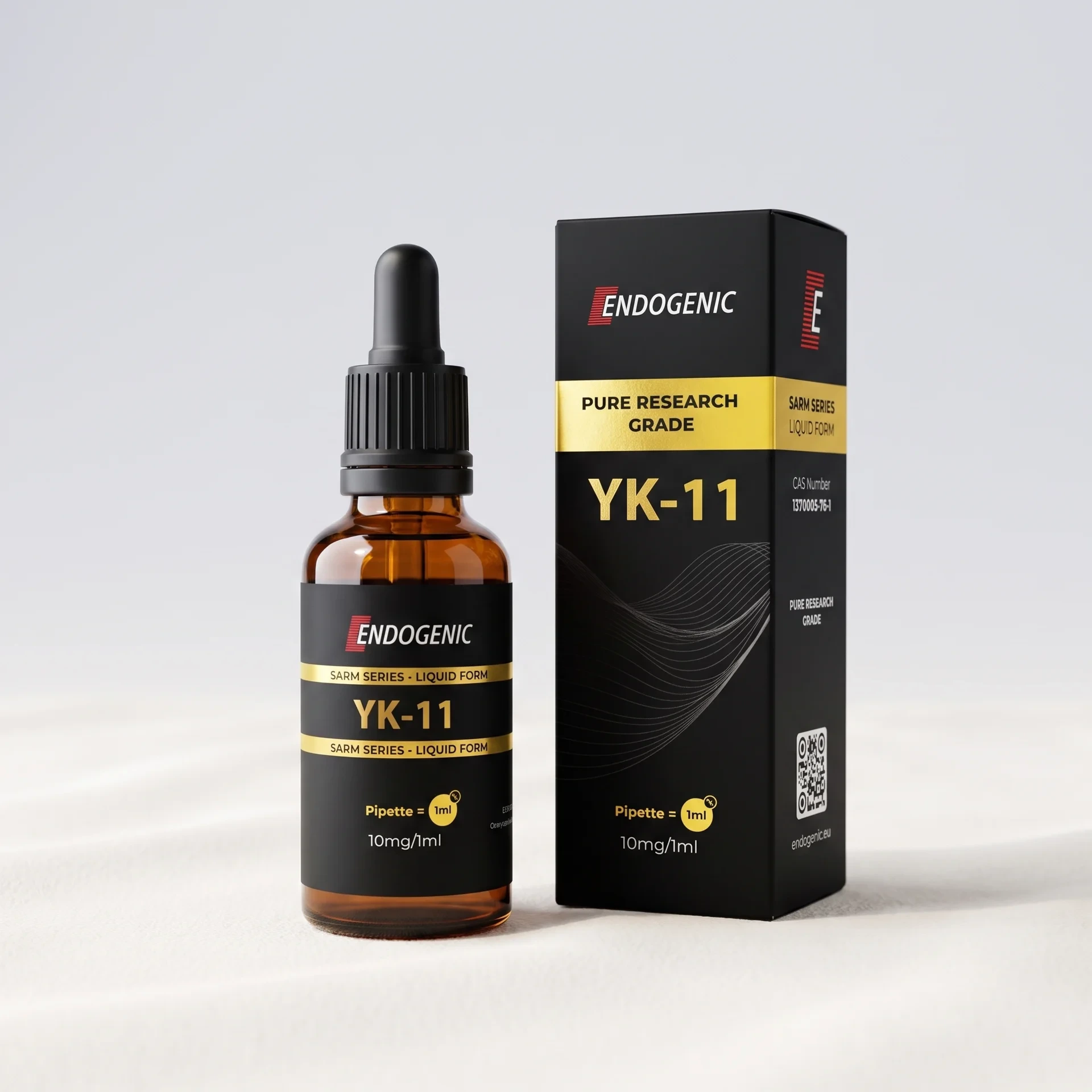
YK11 10mg/1ml LIQUID

YK11 10mg/1ml LIQUID

YK-11 — oral solution in a 30 ml dropper bottle (Endogenic line) is a synthetic steroid analogue of 5α-DHT — a partial androgen receptor agonist that strongly induces follistatin and indirectly suppresses the myostatin/activin/SMAD pathway. Research Use Only reagent

47,99 €
Fast shipping
Delivery options
Returns policy

YK-11 30 ml - AR modulator and indirect myostatin inhibitor, research reagent

  • YK-11: a steroid analogue of 5α-DHT and partial androgen receptor agonist.
  • Solution in a 30 ml dropper bottle; concentration according to the batch COA.
  • Research Use Only reagent, not a medicinal product.

Product status information

Chemical reagent intended exclusively for laboratory tests (Research Use Only). It is not a medicinal product, dietary supplement or food. It is not intended for use on humans or animals. Sales only to registered research units and laboratories.

YK-11 is a synthetic small molecule built on 5α-DHT (5α-dihydrotestosterone) steroid skeleton, tested as a partial androgen receptor (AR) agonist with an unusual profile – combines weak, “biased” androgenic activity with strong induction follistatin, an endogenous myostatin antagonist. The substance was formed on Tokyo University of Science by Yuichiro Kanno’s team. Two classic publications mark its place in pharmacology: Kanno et al. 2011 (Biol Pharm Bull) – describing YK-11 as a partial AR agonist – and Kanno et al. 2013 (Biol Pharm Bull) — showing that in C2C12 myoblasts YK-11 increases the expression of follistatin many times more strongly than DHT itself.

This reagent is supplied in line Endogenic in format oral solution in a 30 ml dropper bottle (concentration mg/ml declared in the batch COA). Within Liquid SARMs the form of the dropper solution is adapted to laboratory research protocols operating with working concentrations in vivo on rodent models and in vitro on cell lines – the dropper simplifies the measurement of repeatable volumes of solution with a known concentration of mg/ml.

In a chemical context, YK-11 is steroid analogue of 5α-DHT — a low-molecular-weight lipophilic molecule that does not need to be reconstituted: the solution is ready for further dilution, unlike freeze-dried peptides that require dissolution in water for injection.

In commercial circulation, YK-11 operates under the label “SARM” (Selective Androgen Receptor Modulator), which is a misleading simplification. Classic SARMs — RAD-140 liquid (Testolone), LGD-4033 liquid (Ligandrol), MK-2866 liquid (Ostarine) – these are ligands non-steroidal, designed from scratch without a steroid skeleton. YK-11 is the exact opposite: it structural steroid, a derivative of 5α-DHT with modifications (ester substitution at position 17, methylated carboxyl group) that make it orally bioavailable and 5α-reductase resistance. This distinction – the steroid under the name “SARM” – is the central focus of this brief and has real implications for its research and risk profile.

Purity verified by HPLC ≥98%, identity confirmed by mass spectrometry, COA available for each batch.

Regulatory status

YK-11 has not completed any phase of human clinical trials. Compound remains at the stage of preclinical research (rodent models, cell cultures). No registration as a drug with the EMA, FDA or anywhere in the world. Not authorized by EFSA as an ingredient of a dietary supplement. YK-11 is on the WADA Prohibited List in category S1.2 (Other Anabolic Agents – SARMs) and is a permanently prohibited substance (in- and out-of-competition). Marketing the product as a “SARM for mass”, a “myostatin inhibitor for athletes” or a “strength gainer” is contrary to the Research Use Only framework.

Myostatin and follistatin as the third force next to classic SARMs

The pharmacology of skeletal muscle modulation has historically operated with two main levers. The first one is androgen axis — activation of the androgen receptor (AR) increases muscle protein synthesis; anabolic androgens and non-steroidal SARMs are based on this mechanism. The second one is IGF-1/PI3K/Akt/mTOR axis — growth and hypertrophy pathway responsive to mechanical and hormonal stimuli. Both are well described and both have their pharmacological tools. However, there is a third axis – muscle growth brake, i.e. signaling myostatin/activin/SMAD2/3.

Myostatin (GDF-8), a member of the TGF-β superfamily, acts as a negative regulator of muscle mass: it binds activin type II receptors (ActRIIB), activates intracellular SMAD2/3 proteins and suppresses the hypertrophy program. Its physiological importance has been documented dramatically – animals and humans with a mutation that inactivates the myostatin gene show massive muscle hypertrophy (Schuelke et al. 2004; Belgian Blue, “double-muscled” cattle).

The natural counterweight of this axis is follistatin — a protein that sequesters myostatin and activin, removing the brake from the SMAD pathway. YK-11 is interesting to pharmacology precisely because it targets this third axis indirectly — by follistatin induction.

In this sense, it is not a “better SARM”, but a reagent with a different, dual profile: a weak, biased AR agonist plus a follistatin activator that removes the myostatin brake. This makes it a model research tool dissociation between classical androgenicity and follistatin/myostatin signaling — a question that classic non-steroidal SARMs do not allow you to ask as clearly.

The world of pharmacology is watching YK-11 for three reasons. First, as a tool to study follistatin regulation in skeletal muscle, an area where selective oral molecular tools are limited. Secondly, as a model compound for the question about biased AR agonism — whether an AR ligand can activate one set of target genes (follistatin) more strongly than another.

Thirdly, as a representative of the “gray zone” between a steroid and a SARM, important for anti-doping analytics and regulatory chemistry.

What is YK-11?

Chemically, YK-11 is a synthetic steroid analogue of 5α-DHT with ester modifications on the D ring.

  • Common name: YK-11, YK11
  • Chemical name (IUPAC): (17α,20E)-17,20-[(1-methoxyethylidene)bis(oxy)]-3-oxo-19-norpregna-4,20-diene-21-carboxylic acid methyl ester
  • Synonyms: YK11, steroid “SARM”, myostatin inhibitor (colloquial, mechanistically inaccurate)
  • CAS number: 431579-34-9
  • Molecular formula: C₂₅H₃₄O₆
  • Molar mass: 430.53 g/mol
  • Chemical class: synthetic steroid analogue of 5α-DHT (19-norpregnadiene gestagen skeleton); AR partial agonist + follistatin activator
  • Delivered form: oral solution in a 30 ml dropper bottle; mg/ml concentration declared in the batch COA; pharmaceutical grade ≥98% HPLC

Table of physicochemical characteristics

Parameter Value
Name YK-11 (YK11)
Chemical name (IUPAC) (17α,20E)-17,20-[(1-methoxyethylidene)bis(oxy)]-3-oxo-19-norpregna-4,20-diene-21-carboxylic acid methyl ester
Class Steroid analogue of 5α-DHT; partial biased AR agonist + follistatin activator
CAS number 431579-34-9
Molecular formula C₂₅H₃₄O₆
Molar mass 430.53 g/mol
Molecular type Small molecule steroid (NOT peptide, NOT non-steroidal SARM)
Purity ≥98% (HPLC)
Form Oral solution, 30 ml dropper bottle; mg/ml concentration – see COA
Identity confirmation Mass spectrometry (MS Q-TOF)
Storage conditions Room temperature (15-25°C), protect from light
Shelf life 24 months (lot details – COA)

Mechanism of action at the molecular level

YK-11 works through two coupled mechanisms: partial, biased activation of the androgen receptor and induction of follistatin, which indirectly suppresses the myostatin/activin/SMAD pathway. There is one simple “action” missing here – the effects are the result of the AR agonist profile and the follistatin transcriptional cascade. Pharmacological profile observed in preclinical models:

  1. Partial (biased) agonism of the androgen receptor — YK-11 binds AR and activates it partially, with a different cofactor recruitment profile than the full DHT agonist (Kanno et al. 2011). “Biased agonism” means that the ligand favors specific AR-dependent transcription pathways (including those leading to the expression of follistatin) over others – this distinguishes YK-11 from androgens that activate AR fully and non-specifically
  2. Follistatin induction — in C2C12 myoblasts, YK-11 increases the expression of follistatin mRNA to a degree many times higher than DHT (Kanno et al. 2013; the reported order of magnitude is a several-fold increase compared to the DHT control). Follistatin is an endogenous protein that sequesters myostatin and activin – increasing it removes the brakes on the hypertrophy program
  3. Indirect inhibition of the myostatin/activin/SMAD2/3 pathway — by increased follistatin YK-11 attenuates myostatin (GDF-8) and activin signaling through activin type II receptors, reducing SMAD2/3 phosphorylation. It is an “indirect myostatin inhibitor”: YK-11 does not bind myostatin directly, but increases its natural antagonist (Lee et al. 2005 describes the role of type II activin receptors in the regulation of muscle growth)
  4. Activation of the PI3K/Akt/mTOR pathway (indirect) — in in vitro models, YK-11 is associated with the intensification of pro-anabolic PI3K/Akt/mTOR signaling, partly through follistatin and altered SMAD signaling; this pathway is responsible for muscle protein synthesis and hypertrophy
  5. Steroid skeleton with functional modifications — the ester substitution at position 17 and the methylated carboxyl group make the molecule orally bioavailable, and 5α-reductase resistance (the molecule is already an analogue of 5α-DHT). This structurally places YK-11 in the steroid family, not non-steroidal SARMs
  6. No conversion to estrogen — YK-11 is not an aromatase substrate (lack of an A ring with a structure enabling aromatization typical of testosterone), therefore it is not converted to estradiol – an important feature in characterizing the profile in relation to classic aromatizing androgens

Pharmacokinetic profile (based on preclinical models and limited data):

  • Oral bioavailability: molecule designed for oral administration (ester modifications); exact values ​​in humans unknown
  • Human PK profile: uncharacterized – no phase I studies
  • Metabolism: probably hepatic; 17α modification of steroids has been historically associated with liver burden (see regulatory status for context of hepatotoxicity)
  • Molecular target: androgen receptor (partial biased agonism) + follistatin transcriptional induction

IMPORTANT DISTINCTION

YK-11 is structurally a steroid — a synthetic analogue of 5α-DHT — even though it is commercially sold under the “SARM” label. This is not a non-steroidal SARM in the sense of RAD-140, LGD-4033 or MK-2866, which were designed from scratch without a steroid skeleton. The distinction has real consequences: the 17α-modified steroid profile has historically been associated with a different metabolic and hepatic profile than nonsteroidal ligands. “Follistatin induction and myostatin inhibition” in the context of this description refers only to observations in in vitro (C2C12 myoblasts) and preclinical models.

This is not a guarantee of effect in humans using the RUO reagent or a suggestion to use YK-11 as a means for muscle mass. Compound remains a research tool – controlled clinical trials in humans have not been published.

YK-11 among AR modulators – pharmacological position: In the class of androgen receptor modulators, YK-11 occupies a position separate from other research tools:

Ligand Structural type AR profile A distinguishing feature
RAD-140 (Testolone) non-steroidal selective AR modulator high AR affinity, tissue-selective profile
LGD-4033 (Ligandrol) non-steroidal selective AR modulator high potency, long T½
MK-2866 (Ostarine) non-steroidal selective AR modulator the most studied non-steroidal SARM
YK-11 steroidal (5α-DHT analogue) partial biased AR agonist follistatin induction, indirect myostatin inhibition

YK-11 is unique in that it combines a steroid skeleton with a follistatin mechanism – it targets third axis (myostatin/follistatin) in addition to classic androgenicity. Non-steroidal SARMs, such as RAD-140 or equivalents in the form of capsules, act primarily through tissue-selective modulation of AR, without documented strong induction of follistatin. Related nonsteroidal modulator S4 liquid is sometimes a reference in comparative analyzes of tissue selectivity. The broader context of selecting substances from this class in mass training is discussed in the guide by SARMs for bodybuilders.

Applications in scientific research

YK-11 is used in research work in several areas. In vitro models (C2C12 mouse myoblast line, muscle cell cultures) examine its effect on follistatin expression, SMAD2/3 phosphorylation, markers of myoblast differentiation and hypertrophy, and the recruitment profile of AR cofactors. In vivo models on rodents examine oral bioavailability, the effect on muscle mass and composition, and markers of the follistatin/myostatin axis. In a broader class SARMs for muscle mass YK-11 is a model reagent for studying the follistatin/myostatin axis. Specific research directions include:

  • Follistatin regulation in skeletal muscle — YK-11 as a tool to study the pharmacological induction of follistatin and its impact on the hypertrophy program (expression kinetics, AR dependence)
  • Myostatin/activin/SMAD signaling — indirect modulation of the axis by follistatin; measurements of SMAD2/3 phosphorylation, target gene expression (Lee et al. 2005)
  • Biased androgen receptor agonism — YK-11 as a model ligand for studying selective, partial AR activation and dissociation of transcription programs
  • “steroid vs non-steroidal SARM” profile — comparison of YK-11 with RAD-140, LGD-4033, MK-2866 in terms of structural, metabolic and analytical aspects (Solomon et al. 2019 – review of knowledge about SARMs)
  • Anti-doping analytics — development of methods for detecting YK-11 and its metabolites in biological matrices; distinguishing steroid signature from non-steroidal SARMs
  • Studies on myoblast hypertrophy in vitro — C2C12 differentiation models, fusion index and myotube diameter measurements

Summary

YK-11 (oral solution 30 ml, Endogenic line) is a synthetic steroid analogue of 5α-DHT with Tokyo University of Science (Kanno team), characterized in in vitro models (C2C12 myoblasts) as a partial biased agonist of the androgen receptor, which at the same time strongly induces follistatin — an endogenous myostatin antagonist — and thus indirectly suppresses the myostatin/activin/SMAD2/3 pathway.

Although sold under the label “SARM”, YK-11 is structurally a steroid, not a nonsteroidal ligand like RAD-140 or LGD-4033 – this distinction has metabolic and analytical consequences. Solution form in a 30 ml dropper bottle, mg/ml concentration in COA, HPLC purity ≥98%, MS Q-TOF, COA for each batch. Regulatory Status – Research Use Only; no clinical phase in humans; WADA S1.2 (SARMs), permanently banned from 2018; reported hepatotoxicity signals (17α-steroid profile).

Bibliography

  1. Kanno Y, Hikosaka R, Zhang SY, Inoue Y, Nakahama T, et al. (2011). 17α,20E-21-(methoxycarbonyl)-19-norpregna-4,20-dien-3-one (YK11) is a partial agonist of the androgen receptor. PubMed
  2. Kanno Y, Ota R, Someya K, Kusakabe T, Kato K, Inouye Y (2013). Selective androgen receptor modulator, YK11, regulates myogenic differentiation of C2C12 myoblasts by follistatin expression. PubMed
  3. Solomon ZJ, Mirabal JR, Mazur DJ, Kohn TP, Lipshultz LI, Pastuszak AW (2019). Selective Androgen Receptor Modulators: Current Knowledge and Clinical Applications. PubMed
  4. Lee SJ, Reed LA, Davies MV, Girgenrath S, Goad MEP, et al. (2005). Regulation of muscle growth by multiple ligands signaling through activin type II receptors. PubMed
  5. Schuelke M, Wagner KR, Stolz LE, Hübner C, Riebel T, et al. (2004). Myostatin mutation associated with gross muscle hypertrophy in a child. PubMed