

AOD-9604 is only a fragment of the C-terminal region of hGH (residues 177-191) with added tyrosine – not the entire 191-amino acid molecule of the hormone. Full hGH has a multi-axial effect: it stimulates growth (via IGF-1), affects glucose metabolism (diabetogenic effect) and triggers lipolysis. AOD-9604 retained only the lipolytic domain and got rid of the regions responsible for growth effects. In preclinical models, this means lipolysis without stimulating IGF-1, without cell growth and without impairing glucose metabolism. This separation of functions is the essence of this relationship as a research tool.
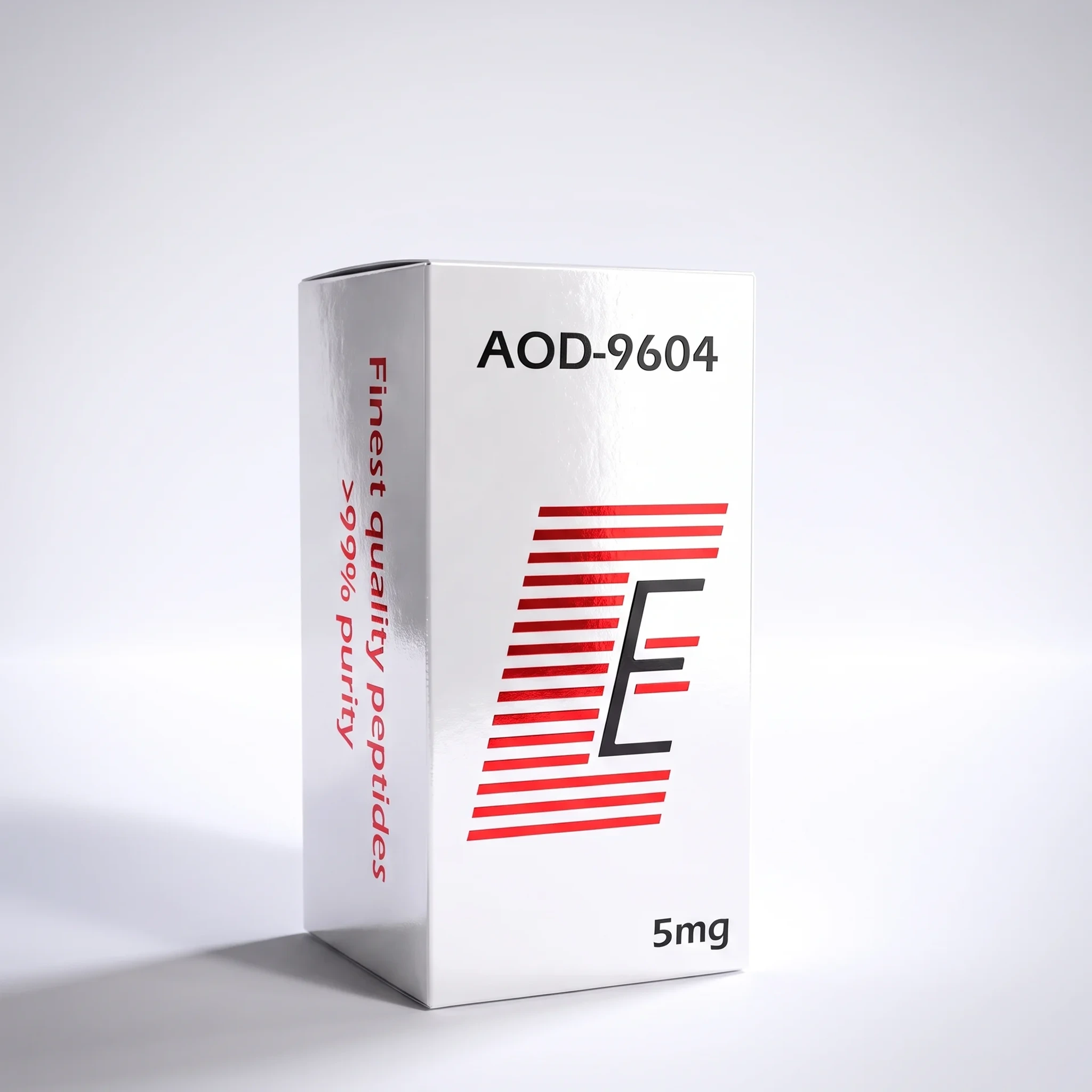
AOD-9604 5 mg
AOD-9604 (Anti-Obesity Drug 9604, Tyr-hGH Fragment 177-191) 5 mg lyophilisate is a modified lipolytic fragment of the C-terminal region of growth hormone. In preclinical models, it stimulates lipolysis and inhibits lipogenesis in adipose tissue without affecting IGF-1 or cell growth – which distinguishes it from full hGH. A chemical reagent intended exclusively for laboratory research on lipolysis separated from the growth axis and fat tissue metabolism.
30,99 €
Fast shipping
Delivery options
Returns policy
AOD-9604 5 mg - growth hormone lipolytic fragment (hGH 176-191)
- AOD-9604: modified fragment of the C-terminal region of growth hormone.
- Vial of lyophilisate with a nominal content of 5 mg.
- Research Use Only reagent, not a medicinal product.
Chemical reagent intended exclusively for laboratory tests (Research Use Only). It is not a medicinal product, dietary supplement or food. It is not intended for use on humans or animals. Sales only to registered research units and laboratories.
AOD-9604 (Anti-Obesity Drug 9604) is a synthetic, modified fragment of the C-terminal region of human growth hormone – the domain responsible for fat breakdown. The molecule was designed with one purpose: to separate the lipolytic activity of growth hormone from the rest of its metabolic profile. Full hGH works on cell growth, IGF-1 synthesis and glucose metabolism; AOD-9604 retained only the fragment that triggers lipolysis and got rid of the sequences responsible for the growth effects.
This has made it one of the most frequently studied peptides in adipose tissue pharmacology. The compound was developed by an Australian team Metabolic Pharmaceuticals as a candidate anti-obesity drug. Under the designation AOD-9604 (and the earlier AOD9401), the compound underwent early phases of clinical trials in obesity, and at a later stage it was also tested in the context of cartilage regeneration in osteoarthritis.
The drug development program did not lead to registration – in phase II clinical trials in obesity, the peptide did not show any advantage over placebo in the primary endpoints, which stopped further development as a weight loss preparation. Compound, however, remained an important research tool for studying growth axis-independent lipolysis. This reagent is supplied as 5 mg lyophilisate in a vial, for reconstitution with bacteriostatic water in laboratory conditions.
The freeze-dried form ensures stability of the peptide before dissolution and allows researchers to prepare working concentrations tailored to the experimental design. Purity verified by HPLC ≥98%, identity confirmed by mass spectrometry, COA available for each batch.
Regulatory status
AOD-9604 underwent early clinical trials (I-II) in obesity and studies in osteoarthritis, but the drug development program did not lead to registration – the compound never obtained the status of a medicinal product in the EU, the USA or anywhere in the world. Not authorized by EFSA as an ingredient of a dietary supplement. Communicating the product as a “slimming peptide”, “fat burner for biohackers” or “safe alternative to growth hormone” is contrary to the Research Use Only framework.
General description - growth hormone fragments as a tool for studying lipolysis
Human growth hormone (hGH) is a protein with 191 amino acids, whose biological profile is multiaxial – it combines growth effects (mediated mainly by IGF-1), influence on carbohydrate metabolism (including diabetogenic effects) and direct lipolytic activity in adipose tissue. Already in the 1970s and 1980s, it was shown that these activities are to some extent separable and assigned to different regions of the molecule.
The C-terminal region of hGH (approximately residues 176–191) was identified as the domain responsible for part of the lipolytic effect, independent of the IGF-1 axis. This discovery opened a research direction: is it possible to reproduce the lipolysis of growth hormone itself without its growth and metabolic effects? Fragment hGH 177-191 became the starting point.
However, the natural C-terminal peptide is unstable and poorly defined as a structure – so the Metabolic Pharmaceuticals team introduced a modification: a tyrosine residue was added to the N-terminus of the fragment, obtaining a more stable, defined analogue designated as AOD-9604 (Tyr-hGH 177-191). Tyrosine has a mainly structural and analytical function – it organizes the molecule and facilitates detection, without changing the basic lipolytic profile of the fragment.
AOD-9604 therefore belongs to the group peptide fragments of growth hormone — tools enabling the study of individual axes of hGH action in isolation; in the catalog of metabolic reagents it falls into the group peptides for burning fat tissue. The closest relative here is hGH Fragment 176-191 (sometimes described as HGH Frag), with which AOD-9604 shares a core lipolytic C-terminal domain; AOD-9604 is its defined, tyrosine-stabilized variant.
A complete overview of the differences between these forms is provided in the reagent sheet HGH Fragment 176-191. The biological profile of lipolytic growth hormone fragments observed in preclinical models includes:
- Lipolysis stimulation — stimulation of the breakdown of triglycerides in adipocytes, imitating the lipolytic C-terminal region of hGH
- Inhibition of lipogenesis — limiting the synthesis and deposition of new fat in adipose tissue
- No growth activity — unlike full hGH, the fragment does not significantly stimulate IGF-1 synthesis or cell growth
- Neutral glucose profile — no diabetogenic effect typical of full growth hormone in preclinical models
- Activity in cartilage models — research on the impact on chondrocyte metabolism in the context of osteoarthritis
AOD-9604 ranks as a model compound for testing in this group lipolysis separated from the growth axis — a tool that allows you to study the metabolism of adipose tissue without the confounding influence of IGF-1 and growth signaling.
What is AOD-9604?
Chemically, AOD-9604 is a modified, short peptide corresponding to the C-terminal fragment of growth hormone with an additional tyrosine at the N-terminus and an intramolecular disulfide bridge.
- Common name: AOD-9604, Anti-Obesity Drug 9604, Tyr-hGH Fragment 177-191
- Chemical name: tyrosyl-fragment hGH (177-191) — Tyr-hGH(177-191) with a Cys-Cys bridge
- Synonyms: AOD9604, AOD-9401 (previously related designation), lipolytic fragment of growth hormone
- Sequence: Tyr-Leu-Arg-Ile-Val-Gln-Cys-Arg-Ser-Val-Glu-Gly-Ser-Cys-Gly-Phe (with a disulfide bridge between Cys residues)
- CAS number: 221231-10-3 (in case of uncertainty – “to be verified in the batch COA”)
- Summary formula: C₇₈H₁₂₃N₂₃O₂₃S₂
- Molar mass: ~1815 g/mol (to be verified in the batch COA)
- Chemical class: a modified C-terminal fragment of human growth hormone (region 176-191) with an added tyrosine at the N-terminus; lipolytic peptide without growth activity and IGF-1
- Delivered form: 5 mg lyophilisate in a vial, for reconstitution with bacteriostatic water; research grade ≥98% HPLC
Origin: AOD-9604 was developed by the team Metabolic Pharmaceuticals (Australia) based on previous research on the lipolytic domain of growth hormone conducted, among others, by the group of Frank Ng and colleagues. The starting point was the observation that part of the lipolytic effect of hGH is caused by its C-terminal region, which can be reproduced in the form of a synthetic fragment.
The addition of tyrosine at the N-terminus of fragment 177-191 provided a defined, more stable analogue, AOD-9604. Compound was being developed as an oral anti-obesity drug candidate; Phase I and II clinical trials were conducted. In a phase II study, the peptide proved to be well tolerated, but showed no significant advantage over placebo in the primary endpoint of weight loss, which halted development as a weight loss preparation.
The research direction then moved towards intra-articular use in osteoarthritis. Despite the abandonment of the registration path, AOD-9604 remained an important research tool in the pharmacology of adipose tissue.
Mechanism of action at the molecular level
AOD-9604 reproduces the lipolytic activity of the C-terminal region of growth hormone while bypassing its growth activity. This separation of functions is the most important pharmacological feature of this compound and the reason for its importance as a research tool. Pharmacological profile observed in preclinical models:
- Stimulation of lipolysis in adipocytes — in isolated fat cells and rodent models, AOD-9604 stimulated the breakdown of stored triglycerides into free fatty acids and glycerol, mimicking the lipolytic effect of the C-terminal domain of hGH. The mechanism was associated with stimulation of lipid metabolism at the level of adipose tissue and an increase in the oxidative activity of fatty acids (Ng et al., 2000; Heffernan et al., 2001)
- Inhibition of lipogenesis — in parallel to stimulating fat breakdown, the compound limited the synthesis of new lipids (lipogenesis) in adipose tissue; this bidirectional profile – more breakdown, less synthesis – provided the rationale for the development of AOD-9604 as an anti-obesity candidate
- No effect on IGF-1, glucose and cell growth — this is the main distinction from full growth hormone. In preclinical models, AOD-9604 did not significantly stimulate the synthesis of IGF-1, did not have a diabetogenic effect (it did not worsen the glucose metabolism characteristic of excess hGH) and did not stimulate cell or tissue growth. The lipolytic C-terminal domain has been separated from the regions responsible for growth effects and insulin resistance
- Possible involvement of β3-adrenergic signaling and mitochondrial metabolism — some studies indicate that the lipolytic effect of AOD-9604 may be mediated by the β3-adrenergic receptor and modulation of lipid oxidation in adipocyte mitochondria; the mechanism at the molecular level remains under investigation and is not fully characterized
- Activity in cartilage models — a later line of research assessed the effect of AOD-9604 (including intra-articular administration, sometimes in combination with hyaluronic acid) on chondrocyte metabolism and cartilage regeneration in models of osteoarthritis (Kwon and Park) — an area separate from the original lipolytic use
Pharmacokinetic profile (based on preclinical models and historical data):
- Plasma half-life: short, ranging from minutes to hours – typical of short peptides sensitive to proteolysis
- Oral bioavailability: low – although the development program assumed an oral form, availability after administration through the gastrointestinal tract is limited by peptide degradation
- Metabolism: hydrolysis of peptide bonds by plasma and tissue peptidases
- Human PK profile: only partially characterized in an abandoned clinical program
In rodent models and isolated adipocytes, exposure to AOD-9604 led to an increase in the release of free fatty acids and an increase in their oxidation with no growth effects — phenotype interpreted as lipolysis separated from the IGF-1 axis.
AOD-9604 is a fragment of growth hormone, but it is not a growth hormone and it doesn’t recreate his profile. In preclinical models, the compound retains the lipolytic activity of the C-terminal domain of hGH, but it does not stimulate the synthesis of IGF-1, does not cause growth effects or worsen glucose metabolism in a way typical of full growth hormone.
The terms “stimulation of lipolysis” and “inhibition of lipogenesis” refer only to observations in in vitro and in vivo models and to early, unconfirmed clinical trials with primary endpoints. This does not mean a guarantee of effect in humans or a suggestion to use AOD-9604 as a “fat burner”, “reduction peptide” or “safe version of growth hormone”. Compound remains a research tool and its weight loss effectiveness in humans has not been confirmed.
AOD-9604 and full hGH – pharmacological position: The value of AOD-9604 as a research tool comes from what’s in it There isn’t: :
- Full hGH (191 aa) — multiaxial profile: growth (IGF-1), glucose management (diabetogenic effect), lipolysis. Difficult to use as a tool to study lipolysis itself because all effects appear simultaneously
- hGH Fragment 176-191 — native lipolytic C-terminal fragment; a core of lipolytic activity without a growth axis but less structurally defined
- AOD-9604 — defined, tyrosine-stabilized variant of the lipolytic fragment; allows you to study lipolysis and fat metabolism in isolation from growth signaling and IGF-1. This selectivity makes it a model compound for studying how growth hormone mobilizes fat independently of how it stimulates growth.
Applications in scientific research
AOD-9604 is used as a research reagent in several areas of metabolic pharmacology. In vitro models (isolated adipocytes, fat cell cultures, chondrocyte cultures) examine its effect on lipolysis, lipogenesis, fatty acid oxidation and cartilage metabolism. In vivo models (rat, mouse, nutritional and genetic obesity models) assess parameters of fat metabolism, body composition and lipid markers – with no effect on the IGF-1 axis. The position of AOD-9604 in comparison to other metabolic tools is organized by the review effective fat burners, describing various classes of compounds tested for fat tissue mobilization. Specific research directions include:
- Pharmacology of lipolysis independent of the growth axis — AOD-9604 as a model compound to study how the C-terminal domain of hGH mobilizes fat without stimulating IGF-1 and cell growth
- Models of obesity — assessment of the impact on adipose tissue metabolism, release and oxidation of free fatty acids and body composition in nutritional and genetic obesity models
- Separation of growth hormone activity — comparative studies of fragment vs. full hGH, aimed at understanding which regions of the molecule are responsible for particular axes of action
- β3-adrenergic signaling and mitochondrial metabolism — study of the involvement of the β3 receptor and lipid oxidation in mitochondria in the lipolytic effect of the peptide
- Cartilage regeneration in osteoarthritis — in vitro and in vivo models of chondrocyte metabolism; assessment of intra-articular administration, sometimes in combination with hyaluronic acid
In designing comparative experiments, AOD-9604 is sometimes compared with other compounds tested in fat tissue reduction models; the broader context of such lists is described in the guide to the classes of compounds in protocol for reducing body fat, treated here only as methodological background for research on lipid metabolism, not as instructions for use in humans.
Summary
AOD-9604 (Anti-Obesity Drug 9604, Tyr-hGH Fragment 177-191) is a synthetic, modified fragment of the C-terminal region of human growth hormone with tyrosine added at the N-terminus and an intramolecular disulfide bridge. Compound was designed to separate the lipolytic activity of hGH from its growth effects: in preclinical models it stimulates lipolysis and inhibits lipogenesis in adipose tissue, without stimulating IGF-1 synthesis, cell growth or worsening glucose metabolism — which is the most important distinction from full growth hormone.
Developed by Metabolic Pharmaceuticals as an anti-obesity candidate (clinical phases I–II, later studies in osteoarthritis); the drug development program did not lead to approval, and the Phase II study in obesity did not demonstrate superiority to placebo on the primary endpoint. The probable lipolytic mechanism involves the β3-adrenergic receptor and mitochondrial metabolism. Lyophilized form 5 mg in a vial, reconstitution with bacteriostatic water, HPLC purity ≥98%, MS Q-TOF, COA for each batch.
Regulatory Status – Research Use Only; lack of registration as a medicine; as a hGH fragment, it requires verification of WADA (S2) status by athletes.
Bibliography
- Ng FM, Sun J, Sharma L, Libinaka R, Jiang WJ, Gianello R (2000). Metabolic studies of a synthetic lipolytic domain (AOD9604) of human growth hormone. PubMed
- Heffernan MA, Thorburn AW, Fam B, Summers R, Conway-Campbell B, Waters MJ, Ng FM (2001). Increase of fat oxidation and weight loss in obese mice caused by chronic treatment with human growth hormone or a modified C-terminal fragment. PubMed
- Heffernan MA, Jiang WJ, Thorburn AW, Ng FM (2000). Effects of oral administration of a synthetic fragment of human growth hormone on lipid metabolism. PubMed
- Ng FM, Jiang WJ, Gianello R, Pitt S, Roupas P (2000). Molecular and cellular actions of a structural domain of human growth hormone (AOD9401) on lipid metabolism in Zucker fatty rats. PubMed
- Kwon D. R., Park G. Y. (2015). Effect of intra-articular injection of AOD9604 with or without hyaluronic acid in rabbit osteoarthritis model. PubMed
FAQ
The biological activities of growth hormone are assigned to different regions of its molecule. The region responsible for stimulating IGF-1 synthesis and cell growth lies beyond the C-terminal lipolytic fragment. AOD-9604 restores only the C-terminal domain (177-191), so it does not contain sequences activating the IGF-1 axis. In preclinical models, this translates into no significant effect on IGF-1, no growth effects and a neutral glucose profile – unlike full hGH, which stimulates all these axes simultaneously.
After the development of AOD-9604 as a weight loss drug was stopped, the focus of research shifted to intra-articular use. In vitro and in vivo models assessed the effect of the peptide on chondrocyte metabolism and cartilage regeneration, sometimes in combination with hyaluronic acid (Kwon and Park). This is a research area separate from primary lipolytic activity – it uses properties of the compound other than fat mobilization. Data remain at the preclinical and early clinical stages.
AOD-9604 is a fragment of human growth hormone. Although it has no IGF-1 increasing activity or effects on IGF-1 in preclinical models, its origin from hGH means that athletes should treat it with caution. Category S2 of the WADA Prohibited List includes peptide hormones, growth factors and related substances, and the interpretation of the status of growth hormone fragments and derivatives can be broad. Registered Athletes (ADAMS) should independently verify the current status of AOD-9604 before making any decision, being aware that the classification may change between list updates.
Compound was being developed as an oral anti-obesity drug candidate; Phase I and II clinical trials were conducted. The peptide appeared to be well tolerated, but in a phase II study it showed no significant advantage over placebo in the primary endpoint of weight loss. The lack of proven effectiveness halted development as a weight loss preparation and the compound was never registered.
All available data should be treated as research material, and the RUO Pro-Body reagent itself is intended only for further laboratory tests – not for weight loss in humans. AOD-9604 is a short peptide with a disulfide bridge, sensitive to thermal degradation, oxidation and mechanical stress. Reconstitution is carried out gently – a stream of solvent on the wall of the vial, without vigorous shaking, which generates foam and may damage the disulfide bridge.
It is best to use the working solution fresh or divide it into aliquots and freeze it, avoiding multiple freezing and thawing cycles.
0.0
0 reviews
This product has no reviews yet.
Related products