

In the number of molecules and the receptor family. A dual agonist is one molecule that activates two incretin receptors. Here there are two separate peptides, and the second acts on amylin receptors derived from the calcitonin receptor, outside the incretin system.
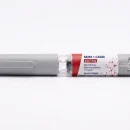
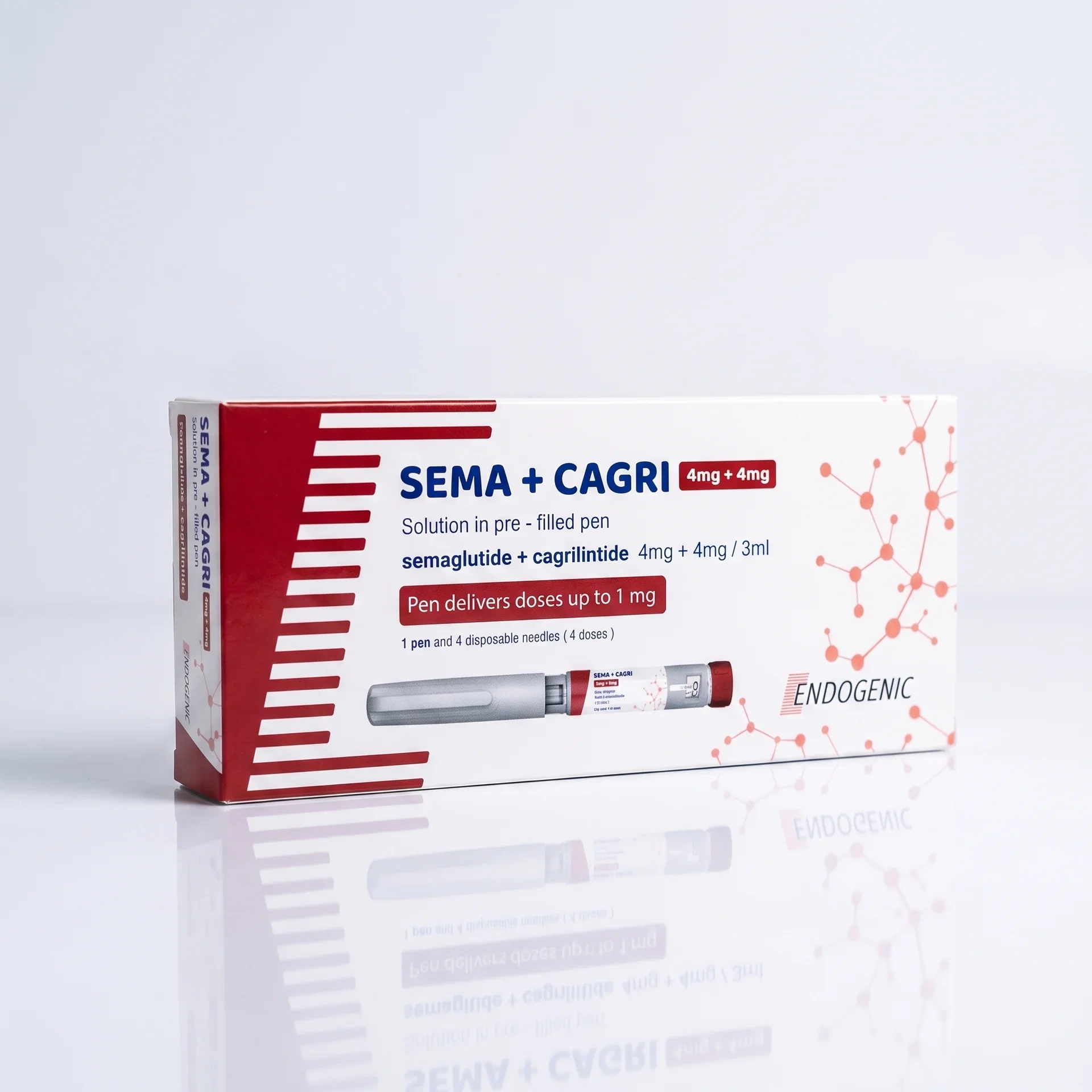
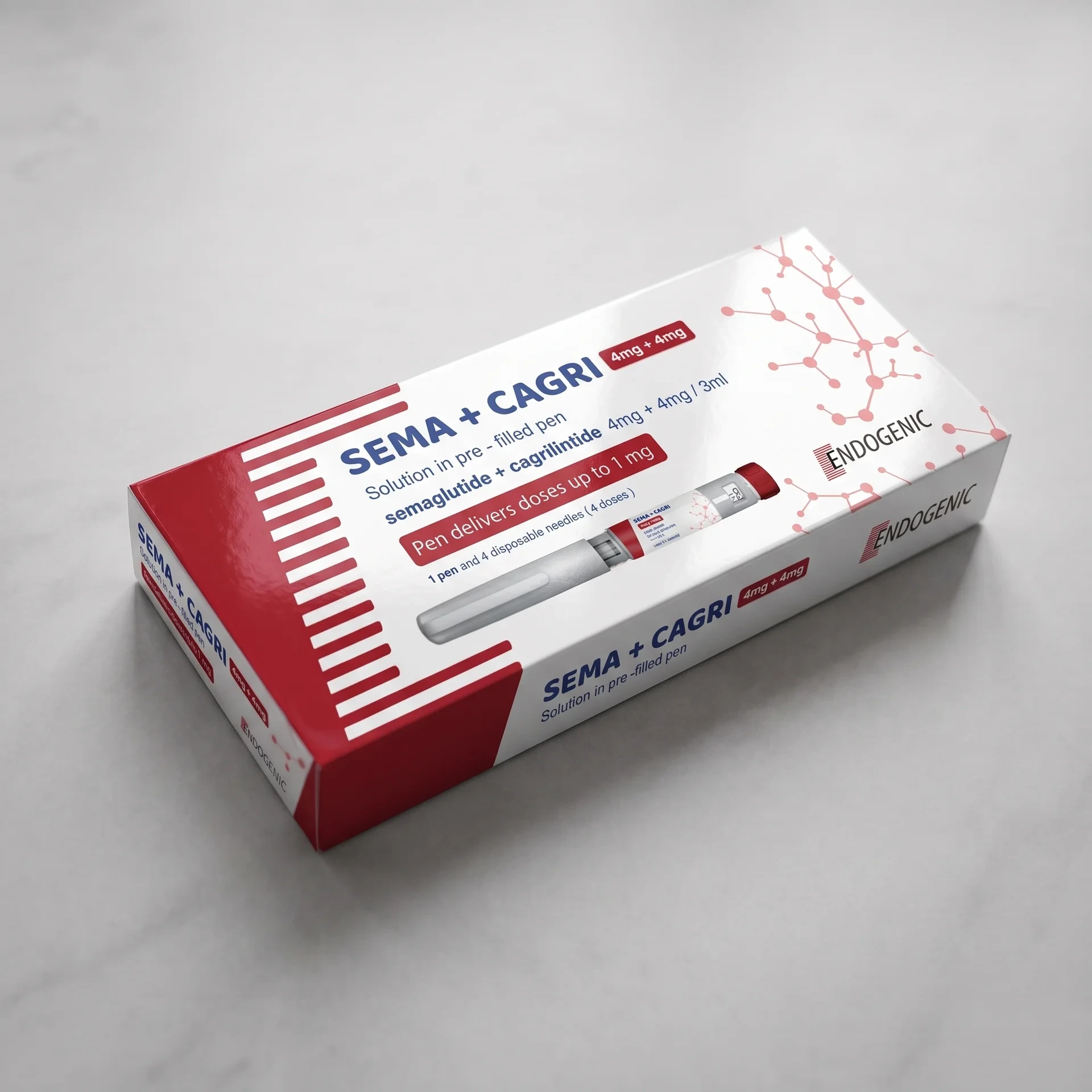
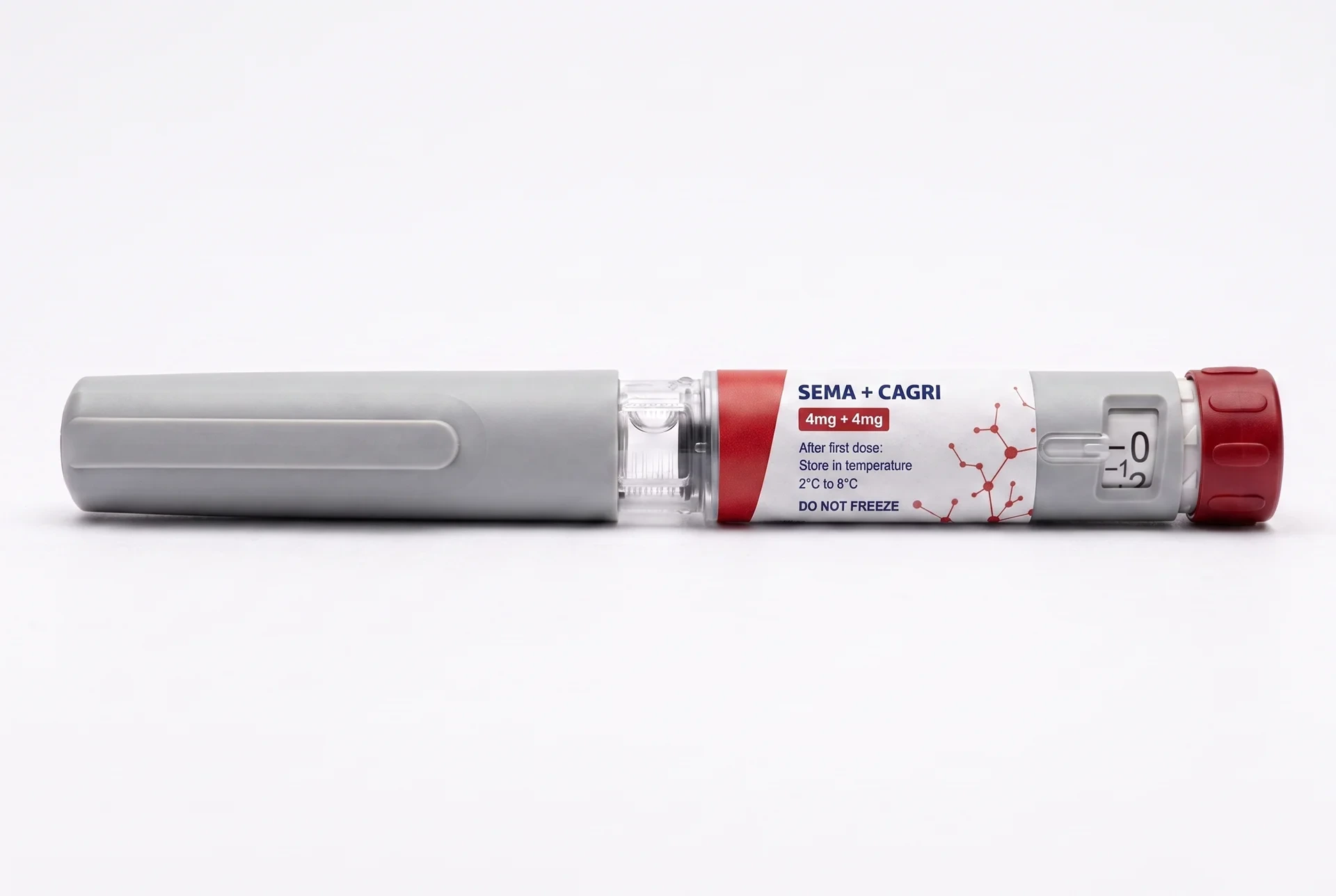
SEMA + CAGRI 4mg + 4mg PEN
SEMA+CAGRI 4 mg + 4 mg PEN is a Research Use Only reagent containing two separate peptide molecules, a GLP-1 analogue and an amylin analogue, intended for research into receptor signalling.
142,99 €
Fast shipping
Delivery options
Returns policy
SEMA+CAGRI 4 mg + 4 mg PEN - a GLP-1R agonist combined with an amylin analogue
- Two separate peptide molecules: a GLP-1 analogue and an amylin analogue.
- Nominal content: 4 mg of each component per PEN unit.
- Intended purpose: Research Use Only laboratory research.
SEMA+CAGRI Material status information
Chemical reagent intended exclusively for laboratory research (Research Use Only). It is not a medicinal product or food. It is not intended for use in humans or animals. The material may only be used by qualified personnel in a controlled research environment.
Reagent characteristics
SEMA+CAGRI 4 mg + 4 mg PEN is the designation of a research material containing two separate peptide molecules in one solution: a GLP-1 analogue and an amylin analogue. This distinguishes it from materials in the dual-agonist class, where one molecule activates two receptors. Here, each component has its own sequence, molecular mass and receptor profile, which directly determines the requirements for batch documentation.
The designation “4 mg + 4 mg” describes the nominal content of each component in a PEN unit. It does not establish the solution volume, working concentration, vehicle composition, actual stoichiometry or purity of either peptide. The trade name alone describes the intended receptor profile but does not replace chemical identification. For quality control purposes, the identity of both components should be confirmed separately for the specific batch through the sequence, molecular mass, an HPLC chromatogram and LC-MS analysis or a comparable mass spectrometry method.
The PEN format describes a factory-prepared liquid form. Within Research Use Only, it does not constitute a declaration of suitability for administration or equivalence to a pharmaceutical dosage form. Vehicle parameters, sterility, pH, osmolarity, the presence of preservatives, working volume and stability conditions must be obtained exclusively from the documentation for the specific batch: the COA, SDS and technical specification.
| Parameter | Information |
|---|---|
| Name | SEMA+CAGRI 4 mg + 4 mg PEN |
| Research class | Co-formulation: GLP-1R agonist + amylin analogue |
| Number of peptide components | Two separate peptide molecules |
| Mechanism analysed in models | Parallel activation of the GLP-1 receptor and amylin receptors |
| Form | Factory-prepared solution in a vehicle designated PEN |
| Nominal content | 4 mg of each component per unit |
| Identity and purity | To be confirmed in the batch COA separately for each peptide (HPLC, LC-MS) |
| Stoichiometry and vehicle composition | To be confirmed in the batch technical specification |
| Storage | Exclusively according to the manufacturer’s label, COA and SDS |
| Intended purpose | RUO laboratory research |
Two receptor systems, not two incretin receptors
This is the most important distinction in this description, and it is sometimes blurred in materials about this class.
In incretin dual agonists, such as materials designated GLP-1+GIP, both activated receptors belong to the same incretin system: the GLP-1 receptor and the GIP receptor are related class B G protein-coupled receptors. A co-formulation of a GLP-1 analogue and an amylin analogue is different: the second component acts on a separate receptor family derived from the calcitonin receptor.
The GLP-1 receptor
The GLP-1 receptor belongs to class B of the G protein-coupled receptors. Activation is followed by coupling to the Gs protein, an increase in cAMP concentration, and activation of PKA and EPAC-dependent pathways. Cellular models measure cAMP accumulation, beta-arrestin recruitment, receptor internalisation and response dynamics following exposure of GLP-1R-expressing cells to an agonist.
Amylin receptors: assembly from subunits
The amylin receptor is not a single protein. It is formed by combining the calcitonin receptor (CTR) with one of the receptor activity-modifying proteins, RAMP1, RAMP2 or RAMP3, producing the phenotypes designated AMY1, AMY2 and AMY3, respectively. This assembly determines affinity and the signalling profile: the same core subunit behaves differently in the presence of different RAMPs. The structural basis of this phenomenon was described in Science (Cao et al., 2022, PMID 35324283), while the effects of agonists on subunit interactions and the resulting signalling were analysed separately (Gostynska et al., 2025, PMID 40828907).
The experimental consequence is direct: studying the amylin component requires different cell lines and assay systems from those used to study the GLP-1 component. The profile of this co-formulation cannot be described by a single cAMP assay in GLP-1R-expressing cells.
Molecular mechanism studied in vitro
GLP-1R activation
In cells expressing GLP-1R, receptor activation leads to an increase in the cAMP signal. This parameter is measured using luminescent, fluorescent or immunological methods, depending on the assay design. In addition to the maximum signal intensity, its kinetics are of interest: the rate of increase, duration, and the processes of receptor desensitisation and internalisation.
Amylin receptor activation
Models using cells that co-express CTR and selected RAMPs allow affinity and functional activation of individual AMY phenotypes to be assessed independently of GLP-1R. Because amylin analogues also show activity at the calcitonin receptor itself, rigorous profiling compares responses at CTR without RAMPs with responses at individual CTR-RAMP combinations. Selectivity for amylin phenotypes is a separate endpoint in this class, not an assumption.
Pathway selectivity and receptor kinetics
Following activation of class B receptors, signalling does not end with cAMP. Beta-arrestin recruitment affects receptor uncoupling from the G protein, internalisation and subsequent intracellular signalling. A two-component system introduces an additional question: are the responses from the two receptor systems independent in the given model, or do they overlap? Answering this requires a comparison of assays performed separately for each component and jointly for the co-formulation.
Lipid modification and albumin binding
In long-acting incretin and amylin analogues alike, acylation is used to limit rapid clearance of the molecule by increasing albumin binding. This is a separate experimental topic: assessments cover peptide stability in the presence of albumin, the extent of protein binding and the behaviour of the material in a medium appropriate to the model. Data obtained for a reference compound cannot be applied to a reagent without analytical confirmation of its identity.
Important distinction: RUO material and medicinal products
Semaglutide is an active substance in authorised prescription medicines subject to medical supervision. Cagrilintide is not authorised as a medicinal product in any jurisdiction, and the co-formulation of the two peptides also has no marketing authorisation, despite published phase 3 trial results. SEMA+CAGRI 4 mg + 4 mg PEN described on this page is an RUO reagent. It is not a pharmaceutical dosage form, does not have the corresponding quality documentation and does not replace a medicinal product. Clinical trial data do not describe outcomes following exposure to this reagent.
Research on the reference compounds
The publications below concern authorised pharmaceutical formulations and investigational reference molecules studied in populations with a diagnosed condition and under medical supervision. They are cited as context for the compound class, not as a description of this reagent’s effects.
The GLP-1 component. Semaglutide was evaluated in a trial programme covering weight reduction in people with overweight or obesity (Wilding et al., 2021, PMID 33567185) and cardiovascular events in people with obesity without diabetes (Lincoff et al., 2023, PMID 37952131). The mechanism and registration trial programme of this molecule are discussed in our separate article on semaglutide.
The amylin component. Cagrilintide monotherapy was evaluated in a phase 2 dose-response trial (Lau et al., 2021, PMID 34798060).
The co-formulation. Coadministration of the two peptides was studied first in a phase 1b trial (Enebo et al., 2021, PMID 33894838), followed by a phase 2 trial in people with type 2 diabetes (Frias et al., 2023, PMID 37364590). Results from phase 3 trials were published in 2025: REDEFINE 1 in people with overweight or obesity (Garvey et al., 2025, PMID 40544433) and REDEFINE 2 in people with obesity and type 2 diabetes (Davies et al., 2025, PMID 40544432). The available data were also summarised in a systematic review and meta-analysis (Dutta et al., 2024, PMID 39676787).
One easily overlooked point deserves emphasis: publication of phase 3 trials is not equivalent to regulatory approval. The co-formulation remains in clinical development.
Applications in laboratory research
Profiling two receptor systems. The material can serve as a comparator in cellular studies that measure GLP-1R-dependent signalling and signalling from individual amylin receptor phenotypes separately. Measurable parameters include EC50, Emax, cAMP dynamics, beta-arrestin recruitment and receptor internalisation.
Comparing a co-formulation with a single dual-receptor molecule. Research models can compare a “two peptides, two receptor systems” arrangement with a “one molecule, two incretin receptors” arrangement. Such comparisons concern molecular architecture and receptor profiles; they do not rank materials for human applications.
Co-formulation stability studies. A liquid format containing two peptides raises a question that does not arise with a single-component material: do both components retain their integrity in the same vehicle and under the same conditions? Analysis should include separate chromatographic assessment of each peptide and verification of their relative proportions.
Metabolic pathway models. Cell cultures and animal models are used to observe markers associated with incretin and amylin signalling. Results should specify the model, working concentration, exposure time and measurement method. Data from cellular models, animal models and clinical trials represent different levels of evidence and must not be presented as equivalent.
Batch documentation and quality control standards
A two-component material requires more extensive documentation than a single-component preparation, and this difference is sometimes overlooked.
The COA should identify the batch number and, separately for each of the two peptides, the sequence or unambiguous chemical name, molecular mass, purity testing method, HPLC chromatogram and mass spectrometry result. A document confirming the identity of only one component does not characterise the material.
A separate parameter is the actual content and relative proportions of the components. “4 mg + 4 mg” is a nominal value; confirming stoichiometry requires quantitative determination of both peptides in the same batch. The SDS should specify conditions for handling, storage and waste disposal.
A limitation applying to every certificate should be kept in mind: chromatographic purity describes the main peak’s share of the total area of recorded peaks, not mass or identity. Only mass spectrometry establishes what a given peak represents. For a co-formulation, the chromatogram should resolve both peptides; overlapping peaks hinder reliable integration and determination of proportions. We explain how to interpret such a document in our article on how to read a certificate of analysis.
Regulatory and anti-doping status
SEMA+CAGRI 4 mg + 4 mg PEN is described exclusively as a Research Use Only chemical reagent. It is not a medicinal product or food. It is not intended for use in humans or animals.
The status of the two components differs and must be considered separately. Semaglutide is an active substance in authorised prescription medicines. Cagrilintide is not authorised as a medicinal product in any jurisdiction, and the co-formulation of the two peptides remains in clinical development despite published phase 3 trials.
Under anti-doping regulations, semaglutide markers are included in the World Anti-Doping Agency’s Monitoring Program. The Monitoring Program is separate from the Prohibited List: it covers substances that are not prohibited but are monitored for patterns of use in sport. Detection of a monitored substance does not constitute an anti-doping rule violation. Cagrilintide’s status must be verified independently against the current WADA documents; the clause covering substances with a similar chemical structure or similar biological effects also applies. People subject to anti-doping rules must check the current WADA documents and their organisation’s regulations on each occasion.
For comparison of receptor profiles, the catalogue also includes semaglutide as a GLP-1R mono-agonist in injectable form, SEMA G 4 mg PEN, the same co-formulation in a 2 mg + 2 mg variant and the injectable 2+2 mg co-formulation.
Summary
SEMA+CAGRI 4 mg + 4 mg PEN is an RUO reagent containing two separate peptide molecules: a GLP-1 analogue and an amylin analogue. This distinguishes it from dual-agonist materials, in which one molecule activates two receptors. The second component acts on a receptor family derived from the calcitonin receptor: amylin phenotypes are formed by combining CTR with RAMP1, RAMP2 or RAMP3, rather than acting on a second incretin receptor.
The nominal content of 4 mg of each component and the PEN format do not independently confirm chemical identity, purity, actual stoichiometry or material stability. These parameters require a batch-specific COA and SDS, with identity and purity confirmed separately for each of the two peptides. The reagent is not an authorised medicine and does not replace pharmaceutical dosage forms or medical consultation.
References
- Cao J, Belousoff MJ, Liang YL, Johnson RM, Josephs TM, Fletcher MM, et al. A structural basis for amylin receptor phenotype. Science. 2022;375(6587):eabm9609. doi:10.1126/science.abm9609. PMID: 35324283
- Gostynska SE, Karim JA, Ford BE, Gordon PH, Babin KM, Inoue A, et al. Amylin receptor subunit interactions are modulated by agonists and determine signaling. Science Signaling. 2025;18(900):eadt8127. doi:10.1126/scisignal.adt8127. PMID: 40828907
- Lau DCW, Erichsen L, Francisco AM, Satylganova A, le Roux CW, McGowan B, et al. Once-weekly cagrilintide for weight management in people with overweight and obesity: a multicentre, randomised, double-blind, placebo-controlled and active-controlled, dose-finding phase 2 trial. Lancet. 2021;398(10317):2160-2172. doi:10.1016/S0140-6736(21)01751-7. PMID: 34798060
- Enebo LB, Berthelsen KK, Kankam M, Lund MT, Rubino DM, Satylganova A, et al. Safety, tolerability, pharmacokinetics, and pharmacodynamics of concomitant administration of multiple doses of cagrilintide with semaglutide 2.4 mg for weight management: a randomised, controlled, phase 1b trial. Lancet. 2021;397(10286):1736-1748. doi:10.1016/S0140-6736(21)00845-X. PMID: 33894838
- Frías JP, Deenadayalan S, Erichsen L, Knop FK, Lingvay I, Macura S, et al. Efficacy and safety of co-administered once-weekly cagrilintide 2.4 mg with once-weekly semaglutide 2.4 mg in type 2 diabetes: a multicentre, randomised, double-blind, active-controlled, phase 2 trial. Lancet. 2023;402(10403):720-730. doi:10.1016/S0140-6736(23)01163-7. PMID: 37364590
- Garvey WT, Blüher M, Osorto Contreras CK, Davies MJ, Winning Lehmann E, Pietiläinen KH, et al. Coadministered cagrilintide and semaglutide in adults with overweight or obesity. New England Journal of Medicine. 2025;393(7):635-647. doi:10.1056/NEJMoa2502081. PMID: 40544433
- Davies MJ, Bajaj HS, Broholm C, Eliasen A, Garvey WT, le Roux CW, et al. Cagrilintide-semaglutide in adults with overweight or obesity and type 2 diabetes. New England Journal of Medicine. 2025;393(7):648-659. doi:10.1056/NEJMoa2502082. PMID: 40544432
- Dutta D, Nagendra L, Harish BG, Sharma M, Joshi A, Hathur B, et al. Efficacy and safety of cagrilintide alone and in combination with semaglutide (Cagrisema) as anti-obesity medications: a systematic review and meta-analysis. Indian Journal of Endocrinology and Metabolism. 2024;28(5):436-444. doi:10.4103/ijem.ijem_45_24. PMID: 39676787
- Wilding JPH, Batterham RL, Calanna S, Davies M, Van Gaal LF, Lingvay I, et al. Once-weekly semaglutide in adults with overweight or obesity. New England Journal of Medicine. 2021;384(11):989-1002. doi:10.1056/NEJMoa2032183. PMID: 33567185
- Lincoff AM, Brown-Frandsen K, Colhoun HM, Deanfield J, Emerson SS, Esbjerg S, et al. Semaglutide and cardiovascular outcomes in obesity without diabetes. New England Journal of Medicine. 2023;389(24):2221-2232. doi:10.1056/NEJMoa2307563. PMID: 37952131
- World Anti-Doping Agency. Monitoring Program. Current version.
FAQ
It is not a single protein. It is formed by combining the calcitonin receptor with one of the receptor activity-modifying proteins, RAMP1, RAMP2 or RAMP3, producing the phenotypes designated AMY1, AMY2 and AMY3. The composition of this assembly determines affinity and the signalling profile.
No. This is a nominal value. Confirming the actual content and relative proportions of both peptides requires quantitative testing of the specific batch, documented in the COA.
In addition to the batch number and vehicle data, it should include the sequence or unambiguous chemical name, molecular mass, HPLC result and mass spectrometry result separately for each of the two peptides, together with determination of their actual content. The chromatogram should resolve both components.
No. In this description, PEN designates the catalogue format of the research material. It does not specify a route of administration, dosage, pharmaceutical sterility or intended use in humans or animals.
No. Publication of clinical trial results and the granting of marketing authorisation are two separate events. Cagrilintide and its co-formulation with semaglutide remain in clinical development.
No. Those data come from trials using clinical material in populations with a diagnosed condition and under medical supervision. An RUO reagent is not equivalent to that material, and its analytical profile must be confirmed for the specific batch.
0.0
0 reviews
This product has no reviews yet.