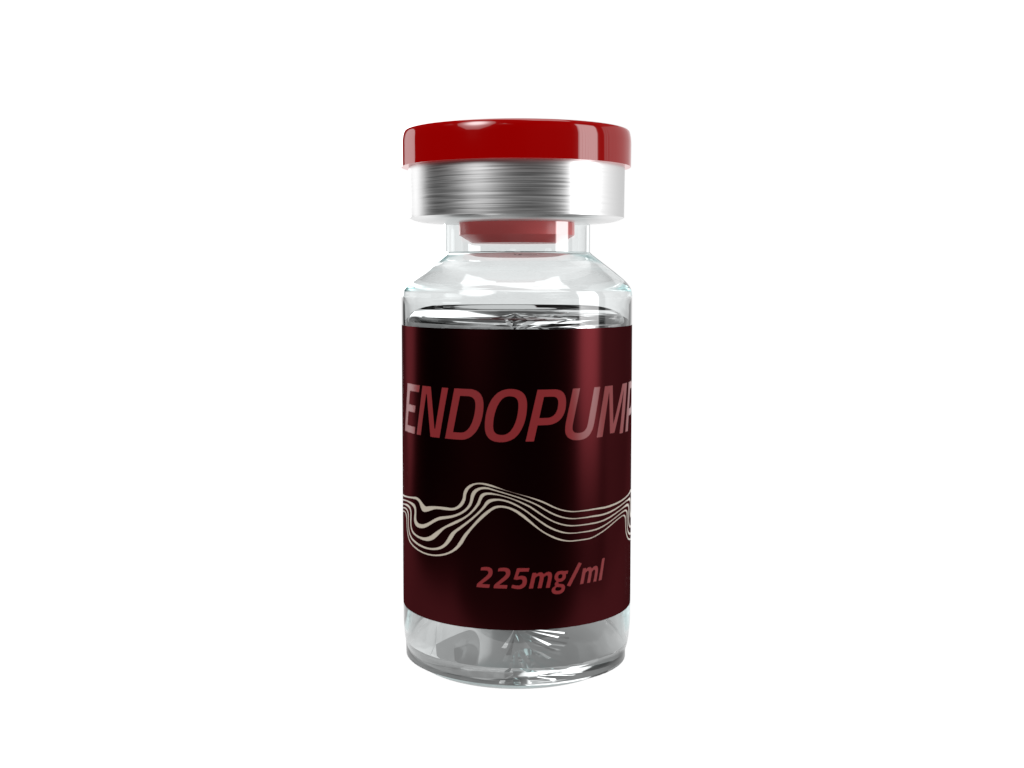
EndoPump it a combination of five free amino acids in one sterile solution for intramuscular injection. Each of them has a separate function, and the whole was designed around two complementary goals: a muscle pump powered by nitric oxide and support for the natural, pulsatile secretion of growth hormone from the pituitary gland. Below is a description of the composition and each asset separately.
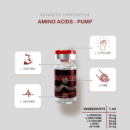
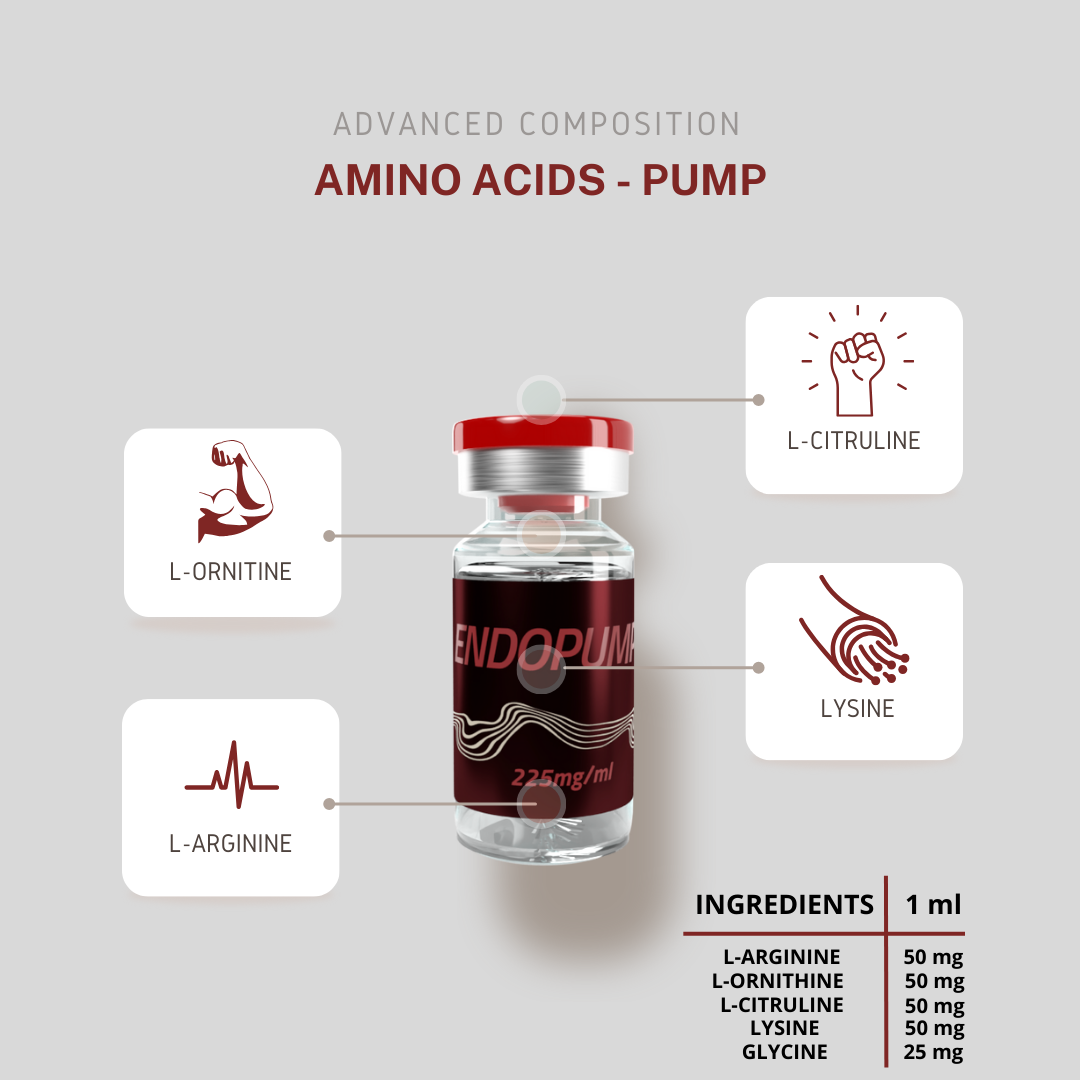
Composition for 1 ml of solution
| Amino acid |
Content per 1 ml |
The main function in the formula |
| L-arginine |
50 mg |
Direct substrate of NO synthase; element of the GH amino-stack |
| L-ornithine |
50 mg |
Urea cycle (ammonia removal); element of the GH amino-stack |
| L-citrulline |
50 mg |
Arginine precursor bypassing the first pass effect; raises arginine more effectively than arginine itself |
| L-lysine |
50 mg |
Synergy with arginine in stimulating GH secretion |
| Glycine |
25 mg |
Inhibitory amino acid; support for creatine and collagen synthesis, regeneration |
| Sum of amino acids |
225 mg/ml |
— |
Form: sterile, clear solution for intramuscular injection in a multi-dose vial (volume according to the label, typically 10 ml). Each batch covered by a certificate of analysis (COA) confirming the content and purity of all five amino acids. The ingredients themselves come from the same family of compounds as the oral ones amino acids in capsules – the difference is the route of administration, which completely changes the pharmacokinetics.
L-arginine – nitric oxide substrate and the core of the GH amino-stack
L-arginine is an amino acid that plays a dual role in this formula. First of all, it is direct substrate of nitric oxide synthase (NOS) — an enzyme that converts arginine into nitric oxide and citrulline. It is literally the raw material from which the body produces the molecule responsible for vasodilation and the pump.
Bode-Böger et al. (1998) demonstrated that intravenous administration of L-arginine induces measurable dose-dependent vasodilation in humans – supporting a direct arginine → NO → blood flow relationship. Secondly, arginine is the historical core amino-stack stimulating the secretion of growth hormone. Kanaley (2008), in a review on arginine and exercise, describes that arginine increases resting GH secretion, possibly by inhibiting somatostatin, a hormone that normally turns down GH release from the pituitary.
It is worth adding that the nitric oxide pathway can also be influenced by the oral metabolite of arginine: those who prefer the non-injectable form will find it in the product Agmatine, which modulates NO synthase activity via a different pathway than arginine itself.
L-citrulline – a smarter way to arginine
This is where the most interesting element of the formula comes into play. Counterintuitively, if you want to increase arginine levels in your body, citrulline does this more effectively than arginine itself. The reason is pharmacokinetic: oral arginine is largely metabolized by argininase in the intestine and liver (first-pass effect) before it reaches the circulation.
Citrulline bypasses this stage – it is absorbed, goes to the kidneys and is transformed there into arginine, increasing its plasma concentration in a more predictable way. Schwedhelm et al. (2008) clearly demonstrated that oral L-citrulline increases plasma arginine concentration more effectively than an equivalent dose of L-arginine alone. Bailey et al. (2015) showed that L-citrulline supplementation improved performance parameters and enhanced NO signaling during exercise.
In EndoPump, citrulline and arginine appear together – one as an immediate substrate, the other as a “slower”, maintaining arginine reservoir.
L-ornithine – urea cycle and the second arm of GH
L-ornithine is closely related to arginine – both participate in urea cycle, a metabolic pathway that removes ammonia from the body. During intense exercise, ammonia builds up as a byproduct of amino acid metabolism and contributes to the feeling of fatigue. Ornithine supports the efficiency of this cycle, which is sometimes associated with delaying fatigue.
The second role of ornithine is its participation in the GH amino-stack. Chromiak and Antonio (2002), in a review devoted to the use of amino acids as growth hormone-releasing factors by athletes, list arginine, ornithine and lysine as the classic trio tested for stimulation of GH secretion. It is this combination that is the historical foundation of the “amino-stack for growth hormone”.
L-lysine – synergy with arginine
L-lysine is an exogenous amino acid (the body cannot produce it on its own), which in the context of this formula serves as a synergistic partner for arginine in GH stimulation. In older sports literature, the combination of arginine and lysine was tested for a stronger effect on growth hormone secretion than either amino acid alone. Chromiak and Antonio (2002) discuss this pair in the context of attempts to increase resting GH. Lysine also participates in the synthesis of collagen and carnitine, which involves the regeneration of connective tissue.
Glycine – the smallest amino acid, many functions
Glycine is the simplest amino acid that performs a function in the body inhibitory neurotransmitter in the central nervous system, but also a building block with a wide range of applications. It is a precursor of creatine (together with arginine and methionine) and the main amino acid of collagen – a protein that builds tendons, ligaments and skin. In the EndoPump formula, glycine (25 mg/ml) supports the regeneration of connective tissue and creatine synthesis, complementing the profile of the other four amino acids.