


Peptides and SARMs for Muscle Building
This article describes what the literature says about the compounds discussed below: their mechanisms, research findings and what those studies do not show.
This article describes what the literature says about the compounds discussed below: their mechanisms, research findings and what those studies do not show. It does not provide protocols, combination regimens or cycle lengths because every substance covered here is a research-grade compound without approval as a medicine or dietary supplement. Publishing use instructions for materials with this status would be unfair to readers, who deserve evidence rather than a prescription.
All substances discussed in this article are research compounds and are not intended for human consumption. Descriptions of their activity are based solely on laboratory findings and experimental observations, not on clinical testing.
Types of growth hormone secretagogues
Growth hormone secretagogues do not supply the hormone from an external source. Instead, they act on mechanisms that regulate its release from the pituitary gland. They fall into two groups with different molecular targets:
- GHRH analogues act on the growth hormone-releasing hormone receptor. CJC-1295 belongs to this group, including its DAC, or Drug Affinity Complex, variant designed to extend the molecule’s presence in the body.
- Ghrelin receptor agonists (GHS-R1a) include GHRP-2, GHRP-6, ipamorelin and hexarelin. GHS-R1a is the same target activated by endogenous ghrelin. Its role in regulating growth hormone release has been reviewed in the literature (Laviano et al., 2012, PMID 22632856), and the distribution of the receptor in the central nervous system has been characterised separately (Airapetov et al., 2021, PMID 34755494).
Human data exist for CJC-1295. A 2006 study observed prolonged stimulation of growth hormone and IGF-1 secretion in healthy adults (Teichman et al., 2006, PMID 16352683). This was a pharmacodynamic study describing hormonal-axis behaviour, not physique-related outcomes.
A common oversimplification should be addressed here. The claim that stimulating endogenous hormone release “cannot cause adverse effects by definition” is not supported by evidence. The case of another secretagogue, MK-677, discussed below, shows this clearly. An endogenous mechanism is not synonymous with biological neutrality.
Which compounds are classified as muscle-mass peptides?
The growth hormone secretagogue group most often studied includes:
- CJC-1295, a GHRH analogue
- CJC-1295 with DAC, a longer-acting variant
- GHRP-2, a ghrelin receptor agonist
- GHRP-6, a ghrelin receptor agonist with a more pronounced effect on appetite
- Ipamorelin, a ghrelin receptor agonist described as having a more selective profile
- Hexarelin, a synthetic hexapeptide that also acts as a ghrelin receptor agonist
The literature describes pairing a GHRH analogue with a ghrelin receptor agonist as a research approach that uses two separate targets within the same axis. This observation concerns experimental design, not a recommendation to combine products. Every additional compound introduces another variable, including an additional risk profile.
Hexarelin: how it differs from other GHRPs
Hexarelin belongs to the same group as GHRP-2 and GHRP-6. It is a synthetic hexapeptide that acts through the ghrelin receptor. The pharmacology of the growth hormone-releasing peptide family was described in reviews published in the 1990s (Ghigo et al., 1997, PMID 9186261), while a more recent review summarises secretagogue safety data together with the limitations of the available evidence (Sigalos and Pastuszak, 2018, PMID 28400207).
The first difference concerns potency. A review of hexarelin’s cardiovascular actions described it as chemically more stable and functionally more potent than ghrelin, the endogenous ligand for the same receptor (Mao et al., 2014, PMID 25278975).
The second, and scientifically more interesting, difference is that GHS-R1a is not hexarelin’s only molecular target. Hexarelin has also been reported to bind CD36, a scavenger receptor unrelated to the ghrelin receptor. In a macrophage study, hexarelin bound both CD36 and GHS-R1a and activated a PPARgamma-dependent pathway that increased ABCA1 and ABCG1 transporter expression and cholesterol efflux from cells (Avallone et al., 2006, PMID 16959872). CD36 has also been described as a receptor mediating hexarelin’s cardioprotective effects in the heart (Mao et al., 2014), linking this mechanism to observations from ischaemia-reperfusion models (Huang et al., 2017, PMID 28321024). These are observations from animal and cellular models, not clinical evidence.
The important distinction is that hexarelin is not simply “a stronger GHRP-6”. It is a molecule with two described molecular targets, the second of which lies outside the somatotropic axis and therefore outside the main scope of this article.
The third difference concerns how the response changes during repeated exposure. Human data over a longer time horizon are available for hexarelin, which is uncommon within this class. Short-term administration in older adults did not desensitise the growth hormone response (Ghigo et al., 1996, PMID 8921821). With prolonged exposure, however, the picture was different. In a study in which adults received subcutaneous hexarelin for 16 weeks, the area under the GH response curve after a single administration fell from 19.1 to 10.5 micrograms/L.h, approximately a 50% reduction. The decrease was statistically significant by week four. Four weeks after administration ended, the response returned to baseline (19.4 micrograms/L.h), indicating that the effect was reversible (Rahim et al., 1998, PMID 9589671). This direction is not unique to hexarelin: in a rat model, six weeks of MK-677 exposure abolished its stimulatory effect on GH secretion by increasing hypothalamic somatostatin expression (Lee et al., 2018, PMID 30450851).
In the same human study, IGF-1 and IGFBP-3 concentrations did not change significantly over the entire 20-week observation period. This is especially relevant to the subject of this article: interest in secretagogues in the context of muscle mass is based on the GH-to-IGF-1 axis, yet IGF-1 remained unchanged in the longest available human study. This was a pharmacodynamic study describing hormonal-axis behaviour, not a study of physique-related outcomes.
For anti-doping purposes, hexarelin, whose international non-proprietary name is examorelin, is classified among growth hormone-releasing peptides under subsection S2.2 of the WADA Prohibited List, which covers growth hormone, its fragments and releasing factors. The general clause applies: the absence of a compound’s name from the examples does not mean that it is permitted, because substances with a similar chemical structure or similar biological effect are also prohibited.
hGH fragment 176-191: a distinct case within the GH axis
Fragment 176-191 is the C-terminal portion of the human growth hormone molecule. It was isolated from the hypothesis that hGH’s lipolytic activity could be separated from its effects on growth and the IGF-1 axis. The research concept was therefore to obtain metabolic activity without increasing IGF-1 concentrations, distinguishing this fragment from the secretagogues and IGF-1 analogues described above.
AOD-9604, an analogue of this fragment, was developed as a candidate drug for metabolic disorders and reached early clinical development (Wilding, 2004, PMID 15134286). The programme did not result in registration, and the compound did not receive marketing authorisation as a medicinal product. A 2026 review of approved and unapproved peptide therapies in the context of musculoskeletal injuries and athletic performance places such molecules among materials with an unconfirmed efficacy profile (Mendias and Awan, 2026, PMID 41966639).
One distinction is important in the context of this article: fragment 176-191 is not a compound studied for building muscle mass. Research has focused on lipid metabolism, so its inclusion in “muscle-building” lists reflects its relationship to the GH axis rather than the endpoint studied. Growth hormone and its fragments fall under category S2 of the WADA Prohibited List and are prohibited at all times.
The principles of handling lyophilised material and its reconstitution are discussed in a separate article on bacteriostatic water.
IGF-1-related peptides in muscle research
PEG-MGF
MGF, or mechano growth factor, is an IGF-1 splice variant, also described as IGF-1 Ec. It is produced by alternative splicing of the same gene (Schlegel et al., 2013, PMID 24146828). Pegylation, the attachment of a polyethylene glycol chain, is intended to extend the molecule’s persistence in the body.
The evidence needs to be placed honestly. MGF research has been conducted primarily in animal and cellular models. Studies describe effects on motor neurons and muscle function in an SOD1 mouse model (Riddoch-Contreras et al., 2009, PMID 19038252) and on neurogenesis in the ageing mouse brain (Tang et al., 2017, PMID 28683812). These are not studies of hypertrophy in trained humans and should not be interpreted as such.
IGF-1 LR3
IGF-1 LR3, or Long R3 IGF-1, is a modified analogue of insulin-like growth factor 1. An arginine substitution at position three and an extended N-terminus reduce affinity for IGF-binding proteins, or IGFBPs, which increases the molecule’s availability to the IGF-1 receptor. Signalling proceeds through the PI3K/Akt/mTOR and Ras/MAPK pathways.
The claim that “everyone sees results” is not supported by evidence. No clinical trials of IGF-1 analogues for building muscle in healthy trained people have been conducted that would justify such a statement.
SARMs and muscle building
SARMs, or selective androgen receptor modulators, are non-steroidal molecules that bind the androgen receptor with tissue selectivity. They were designed to act more strongly in muscle and bone than in the prostate or skin. This selectivity is a design feature, not a guarantee that systemic effects will be absent. A 2025 systematic review found that SARM studies report both increases in lean body mass and effects involving bone remodelling and testosterone suppression (Vasireddi et al., 2025, PMID 39755947).
No SARM has received marketing authorisation as a medicinal product.
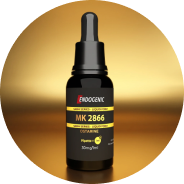
Ostarine (MK-2866, enobosarm)
Ostarine is the best-studied compound in this group. A phase 2 trial in people with cancer and muscle wasting assessed the effect of enobosarm on lean body mass and physical function (Dobs et al., 2013, PMID 23499390). The compound then entered a phase 3 programme in the same indication (Crawford et al., 2016, PMID 27138015), and the therapeutic context of the class was reviewed separately (Dalton et al., 2013, PMID 24189892).
The participants in these trials had cancer-related wasting and were under clinical supervision. They were not healthy people seeking to build muscle. Enobosarm was not approved for this indication. The literature does, however, contain cases of drug-induced liver injury following exposure to ostarine (Bedi et al., 2021, PMID 34368386), (Weinblatt and Roy, 2022, PMID 35655632) and (Khan et al., 2022, PMID 35340496). Claims that the compound has “no side effects” or is “non-invasive” cannot be reconciled with these reports.
Ibutamoren (MK-677)
MK-677 is not a SARM. It is a non-peptide ghrelin receptor agonist, meaning an orally active growth hormone secretagogue. It is grouped with SARMs only by convention.
This compound deserves particular attention because a one-year randomised trial was conducted in healthy older adults. The findings are informative in both directions. MK-677 raised growth hormone and IGF-1 concentrations to levels observed in young adults, while lean body mass increased by 1.1 kg compared with a 0.5 kg decrease in the placebo group. At the same time, the increase in lean body mass did not translate into improved strength or physical function. Mean fasting glucose rose by 0.3 mmol/L and insulin sensitivity decreased. Increased cortisol, transient lower-limb oedema and muscle pain were also reported (Nass et al., 2008, PMID 18981485).
Two conclusions follow directly. First, an increase in lean mass measured by body-composition testing is not the same as an increase in strength. Second, effects on glucose metabolism are a documented part of this compound’s profile. This is not an inconvenience that can be “corrected” by adding another research substance. Such an approach does not remove the problem; it introduces a second variable with its own risk profile.
Which other SARMs are discussed in muscle research?
LGD-4033 (ligandrol)
A phase 1 trial of LGD-4033 was conducted in healthy young men. Lean body mass increased in a dose-dependent manner, without significant changes in aminotransferase activity or PSA during the short study period. At the same time, researchers observed dose-dependent suppression of total testosterone, SHBG, HDL cholesterol and triglycerides. Hormonal and lipid values returned to baseline after discontinuation (Basaria et al., 2013, PMID 22459616).
The authors explicitly noted the study’s limitation: its short duration and the need for longer randomised trials to assess physical function and health endpoints. This matters because suppression of the hormonal axis is a documented observation, not a hypothetical risk.
RAD-140 (testolone)
RAD-140 remains a compound supported by preclinical evidence only. Neuroprotective effects have been described in cultured neurons and in rats with kainate lesions (Jayaraman et al., 2014, PMID 24428527), and preclinical studies have assessed effects on muscle mass and bone mineral density (Puskas et al., 2025, PMID 40680216). The metabolic profiles of RAD-140 and S-23 have also been studied in horses for anti-doping control (So et al., 2021, PMID 32853476).
There are no published clinical trials that allow RAD-140 to be compared with testosterone in humans. Statements claiming superiority are not supported by the literature and have been removed from this article. The RAD-140 ester sold as RAD-150 is covered in a separate article.
Other SARMs
S-4 (andarine)
Andarine appears in the literature primarily in the context of anti-doping analytics. It was detected in a black-market product (Thevis et al., 2009, PMID 20355219), its urinary metabolites were characterised for routine doping control (Thevis et al., 2010, PMID 20623476), and it was later documented in an actual doping-control sample (Starcevic et al., 2013, PMID 23427117). No clinical trials define its adverse-effect profile in humans. This also means there is no basis for assurances that any symptoms are reversible or mild.
S-23
S-23 has no human clinical-trial data. Available publications concern metabolic characterisation for anti-doping control (So et al., 2021, PMID 32853476). Suppression of the hormonal axis is a documented class effect, demonstrated clinically for LGD-4033, but the scale of this effect in humans for S-23 itself remains unknown.
YK-11
YK-11 is a steroid-like molecule described as a partial androgen receptor agonist (Kanno et al., 2011, PMID 21372378). The widespread claim that it “inhibits myostatin” derives from one specific paper. In C2C12 myoblast cultures, researchers observed regulation of myogenic differentiation through expression of follistatin, an antagonist of myostatin (Kanno et al., 2013, PMID 23995658).
This was an observation in a cell line, not in the human body. It should be considered alongside a newer finding: an animal study described YK-11-induced oxidative stress and mitochondrial dysfunction in the hippocampus (Dahleh et al., 2023, PMID 37468001). A complete account includes both results.
What the evidence shows, and what it does not
This section summarises systematic reviews, which weigh the available literature as a whole rather than relying on isolated reports.
A systematic review of SARM safety in healthy adults included 33 studies and 2,136 participants, of whom 1,447 were exposed to a SARM. It identified 15 case reports of drug-induced liver injury, one Achilles tendon rupture and one case of rhabdomyolysis. Elevated ALT was reported in clinical trials in an average of 7.1% of exposed participants. The authors’ conclusion was unequivocal: recreational SARM use should be strongly discouraged (Vignali et al., 2023, PMID 37218811).
A sports-medicine review covering 72 publications from 2003 to 2022 estimated SARM use among athletes at 1-3% and linked it with reports of drug-induced liver injury, myocarditis and tendon rupture, alongside reported increases in lean body mass and testosterone suppression (Vasireddi et al., 2025, PMID 39755947).
When these findings are considered together with the MK-677 trial, in which increased lean mass did not improve strength or function, the conclusion is less dramatic than the original version of this article but better aligned with the literature. Evidence shows changes in body-composition measurements more clearly than functional improvements, while also documenting specific organ and hormonal risks.
How are these compounds used in research?
The original version of this article contained a regimen combining four groups of compounds. It has been removed and not replaced, for a reason that should be stated plainly.
Every substance discussed here is a research-status material without marketing authorisation. No established human dosing exists because dosing is determined through a registration process that none of these compounds has completed. Figures circulated informally do not come from registration trials. They come from practice, which does not systematically record adverse events or include a control group.
In the laboratory, experimental parameters such as working concentration, research model and endpoints follow the methodology of a specific protocol and remain the responsibility of the researcher. They cannot be described meaningfully in a general blog article because they depend on the research question, not on someone’s training experience.
Selection depends on the research context, not training experience
Dividing compounds into products “for beginners” and “for advanced users” is a marketing construct, not a pharmacological category. A compound’s risk profile does not change with years spent in the gym. The hormonal-axis suppression documented for LGD-4033, the reduced insulin sensitivity reported for MK-677 and the liver injuries associated with ostarine do not depend on training experience.
What can distinguish the relevance of a research material is the scientific question and whether it can be investigated under controlled conditions, not a declared level of athletic advancement.
Regulatory status and anti-doping note
None of the compounds listed in this article is a medicinal product, dietary supplement or food. SARMs have neither FDA approval nor registration as medicines in the European Union.
WADA Prohibited List status: every group discussed here is prohibited at all times.
- SARMs, including ostarine, LGD-4033, RAD-140, andarine, S-23 and YK-11, fall under category S1.2, other anabolic agents.
- Growth hormone secretagogues, including CJC-1295, GHRP-2, GHRP-6, ipamorelin, hexarelin and MK-677, and growth factors, including IGF-1 and its analogues and MGF, fall under category S2, peptide hormones, growth factors, related substances and mimetics.
- GW501516, which has been detected as an undeclared component in products labelled as SARMs, falls under category S4.4, metabolic modulators. WADA also issued a public health warning about the compound in 2013.
An athlete registered in ADAMS should treat exposure to any of these compounds as a risk of an anti-doping rule violation. Because these substances are not registered medicines, there is no route to obtain a Therapeutic Use Exemption. Current status should always be checked against the latest Prohibited List.
Harm reduction: what is actually in the product?
One risk is rarely discussed even though it may be greater in practice than the pharmacology of the intended molecule: a mismatch between the label and the contents of the package.
A study published in JAMA analysed 44 products sold online as SARMs using analytical procedures approved by WADA. The results showed that:
- only 23 products (52%) contained any SARM,
- 17 products (39%) contained another non-approved drug, including ibutamoren, GW501516 or SR9009,
- 4 products (9%) contained no active compound,
- 11 products (25%) contained substances not listed on the label,
- only 18 of 44 products (41%) contained an amount of active compound consistent with the label (Van Wagoner et al., 2017, PMID 29183075).
The consequences are twofold. For an athlete subject to anti-doping control, undeclared GW501516 or SR9009 can cause a violation involving a substance the person did not knowingly select. For everyone else, the risk profile in the literature applies to the molecule actually present in the package. As the analysis shows, that molecule often did not match the label.
The only document that can resolve this issue is a certificate of analysis assigned to the specific batch, including an HPLC purity result and identity confirmation by mass spectrometry. A quality claim without access to the result for the actual batch remains only a claim.
Frequently asked questions
Do SARMs cause fewer adverse effects than anabolic-androgenic steroids?
There is no solid direct evidence for this comparison because head-to-head studies in healthy people have not been conducted. Specific SARM-related risks are documented: systematic reviews report drug-induced liver injury, tendon rupture, myocarditis and testosterone suppression (PMID 37218811, PMID 39755947).
Does MK-677 increase strength?
In a one-year randomised trial in healthy older adults, MK-677 increased lean body mass but did not improve strength or physical function. Fasting glucose increased and insulin sensitivity decreased at the same time (PMID 18981485).
Does ostarine avoid suppression of the hormonal axis?
Suppression is a documented effect of this compound class. A phase 1 trial of LGD-4033 showed dose-dependent reductions in total testosterone, SHBG and HDL (PMID 22459616), while systematic reviews list testosterone suppression among reported SARM effects. Claims that SARMs do not affect the hormonal axis are not supported by the literature.
Why does this article not provide doses or cycle lengths?
The substances discussed are not medicinal products and have not completed the registration process through which dosing is established. Figures circulating informally do not come from registration trials.
Does a product sold as a SARM contain what its label claims?
An analysis of 44 products sold online found that only 52% contained any SARM, 39% contained another non-approved drug and only 41% had an active-compound amount consistent with the label (PMID 29183075). A batch-specific certificate of analysis remains the decisive document.
Summary
The compounds discussed in this article fall into three mechanistically distinct groups: growth hormone secretagogues acting through the GHRH or ghrelin receptor, IGF-1 analogues and variants acting through IGF-1R, and SARMs that bind the androgen receptor with tissue selectivity. Human data exist for some of them, including CJC-1295, MK-677, LGD-4033 and enobosarm, but these studies involved defined populations and often short observation periods. Their findings are more restrained than common narratives suggest: changes in body-composition measurements did not always produce functional improvements, while hormonal-axis suppression, reduced insulin sensitivity and cases of liver injury were documented. Evidence for RAD-140, S-23 and YK-11 remains preclinical. Every group discussed is prohibited at all times under the WADA Prohibited List, with S1.2 applying to SARMs and S2 to secretagogues and growth factors. An analysis of products sold online found that most did not match their labels, making a batch-specific certificate of analysis the only decisive evidence of material identity.
Product documentation
Research-material pages with batch-specific analytical documentation are available in the peptides and SARMs and modulators categories. These materials are intended solely for research applications.
References
- Van Wagoner RM, Eichner A, Bhasin S, Deuster PA, Eichner D. Chemical Composition and Labeling of Substances Marketed as Selective Androgen Receptor Modulators and Sold via the Internet. JAMA. 2017;318(20):2004-2010. PMID: 29183075
- Vignali JD, Pak KC, Beverley HR, et al. Systematic Review of Safety of Selective Androgen Receptor Modulators in Healthy Adults: Implications for Recreational Users. J Xenobiot. 2023;13(2):218-236. PMID: 37218811
- Vasireddi N, Hahamyan HA, Gould HP, et al. Athlete Selective Androgen Receptor Modulators Abuse: A Systematic Review. Am J Sports Med. 2025;53(4):999-1009. PMID: 39755947
- Nass R, Pezzoli SS, Oliveri MC, et al. Effects of an oral ghrelin mimetic on body composition and clinical outcomes in healthy older adults: a randomized trial. Ann Intern Med. 2008;149(9):601-611. PMID: 18981485
- Basaria S, Collins L, Dillon EL, et al. The safety, pharmacokinetics, and effects of LGD-4033, a novel nonsteroidal oral, selective androgen receptor modulator, in healthy young men. J Gerontol A Biol Sci Med Sci. 2013;68(1):87-95. PMID: 22459616
- Teichman SL, Neale A, Lawrence B, et al. Prolonged stimulation of growth hormone (GH) and insulin-like growth factor I secretion by CJC-1295, a long-acting analog of GH-releasing hormone, in healthy adults. J Clin Endocrinol Metab. 2006;91(3):799-805. PMID: 16352683
- Dobs AS, Boccia RV, Croot CC, et al. Effects of enobosarm on muscle wasting and physical function in patients with cancer: a double-blind, randomised controlled phase 2 trial. Lancet Oncol. 2013;14(4):335-345. PMID: 23499390
- Crawford J, Prado CM, Johnston MA, et al. Study Design and Rationale for the Phase 3 Clinical Development Program of Enobosarm, a Selective Androgen Receptor Modulator, for the Prevention and Treatment of Muscle Wasting in Cancer Patients (POWER Trials). Curr Oncol Rep. 2016;18(6):37. PMID: 27138015
- Dalton JT, Taylor RP, Mohler ML, Steiner MS. Selective androgen receptor modulators for the prevention and treatment of muscle wasting associated with cancer. Curr Opin Support Palliat Care. 2013;7(4):345-351. PMID: 24189892
- Bedi H, Hammond C, Sanders D, Yang HM, Yoshida EM. Drug-Induced Liver Injury From Enobosarm (Ostarine), a Selective Androgen Receptor Modulator. ACG Case Rep J. 2021;8(1):e00518. PMID: 34368386
- Weinblatt D, Roy S. Drug-Induced Liver Injury Secondary to Enobosarm: A Selective Androgen Receptor Modulator. J Med Cases. 2022;13(5):244-248. PMID: 35655632
- Khan S, Fackler J, Gilani A, Murphy S, Polintan L. Selective Androgen Receptor Modulator Induced Hepatotoxicity. Cureus. 2022;14(2):e22239. PMID: 35340496
- Jayaraman A, Christensen A, Moser VA, et al. Selective androgen receptor modulator RAD140 is neuroprotective in cultured neurons and kainate-lesioned male rats. Endocrinology. 2014;155(4):1398-1406. PMID: 24428527
- Puskas J, Guda T, Niccoli S, et al. Preclinical assessment of the selective androgen receptor modulator RAD140 to increase muscle mass and bone mineral density. Physiol Rep. 2025;13(14):e70463. PMID: 40680216
- So YM, Wong JKY, Choi TLS, et al. Metabolic studies of selective androgen receptor modulators RAD140 and S-23 in horses. Drug Test Anal. 2021;13(2):318-337. PMID: 32853476
- Thevis M, Geyer H, Kamber M, Schänzer W. Detection of the arylpropionamide-derived selective androgen receptor modulator (SARM) S-4 (Andarine) in a black-market product. Drug Test Anal. 2009;1(8):387-392. PMID: 20355219
- Thevis M, Thomas A, Füssholler G, et al. Mass spectrometric characterization of urinary metabolites of the selective androgen receptor modulator andarine (S-4) for routine doping control purposes. Rapid Commun Mass Spectrom. 2010;24(15):2245-2254. PMID: 20623476
- Starcevic B, Ahrens BD, Butch AW. Detection of the selective androgen receptor modulator S-4 (Andarine) in a doping control sample. Drug Test Anal. 2013;5(5):377-379. PMID: 23427117
- Kanno Y, Hikosaka R, Zhang SY, et al. (17alpha,20E)-17,20-[(1-methoxyethylidene)bis(oxy)]-3-oxo-19-norpregna-4,20-diene-21-carboxylic acid methyl ester (YK11) is a partial agonist of the androgen receptor. Biol Pharm Bull. 2011;34(3):318-323. PMID: 21372378
- Kanno Y, Ota R, Someya K, et al. Selective androgen receptor modulator, YK11, regulates myogenic differentiation of C2C12 myoblasts by follistatin expression. Biol Pharm Bull. 2013;36(9):1460-1465. PMID: 23995658
- Dahleh MMM, Bortolotto VC, Guerra GP, Boeira SP, Prigol M. YK11 induces oxidative stress and mitochondrial dysfunction in hippocampus: The interplay between a selective androgen receptor modulator (SARM) and exercise. J Steroid Biochem Mol Biol. 2023;233:106364. PMID: 37468001
- Laviano A, Molfino A, Rianda S, Rossi Fanelli F. The growth hormone secretagogue receptor (Ghs-R). Curr Pharm Des. 2012;18(31):4749-4754. PMID: 22632856
- Airapetov MI, Eresko SO, Lebedev AA, Bychkov ER, Shabanov PD. Expression of the growth hormone secretagogue receptor 1a (GHS-R1a) in the brain. Physiol Rep. 2021;9(21):e15113. PMID: 34755494
- Schlegel W, Raimann A, Halbauer D, et al. Insulin-like growth factor I (IGF-1) Ec/Mechano Growth factor – a splice variant of IGF-1 within the growth plate. PLoS One. 2013;8(10):e76133. PMID: 24146828
- Riddoch-Contreras J, Yang SY, Dick JR, et al. Mechano-growth factor, an IGF-I splice variant, rescues motoneurons and improves muscle function in SOD1(G93A) mice. Exp Neurol. 2009;215(2):281-289. PMID: 19038252
- Tang JJ, Podratz JL, Lange M, et al. Mechano growth factor, a splice variant of IGF-1, promotes neurogenesis in the aging mouse brain. Mol Brain. 2017;10(1):23. PMID: 28683812
- Ghigo E, Arvat E, Muccioli G, Camanni F. Growth hormone-releasing peptides. Eur J Endocrinol. 1997;136(5):445-460. PMID: 9186261
- Rahim A, O’Neill PA, Shalet SM. Growth hormone status during long-term hexarelin therapy. J Clin Endocrinol Metab. 1998;83(5):1644-1649. PMID: 9589671
- Mao Y, Tokudome T, Kishimoto I. The cardiovascular action of hexarelin. J Geriatr Cardiol. 2014;11(3):253-258. PMID: 25278975
- Avallone R, Demers A, Rodrigue-Way A, et al. A growth hormone-releasing peptide that binds scavenger receptor CD36 and ghrelin receptor up-regulates sterol transporters and cholesterol efflux in macrophages through a peroxisome proliferator-activated receptor gamma-dependent pathway. Mol Endocrinol. 2006;20(12):3165-3178. PMID: 16959872
- Ghigo E, Arvat E, Gianotti L, et al. Short-term administration of intranasal or oral Hexarelin, a synthetic hexapeptide, does not desensitize the growth hormone responsiveness in human aging. Eur J Endocrinol. 1996;135(4):407-412. PMID: 8921821
- Sigalos JT, Pastuszak AW. The Safety and Efficacy of Growth Hormone Secretagogues. Sex Med Rev. 2018;6(1):45-53. PMID: 28400207
- Huang J, Li Y, Zhang J, Liu Y, Lu Q. The Growth Hormone Secretagogue Hexarelin Protects Rat Cardiomyocytes From in vivo Ischemia/Reperfusion Injury Through Interleukin-1 Signaling Pathway. Int Heart J. 2017;58(2):257-263. PMID: 28321024
- Lee J, Kwon A, Chae HW, Lee WJ, Kim TH, Kim HS. Effect of the Orally Active Growth Hormone Secretagogue MK-677 on Somatic Growth in Rats. Yonsei Med J. 2018;59(10):1174-1180. PMID: 30450851
- Wilding J. AOD-9604 Metabolic. Curr Opin Investig Drugs. 2004;5(4):436-440. PMID: 15134286
- Mendias CL, Awan TM. Safety and Efficacy of Approved and Unapproved Peptide Therapies for Musculoskeletal Injuries and Athletic Performance. Sports Med. 2026;56(8):1921-1935. PMID: 41966639