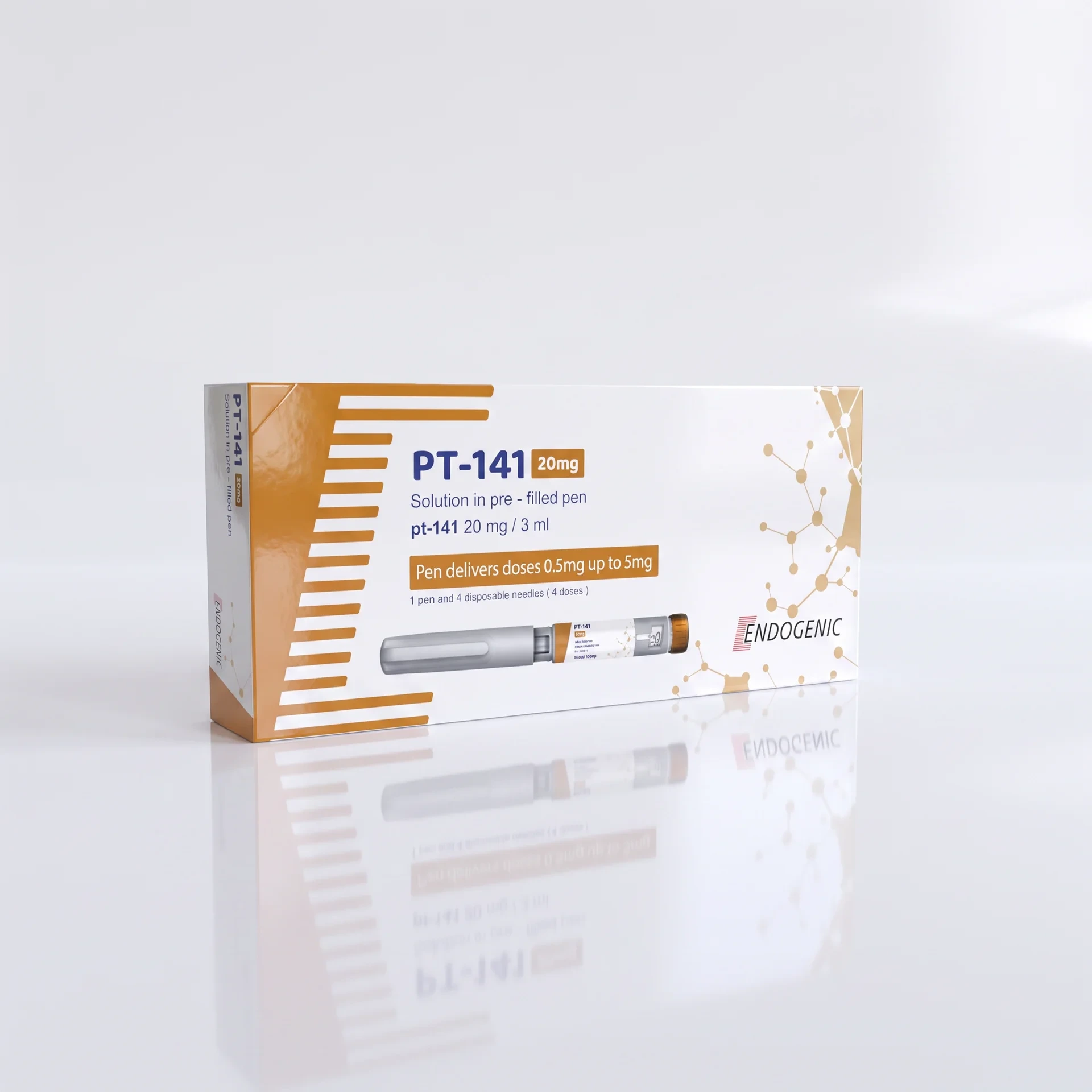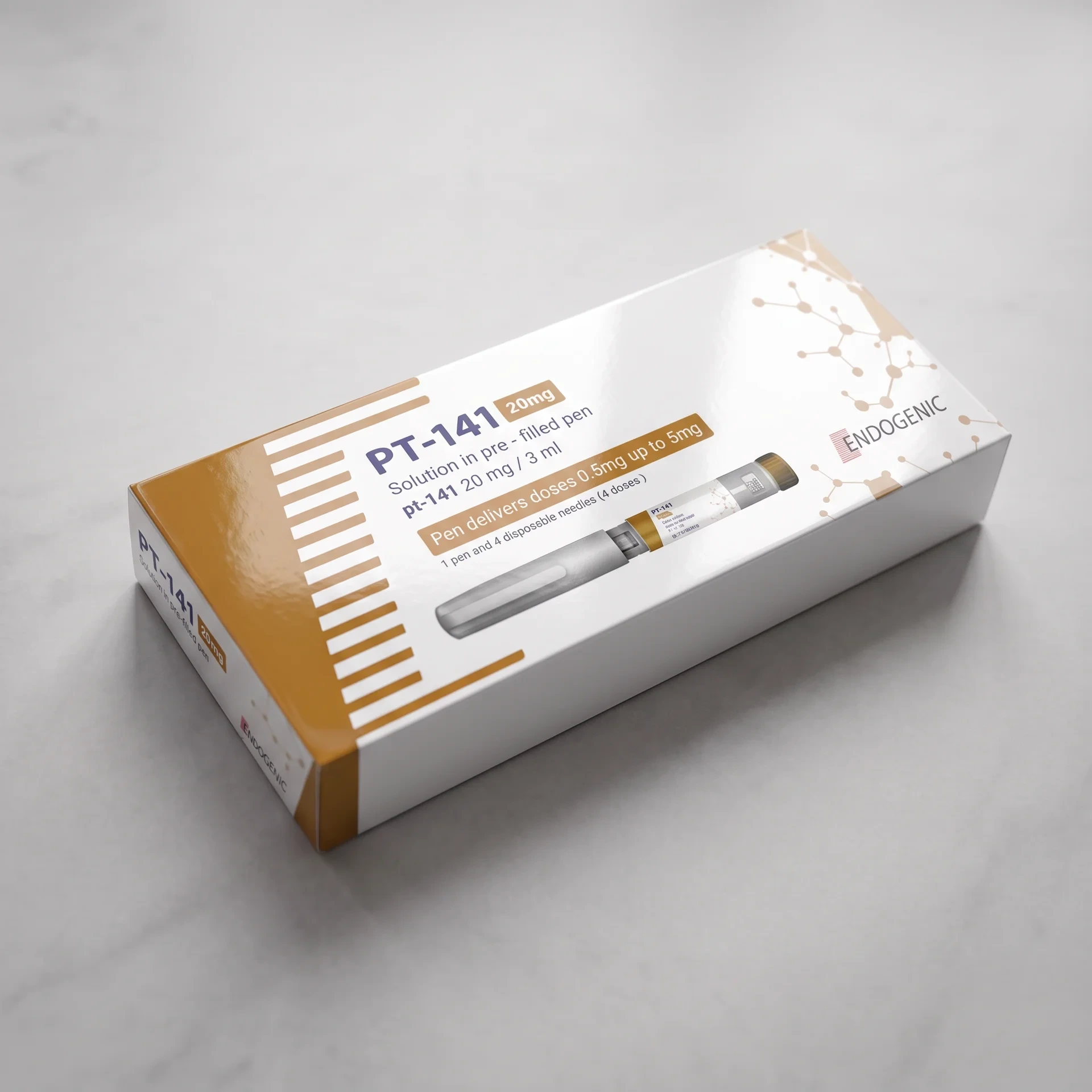


HMG is a biological preparation — a mixture of two natural glycoprotein hormones (FSH and LH) with a complex subunit structure and glycosylation, traditionally isolated from the urine of postmenopausal women. Synthetic or recombinant preparations are usually single, monocomponent molecules (e.g. recombinant FSH alone). Two practical consequences: menotropin is described by biological activity in IU rather than by molar mass in mg, and it reproduces a combined FSH+LH signal closer to physiology than a single hormone. This makes HMG a tool for studying the combined action of both gonadotropins on the gonads.

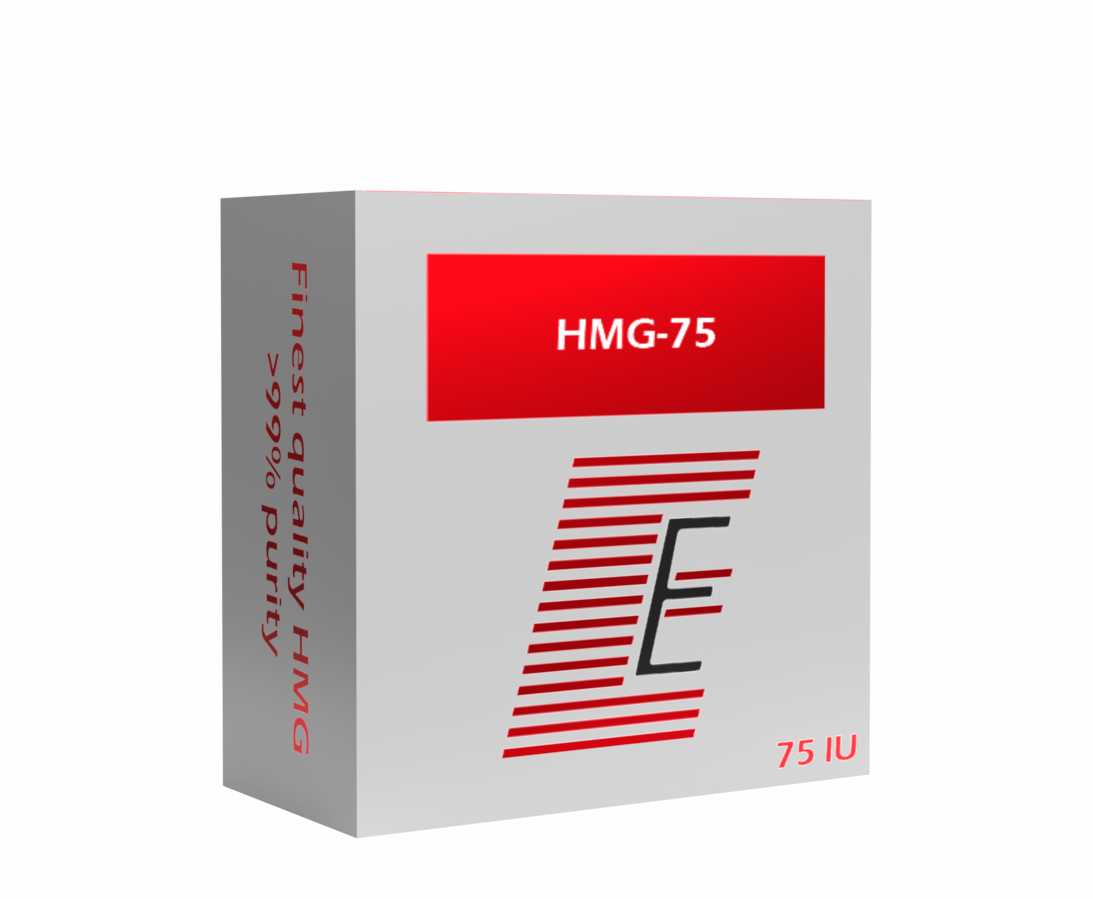
HMG- 75iu
HMG 75 IU (menotropin, human menopausal gonadotropin) — a biological gonadotropin preparation in the form of a lyophilized powder in a vial, a mixture of FSH and LH (~1:1) for laboratory studies of the hypothalamic-pituitary-gonadal axis. FSH stimulates folliculogenesis and spermatogenesis, while LH stimulates ovulation and testosterone production in Leydig cells. Research Use Only.
21,99 €
Fast shipping
Delivery options
Returns policy
HMG 75 IU — menotropin (human menopausal gonadotropin), a biological research reagent in a vial
- HMG (menotropin): biological FSH/LH gonadotropin preparation.
- Lyophilisate in a vial: declared activity of 75 IU.
- Research Use Only reagent, not a medicinal product.
HMG – A biological reagent intended exclusively for laboratory research (Research Use Only). It is not a medicinal product, dietary supplement, or foodstuff. It is not intended for use in humans or animals. Sold only to registered research entities and laboratories.
HMG (menotropin, human menopausal gonadotropin) is a biological gonadotropin preparation, whose activity is based on a mixture of follitropin (FSH) and lutropin (LH). The same active substance is marketed as an EMA-authorised medicinal product under the trade names Menopur®, Menogon® and Merional® (indications: infertility, controlled ovarian stimulation, assisted reproductive techniques / IVF, hypogonadotropic hypogonadism). These two occurrences of menotropin represent two distinct regulatory frameworks.
The HMG 75 IU reagent in the Pro-Body catalogue is not a medicine, holds no authorisation for administration to humans, is not subject to pharmaceutical regulation, and is not a substitute for a medicinal product, nor does it replace medical consultation. Menotropin medicines (Menopur®, Menogon®, Merional®) are available by prescription only and require medical supervision. Identity of biological class does not remove this boundary.
Introduction
Menotropin has one of the longest histories in reproductive pharmacology. The first gonadotropin preparations were isolated from the urine of postmenopausal women as early as the 1950s — in women at this stage of life, pituitary gonadotropin concentrations are naturally elevated, because the failing ovaries do not generate negative feedback. This made menopausal urine a practical, early source of active FSH and LH long before the recombinant era. The pioneering work of Bruno Lunenfeld on gonadotropin therapy (Lunenfeld 2004) launched the entire field of ovulation induction and assisted reproduction, which continues to develop to this day.
HMG is not a single molecule — it is a mixture of two glycoprotein pituitary hormones with complementary action on the reproductive axis. In a standard 75 IU vial, follitropin (FSH) and lutropin (LH) are present in a ratio close to 1:1. This two-component nature distinguishes menotropin from recombinant single-component preparations (e.g. recombinant FSH alone) and makes it a tool for studying the combined FSH+LH signal on the gonads — a situation closer to the physiological profile of pituitary secretion than an isolated hormone.
This reagent is supplied as a 75 IU lyophilisate in a vial, for reconstitution with bacteriostatic water or physiological saline under laboratory conditions. The lyophilised form ensures the stability of the glycoprotein proteins before dissolution and allows researchers to prepare working concentrations tailored to the experimental design. Activity is expressed in international units (IU) reflecting biological potency rather than in mass (mg) — a fundamental feature of biological preparations. Activity verified by bioassay/HPLC, subunit identity confirmed by mass spectrometry, COA available for each batch.
General description — the hypothalamic-pituitary-gonadal axis and gonadotropins
Mammalian reproduction is governed by a hierarchical neuroendocrine system called the hypothalamic-pituitary-gonadal (HPG) axis. At its apex, the hypothalamus secretes gonadoliberin (GnRH) in a pulsatile manner, which stimulates the anterior pituitary lobe to release two gonadotropic hormones: follitropin (FSH) and lutropin (LH). These in turn travel with the blood to the gonads — the ovaries in women, the testes in men — where they initiate gametogenesis and steroidogenesis.
The gonads respond by producing sex hormones (estradiol, progesterone, testosterone) and inhibin, which through negative feedback regulate the activity of the hypothalamus and pituitary. The whole system operates like a precisely calibrated loop.
FSH and LH belong to the family of glycoprotein hormones — together with TSH (thyroid-stimulating hormone) and hCG (chorionic gonadotropin). Each of them is a heterodimer built from two subunits: the alpha (α) subunit common to the entire family and the unique beta (β) subunit, which confers on the hormone its biological specificity and affinity for a particular receptor.
Both subunits are heavily glycosylated — the attached sugar residues determine the circulating half-life, protein folding, and signal strength. This complex glycoprotein structure explains why gonadotropins are described by biological activity (IU) rather than by simple molar mass, as in the case of small synthetic peptides.
Menotropin combines both of these hormones in a single preparation. In a research context, this allows modelling of the combined gonadotropic signal reaching the gonads — as opposed to an approach in which only FSH or only an LH analogue is administered. The pharmacological profile of gonadotropins encompasses a broad spectrum of activity at the level of the gonads:
- Stimulation of folliculogenesis — FSH stimulates the growth and maturation of ovarian follicles (granulosa cells)
- Support of spermatogenesis — FSH acts on the Sertoli cells in the seminiferous tubules of the testis
- Induction of ovulation — the LH surge triggers the rupture of the mature follicle and the release of the oocyte
- Gonadal steroidogenesis — LH stimulates the Leydig cells of the testis to produce testosterone and the theca cells of the ovary to synthesise androgens (substrates for estradiol)
- Modelling of the HPG axis — exogenous gonadotropins bypass the pituitary level and act directly on the gonads, which allows the lower segment of the axis to be studied in isolation from pituitary control
In the landscape of tools for studying the HPG axis, menotropin occupies a special position: as a two-component FSH+LH preparation of biological origin it reproduces a combined gonadotropic signal closer to physiology than single recombinant hormones. A related research tool acting higher in the axis — at the level of GnRH neurons — is Kisspeptin-10, which stimulates the secretion of gonadoliberin, whereas gonadotropins act at its very bottom.
Also situated closer to the top of the axis is the GnRH analogue Alarelin, directly modulating the secretion of pituitary gonadotropins. Menotropin belongs to the broader family of research peptides used in the modelling of neuroendocrine axes.
What is HMG?
In biochemical terms, HMG is a preparation of two glycoprotein pituitary hormones with complementary activity, traditionally isolated from the urine of postmenopausal women.
- Common name: HMG, menotropin, human menopausal gonadotropin, hMG
- Biological composition: follitropin (FSH) + lutropin (LH) in an activity ratio close to 1:1
- Synonyms: menotrophin, menopausal gonadotropin, FSH/LH mixture
- Class: biological gonadotropin preparation (glycoprotein hormones)
- Molecular structure: heterodimers of α (common) and β (specific) subunits — separate for FSH and LH
- Molecular mass (approximate): FSH ~30 kDa, LH ~30 kDa (glycoproteins — mass dependent on the degree of glycosylation)
- Activity: expressed in international units (IU), not in mg — biological potency relative to a reference standard
- Traditional origin: extraction and purification from the urine of postmenopausal women (naturally high gonadotropin concentrations)
- Supplied form: 75 IU lyophilisate in a vial, for reconstitution with bacteriostatic water or physiological saline; full specification of activity and FSH/LH ratio in the batch COA
Origin:
Menopausal gonadotropins are among the earliest introduced biological preparations in reproductive pharmacology. The use of the urine of postmenopausal women as a source of active FSH and LH rests on a simple physiological fact: after the cessation of ovarian function, the negative feedback from estradiol and inhibin disappears, in response to which the pituitary increases the secretion of gonadotropins, and these are excreted in the urine.
The first ovulation induction therapies based on such preparations were described by Lunenfeld in works that launched the entire field (Lunenfeld 2004). The standardisation of the molecular forms of FSH and LH and their glycosylation was the subject of further analytical studies (Wide, Eriksson 2017). Today, alongside urine-derived preparations, recombinant hormones are in use; however, menotropin remains an important, two-component research tool and — in the form of the medicines Menopur®/Menogon®/Merional® — a medicinal product with a well-established position in assisted reproduction protocols.
Characterisation — gonadotropins as glycoprotein hormones
| Parameter | FSH (follitropin) | LH (lutropin) |
|---|---|---|
| Class | Glycoprotein hormone | Glycoprotein hormone |
| Structure | Heterodimer α + βFSH | Heterodimer α + βLH |
| α subunit | Common to the family (FSH/LH/TSH/hCG) | Common to the family |
| β subunit | Specific (βFSH) — confers affinity for FSHR | Specific (βLH) — confers affinity for LHCGR |
| Target receptor | FSHR (granulosa / Sertoli cells) | LHCGR (theca / Leydig cells) |
| Approximate mass | ~30 kDa | ~30 kDa |
| Glycosylation | Extensive (affects t½ and signal) | Extensive (affects t½ and signal) |
| Activity unit | IU (biological potency) | IU (biological potency) |
| Function in women | Growth of ovarian follicles | Induction of ovulation, synthesis of thecal androgens |
| Function in men | Support of spermatogenesis (Sertoli) | Production of testosterone (Leydig) |
In the HMG 75 IU vial both hormones are present together, in an activity ratio close to 1:1 (the exact FSH and LH values and their mutual ratio are given in the COA of the particular batch). This two-component composition means that the preparation reflects a combined gonadotropic signal — as opposed to single-component recombinant preparations.
Mechanism of action at the molecular level
Menotropin acts through two parallel, complementary receptor pathways — one for FSH, the other for LH. Both receptors (FSHR and LHCGR) belong to the family of G protein-coupled receptors and, upon binding of the hormone, trigger the cAMP/PKA cascade in the target cells of the gonads.
- FSH signalling — folliculogenesis and spermatogenesis. FSH binds to the FSHR receptor on the surface of the granulosa cells of the ovarian follicle (in women) and the Sertoli cells in the seminiferous tubules (in men). Activation of FSHR increases the intracellular cAMP concentration, which in women drives the growth and maturation of follicles and the expression of aromatase (conversion of androgens to estradiol), and in men supports the microenvironment necessary for proper spermatogenesis. This is the molecular basis for describing FSH as the “growth” hormone of the gonads.
- LH signalling — ovulation and steroidogenesis. LH binds to the LHCGR receptor on the theca cells of the ovary and the Leydig cells of the testis. In women, a rapid rise in LH (the preovulatory LH surge) triggers the final maturation of the follicle, its rupture, and the release of the oocyte — that is, ovulation — followed by luteinisation. In men, LH is the primary stimulus for the Leydig cells to produce testosterone, which makes this hormone a central regulator of the androgenic gonadal axis.
- The HPG axis and action bypassing the pituitary. Under physiological conditions, FSH and LH are secreted by the pituitary under the control of hypothalamic GnRH, and the gonads regulate this system through feedback. Exogenous gonadotropins — such as menotropin — bypass the hypothalamic and pituitary levels and act directly on the gonadal receptors. In a research context this is important: it allows the gonads to be stimulated independently of the state of the higher tiers of the axis, which finds application in models where pituitary function is abolished, immature, or pharmacologically blocked.
- Restitution of the HPG axis after suppression — literature context. In the gonadotropin literature, their role in restoring gonadal function after a period of axis suppression is described — a situation modelled, among others, after prolonged exposure to exogenous androgens or selective androgen receptor modulators (SARMs), which through negative feedback silence the endogenous production of LH/FSH. Gonadotropins — classically chorionic gonadotropin HCG as an LH analogue, and in combined models also FSH — have been studied for the reactivation of Leydig cells and the restoration of spermatogenesis (Ramasamy et al. 2015; Liu, Handelsman 1999). This is the context in which menotropin appears in the literature concerning restoration of the HPG axis after suppression — relevant to research on the physiology of gonadal restitution.
Applications in scientific research
As a biological RUO reagent, HMG finds application in research on the physiology of the reproductive axis and gonadotropic signalling. In in vivo models (rodents, hypogonadism models, HPG axis suppression and restitution models) the combined effect of FSH+LH on the gonads, the dynamics of folliculogenesis, and steroidogenesis are studied. In in vitro models (cultures of granulosa cells, Leydig cells, Sertoli cells, lines expressing FSHR and LHCGR) analyses of receptor activity, cAMP kinetics, and signal selectivity are carried out.
Specific research directions include:
- Physiology of the HPG axis — modelling of the combined FSH+LH signal at the level of the gonads; study of the lower segment of the axis independently of pituitary control
- Folliculogenesis and ovarian steroidogenesis — cultures of granulosa and theca cells, aromatase expression, dynamics of follicle maturation in animal models
- Spermatogenesis and Leydig cell function — models of spermatogenesis support (FSH/Sertoli) and testosterone production (LH/Leydig)
- Axis restitution models after suppression — research on the restoration of gonadal function after a period of silencing of endogenous gonadotropins (context of androgen/SARM suppression, reactivation of Leydig cells, restoration of spermatogenesis)
- Pharmacology of gonadotropic receptors — profiling of FSHR and LHCGR, cAMP activity measurements, comparisons of urine-derived and recombinant preparations
- Biological standardisation — comparative determination of the potency (IU) of gonadotropin preparations relative to reference standards
Summary
HMG (menotropin, human menopausal gonadotropin) is a biological gonadotropin preparation — a mixture of follitropin (FSH) and lutropin (LH) in an activity ratio close to 1:1, traditionally isolated from the urine of postmenopausal women. Both hormones are glycoprotein heterodimers of α and β subunits, acting on their own gonadal receptors (FSHR and LHCGR) through the cAMP/PKA cascade.
FSH drives folliculogenesis and supports spermatogenesis, LH triggers ovulation and stimulates testosterone production in the Leydig cells. As a two-component preparation, menotropin reproduces the combined gonadotropic signal reaching the lower segment of the hypothalamic-pituitary-gonadal (HPG) axis and serves as a tool in research on the restitution of gonadal function after suppression. Form: 75 IU lyophilisate in a vial, reconstitution with bacteriostatic water, activity expressed in IU (not mg), potency determination by bioassay/HPLC, COA for each batch.
Regulatory status — exclusively Research Use Only; menotropin as a medicine (Menopur®, Menogon®, Merional®) is a separate prescription category; WADA: class S2, LH prohibited in men.
Bibliography
- Lunenfeld B (2004). Historical perspectives in gonadotrophin therapy. PubMed
- Wide L, Eriksson K (2017). Molecular size and charge as dimensions to identify and characterize circulating glycoforms of human FSH, LH and TSH. PubMed
- Coss D (2018). Regulation of reproduction via tight control of gonadotropin hormone levels. PubMed
- Ramasamy R, Armstrong JM, Lipshultz LI (2015). Preserving fertility in the hypogonadal patient: an update. PubMed
- Liu PY, Turner L, Rushford D, McDonald J, Baker HW, Conway AJ, Handelsman DJ (1999). Efficacy and safety of recombinant human follicle stimulating hormone (Gonal-F) with urinary human chorionic gonadotrophin for induction of spermatogenesis and fertility in gonadotrophin-deficient men. PubMed
FAQ
FSH (follitropin) and LH (lutropin) act complementarily. FSH stimulates the growth and maturation of ovarian follicles in women (granulosa cells) and supports spermatogenesis in men (Sertoli cells). LH triggers ovulation in women (the preovulatory LH surge) and stimulates the synthesis of androgens in the theca cells of the ovary, and in men it is the primary stimulus for the Leydig cells to produce testosterone. Together they regulate gametogenesis and steroidogenesis — the two pillars of the reproductive function of the gonads.
In the gonadotropin literature, their role in restoring gonadal function after a period of suppression of the hypothalamic-pituitary-gonadal axis is described. Exogenous androgens and androgen receptor modulators (SARMs) silence the endogenous production of LH and FSH through negative feedback, which leads to inhibition of gonadal function. Gonadotropins have been studied for the reactivation of Leydig cells and the restoration of spermatogenesis in such models (Ramasamy et al. 2015). This is a purely literature and research context. The HMG 75 IU reagent is intended exclusively for laboratory research, not for use in humans.
Yes — and this is a critical matter. Gonadotropins belong to class S2 (peptide hormones, growth factors, related substances and mimetics) on the WADA list of prohibited substances and methods. Luteinising hormone (LH) and its releasing factors are prohibited in men, and menotropin contains LH activity. This means an absolute prohibition for registered athletes (ADAMS). Every athlete subject to anti-doping control must check the current list of prohibited substances before any decision — the status of gonadotropins on the list is unambiguous.
The biological class is the same — menotropin (FSH+LH). The difference concerns the regulatory framework. Menopur® (as well as Menogon® and Merional®) are medicines authorised by the EMA for the indications of infertility and assisted reproduction, with full registration documentation and a summary of product characteristics, available by prescription only under medical supervision. The HMG 75 IU reagent (RUO) is a research material with analytical documentation (COA, activity determination in IU, MS), intended exclusively for laboratory research. The reagent is not a medicinal form, holds no authorisation for administration to humans, and does not replace medical consultation.
The 75 IU lyophilisate is reconstituted with bacteriostatic water or sterile physiological saline, added slowly down the wall of the vial (not directly onto the powder), and then dissolved by gently swirling the vial in a circular motion — without vigorous shaking. The reason is biological: FSH and LH are glycoproteins, and mechanical shaking generates foam and shears the proteins, which lowers their biological activity.
The activity of the working solution is chosen according to the protocol and expressed in IU per unit of volume. The solution is stored at 2–8°C and freeze-thaw cycles, which degrade the glycoprotein structure, are avoided.
5.0
1 review
-
Krzysztof
 Polski
Product review
Nie wiem, czy inna firma posiada ten produkt, ale myślę, że jest to przełom.