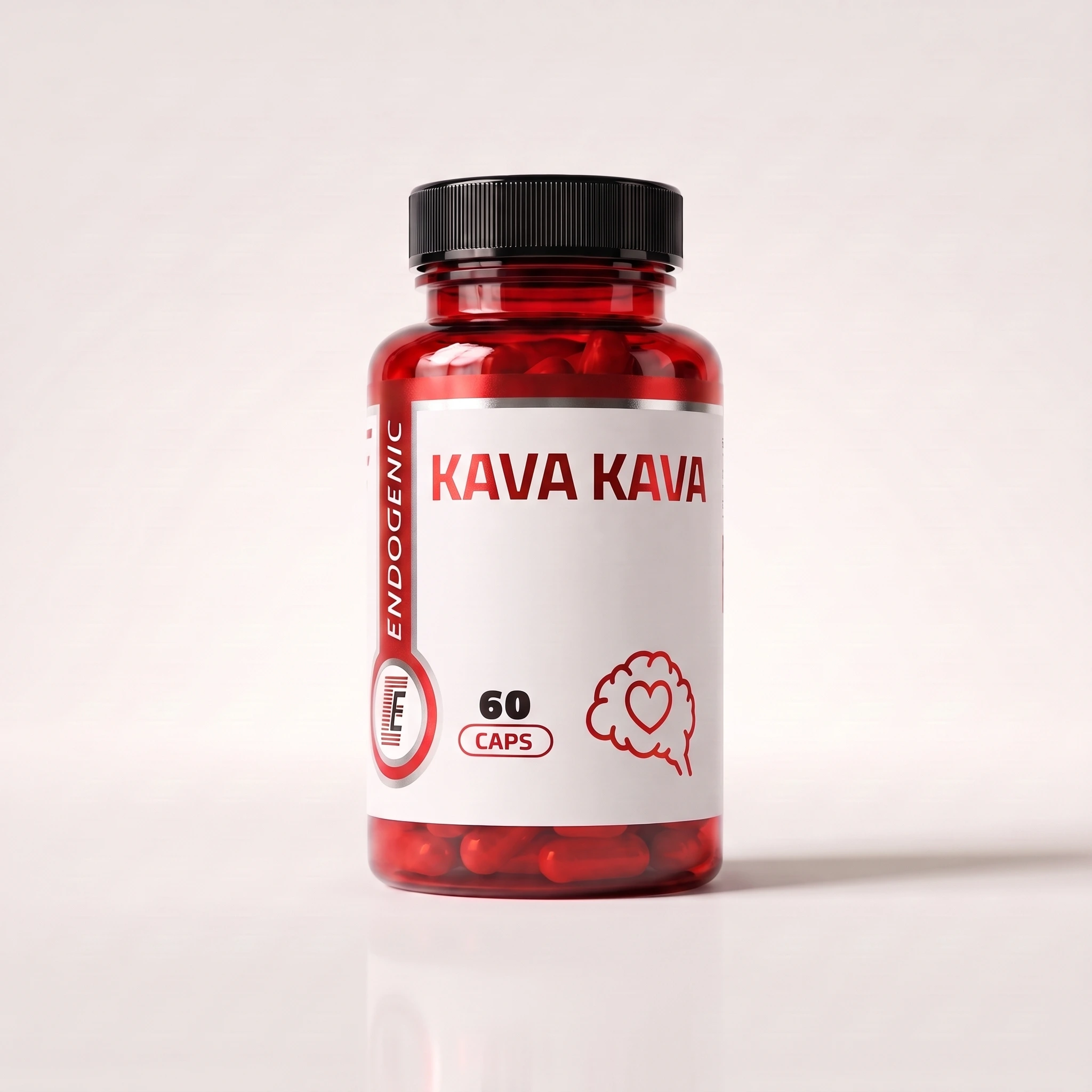
The risk is real and documented. In the years 1990–2002, about 80 cases of liver damage linked to kava extracts were reported, including 11 transplants and 4 deaths — which led to a ban on kava as a dietary supplement in the EU and Germany. Toxicology indicates that the risk is significantly higher with extracts containing an admixture of leaves/stems and with organic solvents (a source of flavokavain B), and lower with pure root extracted aqueously. Lower risk does not, however, mean zero risk — which is why liver function tests and the prohibition of alcohol are mandatory.
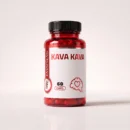
KAVA KAVA 300mg 60 caps
Kava Kava 300 mg x 60 capsules is a traditional herbal anxiolytic extract from Piper methysticum root, standardized to 30% kavalactones, ≥98% HPLC, with mandatory flavocavin B screening and COA for each batch. A specialized formulation for informed adults (21+). A broader context for the classification and mechanisms of calming compounds is discussed in the review of nootropics—what they are and when to use them.
23,99 €
Fast shipping
Delivery options
Free delivery from 350 €
Returns policy
Kava Kava 300 mg 60 caps — Piper methysticum, traditional anxiolytic extract for advanced users (21+)
- Kava Kava: Piper methysticum root extract.
- 300 mg, 60 capsules.
- Specialized botanical preparation for adults (21+).
Specialized botanical preparation for adults (21+) — traditional anxiolytic extract from the root of Piper methysticum. It is NOT a dietary supplement in the EU or Polish legal sense (EFSA ban since 2002, GIS recommendation to withdraw it from circulation as a dietary supplement). It is not a medicinal product nor a food product. Intended exclusively for adults, for independent risk assessment, after reviewing the full safety and legal status section below.
Kava originates from the islands of Polynesia and Micronesia, where the beverage made from the ground root of Piper methysticum has served a ceremonial and social function for over 3000 years — in Vanuatu, Fiji and Tonga. Ethnobotany describes it as a calming agent that facilitates conversation and relaxation without loss of mental clarity — unlike alcohol. Modern pharmacology has confirmed that this effect is attributable to a group of lipophilic lactones called kavalactones, and the Cochrane meta-analysis (Pittler & Ernst 2003) demonstrated a statistically significant reduction in anxiety compared with placebo.
The Pro-Body preparation is supplied in a format of 60 HPMC capsules of 300 mg of standardized root extract Piper methysticum (standardized to 30% kavalactones, ≥98% HPLC), exclusively from the root — without leaves and stems, which are a source of the most hepatotoxic alkaloid, flavokavain B. This distinction is a central element of the safety profile, and we return to it in the section devoted to the liver.
General description — kavalactones as the core of activity
The activity of kava is based on a group of six main kavalactones (kavalactones, kavapyrones): kavain, dihydrokavain, methysticin, dihydromethysticin, yangonin and desmethoxyyangonin. These are lipophilic compounds that readily cross the blood-brain barrier and together are responsible for the anxiolytic, muscle-relaxant and mildly sedative action of the extract. Standardization to 30% kavalactones means that each 300 mg capsule provides approximately 60–90 mg of total kavalactones.
Chemotype profile — that is, the proportion of the individual kavalactones — differs between kava varieties and influences the character of action. Lebot and colleagues (2014) described how the composition of kavalactones and the presence of flavokavins (accompanying compounds with a cytotoxic profile) depend on the cultivar and the part of the plant. This is not a botanical detail for collectors: it is precisely the chemotype differences and the choice of raw material that explain why the traditional aqueous beverage from the root in the Pacific islands did not generate an epidemic of liver failure, whereas some Western ethanol-acetone extracts — indeed — did.
Aware adults reach for kava for one main reason: a traditional, botanical anxiolytic profile with a mechanism different from benzodiazepines, without the classic addictive potential of the latter. The same theme of calming psychological tension links kava with a broader group of mood-modulating compounds — among anxiolytic peptides for improving well-being a reduction of anxiety without the addictive profile of benzodiazepines is also sought.
A study by Sarris and colleagues (2013) demonstrated that a standardized kava extract reduced symptoms of generalized anxiety to a degree comparable with reference drugs — at the same time this analysis noted a signal of elevated liver enzymes in some of the subjects, which upholds the requirement to monitor liver function tests.
What is kava?
Kava (kava kava, Piper methysticum G. Forst.) is a perennial plant of the pepper family (Piperaceae), cultivated exclusively vegetatively on the islands of the South Pacific. The species name methysticum comes from the Greek for “intoxicating” — it refers to the psychoactive action of the root.
- Common name: kava, kava kava, awa, yaqona, sakau
- Botanical name: Piper methysticum G. Forst. (Piperaceae)
- Raw material part: exclusively root and rhizome (NOT leaves, NOT stems — associated with hepatotoxic flavokavain B)
- Active compounds: kavalactones (6 main: kavain, dihydrokavain, methysticin, dihydromethysticin, yangonin, desmethoxyyangonin)
- CAS number: 9000-38-8 (kava extract)
- Standardization: 30% kavalactones (with a different batch standardization — protocol correction in accordance with the COA)
- Supplied form: hard HPMC capsule (vegan), 300 mg of root extract per capsule, 60 capsules; extract ≥98% HPLC
- Origin: Polynesia and Micronesia (Vanuatu, Fiji, Tonga, Samoa); tradition of use over 3000 years
Tradition vs Western extract: the difference in preparation method is pharmacologically significant. The traditional beverage is produced by aqueous maceration of fresh or dried root (an emulsion of kavalactones in water). Western extracts often used organic solvents (ethanol, acetone), which extract a different profile of compounds from the raw material — including more flavokavins. Singh (1992) in his review of kava ethnopharmacology described in detail the composition and pharmacology of the traditional aqueous preparation.
| Feature | Traditional aqueous beverage (Pacific) | Standardized root extract (this preparation) | Historical ethanol-acetone extract (withdrawn) |
|---|---|---|---|
| Raw material | Root, fresh/dried | Root, controlled | Often with an admixture of leaves/stems |
| Solvent | Water | Aqueous-ethanolic, low-flavokavin | Ethanol/acetone (high flavokavins) |
| Flavokavain B | Trace | Screening + limit | Elevated |
| Hepatotoxic signal | No epidemic data | Lower, but monitoring mandatory | Linked to ~80 cases |
| Kavalactone standardization | Variable (chemotype) | 30% (declared, HPLC) | Variable |
Mechanism of action at the molecular level
Kavalactones act through five parallel axes, and the anxiolytic profile is the resultant of several of them. Unlike benzodiazepines, kava does not bind to the classic benzodiazepine site of the GABA-A receptor — and this explains the different subjective profile (calming without the impairment of cognitive function typical of benzodiazepines at moderate doses).
Five axes of kavalactone action:
- Allosteric modulation of the GABA-A receptor (site ≠ benzodiazepine) — kavain and dihydrokavain enhance inhibitory GABAergic conduction by binding to an allosteric site distinct from the benzodiazepine one. This is the main axis of anxiolysis. In the study by Sarris and colleagues (2013), the effect of reducing generalized anxiety was comparable with reference drugs of the buspirone and oxazepam class — with a different binding mechanism.
- Weak MAO-B inhibition — yangonin exhibits weak inhibition of monoamine oxidase type B, which may raise the availability of monoamines (dopamine) and contribute to a mood-improvement component. The activity is weak compared with classic MAO inhibitors.
- Weak inhibition of noradrenaline reuptake — affects noradrenergic transmission; the mechanism contributes to the profile of mood and arousal regulation.
- Antagonism of T- and L-type calcium channels — kavalactones block voltage-gated Ca²⁺ channels, which accounts for the muscle-relaxant and anticonvulsant component (anticonvulsant properties described in preclinical models).
- Anti-inflammatory and analgesic action — inhibition of cyclooxygenase COX-2; contributes to local anesthetic action (the characteristic numbness of the tongue after the traditional beverage) as well as analgesic action.
Practical picture: an aware adult describes the effect as a calming of psychological tension and muscular relaxation, with retained mental alertness — unlike the benzodiazepine “fog”. The action appears relatively quickly (lipophilic kavalactones cross the blood-brain barrier well and efficiently) and persists for several hours. The botanical mechanism of kava thereby differs from peptide anxiolytic tools — the synthetic tuftsin analog Selank modulates primarily serotonergic and GABAergic pathways as well as BDNF expression, offering a complementary approach to reducing tension without binding to kavalactones.
Pharmacological profile
- Absorption: kavalactones are lipophilic and are well absorbed from the gastrointestinal tract; bioavailability increases in the presence of fat in a meal
- CNS penetration: high (low molecular mass, lipophilicity)
- Duration of action: a perceptible effect usually 30–60 min after administration, persisting for several hours
- Metabolism: hepatic, with the participation of P450 cytochromes — kavalactones inhibit among others CYP1A2, CYP2D6, CYP3A4, CYP2C9 and CYP2C19, which constitutes the mechanistic basis both of drug interactions and of part of the hepatotoxic risk (accumulation of substrates, reduction of glutathione)
- Elimination: metabolites excreted mainly in the urine
- Receptor profile: no classic affinity for the benzodiazepine site — lower addiction potential than benzodiazepines, but NOT zero risk of tolerance with frequent administration
The inhibition of a broad spectrum of P450 isoenzymes is the reason why kava is one of the plants with the highest potential for drug interactions — every drug metabolized through these pathways (from anticoagulants, through antidepressants, to some statins) may have an altered concentration.
Cyclical protocol for adults (21+)
This is not a treatment regimen. The values below are the convention for use of a traditional botanical preparation by aware adults, for independent risk assessment. The first attempt is always at the minimum dose, for assessment of individual tolerance.
- Starting dose (tolerance assessment): 1 capsule (300 mg of extract ≈ 60–90 mg of kavalactones)
- Standard dose: 1–2 capsules
- Maximum dose: 3 capsules per day (do not exceed)
- Frequency: at most 2–3 times per week — never daily. Daily, chronic administration increases the burden on the liver and the hepatotoxic risk
- Cycle duration: 4–6 weeks, after which a mandatory break
- With a meal: administration with a small amount of fat improves the absorption of kavalactones
- Time of day: on account of the calming profile — preferentially in the evening; not before driving vehicles or operating machinery
Plan your cycle around your real needs and your research schedule — kava is not a preparation “for permanent” or “for every day” use. The rarer and shorter the administration, the lower the burden on the liver. If the main goal is improving the quality of nocturnal rest, it is worth considering tools with a better-documented safety profile — e.g. dedicated peptides for sleep — instead of escalating exposure to kava.
Liver function tests — a mandatory element, not optional
Monitoring of liver function is not a just-in-case recommendation here — it is a condition of responsible use.
- Before starting the cycle: perform a panel of liver function tests — ALT (AlAT), AST (AspAT), GGTP, ALP (alkaline phosphatase), bilirubin. A result outside the norm = do not start the cycle
- After completing the cycle: repeat the same panel. An increase in enzymes (especially ALT/AST above 2–3 times the upper limit of normal) = discontinue and consult a physician
- During the cycle: at any symptoms on the part of the liver (jaundice, dark urine, pain in the right hypochondrium, nausea, anorexia, extreme fatigue) — discontinue immediately, regardless of the testing schedule
- For repeated cycles: consider a control panel also in the middle of a longer cycle
The Sarris (2013) study, despite a favorable efficacy profile, noted in some of the subjects a transient increase in GGTP — this is the concrete reason why we check liver enzymes before and after, and not “if something happens”.
Summary
Kava (Piper methysticum) is a traditional botanical anxiolytic of the Pacific with an over 3000-year history, whose activity is based on six kavalactones acting through five axes — with allosteric modulation of GABA-A (outside the benzodiazepine site) as the core of anxiolysis. The Cochrane meta-analysis (Pittler & Ernst 2003) and the Sarris (2013) RCT confirm efficacy in reducing anxiety comparable with reference drugs.
The other side of the equation is the documented risk of severe liver damage (~80 cases, 11 transplants, 4 deaths in the years 1990–2002), probably linked to flavokavain B from leaves and stems and to extraction with organic solvents. The Pro-Body preparation is an extract exclusively from the root, standardized to 30% kavalactones, with mandatory flavokavain B screening, ≥98% HPLC and a COA for every batch.
Status: EFSA/GIS/BfR ban as a dietary supplement — a preparation for aware adults (21+) with an absolute requirement of liver function tests before and after the cycle and zero alcohol and hepatotoxic drugs.
References
- Sarris J, Stough C, Bousman CA, Wahid ZT, Murray G, Teschke R, et al. (2013). Kava in the treatment of generalized anxiety disorder: a double-blind, randomized, placebo-controlled study. PubMed
- Pittler MH, Ernst E (2003). Kava extract for treating anxiety. PubMed
- Teschke R, Sarris J, Lebot V (2011). Kava hepatotoxicity solution: a six-point plan for new kava standardization. PubMed
- Singh YN (1992). Kava: an overview. PubMed
- Lebot V, Do TK, Legendre L (2014). Detection of flavokavins (A, B, C) in cultivars of kava (Piper methysticum) using high performance thin layer chromatography (HPTLC). PubMed
FAQ
Early liver damage is sometimes asymptomatic — the only signal is an increase in enzymes (ALT, AST, GGTP) in the blood. Testing before the cycle establishes the baseline (and excludes persons with an already abnormal liver), and testing after the cycle catches a possible increase before it progresses into symptomatic inflammation. The Sarris (2013) RCT noted a transient increase in GGTP in some of the subjects — this is concrete evidence that enzymes must be monitored routinely, not reactively.
No — this is an absolute contraindication. Alcohol and kava burden the same organ and both deplete cellular reserves of glutathione (central to detoxification in the liver). Combining them increases the hepatotoxic risk many times over and was present in some of the historical cases of severe liver damage. Zero alcohol throughout the entire cycle and the peri-cycle period.
Because hepatotoxic flavokavain B (a chalcone with documented cytotoxicity to hepatocytes) accumulates primarily in the aerial parts — the leaves and stems — while in the root it occurs in considerably lower concentrations. Lebot (2014) and Teschke (2011) link the safety profile precisely to the choice of the plant part and the variety. The Pro-Body preparation uses exclusively the root and additionally subjects every batch to flavokavain B screening with an acceptance limit.
Kava is banned as a dietary supplement in the European Union (EFSA decision of 2002) and in Germany (BfR, 2002), and GIS recommends its withdrawal from circulation as a dietary supplement. For this reason the Pro-Body preparation is not sold as a dietary supplement, but as a specialized botanical preparation for aware adults (21+). In the countries of origin (Vanuatu, Fiji, Tonga) kava is legal and culturally protected. WADA does not place kava on the list of prohibited substances.
The first attempt is 1 capsule (300 mg of extract, about 60–90 mg of kavalactones) for assessment of tolerance. The standard dose is 1–2 capsules, the maximum — 3 capsules per day. The central principle: at most 2–3 times per week, never daily, in a cycle of 4–6 weeks followed by a break. The rarer and shorter, the smaller the burden on the liver. Preferentially in the evening, with a meal containing a little fat, not before driving vehicles.
Kava is a botanical anxiolytic acting through allosteric modulation of GABA-A (outside the benzodiazepine site) — its domain is the calming of tension and anxiety. This is a different mechanism than neurotransmitter precursors, such as 5-HTP, which provides a substrate for serotonin synthesis and is more often considered in the context of mood and sleep regulation. Kava does not raise serotonin — it addresses the GABAergic and calcium-channel axis. The choice of tool depends on the goal (anxiety/tension vs mood/sleep) and — in the case of kava — on the absolute fulfillment of the liver function test requirement.
The warning symptoms of liver damage are: yellowing of the skin and the whites of the eyes (jaundice), dark (tea-colored) urine, pale stool, pain or pressure in the right hypochondrium, loss of appetite, nausea, itching of the skin and extreme, atypical fatigue. At any one of these symptoms, discontinue use immediately — regardless of the schedule — and report to a physician, informing them of the use of kava extract. Early withdrawal usually allows full regeneration of the liver.
5.0
1 review
-
Paweł
 Polski
Product review
Polecam