Skip to content
Black Week: 20% off everything, code BLACK

Search

What are you looking for?

Type at least 2 characters to see suggestions.

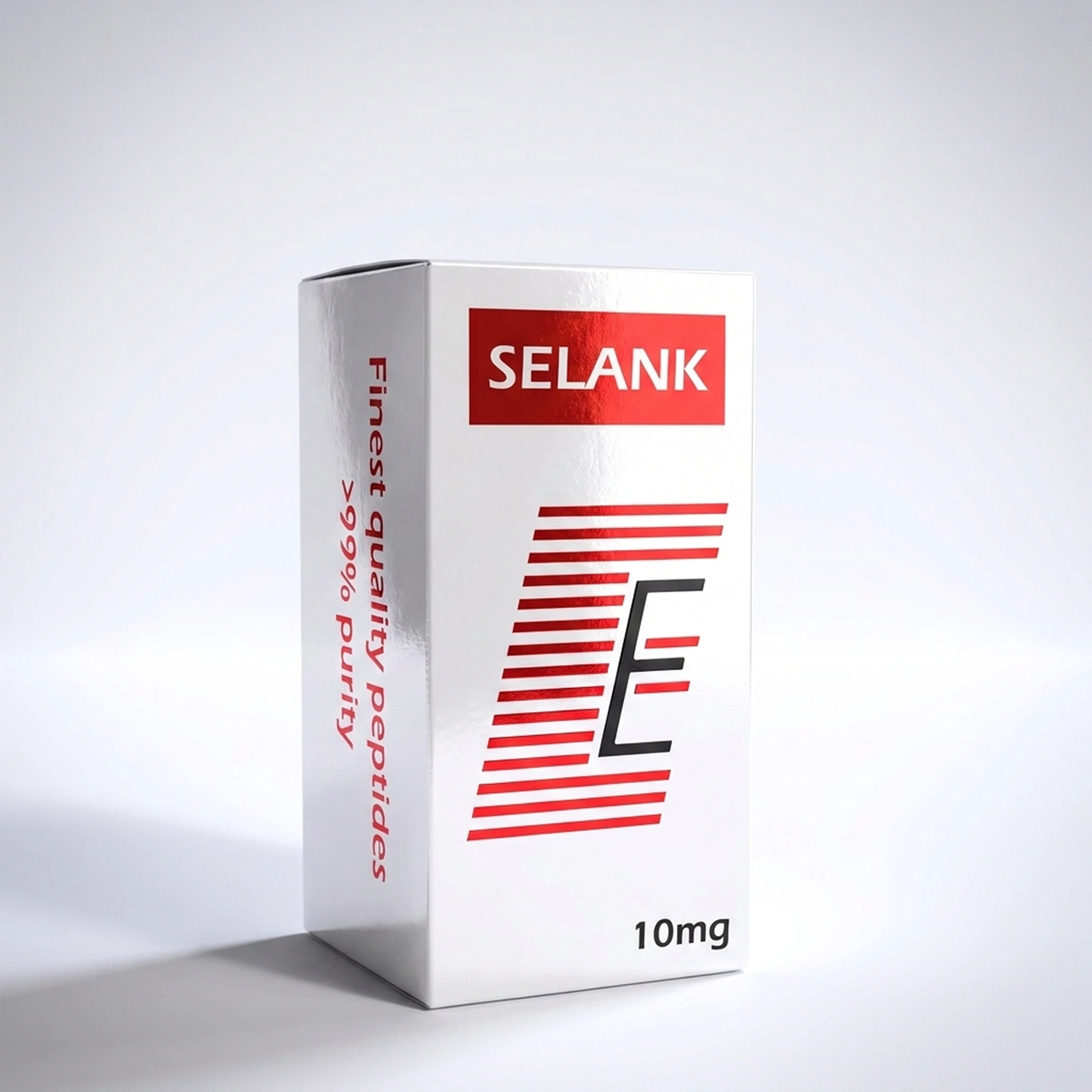
Selank 10mg

Selank 10mg

Selank 10 mg (lyophilized vial, Endogenic line) — synthetic analogue of tuftsin, for laboratory tests. Described in the literature as a non-classical GABAergic modulator with an anxiolytic profile without sedation, associated with an effect on BDNF, modulation of monoamines and immunomodulation – RUO reagent

30,99 €
With code BLACK: 24,79 € Lowest price in the 30 days before the discount: 30,99 €
Buy more, pay less
Fast shipping
Free delivery from 350 €
Returns policy
Peptide Calculator

Selank 10 mg - native anxiolytic peptide, tuftsin analogue, research reagent

  • Selank: native heptapeptide, tuftsin analogue.
  • 10 mg lyophilisate in a vial, Endogenic line.
  • Research Use Only reagent, not a medicinal product.

Product status information

Chemical reagent intended exclusively for laboratory tests (Research Use Only). It is not a medicinal product, dietary supplement or food. It is not intended for use on humans or animals. Sales only to registered research units and laboratories.

Regulatory Framework – WADA Status

Selank (TKPRPGP) is not currently on the WADA Prohibited List as a substance mentioned by name. Class S0 (non-approved substances) does not cover it, because Selank holds a medicinal registration in Russia. Its status is still not straightforward: a review by authors linked to the scientific team of the Polish Anti-Doping Agency (Pokrywka et al., 2025) lists Selank among substances of unclear anti-doping status, and the lists are updated annually. Registered athletes (ADAMS) must check the current list of prohibited substances before making any decision regarding use. In the Pro-Body catalog, Selank appears only as a RUO research reagent, not as an adjuvant.

Selank 10 mg from the Endogenic line is native heptapeptide with an anxiolytic and nootropic profile — a synthetic analogue of the endogenous immune tetrapeptide tuftsin, developed at the Russian school of regulatory peptide pharmacology. Unlike regenerative peptides, whose main described direction is tissue reconstruction, Selank belongs to a class neuroregulatory peptides — molecules tested for their effects on the nervous system, emotional balance and cognitive processes at the model level. This places it among the research peptides on brain function, alongside compounds explored for cognitive functions.

Selank holds a special place in the catalog of reagents for one reason: it is one of the few research peptides that has been granted drug status in its home jurisdiction. In Russia, native Selank has been registered as an anxiolytic administered in the form of nasal drops and spray for generalized anxiety disorders – the result of many years of work by the Institute of Molecular Genetics of the Russian Academy of Sciences.

However, this precedent does not change the reagent’s status in the Pro-Body catalog. Registration of a drug in Russia is a regulatory fact for a specific pharmaceutical form – the RUO reagent in the form of a lyophilisate remains a molecular tool for laboratory tests, without authorization by EMA or FDA.

This reagent is supplied as 10 mg lyophilisate vial — sterile, dry peptide for self-reconstitution in laboratory conditions. The higher content compared to the 5 mg variant gives the researcher more material for longer research protocols and full freedom to select the working concentration for a specific experimental system. Purity verified by HPLC ≥98%, identity confirmed by Q-TOF mass spectrometry, COA available for each batch.

Tuftsin, the Russian school of regulatory peptides

To understand Selank, you have to go back to tuftsins — a natural tetrapeptide with the sequence Thr-Lys-Pro-Arg, a fragment of the immunoglobulin G molecule, described in the 1970s as an endogenous modulator of immunity and phagocytic activity. Tuftsin fascinated researchers with its wide activity profile – from immunomodulation to effects on the central nervous system – but its practical use was limited by a very short half-life: the native tetrapeptide was rapidly enzymatically degraded.

The response of the Russian school of peptide pharmacology was to design a more stable analogue. A tripeptide fragment was added to the tuftsin sequence (Thr-Lys-Pro-Arg).

Pro-Gly-Pro, which has a protective function – the proline motif at both ends of the chain significantly slows down the enzymatic degradation of the peptide. This is how it was created Selank — heptapeptide Thr-Lys-Pro-Arg-Pro-Gly-Pro, developed at the Institute of Molecular Genetics of the Russian Academy of Sciences in cooperation with the Institute of Pharmacology. The molecule retained some of the regulatory heritage of tuftsin, while gaining a neuroactive profile studied primarily in the context of anxiety and cognitive functions. Neuroregulatory peptides constitute a distinct class of molecular tools.

Unlike classic benzodiazepine anxiolytics, which directly increase GABAergic signaling at the expense of sedation and the risk of addiction, Selank-type peptides are described in the literature as non-classical modulators — influencing the balance of neurotransmitters in a more subtle and multidirectional way. In the Pro-Body catalog, Selank belongs to the Endogenic line alongside a related nootropic Semax 50mg, also derived from the Russian school of regulatory peptides.

What is Selank - TKPRPGP heptapeptide, tuftsin analogue

Selank is a heptapeptide with the sequence Thr-Lys-Pro-Arg-Pro-Gly-Pro (single-letter notation TKPRPGP), composed of a tuftsin core (Thr-Lys-Pro-Arg, positions 1–4) and a stabilizing Pro-Gly-Pro fragment (entries 5–7). Seven amino acid residues make it a short molecule, but complex enough to maintain the multidirectional regulatory profile of the parent tetrapeptide. The sequence architecture has direct practical implications.

The tuftsin core is responsible for the regulatory immune inheritance and part of the neuroactive activity. The tripeptide “tail” of Pro-Gly-Pro functions as a conformational stabilizer – two proline residues give the molecule stiffness and delay enzymatic degradation.

Despite this stabilization, native Selank remains relatively short half-life (about 7–15 minutes) in research systems, which distinguishes it from acetylated forms designed for longer operation. In the preclinical literature, Selank has been described in several complementary contexts: as a non-classical modulator of the GABAergic system with an anxiolytic profile without sedation, as a compound affecting BDNF content in the hippocampus, as a monoaminergic modulator (dopamine, serotonin) and as an immunomodulator inheriting part of the activity of tuftsin.

Chemical characteristics

Parameter Value
Name Selank (native, unmodified)
Line Endogenic
Class Neuroregulatory heptapeptide, tuftsin analogue
Sequence (1 letter) TKPRPGP
Sequence (3-letter) Thr-Lys-Pro-Arg-Pro-Gly-Pro
Number of amino acids 7
Molecular formula C₃₃H₅₇N₁₁O₉ [to be verified in COA]
Molar mass ~751.87 g/mol [to be verified in COA]
CAS number 129954-34-3
Origin of the sequence tuftsin core (Thr-Lys-Pro-Arg) + Pro-Gly-Pro
Contents of the vial 10 mg (larger vial variant)
Physical form Lyophilisate (sterile powder for reconstitution)
HPLC purity ≥98%
Identity confirmation Q-TOF mass spectrometry

Mechanism of action at the molecular level

In the literature, Selank is described as a peptide with a multidirectional but consistent neuroregulatory profile. The literature indicates five complementary axes of molecular activity. Below, each with the name of the route or system and the practical translation observed in the research models.

Non-classical modulation of the GABAergic system – anxiolytic profile

This is the central axis of the Selanku profile. In studies on animal models (Zozulia et al. 2008), Selank was associated with anxiolytic effect without sedation and without the risk of addiction typical of benzodiazepines. Unlike classic anxiolytics, which directly enhance GABAergic transmission, Selank has been described as a non-classical modulator – influencing the balance of the inhibitory system indirectly, partly through signaling neuropeptide Y (NPY).

The effect observed in the models was a reduction in anxiety behavior while maintaining the animals’ activity and alertness – anxiolysis without calmness. This profile places the molecule in the field of research anxiolytic peptides and mood regulation.

Effect on BDNF – nootropic component

The second axis explains the nootropic and neuroprotective direction of research on Selank. In models, its effect on brain-derived neurotrophic factor (BDNF) was studied — a protein important for synaptic plasticity, neuron survival and memory processes. The only experimental paper with an available abstract shows that Selank prevented the chronic-ethanol-induced increase in BDNF content in the hippocampus and frontal cortex of rats (Kolik et al., 2019, PMID 31625062); the paper by Inozemtseva et al. (2008) has no available abstract, and there are no NGF data for Selank. This trophic component places the peptide in the field of research on neuroprotection and cognitive functions, distinguishing it from purely symptomatic anxiolytics.

Dopaminergic and serotonergic modulation – monoamine balance

The third axis concerns monoaminergic systems. In Selank models it was associated with modulation of dopamine and serotonin signaling — systems responsible for mood, motivation and emotional balance. Semenova et al. (2010) studied the effect of Selank on learning and memory processes in rodent models. Unlike drugs that directly block neurotransmitter reuptake, Selank has been described as a compound that fine-tunes monoamine balance in a more subtle way—making it an interesting model for studies of mood regulation.

Immunomodulation – the legacy of tuftsin

The fourth axis reaches to the regulatory roots of the molecule. As an analogue of tuftsin – a fragment of immunoglobulin G – Selank retains some of it immunomodulatory activity. In the literature, it was associated with the influence on the expression of interferons (IFN), modulation of cytokines (including IL-6) and influence on the enkephalin system. Uchakina et al. (2008) described the immunomodulatory profile of Selank in clinical observations. This axis makes Selank a molecule with a dual profile – neuroregulatory and immunological at the same time, consistent with the heritage of the parent tetrapeptide.

Enkephalinase inhibition – stabilization of endogenous peptides

The fifth axis details the regulatory mechanism. Selank was described as a relationship inhibiting enkephalinase activity — an enzyme that breaks down endogenous enkephalins and related regulatory peptides. Slowing down this degradation prolongs the action of endogenous peptides in the nervous system, which in the literature has been associated with the prolonged regulatory effect of Selank despite its own short half-life.

Kolomin et al. (2014) studied the effect of Selank on the temporal dynamics of the expression of genes related to the inflammatory response. This is an indirect but consistent element of the profile – the peptide acts not only on its own, but also by stabilizing endogenous signal carriers.

Reference data mainly comes from the work of the Russian school of peptide pharmacology (Zozulia et al. 2008; Inozemtseva et al. 2008) and from studies on immunomodulation and gene expression (Uchakina et al. 2008; Kolomin et al. 2014) – much of it from the Russian-language literature.

IMPORTANT DISTINCTION – 10 mg variant, Selank forms and reagent vs. Russian drug

The name “Selank” covers several separate products which should not be confused:

  • Native Selank 10 mg (this product) — unmodified heptapeptide TKPRPGP in a 10 mg vial; a higher content compared to the 5 mg variant means more material for longer research protocols, with a short intrinsic half-life of the peptide (approx. 7–15 min).
  • Selank 5 mg — the same native peptide in a smaller vial; the difference is only in the content, not the identity of the molecule – see Selank 5mg.
  • N-Acetyl Selank — acetylated form at the N-terminus, designed for longer half-life and different pharmacokinetic profile; it is a separate molecule, not a replacement for the native form – see N-acetyl Selank 10mg.
  • Selank Spray — ready solution for intranasal administration, not lyophilisate for reconstitution – see Selank spray.

This is a separate issue reagent status towards the Russian drug. Native Selank is registered as an anxiolytic (nasal drops/spray) in Russia. This regulatory fact applies to a specific pharmaceutical form registered in Russia and does not make the RUO reagent a medicinal product. The 10 mg lyophilisate vial in the Pro-Body catalog is a molecular tool for laboratory testing – without EMA or FDA authorization, and without drug status in the EU or USA.

The identity of a batch is always determined by the sequence and mass spectrometric mass of the peptide recorded in the COA, not the trade name itself.

Applications in scientific research

Selank as an RUO reagent is used in several research areas focused on neuroregulation, anxiety and cognitive functions. The 10 mg form of a lyophilized vial is especially useful when the researcher needs a larger amount of material for longer or multi-arm protocols and full freedom in selecting the working concentration.

Models of anxiety behavior and anxiolytic profile. Behavioral tests on rodents (elevated plus maze test, open field test, light/dark compartment test). Endpoints: indicators of anxiety behaviors, level of locomotor activity, sedation assessment. This has historically been the most explored area of ​​research on Selank – Zozulia et al. (2008) described the peptide in the context of generalized anxiety disorder.

Neurotrophins and synaptic plasticity. Neuronal cultures and rodent models – measurement of BDNF content, markers of synaptic plasticity in the hippocampus and cortex. Endpoints: neurotrophin levels, memory and learning parameters in behavioral tests. Inozemtseva et al. (2008) studied the effect of Selank on BDNF in the hippocampus (paper without an available abstract); Kolik et al. (2019, PMID 31625062) reported that Selank prevented the increase in BDNF after chronic ethanol.

Monomaminergic modulation and mood regulation. Analysis of dopamine and serotonin metabolism in brain structures of animal models. Endpoints: level of monoamines and their metabolites, neurotransmitter profile. Semenova et al. (2010) studied Selank in the context of learning and memory.

Immunomodulation and gene expression. Models for assessing the effect of Selank on interferons, cytokines (IL-6) and the enkephalin system, as well as gene expression analyses. Endpoints: cytokine profile, expression of genes related to the immune response and enkephalins. Uchakina et al. (2008) and Kolomin et al. (2014) described a peptide in this area.

Comparative studies in the class of regulatory peptides. Selank as a reference compound in comparison with tuftsin, Semax and other peptides of the Russian school – when examining the separation of anxiolytic, nootropic and immunomodulatory activity.

In this area, it is also compared to other neuroactive research tools, such as NSI-189 (tested for hippocampal neurogenesis), peptide P21 Whether DSIP in research on sleep and CNS regulation. They are needed for reconstitution bacteriostatic water 10ml and sterile laboratory accessories.

Summary

Selank 10 mg (lyophilisate vial, Endogenic line) is native neuroregulatory heptapeptide with the sequence TKPRPGP — synthetic analogue of tuftsin developed at the Institute of Molecular Genetics of the Russian Academy of Sciences (CAS 129954-34-3; C₃₃H₅₇N₁₁O₉; ~751.87 g/mol – values ​​to be confirmed in the COA). It was created by combining the tuftsin core (Thr-Lys-Pro-Arg) with the stabilizing Pro-Gly-Pro fragment, which slowed down the enzymatic degradation while maintaining a short half-life (approx. 7–15 min).

Five axes of molecular activity of the peptide have been described in the literature: non-classical GABAergic modulation with an anxiolytic profile without sedation (partly by NPY), an effect on BDNF content in the hippocampus (nootropic component), dopaminergic and serotonergic modulation, tuftsin-inherited immunomodulation (IFN, IL-6, enkephalins) and enkephalinase inhibition stabilizing endogenous peptides. What makes Selank an unusual molecule in the reagent catalog is its status in its home jurisdiction—native Selank has been licensed as an intranasal anxiolytic in Russia.

This precedent is a regulatory fact for a specific pharmaceutical form and does not change the status of the reagent: in the EU and USA, Selank is not authorized by the EMA or FDA and functions only as a research tool. The 10 mg variant differs from the 5 mg variant only in the content of the vial, and from N-Acetyl Selank and Selank Spray – in the identity of the molecule and form.

In the Pro-Body catalog, Selank 10 mg is available as a Research Use Only reagent – with HPLC purity ≥98%, MS Q-TOF confirmation and COA for each batch. The broader context of the classification and mechanisms of neuroactive compounds is discussed in the review nootropic substances.

Bibliography

  1. Zozulia AA, Neznamov GG, Siuniakov TS, Kost NV, Gabaeva MV, et al. (2008). Efficacy and possible mechanisms of action of a new peptide anxiolytic selank in the therapy of generalized anxiety disorders and neurasthenia. PubMed
  2. Inozemtseva LS, Karpenko EA, Dolotov OV, Levitskaya NG, Kamensky AA, et al. (2008). Intranasal administration of the Selank peptide regulates BDNF expression in the rat hippocampus in vivo. PubMed
  3. Kolik LG, Nadorova AV, Antipova TA, Kruglov SV, Kudrin VS, Durnev AD (2019). Selank, Peptide Analogue of Tuftsin, Protects Against Ethanol-Induced Memory Impairment by Regulating of BDNF Content in the Hippocampus and Prefrontal Cortex in Rats. PubMed
  4. Uchakina ON, Uchakin PN, Miasoedov NF, Andreeva LA, Shcherbenko VE, et al. (2008). Immunomodulatory effects of selank in patients with anxiety-asthenic disorders. PubMed
  5. Semenova TP, Kozlovskii II, Zakharova NM, Kozlovskaia MM (2010). Experimental optimization of learning and memory processes by selank. PubMed
  6. Kolomin T, Morozova M, Volkova A, Shadrina M, Andreeva L, et al. (2014). The temporary dynamics of inflammation-related genes expression under tuftsin analog Selank action. PubMed