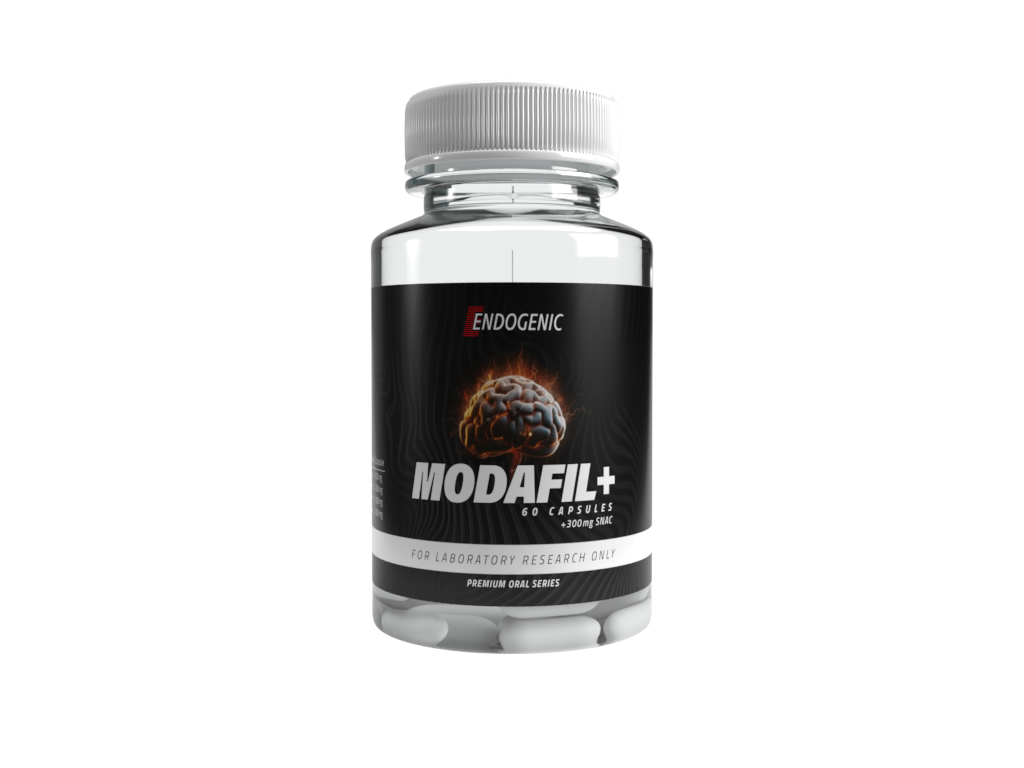

Modafil is a nootropic blend supporting wakefulness in capsules (Endogenic line) – a multi-ingredient composition built around fladrafinil (CRL-40,941), supplemented with caffeine, Alpha-GPC and L-theanine. This is a fundamental distinction: Modafil is not pure Modafinil or Provigil. The main active ingredient is fladrafinil – a research analogue of adrafinil and a prodrug metabolized to compounds with a modafinil profile. The idea of the blend is to combine the modafinil core with the cholinergic axis and balanced stimulation in one research composition.
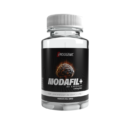
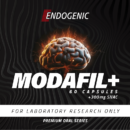
Modafil + 60 caps
Modafil 60 capsules from the Endogenic line is a nootropic blend built around fladrafinil (CRL-40,941) – a research analogue of adrafinil metabolized to compounds with a modafinil profile – supplemented with caffeine, Alpha-GPC and L-theanine. The composition combines the wakefulness axis, cholinergic (precursor of acetylcholine) and balanced stimulation. Research Use Only reagent for research on wakefulness mechanisms and the synergy of nootropic ingredients.
64,99 €
Fast shipping
Delivery options
Free delivery from 350 €
Returns policy
Modafil 60 capsules - nootropic blend with fladrafinil, research reagent
- Modafil 60 capsules from the Endogenic line is a nootropic blend built around fladrafinil (CRL-40,941) - a research analogue of adrafinil metabolized to compounds with a modafinil profile - supplemented with caffeine, Alpha-GPC and L-theanine.
- The composition combines the wakefulness axis, cholinergic (precursor of acetylcholine) and balanced stimulation.
- Research Use Only reagent for research on wakefulness mechanisms and the synergy of nootropic ingredients.
Modafinil and related wakefulness-promoting compounds and their metabolites fall into the category S6 – stimulants on the World Anti-Doping Agency (WADA) Prohibited List, prohibited in competition. Modafil contains fladrafinil — prodrug metabolized to compounds with a modafinil profile. This means that the presence of modafinil metabolites in a doping sample constitutes an anti-doping rule violation. Registered athletes (ADAMS) must absolutely verify the current WADA Prohibited List before making any decision – the risk of disqualification is real.
Introduction
Cognitive fatigue – the decline in alertness, clarity of attention and ability to maintain concentration under prolonged mental load – has been one of the most difficult phenomena in neuropharmacology to model for decades. Classic psychostimulants (amphetamine-like sympathomimetics) act quickly and potently, but bring a profile of sympathetic arousal, anxiety, and depletion of neurotransmitter resources after the effects wear off.
The answer of pharmacology was a separate class of compounds – substances that promote wakefulness (English wake-promoting agents), formed in the second half of the 20th century around adrafinil and modafinil: molecules that maintain wakefulness and alertness without the rapid, exhausting stimulation typical of stimulants. Modafil is a nootropic blend supporting wakefulness, offered by Pro-Body in the line Endogenous in format 60 capsules.
It is not pure modafinil or Provigil – it is a multi-ingredient research composition built around fladrafinil (CRL-40,941), an investigational adrafinil analogue and prodrug metabolized to compounds with a modafinil profile, supplemented with caffeine, Alpha-GPC and L-theanine. The idea of the blend is to combine the modafinil core (support for wakefulness) with a cholinergic component (support for attention and memory) and balanced caffeine stimulation smoothed by L-theanine.
In research terms, Modafil remains a tool for studying the mechanisms of wakefulness, attention modulation and the synergy of nootropic ingredients in a single composition. Purity of ingredients verified by HPLC, identity confirmed by mass spectrometry, COA available for each batch.
REGULATORY STATUS
Fladrafinil is not a registered medicine in the EU or the USA – unlike modafinil, which functions as a prescription medicinal product (Provigil®, indication: narcolepsy and wakefulness disorders). Modafil is not authorized by the EMA, FDA or EFSA. Modafinil and related wakefulness-promoting compounds are on the WADA Prohibited List in category S6 (stimulants)., and fladrafinil is metabolized to modafinil compounds. Communication of the product as an “over-the-counter nootropic for concentration”, a “wakefulness booster” or a “sleep aid” is contrary to the Research Use Only framework.
General description - compounds promoting wakefulness and classic stimulants
Wakefulness-promoting compounds are a pharmacological class that developed in the second half of the 20th century around adrafinil and its active metabolite, modafinil. The defining feature of the class is maintaining alertness and vigilance without the profile of a classic psychostimulant: without a sudden release of catecholamines, strong sympathetic stimulation and a clear phase of exhaustion after the effect wears off.
This distinction is based on the mechanism of action – a compound from the modafinil family modulates the systems responsible for maintaining wakefulness (orexin, histaminergic, dopaminergic) differently than a substance that releases catecholamines. A broader overview of this class and its place among others nootropic substances organizes the context in which Modafil fits. Idea nootropic blend involves combining several ingredients with complementary mechanisms in one composition so that the activity profiles complement each other.
In the case of Modafil, the modafinil core (fladrafinil) is responsible for supporting wakefulness, caffeine adds an adenosine antagonism component (alertness, fatigue reduction), Alpha-GPC provides cholinergic support (precursor of acetylcholine – the neurotransmitter of attention and memory), and L-theanine modulates the stimulation profile, smoothing the caffeine stimulus. A related compositional architecture is represented in the Endogenic multi-component catalog MINDHUNTER X — a cognitive booster connecting racetams with the cholinergic axis.
The whole thing is exploratory in nature – it is a research composition for observing how co-occurring mechanisms are arranged in a single blend. The world of nootropic research observes such compositions for several reasons. Firstly, as models of ingredient synergy – the caffeine + L-theanine pair is one of the best described synergies in the nootropic literature (Owen et al. 2008).
Secondly, as a tool to study the modafinil core in the context of cholinergic support. Thirdly, as compositions for analyzing the profile of fladrafinil – a research analogue of adrafinil from the modafinil family of compounds.
What is Modafil?
Modafil is a nootropic blend supporting wakefulness – a multi-ingredient composition in capsules, built around fladrafinil as the main ingredient promoting wakefulness.
- Common name: Modafil (nootropic blend)
- Main active ingredient: fladrafinil (CRL-40,941)
- Main Ingredient Class: wakefulness-promoting compound (modafinil-adrafinil family); bis(4-fluoro) adrafinil analogue; prodrug metabolized to compounds with a modafinil profile
- Other ingredients: caffeine, Alpha-GPC (alpha-glycerylphosphorylcholine), L-theanine
- Composition profile: modafinil core + cholinergic + balanced stimulation
- Delivered form: hard capsule, multi-ingredient blend, 60 capsules; pharmaceutical grade ingredients
Blend composition table
| Component | Class/role | The mechanism in brief | Contents |
|---|---|---|---|
| Fladrafinil (CRL-40,941) | wakefulness-promoting compound, modafinil prodrug | wakefulness support, postulated DAT/orexin/histamine modulation | for verification on the batch label/COA |
| Caffeine | xanthine stimulant | adenosine A1/A2A receptor antagonist | for verification on the batch label/COA |
| Alpha-GPC | choline donor, cholinergic | acetylcholine precursor | for verification on the batch label/COA |
| L-theanine | amino acid, modulator | GABA/alpha wave modulation, smoothing stimulation | for verification on the batch label/COA |
Origin and chemical context: Fladrafinil (CRL-40,941) is a bis(4-fluoro) analogue of adrafinil – a structural relative of modafinil from the same family of wakefulness-promoting compounds. As a prodrug, it is metabolized to compounds with a modafinil profile, which places it in the category of research equivalents of modafinil and adrafinil. Unlike modafinil, which has undergone full registration as a drug (Provigil), fladrafinil remains an investigational compound without registration authorization.
Mechanism of action at the molecular level
Modafil as a blend is based on four complementary ingredients. The mechanism of each is described below, followed by the profile of the assembly as a whole. Mechanisms refer to observations in the literature on individual components and their families. Mechanistic profile of the blend components:
- Fladrafinil – modafinil core. As a prodrug metabolized to compounds with a modafinil profile, fladrafinil belongs to the class of wakefulness-promoting compounds. There are some postulations about modafinil in the literature weak inhibition of the dopamine transporter (DAT) leading to a moderate enhancement of dopaminergic transmission, as well as modulation of the system orexin (hypocretin), histaminergic and noradrenergic — networks responsible for maintaining wakefulness (Ballon and Feifel 2006). This profile distinguishes the modafinil family from classic stimulants: alertness increases without the rapid release of catecholamines typical of sympathomimetics.
- Caffeine – adenosine antagonism. Caffeine is an adenosine receptor antagonist A1 and A2A. By blocking the signaling of adenosine – a neurotransmitter that increases during wakefulness and promotes sleepiness – caffeine increases alertness and reduces subjective fatigue. It is the best described stimulating ingredient in a blend and a classic component of nootropic compositions.
- Alpha-GPC – cholinergic support. Alpha-glycerylphosphorylcholine is a choline donor and precursor acetylcholine — a central neurotransmitter for attention, working memory and learning processes. By providing a substrate for acetylcholine synthesis, Alpha-GPC brings a cholinergic axis into the mix, complementary to the modafinil and adenosine components of wakefulness. Mechanism and dosage itself choline for the brain discusses a separate study on Alpha-GPC.
- L-theanine – modulation and smoothing of stimulation. L-theanine is an amino acid that modulates signaling GABAergic and favorable alpha waves in the EEG recording. In compositions with caffeine, L-theanine “smoothes” the stimulation profile – it soothes the sharp, arousal components of caffeine, promoting a state of calm alertness. The caffeine + L-theanine synergy is one of the best documented in the nootropic literature (Owen et al. 2008).
- Profile of the blend as a whole. The composition of four components connects three axes: wakefulness axis (fladrafinil – wakefulness support), cholinergic (Alpha-GPC – attention and memory support) and balanced stimulation (caffeine + L-theanine – alertness without acute arousal). It is an exploratory composition for examining how co-occurring mechanisms are arranged in a single profile.
Applications in scientific research
Modafil as a nootropic blend is used as a tool for examining several areas. In vitro and in vivo models examine the modafinil core profile (fladrafinil and its metabolites), caffeine adenosine antagonism, Alpha-GPC cholinergic support and the modulatory effect of L-theanine on the stimulation profile. A special direction is the analysis of ingredient synergy in a single composition. Specific research directions include:
- Standby mechanisms — fladrafinil as a research representative of the modafinil family in research on the orexin, histaminergic and dopaminergic systems (Ballon and Feifel 2006)
- Cognitive functions — modafinil and related compounds in research on attention, working memory and vigilance (Battleday and Brem 2015, meta-analysis)
- Caffeine + L-theanine synergy — analysis of the effect of the composition on vigilance, attention and stimulation profile (Owen et al. 2008)
- Cholinergic axis — research on the role of Alpha-GPC as a choline donor and acetylcholine precursor in supporting attention
- Profile of nootropic blends — analysis of how co-occurring mechanisms (modafinil core + cholinergic + balanced stimulation) are arranged in a single composition
In comparative analyzes of the arousal and concentration profile, the modafinil core of Modafil is sometimes compared with actoprotectors with a dopaminergic profile – the reference point in the Endogenic catalog is Bromantane for energy and concentration, studied as a separate vigilance support mechanism.
REGULATORY STATUS
Fladrafinil is not a registered medicine in the EU or the USA – unlike modafinil, which functions as a prescription medicinal product (Provigil®). Modafil is not authorized by the EMA, FDA or EFSA. Modafinil and related wakefulness-promoting compounds and their metabolites are on the WADA Prohibited List in category S6 (stimulants). — prohibited in competitions.
Fladrafinil metabolizes to compounds with a modafinil profile, so the presence of these metabolites in a doping sample constitutes a violation of anti-doping rules. Registered Athletes (ADAMS) must verify the current Prohibited List before making any decision. Communicating the product as an “over-the-counter nootropic for concentration” or a “wakefulness aid” is inconsistent with the Research Use Only framework.
Summary
Modafil (60 capsules) from the Endogenic line nootropic blend supporting wakefulness — a multi-component research composition built around fladrafinil (CRL-40,941), a bis(4-fluoro) analogue of adrafinil and a prodrug metabolized to compounds with a modafinil profile. They complement the blend caffeine (adenosine A1/A2A receptor antagonist), Alpha-GPC (choline donor, acetylcholine precursor) and L-theanine (GABA/alpha modulation, stimulation smoothing).
The composition combines three axes: wakefulness (support for alertness), cholinergic (support for attention and memory) and balanced stimulation. Modafil is a blend, not pure modafinil or Provigil — fladrafinil is a research analogue, not a registered drug. Compounds that promote wakefulness are a separate class, distinct from classic psychostimulants. HPLC, MS, COA purity for each batch (content of individual components).
Regulatory Status – Research Use Only; lack of EMA/FDA/EFSA authorization; modafinil and related compounds on the WADA Prohibited List, category S6 (stimulants).
Bibliography
- Ballon JS, Feifel D (2006). A systematic review of modafinil: potential clinical uses and mechanisms of action. PubMed
- Battleday RM, Brem AK (2015). Modafinil for cognitive neuroenhancement in healthy non-sleep-deprived subjects: a systematic review. PubMed
- Owen GN, Parnell H, De Bruin EA, Rycroft JA (2008). The combined effects of L-theanine and caffeine on cognitive performance and mood. PubMed
DISCLAIMER – Research reagent (Research Use Only). Product Modafil – 60 capsules is sold exclusively as chemical reagent for laboratory tests in vitro and on animal models. It is not a medicine, is not a dietary supplement and is not a product intended for human consumption. It is not intended to diagnose, treat, alleviate or prevent any disease, including impaired alertness or concentration.
Modafil is a multi-ingredient blend built around fladrafinil — a research compound that is not a registered drug; modafinil (a related compound) is available only by prescription (Provigil®) and Modafil is not a substitute for it or a substitute for medical consultation. Modafinil and related wakefulness-promoting compounds and their metabolites are on the World Anti-Doping Agency Prohibited List in category S6 (stimulants). — fladrafinil metabolizes to compounds with a modafinil profile; professional athletes and people covered by anti-doping programs must absolutely verify the current WADA guidelines on their own.
Sales addressed to qualified research personnel, scientific units and pharmacological laboratories. The buyer assumes full responsibility for the legal and safe use of the reagent under laboratory conditions consistent with applicable regulations and institutional guidelines.
FAQ
Fladrafinil (CRL-40,941) is a bis(4-fluoro) analogue of adrafinil – a structural relative of modafinil from the same family of wakefulness-promoting compounds. As a prodrug, it metabolizes to compounds with a modafinil profile. The main difference is regulatory: modafinil has gone through the full registration process and is a prescription drug (Provigil®, indication: narcolepsy and wakefulness disorders), while fladrafinil remains an investigational compound without registration authorization. In an anti-doping context, both belong to the same family whose metabolites fall under WADA S6.
Each ingredient brings a distinct mechanism. Caffeine is an antagonist of adenosine A1/A2A receptors – it increases alertness and reduces subjective fatigue. L-theanine modulates GABA signaling and promotes alpha waves, “smoothing” the caffeine stimulation profile (caffeine + L-theanine synergy is one of the best described in the nootropic literature – Owen et al. 2008). Alpha-GPC is a choline donor and a precursor of acetylcholine – the neurotransmitter of attention and memory – contributing a cholinergic axis complementary to the modafinil core.
The modafinil and adrafinil family maintain wakefulness by modulating the networks responsible for alertness: the orexin, histaminergic, noradrenergic and weak dopaminergic systems (by inhibiting the dopamine transporter). Classic psychostimulants (amphetamine-like sympathomimetics) act primarily through the rapid release of catecholamines, with a more pronounced sympathetic arousal profile. This distinction is based on the mechanism of action – in anti-doping categories, WADA classifies modafinil and related compounds as stimulants (S6) regardless of the different mechanism.
Yes – in anti-doping terms. Modafinil and related wakefulness-promoting compounds and their metabolites are found on WADA Prohibited List in category S6 (stimulants), prohibited in competitions. Modafil contains fladrafinil, a prodrug that is metabolized to compounds with a modafinil profile, so the presence of these metabolites in a doping sample constitutes a violation of anti-doping rules. Registered athletes (ADAMS) must absolutely verify the current Prohibited List before making any decision – the risk of disqualification is real.
Modafil is a Research Use Only reagent, addressed exclusively to qualified research personnel, scientific units and pharmacological laboratories conducting research on the mechanisms of wakefulness, attention modulation and synergy of nootropic ingredients in in vitro and animal models. It is not a medicine, dietary supplement or food and is not intended for use on humans or animals. Fladrafinil is not a registered medicine; modafinil (related) is available by prescription only. The identity and composition of the party shall be decided by the COA.
5.0
0 reviews
-
Tony
 Polski
Verified purchase
Product review
Jakość przeszła wszelkie oczekiwania. Dziękuję!
-
Oli
Polski
Product review
Top jakość. Fajnie, że dodaliście również ten produkt do oferty.
PS: ładne te nowe opakowania :)