

Aktoprotector is a pharmacological class distinguished in Soviet neuropharmacology – compounds that increase physical and mental performance under load and the body’s resistance to fatigue, stress and hypoxia. Unlike classic stimulants, actoprotectors such as bromantane act slowly and long-lastingly in models: dopaminergic enhancement increases gradually by inducing dopamine synthesis, and not by a sudden release of stored reserves. The profile is adaptogenic – it supports the maintenance of functions under stress, without a clear phase of depletion of neurotransmitter resources.
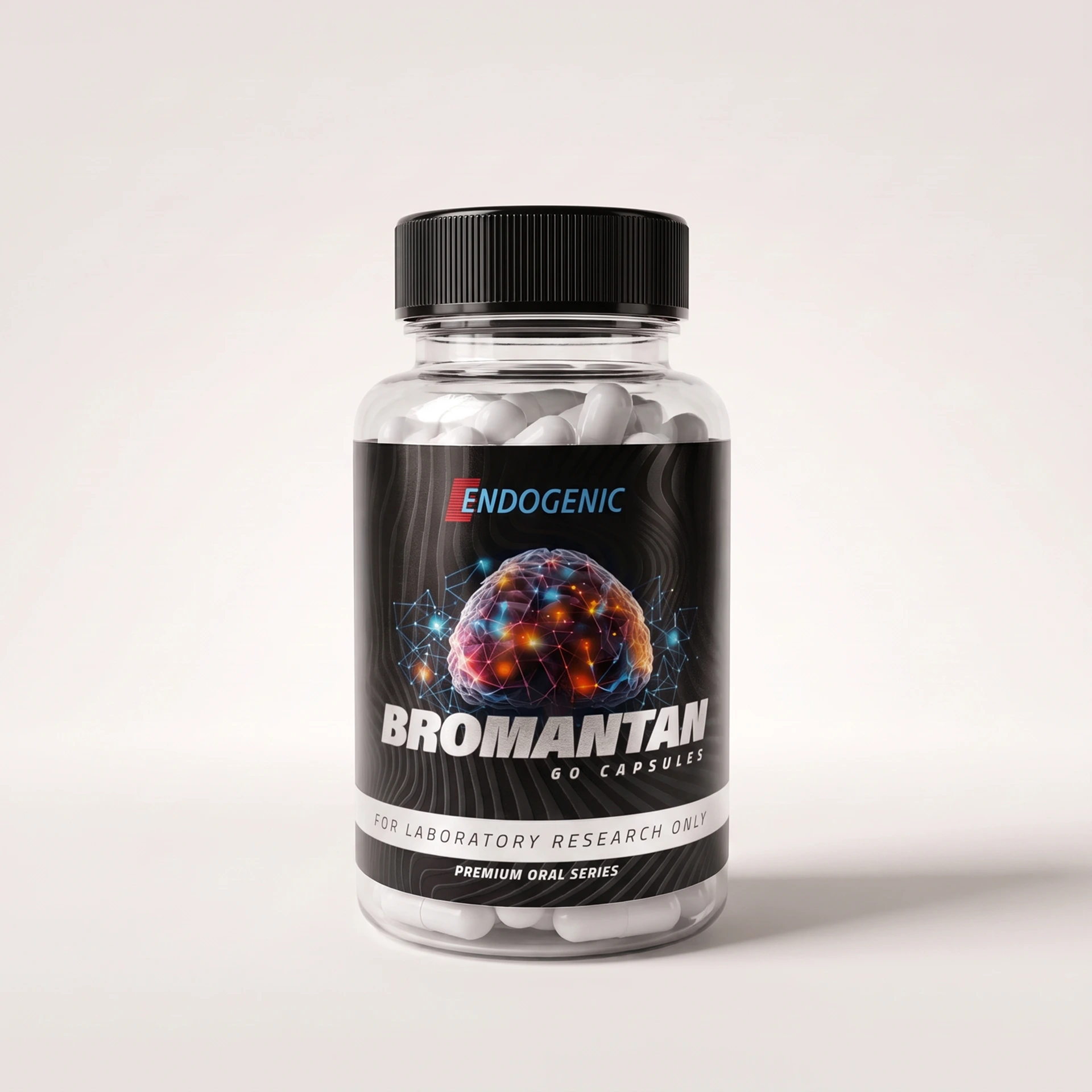
Bromantan 50mg 60 caps
Bromantane 50 mg × 60 capsules is a synthetic derivative of adamantane, characterized by a rare combination of slow, long-lasting dopaminergic enhancement (induction of dopamine synthesis, expression of tyrosine hydroxylase) with an anxiolytic component – stimulation without the anxiety typical of stimulants. Research Use Only reagent for research.
59,99 €
Fast shipping
Delivery options
Returns policy
Bromantane 50 mg 60 caps - an adamantane derivative with a dopaminergic profile
- Bromantane: a synthetic adamantane derivative.
- 50 mg per capsule; pack of 60 capsules.
- Research Use Only reagent, not a medicinal product.
Product status information
Chemical reagent intended exclusively for laboratory tests (Research Use Only). It is not a medicinal product, dietary supplement or food. It is not intended for use on humans or animals. Sales only to registered research units and laboratories.
WADA STATUS – Category S6 (stimulants)
Bromantane is on the World Anti-Doping Agency (WADA) Prohibited List S6 – stimulants. The substance went down in anti-doping history as one of the first high-profile cases of disqualification at the Olympic Games in Atlanta (1996), when it was detected in the samples of several athletes. It is imperative that Registered Athletes (ADAMS) verify the current Prohibited List before making any decision – the presence of bromantane or its metabolites in a doping sample constitutes an anti-doping rule violation.
Introduction
Central fatigue – a decline in dopaminergic drive under the influence of long-term physical and mental effort – has remained one of the most difficult phenomena in neuropharmacology to model for decades. Classic stimulants (amphetamine-like sympathomimetics, modafinil) act quickly and briefly, but they produce a profile of arousal, anxiety and depletion of neurotransmitter resources after the effects wear off.
The Soviet school of pharmacology responded with another class of compounds — actoprotectors: molecules that were supposed to increase the body’s resistance to fatigue and stress without sudden, exhausting stimulation. Bromantane is one of the best described representatives of this class. Pro-Body supplies it in the Endogenic line as a research reagent in packs of 50 mg × 60 capsules.
Chemically, it is a small molecule – a synthetic derivative of adamantane with an amine structure, carrying a para-bromophenyl substituent. Pharmacologically, it combines rarely co-occurring properties: mild, slow dopaminergic enhancement typical of a psychostimulant with anxiolytic component — that is, stimulation without the anxiety typical of stimulants. As a small neuroactive molecule, it remains a reference point in the catalog alongside peptides on brain function, although it works by a different mechanism than regulatory peptides.
Bromantane was developed in the USSR at the Institute of Pharmacology of the Academy of Medical Sciences as an anti-fatigue agent for the military and athletes. In Russia it was later used as a medicine under the name Ladasten (in the indication of asthenia). In research terms, it remains a model actoprotector for studying the mechanisms of fatigue resistance, dopaminergic regulation and adaptogenic profile. Purity verified by HPLC ≥98%, identity confirmed by mass spectrometry, COA available for each batch.
REGULATORY STATUS
Bromantane is not registered as a medicine in the EU or USA. In the Russian Federation, it functioned as a medicinal product (Ladasten) for the indication of asthenia – this registration does not cover other jurisdictions. Bromantane is on the WADA Prohibited List in category S6 (stimulants). Communicating the product as an “energy nootropic”, “fatigue adaptogen” or “over the counter dopamine booster” is contrary to the Research Use Only framework.
Actoprotectors and the Soviet school of pharmacology
Actoprotectors are a pharmacological class identified in Soviet neuropharmacology in the 1970s and 1980s. The name comes from Latin actus (action, effort) i protector (protection) – the aim of the class is to increase physical and mental performance under stress and to protect the body against the effects of fatigue, stress, hypoxia and extreme temperatures.
Actoprotectors were designed with military personnel, cosmonauts and athletes in mind – contexts in which endurance and performance under load are important, not a sudden, short-term stimulating stimulus. Bromantane occupies a special position in this class. Unlike pure central nervous system stimulants, its action profile in preclinical models is different slow and long lasting — dopaminergic enhancement increases gradually and lasts for hours, without a phase of sudden stimulation or a clear rebound effect.
The second distinguishing feature is anxiolytic component: In behavioral tests in rodents, bromantane reduced anxiety markers, which is a rare combination – most compounds with an anxiety-stimulating profile exacerbate rather than alleviate. The world of pharmacology is watching bromantane for several reasons. Firstly, as a model actoprotector – a tool for studying the mechanisms of resistance to central and peripheral fatigue.
Secondly, as a compound with an unusual combination of psychostimulant and anxiolytic profiles, useful in research on dopaminergic regulation and the stress axis. Third, as a derivative of adamantane—a chemical class that also includes amantadine and memantine—in studies of the structure-activity relationships of adamantane molecules in neuropharmacology. The broader background of this class of compounds is discussed in the review nootropic substances and their classification.
What is bromantan?
Chemically, bromantane is a small molecule – a synthetic derivative of adamantane with an amino group and a para-bromophenyl substituent.
- Common name: Bromantane, bromantane
- Research code: ADK-709
- Systematic name: N-(2-adamantyl)-N-(para-bromophenyl)amine
- Pharmacological class: actoprotector (class of Soviet pharmacology) with psychostimulant and anxiolytic properties; mild dopaminergic actoprotector; adamantane derivative
- CAS number: 87913-26-6 (to be verified with the batch COA)
- Molecular formula: C₁₆H₂₀BrN (to be verified in the batch COA)
- Molar mass: ~330.24 g/mol (to be verified in the batch COA)
- Laboratory of Origin: Institute of Pharmacology of the Academy of Medical Sciences (USSR); studied as an anti-fatigue agent for military and athletes
- Delivered form: hard capsule, 50 mg of active substance per capsule, 60 capsules; pharmaceutical grade ≥98% HPLC
Table of physicochemical characteristics
| Parameter | Value | Attention |
|---|---|---|
| Name | Bromantane (bromantane), ADK-709 | — |
| Systematic name | N-(2-adamantyl)-N-(para-bromophenyl)amine | — |
| Chemical class | adamantane derivative (small molecule, amine) | not a peptide |
| Pharmacological class | actoprotector with a dopaminergic and anxiolytic profile | Soviet school of pharmacology |
| CAS | 87913-26-6 | for verification in the batch COA |
| Molecular formula | C₁₆H₂₀BrN | for verification in the batch COA |
| Molar mass | ~330.24 g/mol | for verification in the batch COA |
| Purity | ≥98% HPLC | UV detection, per batch verification |
| Form | capsule, 50 mg/capsule, 60 capsules | — |
| Time profile | slow onset, long lasting effect | distinguishes it from classic stimulants |
| Clinical status | registration as a medicine (Ladasten) only in the Russian Federation | no EU/US registration |
| WADA status | Prohibited List, Category S6 (stimulants) | high-profile cases of IO Atlanta 1996 |
Origin. Adamantane as a chemical skeleton (a hydrocarbon cage structure with high stability) became a popular scaffold for neuroactive molecules in the second half of the 20th century – this family includes, among others, amantadine and memantine. Bromantane was designed and characterized at the Institute of Pharmacology of the Academy of Medical Sciences in the USSR as part of a program to search for agents that increase the endurance of military personnel and athletes under conditions of extreme stress.
Subsequent Russian clinical characterization (including the work of Seredenin and colleagues and studies on the use in asthenia) led to the registration of a medicinal form under the name Ladasten – only in the Russian Federation.
Mechanism of action at the molecular level
Bromantane acts in preclinical models through several parallel, complementary pathways. The following mechanisms have been documented mainly in the Russian literature on rodent and in vitro models. Pharmacological profile observed in research models:
- Indirect dopaminergic reinforcement — the best described mechanism of bromantane. In rat models, the compound increases dopamine synthesis by inducing expression tyrosine hydroxylase (TH) — an enzyme that limits the rate of the catecholamine biosynthetic pathway — and inhibits the reuptake of dopamine and serotonin (Grekhova et al. 1995). The key feature is slow kinetics: dopaminergic enhancement increases gradually and lasts for a long time, unlike the sudden, short-term release typical of classic stimulants. This is the basis of the actoprotective profile – lasting improvement of drive without the phase of depletion of neurotransmitter resources.
- Anxiolytic component (GABA/serotonin modulation) — in behavioral tests on rodents (elevated plus maze test, open field test), bromantane reduced anxiety markers while simultaneously reducing arousal. This is a rare combination: stimulation without the anxiety component typical of stimulants. The mechanism is probably related to the modulation of the GABAergic and serotonergic systems, which distinguishes bromantane from pure psychostimulants.
- Actoprotector profile – resistance to fatigue and stress — in models of physical load (swim test, run to exhaustion) and mental load, bromantane increased resistance to fatigue and performance under load. The profile is adaptogenic – it supports the body’s ability to maintain functions under conditions of stress, hypoxia and extreme temperatures, which was the original design goal of the entire class of actoprotectors.
- Immune and anti-inflammatory modulation — some preclinical models describe the effect of bromantane on immune response markers and inflammatory processes, suggesting an immunomodulatory component in addition to the neuroactive profile. This direction is less recognized than the dopaminergic axis.
- Neuroprotection and support for neuronal regeneration — in models of neuronal damage, the effect of bromantane on neuronal survival markers and regenerative processes was observed, which is associated with the induction of TH and the overall neuroactive profile of the molecule.
An important distinction - an actoprotector and a classic psychostimulant
Understanding the difference between an actoprotector and a classic stimulant is the central point of this description:
- Kinetics of action — classic psychostimulants (sympathomimetics, modafinil) act quickly and briefly, with a clear peak and decline phase. Bromantane as an actoprotector acts slowly and long-lastingly – dopaminergic enhancement increases gradually by inducing synthesis (TH expression), and not by a sudden release of stored dopamine.
- Anxiety profile — most stimulants increase anxiety and sympathetic arousal. Bromantane has an anxiolytic component – in models it stimulates while reducing anxiety markers. This is a rare combination that distinguishes it from pure stimulants.
- Reflection effect — classic stimulants are often associated with the depletion of neurotransmitter resources and a rebound effect after the effect wears off. The actoprotective profile of bromantane, based on the induction of dopamine synthesis, did not show a clear depletion phase characteristic of releasers in the models.
- Chemical class — bromantane is a small adamantane molecule (like amantadine and memantine), not a peptide or a catecholamine. Its chemical profile and mechanism distinguish it from both of these families.
This distinction is of both mechanistic and compliance importance: bromantane is sometimes mistakenly classified as an “amphetamine-type stimulant”, while its pharmacology is different. However, in anti-doping terms, it remains classified by WADA as a stimulant (S6) – regardless of its unusual kinetics of action.
Applications in scientific research
Bromantane is used in research in several areas. In vivo models (rat, mouse) examine its impact on resistance to physical (swimming test, running to exhaustion) and mental fatigue, on anxiety markers in behavioral tests (elevated cross-maze, open field), on the level of dopamine and serotonin in brain structures and on the expression of tyrosine hydroxylase.
In vitro models measure the effect on the enzymes of the catecholamine pathway and the reuptake of monoamines. In comparative comparisons of compounds with a cognitive profile, it is sometimes compared to ready-made nootropic blends, such as MINDHUNTER X, and with single reference compounds. Specific research directions include:
- Mechanisms of resistance to central fatigue — bromantane as a model actoprotector in research on the neurochemical basis of fatigue and performance under load
- Dopaminergic regulation — studies on the induction of tyrosine hydroxylase, dopamine synthesis and reuptake inhibition as a mechanism of slow, long-term catecholaminergic enhancement
- Anxiolytic and stimulant profile — analysis of atypical co-occurrence of arousal and anxiolytic effects; modulation of the GABA/serotonin system
- Adaptogenic models of stress and hypoxia — impact on the body’s resistance to stress, hypoxia and extreme temperatures
- Pharmacology of adamantane derivatives — bromantane in comparative analyzes with amantadine and memantine in terms of the neuroactive profile of adamantane molecules
- Models of neuroprotection and immunomodulation — impact on neuron survival and immune response markers
Summary
Bromantane (50 mg × 60 capsules) is a synthetic derivative of adamantane from the class actoprotectors Soviet school of pharmacology – a small molecule developed at the Institute of Pharmacology of the Academy of Medical Sciences as an anti-fatigue agent for the military and athletes. It is distinguished by a rare profile combination: mild, slow dopaminergic enhancement (by induction of dopamine synthesis, expression of tyrosine hydroxylase and inhibition of reuptake) coexists with anxiolytic component — stimulation without the anxiety typical of stimulants.
This distinguishes it from classic psychostimulants with a quick, short effect. In preclinical models, an actoprotective profile (resistance to fatigue and stress), immune modulation and neuroprotection were also observed. In the Russian Federation it was known as Ladasten (asthenia). HPLC purity ≥98%, MS Q-TOF, COA for each batch. Regulatory status – Research Use Only outside Russia; lack of EMA/FDA/EFSA authorization; WADA Prohibited List, category S6 (stimulants) – high-profile cases of IO Atlanta 1996.
Bibliography
- Seredenin SB, Morozov IS, Klimova NV, et al. (1999). Analysis of pharmacological properties of bromantane. PubMed
- Grekhova TV, Gaĭnetdinov RR, Sotnikova TD, Krasnykh LM, Kudrin VS, et al. (1995). The effect of bromantane, a new immunostimulant with psychostimulating action, on release and metabolism of dopamine in the dorsal striatum of freely moving rats: a microdialysis study. PubMed
- Neznamov GG, Siuniakov SA, Teleshova SE, Chumakov DV, Reutova MA, et al. (2009). Ladasten, the new drug with psychostimulant and anxiolytic actions in treatment of neurasthenia (results of the comparative clinical study with placebo). PubMed
- Oliynyk S, Oh S (2013). Actoprotective effect of ginseng: improving mental and physical performance. PubMed
FAQ
Three features. Kinetics: bromantane has a slow and long-lasting effect (induction of dopamine synthesis), classic stimulants – fast and short (release of catecholamines). Anxiety profile: bromantane has an anxiolytic component and in models stimulates, while reducing anxiety markers, whereas most stimulants increase anxiety. Rebound effect: the actoprotective profile of bromantane in the models did not show a clear depletion phase characteristic of releasers. This distinction is mechanistic – in anti-doping terms, WADA classifies bromantane as a stimulant (S6) regardless of unusual kinetics.
In rat models, bromantane increases dopamine synthesis by inducing the expression of tyrosine hydroxylase (TH)—the rate-limiting enzyme of the catecholamine biosynthetic pathway—and inhibits dopamine and serotonin reuptake (Grekhova et al. 1995). Slow kinetics is key: the enhancement builds gradually and lasts a long time. This is the basis of the actoprotective profile – lasting improvement of drive without sudden stimulation.
Observations relate to preclinical models and do not suggest the use of the RUO reagent in humans. Related compounds with a nootropic profile, such as peptide Semax 50mg or neurogenesis stimulator NSI-189, operate by different mechanisms and are reference points in comparative research.
Yes. Bromantane is located on WADA Prohibited List in category S6 (stimulants) — prohibited in competition. It went down in anti-doping history as one of the first high-profile cases: at the Olympic Games in Atlanta (1996), several athletes were disqualified because bromantane was detected in their samples. The case had precedent significance for the development of methods for detecting new classes of substances. Registered athletes (ADAMS) must absolutely verify the current Prohibited List; the presence of bromantane or its metabolites in the sample will result in an anti-doping rule violation.
Ladasten is the trade name of a registered medicinal form of bromantane only in the Russian Federation in the indication of asthenia. This registration does not cover the EU or the US – bromantane is not authorized by the EMA, FDA or EFSA outside of Russian jurisdiction. The RUO Pro-Body bromantane reagent is provided as a research material for laboratory work in vitro and on animal models, in the Research Use Only category. It is not a medicine, is not a substitute for a medicinal product and does not replace a medical consultation; not intended for use on humans.
Bromantane is small molecule — synthetic derivative of adamantane (a caged hydrocarbon), with an amino group and a para-bromophenyl substituent. It is not a peptide or catecholamine. It belongs to the same chemical family as amantadine and memantine (derivatives of adamantane with neurological activity). Its mechanism is based on the regulation of the synthesis and reuptake of catecholamines, and not on the receptor signaling of regulatory peptides – this is how it differs from peptide nootropics, such as injectable Selank 10mg.
The identity of the reagent is determined by the batch COA – mass confirmed by MS (~330.24 g/mol) and HPLC purity.
0.0
0 reviews
This product has no reviews yet.
Related products