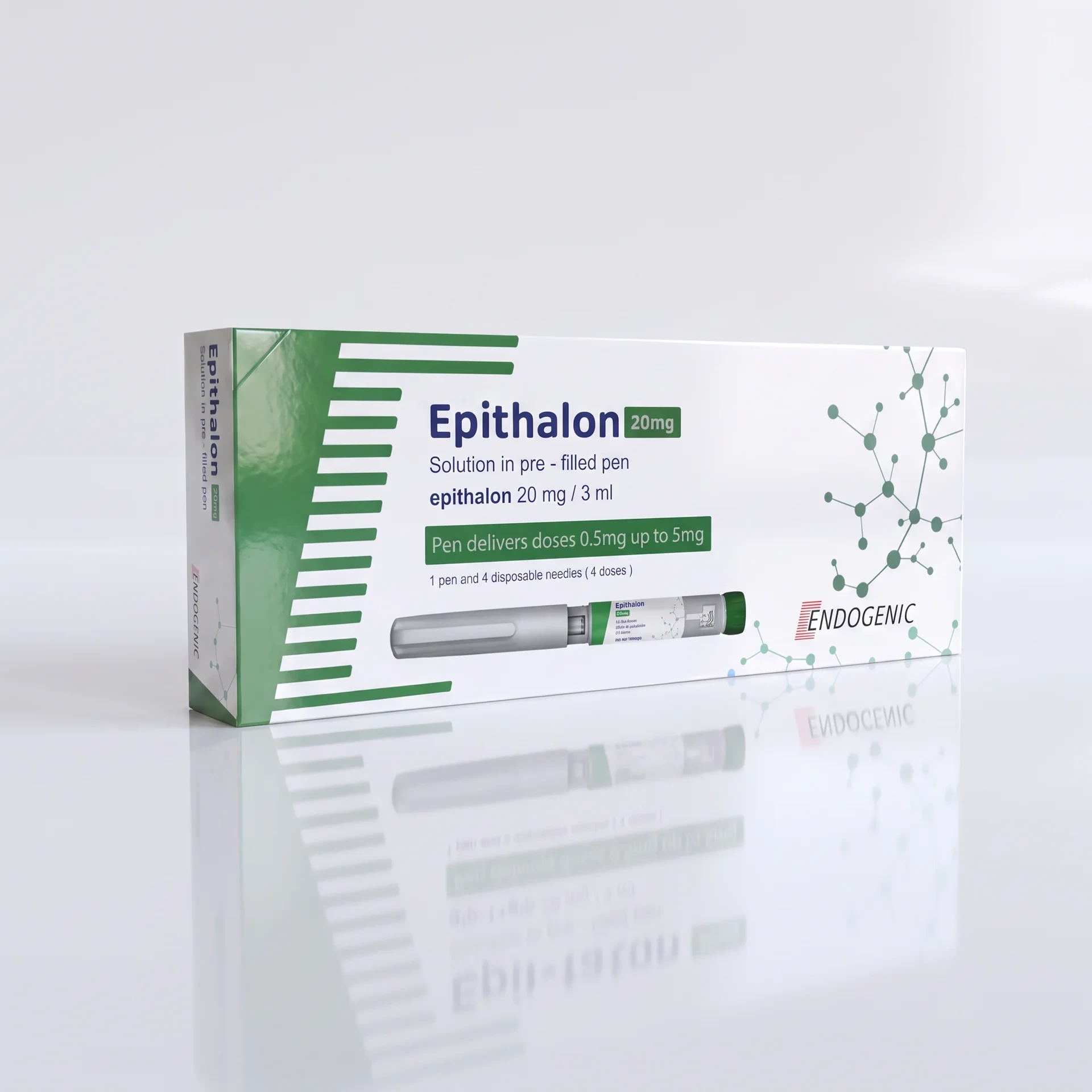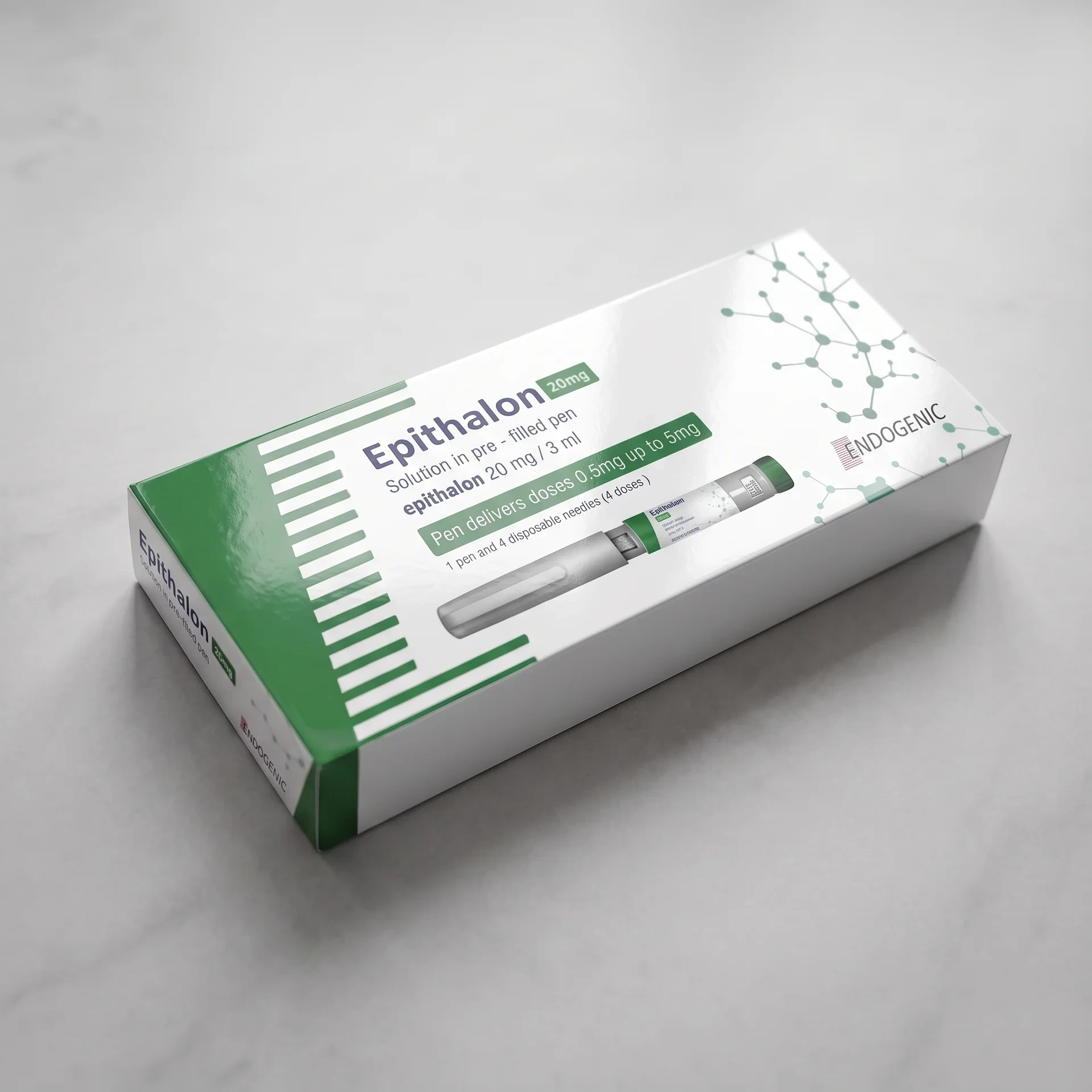


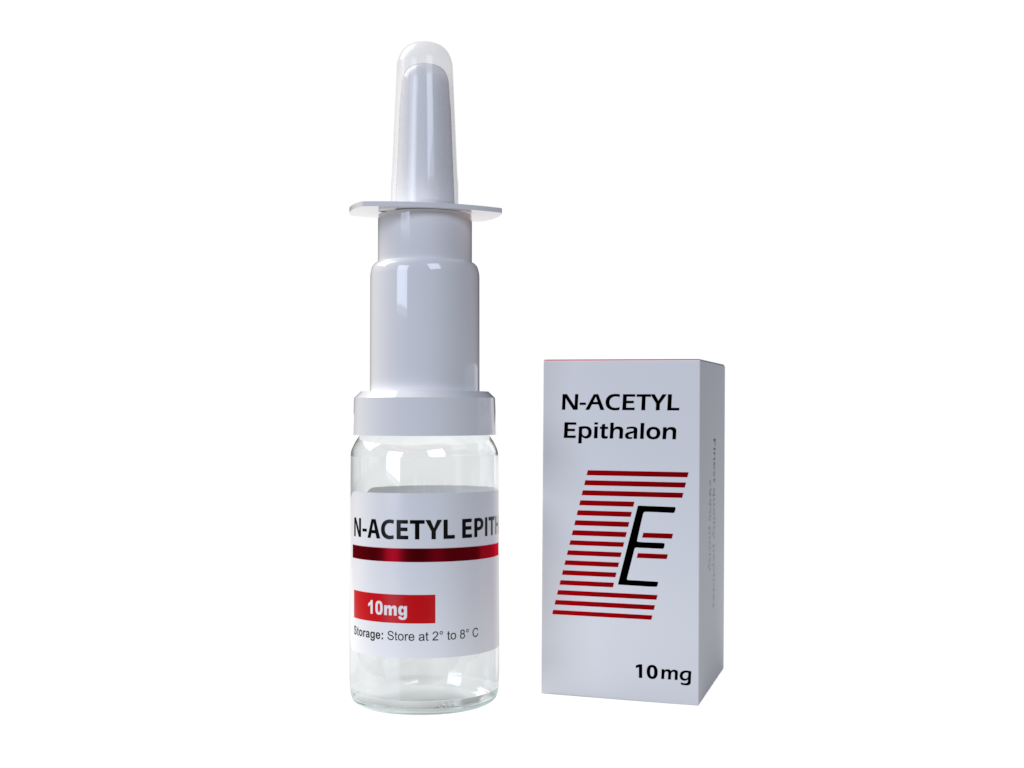
It’s the same compound – acetylated Epithalon (Ac-AEDG). The difference is only in the format. Vial form (stack Epithalon + GHK-Cu is an example of this core combined with a copper peptide) is supplied as lyophilisate for reconstitution. N-Acetyl Epithalon Spray also contains lyophilisate, together with water and an atomizer. It is not a ready-made solution: both formats require preparation before research work. The atomizer reflects the research convention of the intranasal route. Working concentration and storage conditions must be based on the specific batch documentation and research protocol.
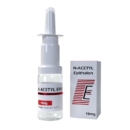
N-Acetyl Epithalon spray
N-Acetyl Epithalon Spray is an acetylated derivative of Epithalon (Ac-AEDG) in a spray preparation kit (lyophilisate, water and an atomizer) – the same tetrapeptide core as the vial form, in a format requiring solution preparation before research work. Core AEDG has been reported in the literature mainly by telomerase induction in in vitro cell cultures. Research Use Only Reagent.
40,99 €
Fast shipping
Delivery options
Returns policy
N-Acetyl Epithalon Spray - Acetylated Epithalon (Ac-AEDG) spray
- N-Acetyl Epithalon (Ac-AEDG): acetylated tetrapeptide.
- Kit: lyophilisate, water and an atomizer; requires solution preparation before research work.
- Research Use Only reagent, not a medicinal product.
Chemical reagent intended exclusively for laboratory tests (Research Use Only). It is not a medicinal product, dietary supplement or food. It is not intended for use on humans or animals. Sales only to registered research units and laboratories.
Epithalon is one of the most frequently cited peptides in the geroprotection literature – a short tetrapeptide with the sequence Ala-Glu-Asp-Gly (AEDG), designed as a synthetic analogue of epithalamine, a peptide extract from the pineal gland. In in vitro models, Epithalon has attracted attention mainly for one result: the induction of telomerase activity in somatic cell cultures.
This is a non-trivial observation, because telomerase in most cells of the adult organism is silenced, and its reactivation is hypothetically associated with the extension of the cell’s replicative potential. N-Acetyl Epithalon is an acetylated derivative of Epithalon – the same AEDG core with an additional acetyl group at the N-terminus of the molecule. In the chemistry of short peptides, N-terminal acetylation is a standard method of blocking aminopeptidases, i.e. enzymes that cut off amino acids from the free α-amino group.
A tetrapeptide like Epithalon is particularly susceptible to this degradation – four amino acid residues make up a very short chain, and the free N-terminus is the first site of attack for exopeptidases. Capping the N-terminus with an acetyl group is intended to extend the proteolytic stability of the molecule without changing the pharmacophore core.
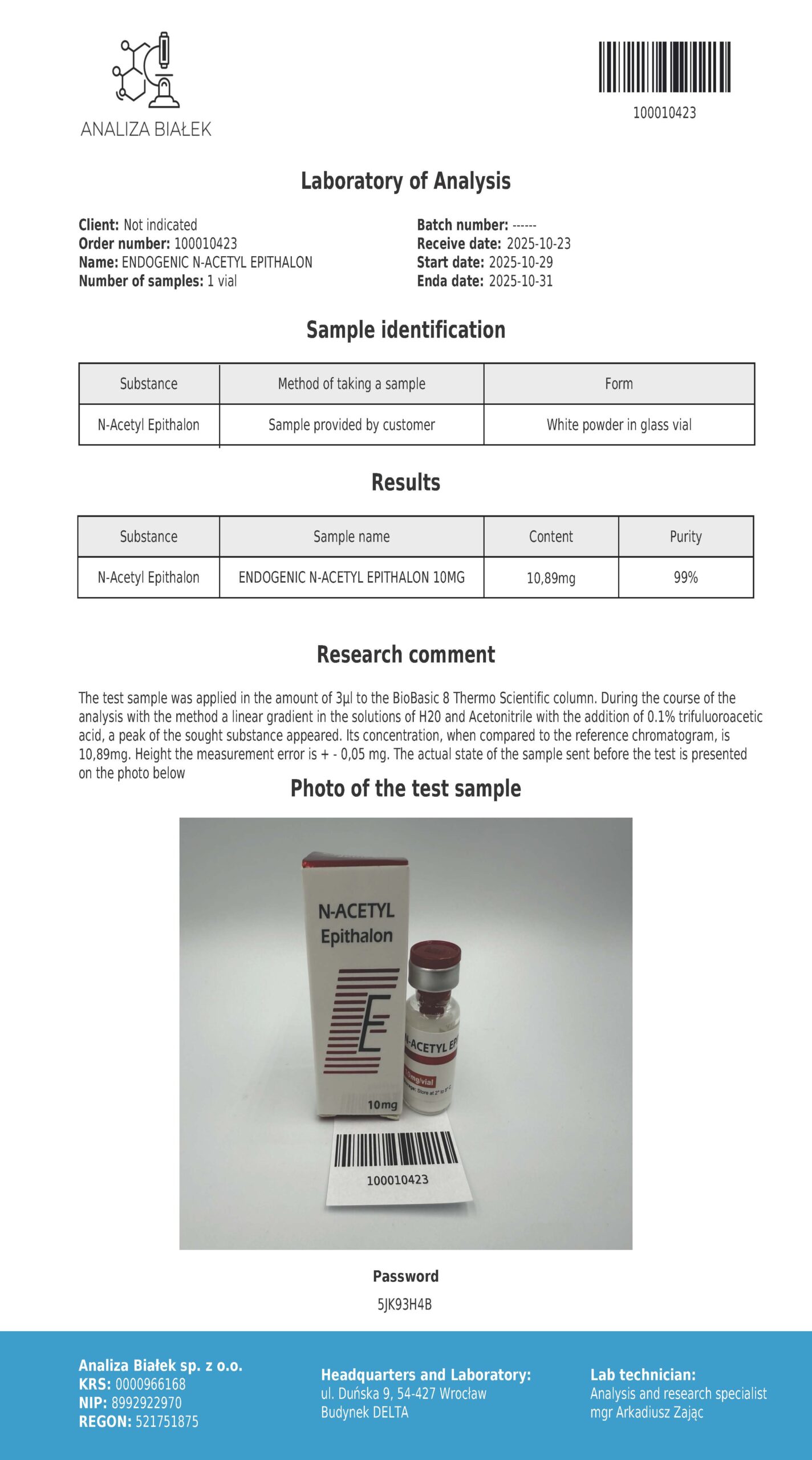
This reagent is supplied in a spray preparation kit containing lyophilisate, water and an atomizer, as one of the forms of spray peptides on offer, an alternative to the classic lyophilized form in a vial (N-acetyl Epithalon injection and base Epithalon 10mg). The kit requires reconstitution of the lyophilisate and preparation of the solution in the atomizer according to the batch documentation and research protocol. Purity verified by HPLC ≥98%, identity confirmed by mass spectrometry, COA available for each batch.
REGULATORY STATUS
N-Acetyl Epithalon is not registered as a medicine in the EU, USA or any other jurisdiction. Epithalon (AEDG) and epithalamin come from the work of the Russian peptide school and are not authorized by the EMA, FDA or EFSA. Marketing the product as a “longevity peptide”, “rejuvenation spray” or “telomerase activator for humans” is contrary to the Research Use Only framework.
Pineal peptides and the Khavinson school - research context
Epithalon comes from the research direction initiated by Vladimir Khavinson in St. Petersburg, concerning peptide bioregulation of aging processes. The starting point was epithalamin – a peptide complex isolated from the bovine pineal gland, studied in the context of circadian regulation, melatonin secretion and aging markers in animal models. From the analysis of epithalamine peptide fractions, short, synthetic sequences were derived that were supposed to reproduce its activity in a chemically defined, single molecule.
Epithalon (AEDG) is just such a product – a tetrapeptide designed as a minimal active fragment that is simpler to synthesize and characterize than a complex tissue extract. The concept of peptide bioregulation assumes that short peptides can act as signals regulating gene expression in specialized cell types, modulating age-dependent processes. This is the theoretical framework within which much of the literature on Epithalon has been developed.
What is N-Acetyl Epithalon?
N-Acetyl Epithalon is a synthetic tetrapeptide – an acetylated derivative of Epithalon.
- Common name: N-Acetyl Epithalon, N-Acetyl Epitalon, Acetylated Epithalon, Ac-Epithalon
- Sequence: Ac-Ala-Glu-Asp-Gly (single letter: Ac-AEDG)
- Base Core: Epithalon (AEDG, Ala-Glu-Asp-Gly), a tetrapeptide designed as an analogue of epithalamine from the pineal gland
- Modification to Epithalon: acetylation of the α-amino group of the N-terminus (alanine residues)
- Chemical class: modified regulatory tetrapeptide (category of bioregulatory peptides)
- CAS (Epithalon Core): 307297-39-8 (CAS number for the N-acetylated form – to be verified in the batch COA)
- Molar mass: ~432 g/mol (AEDG core ~390 Da + acetyl group +42 Da; exact value – to be verified in the batch COA)
- Nature of the molecule: a highly polar, acidic peptide (two acidic residues – glutamic and aspartic acid – give the molecule a net negative charge at physiological pH)
- Supplied form: spray preparation kit containing lyophilisate, water and an atomizer; reconstitution before research work; pharmaceutical grade ≥98% HPLC
The logic of acetyl modification: Epithalon in its native form consists only of four amino acid residues with a free N- and C-terminus – a molecule that is extremely susceptible to proteolysis by exopeptidases. Acetylation of the α-amino group of the N-terminus blocks aminopeptidases that cleave amino acids from this end. In the chemistry of short regulatory peptides, it is the same strategy used for other analogues (e.g. N-acetylation of Semax or Selank) – chemically “plugging” the sensitive end extends the window in which the molecule remains intact in solution and tissue. The core responsible for the hypothetical biological activity (AEDG sequence) remains unchanged.
Mechanism of action at the molecular level
The mechanistic profile described in the literature concerns primarily Native Epithalon (AEDG) in in vitro and animal models. The transfer of these observations to the acetylated analogue remains under investigation. The following pathways represent working hypotheses formulated within the concept of peptide bioregulation. Telomerase activation (hTERT) – the most frequently cited mechanism: The central result attributed to Epithalon is the induction of telomerase activity in somatic cell cultures (Khavinson et al. 2003).
Telomerase is an enzyme that lengthens telomeres – the end sections of chromosomes that shorten with each cell division. In most adult cells, the telomerase catalytic subunit (hTERT) gene is silenced, causing telomeres to shorten until they reach the replication limit (Hayflick limit). In in vitro models, Epithalon was supposed to increase the activity of telomerase in cells in which it is normally inactive, which was interpreted as extending the replicative potential of the culture. Other pathways described for Epithalon in research models:
- Modulation of circadian rhythm and melatonin — as a derivative of the pineal peptide fraction, Epithalon has been studied in the context of regulating melatonin secretion and normalizing the circadian rhythm in aging animals in which the melatonin profile flattens
- Geroprotection and antioxidant activity in models — in the work of Anisimov et al., the effect on aging biomarkers in rodents was observed, including parameters of oxidative stress and markers of age-dependent damage
- Regulation of gene expression (peptide bioregulation) — the central hypothesis of the Khavinson school assumes that short bioregulatory peptides modulate the transcription of selected genes by binding to specific DNA sequences or regulatory proteins; This is a proposed mechanism, not fully structurally confirmed
- Neuroendocrine influence — by association with the pineal axis Epithalon was studied in the context of neuroendocrine regulation and normalization of hormonal parameters changing with age in animal models
Nose-to-brain mechanism - intranasal administration of the peptide
The nasal spray format invokes the concept of nose-to-brain transport, well described in neuropharmacology for selected short peptides. The molecular logic is as follows: most regulatory peptides cross the blood-brain barrier (BBB) poorly when administered peripherally because they are too polar. Intranasal administration offers an alternative delivery route to the central nervous system (CNS), partially bypassing the BBB, via two parallel pathways:
- Olfactory pathway (olfactory) — a peptide applied to the olfactory epithelium in the upper part of the nasal cavity can be transported along the olfactory nerves to the olfactory bulb and further to the structures of the forebrain, bypassing the systemic circulation
- Trigeminal nerve pathway — the endings of the trigeminal nerve innervating the nasal mucosa constitute a second route of transport to the brain stem and further structures of the CNS
For the comparative context of a nootropic peptide with documented precedent for intranasal administration in humans is appropriate N-acetyl Selank spray — an anxiolytic analogue of tuftsin, for which the intranasal route is documented, unlike the hypothetical intranasal transport of Epithalon.
Applications in scientific research
N-Acetyl Epithalon in a nasal spray format is used in research directions analogous to native Epithalon, with additional emphasis on characterizing the profile of the modified molecule and verifying the nasal route itself:
- In vitro models of cellular aging — studies of telomerase activity and telomere length in somatic cell cultures; assessment of replicative potential (Hayflick limit) and cellular senescence markers
- Models of geroprotection in rodents — impact on aging biomarkers, oxidative stress parameters and markers of age-dependent damage in aging animal models
- Studies of circadian regulation — influence on the melatonin secretion profile and normalization of the circadian rhythm in models with a disturbed pineal axis
- Gene expression studies (peptide bioregulation) — transcriptional analyzes verifying the hypothesis of modulation of the expression of selected genes by the AEDG tetrapeptide
- Characterization of the pharmacokinetics of the acetylated analogue — comparison of the proteolytic stability and distribution profile of the acetylated form compared to native Epithalon
- Nose-to-brain transport verification — experimental assessment of whether the highly polar tetrapeptide is actually transported to the CNS via the intranasal route, and the comparative pharmacokinetics of intranasal versus systemic administration N-Acetyl Epithalon as a research reagent remains in the category Research Use Only in all jurisdictions. It is legal to sell it as a chemical reagent for laboratory research; communication of the product as a medicine, dietary supplement or food is prohibited.
Summary
N-Acetyl Epithalon Spray is an acetylated derivative of Epithalon (Ac-AEDG) – the same Ala-Glu-Asp-Gly tetrapeptide core with an acetyl group at the N-terminus, delivered as a kit containing lyophilisate, water and an atomizer. The solution must be prepared before research work according to the batch documentation. N-terminal acetylation blocks aminopeptidases, extending the proteolytic stability of the short peptide.
The most frequently cited core mechanism is the induction of telomerase activity (hTERT) in in vitro cell cultures; the literature also describes the modulation of circadian rhythm and melatonin, geroprotection in rodent models, and the hypothesis of regulation of gene expression as part of peptide bioregulation. All of these data refer to native Epithalon in in vitro and animal models, come mainly from one research school and require separate validation for the acetylated analogue.
Unlike Selank and Semax, Epithalon does not have a strong precedent for intranasal administration in humans – nose-to-brain transport remains a logical analogy here, and the polar nature of the molecule makes real intranasal penetration a subject of verification. Regulatory status – Research Use Only.
Bibliography
- Khavinson VK, Bondarev IE, Butyugov AA (2003). Epithalon peptide induces telomerase activity and telomere elongation in human somatic cells. PubMed
- Khavinson VK, Morozov VG (2003). Peptides of pineal gland and thymus prolong human life. PubMed
- Anisimov VN, Khavinson VKh, Popovich IG, Zabezhinski MA, et al. (2003). Effect of Epitalon on biomarkers of aging, life span and spontaneous tumor incidence in female Swiss-derived SHR mice. PubMed
FAQ
Not to the same extent as nootropic peptides of a related school. Selank is registered in the Russian Federation as a nasal solution, and Semax has been clinically studied in this form – there is documented human intranasal precedent for them. There is no such strong precedent for Epithalon in the literature. Nose-to-brain transport of Epithalon remains a logical analogy based on the general rule for small peptides, not a documented fact.
Additionally, Epithalon is a highly polar and acidic tetrapeptide, which makes it difficult to penetrate the lipid barrier of the nasal epithelium – the real effectiveness of intranasal transport of this molecule requires separate experimental verification. The intranasal format here is a research convention, not a validated route of delivery.
Means the result from in vitro cell cultures: after exposure to native Epithalon, an increase in telomerase enzymatic activity was observed in somatic cells in which this enzyme is normally silenced (Khavinson et al. 2003). Telomerase lengthens telomeres, the ends of chromosomes that shorten with each cell division. However, the distinction must be sharp: the induction of telomerase in a cell in a test tube is a very distant step from any effect at the level of the entire human body.
Between these levels lie pharmacokinetics, long-term safety (telomerase reactivation is a feature of many cancers), and lack of clinical data. No available study has shown an increase in lifespan in humans.
Epithalon and its analogues are not currently listed as separately listed prohibited substances on the WADA list. However, peptides with bioregulatory activity may be subject to interpretation within the general clauses and the compound status may change in subsequent updates. Registered athletes (ADAMS) must check the current list of prohibited substances before making any decision.
The kit contains separate lyophilisate, water and an atomizer. Storage conditions for each component and the stability of the solution after reconstitution must be checked in the specific batch documentation. Without these data, no universal temperature or shelf life should be stated for the prepared solution. Material preparation and storage should follow the approved laboratory protocol.
Almost all documented literature – telomerase activity, geroprotection, melatonin modulation – concerns native Epithalon (AEDG). N-terminal acetylation changes the pharmacokinetics of the molecule: it increases resistance to aminopeptidases, modifies the charge and distribution profile, and potentially also the interaction with the proposed molecular targets. The N-acetylated analogue (Ac-AEDG) profile requires separate characterization – extrapolation from native Epithalon is a working hypothesis, not documented fact. This applies to both the mechanism and the nasal route itself.
0.0
0 reviews
This product has no reviews yet.
Related products