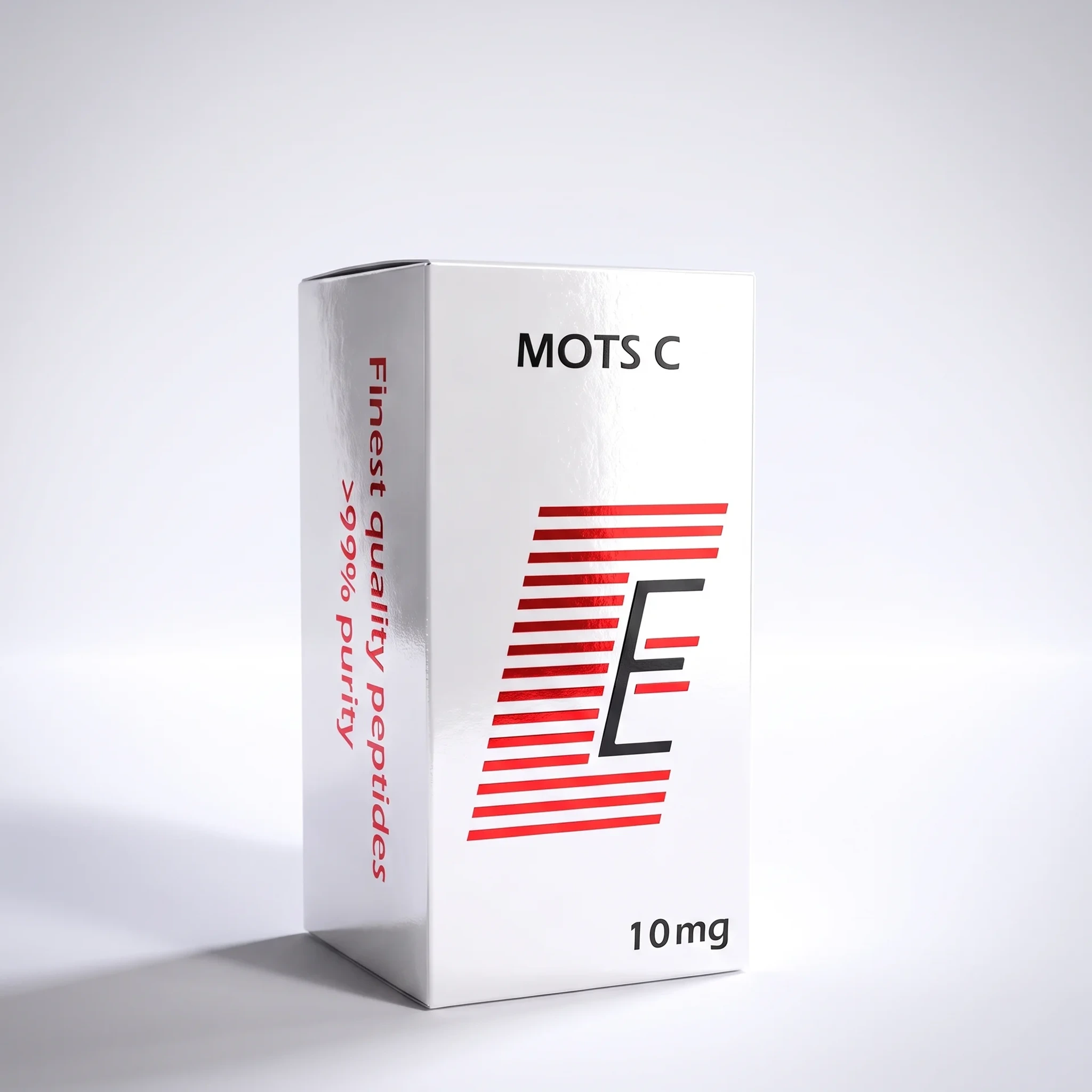
Product status information
Chemical reagent intended exclusively for laboratory tests (Research Use Only). It is not a medicinal product, dietary supplement or food. It is not intended for use on humans or animals. Sales only to registered research units and laboratories
.
Regulatory Frame – WADA Status
Blend combines two peptides with similar anti-doping status. Epithalon (AEDG tetrapeptide) falls under class S0 of the WADA Prohibited List (non-approved substances): the List does not name it, but as a compound with no marketing authorisation in any country it is prohibited at all times. GHK-Cu (copper tripeptide Gly-His-Lys·Cu) also has no marketing authorisation as a medicine, so it may be regarded as a non-approved substance. In the Pro-Body catalog, the Epithalon + GHK-Cu blend is available only as RUO research reagent, not as an adjunct. Registered athletes (ADAMS) must check the current list of prohibited substances before making any decision.
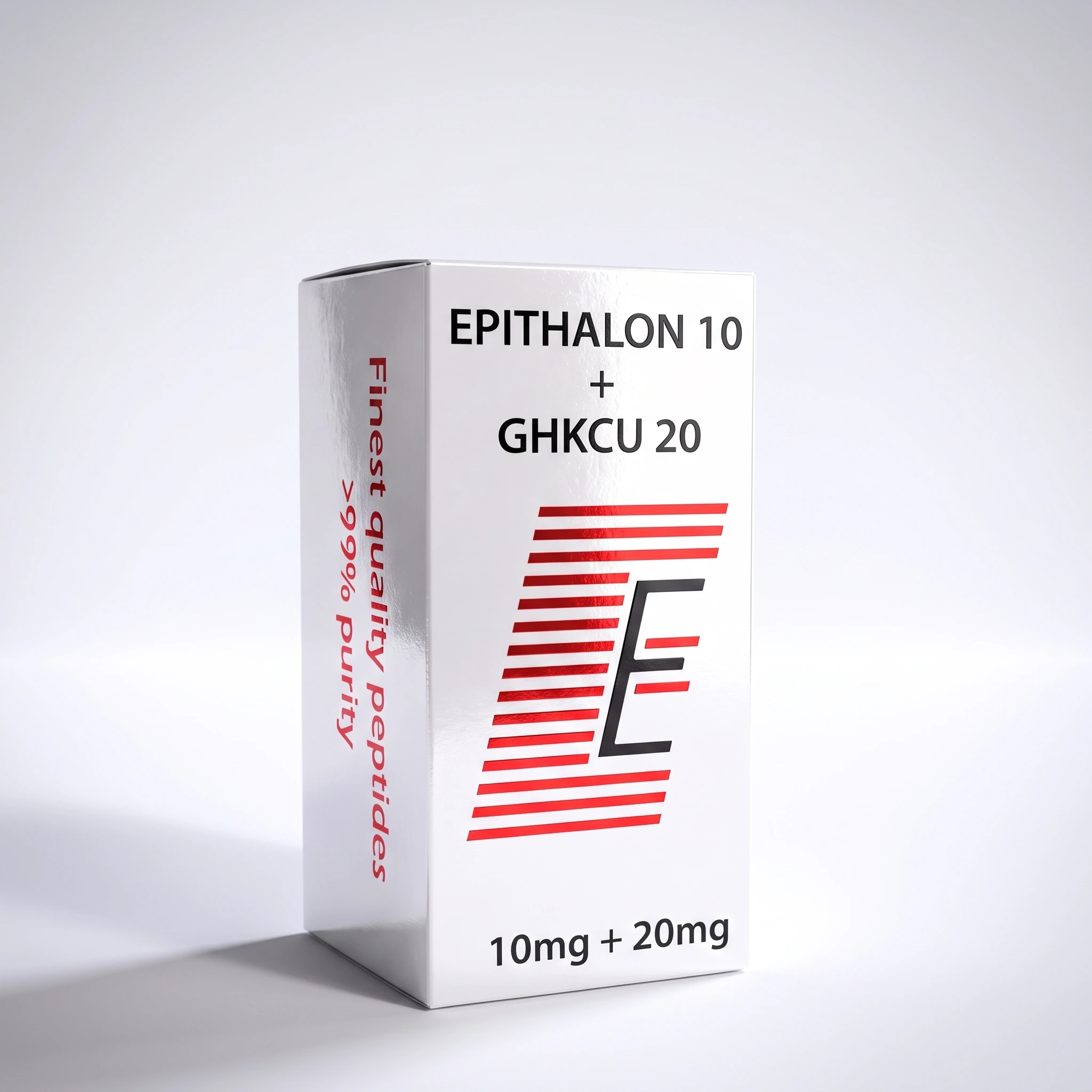
Epithalon 10 mg + GHK-Cu 20 mg from the line Endogenous this a blend of two longevity and regeneration peptides combined in one vial of lyophilisate. The first of them, Epithalon (Epitalon), is a tetrapeptide with the sequence Ala-Glu-Asp-Gly (AEDG) – a pineal bioregulator originating from the school of Vladimir Khavinson, studied in the literature on the activation of telomerase and the regulation of the internal biological clock.
The second one, GHK-Cu, is a copper tripeptide – a complex of a short plasma peptide glycyl-L-histidyl-L-lysine with a bound Cu²⁺ copper ion, described primarily in the context of extracellular matrix remodeling and tissue regeneration. Blend aligns these two molecules around a common but two-pronged research area: tissue aging at the regulatory level and remodeling at the structural level.
In the Pro-Body catalog both molecules belong to research peptides Endogenic line. The logic of this combination is molecular, not marketing. Both peptides are associated in the literature with aging and regeneration processes, but they operate at completely different levels of biological organization. Epithalon is described as a compound influencing the regulation of telomerase activity, normalization of melatonin secretion by the pineal gland, modulation of gene expression, i.e. the axis of the “internal clock”.
GHK-Cu, on the other hand, organizes the tissue from the structural side – collagen and elastin synthesis, modulation of metalloproteinases, angiogenesis, i.e. the axis of extracellular matrix remodeling. These are two different but complementary axes of longevity – one regulates the cell program, the other rebuilds the tissue scaffolding. This is why blends combining both peptides appear in the reagent market in protocols for aging and regeneration at the tissue and regulatory level.
Neither Epithalon nor GHK-Cu is registered as a drug in any jurisdiction, and their clinical development has not been completed in phase III studies in humans. In the case of Epithalon, the evidentiary picture is additionally specific: the bulk of the data comes from the Russian school of peptide bioregulator research (Khavinson, Anisimov), and independent replication outside this center remains limited.
GHK-Cu is better documented in the international literature in this respect. Therefore, blend is marketed as Research Use Only reagent — a molecular tool for laboratory work, not a medicinal form. This format is provided as vial of lyophilisate 10 mg Epithalon + 20 mg GHK-Cu — a sterile, dry blend of both peptides for self-reconstitution in laboratory conditions.
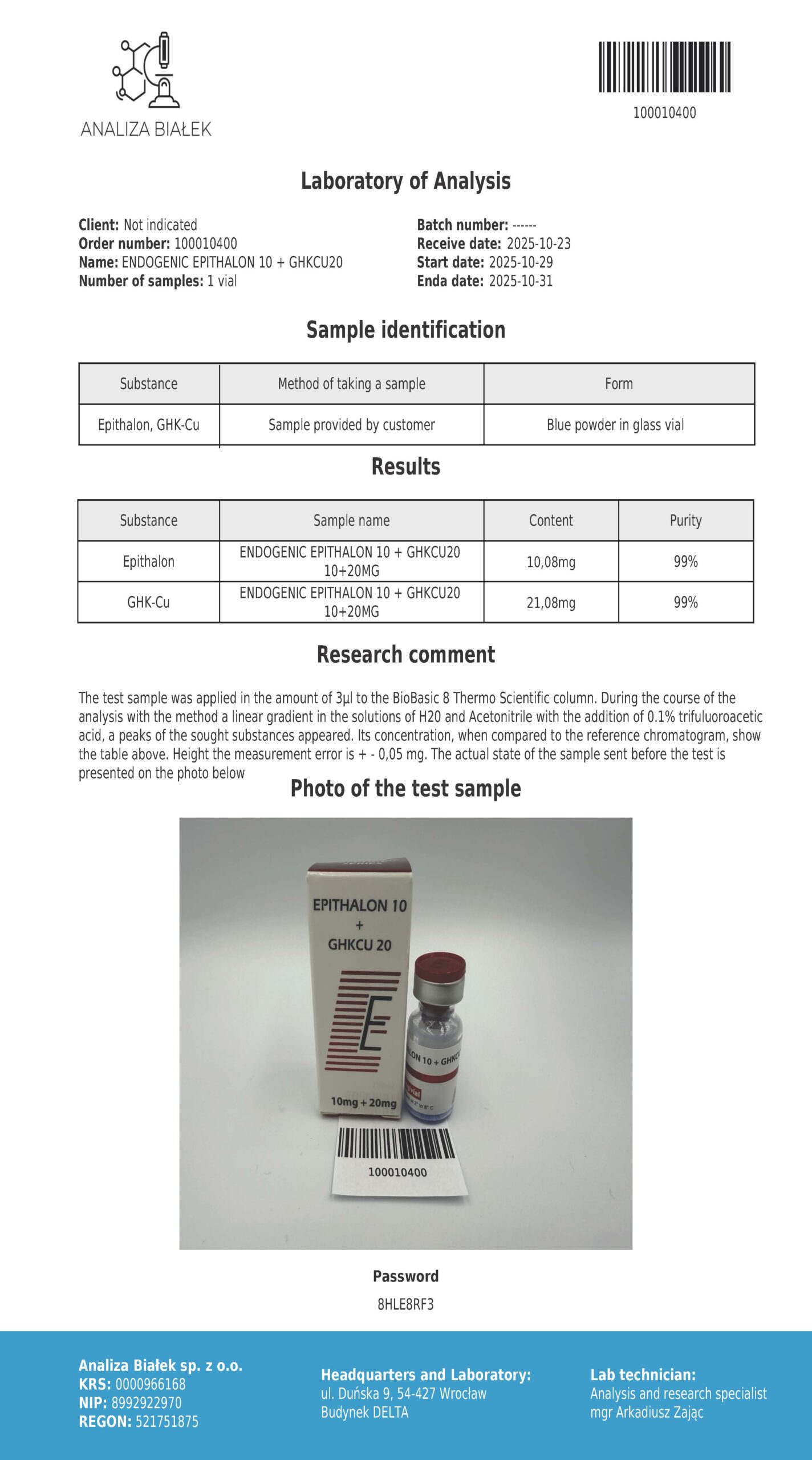
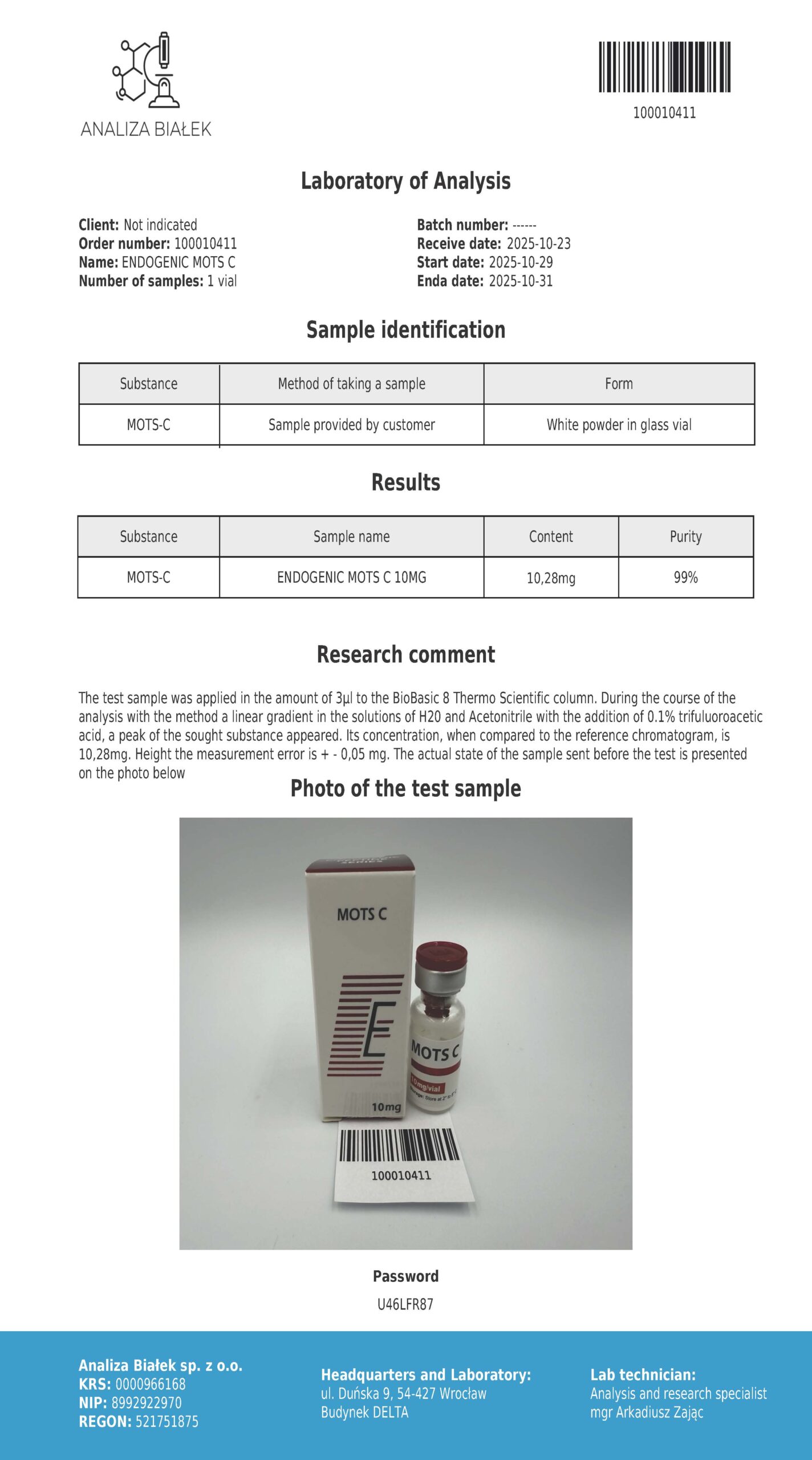
The purity of each peptide verified by HPLC ≥98%, the identity of both molecules confirmed by Q-TOF mass spectrometry, COA available for each batch (with separate determination of the peptide and copper content in the GHK-Cu complex).