

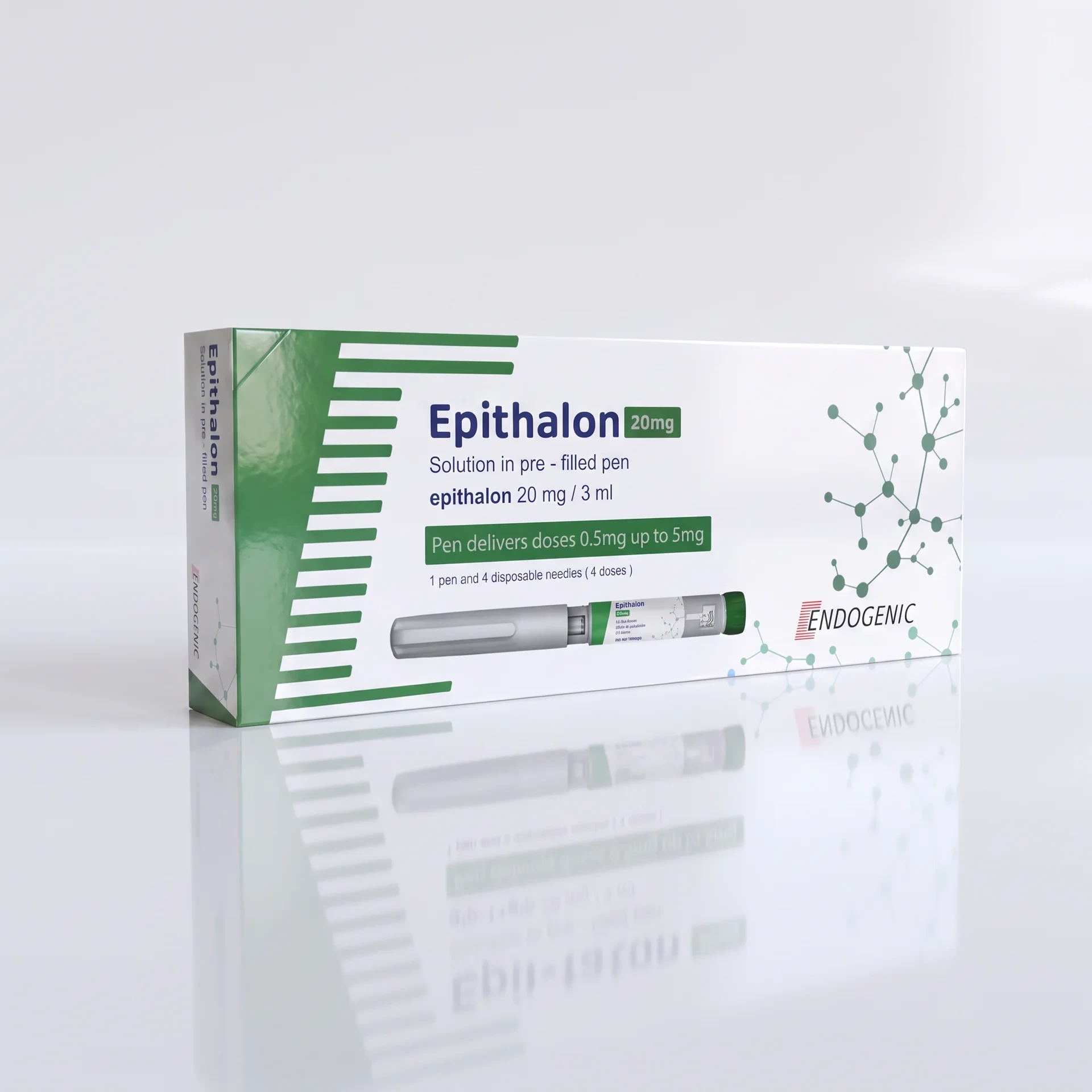
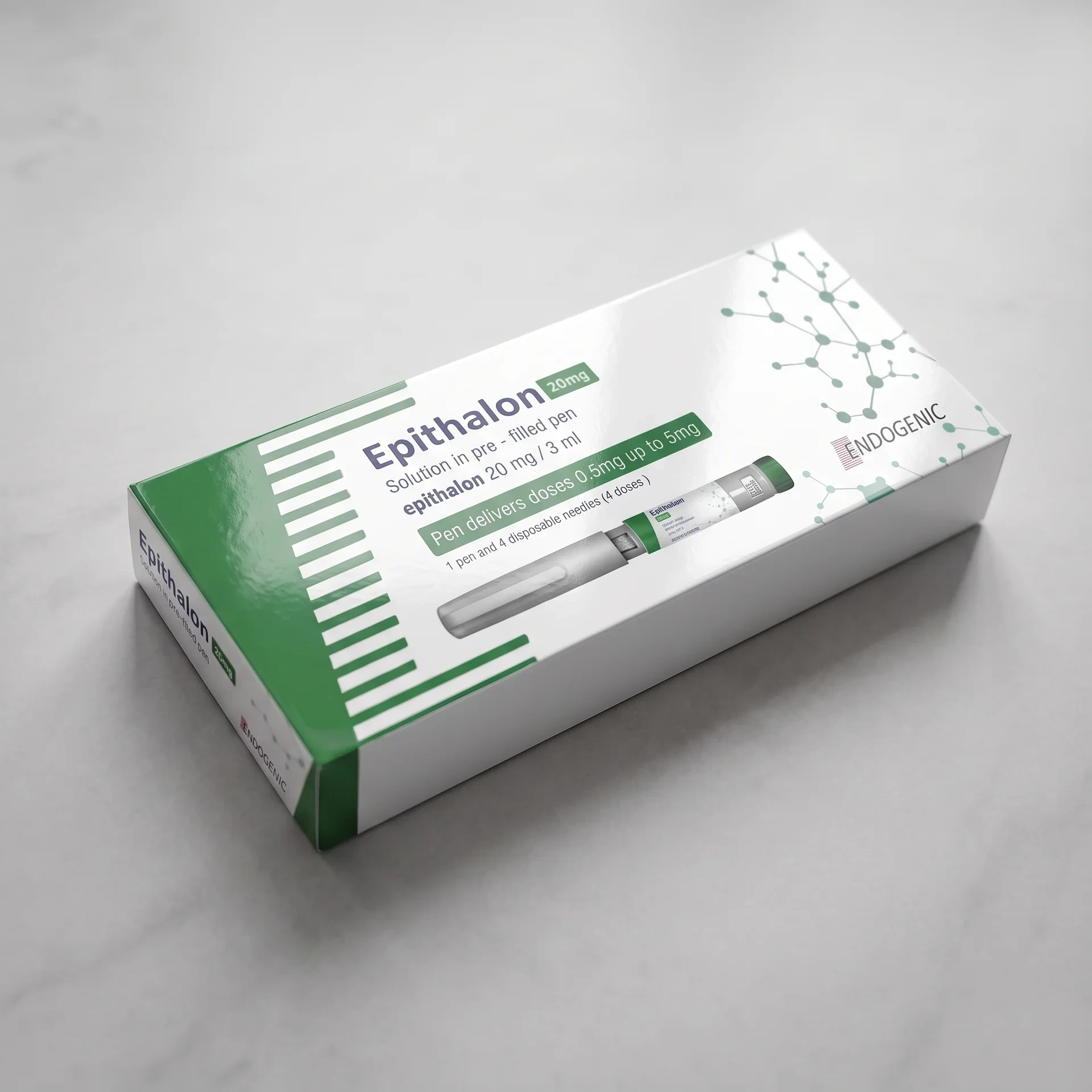
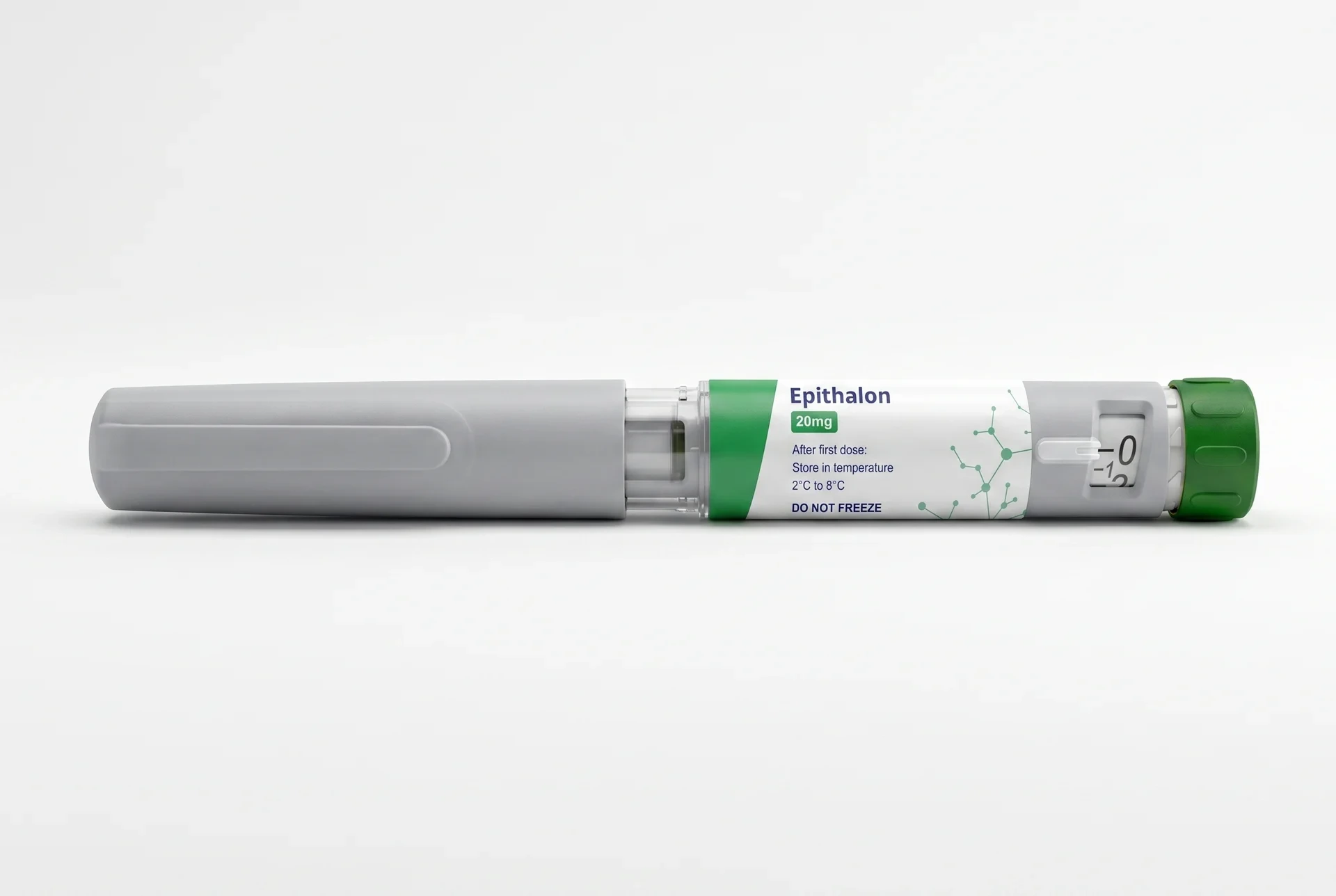
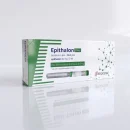

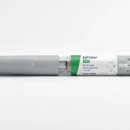
EPITHALON 20mg PEN
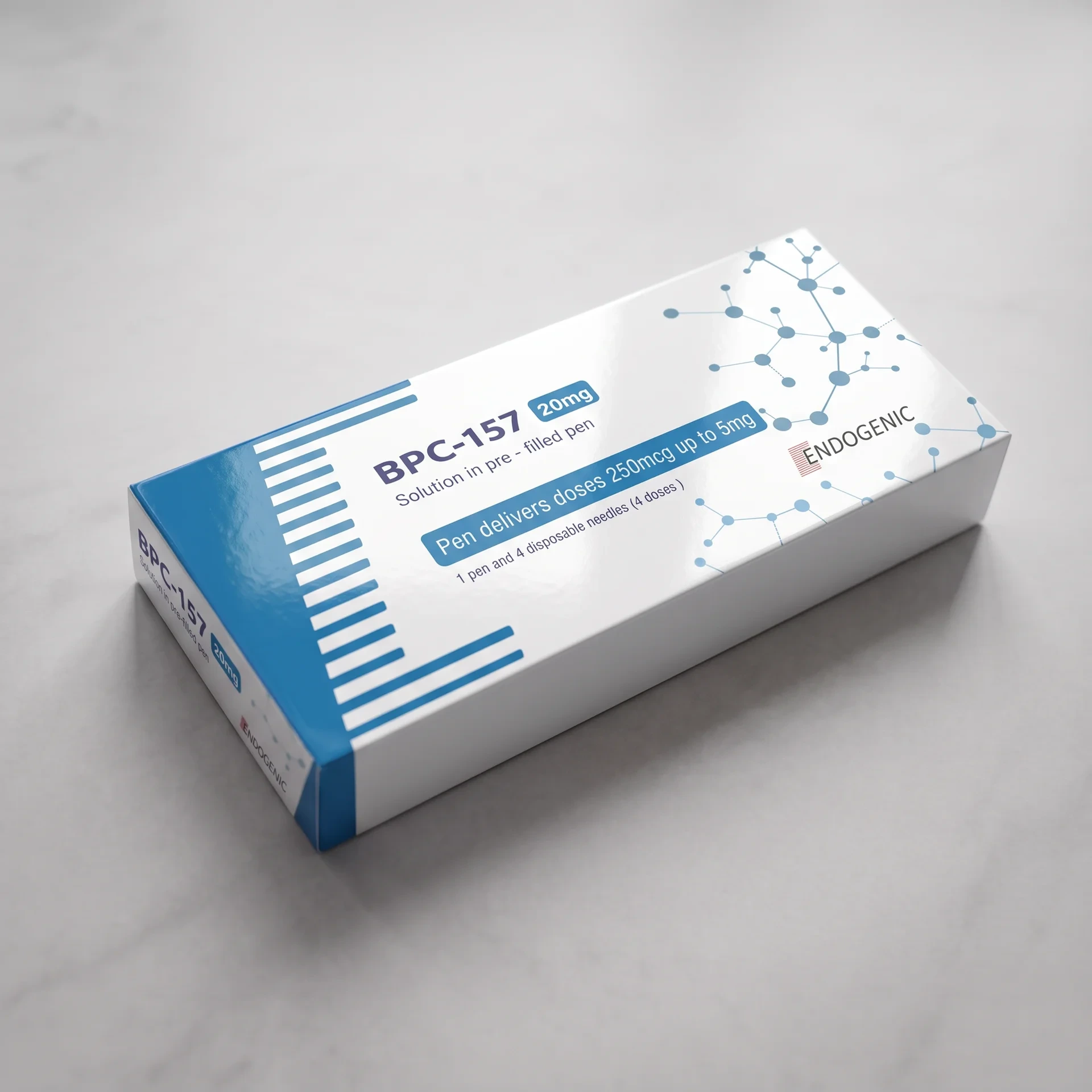
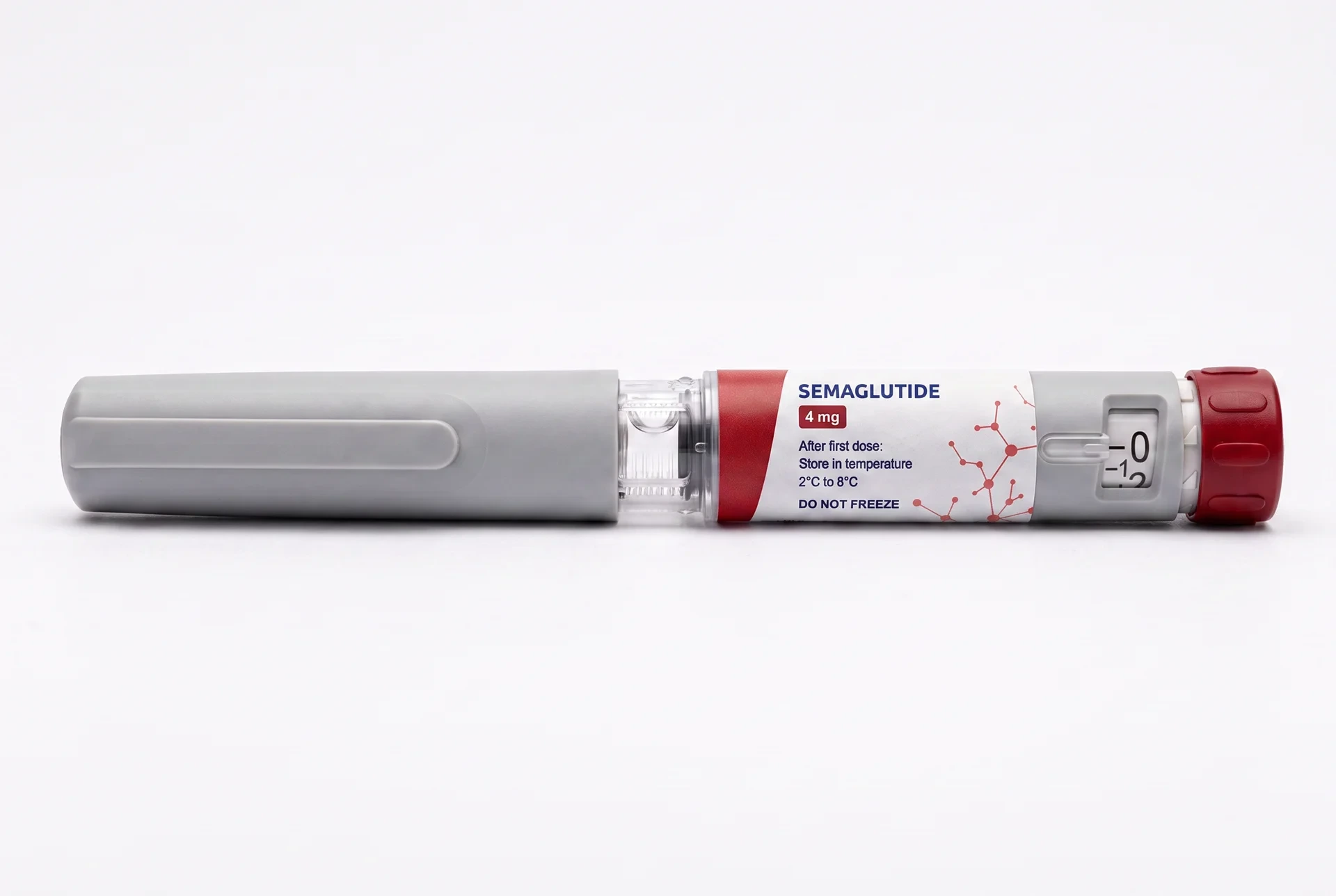
Epithalon 20mg PEN – ready-to-use laboratory solution. Synthetic peptide (Ala-Glu-Asp-Gly) with confirmed analytical purity >99% (HPLC). The product is supplied as a sterile solution in a precise applicator (PEN), intended exclusively for accurate substance dosing under research conditions.
85,99 €
Fast shipping
Delivery options
Returns policy
Epithalon 20mg PEN - in applicator, ready to use
- Epithalon: the synthetic tetrapeptide Ala-Glu-Asp-Gly.
- Ready-made solution in a PEN applicator; content: 20 mg.
- Reagent exclusively for in vitro laboratory research.
Epithalon 20mg PEN, a synthetic tetrapeptide, is one such tool that has been generating interest in the scientific community for years. Its unique structure and potential molecular-level interactions make it a valuable reagent in studies on the mechanisms of cellular aging (senescence) and cell cycle regulation in in vitro models.
Our product, Epithalon in a pen, is supplied as a high-purity reference substance (analytical standard), intended exclusively for advanced laboratory research. Understanding the need for precision and repeatability of results, we offer this reagent in an innovative “PEN” type applicator, which allows for precise and sterile dosing of the peptide solution directly into cell culture media or buffer solutions, eliminating the risk of contamination and human error during pipetting. Check also N-Acetyl Epitalon.
What is Epithalon 20 PEN?
Epithalon (also spelled as Epitalon) is a synthetically produced oligopeptide, consisting of four amino acid residues. Its linear sequence is L-Alanyl-L-Glutamyl-L-Asparaginyl-L-Glycine (abbreviated as: Ala-Glu-Asp-Gly).
It belongs to the group of so-called bioregulatory peptides, which have been the subject of intensive research in recent decades, mainly due to the work of Prof. Vladimir Khavinson. Epithalon is a synthetic analog of epithalamin – a polypeptide complex naturally isolated from the pineal gland (epiphysis) of animals.
In a laboratory context, Epithalon is used as a tool for studying fundamental biological processes. As a chemical reagent, it constitutes a strictly defined molecule that can be used to investigate its effect on gene expression, genomic stability, and replicative processes in isolated cell lines. Its small molecular weight and specific sequence make it an interesting ligand for studying potential receptors or interaction partners at the cellular level.
Properties of Epithalon 20mg PEN
A precise understanding of the physicochemical properties is crucial for any researcher planning in vitro experiments using a given peptide.
- Systematic Name (IUPAC): (2S)-2-[[(2S)-2-[[(2S)-2-aminopropanoyl]amino]-4-carboxybutanoyl]amino]-4-carboxybutanoylglycine
- Sequence: Ala-Glu-Asp-Gly
- Chemical Formula: C14H22N4O9
- Molar Mass: 390.35 g/mol
- Form: Ready-made Epithalon solution in a PEN applicator with a nominal content of 20 mg; this is not a vial of lyophilized powder.
- Solution format: The PEN version contains a prepared solution and does not require dissolving a lyophilized powder. Check the vehicle composition, volume and concentration in the documentation for the specific batch.
- Stability: Establish the stability conditions of the ready-made solution from the documentation for the specific batch; do not apply specifications for a dry lyophilisate to the PEN.
Purity and Analysis
In scientific research, especially those concerning molecular mechanisms, reagent purity is a critical parameter. Contaminants, such as incorrect sequences (formed during synthesis), solvent residues, or salts, can drastically affect experiment results, leading to false conclusions.
Our Epithalon 20 mg product is synthesized using the solid-phase peptide synthesis (SPPS) method, and subsequently purified using high-performance liquid chromatography (HPLC) in the reverse phase (RP-HPLC).
Storage and Laboratory Handling
Proper handling of peptides is crucial for maintaining their structural integrity and activity in assays.
PEN format: The applicator contains a ready-made solution of Epithalon 20 mg and does not require reconstitution of a lyophilized powder.
Storage and stability: Follow the manufacturer’s documentation for the specific batch, including the label, certificate of analysis and safety data sheet. Confirm storage temperature, suitability for freezing and the period of use after opening in those documents, rather than assuming specifications for a powder or a different formulation.
Handling: Standard personal protective equipment (laboratory gloves, safety glasses, lab coat) should be used when working with the reagent.
Epithalon 20 mg PEN - action
Scientific research on Epithalon focuses primarily on its potential impact on processes related to genome stability in cell cultures. A central point of interest is the hypothesis regarding telomerase activity. Telomeres are protective structures at the ends of chromosomes that shorten with each cell division. Telomerase is an enzyme (ribonucleoprotein) capable of rebuilding (lengthening) these structures.
In most human somatic cells, telomerase activity is silenced, leading to the cell reaching its Hayflick limit and entering senescence. In vitro studies, conducted on human lung fibroblast lines (MRC-5 cell line), among others, suggest that the addition of the Ala-Glu-Asp-Gly peptide to the culture medium can induce telomerase expression and activity. Telomeres have been observed to elongate in cells treated with this peptide.
The mechanism of this induction is not fully understood, but it is hypothesized that this peptide may act as a transcriptional regulator, influencing the expression of the hTERT gene, which encodes the catalytic subunit of telomerase. It should be emphasized that these are solely observations made in laboratory conditions (in vitro) on isolated cells. These results cannot be extrapolated or applied to the functioning of the complex human organism (in vivo).
Peptide Application
Epithalon 20 mg, as a certified chemical reagent, finds application in biochemical laboratories, molecular biology, and experimental gerontology. The main directions of in vitro research include:
- Study of cellular senescence mechanisms: Use of the peptide to study the aging processes of somatic cells, e.g., in cultures of fibroblasts, keratinocytes, or lymphocytes.
- Study of telomerase regulation: Used as a tool to investigate signaling pathways leading to the activation or repression of the hTERT gene in various cell types.
- Gene expression study models: Analysis of the peptide’s influence on the cell’s transcriptional profile, particularly genes related to the cell cycle, apoptosis, and stress response.
- Study of circadian rhythms: Preliminary studies on isolated cultures of neurons or pineal gland cells may use Epithalon to investigate its effect on the expression of clock genes (e.g., PER, CRY).
- Analytical standard: Serves as a reference standard (wzorzec) in chromatographic (HPLC) and spectrometric (MS) methods for the identification and quantification of this sequence in complex biological matrices.
Summary
Epithalon (Ala-Glu-Asp-Gly) is a synthetic tetrapeptide of great significance for basic science. Its ability to potentially modulate telomerase activity in in vitro models makes it a valuable tool for researchers exploring the fundamental processes of cellular aging and cell life cycle regulation.
Our Epithalon 20 mg product in a “PEN” applicator is a guarantee of the highest, certified purity (>99% HPLC) and the convenience and sterility of dispensing under laboratory conditions.
We re-emphasize that this is a chemical reagent intended exclusively for scientific research. It is not intended for the diagnosis, treatment, or prevention of any disease in humans.
Scientific References
- Khavinson, V. Kh., Bondarev, I. E., & Butyugov, A. A. (2003). Epithalon peptide induces telomerase activity and telomere elongation in human somatic cells. Bulletin of Experimental Biology and Medicine, 135(6), 590–592. (Key study confirming the effect of Epithalon on telomerase and telomere elongation in human cells).
- Anisimov, V. N., Khavinson, V. Kh., Popovich, I. G., & Zavarzina, N. Y. (2003). Effect of Epithalon on biomarkers of aging, mortality and spontaneous tumor incidence in female Swiss-derived SHR mice. Biogerontology, 4(4), 193–202. (Study on animal models demonstrating the geroprotective effect of the peptide, including on aging markers and mortality).
- Khavinson, V. Kh. (2002). Peptides and Ageing. Neuroendocrinology Letters, 23(Suppl 3), 1–116. (Extensive monograph by Professor Khavinson summarizing decades of research on peptides (including Epithalon) in the context of aging).
0.0
0 reviews
This product has no reviews yet.
Related products