Skip to content

Free delivery on orders over €400. Fast delivery.

Search

What are you looking for?

Type at least 2 characters to see suggestions.

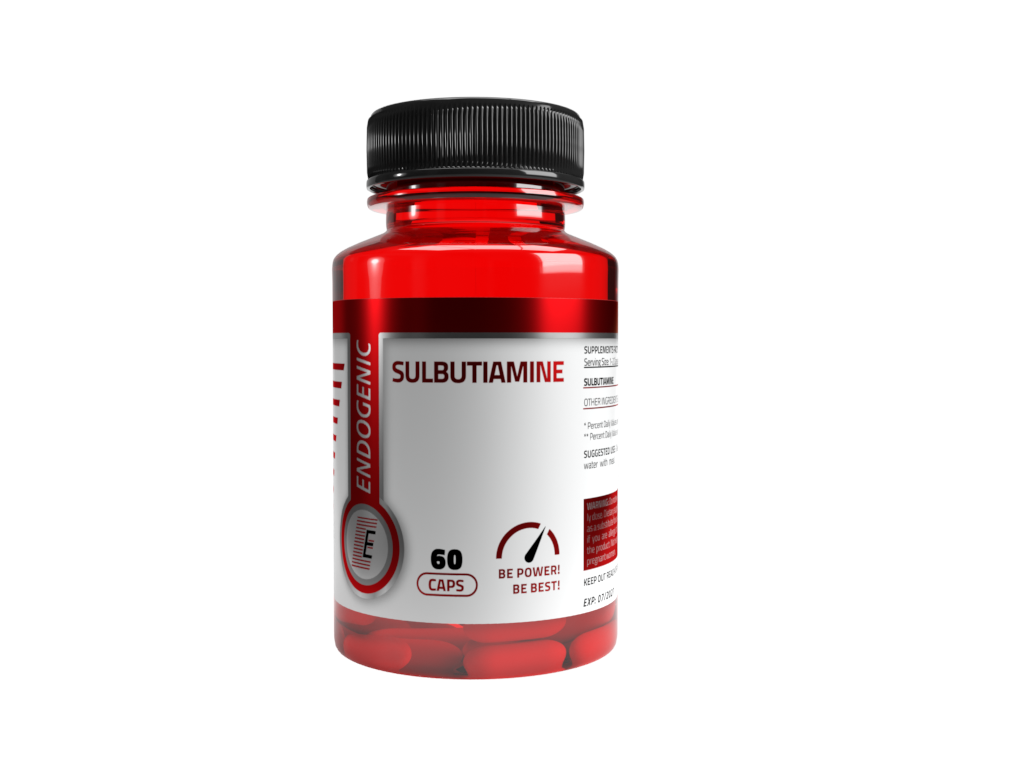
Sulbutiamine 400 mg 60 caps

Sulbutiamine 400 mg 60 caps

Sulbutiamine (isobutyryl thiamine disulfide) 400 mg — a lipophilic derivative of vitamin B1 that crosses the blood-brain barrier where hydrophilic thiamine does not reach — support for neuron energy, memory and motivation without the profile of a classic stimulant. Anti-asthenic effect, aimed at functional fatigue. A specialized nootropic preparation for adults (21+), cyclical use.

25,99 €
Fast shipping
Delivery options
Returns policy

Sulbutiamine 400 mg 60 caps - lipophilic derivative of vitamin B1, anti-asthenic nootropic

  • Sulbutiamine: a lipophilic derivative of vitamin B1.
  • 400 mg, 60 capsules.
  • Specialized nootropic preparation for adults (21+).

A specialized nootropic preparation intended only for adults (21+) for self-assessment of risk. It is not a medicinal product or dietary supplement in the Polish and EU legal sense. It is not a substitute for Arcalion® (sulbutiamine, a prescription drug registered in France for asthenia/fatigue). Before making any decision, please read the “Legal Status” section and contraindications at the end of the description.

Thiamine – vitamin B1 – is hydrophilic, which means one specific problem: it does not cross the blood-brain barrier well. You can take a large dose of oral thiamine and most of it will end up in your urine before it can significantly raise concentrations in the central nervous system. Transport across membranes is saturable – once the threshold is exceeded, the body simply does not let in any more.

This biochemical bottleneck is known to anyone who has tried to “boost B1” with a regular supplement and felt nothing in the head. In the 1960s, Japanese chemists solved this bottleneck by engineering the molecule. They connected two modified thiamine units with a disulfide bridge and added isobutyryl groups – it was created sulbutiamine, a lipophilic molecule, i.e. fat-soluble.

Lipophilicity changes the rules of transport: sulbutiamine passes through biological barriers by passive diffusion, reaches the brain and is hydrolyzed there back to thiamine and its esters. The net effect is an increase in thiamine concentration in the CNS that hydrophilic B1 cannot achieve (Volvert et al. 2008). This makes sulbutiamine the first “nootropic” vitamin derivative.

In France, the same molecule is registered as a drug Arcalion®, used to treat asthenia – chronic functional fatigue. Coach Marek would say this: don’t expect stimulant fireworks here. Sulbutiamine is neither caffeine nor DMAA. Rather, it is a silent modulation of energetics and neurotransmitter systems that is best seen in someone who feels exhausted despite a good night’s sleep.

This preparation is sulbutiamine 400 mg in HPMC capsule, 60 capsules per package, pharmaceutical quality, purity ≥98% HPLC, identity confirmed by mass spectrometry, COA available for each batch. The capsule form allows you to precisely measure a standard portion and plan a cyclical protocol – which is important in the case of sulbutiamine, because its characteristic feature is increasing tolerance with daily use.

What is sulbutiamine - a lipophilic form of vitamin B1

Sulbutiamine is synthetic lipophilic derivative of thiamine. In terms of structure, it is a dimer: two molecules of modified thiamine with an open thiazole ring, connected by a disulfide bridge (-S-S-), with two isobutyric acid residues attached by ester. Hence its second chemical name – isobutyryl thiamine disulfide. The simplest way is: take ordinary vitamin B1, glue two pieces with a fat-loving bridge and you will get a molecule that behaves like B1 inside, but penetrates where ordinary B1 cannot reach.

An analogy from the workshop: thiamine is a good part that is stuck at the warehouse gate because it cannot pass through lipid membranes. Sulbutiamine is the same part packed in a package that passes through the gate – and inside it is unpacked back into thiamine. Sulbutiamine belongs to a broader family of lipophilic thiamine derivatives (allithiamine from garlic, benfotiamine, fursultiamine).

Volvert et al. (2008) compared these compounds directly and showed that they are not equivalent: benfotiamine increases thiamine mainly peripherally (blood, liver), while sulbutiamine and fursultiamine increase its concentration more effectively in the brain. This distinction has practical significance – if the target is the CNS, not all “better B1” works the same.

Thiamine in the central nervous system - why the brain needs it

To understand what the sulbutiamine profile is based on, you need to see what thiamine does in the neuron. Its active form is thiamine pyrophosphate (TPP) — cofactor of three enzymes central to energy metabolism:

  • pyruvate dehydrogenase — carbon entry gate to the Krebs cycle (from glucose to energy)
  • α-ketoglutarate dehydrogenase — an enzyme within the Krebs cycle
  • transketolase — enzyme of the pentose phosphate pathway (NADPH and ribose production)

The brain uses approximately 20% of the body’s energy at 2% of its mass and is almost entirely dependent on glucose metabolism. Without functional pyruvate dehydrogenase, glucose does not enter the Krebs cycle, and ATP production in neurons decreases. Therefore, thiamine deficiency affects the brain as one of the first organs – the classic picture is Wernicke’s encephalopathy.

This is not a biochemical abstraction: the energy deficit of the neuron translates into cognitive fatigue, memory problems and decreased alertness. Sulbutiamine enters this dependence from a side that hydrophilic thiamine cannot use – it increases the pool of TPP available in the nervous tissue. This is the starting point for all further mechanisms.

Mechanism of action at the molecular level

Sulbutiamine does not have a single target receptor. Its profile is the result of several overlapping effects – from purely metabolic ones to modulation of neurotransmitter systems. Below I divide them into axes of action.

Increased concentration of thiamine and thiamine esters in the brain

The first and best documented mechanism is the simplest: lipophilicity. Sulbutiamine crosses the blood-brain barrier by passive diffusion and increases the concentration of thiamine and its phosphate esters – TPP and thiamine triphosphate (TTP) in the nervous tissue. Volvert et al. (2008) confirmed that in this respect sulbutiamine is superior to regular thiamine, the transport of which to the CNS is saturable. In practice: more cofactor for energy enzymes exactly where the demand is highest – in the neuron.

Modulation of the cholinergic system

Acetylcholine is a neurotransmitter of memory, learning and alertness. Studies in animal models indicate that chronic administration of sulbutiamine increases the activity of the cholinergic system in the hippocampus – the structure responsible for memory consolidation. Bizot et al. (2005) showed that after chronic administration of sulbutiamine, rats performed better in the object recognition test, which is interpreted as an improvement in working memory, associated with cholinergic modulation. In practice: this is the axis that explains the effect of “sharper” – that is, clearer – memory and better recall reported by users.

Modulation of the dopaminergic system – D1 receptors of the prefrontal cortex

Dopamine in the prefrontal cortex is responsible for motivation, drive and mood. Preclinical data suggest that chronic administration of sulbutiamine reduces the density of D1 dopamine receptors in the prefrontal cortex – which in receptor pharmacology is usually interpreted as an adaptive response to increased dopaminergic signaling (down-regulation in response to elevated dopamine tone). This is the mechanistic basis for the observation that sulbutiamine is sometimes described as a compound supporting motivation and drive to act, and not just a “metabolic energetic”.

In practice: for many people, it is this axis – the willingness to act, not just vigilance – that is the most noticeable effect.

Modulation of the glutamatergic system

Glutamate is the main excitatory neurotransmitter of the brain, involved in synaptic plasticity and learning processes. Preclinical data indicate the effect of sulbutiamine also on glutamatergic transmission in the hippocampus and cortex. This axis is the least well understood of the four and I treat it with caution – there are indications of modulation, but the mechanism is not resolved at the level at which cholinergic and dopaminergic ones have been described.

Support for cell energy metabolism

To summarize the above: because TPP is a cofactor of pyruvate dehydrogenase and transketolase, increasing its pool in the brain supports the production of ATP from glucose. This is the metabolic foundation of the entire profile – sulbutiamine does not “pump” energy like a stimulant that raises the heart rate, but increases the availability of the cofactor for the pathway through which the neuron produces energy itself.

For this reason, its action is described as anti-asthenic: aimed at functional fatigue resulting from inefficient energy production, and not at sleepiness that is “covered” by caffeine. A related tool that targets mitochondrial energetics from a different angle – as an alternative electron transporter supporting ATP production – is Methylene Blue; both compounds have a common purpose (cell energy), but a different mechanism.

A scientific perspective

Most of the neurotransmitter mechanisms of sulbutiamine (cholinergic, dopaminergic, glutamatergic) have been documented in rodent models. On the human side, there are several clinical studies on asthenia and fatigue (e.g. Tiev et al., Loo et al.), but no large, multicenter trials confirming the “nootropic” profile in healthy adults. It is worth balancing optimism about the mechanistic data with realism about the strength of the clinical evidence in a healthy population.

Nootropic profile – what sulbutiamine does in practice

Sulbutiamine has a reputation for being a “subtle” nootropic – and that’s a fair description. You won’t feel the rush of a large dose of caffeine or a sympathomimetic stimulant. What people describe and what is based on the mechanisms falls into three areas:

  • Alertness and mental clarity — clearer focus, less cognitive fog. Metabolic-cholinergic effect, best seen in people with functional fatigue.
  • Memory and learning — support for working memory and consolidation, related to the cholinergic axis in the hippocampus (Bizot et al. 2005).
  • Motivation and drive — willingness to act, “start-up” on the mental side, associated with dopaminergic modulation of the prefrontal cortex. For some people, this is the most noticeable component of the profile.

The role remains the most clinically powerful anti-asthenic. Research on asthenia – chronic fatigue with a functional basis, not resulting from a specific disease – is the historical core of the use of this molecule and the reason why it was introduced into treatment in France as Arcalion®. For advanced adults who are looking for support during periods of intense cognitive load, the “energy without adrenergic stimulation” profile can be attractive precisely because it does not raise the heart rate and does not generate the “downhill” typical of stimulants.

In the context of learning and the examination session, the guide organizes the topic nootropic supplements for students, which combines various axes of action with a specific goal in mind. If you want a more pronounced, stimulating cognitive profile, sulbutiamine will not be your first choice – racetam is more suitable for this role. MINDHUNTER X, which targets alertness and concentration through a different mechanism.

Sulbutiamine is worth treating in a complementary way: as a support for energy and drive, not as a classic cognitive booster. Do you want to tailor your nootropic preparation to a specific purpose before you reach for a dose? Start with mechanics, not opinions – an overview nootropic substances – what they are and when to use them organizes the classification and helps compare axes of action.

Legal status

The status of sulbutiamine is two-layered, as the same molecule functions simultaneously as a registered drug (in France) and as a nootropic preparation outside the framework of a dietary supplement.

  • Arcalion® (drug): sulbutiamine is registered as a medicinal product in France under the name Arcalion®, with indications for the treatment of asthenia (chronic functional fatigue). It is a prescription medicine. This Pro-Body preparation is not Arcalion®, it is not a substitute and is not intended to treat asthenia or any other condition.
  • Status in the EU/outside France – outside the dietary supplement framework: sulbutiamine as a derivative of vitamin B1 in a nootropic dose does not have the status of a registered dietary supplement in the EU legal sense. We classify this preparation as: specialized nootropic preparation for adults (21+), for self-assessment of risk – is not a dietary supplement in the Polish and EU legal sense.
  • GIS/EFSA: sulbutiamine is not among the ingredients authorized as a dietary supplement ingredient in the EU. The Chief Sanitary Inspectorate (GIS) does not qualify this substance in a nootropic dose as a permitted food ingredient/supplement, and EFSA has not issued authorization for nutraceutical applications in this area. For this reason, the preparation functions outside the framework of a dietary supplement.
  • DRAWBACK: sulbutiamine not listed on the WADA prohibited substances list (as of 2024). However, registered athletes (ADAMS) should verify the current list before making any decisions, as compound status may change in future updates.

The preparation is intended only for adults (21+) to independently assess the risk. Communication of the product as a medicine, as a substitute for Arcalion®, as a “treatment for fatigue/depression” or as a dietary supplement is unacceptable.

Summary

Sulbutiamine (isobutyryl thiamine disulfide, CAS 3286-46-2) is a synthetic lipophilic derivative of vitamin B1, developed in Japan in the 1960s as a response to the poor CNS penetration of hydrophilic thiamine. Lipophilicity allows it to cross the blood-brain barrier and increase the concentration of thiamine and its esters (TPP) in the nervous tissue – which ordinary B1 cannot do (Volvert et al. 2008).

On this basis, a profile is built combining support for energy metabolism (TPP as a cofactor of pyruvate dehydrogenase and transketolase) with modulation of the cholinergic (memory – Bizot et al. 2005), dopaminergic (motivation, D1 receptors of the prefrontal cortex) and glutamatergic systems. Clinically, the anti-asthenic role remains the most powerful – and this is the reason for the registration of the molecule in France as Arcalion®.

The practical critical feature is increasing tolerance, which forces cyclic, not continuous, use. This preparation is 400 mg capsules, purity ≥98% HPLC, MS confirmation, COA per batch – a specialized nootropic preparation for adults (21+), not a drug and not a substitute for Arcalion®.

Bibliography

  1. Bizot JC, Herpin A, Pothion S, Pirot S, Trovero F, Ollat H (2005). Chronic treatment with sulbutiamine improves memory in an object recognition task and reduces some amnesic effects of dizocilpine in a spatial delayed-non-match-to-sample task. PubMed
  2. Volvert ML, Seyen S, Piette M, Evrard B, Gangolf M, Plumier JC, Bettendorff L (2008). Benfotiamine, a synthetic S-acyl thiamine derivative, has different mechanisms of action and a different pharmacological profile than lipid-soluble thiamine disulfide derivatives. PubMed
  3. Trovero F, Gobbi M, Weil-Fugazza J, Besson MJ, Brochet D, Pirot S (2000). Evidence for a modulatory effect of sulbutiamine on glutamatergic and dopaminergic cortical transmissions in the rat brain. PubMed
  4. Tiev KP, Cabane J, Imbert JC (1999). Treatment of chronic postinfectious fatigue: randomized double-blind study of two doses of sulbutiamine (400-600 mg/day) versus placebo. PubMed
  5. Lôo H, Poirier MF, Ollat H, Elatki S (2000). Effects of sulbutiamine (Arcalion 200) on psycho-behavioral inhibition in major depressive episodes. PubMed