

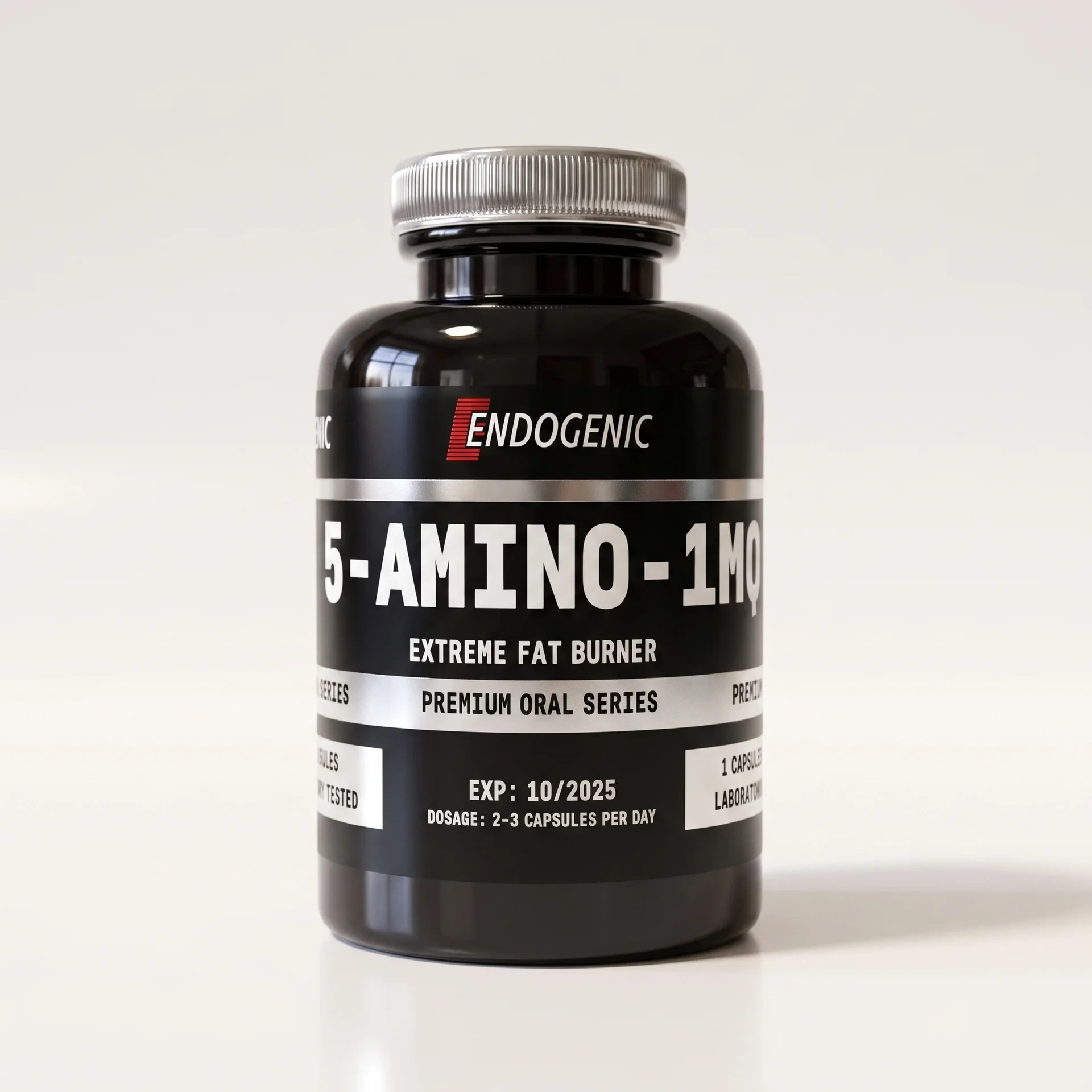
5-Amino-1MQ (5-amino-1-methylquinolinium) is a synthetic small organic molecule – quinolinium cation – which is a selective, reversible inhibitor of the NNMT enzyme (nicotinamide N-methyltransferase). In metabolic studies, it is used as a molecular tool to block the activity of this enzyme and observe how it affects the nicotinamide pool, NAD⁺ regeneration and adipocyte metabolism. The molecule remains a research reagent with no human clinical trials completed.
5-amino-1-MQ 50mg 30 caps
5-Amino-1MQ 50 mg × 30 capsules from the Endogenic line is a synthetic small organic molecule – a selective, reversible inhibitor of the NNMT enzyme (nicotinamide N-methyltransferase). In the models, NNMT inhibition increases the pool of nicotinamide available for NAD⁺ regeneration. Research Use Only reagent
142,99 €
Fast shipping
Delivery options
Returns policy
5-Amino-1MQ 50 mg 30 caps - NNMT inhibitor, research reagent
- 5-Amino-1MQ: a small-molecule inhibitor of the NNMT enzyme.
- 50 mg per capsule; pack of 30 capsules.
- Research Use Only reagent, not a medicinal product.
Product status information
Chemical reagent intended exclusively for laboratory tests (Research Use Only). It is not a medicinal product, dietary supplement or food. It is not intended for use on humans or animals. Sales only to registered research units and laboratories.
5-Amino-1MQ (5-amino-1-methylquinolinium) is a synthetic small organic molecule from the line Endogenic — a collection of Pro-Body reagents focused on enzymes and endogenous metabolism pathways. The molecule acts as selective, reversible NNMT inhibitor — Nicotinamide N-methyltransferase, an enzyme from the S-adenosylmethionine-dependent methyltransferase (SAM) family. NNMT lies at the intersection of two important axes for cellular metabolism: nicotinamide management (a precursor of NAD⁺ regeneration) and methyl group management (SAM pool).
This makes this enzyme an attractive molecular target for studies on the energy metabolism of adipose tissue, liver and muscle. Interest in NNMT as a research target increased after the work Kraus et al. 2014 (Nature), which linked NNMT expression in adipose tissue and liver to the regulation of energy expenditure in rodent models. Small molecule enzyme inhibitors – including 5-Amino-1MQ, characterized by, among others, by the team Neelakantan et al. — have become tools for examining how NNMT inhibition translates into the nicotinamide pool, NAD⁺ regeneration and adipocyte metabolism.
In the Pro-Body catalog of metabolic reagents, the molecule falls within the group peptides for burning fat tissue — although it is not a peptide itself, but a small-molecule inhibitor of a metabolic enzyme. This reagent is supplied as 30 capsules of 50 mg 5-Amino-1MQ — a form adapted to standardize the weighed amount in chronic oral exposure protocols in in vivo models on rodents and to handle weighed powder in laboratory conditions. Purity verified by HPLC ≥98%, identity confirmed by mass spectrometry, COA available for each batch.
Regulatory status
5-Amino-1MQ is a new research compound – the evidence base comes mainly from preclinical models (mouse, cell cultures), with no completed human clinical trials. No registration as a drug with the EMA, FDA or anywhere in the world. Not authorized by EFSA as an ingredient of a dietary supplement. The molecule is not currently on the WADA Prohibited List. Communicating a product as a “fat burner”, “NAD⁺ booster” or “weight loss agent” is inconsistent with the Research Use Only framework.
NNMT as a target and the nicotinamide / NAD⁺ / methylation axis
Nicotinamide N-methyltransferase (NNMT) is a cytosolic enzyme that transfers a methyl group from S-adenosylmethionine (SAM) on nicotinamide, forming 1-methylnicotinamide (MNA) and S-adenosylhomocysteine (SAH). This reaction seems simple, but it places NNMT at a critical point in cellular metabolism – at the junction of two regulatory axes. The first axis is nicotinamide and NAD management. Nicotinamide is a precursor in the salvage pathway for the regeneration of NAD⁺ – a coenzyme central to energy metabolism, the action of sirtuins and redox reactions.
By methylating nicotinamide, NNMT diverts some of it for degradation and excretion (as MNA) rather than allowing it to return to the NAD pool. Inhibiting NNMT theoretically increases the availability of nicotinamide for NAD regeneration – this is one of the main reasons for research interest in the enzyme. The second axis is management of methyl groups.
Each reaction catalyzed by NNMT consumes a SAM molecule – the universal donor of methyl groups in the cell. High NNMT activity can drain the SAM pool and increase the level of SAH, which affects other methylation reactions (including DNA and histone methylation). Inhibiting the enzyme therefore spares SAM. These two axes – nicotinamide/NAD⁺ and methylation/SAM – intersect precisely at the NNMT enzyme, making it a promising, if still exploratory, target for metabolic research.
The metabolic research world is keeping an eye on NNMT for several reasons. First, the enzyme is highly expressed in adipose tissue and liver, and its expression correlates with models of obesity and insulin resistance (Kraus et al. 2014). Second, NNMT modulation intersects NAD⁺ and methylation pathways—two central topics in metabolism and aging research. Third, NNMT was detected in muscle satellite cells, which opened up the field of research on regeneration and muscle mass. 5-Amino-1MQ is one of the most frequently cited molecular tools for studying these relationships.
What is 5-Amino-1MQ?
Chemically, 5-Amino-1MQ is a small organic molecule – quinolinium cation, a structural analogue of 1-methylquinolinium substituted with an amino group in the 5-position.
- Common name: 5-Amino-1MQ
- Systematic name: 5-amino-1-methylquinolinium (5-amino-1-methylquinolinium)
- Class: synthetic small organic molecule; selective, reversible inhibitor of the NNMT enzyme (nicotinamide N-methyltransferase)
- Molecular target: NNMT – an enzyme that methylates nicotinamide at the expense of SAM
- CAS number: for verification in the batch COA
- Molecular formula: ~C₁₀H₁₁N₂⁺ (quinolinium cation) – to be verified in the batch COA
- Molar mass: for verification in the batch COA
- Delivered form: hard capsule, 50 mg of substance per capsule, 30 capsules; ≥98% HPLC
Table of physicochemical characteristics
| Parameter | Value |
|---|---|
| Name | 5-Amino-1MQ (5-amino-1-methylquinolinium) |
| Chemical class | small organic molecule (quinolinium cation) |
| Pharmacological profile | selective, reversible NNMT inhibitor |
| Molecular target | Nicotinamide N-methyltransferase (NNMT) |
| CAS | for verification in the batch COA |
| Molecular formula | ~C₁₀H₁₁N₂⁺ (to be verified in the batch COA) |
| Molar mass | for verification in the batch COA |
| Purity | ≥98% HPLC |
| Form | capsule, 50 mg/capsule, 30 capsules |
| Metabolic conversion | no clinical data in humans |
| Clinical status | no completed phase I-III studies in humans |
| WADA status | is not on the Prohibited List |
Mechanism of action at the molecular level
5-Amino-1MQ binds to the active site of NNMT and inhibits the transfer of the methyl group from SAM to nicotinamide. The inhibition is selective for NNMT and reversible. The mechanism of a molecule is described in the literature by several related observations in models.
- Inhibition of NNMT – nicotinamide methylating enzyme. The molecule blocks the catalytic activity of NNMT, i.e. the reaction of transferring the methyl group from SAM to nicotinamide. Inhibiting this step increases the pool of nicotinamide available for NAD⁺ regeneration (via the salvage pathway) in the models and spares S-adenosylmethionine, limiting its drain on nicotinamide methylation reactions. This is the main direct molecular effect of the inhibitor.
- Effect on the energy metabolism of adipocytes. NNMT is highly expressed in adipose tissue and liver; its expression is increased in obesity models (Kraus et al. 2014). In models with NNMT inhibition, increased energy expenditure of adipocytes and changes in the lipid metabolism of fat cells were observed (Neelakantan et al. 2018). This is the direction that drives most metabolic research on the molecule.
- Modulation of the NAD⁺ pool and methylation. By intersecting two axes – nicotinamide (NAD⁺) metabolism and methyl group metabolism (SAM/SAH) – NNMT inhibition simultaneously affects the availability of the NAD⁺ precursor and the balance of methyl donors in the cell. These two changes are coupled and together describe the metabolic “signature” of NNMT inhibition observed in the models.
- Research on muscle mass and regeneration. NNMT has been detected in skeletal muscle satellite cells, the stem cells responsible for fiber repair and growth. This opened an exploratory line of research on the role of NNMT inhibition in muscle regeneration and maintenance of muscle mass in models (Neelakantan et al. 2019).
- The context of metabolism and longevity – exploratory. Since NAD⁺ and sirtuins are central topics in research on energy metabolism and cellular aging, NNMT inhibition is sometimes considered as a tool to study these relationships. This context remains clearly exploratory – based on pathway associations, not human clinical data.
IMPORTANT DISTINCTION
5-Amino-1MQ is small organic molecule – enzymatic NNMT inhibitor, a not a peptide or SARM. It does not bind the receptor and does not act as a hormonal ligand – it inhibits a specific metabolic enzyme. The second distinction concerns NAD⁺ precursors: 5-Amino-1MQ works differently than NMN – NAD+ precursor (nicotinamide mononucleotide) or NR (nicotinamide riboside).
NAD⁺ precursors (NMN/NR) provide the substrate to build NAD⁺ while 5-Amino-1MQ inhibits the enzyme (NNMT) that methylates and effluxes nicotinamide from the regeneration pool. These are two different, complementary mechanisms for influencing the NAD⁺ economy – one by “filling in the substrate”, the other by “plugging the drain”. All effects described refer only to observations in preclinical models and do not constitute a guarantee or suggestion of effect in humans using the RUO reagent.
Applications in scientific research
5-Amino-1MQ is used as a molecular tool in several areas of metabolic research. In vitro models (cultures of adipocytes, hepatocytes, isolated muscle satellite cells) examine its impact on NNMT activity, nicotinamide pool, 1-methylnicotinamide (MNA) level, SAM/SAH balance and NAD⁺ regeneration. In vivo models in rodents analyze the effect of NNMT inhibition on energy expenditure, fat mass, liver metabolic parameters and muscle regeneration.
The position of 5-Amino-1MQ in comparison to other tools tested for fat tissue mobilization is organized by a review effective fat burners, describing different classes of compounds studied in the context of lipid metabolism. Specific research directions include:
- Energy metabolism of adipose tissue — studies on the impact of NNMT inhibition on adipocyte energy expenditure and lipid metabolism in obesity models
- Nicotinamide/NAD⁺ axis — measurements of how inhibition of nicotinamide methylation translates into the availability of substrate for NAD regeneration via the salvage pathway
- Management of methyl groups — analysis of the impact of NNMT inhibition on the SAM/SAH balance and, secondarily, on other methylation reactions
- Regeneration and muscle mass — research on the role of NNMT in skeletal muscle satellite cells
- Structure-activity relationships (SAR) — characterization of 5-Amino-1MQ as a representative of small-molecule NNMT inhibitors in comparative analyzes
When designing comparative experiments on the metabolism of adipose tissue, 5-Amino-1MQ is sometimes combined with compounds with a different molecular target – for example, with a lipolytic fragment of growth hormone AOD-9604 or an oral incretin agonist GLP-1 MAX. The broader context of such lists is described in the guide to compound classes in protocol for reducing body fat, treated here only as methodological background for research on lipid metabolism, not as instructions for use in humans.
Summary
5-Amino-1MQ (50 mg × 30 capsules) from the Endogenic line is a synthetic small organic molecule – selective, reversible NNMT enzyme inhibitor (Nicotinamide N-methyltransferase). By inhibiting nicotinamide methylation at the expense of SAM, the molecule in the models increases the pool of nicotinamide available for NAD⁺ regeneration and spares S-adenosylmethionine. NNMT lies at the intersection of the nicotinamide/NAD⁺ and methylation/SAM axis, is highly expressed in adipose tissue and liver (Kraus et al. 2014, Nature) and is present in muscle satellite cells – hence the directions of research on adipocyte energy metabolism, NAD⁺ management and muscle regeneration. 5-Amino-1MQ is a small molecule (enzymatic inhibitor), not a peptide or SARM, acting differently than NAD⁺ precursors (NMN/NR) – complementary, but by a different mechanism.
HPLC purity ≥98%, MS, COA for each batch. Regulatory Status – Research Use Only; no clinical phase in humans; is not on the WADA Prohibited List.
Bibliography
- Neelakantan H, Vance V, Wetzel MD, Wang HL, McHardy SF, Finnerty CC, Hommel JD, Watowich SJ (2018). Selective and membrane-permeable small molecule inhibitors of nicotinamide N-methyltransferase reverse high fat diet-induced obesity in mice. PubMed
- Kraus D, Yang Q, Kong D, Banks AS, Zhang L, Rodgers JT, Pirinen E, Pulinilkunnil TC, Gong F, Wang YC, Cen Y, Sauve AA, Asara JM, Peroni OD, Monia BP, Bhanot S, Alhonen L, Puigserver P, Kahn BB (2014). Nicotinamide N-methyltransferase knockdown protects against diet-induced obesity. PubMed
- Neelakantan H, Brightwell CR, Graber TG, Maroto R, Wang HL, McHardy SF, Papaconstantinou J, Fry CS, Watowich SJ (2019). Small molecule nicotinamide N-methyltransferase inhibitor activates senescent muscle stem cells and improves regenerative capacity of aged skeletal muscle. PubMed
- Pissios P (2017). Nicotinamide N-Methyltransferase: More Than a Vitamin B3 Clearance Enzyme. PubMed
- Brachs S, Polack J, Brachs M, Jahn-Hofmann K, Elvert R, Pfenninger A, Bärenz F, Margerie D, Mai K, Spranger J, Kannt A (2019). Genetic Nicotinamide N-Methyltransferase (Nnmt) Deficiency in Male Mice Improves Insulin Sensitivity in Diet-Induced Obesity but Does Not Affect Glucose Tolerance. PubMed
FAQ
NNMT methylates nicotinamide – a precursor of NAD⁺ regeneration in the salvage pathway – and directs some of it for degradation and excretion as 1-methylnicotinamide (MNA). High enzyme activity therefore removes nicotinamide from the pool from which it could return to NAD. By inhibiting NNMT, 5-Amino-1MQ theoretically increases the availability of nicotinamide for NAD⁺ regeneration in models. Additionally, each NNMT reaction consumes S-adenosylmethionine (SAM), so enzyme inhibition spares this pool of methyl donors.
These are two different, complementary mechanisms of influencing the NAD economy. NMN (nicotinamide mononucleotide) provides substrate for the construction of NAD⁺. 5-Amino-1MQ works the opposite – inhibits the enzyme (NNMT), which methylates and removes nicotinamide from the regeneration pool. Figuratively: NMN “fills the substrate”, and 5-Amino-1MQ “blocks the drain”. These are different starting points on the same pathway.
NO. 5-Amino-1MQ is a small organic molecule – quinolinium cation – that acts as an enzymatic inhibitor of NNMT. It is not a peptide (does not consist of amino acids) or a SARM (does not bind the androgen receptor). It works differently than receptor ligands: it inhibits a specific metabolic enzyme, rather than activating the receptor. This distinction is important when designing research models and mechanistic comparisons.
In the early, mainly preclinical phase. The evidence base comes from animal models (mouse) and cell cultures – adipocytes, hepatocytes, and isolated muscle satellite cells. Key work on NNMT as a target (Kraus et al. 2014) and on small molecule inhibitors (Neelakantan team) has led the way, but human clinical trials have not been completed. 5-Amino-1MQ remains a new research compound with a limited database.
The molecule is not currently on the World Anti-Doping Agency’s Prohibited List. However, this status may change in future updates to the list. Registered Athletes (ADAMS) and persons covered by anti-doping programs should verify the current WADA Prohibited List themselves before making any decision. The reagent is intended for laboratory use only and not for human use.
0.0
0 reviews
This product has no reviews yet.