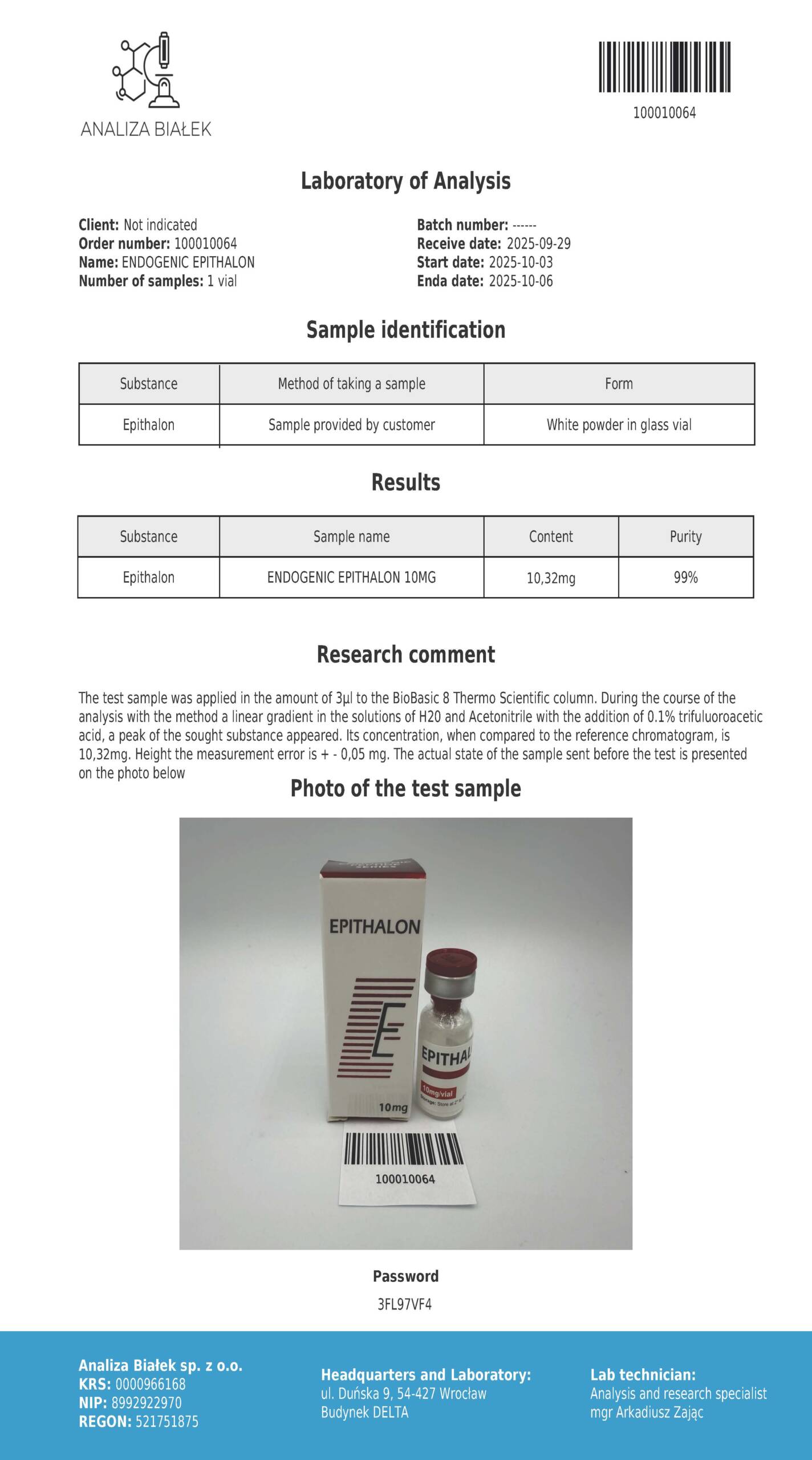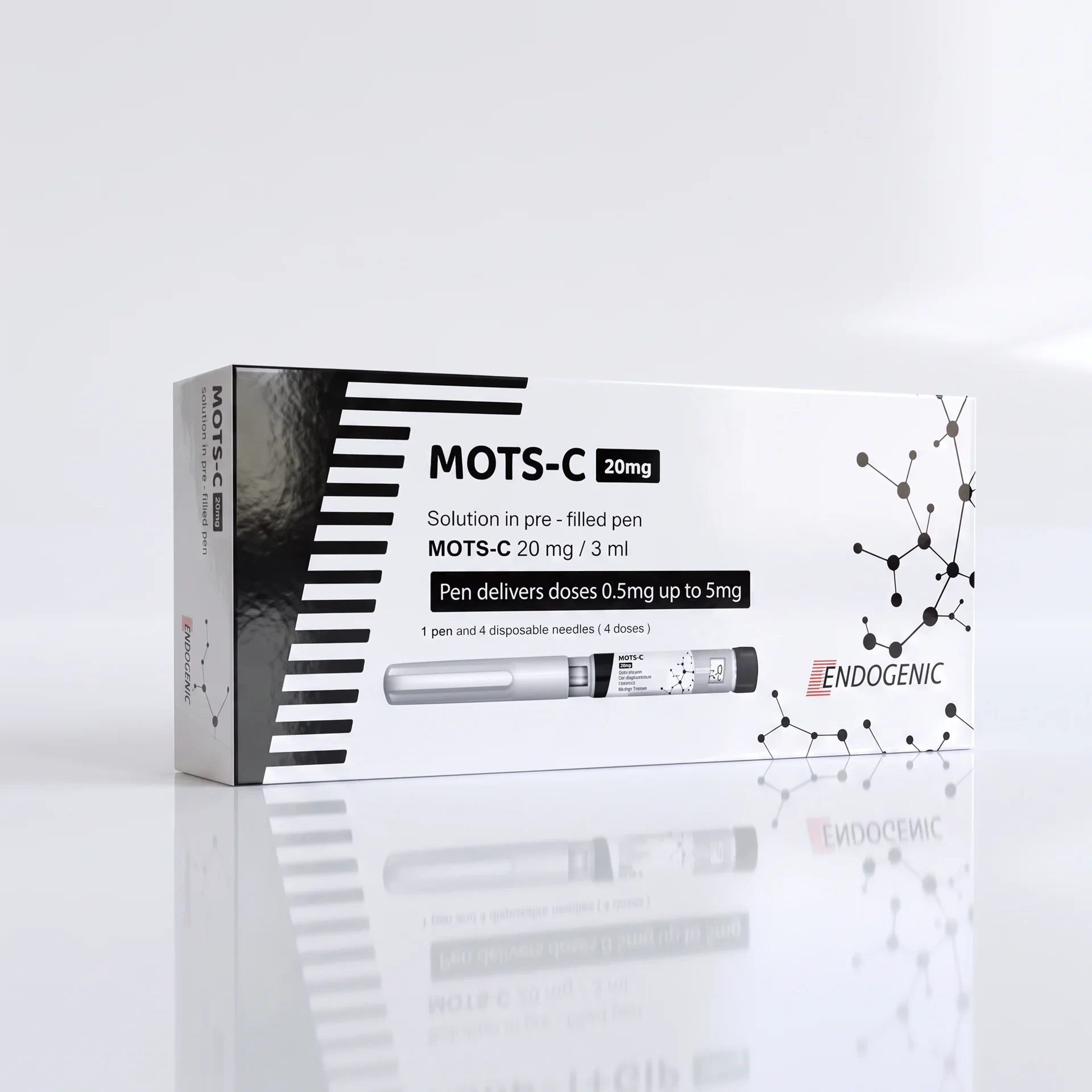


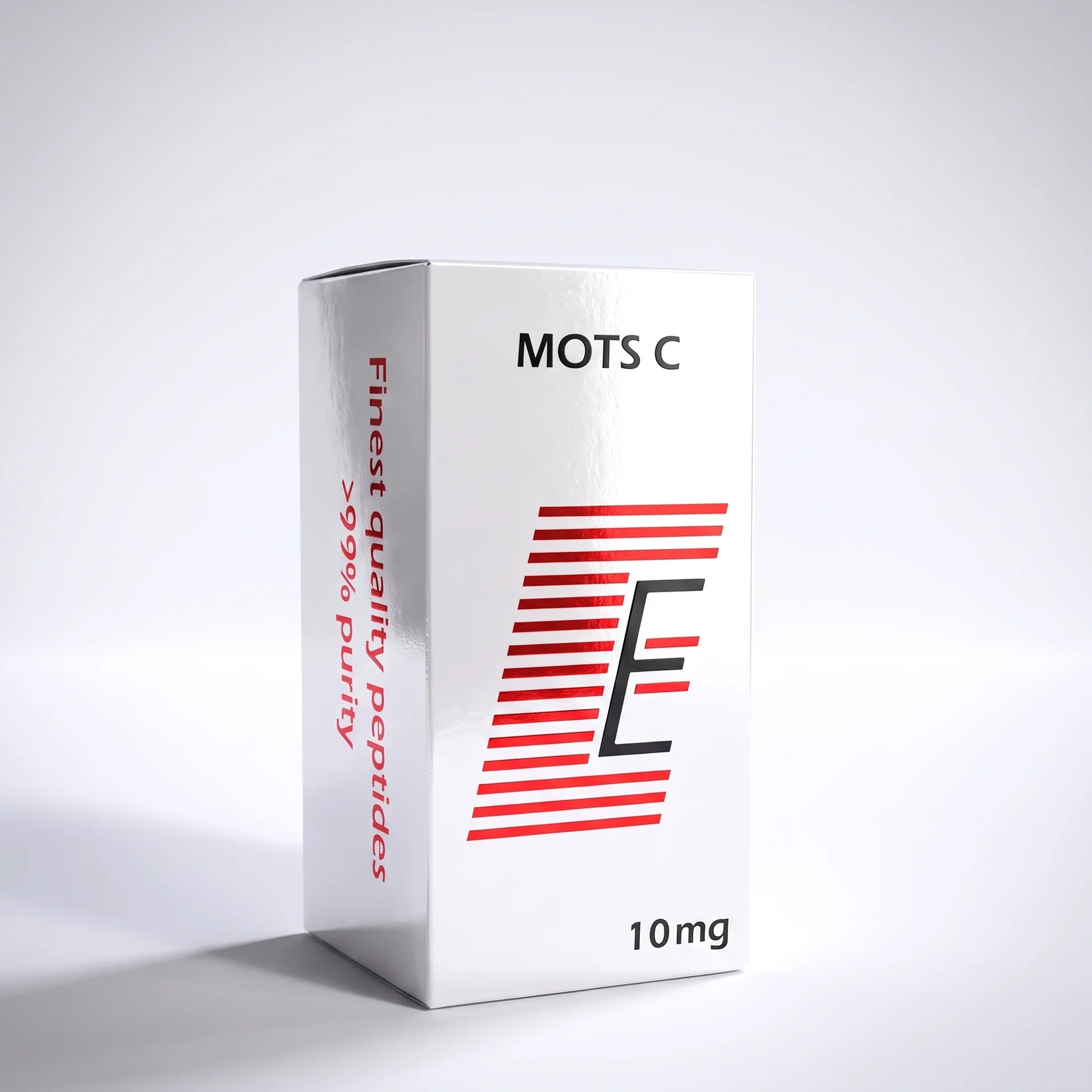
MOTS-c (Mitochondrial ORF of the 12S rRNA type-c) is a 16-amino acid peptide encoded by mitochondrial DNA – in an alternative reading frame hidden in the 12S rRNA gene. This makes it a representative of the class of mitochondrial-derived peptides (MDPs), alongside humanin and SHLP peptides. Unlike peptides encoded by the nuclear genome, MOTS-c functions as a retrograde signal: under metabolic stress, it moves to the nucleus and co-regulates metabolic response genes. It was described by Lee and Cohen in 2015. It remains an investigational reagent with no completed clinical trials of its administration.

MOTS-C
MOTS-c (lyophilisate vial) — A 16-amino-acid mitochondrial-derived peptide (MDP) encoded by mitochondrial DNA, described by Lee and Cohen (2015). In models, it moves to the nucleus under metabolic stress and acts on the AMPK axis – regulation of glucose metabolism, mitochondrial biogenesis, “exercise mimetic” profile; endogenous levels decline with age (Reynolds 2021).
35,99 €
Fast shipping
Delivery options
Returns policy
MOTS-c - mitochondrial peptide (MDP), activator of the AMPK pathway
- MOTS-c (lyophilisate vial) — A 16-amino-acid mitochondrial-derived peptide (MDP) encoded by mitochondrial DNA, described by Lee and Cohen (2015).
- In models, it moves to the nucleus under metabolic stress and acts on the AMPK axis - regulation of glucose metabolism, mitochondrial biogenesis, "exercise mimetic" profile; endogenous levels decline with age (Reynolds 2021).
MOTS-c is a peptide of mitochondrial origin with a metabolic profile – peptides of this nature remain under the area of interest of the World Anti-Doping Agency, and a possible classification in the S2 category (peptide hormones, growth factors, related substances and mimetics) is under observation. WADA status for MOTS-c must be verified against the current Prohibited List – pending verification. Registered athletes (ADAMS) must check the current list of prohibited substances before making any decision regarding use.
MOTS-c from the line Endogenous is a representative of a surprisingly young class of signaling molecules – peptides encoded by the mitochondrial genome. For decades, the mitochondrion was treated almost exclusively as the “powerhouse of the cell”, and its small, circular DNA – as a set of genes for respiratory chain proteins and a few RNAs.
The discovery that an additional reading frame encoding a biologically active peptide is hidden within the 12S rRNA gene changed this picture. MOTS-c – Mitochondrial ORF of the 12S rRNA type-c – they described Lee and Cohen in 2015 (Cell Metabolism) as one of the first well-characterized peptides of mitochondrial origin with a clear metabolic profile.
The Endogenic line brings together Pro-Body reagents focused on the enzymes, pathways and signals of endogenous metabolism – the same family of research tools that the small metabolic molecule belongs to 5-Amino-1MQ (NNMT inhibitor). MOTS-c fits it perfectly: it is not a hormone receptor ligand or a tissue regeneration modulator, but an intracellular signal that, under conditions of metabolic stress, moves to the nucleus and co-regulates metabolic response genes, intersecting with the central energy sensor of the cell – AMPK kinase.
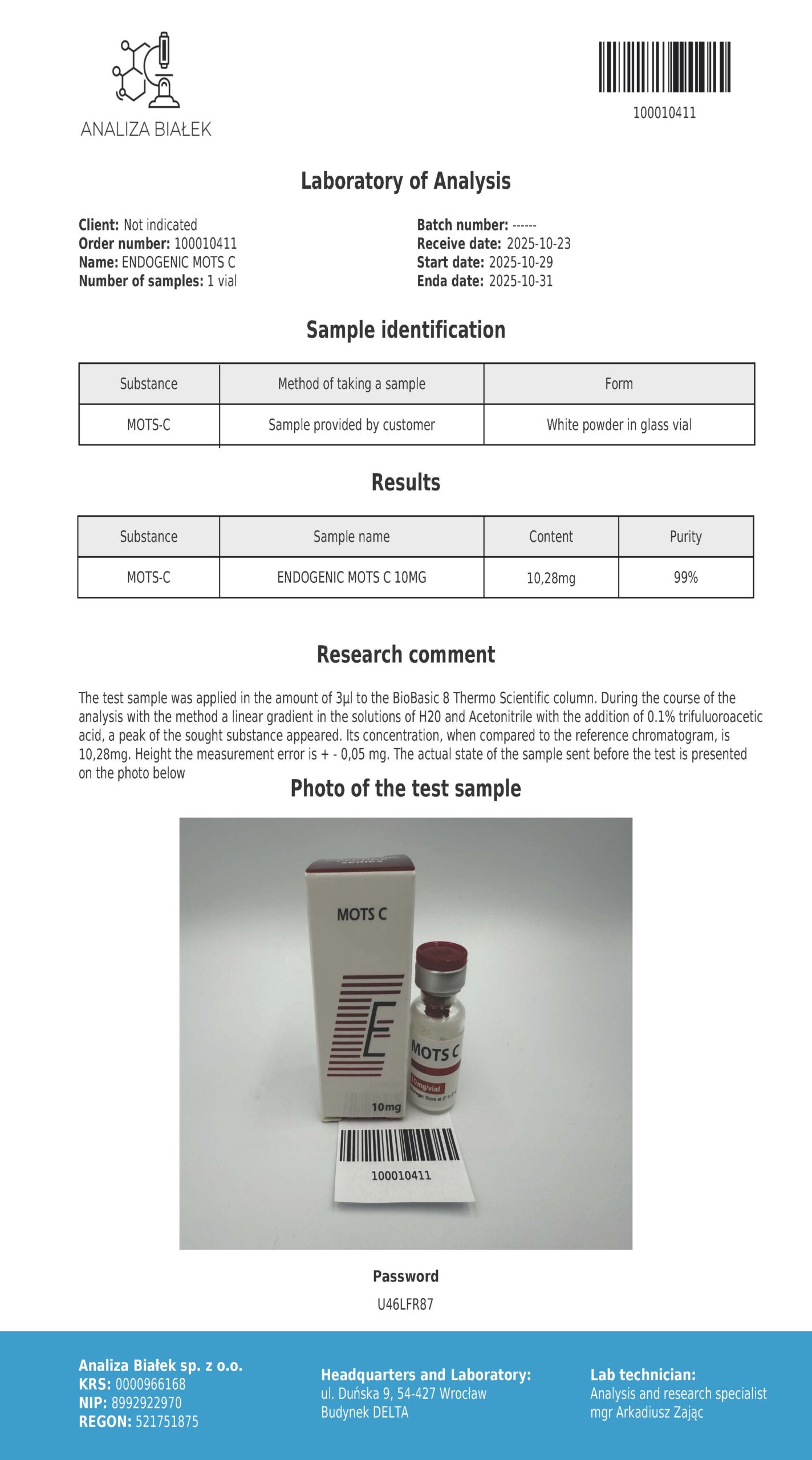
This reagent is supplied as vial of lyophilisate (dry powder) for self-reconstitution — a format that gives the researcher the freedom to select the working concentration for a specific experimental setup. Purity verified by HPLC ≥98%, identity confirmed by Q-TOF mass spectrometry, COA available for each batch. It is a molecular tool for research on energy metabolism, mitochondrial biogenesis and the metabolic aging axis – exclusively in laboratory conditions.
Mitochondrial DNA encodes a signal peptide
The classical model of cell biology divides the roles sharply: nuclear DNA encodes most proteins, and mitochondria only encode a few subunits of the respiratory chain. MOTS-c breaks this division. The peptide coding sequence is hidden inside the 12S rRNA gene of mitochondrial DNA — in an alternative short reading frame (ORF). This makes MOTS-c representative of a growing class mitochondrial-derived peptides (MDP), which also includes humanin and SHLP peptides.
The importance of this class goes beyond genetic curiosity. MDPs perform a function retrograde signals — messages flowing from the mitochondrion to the rest of the cell, including the nucleus. The mitochondrion is therefore not just the recipient of the instructions of the nuclear genome; it can itself send signals that adjust the cell’s metabolism to its energy state and stress level.
MOTS-c is one of the best described carriers of such a signal. The metabolic research world is keeping an eye on MOTS-c for several reasons. First, the peptide intersects with AMPK kinase — the main sensor of energy deficiency in the cell, regulating glucose uptake, fatty acid oxidation and mitochondrial biogenesis. Secondly, in MOTS-c models it affects insulin sensitivity and glucose management, which places him in the field of research on energy metabolism and insulin resistance.
Thirdly, its level in the body decreases with age, which opened up a field of research on metabolic aging and exercise capacity (Reynolds et al. 2021). MOTS-c is sometimes described in the literature as a candidate for an “exercise mimetic” – a molecule that reproduces in models some of the metabolic effects of physical exercise.
What is MOTS-c - 16 amino acid mitochondrial peptide (MDP)
Chemically, MOTS-c is a short peptide of sixteen amino acid residues, encoded by mitochondrial DNA within the 12S rRNA gene.
- Full name: MOTS-c (Mitochondrial ORF of the 12S rRNA type-c)
- Class: mitochondrial-derived peptide (MDP)
- Number of amino acids: 16
- Sequence (3-letter): Met-Arg-Trp-Gln-Glu-Met-Gly-Tyr-Ile-Phe-Tyr-Pro-Arg-Lys-Leu-Arg — for verification in the batch COA
- Sequence (1-letter): MRWQEMGYIFYPRKLR — for verification in the batch COA
- CAS number: 1627580-64-6 — for verification in the batch COA
- Molecular target/axis: AMPK pathway; glucose management and energy metabolism
- First description: Lee and Cohen, 2015 (Cell Metabolism)
- Delivered form: vial of lyophilisate (dry powder) for reconstitution; ≥98% HPLC
Characteristics table
| Parameter | Value |
|---|---|
| Name | MOTS-c (Mitochondrial ORF of the 12S rRNA type-c) |
| Line | Endogenous |
| Class | Mitochondrial derived peptide (MDP) |
| Sequence (1 letter) | MRWQEMGYIFYPRKLR (for verification in batch COA) |
| Number of amino acids | 16 |
| CAS number | 1627580-64-6 (for verification in the batch COA) |
| Molecular target/axis | AMPK pathway; glucose and lipid metabolism |
| Physical form | lyophilisate (dry powder) in a vial |
| HPLC purity | ≥98% |
| Identity confirmation | Q-TOF mass spectrometry |
| Clinical status | no completed phase I-III studies in humans |
| WADA status | for verification (possible category S2) |
Mechanism of action at the molecular level
In the literature, MOTS-c is described as a signal peptide acting primarily on energy metabolism – with AMPK kinase as the main node. The literature points to five related axes observed in the models. Below, each with the name of the trail and its translation into experimental observations.
AMPK pathway activation and nuclear translocation
The main, best described axis. In the conditions metabolic stress (glucose deficiency, nutrient limitation) MOTS-c moves from the cytoplasm to cell nucleus, where it co-regulates the expression of metabolic and antioxidant response genes. This signal coincides with activation AMPK — a kinase activated when the ATP/AMP ratio decreases, acting as a central sensor of energy deficiency. AMPK switches the cell from the storage mode to the energy acquisition mode: it increases glucose uptake and fatty acid oxidation. This is the molecular core of the MOTS-c profile observed in the models.
Regulation of glucose metabolism – folate pathway and AICAR
The second axis concerns glucose management. In the reference work (Lee et al. 2015), MOTS-c was combined with folate metabolism and purine cycle, where it is created AICAR — endogenous AMPK activator. In this way, MOTS-c influenced insulin signaling in the models insulin sensitivity tissues. In rodent models with a high-fat diet, improvements in glucose metabolism parameters were observed. This is the direction driving research on insulin resistance and energy metabolism.
Modulation of lipid metabolism and energy expenditure
The third axis covers lipid metabolism. In models, MOTS-c has been associated with changes in fatty acid oxidation and energy expenditure – consistent with the activation profile of AMPK, which directs metabolism towards obtaining energy from substrates. These observations place the peptide in the field of research on the energy metabolism of adipose tissue and liver, alongside other tools from the group peptides for burning fat tissue, such as lipolytic AOD-9604.
Exercise mimetic behavior in models
The fourth axis is the exercise context. In rodent models, MOTS-c administration has been associated with improvement metabolic efficiency and markers mitochondrial biogenesis — partial reconstruction of the metabolic “signature” of physical exercise. Hence the description of the peptide in the literature as a candidate for “exercise mimetic” – a category that also includes small molecule ERRα agonists SLU-PP-332-PLUS. Reynolds et al. (2021) further linked endogenous MOTS-c levels to the response to exercise and the aging process, documenting a decline in the peptide level with age.
The context of longevity and metabolic aging – exploratory
The fifth axis is the most exploratory. Since mitochondrial function, biogenesis, and AMPK signaling are central topics in cellular aging research, and MOTS-c levels decline with age, the peptide is sometimes considered as a tool to study the metabolic aspects of aging (Yen et al. 2020). This context is based on pathway associations and preclinical data, not completed human clinical trials. Reference data mainly comes from the work of Lee and Cohen (2015) and groups working on the MOTS-c–exertion–aging axis (Reynolds et al. 2021).
IMPORTANT DISTINCTION
“Activates AMPK” or “improves glucose metabolism” in the context of this description means: “in vitro and in vivo studies in animal models have observed effects of MOTS-c on the AMPK pathway, insulin signaling, and markers of mitochondrial biogenesis.” This is not a guarantee of effect in humans or a suggestion that the MOTS-c reagent may function as a metabolic, weight loss or performance enhancing agent in humans.
Three class distinctions are also necessary. MOTS-c is a mitochondrial derived peptide (MDP) — encoded by the mitochondrial genome and acting as a retrograde signal, unlike nuclear-encoded peptides. MOTS-c works metabolically (AMPK axis), not regeneratively — this is a different mechanism than connective tissue reparative peptides such as TB-500 5mg, which operate on the angiogenesis and cell migration pathways.
And finally, MOTS-c is different from small metabolic molecules: enzyme inhibition by 5-Amino-1MQ (NNMT inhibitor) or nuclear receptor agonism by exercise mimetics (SLU-PP-332) are mechanisms separate from the MOTS-c peptide signaling on the AMPK axis. All mechanisms described refer only to observations in preclinical models.
Applications in scientific research
MOTS-c as an RUO reagent is used as a molecular tool in several areas of metabolic research. In vitro models (cultures of myocytes, hepatocytes, adipocytes) examine its effect on AMPK activation, nuclear translocation, glucose uptake and markers of mitochondrial biogenesis. In vivo models in rodents analyze the effect on insulin sensitivity, lipid metabolism, metabolic efficiency and parameters of metabolic aging. Specific research directions include:
- AMPK signaling — studies on the nuclear translocation of MOTS-c under metabolic stress and on its interaction with the main energy sensor of the cell
- Glucose metabolism and insulin sensitivity — models of high-fat diet and insulin resistance, measurements of glucose metabolism parameters
- Mitochondria biogenesis and metabolic efficiency — biogenesis markers, “exercise mimetic” profile in rodent models
- Aging-exertion axis — research on the decline in endogenous MOTS-c with age and on the peptide’s response to exercise (Reynolds et al. 2021)
- Biology of Mitochondrial Derived Peptides (MDPs) — characterization of MOTS-c as a class representative in comparative analyzes with humanin and SHLP peptides
Summary
MOTS-c (lyophilized vial, Endogenic line) is 16-amino acid mitochondrial derived peptide (MDP) — encoded by mitochondrial DNA within the 12S rRNA gene, described by Lee and Cohen in 2015 (Cell Metabolism). Under conditions of metabolic stress, it translocates to the nucleus and co-regulates metabolic response genes by intersecting with the cell’s main energy sensor, AMPK kinase.
In MOTS-c models, it has been associated with the regulation of glucose metabolism (folate/AICAR pathway, insulin sensitivity), with lipid metabolism and energy expenditure, with the “exercise mimetic” profile (mitochondrial biogenesis, metabolic efficiency) and with the axis of metabolic aging – the level of endogenous peptide decreases with age (Reynolds et al. 2021). MOTS-c is a metabolically acting mitochondrial peptide (AMPK axis) — unlike regenerative peptides (TB-500) and small metabolic molecules (5-Amino-1MQ). Regulatory Status – Research Use Only; no clinical phase in humans; WADA status for verification (possible category S2).
Bibliography
- Lee C, Zeng J, Drew BG, Sallam T, Martin-Montalvo A, Wan J, et al. (2015). The mitochondrial-derived peptide MOTS-c promotes metabolic homeostasis and reduces obesity and insulin resistance. PubMed
- Reynolds JC, Lai RW, Woodhead JST, Joly JH, Mitchell CJ, Cameron-Smith D, et al. (2021). MOTS-c is an exercise-induced mitochondrial-encoded regulator of age-dependent physical decline and muscle homeostasis. PubMed
- Kim KH, Son JM, Benayoun BA, Lee C (2018). The mitochondrial-encoded peptide MOTS-c translocates to the nucleus to regulate nuclear gene expression in response to metabolic stress. PubMed
- Lu H, Wei M, Zhai Y, Li Q, Ye Z, Wang L, et al. (2019). MOTS-c peptide regulates adipose homeostasis to prevent ovariectomy-induced metabolic dysfunction. PubMed
- Yen K, Mehta HH, Kim SJ, Lue Y, Hoang J, Guerrero N, et al. (2020). The mitochondrial derived peptide humanin is a regulator of lifespan and healthspan. PubMed
Chemical reagent Research Use Only. MOTS-c (lyophilized vial, Endogenic line) in the Pro-Body catalog is not a medicinal product, dietary supplement or food. It is not intended for administration to humans or animals outside a controlled experimental environment. MOTS-c it is not registered as a medicine in the EU or the USA, and the status on the WADA Prohibited List requires verification – mitochondrial peptides with a metabolic profile remain in the Agency’s area of interest (possible category S2).
Registered Athletes (ADAMS) must check the current list before making any decision. The information in the description is educational and scientific in nature and refers to results reported in preclinical literature – it does not constitute medical advice or administration instructions.
FAQ
The main axis of the mechanism leads through the AMPK kinase – the central sensor of energy deficiency in the cell. Under conditions of metabolic stress, MOTS-c promotes AMPK activation, in part by influencing the folate pathway and the purine cycle, which produces AICAR (endogenous activator of AMPK). Active AMPK enhances glucose uptake and fatty acid oxidation. In rodent models with a high-fat diet, improvements in glucose metabolism parameters and insulin sensitivity were observed. These are observations from preclinical models, not an effect confirmed in humans.
In rodent models, MOTS-c administration has been associated with improved metabolic efficiency and an increase in markers of mitochondrial biogenesis – i.e., with a partial restoration of the metabolic “signature” of physical exercise. Hence the description of the peptide in the literature as an “exercise mimetic” candidate. Reynolds et al. (2021) also linked the endogenous level of MOTS-c with the response to exercise and showed its decline with age. This is a research context – not a declaration that a reagent improves performance in humans.
These are two different types of molecules with different mechanisms in the field of metabolism. MOTS-c is there peptide (16 amino acids) of mitochondrial origin and acts as signal on the AMPK axis. Tesofensine Express or 5-Amino-1MQ, in turn, represent a class small particles metabolic: 5-Amino-1MQ is a small organic molecule that inhibits the enzyme NNMT and affects the nicotinamide pool and NAD⁺ regeneration. One is a peptide retrograde signal from the mitochondrion, the other is an enzymatic small-molecule inhibitor. Both are studied in the context of energy metabolism, but from completely different angles.
WADA status for MOTS-c requires verification against the current Prohibited List. Peptides of mitochondrial origin with a metabolic profile remain of interest to the Agency, and a possible classification in the S2 category (peptide hormones, growth factors, related substances and mimetics) is under observation. This status may change between list updates. Registered Athletes (ADAMS) and persons covered by anti-doping programs should check the current WADA Prohibited List themselves before making any decision. The reagent remains intended for laboratory use only.
The lyophilisate is brought to room temperature and then dissolved in bacteriostatic water or sterile water for injection, which is slowly introduced along the side of the vial. Dissolution is carried out with gentle circular motion, without vigorous shaking, which causes aggregation and foaming of the peptide. Once a clear solution is obtained, it is divided into working aliquots, labeled with the date and batch number, and stored according to the unit’s procedure, limiting freeze-thaw cycles. This is a laboratory procedure for a research reagent, not instructions for administration to humans.
0.0
0 reviews
This product has no reviews yet.
Related products