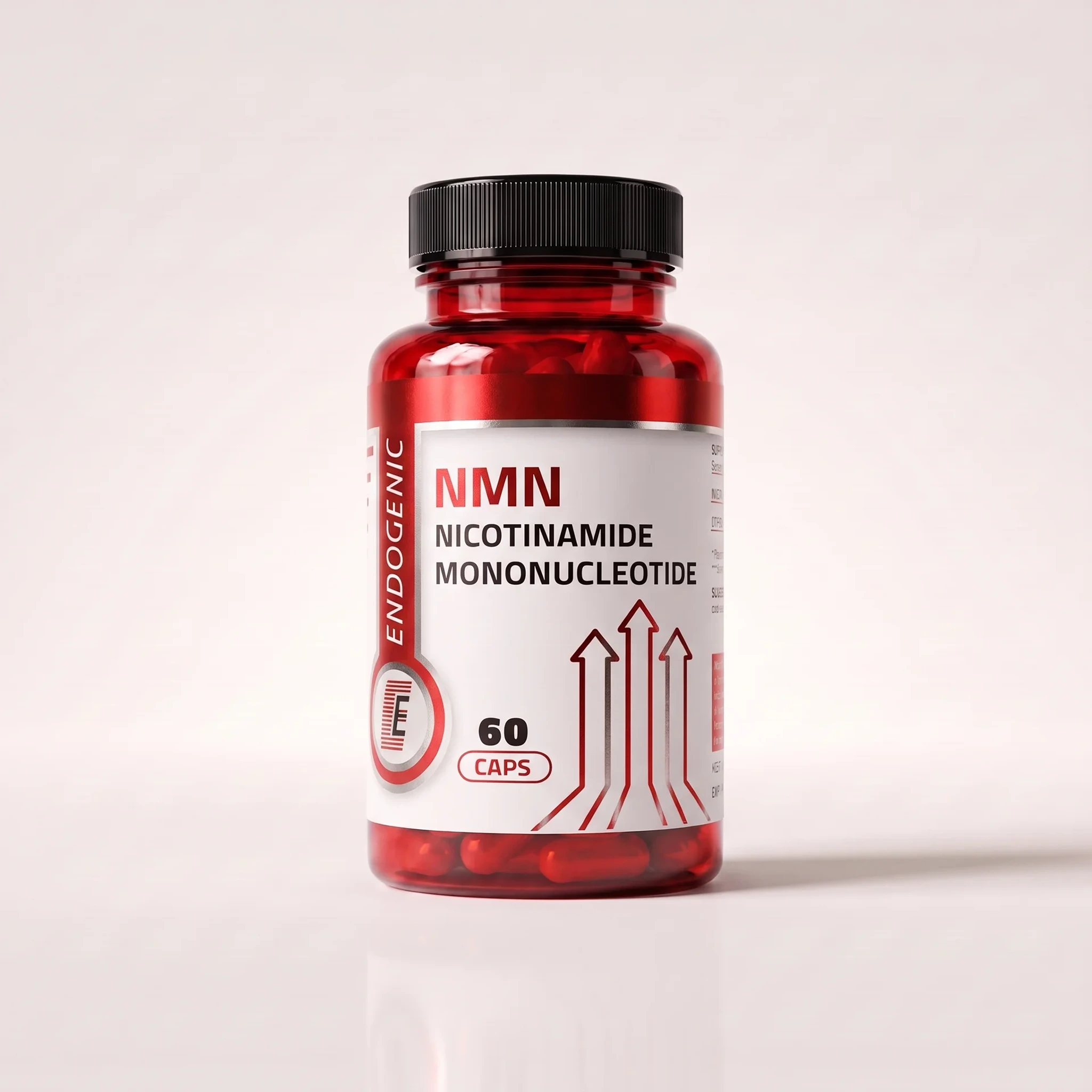
NMN does not have a single receptor – its profile is the sum of effects resulting from the place it occupies in NAD+ metabolism. Below are five axes of action, each completed with practical observation from research models.
Direct precursor of NAD+ – conversion by NMNAT
The heart of NMN’s action is its position in the salvage pathway of NAD+ biosynthesis. The NMNAT enzyme converts NMN to NAD+ in a single enzymatic step. NAD+, in turn, is a central cofactor of three main energy production pathways: glycolysis (cytosol), the Krebs cycle (mitochondrial matrix) and the respiratory chain (internal mitochondrial membrane). In practice: providing NMN means providing an intermediate from which the cell recreates NAD+ without the need to synthesize the entire molecule from scratch (Yoshino, Baur, Imai 2018).
NAD+ decline with age – replenishing the pool
NAD+ concentration in many tissues (liver, muscles, brain, pancreas) declines with age – in mice this has been documented directly, in humans indirectly through markers of NAD+ metabolism. NMN in animal models increased the tissue NAD+ concentration within several dozen minutes of administration (Mills et al. 2016). This is the mechanistic justification for the longevity context: the idea is to rebuild the NAD+ pool to the level typical of a younger organism. In mouse models, this translated into improved metabolic parameters – in humans, this effect is still being verified.
Sirtuin activation (SIRT1–7)
Sirtuins are family NAD+-dependent deacetylases — enzymes that remove acetyl groups from proteins using NAD+ as a co-substrate. They regulate DNA repair, mitochondrial biogenesis (via the coactivator PGC-1α), lipid metabolism and the response to cellular stress. What is central here is coupling: the activity of sirtuins depends directly on the availability of NAD+. When NAD+ drops, sirtuins slow down.
In practice: rebuilding the NAD+ pool by the precursor is one of the proposed ways to maintain sirtuin activity – and it is this pathway (SIRT1, SIRT3) that most often appears in Sinclair’s works as a bridge between NAD+ and aging processes (Rajman, Chwalek, Sinclair 2018).
Support for mitochondrial function and glucose/lipid metabolism
Because NAD+ drives both the respiratory chain and the SIRT3 sirtuin (regulating mitochondrial enzymes), rebuilding its pool in animal models translated into improved mitochondrial function, insulin sensitivity and lipid metabolism profile. In a clinical study, Yoshino et al. (2021) in prediabetic women, 250 mg of NMN daily for 10 weeks increased skeletal muscle insulin sensitivity as measured by the euglycemic clamp method—one of the few hard observations in a human rather than a rodent.
Slc12a8 transporter – direct uptake of NMN in the intestine
For years, an open question has been whether NMN is absorbed as a whole molecule at all or whether it must first break down into nicotinamide riboside. The Imai team described Slc12a8 transporter in the epithelium of the small intestine, which transfers the intact NMN molecule directly to the cells using a sodium ion gradient (Grozio et al. 2019, Yoshino/Imai team).
This finding provides a biochemical rationale for the oral route of administration: at least some NMN can be taken up without prior degradation. The mechanism is sometimes the subject of methodological discussion, but it is the most frequently cited argument for the bioavailability of NMN taken orally.