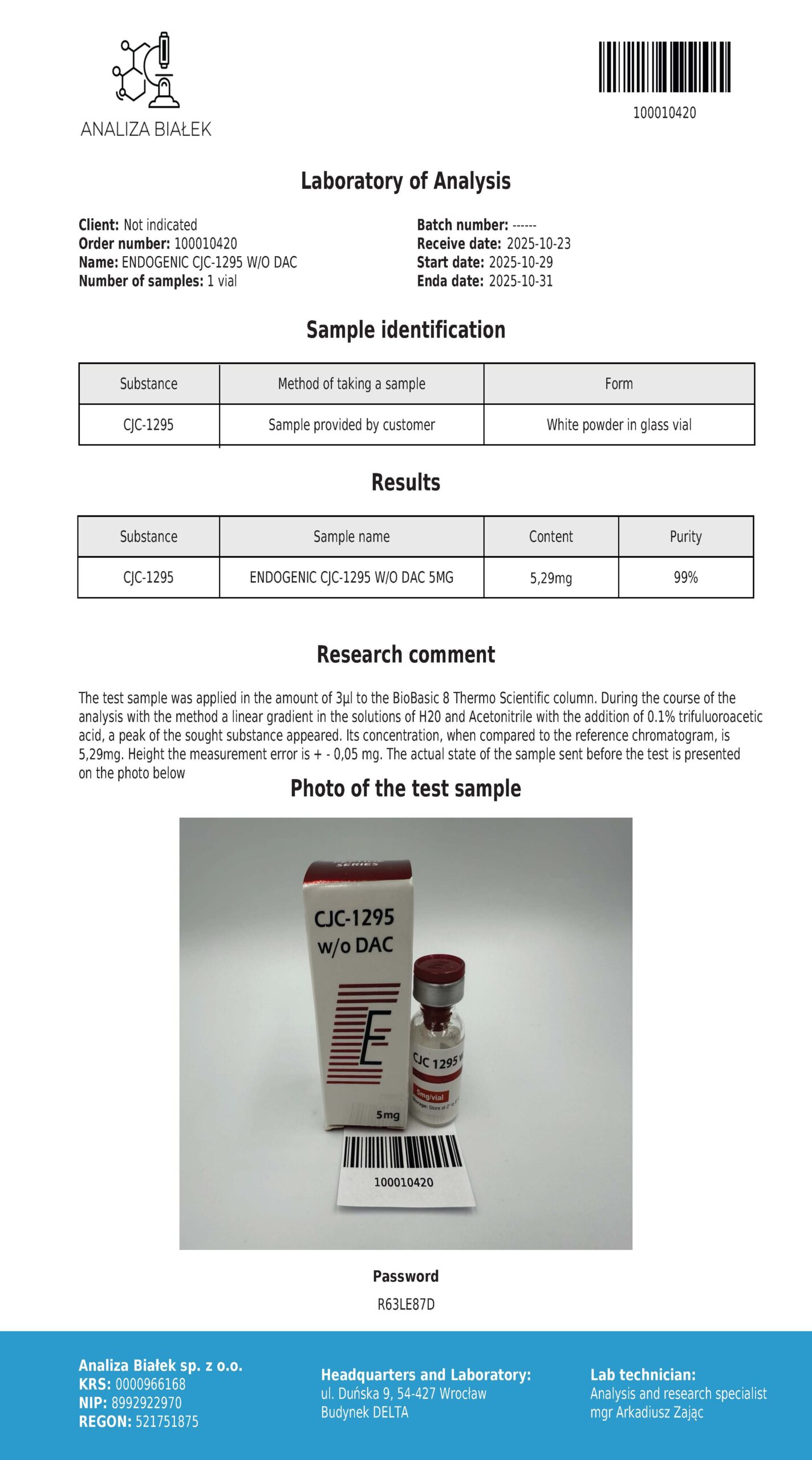


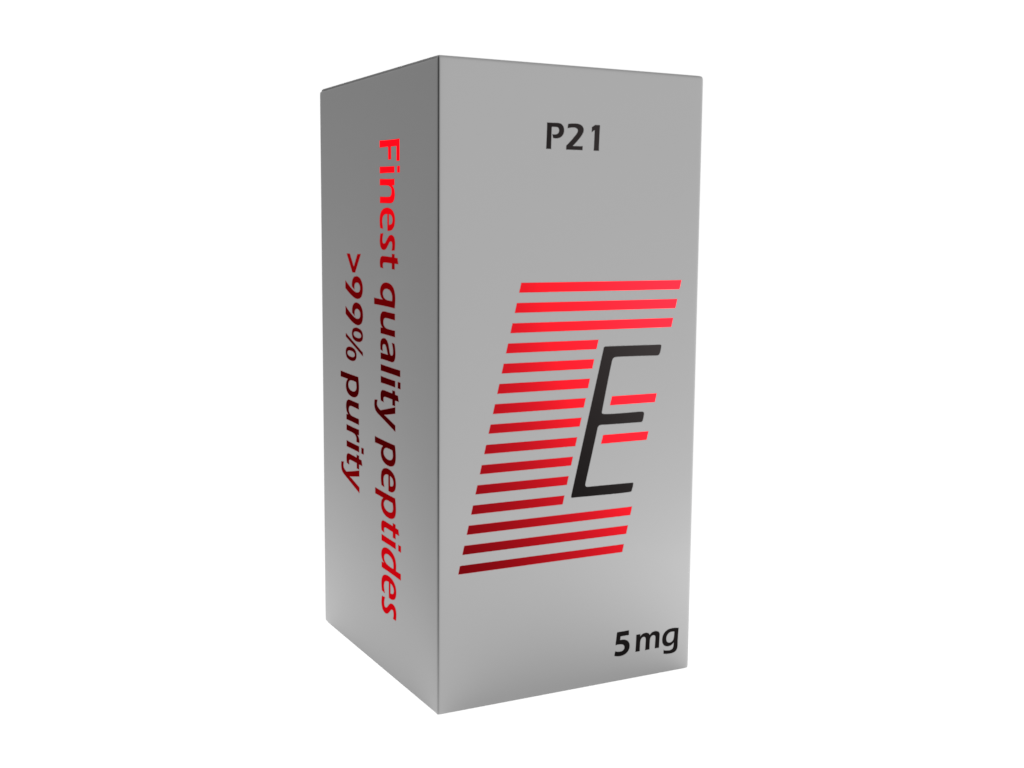
P21 (Peptide P21, research code P021) is a synthetic neurotrophic peptidomimetic — a small molecule designed to replicate the active region of ciliary neurotrophic factor (CNTF). Native CNTF is a large protein that poorly crosses the blood-brain barrier; the peptidomimetic is expected to trigger similar neurotrophic signaling with better permeation properties. P21 is an analogue of the earlier P20 with enhanced activity. Research uses it as a tool to modulate hippocampal neurogenesis and BDNF signaling in rodent and in vitro models. It remains an investigational reagent with no completed human clinical trials.
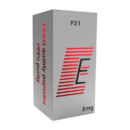
P21 5mg
P21 5 mg — lyophilisate in a vial, Endogenic line — is a synthetic neurotrophic peptidomimetic, a mimetic of the ciliary region of neurotrophic factor (CNTF), designed to penetrate the blood-brain barrier. In preclinical models, it stimulates hippocampal neurogenesis, increases BDNF levels and enhances neurotrophic signaling. Research Use Only reagent
42,99 €
Fast shipping
Delivery options
Returns policy
P21 (Peptide P21) 5 mg - neurotrophic peptidomimetic
- P21 5 mg — lyophilisate in a vial, Endogenic line — is a synthetic neurotrophic peptidomimetic, a mimetic of the ciliary region of neurotrophic factor (CNTF), designed to penetrate the blood-brain barrier.
- In preclinical models, it stimulates hippocampal neurogenesis, increases BDNF levels and enhances neurotrophic signaling.
- Research Use Only reagent
P21 (Peptide P21, P021) is a research compound from the Endogenic line – intended only for laboratory work in authorized units. It is not a drug, is not a treatment for any neurodegenerative disease, and is not intended to treat, alleviate, or prevent any condition. All described mechanisms refer to preclinical models (rodents, cell cultures). Material intended for adults (21+) in a research context only.
The adult mammalian brain was long considered a structure incapable of creating new neurons. Discovery hippocampal neurogenesis — the formation of new nerve cells in the dentate gyrus throughout life — changed thinking about the plasticity of the central nervous system and opened up a whole area of research on neurotrophic factors, i.e. proteins supporting the survival, maturation and differentiation of neurons.
Among these factors, they occupy a special place BDNF (brain neurotrophic factor) and CNTF (ciliary neurotrophic factor) – large protein molecules that poorly cross the blood-brain barrier, making them difficult to study as tools to modulate neurogenesis. P21 (also known as Peptide P21 or P021) is the answer to this chemical problem. Pro-Body supplies it in line Endogenous as a research reagent in the form of lyophilisate in a vial, 5 mg.
In terms of design, it is synthetic neurotrophic peptidomimetic — a small molecule designed as a mimetic of the active CNTF region, able to cross the blood-brain barrier better than the native protein. A molecule belongs to a category peptides on brain function — research tools on neurogenesis and cognitive functions. P21 is an analogue of the previous compound P20 with enhanced neurotrophic activity.
In preclinical models, it is studied as an inducer of hippocampal neurogenesis and a factor that increases BDNF signaling. The molecule was created in the field of research on neurotrophic peptidomimetics conducted, among others, by Khalid Iqbal’s team. In research terms, it remains a tool for investigating mechanisms of neurogenesis, synaptic plasticity, and neurotrophic signaling in rodent models. Purity verified by HPLC ≥98%, identity confirmed by mass spectrometry, COA available for each batch.
Hippocampal neurogenesis and neurotrophic factors
Neurotrophic factors are proteins that regulate the development, survival and function of neurons. The best known representative is BDNF — brain neurotrophic factor, signaling through the TrkB receptor, one of the main regulators of synaptic plasticity, learning and memory. She stands next to him CNTF — ciliary neurotrophic factor, a cytokine from the IL-6 family that supports the survival of neurons and influences the proliferation of progenitor cells in neurogenesis niches.
The central phenomenon around which interest in these factors revolves is hippocampal neurogenesis. In the dentate gyrus of the hippocampus, in the subgranular zone, neural stem and progenitor cells divide and differentiate into new neurons throughout life. The rate of this process is regulated by neurotrophic factors and by negative regulators – including LIF (leukemia inhibitory factor), a cytokine related to CNTF, which in some models inhibits the differentiation of neuronal progenitors.
Hippocampal neurogenesis is associated in the literature with synaptic plasticity and memory consolidation, which makes its regulation an attractive research target. A practical problem is that native BDNF and CNTF are large proteins with poor blood-brain barrier penetration and short half-lives – they are difficult to manipulate as tools in models. Hence the design trend neurotrophic peptidomimetics: small molecules that recreate the active region of the protein, but with better pharmacokinetic properties.
P21 belongs to this trend – it was designed as a mimetic of the CNTF region, intended to trigger neurotrophic signaling and increase the level of BDNF while maintaining the ability to penetrate the central nervous system. The broader context of this class of compounds is discussed in the review nootropic substances and their mechanisms of action.
What is P21?
By design, P21 is a synthetic peptidomimetic—a small molecule designed as a functional mimetic of the active region of the ciliary neurotrophic factor (CNTF).
- Common name: P21, Peptide P21
- Research code: P021 (analogue of P20 with enhanced activity)
- Class: synthetic neurotrophic peptidomimetic; a CNTF region mimetic designed to cross the blood-brain barrier
- Molecular target: neurotrophic signaling (CNTF/BDNF axis), hippocampal neurogenesis
- Sequence/Structure: the manufacturer does not disclose the full sequence – to be verified in the batch COA
- CAS number: for verification in the batch COA
- Molar mass: for verification in the batch COA
- Delivered form: lyophilisate in a vial, 5 mg of substance; for reconstitution before use; ≥98% HPLC
Characteristics table
| Parameter | Value | Attention |
|---|---|---|
| Name | P21 (Peptide P21), P021 | — |
| Class | synthetic neurotrophic peptidomimetic | CNTF region mimetic |
| The origin of the structure | P20 analogue with enhanced neurotrophic activity | trend of neurotrophic peptidomimetics |
| Molecular target | CNTF/BDNF axis, hippocampal neurogenesis | preclinical model |
| Sequence/structure | not disclosed by the manufacturer | for verification in the batch COA |
| CAS | — | for verification in the batch COA |
| Molar mass | — | for verification in the batch COA |
| Cleanliness | ≥98% HPLC | UV detection, per batch verification |
| Identity confirmation | MS (sequence + mass) | decides the identity of the party |
| Character | lyophilisate in vial, 5 mg | for reconstitution before use |
| Clinical status | no completed phase I-III studies in humans | preclinical data |
| WADA status | is not on the Prohibited List | verify the current list |
Mechanism of action at the molecular level
P21 is described in the literature by several related observations in preclinical models. The mechanisms below have been documented primarily in work on rodents and cell cultures. Neurotrophic profile observed in research models:
- Stimulation of hippocampal neurogenesis. The most frequently described particle effect. In models, P021 increased the proliferation and survival of progenitor cells in the hippocampal dentate gyrus and the number of newly formed, maturing neurons (Kazim and Iqbal 2016). This is the basic research direction of the compound – peptidomimetic as a tool for modulating the rate of neurogenesis in the adult brain.
- Increasing BDNF levels and neurotrophic signaling. In models, P021 increased brain-derived neurotrophic factor (BDNF) levels and enhanced neurotrophic signaling. Since BDNF (via the TrkB receptor) is the main regulator of synaptic plasticity and memory consolidation, increasing its availability is associated in the literature with the observed pro-cognitive effects in models.
- LIF inhibition as a postulated mechanism of CNTF origin. The P21 structure is derived from the CNTF region. The postulated mechanism of action is the influence on the CNTF/LIF family cytokine axis, including inhibition of LIF (leukemia inhibitory factor), a negative regulator of the differentiation of neuronal progenitors. Unlocking this brake is one of the proposed explanations for the pro-growth profile of the molecule in neurogenesis niches.
- Reduction of tau hyperphosphorylation and improvement of synaptic plasticity. In P021 neurodegeneration models, effects on tau protein hyperphosphorylation markers and synaptic plasticity parameters were observed (Baazaoui and Iqbal 2018, Khatoon et al. 2015). These observations belong to the research context of neurodegeneration and exclusively describe the behavior of markers in animal models. They do not constitute any claim for the treatment of neurodegenerative diseases in humans.
- Procognitive effects in animal models. Behavioral tests on rodents (spatial memory tasks, learning tasks) described an improvement in cognitive parameters after exposure to P021, consistent with the neurotrophic profile and the intensity of neurogenesis (Bolognin et al. 2014, Blanchard et al. 2010). These are observations from preclinical models, not clinical data.
Applications in scientific research
P21 is used as a molecular tool in several areas of research on neurogenesis and neurotrophic signaling. In vitro models (cultures of neuronal progenitors, hippocampal neurons) examine its impact on cell proliferation and differentiation, BDNF levels and neurotrophic signaling markers. In vivo models on rodents analyze the impact on hippocampal neurogenesis, synaptic plasticity, behavioral parameters (memory and learning tests) and neurodegenerative markers (including tau phosphorylation). Specific research directions include:
- Hippocampal neurogenesis — P21 as a peptidomimetic tool to modulate the proliferation and survival of neuronal progenitors in the dentate gyrus
- The BDNF axis and neurotrophic signaling — research on increasing BDNF levels and intensifying trophic signaling in brain structures. Another peptide inducer of BDNF that is Semax 50mg, is sometimes a reference point in comparative work on this axis
- Mechanism of origin of CNTF — analysis of the impact on the CNTF/LIF cytokine axis as a postulated pro-growth mechanism
- Models of neurodegeneration — impact on tau hyperphosphorylation markers and synaptic plasticity in a research context (without therapeutic implications)
- Procognitive profile in models — behavioral research on memory and learning in rodents
- Pharmacology of neurotrophic peptidomimetics — P21 in comparative analyzes with other neurogenic tools, e.g. synaptogenesis inducer DIHEXA, in terms of mechanism and penetration into the central nervous system
Summary
P21 (lyophilisate in a vial, 5 mg) from the Endogenic line is synthetic neurotrophic peptidomimetic — a small molecule designed as a mimetic of the active region of ciliary neurotrophic factor (CNTF), with the aim of penetrating the blood-brain barrier. P21 (research code P021) is a P20 analogue with enhanced activity. In preclinical models, stimulation of hippocampal neurogenesis (proliferation and survival of neuronal progenitors), increased BDNF levels and intensification of neurotrophic signaling, postulated LIF inhibition as a mechanism of origin of CNTF, and in neurodegeneration models – effects on tau hyperphosphorylation markers, synaptic plasticity, and procognitive effects were observed.
P21 is a peptidomimetic of the CNTF/BDNF axis – mechanistically different from NSI-189 and from cholinergic nootropics; mainly preclinical data; It is NOT a cure for Alzheimer’s or dementia. The pharmacokinetic profile of this class of compounds in humans remains an open research question. Form: lyophilisate in a vial for reconstitution before use; HPLC purity ≥98%, MS, COA for each batch. Regulatory Status – Research Use Only; no clinical phase in humans; is not on the WADA Prohibited List.
Bibliography
- Kazim SF, Iqbal K (2016). Neurotrophic factor small-molecule mimetics mediated neuroregeneration and synaptic repair: emerging therapeutic modalities for Alzheimer’s disease. PubMed
- Bolognin S, Buffelli M, Puoliväli J, Iqbal K (2014). Rescue of cognitive-aging by administration of a neurogenic and/or neurotrophic compound. PubMed
- Baazaoui N, Iqbal K (2018). A Novel Therapeutic Approach to Treat Alzheimer’s Disease by Neurotrophic Support During the Period of Synaptic Compensation. PubMed
- Khatoon S, Chalbot S, Bolognin S, Puoliväli J, Iqbal K (2015). Elevated Tau Level in Aged Rat Cerebrospinal Fluid Reduced by Treatment with a Neurotrophic Compound. PubMed
- Blanchard J, Wanka L, Tung YC, Cárdenas-Aguayo Mdel C, LaFerla FM, Iqbal K, Grundke-Iqbal I (2010). Pharmacologic reversal of neurogenic and neuroplastic abnormalities and cognitive impairments without affecting Aβ and tau pathologies in 3xTg-AD mice. PubMed
DISCLAIMER – Research reagent (Research Use Only). Product P21 (Peptide P21) 5 mg – vial (lyophilisate) it is sold only as a chemical reagent for in vitro laboratory tests and in animal models. It is not a medicine, is not a dietary supplement and is not a product intended for human consumption. It is not intended to diagnose, treat, cure, alleviate or prevent any disease – in particular, it is not intended for any use in Alzheimer’s disease, dementia or other neurodegenerative conditions.
No clinical data in humans – all literature concerns animal models and cell cultures. The molecule is not currently on the World Anti-Doping Agency’s Prohibited List, but this status may change; persons covered by anti-doping programs must verify current WADA guidelines on their own. Sales addressed to qualified research personnel, scientific units and pharmacological laboratories.
The buyer assumes full responsibility for the legal and safe use of the reagent under laboratory conditions consistent with applicable regulations and institutional guidelines.
FAQ
In preclinical models, P021 increased the proliferation and survival of progenitor cells in the hippocampal dentate gyrus – the zone where new neurons are formed in the adult brain – and increased levels of brain-derived neurotrophic factor (BDNF). BDNF, signaling through the TrkB receptor, is the main regulator of synaptic plasticity and memory consolidation, therefore its elevation is associated in the literature with the observed procognitive effects in animal models.
The effect on the CNTF/LIF axis is also suggested as a postulated mechanism of the origin of CNTF. Observations are from models and do not constitute a suggestion for use of the RUO reagent in humans.
Mechanism and chemical class. P21/P021 is a neurotrophic peptidomimetic acting through the CNTF/BDNF axis – it reproduces a fragment of a large neurotrophic protein. NSI-189, in turn, is a small molecule with its own, distinct neurogenic profile, not directly related to CNTF mimetics. Both are considered in studies of hippocampal neurogenesis, but their starting points are different. It is also worth distinguishing P21 from classic cholinergic nootropics, which modulate acetylcholine transmission and not neurotrophic signaling. This distinction is important when designing comparative models.
NO. P21 is not a cure for any neurodegenerative disease and is not intended to treat, alleviate or prevent any condition. Some preclinical studies were conducted in models of neurodegeneration – they observed effects on markers of tau protein hyperphosphorylation and synaptic plasticity – but these were observations of markers in animal models, not evidence of therapeutic effectiveness in humans. No completed clinical trials. Any claim to cure Alzheimer’s or dementia would be contrary to the Research Use Only framework and unacceptable.
Bring the vial to room temperature before opening to reduce moisture condensation on the lyophilized product. Pour the solvent slowly along the wall of the vial, without directing the stream at the precipitate; do not shake the vial – leave it to dissolve on its own, swirling it if necessary. The volume of solvent is selected by the investigator depending on the concentration of the mother liquor required in the protocol; the reference point is the net peptide content given in the COA of the batch.
After reconstitution, store the solution at 2–8°C, and for longer storage, aliquot and freeze at −20°C, avoiding multiple freeze-thaw cycles. It should be remembered that the pharmacokinetic profile of P21 in humans has not been characterized – there are no completed PK/PD clinical trials, and the exposure in the model is verified by the researcher independently.
The molecule is not currently on the World Anti-Doping Agency’s Prohibited List. However, this status may change in future updates to the list. Investigators and persons covered by anti-doping programs (ADAMS) should verify the current WADA Prohibited List themselves before making any decision. The reagent is intended for laboratory use only and not for use on humans or animals.
0.0
0 reviews
This product has no reviews yet.
Related products