

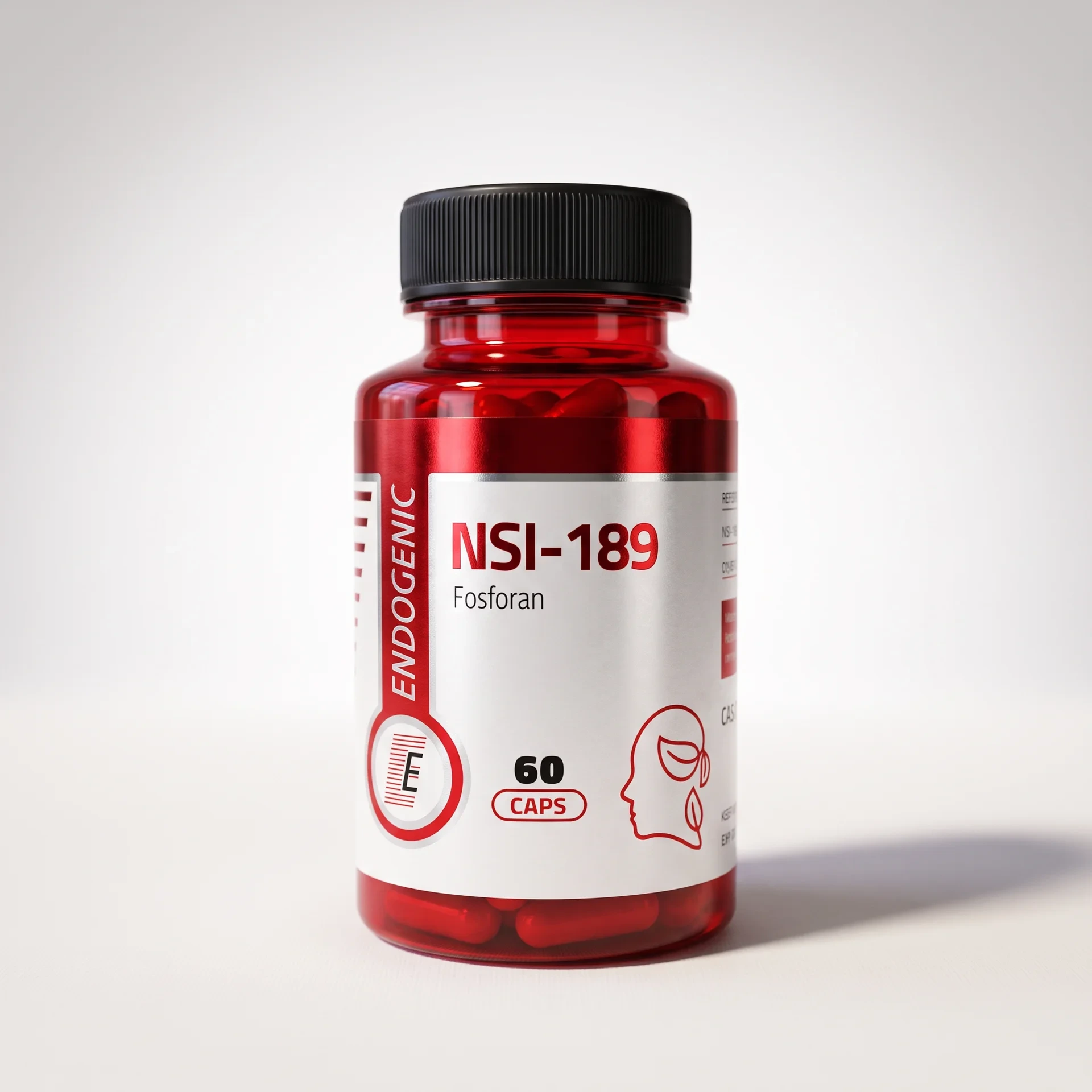
NSI-189 is a synthetic small molecule from the class of benzylpiperazine-aminopyridine derivatives, developed by Neuralstem Inc. as an investigational candidate for a new-class antidepressant drug. Its characteristic feature is the proposed mechanism of hippocampal neurogenesis stimulation — distinct from classic monoaminergic antidepressants. Supplied as an RUO reagent in a format of 60 capsules of 20 mg each.
NSI-189 20mg 60 caps
NSI-189 20 mg × 60 capsules is an investigational, low-molecular-weight hippocampal neurogenesis stimulator (Neuralstem Inc.) developed as a candidate for a new class of antidepressant—a neurogenic, non-monoaminergic agent. HPLC purity ≥98%. For Research Use Only.
59,99 €
Fast shipping
Delivery options
Returns policy
NSI-189 20 mg 60 caps — hippocampal neurogenesis stimulator, research reagent
- NSI-189: an investigational small-molecule neurogenesis stimulator.
- 20 mg per capsule; pack of 60 capsules.
- Research Use Only reagent, not a medicinal product.
Chemical reagent intended exclusively for laboratory research (Research Use Only). It is not a medicinal product, dietary supplement or foodstuff. It is not intended for use in humans or animals. NSI-189 is an investigational drug candidate whose development was not advanced to registration — it is not an approved drug or antidepressant. Sale exclusively to registered research institutions and laboratories.
NSI-189 is a synthetic small molecule from the class of benzylpiperazine-aminopyridine derivatives, developed by Neuralstem Inc. as a candidate for a new-class antidepressant drug — acting not through the monoaminergic system (like classic SSRIs or SNRIs), but through a proposed mechanism of hippocampal neurogenesis stimulation. In the literature it also appears as NSI-189 phosphate — the phosphate salt used in phase I/Ib/II clinical trials.
The starting point for the entire program was the neurogenic hypothesis of depression: the observation that chronic stress and major depression (MDD) are associated with a reduction in hippocampal volume, and that many effective antidepressant therapies enhance neurogenesis in this region. NSI-189 was designed as a compound that directly stimulates the proliferation and differentiation of human hippocampal stem cells — differently from compounds that raise serotonin or noradrenaline levels. In preclinical models, an increase in hippocampal volume in rodents of approximately 20% was reported, which became the signature of this molecule.
In the chemical context, NSI-189 belongs to the class of small-molecule neurogenesis stimulators — a category distinct both from classic regenerative peptides (BPC-157, TB-500) and from monoaminergic modifiers. This distinction is important for understanding why the compound attracted the attention of neuropharmacology: it represented an attempt to shift the paradigm of depression treatment from neurotransmitter modulation to structural regeneration.
Regulatory status
NSI-189 is an investigational antidepressant drug candidate whose development was not advanced to registration in any jurisdiction. The phase II trial in major depression (MDD) did not meet its primary endpoint. It is not registered as a drug with the EMA, FDA, or anywhere in the world. There is no EFSA authorization as a dietary supplement ingredient. Communicating the product as a “depression drug”, “natural antidepressant”, “mood nootropic” or “neurogenesis agent for humans” is contrary to the Research Use Only framework and is not permitted.
What is NSI-189?
Chemically, NSI-189 is a synthetic small molecule with a benzylpiperazine-aminopyridine core.
- Common name: NSI-189
- Synonym / salt form: NSI-189 phosphate
- CAS number (free base): 1270138-40-3 — to be verified in the batch COA
- CAS number (phosphate): 1270138-41-4 — to be verified in the batch COA
- Molecular formula (free base): C₂₀H₂₆N₄O
- Molecular weight (free base): ~338.45 g/mol; the phosphate salt has a higher molar mass — to be verified in the batch COA
- Chemical class: benzylpiperazine-aminopyridine derivative; investigational hippocampal neurogenesis stimulator
- Laboratory of origin: Neuralstem Inc. — a new-class antidepressant drug candidate (neurogenic, not monoaminergic)
- Molecular type: small-molecule compound (powder) — NOT a classic peptide lyophilized for injection, NOT a steroid
- Supplied form: hard HPMC capsule (vegan), 20 mg of active substance per capsule, 60 capsules; pharmaceutical grade ≥98% HPLC
Origin:
NSI-189 was created within a program of Neuralstem Inc. — a company stemming from research on human neural stem cells. The starting point was the screening of molecules for their ability to stimulate the proliferation and differentiation of human hippocampal stem cells under in vitro conditions. The selected compound subsequently proceeded to preclinical in vivo studies, where an increase in hippocampal volume in rodents of approximately 20% was reported, and later to phase I, Ib and II clinical trials in major depression.
The wave of interest in popular-science media (“the molecule that rebuilds the brain”) is, however, a journalistic oversimplification — the drug development program was not advanced to registration, and the phase II results were inconclusive.
SCIENTIFIC PERSPECTIVE
Most of the mechanistic data on NSI-189 comes from in vitro models (human hippocampal stem cells, cell lines) and preclinical in vivo models (rodents). Data from phase I/Ib/II clinical trials in humans are available, however their interpretation requires caution — the phase II trial did not meet its primary endpoint. All neurogenic and pro-cognitive observations require further verification; the development of the compound as a drug was not completed. The RUO reagent is not intended to reproduce any clinical regimen in humans.
Mechanism of action at the molecular level
The proposed mechanism of NSI-189 is based on the stimulation of hippocampal neurogenesis and the modulation of neurotrophic signaling — with the caveat that the exact primary molecular target has not been fully elucidated.
Pharmacological profile observed in research models:
- Stimulation of hippocampal neurogenesis — in in vitro models (human hippocampal stem cells), an increase in proliferation and differentiation was reported; in in vivo models in rodents, an increase in hippocampal volume of approximately 20% was reported. This is the central, signature observation for this molecule
- Inconclusive primary molecular target — the exact receptor or target protein of NSI-189 has not been fully characterized. Modulation of neurotrophic signaling is postulated (BDNF — Brain-Derived Neurotrophic Factor, neuronal survival pathways), however the mechanism at the single-target level remains an open research question
- Action distinct from monoaminergic antidepressants — unlike SSRIs/SNRIs, the proposed mechanism of NSI-189 does not primarily rely on increasing the availability of serotonin or noradrenaline. Neurogenesis here is the mechanism proposed as primary, not secondary
- Long half-life — in pharmacokinetic data, a half-life on the order of ~17–20 hours was reported, which distinguishes the compound from molecules with rapid clearance and makes it interesting for chronic exposure protocols
- Pro-cognitive and neuroprotective profile in models — in preclinical models, pro-cognitive and neuroprotective signals were reported (including in models of cognitive impairment)
Pharmacokinetic profile (based on available data):
- Half-life: ~17–20 h (long T½ — favorable for chronic exposure regimens in research)
- Oral bioavailability: compound studied in oral form (phosphate) in clinical trials
- Blood–brain barrier penetration: assumed based on the central mechanism; full PK/PD characterization requires careful interpretation
- Primary molecular target: not unambiguously elucidated; postulated modulation of neurotrophic signaling (BDNF, survival pathways)
Hippocampal neurogenesis is one node in an extensive network of processes governing cognitive function and mood regulation. Mood, memory and stress resilience depend in parallel on monoaminergic systems, growth-factor economy, the HPA axis, sleep, the inflammatory profile and environmental factors. Stimulation of neurogenesis models a fragment of this machinery — and nothing more.
Applications in scientific research
NSI-189 is used in research work in several areas of neuropharmacology. In in vitro models (human hippocampal stem cells, cell lines) its influence on the proliferation and differentiation of progenitor cells and on markers of neurotrophic signaling is studied. In in vivo models (rodents) hippocampal volume, neurogenesis markers, behavioral parameters and the pro-cognitive and neuroprotective profile are studied. As a compound from the brain function and cognitive function shelf, it is sometimes a tool for research on the structural plasticity of the CNS.
Specific research directions include:
- Research on hippocampal neurogenesis — characterization of the compound’s influence on the proliferation and differentiation of hippocampal stem cells, measurements of hippocampal volume in rodent models
- Neurogenic mechanism separated from the monoaminergic one — NSI-189 as a tool for studying whether stimulation of neurogenesis independent of the serotonergic system models a fragment of the mood-regulation machinery
- Modulation of neurotrophic signaling — analyses of BDNF expression and activation of neuronal survival pathways in response to exposure to the compound
- Models of neuroprotection and cognitive deficits — assessment of the neuroprotective profile in models of damage (including cognitive deficit models)
- Pharmacokinetic analyses — characterization of the long half-life (~17–20 h) in the context of chronic exposure protocols
NSI-189 among neurogenic compounds — pharmacological position
In experimental neuropharmacology, several classes of compounds are studied for their enhancement of neurogenesis and synaptic plasticity — they differ in mechanism, research status and evidence profile:
| Class | Example | Mechanism | Status |
|---|---|---|---|
| Small-molecule neurogenesis stimulator | NSI-189 | Hippocampal neurogenesis stimulation, postulated BDNF modulation | RUO; investigational drug candidate — phase II did not meet its endpoint |
| Modified Ang-IV analog | Dihexa | HGF/c-Met axis augmentation, synaptogenesis | RUO research chemical (preclinical research) |
| β-carboline alkaloid | 9-MBC | Dopaminergic neurogenesis, BDNF/GDNF expression | RUO research chemical (preclinical research) |
| Regulatory peptide ACTH(4-10) | Semax | BDNF modulation, melanocortin system | RUO research peptide |
NSI-189 stands out in that it targets hippocampal neurogenesis as the proposed primary mechanism and was developed as a new-class antidepressant drug candidate — differently from compounds that mainly modulate growth factor (Dihexa, HGF/c-Met axis) or dopaminergic neurons (9-MBC). Mechanistically related in terms of research interest in neurogenesis and neurotrophic factors are Dihexa — synaptogenesis, Ang-IV analog, 9-MBC — dopaminergic neuroprotector and Semax — BDNF inducer — research reagents with a distinct mechanistic profile, sometimes serving as a point of reference in comparative neuropharmacological analyses.
Summary
NSI-189 (20 mg × 60 capsules) is a synthetic small molecule from the class of benzylpiperazine-aminopyridine derivatives, developed by Neuralstem Inc. as a new-class antidepressant drug candidate acting through proposed hippocampal neurogenesis stimulation, rather than through the monoaminergic system. In in vitro models (human hippocampal stem cells) and in vivo (an increase in hippocampal volume in rodents of ~20%), a signature neurogenic effect was reported; the primary molecular target remains unelucidated, and modulation of neurotrophic signaling (BDNF) is postulated.
The compound underwent phase I/Ib/II trials in MDD — the phase II trial did not meet its primary endpoint (MADRS), and its development as a drug was not advanced to registration. It is characterized by a long half-life (~17–20 h). HPLC purity ≥98%, MS confirmation, COA for each batch. Regulatory status — exclusively Research Use Only; NSI-189 is not a drug or a supplement; ZERO claims of treating depression in humans.
References
- Fava M, Johe K, Ereshefsky L, Gertsik LG, English BA, Bilello JA, et al. (2016). A Phase 1B, randomized, double blind, placebo controlled, multiple-dose escalation study of NSI-189 phosphate, a neurogenic compound, in depressed patients. PubMed
- Tajiri N, Quach DM, Kaneko Y, Wu S, Lee D, Lam T, et al. (2017). NSI-189, a small molecule with neurogenic properties, exerts behavioral, and neurostructural benefits in stroke rats. PubMed
- McIntyre RS, Johe K, Rong C, Lee Y (2017). The neurogenic compound, NSI-189 phosphate: a novel multi-domain treatment capable of pro-cognitive and antidepressant effects. PubMed
- Allen BD, Acharya MM, Lu C, Giedzinski E, Chmielewski NN, Quach D, et al. (2018). Remediation of Radiation-Induced Cognitive Dysfunction through Oral Administration of the Neuroprotective Compound NSI-189. PubMed
- Papakostas GI, Johe K, Hand H, Drouillard A, Russo P, Kay G, et al. (2020). A phase 2, double-blind, placebo-controlled study of NSI-189 phosphate, a neurogenic compound, among outpatients with major depressive disorder. PubMed
FAQ
Classic monoaminergic antidepressants (SSRIs, SNRIs) act primarily by increasing the availability of serotonin or noradrenaline in the synaptic cleft; in their case, the enhancement of neurogenesis is treated as a secondary effect, distant in time. NSI-189 was designed to directly and primarily stimulate hippocampal neurogenesis, bypassing the classic monoaminergic pathway. This makes it a model tool for studying the neurogenic mechanism separated from the monoaminergic one (in research models, not in humans).
The 2017 phase II trial in major depression (MDD) did not meet its primary endpoint as measured by the MADRS scale. Signals were noted in some secondary measures and in cognitive domains, however they were not sufficient to consider the trial positive in its main premise. The development of NSI-189 as a drug was not advanced to registration.
No. Emphatically not. NSI-189 is an investigational drug candidate whose development was not completed and which has not been registered in any jurisdiction. The phase II trial did not meet its primary endpoint. NSI-189 does not treat, alleviate or prevent depression, anxiety or any mood disorders in humans. The RUO reagent is intended exclusively for laboratory research — not for use in humans or animals.
In the available pharmacokinetic data, a half-life on the order of ~17–20 hours was reported. The long T½ distinguishes the compound from molecules with rapid clearance and makes it interesting for chronic exposure protocols in research models — it allows relatively stable concentrations to be maintained with once-daily dosing regimens in in vivo models. Full PK/PD characterization requires careful interpretation.
Exclusively for registered research institutions, universities and R&D laboratories, for in vitro studies and in animal models. NSI-189 RUO is not intended for use in humans or animals. The buyer assumes full responsibility for the lawful and safe use of the reagent under laboratory conditions in compliance with applicable regulations and institutional guidelines.
5.0
1 review
-
Hakan Z.
Product review
Good