

No. O-304 is a small molecule with a thiadiazole core, ADaM class (Allosteric Drug and Metabolite site activator of AMPK). No amino-acid sequence, no peptide bonds. The mistaken classification of O-304 as a “peptide” comes from forums and pseudo-scientific marketing — the actual chemistry says otherwise. The practical consequence: oral stability (the capsules work), no need for reconstitution, no cold chain.
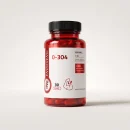
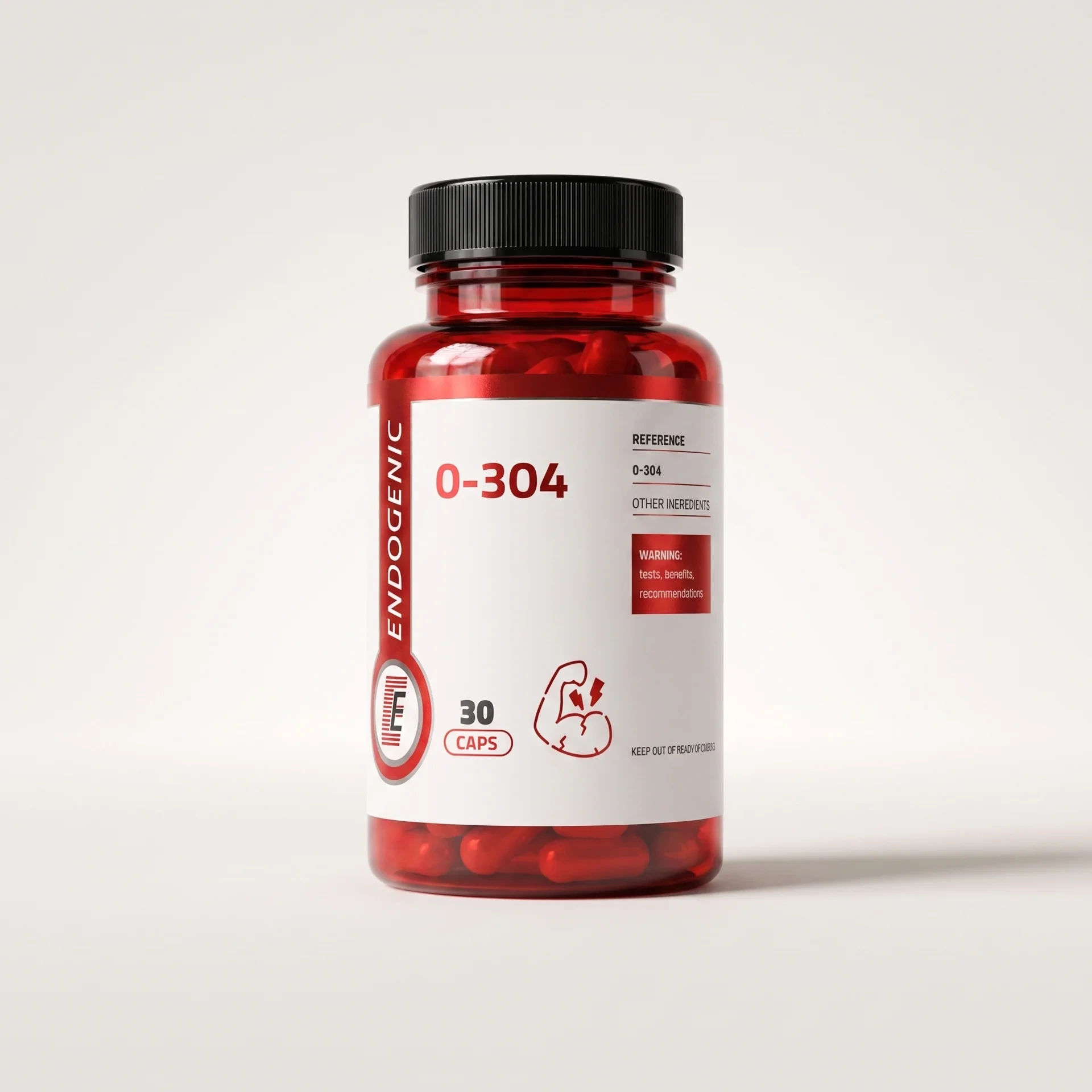
O-304 100mg 30 caps
O-304 100 mg, 30 capsules — a small-molecule pan-AMPK activator of the ADaM class, HPLC purity ≥98%. A chemical reagent intended solely for laboratory research into pharmacological activation of the AMPK pathway in models of insulin resistance, dyslipidaemia and microcirculation.
106,99 €
Fast shipping
Delivery options
Returns policy
O-304 100 mg, 30 capsules — AMPK activator, exercise mimetic
- O-304: a small-molecule pan-AMPK activator, not a peptide.
- 100 mg per capsule; pack of 30 capsules.
- Research Use Only reagent, not a medicinal product.
O-304 is one of the best-characterised candidates for this role. A small molecule, a pan-AMPK activator (acting on all isoforms of the enzyme), developed by Professor Helena Edlund’s group at Umeå University (Sweden) and advanced by Betagenon AB. The key publication — Steneberg et al. 2018 in JCI Insight — describes results from animal models (db/db mouse, high-fat-diet mouse) and preliminary phase IIa data in type 2 diabetes patients: reduced fasting glycaemia, improved microvascular perfusion, lowered arterial blood pressure.
In terms of its action profile it sits in a research niche close to next-generation fat burners — acting on energy metabolism, not on adrenergic thermogenesis.
Regulatory status
O-304 is a small molecule, not a peptide — online it is often mistakenly classified as the “O-304 peptide”. In fact it is a thiadiazole-substituted compound from the group of direct AMPK activators, the ADaM class (allosteric drug- and metabolite-binding site activators). The substance is a clinical candidate in development — it holds no FDA, EMA or other regulatory authorisation. The Pro-Body O-304 reagent does not replace medical consultation and is not a substitute for registered diabetes pharmacotherapy (metformin, GLP-1 agonists, SGLT2 inhibitors).
What is O-304?
Most of the research-chemicals market treats the term “O-304” loosely: the name turns up on forums next to BPC-157, TB-500 and CJC-1295, implying kinship with peptides. The actual chemical structure says otherwise.
O-304 is a small-molecule pan-AMPK activator with a rigid, non-peptide structure based on a thiadiazole core. No amino-acid sequence, no peptide bonds, no need for reconstitution in bacteriostatic water. The molecule is stable in the gastric environment and has oral bioavailability sufficient for per os administration — which fundamentally distinguishes it from research peptides such as BPC-157 or GLP-1, which require parenteral administration.
This distinction has three practical consequences for research protocols:
- Delivery format — hard HPMC capsules with a weighed 100 mg dose, ready for oral administration in animal models or for further dispersion in buffer
- Stability — capsules are stored at room conditions (15–25°C, in a dry place); no cold-chain requirement, no reconstitution, no risk of degradation in freeze/thaw cycles
- Receptor mechanism — O-304 binds allosterically to the ADaM site at the interface of the AMPK α and β subunits, rather than to a membrane receptor like a peptide; this is direct enzyme activation, not GPCR signalling
In this category, O-304 sits alongside PF-739, MK-8722, A-769662 and salicylate — all direct AMPK activators. Among them it stands out for the best cardiac safety profile (PF-739 and MK-8722 caused cardiac hypertrophy in preclinical models) and the strongest in vivo dataset involving humans. In the Pro-Body portfolio, a mechanistically complementary reagent is BAM-15 MAX — a mitochondrial uncoupler acting on the other side of the energy balance (oxidation instead of ATP conservation).
Structure and physicochemical properties of O-304
Chemical data — basics:
| Parameter | Value |
|---|---|
| Common name | O-304 (Betagenon nomenclature) |
| Chemical class | small-molecule AMPK activator, ADaM class |
| Structural core | 1,2,4-thiadiazole with aryl substituents |
| PubChem CID | 50923806 |
| Molecular formula | C16H11Cl2N3O2S |
| Molecular mass | 380.2 g/mol |
| Water solubility | low |
| DMSO solubility | good (≥10 mg/ml, preferred vehicle for in vitro) |
| Oral bioavailability (rodent model) | moderate, sufficient for a pharmacodynamic effect |
| Half-life (rodent model) | a few hours (single dose) |
| HPLC purity | ≥98.0% |
| Identity confirmation | MS (Q-TOF) |
Mechanism of action at the molecular level
What AMPK is and why it matters
AMPK (5′-AMP-activated protein kinase) is a heterotrimeric serine/threonine kinase made up of three subunits: the catalytic α, the structural β and the regulatory γ. In the cell it acts as an energy sensor — it reads the AMP:ATP and ADP:ATP ratios that signal an energy-deficit state (intense exercise, hypoxia, fasting, caloric deficit).
Activation of AMPK triggers an adaptive cascade whose net effect is:
- Inhibition of anabolic processes (protein synthesis, lipogenesis, hepatic gluconeogenesis)
- Stimulation of catabolic processes (fatty-acid oxidation, glycolysis, autophagy)
- Mitochondrial biogenesis via PGC-1α activation
- GLUT4 transporter translocation to the cell membrane in muscle (insulin-independent glucose uptake) — a mechanism whose net effect converges with that of classic GDAs such as Sugar Shield in lowering postprandial glycaemia, though via a different receptor pathway
- Inhibition of the mTORC1 pathway (less protein synthesis, more autophagy)
This is the same set of responses triggered by endurance training, caloric deficit and metformin — which is why AMPK is called the “metabolic master switch”, and its direct activators are sometimes referred to as exercise mimetics.
How O-304 works — binding to the ADaM site (the α/β interface)
O-304 belongs to the ADaM class (Allosteric Drug and Metabolite site activators). It binds at a site on the boundary of the α and β subunits, close to the γ domain. Binding induces a conformational change that stabilises the active form of the enzyme, independently of the cellular AMP concentration.
Practical consequences of O-304 binding to AMPK (db/db mouse model and HFD mouse, Steneberg et al. 2018):
- Activation of all AMPK isoforms — unlike A-769662 (selective for β1) and PF-739 (selective for α1), O-304 is a pan-activator — it acts on the α1β1γ1, α1β2γ1, α2β1γ1, α2β2γ1 and α2β2γ3 isoforms (the last being important in skeletal muscle)
- GLUT4 translocation to the muscle membrane — insulin-independent glucose uptake in skeletal muscle; relevant in the insulin-resistance model
- Reduced hepatic glucose production — phosphorylation of CRTC2 and SHP, inhibiting expression of gluconeogenic enzymes (G6Pase, PEPCK)
- Increased fatty-acid oxidation — phosphorylation of ACC (acetyl-CoA carboxylase), a drop in malonyl-CoA, opening of the β-oxidation pathway; the same metabolic profile was observed in studies on Meldonium as a modulator of β-oxidation
- Improved microvascular perfusion — eNOS activation in endothelial cells, increased NO bioavailability
Does O-304 replace training?
Endurance training activates AMPK in pulses (a peak during exercise, a return to baseline in the hours afterwards) — and it does so in parallel with activation of PGC-1α, CaMKII, MAPK, mTORC2 and mechanotransduction in muscle. O-304 activates AMPK tonically (a sustained elevation of activity during dosing), without the simultaneous activation of mechanotransduction pathways or CaMKII.
In practical terms: O-304 reproduces the metabolic signature of training (glucose homeostasis, mitochondria, lipid profile), but it does not reproduce the strength signature (hypertrophy, myoneurogenesis, mechanical-stimulus-dependent capillarisation). The term “exercise mimetic” is therefore apt in a narrow, metabolic sense — not in the full sense of replacing physical activity. A related molecule in the portfolio in this respect is the mitochondrial peptide MOTS-C, which also modulates a metabolic signature close to the training effect — but through an entirely different mechanism (a peptide encoded in mitochondrial DNA).
AN IMPORTANT DISTINCTION
“Exercise mimetic” in the context of this description means: in animal-model studies and preliminary human studies in T2D, pharmacological activation of the AMPK pathway was observed, with metabolic effects partly similar to those after endurance training. This does not imply a guarantee of equivalence to physical activity in a healthy person, nor any suggestion of using O-304 RUO for that purpose.
What does the research on O-304 show?
db/db mice (type 2 diabetes model) — Steneberg 2018
db/db mice with genetically induced insulin resistance and hyperglycaemia received O-304 orally for 8 weeks. Results:
- Fasting glycaemia: a significant drop vs vehicle
- HbA1c: reduced after 8 weeks of dosing
- Insulin sensitivity (OGTT): improved
- No increase in body weight
- No hypoglycaemia (a mechanism dependent on AMP availability — a physiological limit on activation)
High-fat-diet mice (HFD obesity model) — Steneberg 2018
Mice fed a high-fat diet (60% kcal from fat) for 12 weeks, then dosed with O-304 or placebo for a further 8 weeks. Results:
- Reduced body weight vs placebo
- Decreased visceral (white) adipose tissue
- Improved lipid profile (triglycerides, LDL)
- Increased UCP1 expression in brown adipose tissue (suggesting enhanced thermogenesis)
- Improved mitochondrial function in skeletal muscle
Phase IIa in type 2 diabetes patients — Steneberg 2018
In the first human study in T2D (n = small cohort, oral dosing, 14 days) the following were observed:
- Reduced fasting glycaemia
- Improved microvascular perfusion (laser Doppler skin perfusion)
- Reduced systolic arterial blood pressure
- No hypoglycaemia
- Good tolerability, no serious adverse events reported
This is the first direct AMPK activator to reach a clinical phase in humans while preserving a cardiac safety profile (PF-739 and MK-8722 caused left-ventricular hypertrophy in animal models — which ended their preclinical development).
AMPK in sport and physiology — an overview
Literature context beyond the individual O-304 studies: the role of AMPK in exercise adaptation is well documented (Mounier 2015, Spaulding 2022). AMPK participates in PGC-1α-dependent mitochondrial biogenesis (O’Neill 2013), regulates hepatic fat oxidation (Foretz 2018) and is responsible for the metabolic switch between the fed state and energy deficit (Hardie 2012, Garcia & Shaw 2017).
Applications in scientific research
O-304 is used in research work in several directions:
- Insulin-resistance and T2D models — db/db mouse, HFD mouse, ZDF rat; studies of the GLUT4 translocation mechanism and the reduction of hepatic glucose production
- AMPK pharmacology — comparative studies of pan-activators (O-304 vs PF-739 vs MK-8722 vs A-769662) in the context of isoform selectivity and cardiac safety
- Dyslipidaemia and NAFLD models — the effect of AMPK activation on hepatic fatty-acid oxidation, triglyceride profiles
- Microcirculation and blood pressure — animal models of hypertension, endothelial dysfunction; a mechanism via eNOS and NO bioavailability
- Exercise-mimetic research — comparison of the transcriptional signatures of O-304 vs endurance training in skeletal muscle of rodent models; alongside, comparisons with ERRα agonists of the SLU-PP-332-PLUS type, which act on a different node of the mitochondrial network
- Co-experiments — synergies and antagonisms with metformin (an indirect AMPK activator via LKB1), GLP-1 agonists (a category represented in the portfolio by Tirzepatide 5mg), SGLT2 inhibitors, fibrates
Each of these directions requires rigorous RUO conditions — the reagent supplied by Pro-Body is intended solely for laboratory research in registered research units.
Summary
O-304 100 mg, 30 capsules is a small-molecule pan-AMPK activator of the ADaM class, delivered in oral format for precise research protocols. The best-documented candidate in the direct-AMPK-activator niche — with an in vivo dataset covering T2D, dyslipidaemia and microcirculation models, plus preliminary phase IIa data in humans (Steneberg et al. 2018, JCI Insight). Mechanism: allosteric binding to the γ-AMPK domain, activation of all enzyme isoforms, metabolic effects partly similar to endurance training (GLUT4 translocation, mitochondrial biogenesis, β-oxidation, reduced hepatic glucose production). HPLC purity ≥98%, MS confirmation, COA per batch, HPMC capsule format. Status: Research Use Only, WADA S4.4.
References
- Steneberg P, Lindahl E, Dahl U, et al. (2018). PAN-AMPK activator O304 improves glucose homeostasis and microvascular perfusion in mice and type 2 diabetes patients.
- Hardie DG, Ross FA, Hawley SA. (2012). AMPK: a nutrient and energy sensor that maintains energy homeostasis.
- Garcia D, Shaw RJ. (2017). AMPK: Mechanisms of Cellular Energy Sensing and Restoration of Metabolic Balance.
- Mounier R, Theret M, Lantier L, Foretz M, Viollet B. (2015). Expanding roles for AMPK in skeletal muscle plasticity.
- O’Neill HM, Holloway GP, Steinberg GR. (2013). AMPK regulation of fatty acid metabolism and mitochondrial biogenesis: implications for obesity.
- Foretz M, Even PC, Viollet B. (2018). AMPK Activation Reduces Hepatic Lipid Content by Increasing Fat Oxidation In Vivo.
- Spaulding HR, Yan Z. (2022). AMPK and the Adaptation to Exercise.
FAQ
Metformin activates AMPK indirectly — mainly by inhibiting complex I of the mitochondrial respiratory chain, which raises the AMP:ATP ratio and secondarily activates AMPK. O-304 is a direct activator — it binds to the γ-subunit of the enzyme and activates it independently of the AMP level. In practice: O-304 has a stronger and more controlled pharmacodynamic effect in animal models, but there are no long-term human safety data (metformin has >60 years of clinical history).
In rodent models (mouse, rat) oral bioavailability is moderate, sufficient to achieve a pharmacodynamic effect at standard research doses. Full PK data in humans have not been published in full — Steneberg 2018 reports a pharmacodynamic effect after oral dosing, which confirms adequate systemic bioavailability.
Yes — AMPK activators fall under the S4.4 Metabolic Modulators category of the WADA list. AICAR and GW1516 are named explicitly, but the category covers “other AMPK activators” — small-molecule pan-AMPK activators such as O-304 fall under this classification. Registered athletes (ADAMS) must verify the current list before any decision.
GW-501516 is a PPARδ agonist — it acts on an entirely different pathway (a nuclear receptor regulating the expression of fatty-acid-oxidation genes). Common point: both compounds are sometimes classified as “exercise mimetics” and both are on the WADA list. Point of divergence: GW-501516 has a carcinogenic signal in long-term rodent models, which ended its clinical development; O-304 has no such signal in published preclinical studies. You will find a detailed comparison of the mechanism and research profile of GW-501516 in the article Cardarine for weight loss — action and dosage.
0.0
0 reviews
This product has no reviews yet.