Skip to content
Black Week: 20% off everything, code BLACK

Search

What are you looking for?

Type at least 2 characters to see suggestions.

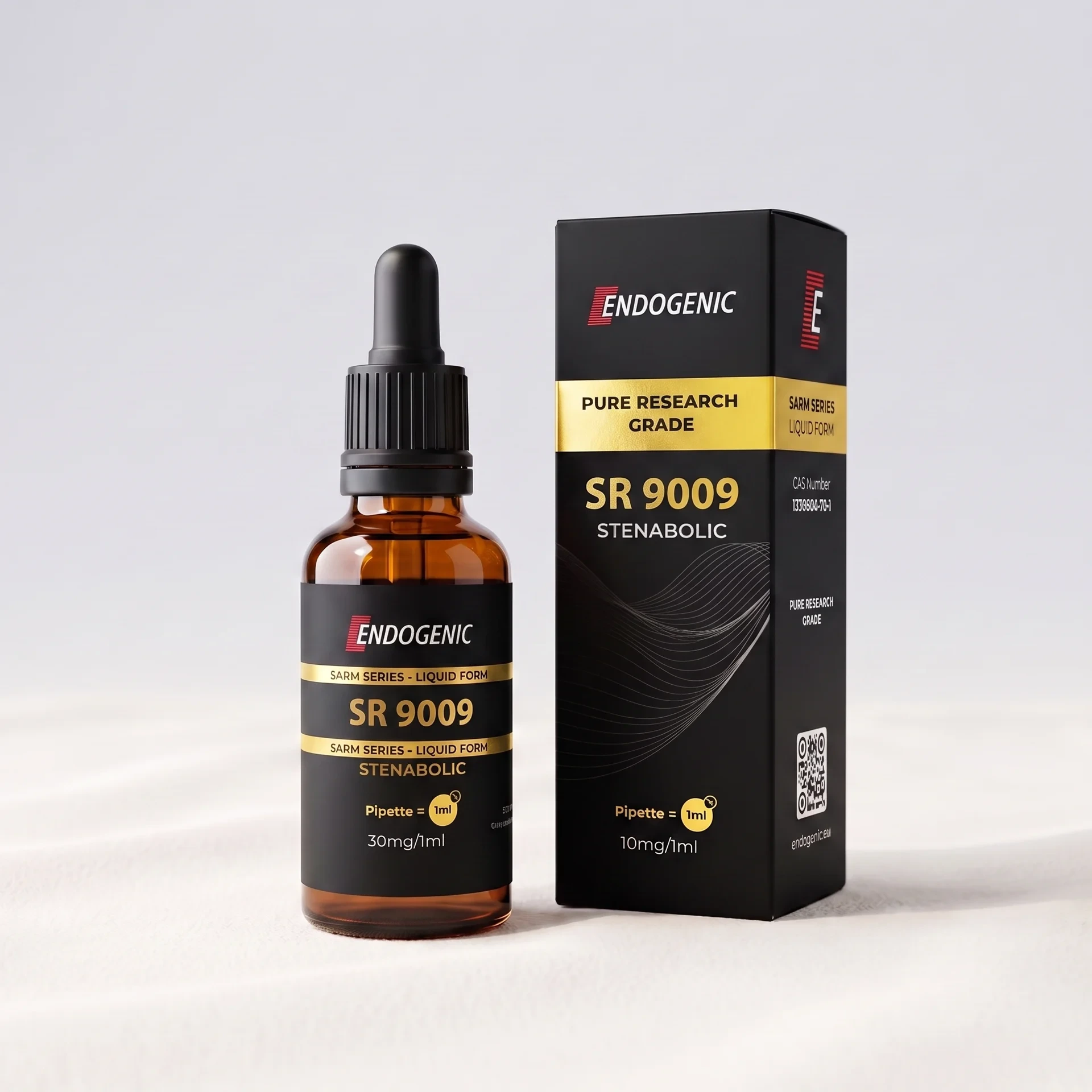
SR 9009 30mg/1ml LIQUID

SR 9009 30mg/1ml LIQUID

SR-9009 (Stenabolic) — oral solution in a 30 ml dropper bottle (Endogenic line) – REV-ERBα/β nuclear receptor agonist (NR1D1/NR1D2). Described in Nature 2012 as a modulator of the molecular circadian clock and metabolism – BMAL1 repression, mitochondrial biogenesis, “exercise mimetic”. Research Use Only

47,99 €
With code BLACK: 38,39 € Lowest price in the 30 days before the discount: 47,99 €
Fast shipping
Free delivery from 350 €
Returns policy

SR-9009 (Stenabolic) 30 ml solution - REV-ERB receptor agonist, research reagent

  • SR-9009 (Stenabolic): a REV-ERBα/β receptor agonist.
  • Solution in a 30 ml dropper bottle; concentration according to the batch COA.
  • Research Use Only reagent, not a medicinal product.

Product status information

Chemical reagent intended exclusively for laboratory tests (Research Use Only). It is not a medicinal product, dietary supplement or food. It is not intended for use on humans or animals. Sales only to registered research units and laboratories.

SR-9009, better known under its trade name Stenabolic, is a small organic class molecule REV-ERB nuclear receptor agonist — agonist of both REV-ERBα (NR1D1) and REV-ERBβ (NR1D2) isoforms. The substance was created in a laboratory Thomas Burris at Scripps Research Institute — the same team that developed the ERR pan-agonist a decade later SLU-PP-332 100mcg. SR-9009 and its sister compound SR-9011 were described in a groundbreaking publication Solt et al. 2012 (Nature) as the first synthetic REV-ERB agonists capable of retuning the circadian rhythm and metabolic program in mouse models.

Of this pair, it is the SR-9009 that has gained the greatest market recognition – under the Stenabolic brand it functions as a reference representative of the entire class. This reagent is supplied in line Endogenic in format oral solution in a 30 ml dropper bottle (concentration mg/ml declared in the batch COA). The form of the dropper solution is adapted to laboratory research protocols operating with working concentrations in vivo on animal models and in vitro on cell lines – the dropper simplifies the measurement of repeatable volumes of solution with a known concentration of mg/ml.

In a chemical context, SR-9009 belongs to a class small organic molecules in the pharmacology of nuclear receptors – this is an important distinction between peptides (BPC-157, TB-500, MOTS-c) and steroid SARMs (RAD-140). The central axis of the mechanism is the feedback of the molecular circadian clock with mitochondrial metabolism: REV-ERB receptors constitute one of the core components of the cellular clock, and at the same time regulate the expression of β-oxidation and mitochondrial biogenesis genes in skeletal muscles.

For this reason, REV-ERB agonists are classified among so-called “exercise mimetics” – molecules that partially replicate the biochemical phenotype of endurance exercise.

Purity verified by HPLC ≥98%, identity confirmed by mass spectrometry, COA available for each batch.

Regulatory status

SR-9009 has not completed any phase of human clinical trials. Compound remains at the stage of preclinical research (rodent models, cell cultures). No registration as a drug with the EMA, FDA or anywhere in the world. Not authorized by EFSA as an ingredient of a dietary supplement. Marketing a product as an “exercise in a pill”, “fat burner” or “endurance booster for athletes” is inconsistent with the Research Use Only framework.

REV-ERB receptors and the circadian clock

REV-ERBα (encoded by the NR1D1 gene) and REV-ERBβ (NR1D2) are nuclear receptors belonging to the nuclear hormone receptor superfamily. They are distinguished by a rare feature in this family – the physiological ligand of REV-ERB is heme (heme), an iron-containing prosthetic group. Binding of heme in the ligand domain switches the receptor into an active repressor conformation.

REV-ERB receptors work in the opposite way to classic transcription activators: after activation they suppress expression of target genes by recruiting the corepressor NCoR and the histone deacetylase HDAC3. The most important transcriptional target of REV-ERB is the gene BMAL1 (ARNTL) — one of the two core activators of the molecular circadian clock.

The cellular clock acts as a feedback loop: the CLOCK–BMAL1 complex triggers the transcription of the Period (PER) and Cryptochrome (CRY) genes, and in parallel activates the expression of REV-ERB, which then represses BMAL1, completing the rhythmic oscillation with a period close to 24 hours. REV-ERB is therefore an integral, rhythmically oscillating component of the molecular clock, connecting biological time with metabolism. The biological functions of REV-ERB include gene expression programs of fundamental importance for chronobiology and energy metabolism:

  • Regulation of circadian rhythm — BMAL1 repression as one of the arms of the main loop of the molecular clock; stabilization of the period and amplitude of daily oscillations
  • Lipid metabolism — repression of lipogenesis genes in the liver, modulation of fatty acid synthesis and lipid profile
  • Mitochondrial biogenesis in skeletal muscles — REV-ERBα regulates the number and oxidative capacity of mitochondria in muscle tissue
  • Glucose metabolism — participation in the rhythmic regulation of hepatic gluconeogenesis and energy homeostasis
  • Modulation of the inflammatory response — repression of pro-inflammatory genes in macrophages (REV-ERB–NF-κB axis)
  • Regulation of sleep and locomotor activity — coupling the molecular clock with the circadian activity pattern (rodent models)

For this reason, pharmacological activation of REV-ERB receptors has been treated for over a decade as an interesting target in the search for molecules that modulate both the circadian rhythm and the metabolic program – at the interface of chronobiology and exercise metabolism.

What is SR-9009 (Stenabolic)?

Chemically, SR-9009 is a synthetic small organic molecule designed with affinity for the ligand pocket of REV-ERB receptors, mimicking the agonist effect of heme.

  • Common name: SR-9009 (Stenabolic)
  • Laboratory of Origin: Thomas Burris, Scripps Research Institute
  • Pharmacological class: REV-ERBα (NR1D1) + REV-ERBβ (NR1D2) receptor agonist
  • Molecular function: circadian rhythm and metabolism modulator; exercise mimetic
  • Molecular type: small organic molecule (NOT peptide, NOT steroid)
  • Delivered form: oral solution in a 30 ml dropper bottle; mg/ml concentration declared in the batch COA; pharmaceutical grade ≥98% HPLC

Table of physicochemical characteristics

Parameter Value
Name SR-9009 (Stenabolic)
Pharmacological class REV-ERBα/β (NR1D1/NR1D2) agonist
CAS number 1379686-30-2
Summary formula C₂₀H₂₄ClN₃O₄S
Molecular weight 437.94 g/mol
Molecular type A small organic molecule
Cleanliness ≥98% (HPLC)
Character Oral solution, 30 ml dropper bottle; mg/ml concentration – see COA
Identity confirmation Mass spectrometry (MS Q-TOF)
Storage conditions Room temperature (15-25°C), protect from light
Shelf life 24 months (lot details – COA)

Mechanism of action at the molecular level

SR-9009 binds to the ligand-binding domain of REV-ERBα and REV-ERBβ receptors, mimicking the agonist effect of the natural heme ligand. Binding of the molecule stabilizes the repressor conformation of the receptor, increasing the recruitment of the corepressor NCoR and the deacetylase HDAC3, which leads to enhanced repression of REV-ERB target genes. Pharmacological profile observed in preclinical models – six axes of action:

  1. REV-ERB agonism and molecular clock repression — as a heme-binding nuclear receptor, REV-ERB, when activated by SR-9009, increases the repression of transcription of target genes, including BMAL1 and other core genes of the circadian clock. This is a direct interference in the feedback loop of the molecular oscillator
  2. Mitochondrial biogenesis and β-oxidation in skeletal muscle — activation of REV-ERBα in muscle increases the number and oxidative capacity of mitochondria and intensifies the oxidation of fatty acids; improvement in running endurance was reported in mouse models, which is the basis for the term “exercise mimetic”
  3. Regulation of lipid and glucose metabolism — repression of hepatic lipogenesis genes, reduction of fatty acid synthesis and influence on the lipid profile; participation in the rhythmic control of glucose metabolism
  4. Circadian rhythm modulation — REV-ERB as an integral component of the molecular clock; pharmacological retuning of the amplitude and phase of circadian oscillations observed in animal models
  5. Reduction of fat mass in a diet-induced obesity (DIO) model — in mice on a high-fat diet, a decrease in adipose tissue mass was reported without caloric restriction, in connection with increased energy expenditure
  6. Effect on sleep and locomotor activity — modulation of the circadian pattern of activity and sleep parameters in rodent models, resulting from the coupling of REV-ERB with the molecular clock

Pharmacokinetic profile (based on preclinical models):

  • Oral bioavailability: weak — in the studies, the compound was administered intraperitoneally (i.p.), not orally; oral exposure in humans remains uncharacterized
  • Human PK profile: uncharacterized – no phase I studies
  • Molecular target: ligand-binding domain of REV-ERBα/β receptors, enhancement of transcriptional repression by the NCoR/HDAC3 axis

The REV-ERB mechanism activates one axis from many components of the body’s response to physical exercise and the circadian rhythm. Endurance training simultaneously affects the cardiovascular system, skeletal system, central nervous system, hormonal balance and inflammatory profile. Pharmacological activation of REV-ERB receptors replicates part of the skeletal muscle metabolic program and retunes the molecular clock – but nothing else.

SR-9009 vs SR-9011, REV-ERB vs PPARδ vs pan-ERR and the issue of oral bioavailability

There are several common misconceptions surrounding SR-9009: confusion with its sister SR-9011, lumping all “exercise mimetics” into one category, and overlooking the issue of oral bioavailability. Each requires distinction.

SR-9009 and SR-9011. Both compounds are REV-ERB agonists from the same Burris laboratory, described in the same publication by Solt et al. 2012. They differ in chemical structure and minor pharmacokinetic properties, but the primary molecular target – REV-ERBα/β receptors – is common.

SR-9009 gained greater market recognition under the trade name “Stenabolic” and is sometimes the prototype for an entire class; SR-9011 functions as its structural analogue and often serves as a reference compound in SAR (structure-activity) analyses. From a laboratory point of view, both are sometimes used interchangeably as tools for studying REV-ERB pharmacology. The sister compound is available as SR-9011 in the form of capsules.

REV-ERB vs PPARδ vs pan-ERR – three different families of “exercise mimetics”. The term “exercise mimetic” covers molecules with completely different molecular targets – they share only partial replication of the biochemical exercise phenotype, not a common mechanism.

Class Example Molecular target Mechanism Status
REV-ERB agonist SR-9009 (Stenabolic), SR-9011 REV-ERBα/β (NR1D1/NR1D2) Repression of the molecular clock (BMAL1), mitochondrial biogenesis, lipid metabolism RUO research chemicals (Nature 2012)
ERR pan-agonist SLU-PP-332 ERRα/β/γ Induction of mitochondrial biogenesis through the ERR–PGC-1α axis RUO research chemicals (Nature Metabolism 2024)
PPARδ agonist GW-501516 (Cardarine), GW-0742 PPARδ β-oxidation of fatty acids RUO research chemical (carcinogenesis signal in long-term studies in rodents)

The SR-9009 has the distinction of being – along with the SR-9011 – the only one of the three classes to operate by the molecular circadian clock: its target (REV-ERB) is a core component of the circadian oscillator and not solely a metabolic regulator. The related pan-agonist SLU-PP-332 targets the ERR–PGC-1α network (mitochondrial biogenesis without direct interference with the clock), and the agonist GW-501516 (Cardarine) in liquid form modifies lipid oxidation by a neighboring node of the metabolic network.

Three distinct receptors, three mechanisms, one common phenotypic denominator – which makes them the subject of comparative analyzes in studies on exercise metabolism.

Oral bioavailability – translational barrier. The third misunderstanding concerns form. Although SR-9009 is delivered as an oral solution in a dropper bottle (laboratory-convenient formulation), the oral bioavailability of the molecule itself is poor – in experimental work it was administered to rodents via the intraperitoneal (i.p.) route. Limited metabolic stability and an unfavorable PK profile after administration through the gastrointestinal tract are one of the main reasons why the compound has not entered the clinical phase and remains a research tool.

The form of the solution concerns the handling of the reagent in the laboratory and does not indicate the route of administration to humans.

Applications in scientific research

SR-9009 is used in research work in several areas. In vivo models (mouse) examine its impact on the rhythmic expression of molecular clock genes (BMAL1, PER, CRY), markers of mitochondrial biogenesis, running endurance parameters (treadmill tests), lipid profile and the daily pattern of locomotor activity and sleep. In vitro models (muscle cell lines, hepatocytes, macrophages) measure the kinetics of transcriptional repression, analyze cellular respiration (OCR/ECAR on Seahorse platforms) and study the REV-ERB-inflammation axis.

Within the class of metabolic modulators, SR-9009 is sometimes compared to other compounds on the shelf SARMs for fat burning in the paradigm of reducing fat mass and energy expenditure. Specific research directions include:

  • Molecular chronobiology — pharmacological retuning of the circadian clock, mapping of BMAL1 repression, research on the synchronization of peripheral oscillators with the central clock in the suprachiasmatic nucleus
  • Mouse models of mitochondrial endurance and metabolism — treadmill tests, indirect calorimetry, energy expenditure measurements, muscle oxidative capacity analysis
  • Experiments on “exercise mimetics” — comparative pharmacological studies in the paradigm of mitochondrial endurance and adaptation, with SR-9009/SR-9011 as REV-ERB agonists alongside ERR and PPARδ agonists
  • Studies of lipid metabolism and obesity — DIO (diet-induced obesity) models, analysis of hepatic lipogenesis, lipid profile and body composition
  • Pharmacology of nuclear receptors — characterization of REV-ERB ligands, SAR analyses, studies of selectivity towards REV-ERBα/β and interaction with the NCoR/HDAC3 corepressor
  • Inflammation research — modulation of the REV-ERB–NF-κB axis in macrophages, rhythmic control of pro-inflammatory gene expression

Summary

SR-9009 (Stenabolic, oral solution 30 ml, Endogenic line) is a small organic molecule of the REV-ERB agonist class (REV-ERBα/β, NR1D1/NR1D2) from the laboratory of Thomas Burris (Scripps Research Institute), described along with its sister SR-9011 in the seminal publication of Solt et al. 2012 (Nature). In mouse models, the compound retunes the molecular circadian clock by repressing BMAL1, enhances mitochondrial biogenesis and β-oxidation in skeletal muscles (REV-ERBα axis – performance, Woldt et al. 2013), reduces fat mass in the DIO model, and modulates the lipid profile and locomotor activity.

SR-9009 combines chronobiology with exercise metabolism – together with SR-9011, it is the only one of the three main classes of “exercise mimetics” acting through the molecular circadian clock, unlike ERR pan-agonists (SLU-PP-332) and PPARδ agonists (GW-501516, Cardarine). Oral bioavailability is poor (i.p. administration in studies). Solution in a 30 ml dropper bottle, mg/ml concentration in COA, HPLC purity ≥98%, MS Q-TOF confirmation. Regulatory Status – Research Use Only; no clinical phase in humans; WADA: class S4.4.1 (metabolic modulators, named), prohibited at all times.

Bibliography

  1. Solt LA, Wang Y, Banerjee S, Hughes T, Kojetin DJ, Lundasen T, et al. (2012). Regulation of circadian behavior and metabolism by synthetic REV-ERB agonists. PubMed
  2. Woldt E, Sebti Y, Solt LA, Duhem C, Lancel S, Eeckhoute J, et al. (2013). Rev-erb-α modulates skeletal muscle oxidative capacity by regulating mitochondrial biogenesis and autophagy. PubMed
  3. Sulli G, Manoogian ENC, Taub PR, Panda S (2018). Training the circadian clock, clocking the drugs, and drugging the clock to prevent, manage, and treat chronic diseases. PubMed
  4. Burris TP, Solt LA, Wang Y, Crumbley C, Banerjee S, Griffett K, et al. (2013). Nuclear receptors and their selective pharmacological modulators. PubMed
  5. Amador A, Wang Y, Banerjee S, Kamenecka TM, Solt LA, Burris TP (2016). Pharmacological and genetic modulation of REV-ERB activity and expression affects orexigenic gene expression. PubMed