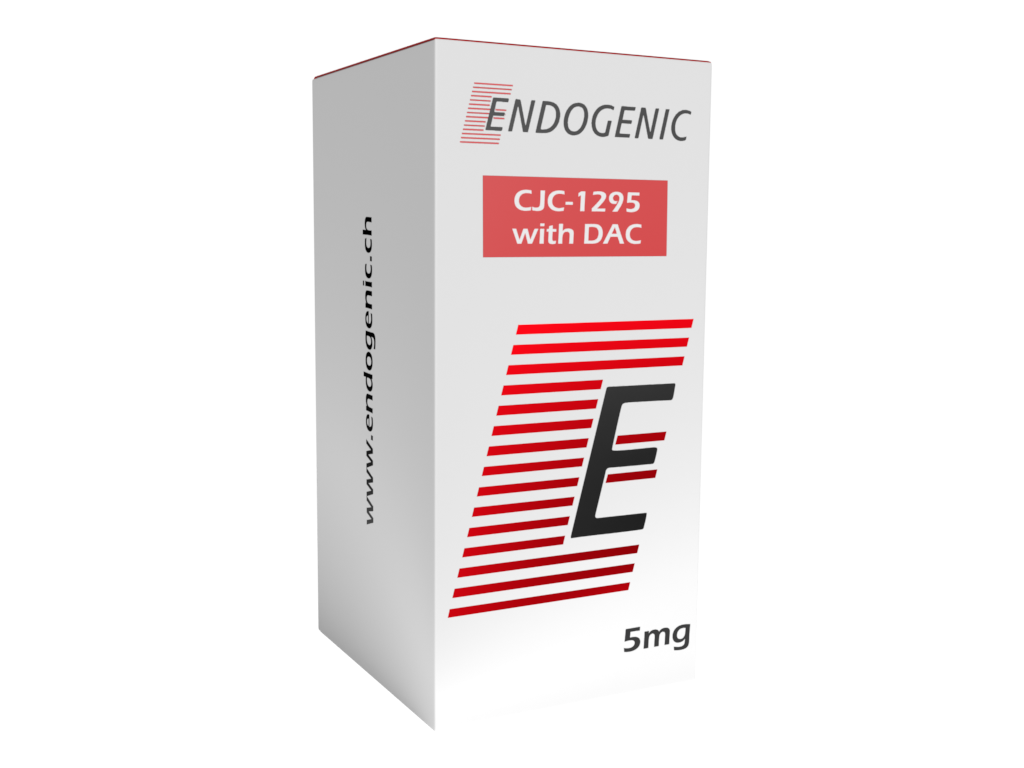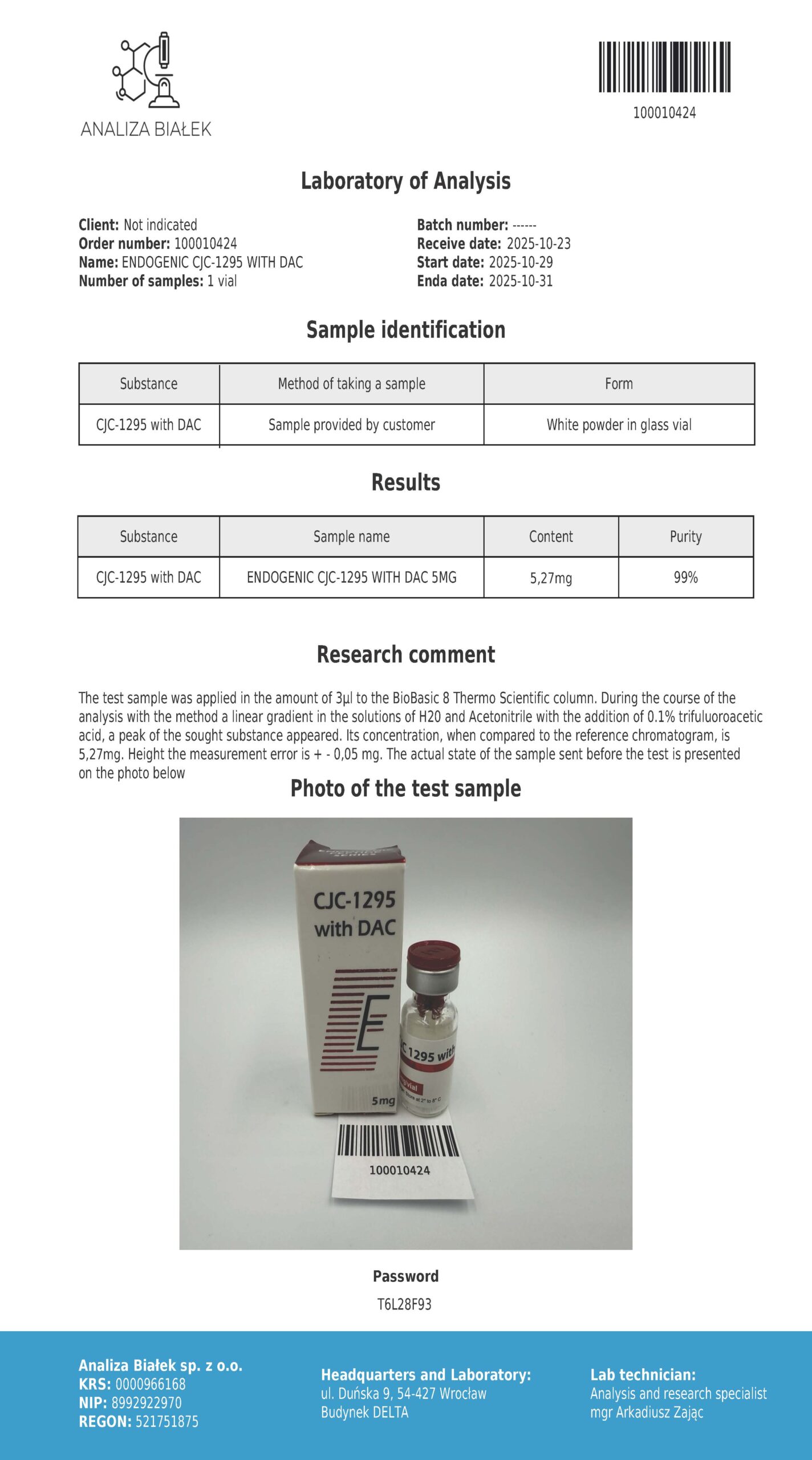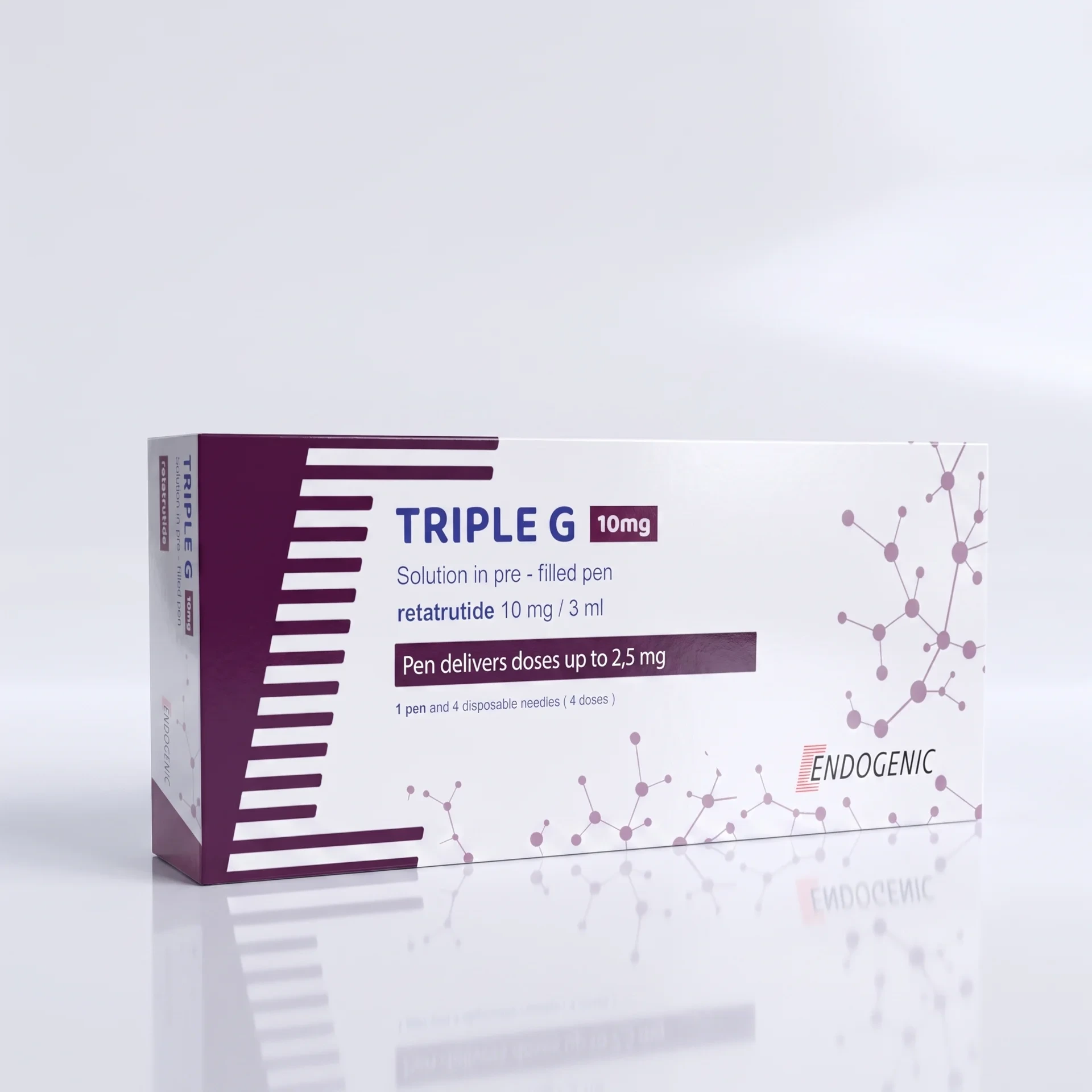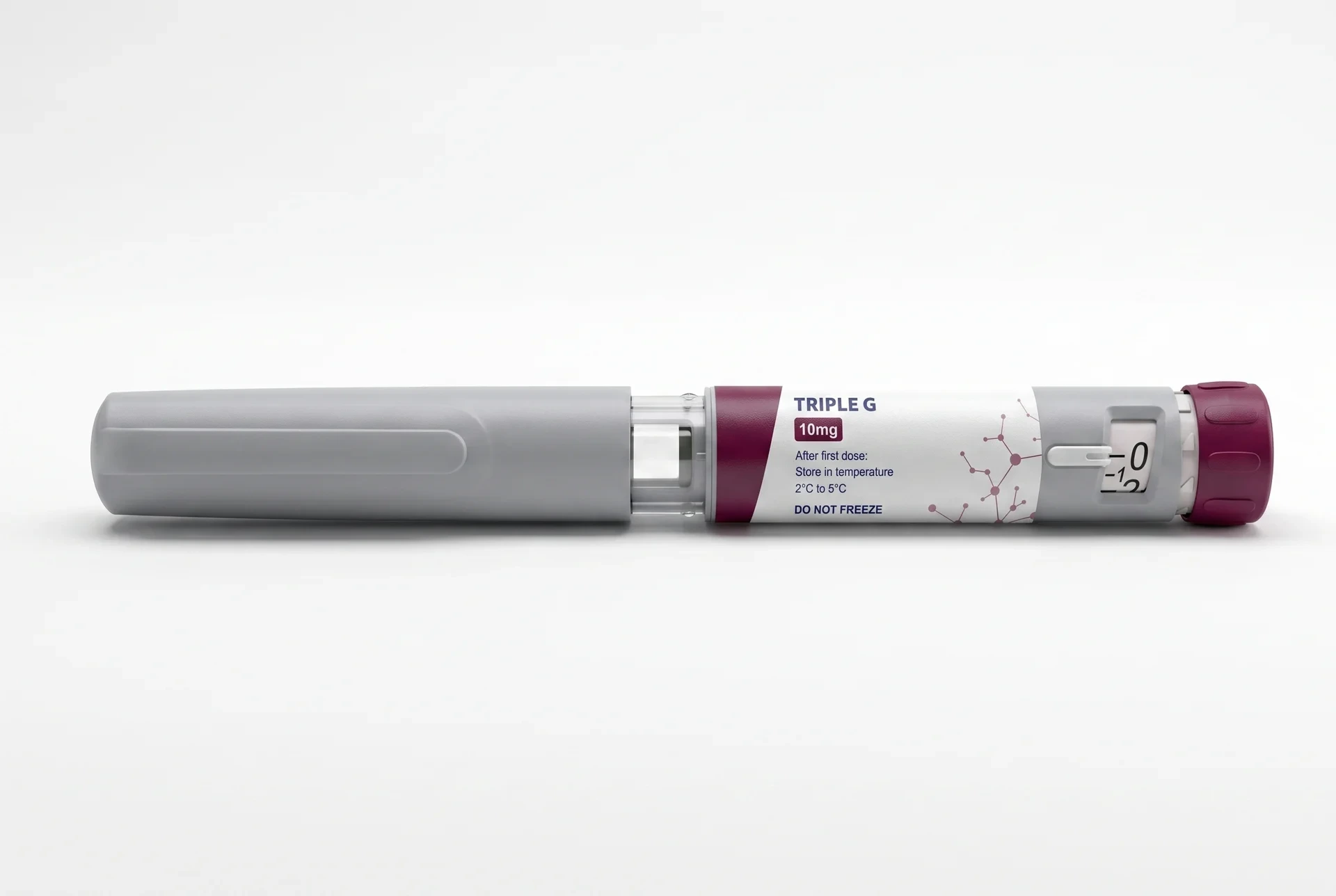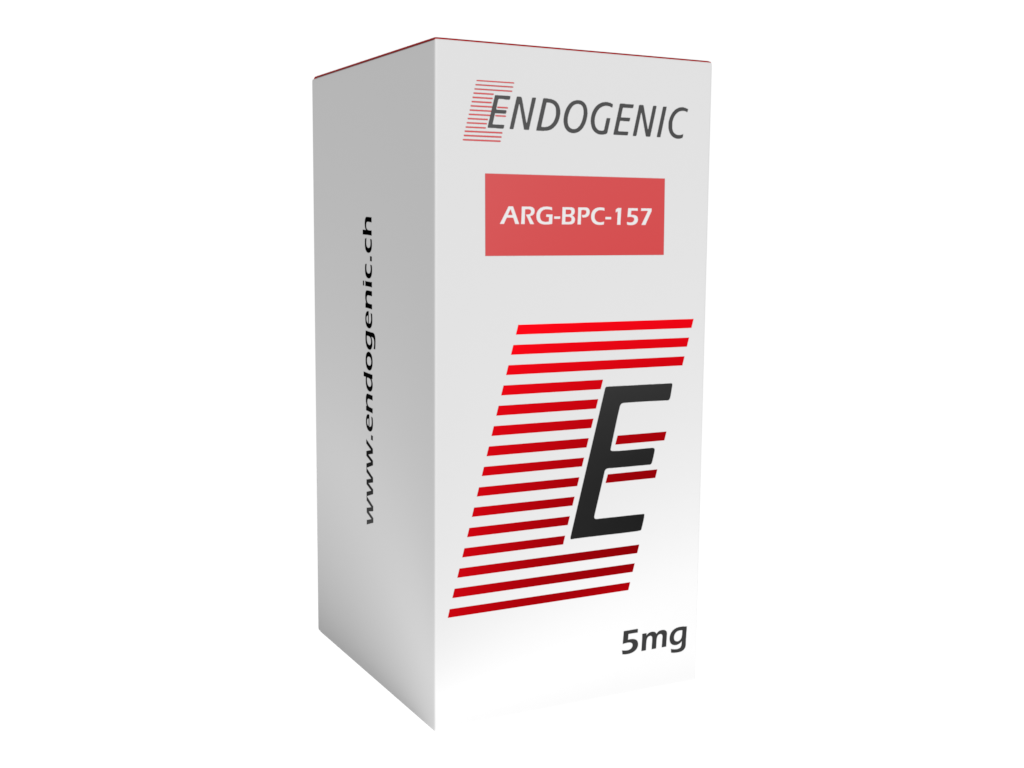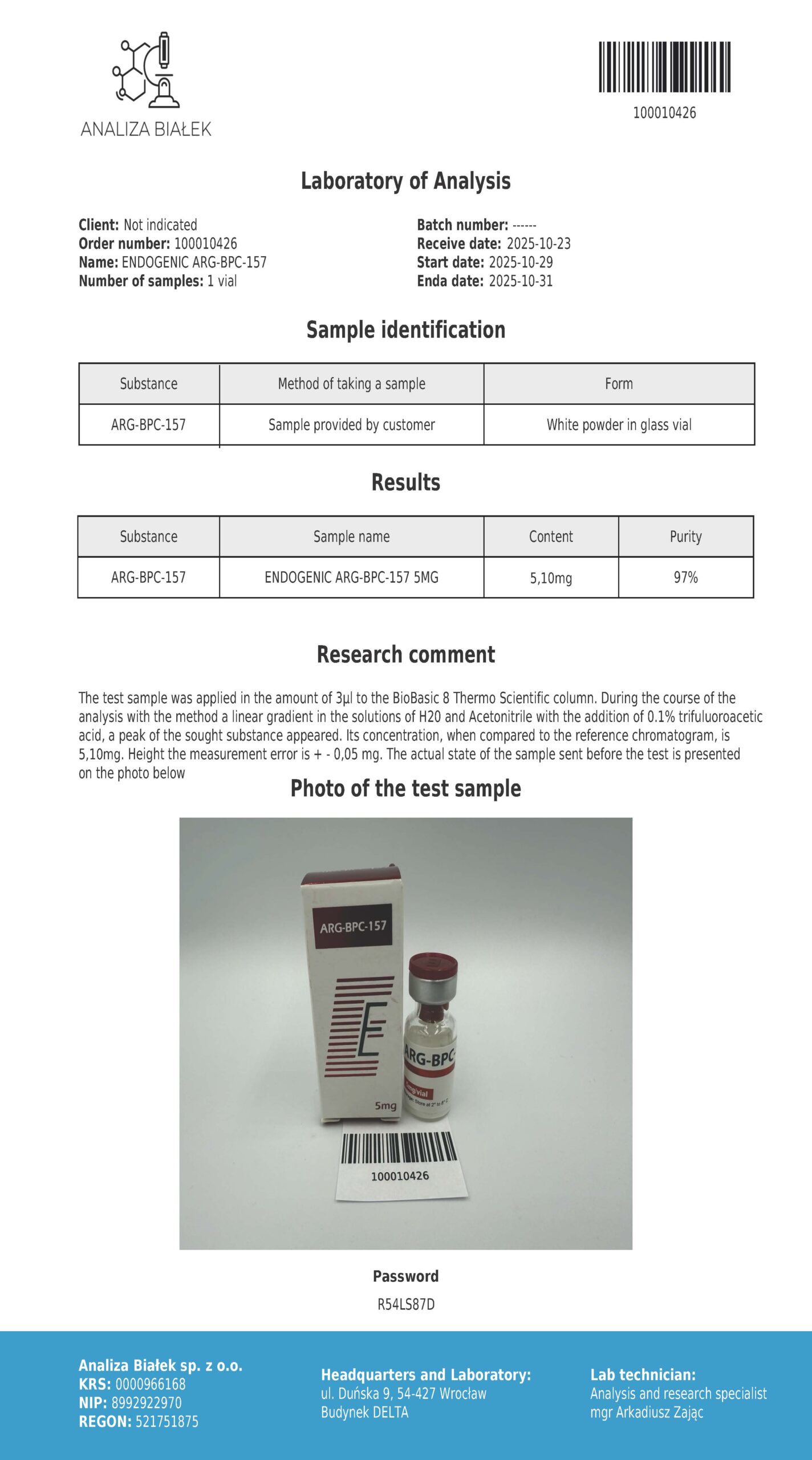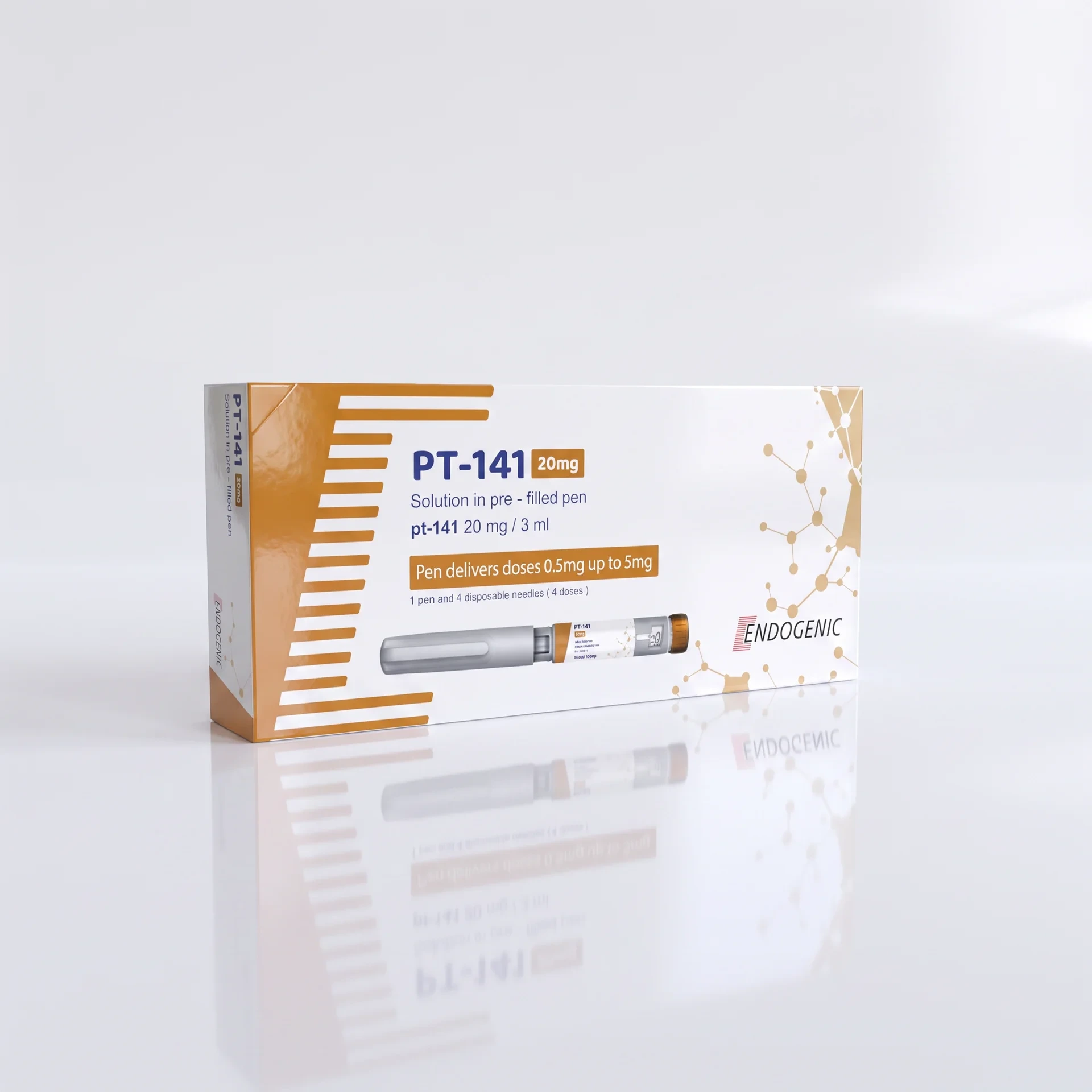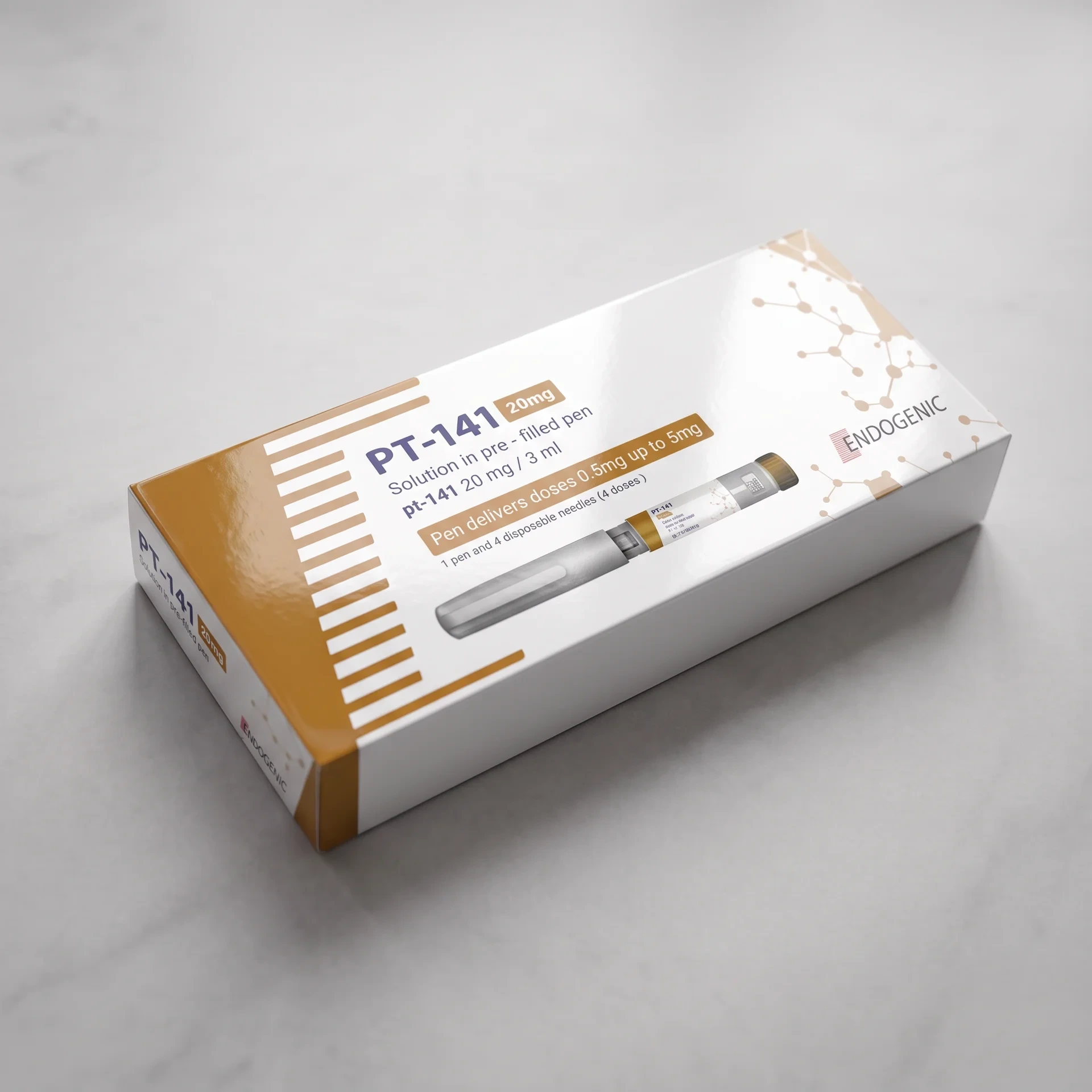


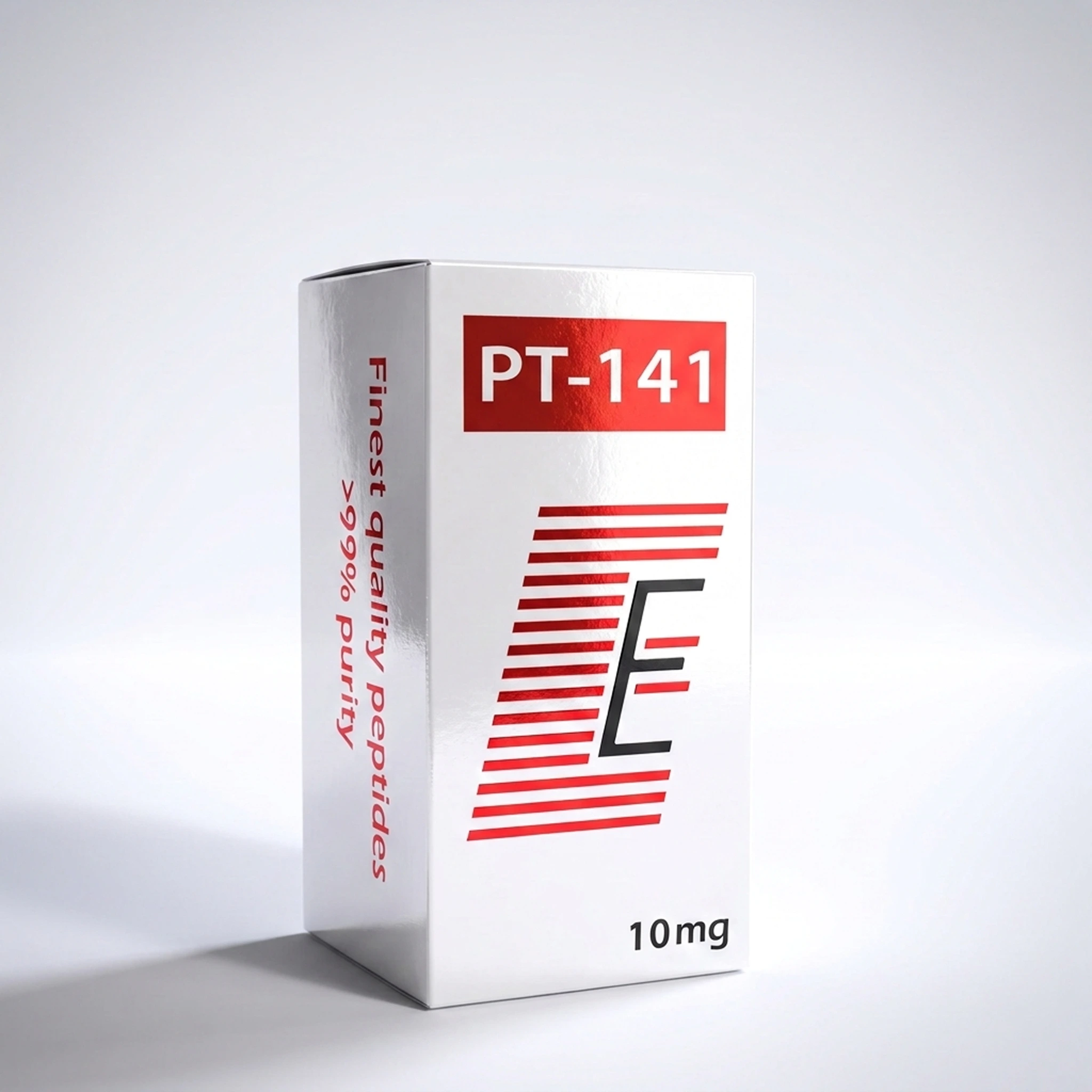
The contents of the set. The vial version is the PT-141 lyophilisate (10 mg) alone – no solvent included and no applicator; the researcher selects the solvent and working concentration independently. The spray variant is a set (vial with lyophilisate + bacteriostatic water + glass atomizer) prepared for intranasal administration. In both cases, the peptide is present as a lyophilisate requiring reconstitution.
PT-141 10mg
PT-141 (bremelanotide) 10 mg, vial version – Melanotan II metabolite with a free C-terminus, shifted towards MC4R receptor selectivity. Mechanism: MC4R agonism in the CNS, central regulation of sexual functions, limited effect on pigmentation relative to MT-II. Research Use Only reagent
35,99 €
Fast shipping
Delivery options
Returns policy
PT-141 (Bremelanotide) 10 mg - research reagent
- PT-141 (bremelanotide): cyclic melanocortin heptapeptide.
- 10 mg lyophilisate in a vial, without solvent or applicator.
- Research Use Only reagent, not a substitute for Vyleesi.
Product status information
Chemical reagent intended exclusively for laboratory tests (Research Use Only). It is not a medicinal product, dietary supplement or food. It is not intended for use on humans or animals. Sales only to registered research units and laboratories.
REGULATORY STATUS
PT-141 (bremelanotide) has an equivalent approved drug — Vyleesi® (bremelanotide), approved by the FDA (2019) for the narrow indication of sexual desire disorder in premenopausal women (HSDD). PT-141 research reagent is not a substitute for this medicine, is not intended to treat any disorders and does not replace medical consultation. WADA Status: Bremelanotide is not currently on the Prohibited List as a separately listed substance, however athletes registered in the ADAMS system will verify the current list before any decision.
Communication of the product as a “libido peptide”, “erection remedy”, “over-the-counter sexual enhancer” is contrary to the Research Use Only framework.
PT-141, i.e bremelanotide, is a cyclic heptapeptide from the melanocortin family – a selective agonist of the melanocortin type 4 receptor (MC4R). It comes directly from the Melanotan II program: it is its metabolite in which the C-terminal amide group has been replaced with a free carboxyl group. This seemingly minor chemical change shifts the profile of the molecule from broad pan-agonism of melanocortin (MT-II) receptors towards greater selectivity for MC4R, a central receptor associated with central regulation of sexual function rather than pigmentation.
It was this selectivity that became the basis for the development of Vyleesi®. This reagent from the line Endogenic is delivered in vial version – as a 10 mg lyophilisate for reconstitution by the investigator. This is what sets it apart from spray variant (kit for preparing a solution for intranasal administration): the vial is only a dry form of the peptide, which the researcher dissolves with a solvent of his choice, obtaining full control over the volume and concentration of the working solution.
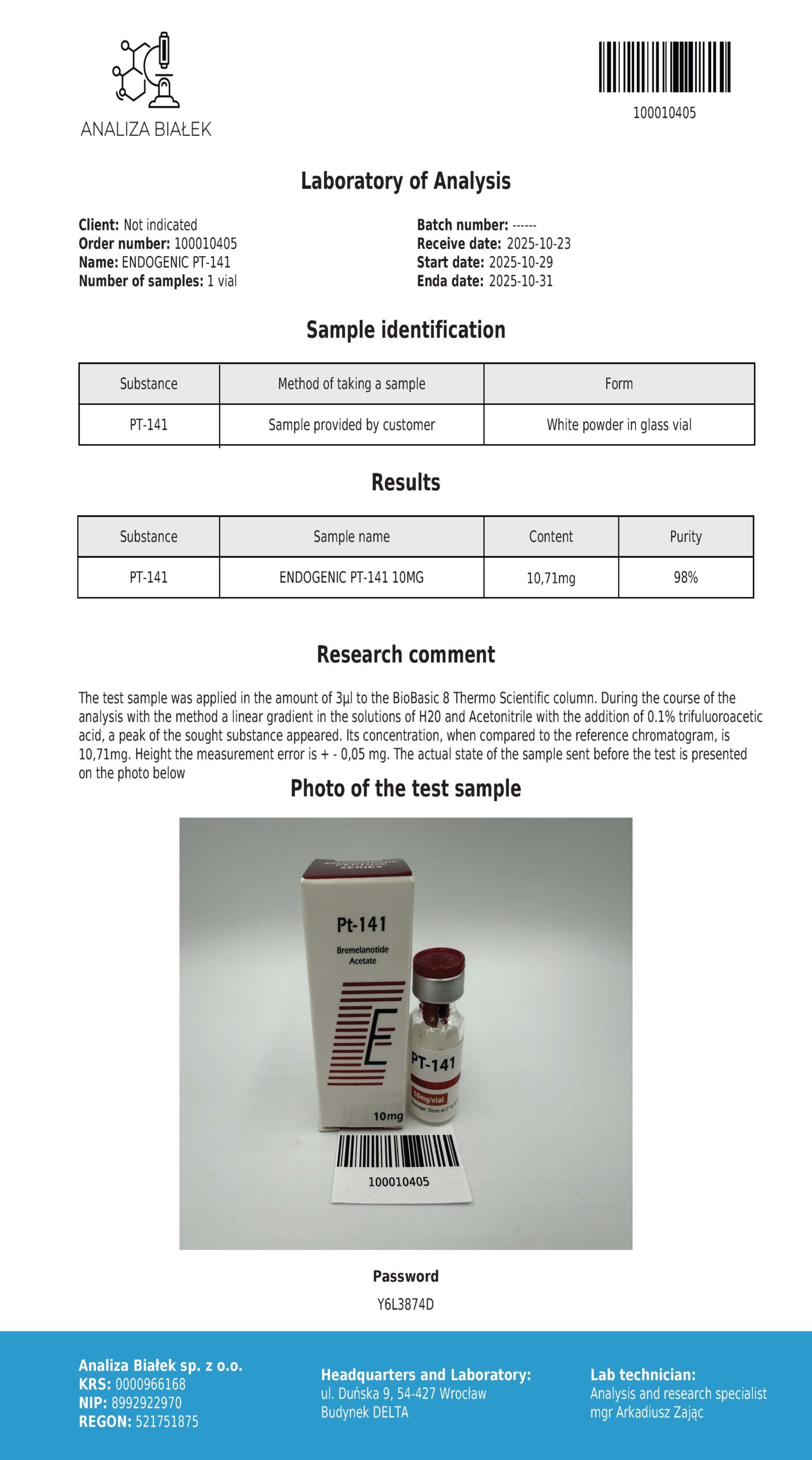
As research peptide for libido PT-141 is situated in the area of work on the melanocortin axis and central regulation of behavior – next to the related Melanotan II, from which it differs in receptor selectivity. Purity ≥98% verified by HPLC, identity confirmed by mass spectrometry, COA available for each batch.
The melanocortin system and the place of PT-141
The melanocortin system is a branched signaling pathway based on five receptors (MC1R–MC5R) and a family of peptides (melanocortins) derived from one precursor – proopiomelanocortin (POMC). Individual receptors are responsible for various processes: MC1R for skin pigmentation, MC2R for the response of the adrenal cortex to ACTH, MC4R (and partially MC3R) for energy balance and central regulation of sexual functions, MC5R for exocrine glands.
The best described melanocortin is α-MSH, a thirteen-amino-acid peptide with a short half-life. Melanotan II was created as a stable, strong analog of α-MSH – a full pan-agonist of MC1R and MC3R–MC5R melanocortin receptors (MC2R responds only to ACTH and does not bind other melanocortins). This non-selectivity, while useful for research, was problematic from the perspective of drug design: in addition to its effect on MC4R (sexual function), MT-II strongly stimulated MC1R (pigmentation).
PT-141 is the answer to this limitation – an MT-II metabolite with an altered C-terminus, shifted towards MC4R selectivity and limited effect on pigmentation. The ultimately registered drug Vyleesi® emerged from this design path.
What is PT-141 (bremelanotide)?
Chemically, PT-141 is a cyclic heptapeptide, an analogue of melanocortin with a free carboxyl group at the C-terminus. It is supplied as a lyophilized vial for reconstitution by the investigator.
- Common name: PT-141, bremelanotide (bremelanotide)
- Chemical name: Ac-Nle-cyclo[Asp-His-D-Phe-Arg-Trp-Lys]-OH (cyclic via Asp–Lys lactam bridge, C-terminus free carboxyl)
- CAS number: 189691-06-3 – to be confirmed with the batch COA
- Molecular formula: C₅₀H₆₈N₁₄O₁₀
- Molar mass: approx. 1025.2 g/mol – the mass from the MS analysis of the batch is binding
- Chemical class: cyclic heptapeptide, melanocortin analogue; selective (over MT-II) MC4R agonist
- Contents: 10 mg of substance per vial
- Supplied form: lyophilisate in a vial (vial version), for reconstitution by the investigator; pharmaceutical grade ≥98% HPLC
- Medicinal equivalent: Vyleesi® (bremelanotide) – a separate product with its own regulatory status, not this reagent
Characteristics table
| Parameter | Value | Notes |
|---|---|---|
| Sequence | Ac-Nle-cyclo[Asp-His-D-Phe-Arg-Trp-Lys]-OH | C-terminus free carboxyl (–OH) |
| CAS number | 189691-06-3 | to be confirmed in COA |
| Molecular formula | C₅₀H₆₈N₁₄O₁₀ | — |
| Molar mass | approx. 1025.2 g/mol | the weight from the MS analysis of the batch is binding |
| Class | cyclic melanocortin heptapeptide | selective MC4R agonist |
| Content/form | 10 mg, lyophilisate in a vial | vial version, for reconstitution |
| Molecular target | MC4R (and MC1R) receptor | cAMP pathway; central action |
| Purity | ≥98% HPLC | verification per batch |
Mechanism of action at the molecular level
PT-141 works as MC4R melanocortin receptor agonist — a G protein-coupled receptor whose activation increases the intracellular cAMP concentration. MC4R is located in the structures of the central nervous system (including the hypothalamus) and participates in the central regulation of sexual behavior and energy balance. Profile described in the literature:
- MC4R agonism in the CNS — central receptor activation associated with central modulation of sexual desire and arousal; a mechanism different from that of PDE5 inhibitors, which act peripherally and not centrally
- Limited impact on MC1R — thanks to the free C-terminus, PT-141 is shifted towards MC4R selectivity and affects pigmentation (MC1R) less strongly than the pan-agonist MT-II
- cAMP/PKA signaling — a common intracellular pathway of melanocortin receptors, activated upon binding of an agonist
- Central action, not hormonal — PT-141 modulates the melanocortin signal in the CNS, but does not interact through the hormonal axis in a way specific to gonadal hormones
Applications in scientific research
PT-141 is used as a reagent in work on the pharmacology of the MC4R receptor and the central regulation of behavior. The working concentrations and route of administration in the model are selected by the researcher – the product does not define either doses or schedules. Main research directions:
- MC4R receptor pharmacology — affinity, functional selectivity and kinetics of cAMP activation in recombinant receptor expression systems
- Central regulation of sexual functions — central melanocortin pathways in animal models
- Comparative selectivity studies — PT-141 (shifted towards MC4R) vs MT-II (pan-agonist) vs selective MC1R ligands; mapping of functional profiles
- Energy balance and MC4R pathways — the role of the receptor in the regulation of appetite and energy expenditure
- Characteristics of identity and purity — sequence and mass confirmation by MS, HPLC purity determination and differentiation from MT-II in batch COA
Vial version - reconstitution and preparation
This product is the vial itself with the lyophilisate (10 mg) – no solvent included and no applicator. The solvent is selected and supplied by the researcher, which distinguishes the vial version from the spray set (vial + water + atomizer, prepared for intranasal administration). Preparation:
- Solvent: typical bacteriostatic water — selected by the researcher; the volume determines the concentration of the working solution
- Concentration control: because the volume of the solvent is determined by the researcher, the concentration of the working solution is fully under his control – the product does not impose doses or concentrations
- Reconstitution: the solvent is not introduced directly onto the lyophilisate cake, but in a slow stream along the wall of the vial; the vial should not be shaken – just swirl it gently until dissolved, as shaking foams the solution and destabilizes the peptide
- Visual inspection: after reconstitution, the solution should be clear; a solution that is cloudy or contains sediment should not be used for work
Summary
PT-141 (bremelanotide) is a cyclic melanocortin heptapeptide – a metabolite of Melanotan II, in which the C-terminal amide group has been replaced with a free carboxyl, which shifts the profile of the molecule from MC1R and MC3R–MC5R pan-agonism towards selectivity towards the MC4R receptor. It is delivered in vial version – as a 10 mg lyophilisate for reconstitution by the investigator, unlike the spray set.
At the molecular level, PT-141 activates MC4R in the central nervous system (cAMP pathway), which is associated with the central regulation of sexual functions – a mechanism different from the peripheral vascular action of PDE5 inhibitors, with a limited effect on pigmentation (MC1R) relative to MT-II. The molecule is derived from the program that led to the registration of Vyleesi®, a separate product with its own regulatory status, which the RUO reagent is not.
HPLC purity ≥98%, MS confirmation (mass of approx. 1025.2 g/mol distinguishes PT-141 from MT-II), COA for each batch. Regulatory Status – Research Use Only; WADA: bremelanotide is not currently on the list (current list needs to be verified).
Main research conclusions
- PT-141 (bremelanotide) is an MT-II metabolite with a free C-terminus – shifted towards MC4R selectivity towards the pan-agonist MT-II (amide), with a limited effect on pigmentation
- The vial version is only the 10 mg lyophilisate for reconstitution by the researcher (without water and applicator) – unlike the spray set prepared for the intranasal route of administration
- Mechanism: MC4R agonism in the CNS (cAMP pathway), central regulation of sexual functions – different from the peripheral action of PDE5 inhibitors
- The molecule is derived from the Vyleesi® drug program (bremelanotide, FDA 2019) – the RUO reagent is separate from the drug and is not a substitute for it
- The identity is determined by the sequence and MS mass in the COA of the batch (a mass of approximately 1025.2 g/mol distinguishes PT-141 from MT-II)
Bibliography
- Wessells H, Levine N, Hadley ME, Dorr R, Hruby VJ (2000). Melanocortin receptor agonists, penile erection, and sexual motivation: human studies with Melanotan II. PubMed
- Pfaus JG, Sadiq A, Spana C, Clayton AH (2022). The neurobiology of bremelanotide for the treatment of hypoactive sexual desire disorder in premenopausal women. PubMed
- U.S. Food and Drug Administration. Vyleesi (bremelanotide) – medicinal product information. FDA: Drugs@FDA
FAQ
Status and intended use. Vyleesi® (bremelanotide) is an FDA-approved drug for the narrow indication of sexual desire disorders in premenopausal women. PT-141 in the reagent market is a Research Use Only material – it is not a substitute for medicine, it is not intended for treatment and does not replace medical consultation.
C-terminus of the cyclic core and receptor profile. MT-II has an amide group (–NH₂) and is a full pan-agonist of MC1R and MC3R–MC5R receptors (strong effect on pigmentation). PT-141 has a free carboxyl (–COOH) and is biased towards MC4R selectivity with a limited effect on pigmentation. These are two different tools for two different research questions.
As an agonist of the MC4R receptor in the central nervous system, it increases intracellular cAMP concentration. MC4R participates in the central regulation of sexual behavior and energy balance. The mechanism is central and different from the peripheral vascular action of PDE5 inhibitors. These observations relate to models and data from drug development and are not a declaration of effect in humans using the reagent.
The solvent (typically bacteriostatic water) is introduced in a slow stream along the wall of the vial, not directly onto the lyophilized cake. The vial should not be shaken – just swirl it gently until dissolved. The volume of the solvent determines the concentration of the working solution, and the finished solution is stored under refrigerated conditions.
Bremelanotide is not currently listed as a separately listed prohibited substance. However, athletes registered in the ADAMS system should verify the current list before making any decisions. Regardless of WADA status, the material remains a RUO reagent – not for use on humans or animals.
0.0
0 reviews
This product has no reviews yet.