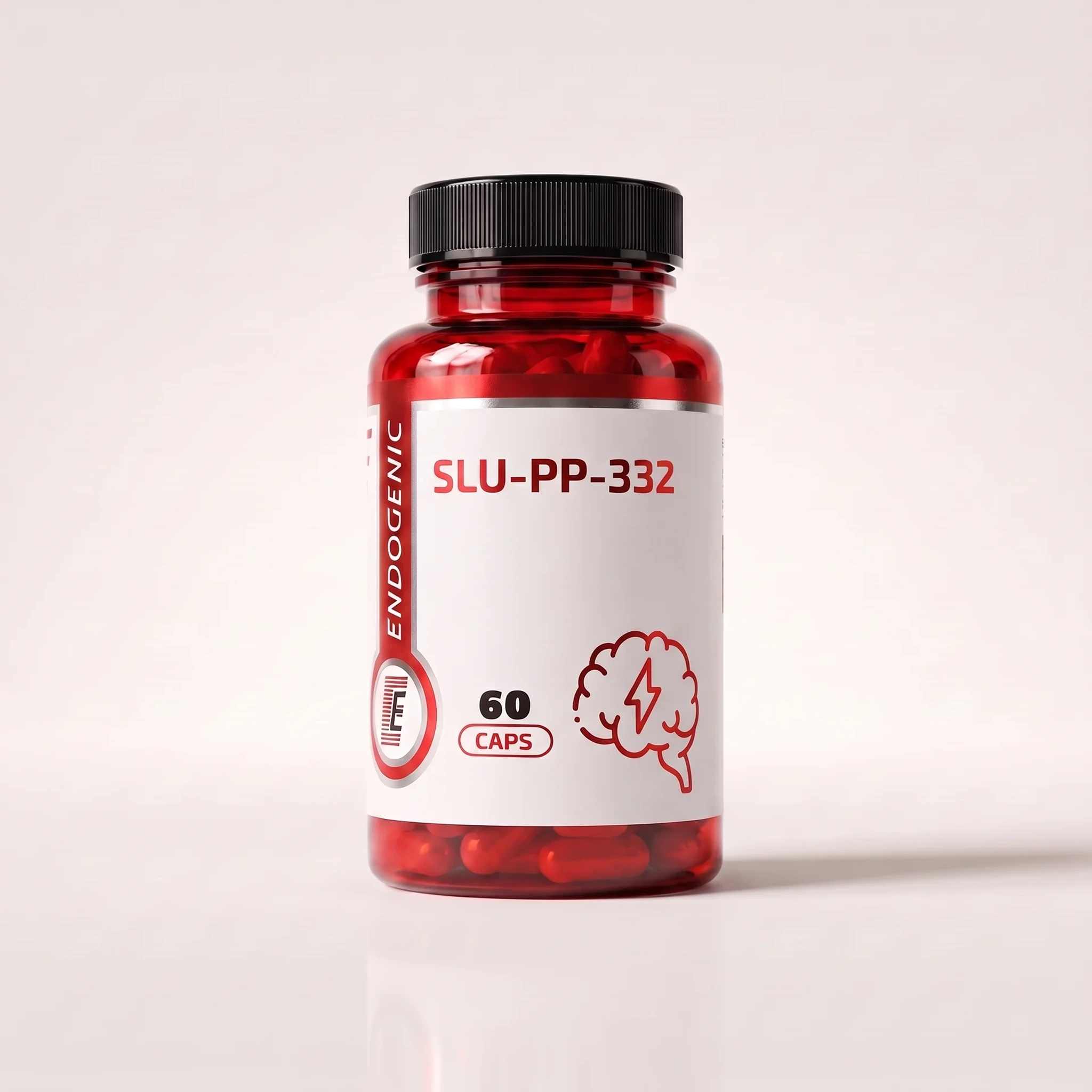
They differ solely in the content of active substance per capsule — 100 mcg (0.1 mg) in the low-dose variant versus 1000 mcg (1 mg) in the high-dose variant. The 100 mcg variant is precision: it allows reproduction of the lower points of the concentration-response curve and operation with low working molarities without multi-step dilutions. The SLU-PP-332-PLUS 500 mcg variant and the stronger 1000 mcg serve protocols with higher exposure. The purity (HPLC ≥98%), identity (MS), and origin of the compound are identical — only the weighed amount differs.
SLU-PP-332 100mcg 60caps
SLU-PP-332 100 mcg × 60 capsules is a small organic molecule from Thomas Burris’s laboratory (Saint Louis University), a pan-agonist of the nuclear ERRα/β/γ receptors, described in Nature Metabolism 2024 as an “exercise mimetic” in a mouse model (mitochondrial biogenesis via the ERR–PGC-1α axis, increased running endurance).
94,99 €
Fast shipping
Delivery options
Free delivery from 350 €
Returns policy
SLU-PP-332 100 mcg 60 caps — ERR receptor pan-agonist, research reagent
- SLU-PP-332: ERR receptor pan-agonist.
- 100 mcg, 60 capsules.
- Research Use Only reagent, not a medicinal product.
SLU-PP-332 is a small organic molecule of the ERR pan-agonist class — an agonist of all three isoforms of the Estrogen-Related Receptor nuclear receptors (ERRα, ERRβ, ERRγ). The substance was synthesized in the laboratory of Thomas Burris at Saint Louis University (hence the acronym: SLU = Saint Louis University, PP = Pharmaceutical Probe, 332 = synthetic iteration number).
The landmark publication of the team — Billon et al. 2024 (Nature Metabolism) — described an “exercise mimetic phenotype” in mouse models: rodents treated with SLU-PP-332 achieved a significantly longer time to exhaustion in running than the control group, without a training program, while simultaneously reducing fat mass and producing beneficial changes in the lipid profile.
In a chemical context, SLU-PP-332 belongs to the class of small organic molecules from nuclear receptor pharmacology — an important distinction relative to peptides (BPC-157, TB-500, MOTS-c) and steroidal SARMs (RAD-140). The central axis of the mechanism is the ERR–PGC-1α transcriptional network, one of the best-described regulators of mitochondrial biogenesis and skeletal muscle adaptation to endurance exercise.
This reagent is supplied in a format of 60 capsules of 100 mcg (0.1 mg) SLU-PP-332 — a form adapted to dose-response protocols requiring low working molarities and precise titration. The 100 mcg variant is the low-dose/precision equivalent: it allows researchers to build the lower points of the concentration-response curve and to operate with microportions without the need for serial dilutions of higher concentrations. For protocols requiring higher exposures, a stronger variant is available: SLU-PP-332-MAX PLUS 1000 mcg. Purity verified by HPLC ≥98%, identity confirmed by mass spectrometry, COA available for each batch.
Regulatory status
SLU-PP-332 has not completed any phase of clinical trials in humans. The compound remains at the preclinical research stage (rodent models, cell cultures). No registration as a drug with the EMA, FDA, or anywhere in the world. No EFSA authorization as a dietary supplement ingredient. Marketing the product as “exercise in a pill”, a “fat burner”, or an “endurance enhancer for athletes” is contrary to the Research Use Only framework.
General description — context of ERR receptors
Estrogen-Related Receptors (ERRα, ERRβ, ERRγ) are a family of nuclear receptors discovered in 1988 by Vincent Giguère. The name “estrogen-related” is misleading — the receptors were classified as related to estrogen solely because of the amino acid sequence similarity to the estrogen receptor (ERα). In reality, ERRs do not bind estradiol or other natural estrogens as a ligand — they remain constitutively active (“orphan”) receptors, and their transcriptional activity is regulated mainly by coactivators, in particular PGC-1α.
The three isoforms differ in tissue distribution:
- ERRα (ESRRA) — the most widely expressed isoform, dominant in tissues with high energy demand (cardiac muscle, skeletal muscles, brown adipose tissue, kidneys)
- ERRβ (ESRRB) — expressed early in embryonic development and in tissues of the central nervous system
- ERRγ (ESRRG) — expressed in skeletal muscles and cardiac muscle, co-regulates the oxidative program in parallel with ERRα
The biological functions of ERRs encompass gene expression programs of fundamental importance for energy metabolism:
- Mitochondrial biogenesis — co-regulation with PGC-1α of genes responsible for the formation of new mitochondria in cells with high energy demand
- Expression of oxidative phosphorylation genes — modulation of the respiratory chain complexes (Complex I–V), ATP synthesis
- Fatty acid metabolism — regulation of β-oxidation in skeletal muscles and cardiac muscle
- Modulation of muscle fiber type — a shift of the profile toward type I fibers (oxidative, slow-twitch)
- Response to endurance training — ERRs are among the transcription factors activated in response to repeated endurance activity
For this reason, the pharmacological activation of ERR receptors has for years been regarded as an interesting target in the search for molecules modulating the metabolic program of exercise without the need to train — that is, the classic “exercise mimetics”.
What is SLU-PP-332?
In chemical terms, SLU-PP-332 is a synthetic small organic molecule designed for affinity to the ligand pockets of ERR receptors.
- Common name: SLU-PP-332
- Acronym expansion: Saint Louis University, Pharmaceutical Probe 332
- Laboratory of origin: Thomas Burris, Saint Louis University
- Pharmacological class: ERR pan-agonist (ERRα + ERRβ + ERRγ)
- Molecular weight: ~395 Da
- Molecular type: small organic molecule (NOT a peptide, NOT a steroid)
- Supplied form: hard HPMC capsule (vegan), 100 mcg (0.1 mg) of active substance per capsule, 60 capsules; pharmaceutical grade ≥98% HPLC
Origin:
SLU-PP-332 was created as part of a systematic program to search for selective ERR receptor ligands conducted in the laboratory of Thomas Burris — one of the leading specialists in nuclear receptor pharmacology (ERR, REV-ERB, PPAR). The results in mouse models proved considerably stronger than the authors had originally assumed, which led to publication in Nature Metabolism in 2024 and a wave of interest from popular science media in the concept of “exercise in a pill”.
SCIENTIFIC PERSPECTIVE
All pharmacological data on SLU-PP-332 come from preclinical models (mouse, C2C12 muscle cell lines, hepatocytes). All observations concerning endurance, mitochondrial biogenesis, and body composition require confirmation in clinical trials in humans — no such studies have been conducted to date. Extrapolation of PK/PD profiles to humans requires caution; oral bioavailability in humans remains unknown.
Mechanism of action at the molecular level
SLU-PP-332 binds to the ligand-binding domain of all three isoforms of ERR receptors (hence the designation “pan-agonist”). The binding of the molecule stabilizes the receptor conformation that activates the recruitment of transcriptional coactivators — primarily PGC-1α — and leads to enhanced transcription of target genes.
Pharmacological profile observed in preclinical models:
- Induction of mitochondrial biogenesis — activation of ERR receptors by SLU-PP-332 raises the expression of PGC-1α and of target genes responsible for the synthesis of respiratory chain proteins and the formation of new mitochondria. In mouse skeletal muscle, an increase in mitochondrial DNA content and an enhancement of type I (oxidative) fiber markers were reported
- Enhancement of fatty acid oxidation — the transcriptional profile induced by SLU-PP-332 encompasses β-oxidation genes and genes for the transport of lipids into the mitochondrial matrix (including CPT1b); a shift of muscle metabolism toward lipid oxidation, a phenotype characteristic of endurance training
- “Exercise mimetic” in the mouse model — partial replication of the biochemical phenotype of endurance training without applying the training itself; mice treated with SLU-PP-332 achieved a significantly longer treadmill running time than control rodents, with a shift in the proportion of type I fibers at the expense of type II
- Modulation of muscle fiber type — a shift of the profile toward oxidative (type I) fibers, consistent with the adaptive program of endurance exercise
- Beneficial metabolic changes in the mouse model — reduction of adipose tissue mass and improvement of the lipid profile (reduction of triglycerides) in animals on a high-fat diet (HFD), without a significant change in caloric intake
Pharmacokinetic profile (based on preclinical models):
- Oral bioavailability in humans: unknown (data limited to animal models)
- Human PK profile: uncharacterized — no Phase I studies
- Molecular target: ligand-binding domain of ERRα/β/γ receptors, enhancement of PGC-1α recruitment
The ERR mechanism activates one axis of the many components of the body’s response to physical exercise. Endurance training affects in parallel the cardiovascular system, the skeletal system, the central nervous system, the hormonal balance, and the inflammatory profile. Pharmacological activation of ERR receptors replicates a fragment of the metabolic program of skeletal muscle — and nothing beyond that.
SLU-PP-332 in the “exercise mimetics” class — pharmacological position:
Over the past decade, several classes of molecules have been designated “exercise mimetics” — differing in mechanism, research status, and evidence profile:
| Class | Example | Mechanism | Status |
|---|---|---|---|
| AMPK activator (mitochondrial peptide) | MOTS-c | AMPK activation, modulation of energy metabolism | RUO research peptide |
| PPARδ agonist | GW-501516 (Cardarine), GW-0742 | PPARδ activation, β-oxidation of fatty acids | RUO research chemical (carcinogenesis signal in long-term rodent studies) |
| Mitochondrial uncoupler | BAM15 | Proton uncoupling of the respiratory chain | RUO research chemical |
| ERR pan-agonist | SLU-PP-332 | ERRα/β/γ agonist, mitochondrial biogenesis, ERR–PGC-1α axis | RUO research chemical (Nature Metabolism 2024) |
SLU-PP-332 stands out in that it targets directly the transcriptional machinery of mitochondrial biogenesis — in contrast to uncouplers (which uncouple already existing mitochondria) and to PPARδ agonists (which modify lipid oxidation without simultaneously inducing biogenesis to the same extent). The mechanistically related PPARδ agonist GW-0742 acts on a neighboring node of the metabolic network, which makes both reagents the subject of comparative analyses in research on exercise metabolism. Another related tool from the class of metabolic rhythm modulators — a Rev-Erb agonist — is SR-9011, whose mechanism is discussed in a separate comparative article.
Applications in scientific research
SLU-PP-332 is used in research work in several areas. In in vivo models (mouse), its effect is studied on markers of mitochondrial biogenesis, PGC-1α expression, running endurance parameters (treadmill tests), the lipid profile, and the analysis of muscle fiber type. In in vitro models (C2C12 muscle cell lines, hepatocyte cultures), measurements of OCR and ECAR on Seahorse-type platforms, kinetics of PGC-1α/CPT1b expression, and SAR analyses of new ERR ligands are conducted.
Specific research directions include:
- Pharmacological studies of ERRs as therapeutic targets — characterization of new ligands, mapping of the agonistic profile relative to ERRα/β/γ, structure-activity relationship (SAR) analyses
- Mouse models of endurance and mitochondrial metabolism — treadmill tests, indirect calorimetry, VO₂ measurements, muscle fiber analysis
- Experiments on “exercise mimetics” — comparative pharmacological studies in the paradigm of endurance and mitochondrial adaptation
- Comparative analyses with other compounds targeting ERR — SLU-PP-332 as a reference pan-agonist in studies of selective ERRα or ERRγ agonists
- In vitro studies of bioenergetics — measurements of OCR and ECAR on Seahorse platforms in C2C12 lines and hepatocyte cultures
The low-dose 100 mcg variant is particularly useful in dose-response protocols — it allows precise reproduction of the lower points of the concentration-response curve and titration of exposure within a narrow working range without the need for multi-step dilutions of higher-concentration material.
REGULATORY STATUS
The “exercise mimetics” class remains under careful monitoring by the World Anti-Doping Agency (WADA). The precedent of GW-501516 (Cardarine, a PPARδ agonist), placed on the Prohibited List despite the lack of registration as a drug, shows that WADA treats this class as a priority. SLU-PP-332 as an ERR agonist may potentially fall under the S4 Hormones and Metabolic Modulators category or the clause on substances with a similar mechanism of action — an interpretive risk.
The 2024 wave of publications may accelerate the inclusion of ERR agonists outright on the Prohibited List in future editions. Registered athletes (ADAMS) must verify the current list before any decision. No clinical phase in humans and no registration as a drug in any jurisdiction.
Summary
SLU-PP-332 (100 mcg × 60 capsules, low-dose variant) is a small organic molecule of the ERR pan-agonist class from the laboratory of Thomas Burris (Saint Louis University), characterized in mouse models (Billon et al. 2024, Nature Metabolism) as a compound inducing mitochondrial biogenesis through the ERR–PGC-1α axis, increasing running endurance without training, and reducing fat mass in the HFD model.
The 100 mcg variant is positioned as a precision reagent for dose-response protocols requiring low working molarities and precise titration; the high-dose 1000 mcg variant serves protocols with higher exposure. HPLC purity ≥98%, MS confirmation, COA for each batch. Regulatory status — Research Use Only exclusively; no clinical phase in humans; the “exercise mimetics” class under WADA monitoring.
Bibliography
- Billon C, Schoepke E, Avdagic A, et al. (2024). A Synthetic ERR Agonist Alleviates Metabolic Syndrome. PubMed
- Hampton CS, Sitaula S, Billon C, et al. (2023). Development and pharmacological evaluation of a new chemical series of potent pan-ERR agonists, identification of SLU-PP-915. PubMed
- Radwan MO, Guin S, Burris TP (2026). Pharmacology of estrogen-related receptors (ERRs) agonists. PubMed
- Audet-Walsh É, Giguère V (2015). The multiple universes of estrogen-related receptor α and γ in metabolic control and related diseases. PubMed
- Fan W, Evans R (2015). PPARs and ERRs: molecular mediators of mitochondrial metabolism. PubMed
The product SLU-PP-332 100 mcg — 60 capsules is sold exclusively as a chemical reagent for in vitro laboratory research and animal model research. It is not a drug, not a dietary supplement, and not a product intended for human consumption. It does not serve to diagnose, treat, alleviate, or prevent any diseases. No clinical data in humans — all literature concerns animal models and cell cultures.
The “exercise mimetics” class remains under observation by the World Anti-Doping Agency; the interpretive risk as a metabolic modulator (S4 category) is real — professional athletes and persons covered by anti-doping programs should verify the current WADA guidelines on their own. Sales are addressed to qualified research personnel, scientific institutions, and pharmacological laboratories. The buyer assumes full responsibility for the lawful and safe use of the reagent under laboratory conditions compliant with applicable regulations and institutional guidelines.
FAQ
The term refers to partial replication of the effects of endurance training in an animal model without applying the training itself. In the studies of the Burris group, mice treated with SLU-PP-332 achieved a longer treadmill running time, had a higher content of mitochondrial biogenesis markers, and a fiber profile shifted toward oxidative. “Exercise in a pill” is a journalistic simplification — in experimental pharmacology, “exercise mimetic” denotes a transcriptional pattern analogous to training adaptation, described in an animal model, not a substitute for exercise.
No. Publicly available clinical data (Phase I/II/III) in humans do not exist. The entire evidence base rests on mouse models and cell cultures. Oral bioavailability in humans remains unknown, and the long-term safety profile has not been characterized in any human population.
Cardarine GW-501516 and GW-0742 are agonists of PPARδ — a receptor regulating fatty acid oxidation. SLU-PP-332 is an agonist of ERR, a distinct class of nuclear receptors regulating mitochondrial biogenesis through the coactivator PGC-1α. The mechanisms partially complement each other, but the primary molecular target is different. Cardarine has a history of studies discontinued due to carcinogenesis signals in long-term rodent studies; the long-term profile of SLU-PP-332 remains unknown. A full discussion of the PPARδ mechanism and metabolic effects can be found in the article Cardarine for weight loss — action and dosage.
The ERR pan-agonist class is not mentioned outright on the current Prohibited List. However, the “exercise mimetics” class remains under careful WADA monitoring, and the S4 Hormones and Metabolic Modulators category contains clauses that may cover substances with a similar mechanism of action — an interpretive risk. The precedent of GW-501516 shows that metabolic agonists can be placed on the list despite the lack of registration as a drug. Registered athletes (ADAMS) must verify the current list before any decision.
An institutional acronym: SLU = Saint Louis University (the university where the molecule was created), PP = Pharmaceutical Probe (classification as a pharmacological probe for nuclear receptor research), 332 = the iteration number in the internal project numbering of the Thomas Burris team.
The compound has no therapeutic form — SLU-PP-332 has not undergone any phase of clinical trials in humans and is not registered as a drug in any jurisdiction. All available data come from preclinical models (rodents, cell cultures). The Pro-Body RUO reagent is intended exclusively for further laboratory research — in the identical category in which it has functioned in scientific circulation since the moment of its first characterization by the Burris team.
0.0
0 reviews
This product has no reviews yet.