


ATP
ATP is a nucleotide, an organic chemical compound composed of adenine, ribose and three phosphoric acid residues. It is the universal energy currency of cells, accumulating and providing energy needed for many biochemical processes.
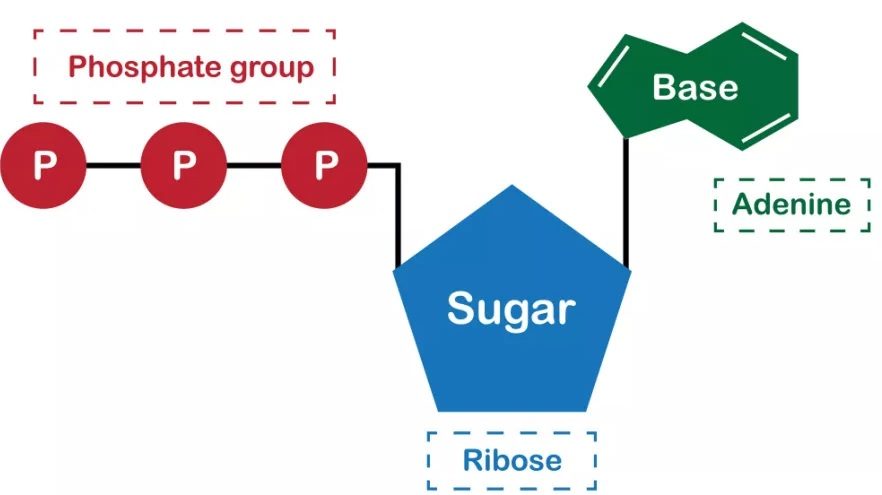
Chemical structure of ATP
Adenosine triphosphate consists of adenine, whose nitrogen ring is connected to the sugar – ribose, and three phosphate groups. This structure provides a rich source of energy that is released during chemical reactions.
Synthesis
The nucleotide is synthesized by an energy fighting process known as phosphorylation. As a result of this reaction, energy is stored in the high-energy bonds between the phosphate groups.
Role in organisms
As an energy source
Plays a key role as an energy carrier in cells. During the hydrolysis reaction, i.e. the breakdown of phosphate bonds, energy is released and used to power various life processes.
Functions in biochemical transformations
Adenosine triphosphate is essential in many biochemical processes, such as protein synthesis, DNA transcription, ion transport across cell membranes, and many others. Without the presence of the nucleotide, many key reactions could not occur.
Regeneration
Adenosine triphosphate is not permanently used in biochemical processes. After energy is released, ADP (adenosine diphosphate) is regenerated into adenosine triphosphate in a process called substrate phosphorylation or oxidative phosphorylation.
ATP in the process of cellular respiration
ATP is necessary in the process of cellular respiration, in which glucose is broken down into carbon dioxide and water. The energy released during this process is used to synthesize ATP.
Importance for organisms
Adenosine triphosphate is extremely important for all living organisms. Without the presence of adenosine triphosphate, it would not be possible to carry out basic life functions, such as movement, growth, cell division or the synthesis of substances necessary for survival.
How do ATP inhibitors work?
ATP inhibitors are substances that inhibit the action of ATP-dependent enzymes. They block access to the Adenosine Triphosphate binding site, preventing the release of energy. Inhibitors are important in the treatment of certain diseases, such as cancer and viral infections.
ATP in sport and physical exercise
Adenosine triphosphate plays a key role in providing energy during intense physical exercise. During intense training or sports activity, it wears out, so it is important to ensure its proper regeneration through proper diet and rest.
ATP deficiency disorders
Adenosine triphosphate deficiencies may lead to various metabolic disorders and diseases, such as hereditary mitochondrial diseases or chronic fatigue syndrome. Research is being conducted to improve ATP production.
ATP in medicine
Nucleotide is also used in medicine. Its energetic properties are used in diagnostic techniques such as PET (Positron Emission Tomography) and in therapies such as electrotherapy.
Summary
Adenosine triphosphate is a key molecule in the process of providing energy in the cells of living organisms. It serves as a universal energy currency, enabling important biochemical processes to be carried out. The nucleotide plays an important role both in the everyday functioning of organisms, as well as in sports and medicine.
Sources: