



GW-501516 (cardarine)
Other categories
3 products
Black Week
Black Week deals before everyone else
Sign up for the newsletter and get access to the Black Week promotion before other customers.
By signing up you agree to receive the Pro-Body newsletter with news and promotions. You can unsubscribe at any time with one click in the e-mail. Privacy policy
GW-501516 (cardarine) - research reagents
GW-501516, known in research commerce as cardarine, is a non-steroidal small molecule acting as a selective agonist of the peroxisome proliferator-activated receptor delta, PPARδ. That receptor is a transcription factor: once activated it changes the reading of genes governing lipid handling and inflammatory signalling, and the consequences depend on the cell type (Bojic and Huff, 2013, PMID 23481229).
That distinction settles the molecule’s place in the catalogue. The androgen receptor stays out of cardarine’s reach, although in research sections it stands beside the SARMs. Its target lies in the cell nucleus, not at the membrane and not in the androgen pathway.
The subcategory collects reagents holding cardarine and a related PPARδ agonist. The materials are intended for laboratory research; they are not medicinal products or dietary supplements. The remaining compounds of the section are gathered by the parent category SARMs.
Variants in the range
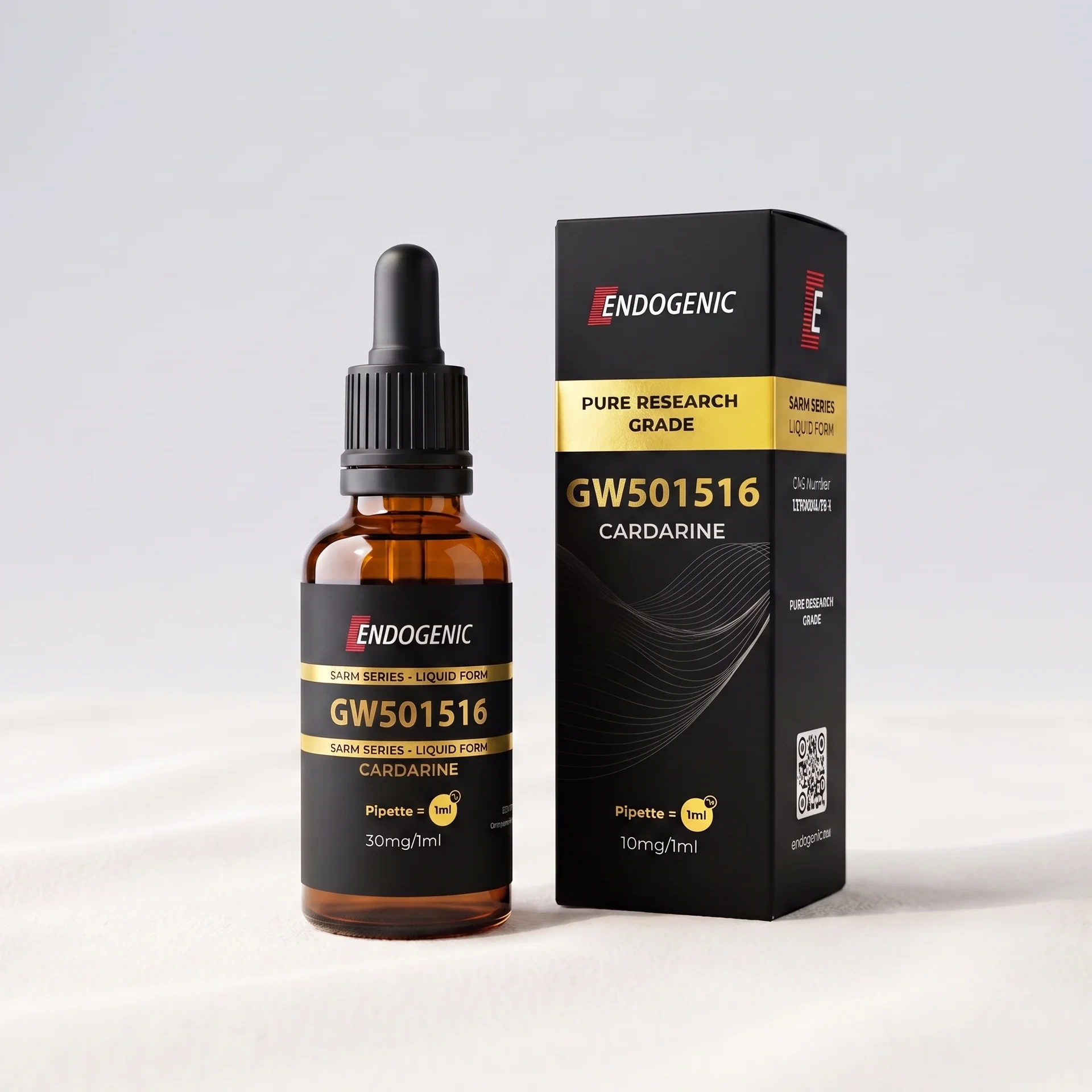
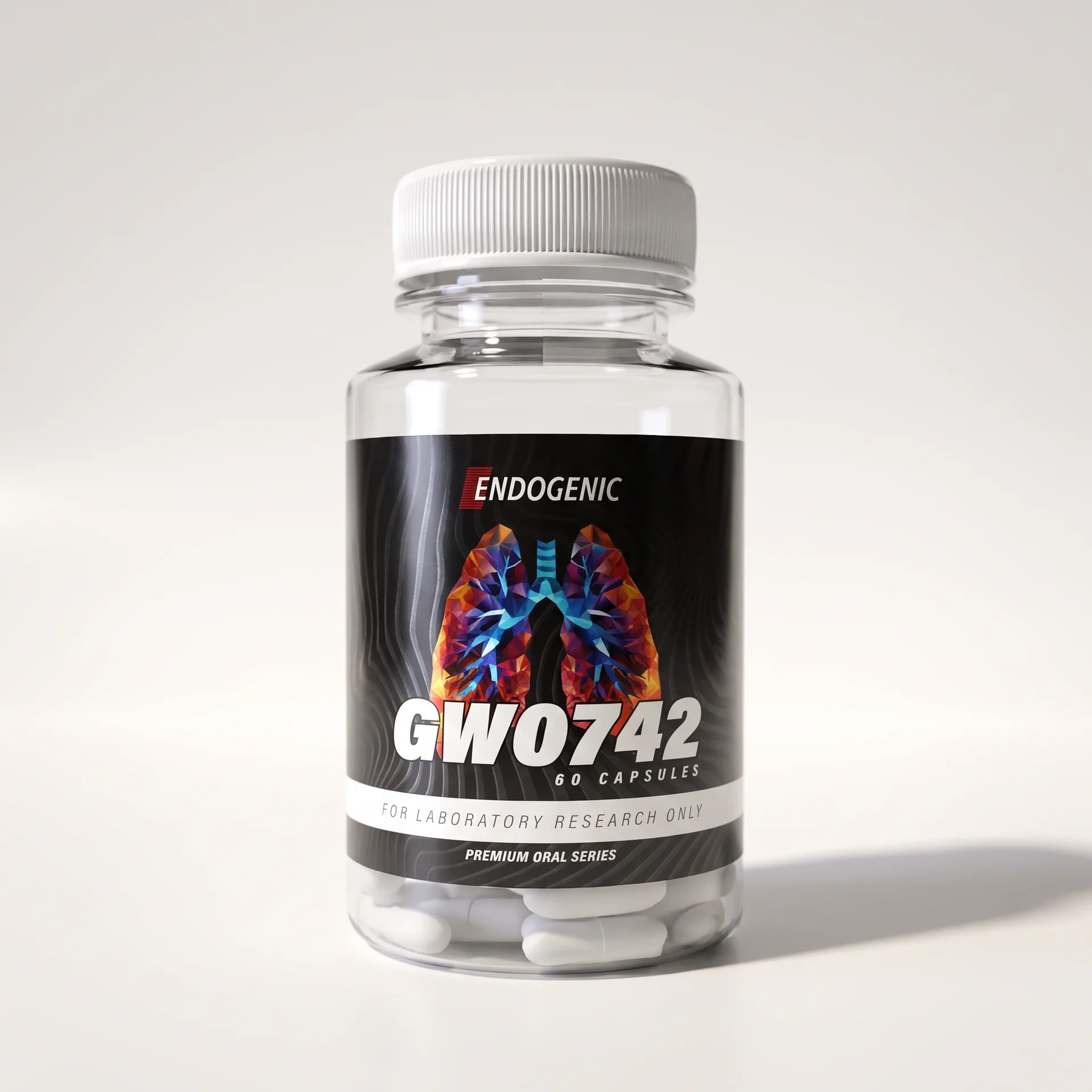
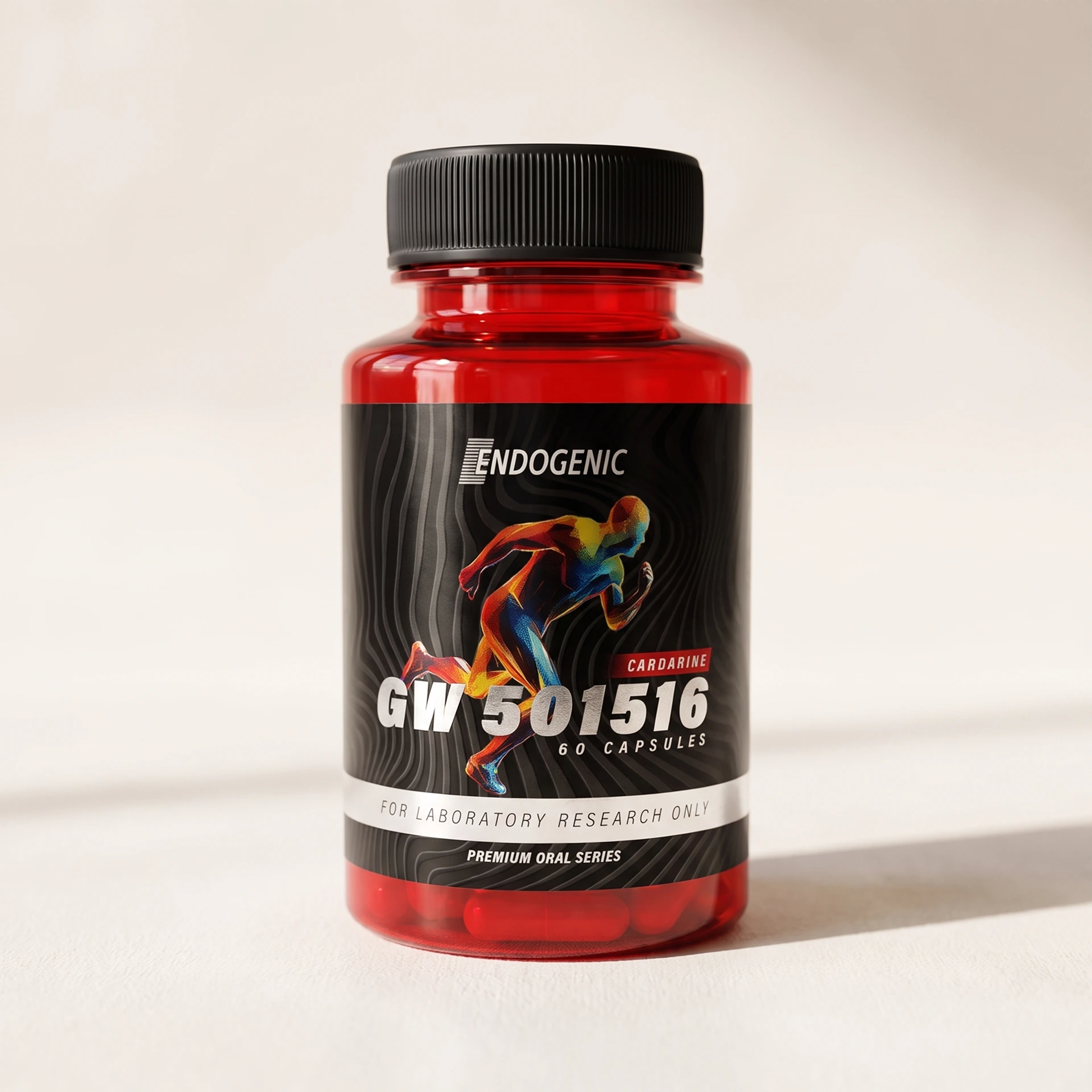
The subcategory covers three reagents. GW501516 60 caps supplies the substance in hard capsules of 10 mg, sixty to a pack. GW 501516 LIQUID holds 30 ml of solution in a dropper bottle; the milligrams per millilitre are declared on the batch label together with its certificate of analysis. The third reagent, GW0742 60 caps, holds a different molecule from the same family of PPARδ agonists, also in capsules of 10 mg and sixty to a pack.
The capsule format simplifies repeatable weighing, while the liquid shortens the path to a working solution. Batch purity is confirmed by HPLC and identity by mass spectrometry; with two molecules of similar receptor profile in one subcategory, the certificate of analysis is the document that separates them.
Applications in scientific research
In the literature cardarine is the model PPARδ agonist and appears in that role in work on lipid metabolism and on muscle adaptation to exercise. Working concentrations are chosen by the researcher depending on the system; the subcategory gives no quantities and no schedules.
- Mouse models of endurance. In trained and untrained mice, a PPARδ agonist increased running endurance and the proportion of muscle fibres positive for succinate dehydrogenase, and in metabolomic analysis the levels of intermediate metabolites and key enzymes of fatty acid oxidation pathways rose. The authors stressed that the mechanism is not identical to that of training itself: training raised energy availability through protein catabolism and gluconeogenesis, while the molecule increased fatty acid consumption and reduced glucose utilisation (Chen et al., 2015, PMID 25943561).
- Synergy with training in an animal model. In the paper that introduced the phrase “exercise mimetics” into the literature, a PPARβ/δ agonist and exercise training together increased oxidative fibres and running endurance in adult mice, while an AMPK activator raised endurance by 44% even in sedentary mice (Narkar et al., 2008, PMID 18674809).
- The first study in humans. In healthy volunteers, triglycerides trended downwards (p = 0.08) and post-fat-meal triglyceride clearance improved (p = 0.02); HDL cholesterol rose in both treated groups against a fall of 11.5 ± 1.6% on placebo (p = 0.002). In parallel experiments on human skeletal muscle cells the molecule increased fatty acid oxidation and the expression of CPT1 and CD36, doubled ABCA1 expression (p = 0.002), and left lipoprotein lipase expression unchanged (Sprecher et al., 2007, PMID 17110604).
- Mechanism in lipoprotein metabolism. In a crossover study in 13 men with dyslipidaemia and central obesity, over six-week periods, concentrations of triglycerides, fatty acids, apoB-100 and apoB-48 fell; the fractional catabolism of VLDL-apoB rose, apoC-III production and VLDL-to-LDL conversion fell, and HDL cholesterol, apoA-II and LpA-I:A-II particles rose (p < 0.05) (Ooi et al., 2011, PMID 21816786).
- Lipid profile in a twelve-week study. HDL cholesterol rose by up to 16.9% and apoA-I by up to 6.6%, while LDL cholesterol (−7.3%), triglycerides (−16.9%), apoB (−14.9%) and free fatty acids (−19.4%) fell; in the exploratory part the number of VLDL (−19%), IDL (−52%) and LDL (−14%) particles decreased while HDL particles rose by 10% (Olson et al., 2012, PMID 22814748).
- The second molecule in the subcategory. GW0742 appears in the literature as a PPARβ/δ agonist in animal models: in a mouse model of acute paracetamol-induced liver damage it lowered alanine transaminase activity and improved the histopathological picture, probably acting on liver macrophages (Wang et al., 2025, PMID 39617257); in a rat model of temporal lobe epilepsy it attenuated part of the changes in expression of astroglial and microglial activation markers and cytokines without abolishing them (Zubareva et al., 2024, PMID 39337503).
Scientific perspective. The data for cardarine span animal models and small human studies. The longest human study we found in PubMed lasted twelve weeks; the clinical programme was not completed and the molecule holds no authorisation. The 2013 review attributes tissue-dependent effects to PPARδ activation, so results from one model are not carried over to another (Bojic and Huff, 2013).
How GW-501516 differs from related compounds
By the node it acts on, compared with the SARMs in the same category. Testolone (RAD-140), Ligandrol (LGD-4033) and Ostarine (MK-2866) work on the androgen receptor, which lies in the sex hormone pathway. Cardarine enters the cell nucleus through PPARδ and takes no part in that pathway. Sharing a shelf in the catalogue is a matter of publishing practice, not pharmacological kinship.
By molecule within the subcategory. Cardarine and GW0742 are two different compounds from the family of PPARδ agonists, described in separate bodies of work: the first in studies of lipoproteins and endurance, the second in animal models of liver and central nervous system injury. They share a type of molecular target but are not interchangeable as reagents.
Regulatory status and anti-doping note
Neither GW-501516 nor GW0742 is authorised as a medicinal product. The European Medicines Agency Article 57 listing (data as of 9 October 2026) contains no entry for either substance, and the Drugs@FDA database and the National Drug Code catalogue hold no product with either as an active ingredient (checked 8 November 2026). Neither holds authorisation as a food or dietary supplement ingredient in the European Union.
Anti-doping note. The WADA Prohibited List 2026 names GW-501516 explicitly in subclass S4.4.1, in the enumeration of PPARδ receptor agonists, giving its full chemical name and the designation GW1516 as well. The 2027 List, which applies from 1 January 2027, keeps that entry and adds seladelpar together with SLU-PP-332, SLU-PP-915 and related substances to the same subclass. GW0742 is not named in either edition, yet as a PPARδ agonist it falls within the description of that same subclass, because the enumeration is by example. The prohibition applies at all times, in and out of competition. The binding sources are the List in force and the ADAMS system. Materials from this subcategory are research reagents and do not serve as preparation for sporting competition.
Frequently asked questions (FAQ)
What is GW-501516?
A non-steroidal small molecule acting as a selective agonist of the nuclear receptor PPARδ. Research commerce calls it cardarine, and WADA documents also list it as GW1516.
Is cardarine a SARM?
No. The class name refers to the androgen receptor, and cardarine does not touch it: its target is nuclear PPARδ. Listing both groups together is a matter of catalogue order, not pharmacology.
How does GW0742 differ from GW-501516?
They are two different molecules from the same family of PPARδ agonists with separate literatures: cardarine has studies on lipoproteins and endurance, GW0742 work in animal models of the liver and the central nervous system.
Is cardarine a medicine?
No. There is no authorisation in any jurisdiction, and outside the medicines regime the molecule is not permitted in food either. The longest human study we found lasted twelve weeks.
Is GW-501516 prohibited in sport?
Yes. In both editions, 2026 and 2027, the name GW501516 stands in subclass S4.4.1 among the PPARδ agonists, and the prohibition applies at all times. GW0742 is absent from the list by name yet falls under the same subclass description.
Category status notice
This category groups chemical reagents intended solely for laboratory research (Research Use Only). The compounds presented are not medicinal products, dietary supplements or foodstuffs. They are not intended for use in humans or animals. Sales are restricted to registered research institutions and laboratories.