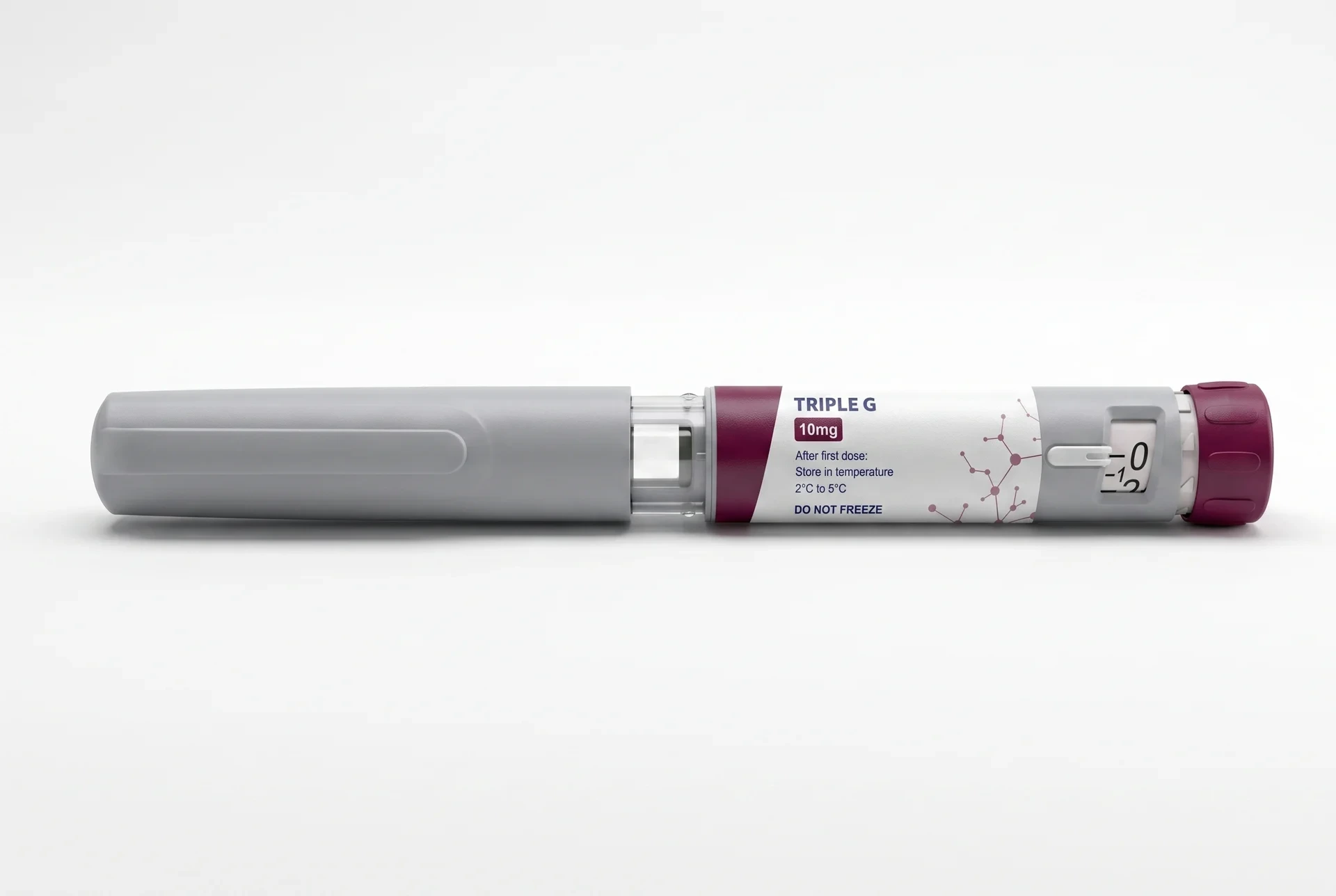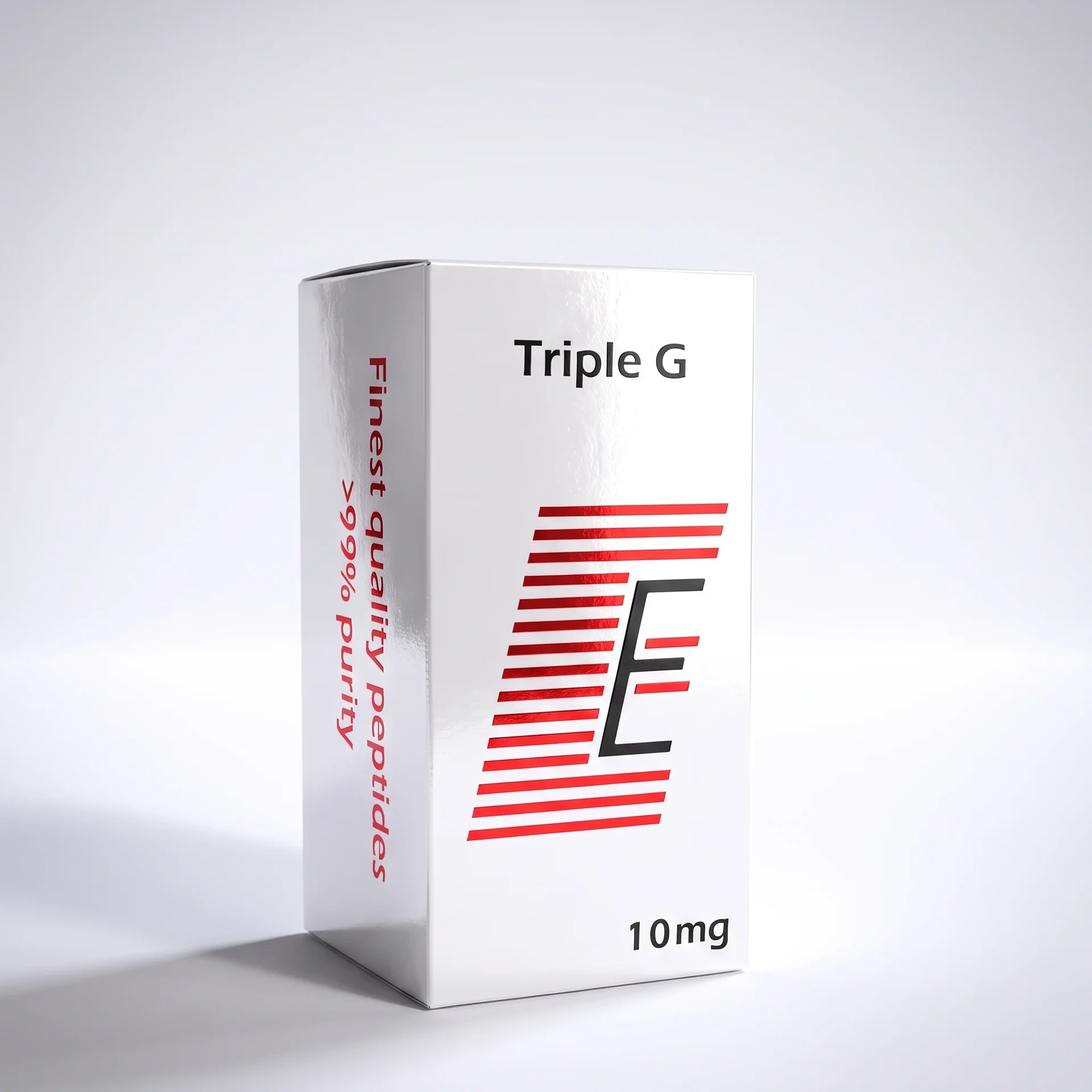
TRIPLE G 10mg
TRIPLE G 10mg
118,99 €
Free delivery on orders over €350. Fast delivery.



Other categories
7 products
Black Week
Sign up for the newsletter and get access to the Black Week promotion before other customers.
By signing up you agree to receive the Pro-Body newsletter with news and promotions. You can unsubscribe at any time with one click in the e-mail. Privacy policy
Retatrutide, described in research documentation under the code LY3437943, is a synthetic 39-residue peptide with an attached lipid chain, and it activates three metabolic receptors at once: the glucose-dependent insulinotropic polypeptide (GIP) receptor, the glucagon-like peptide-1 (GLP-1) receptor and the glucagon receptor (Mateescu et al., 2026, PMID 42942810). In the Pro-Body catalogue the molecule appears under the trade name TRIPLE G, a reference to its three target receptors.
The receptor profile is not symmetrical. In cell-based assays the molecule showed balanced activity at the glucagon and GLP-1 receptors and markedly higher activity at the GIP receptor (Coskun et al., 2022, PMID 35985340). It is that third vector, glucagon receptor agonism, that separates retatrutide from the single and dual agonists of the same family.
The compound is the subject of an advanced clinical programme and holds no marketing authorisation as a medicine in any jurisdiction. The reagents collected in this subcategory are materials for laboratory research; they are neither medicines nor dietary supplements. The wider context of the family is described by the parent category Peptides.
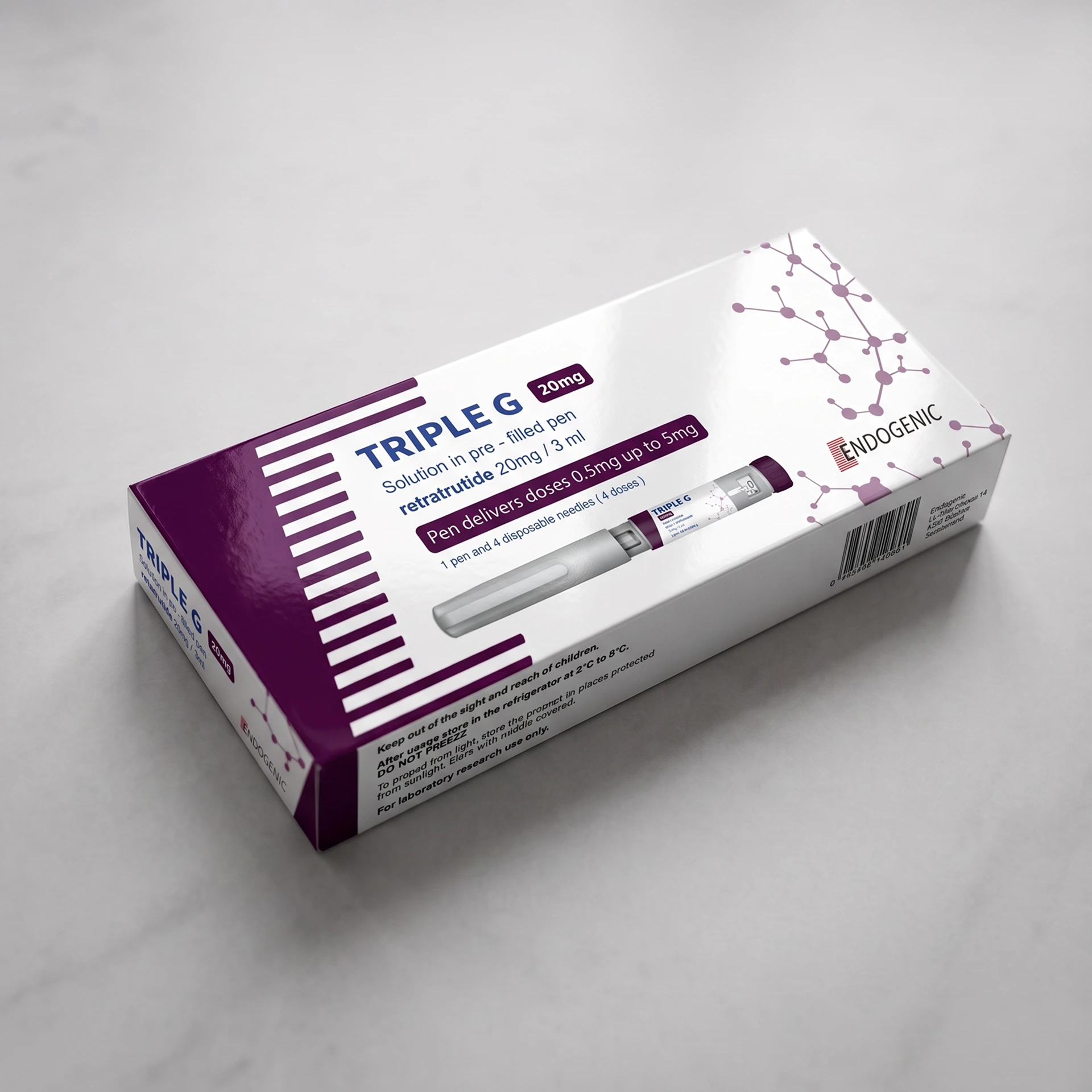
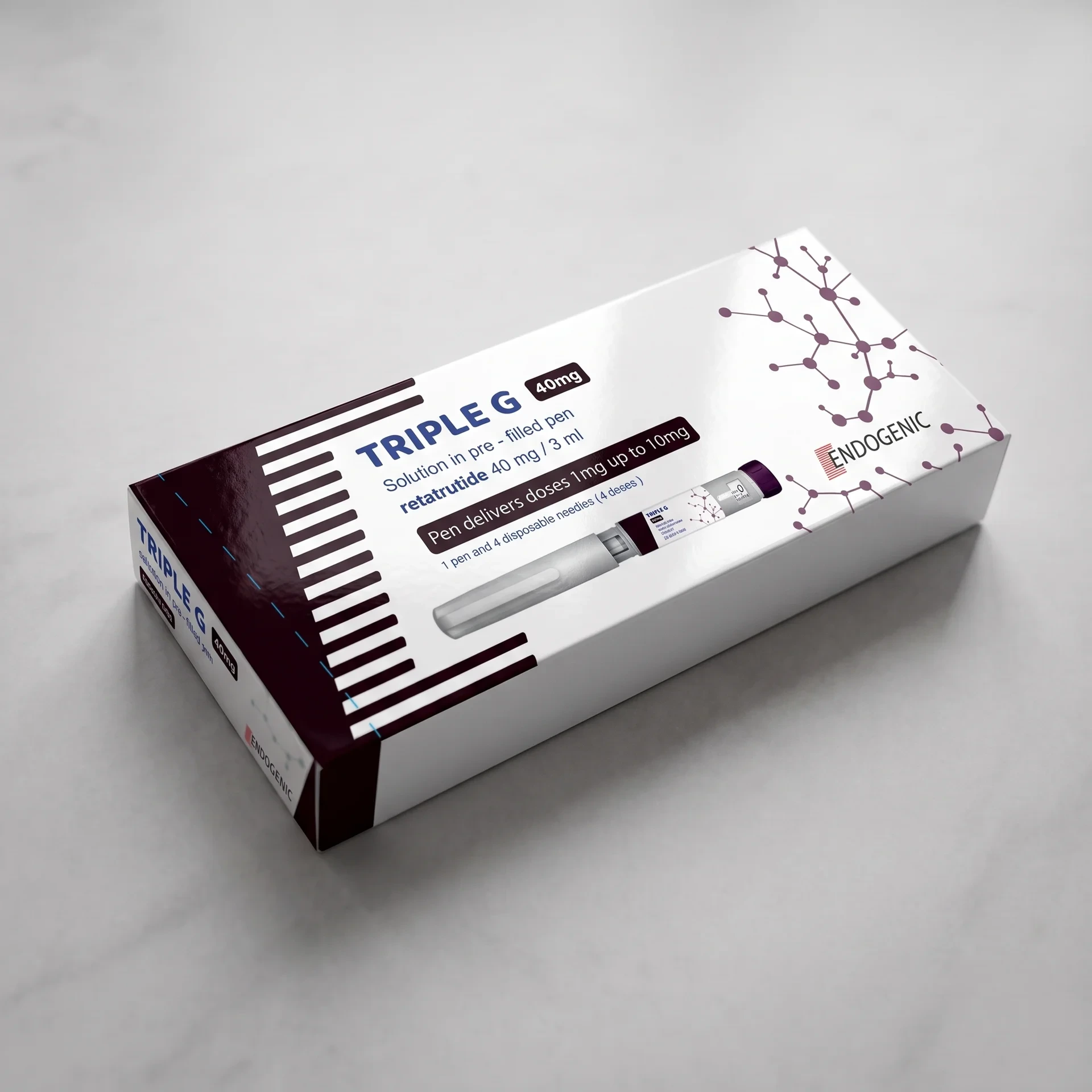
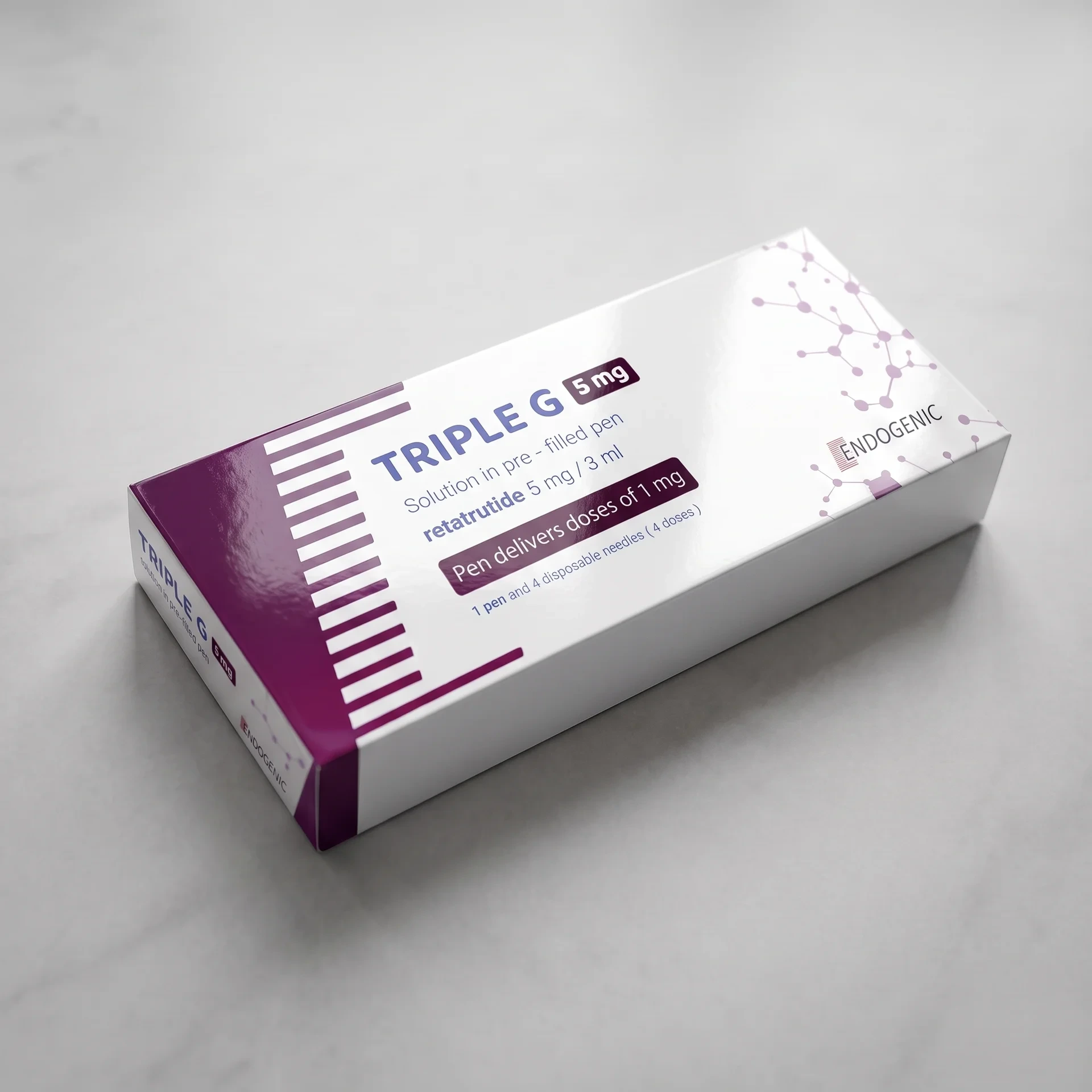
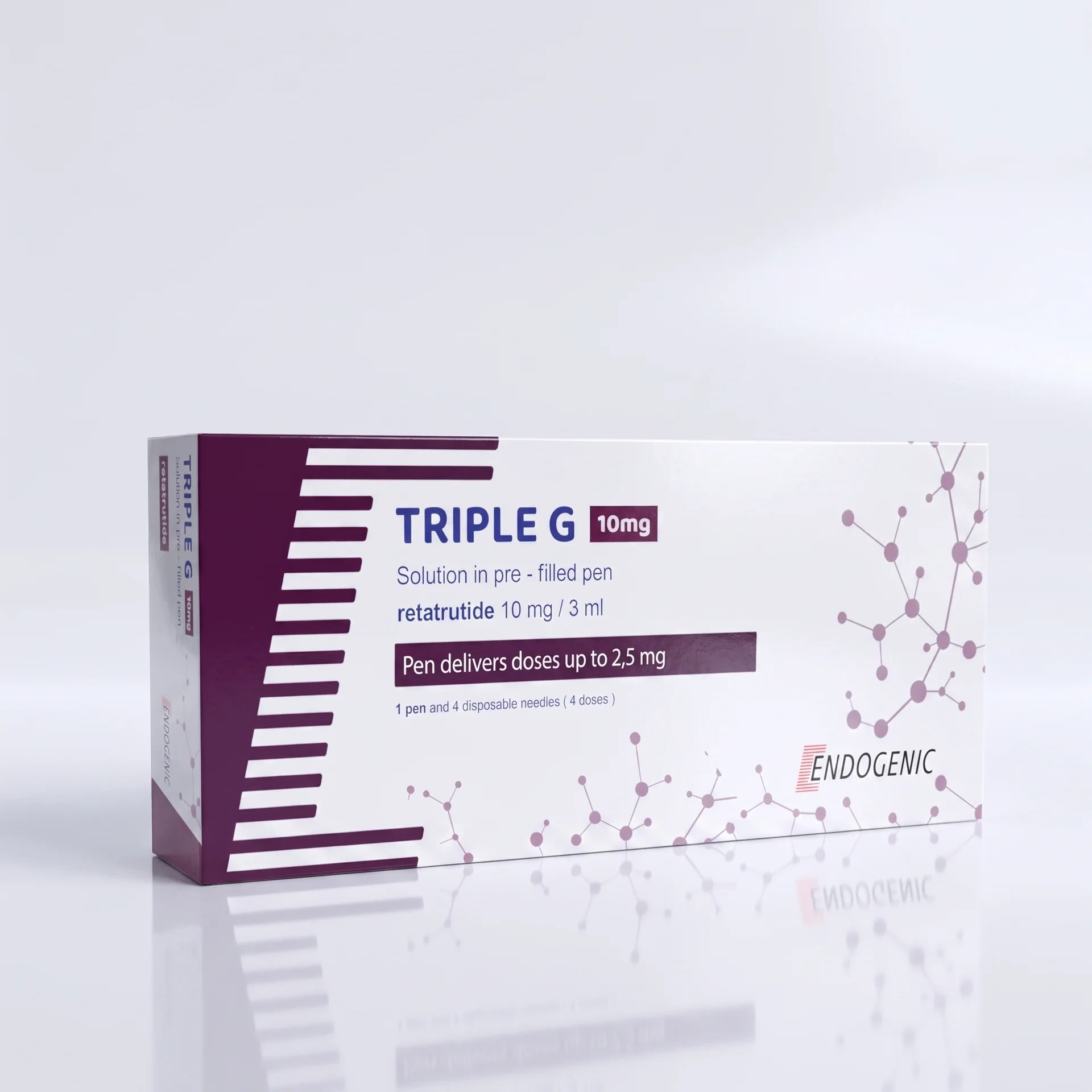
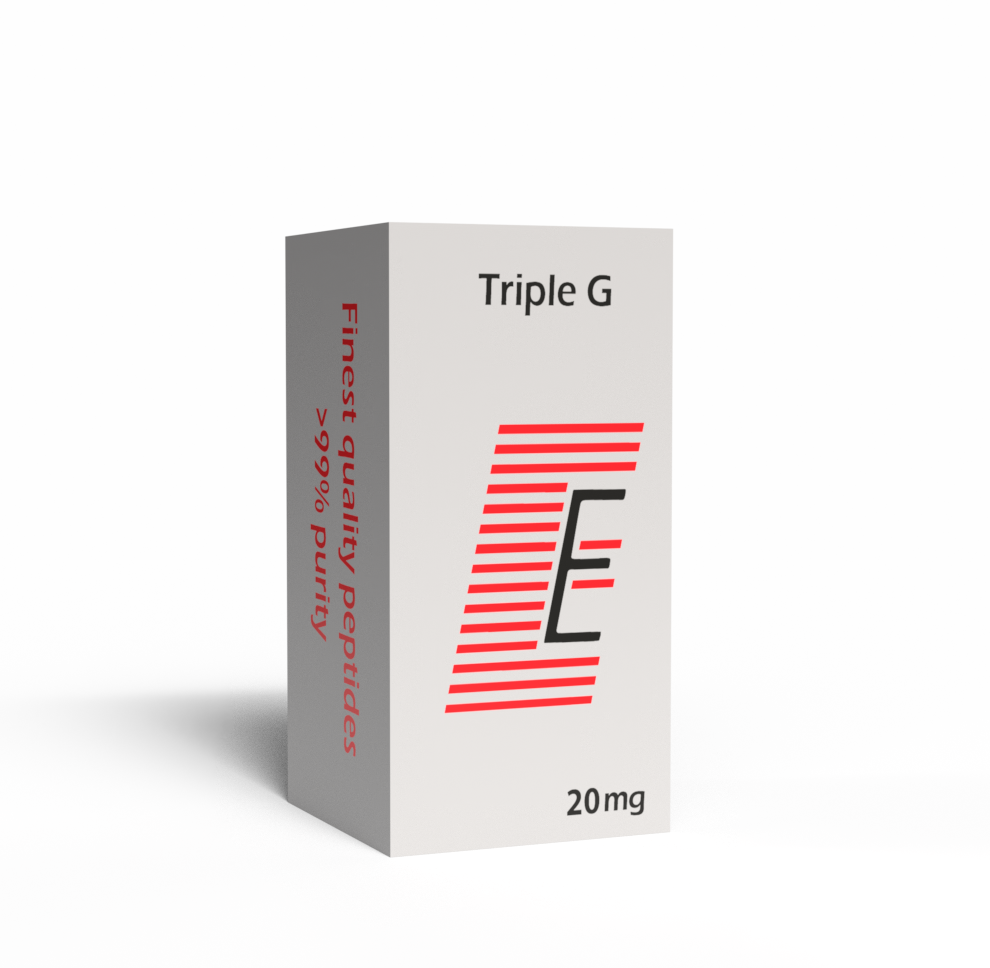
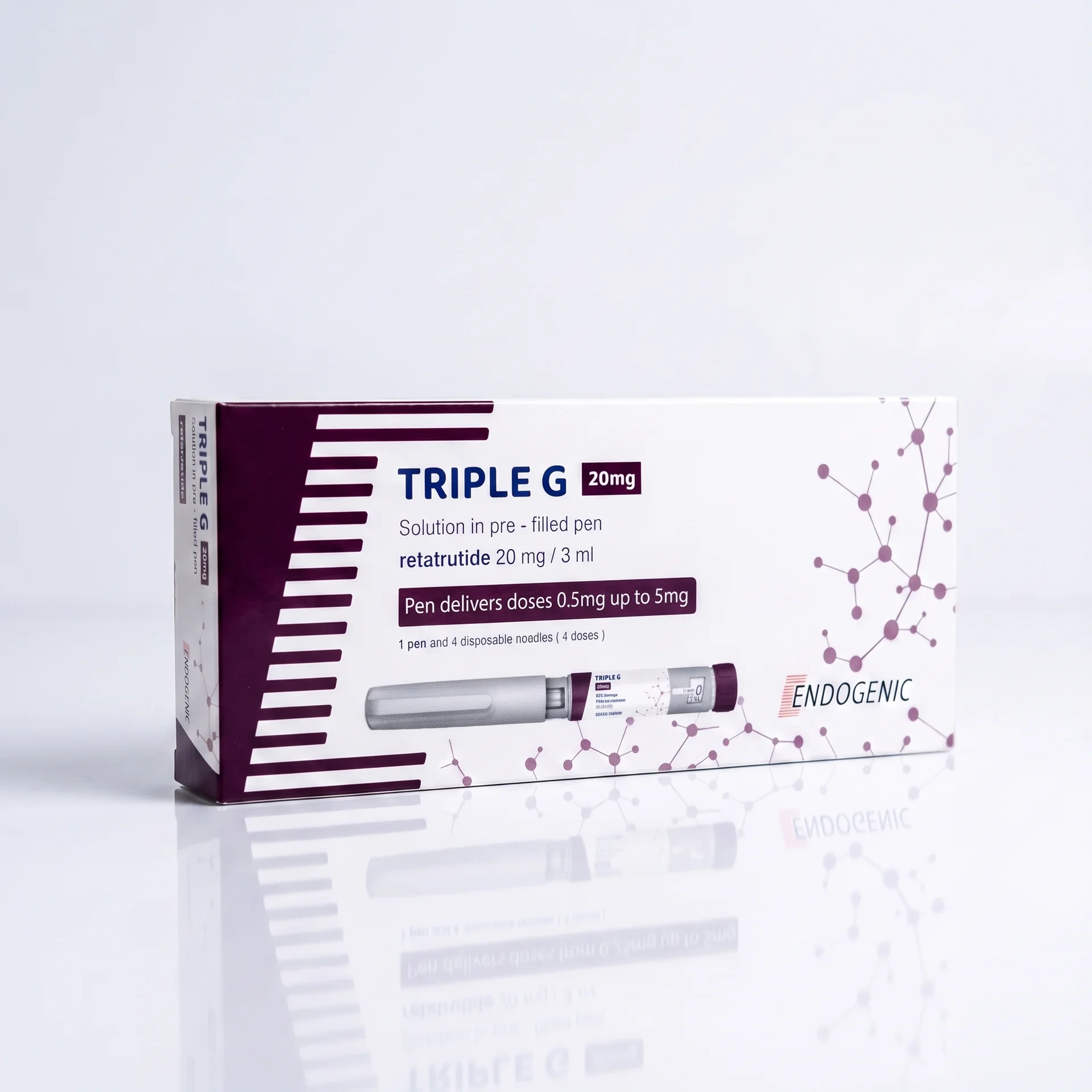
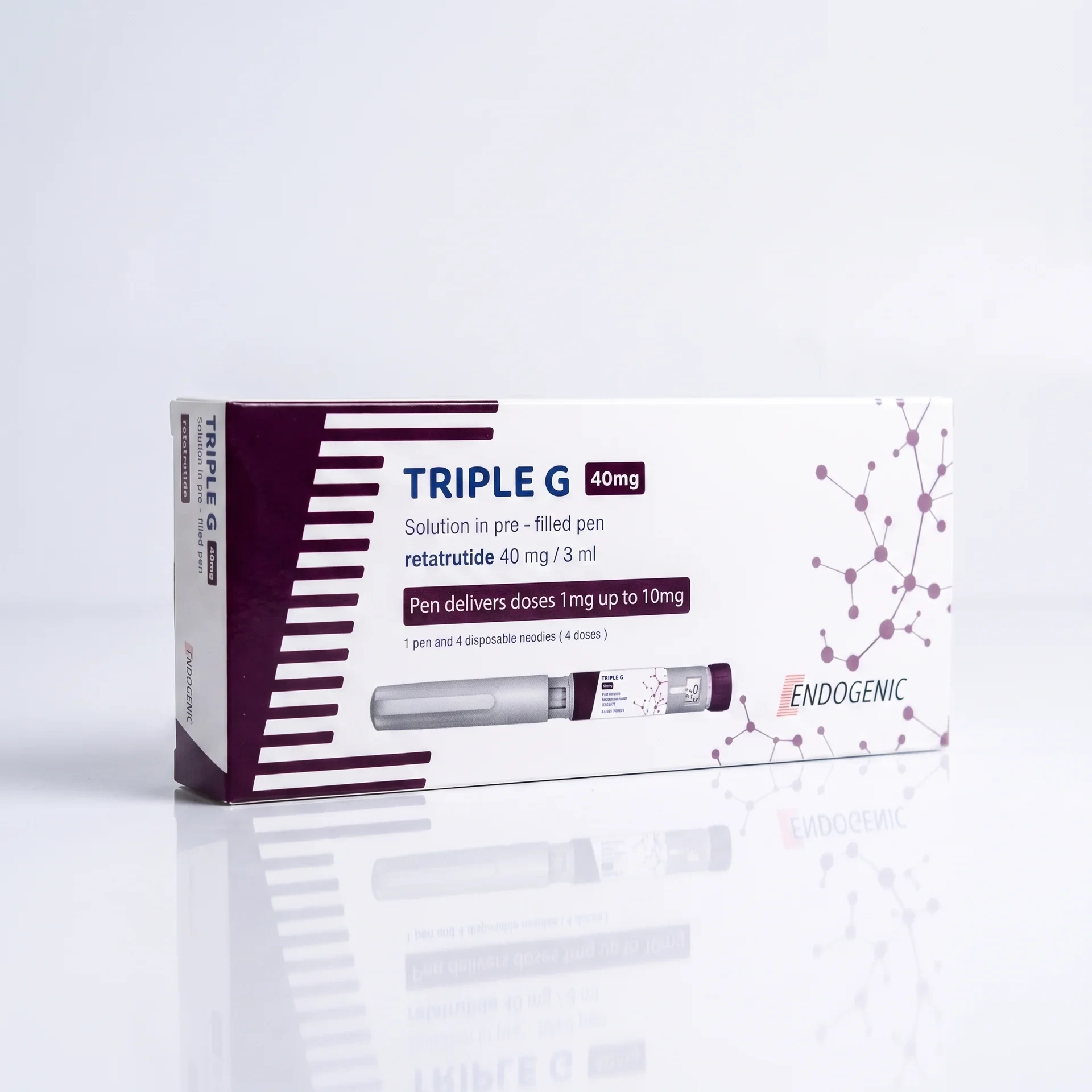
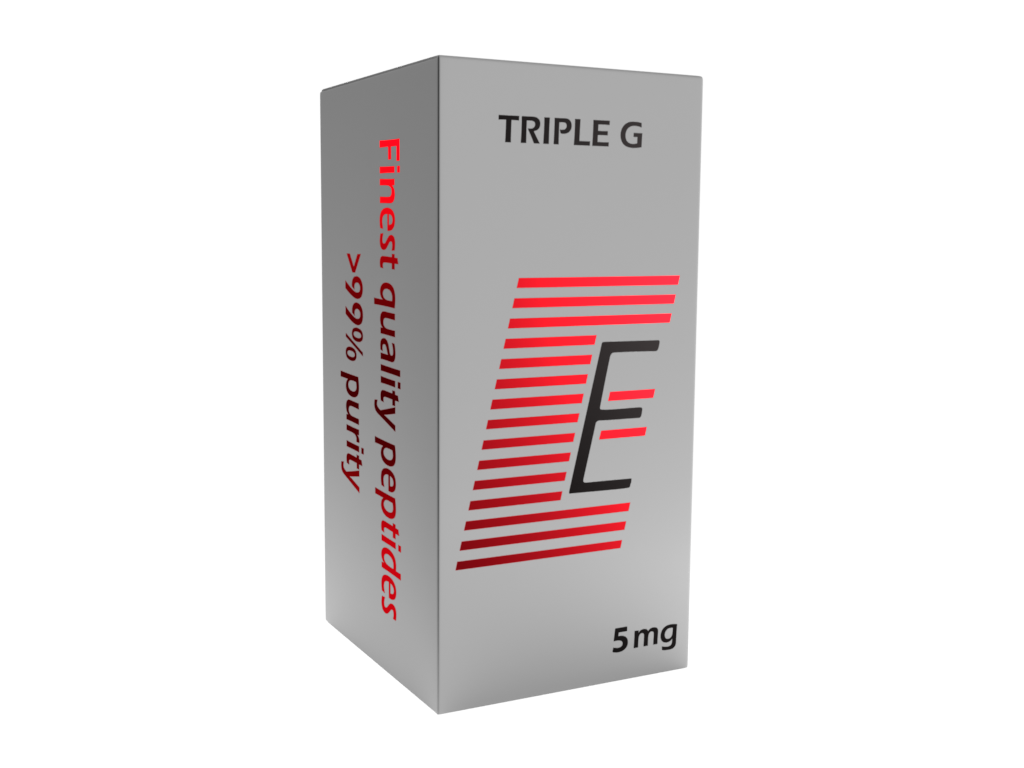
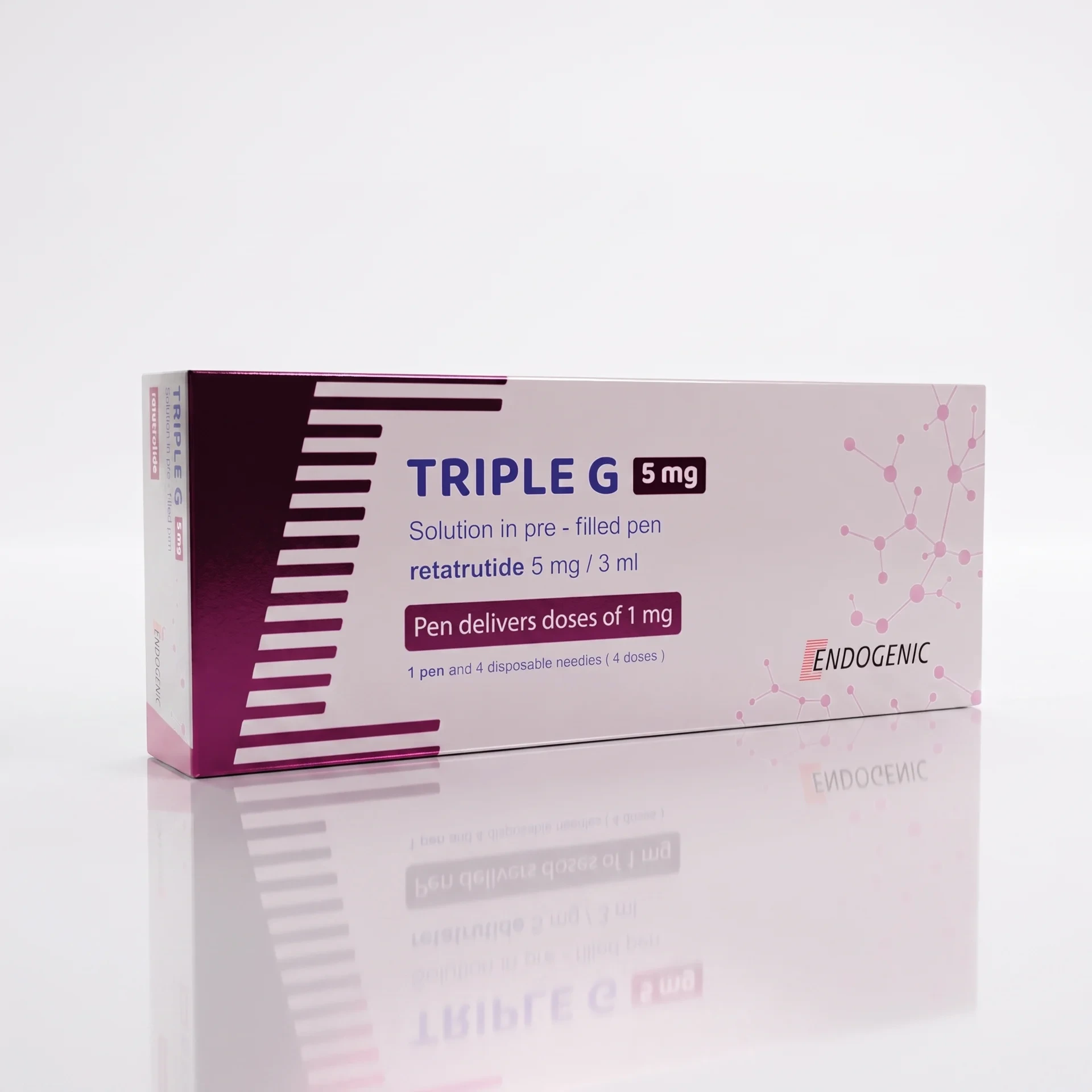
The subcategory brings together seven reagents containing the same molecule in two physical forms. Vials of lyophilisate, a dry powder for reconstitution, carry nominal contents of 5, 10 and 20 mg: Triple G 5mg, TRIPLE G 10mg and TRIPLE G 20mg. PEN applicators holding a factory-prepared solution come in four contents: TRIPLE G 5mg PEN, TRIPLE G 10mg PEN, TRIPLE G 20mg PEN and TRIPLE G 40mg PEN.
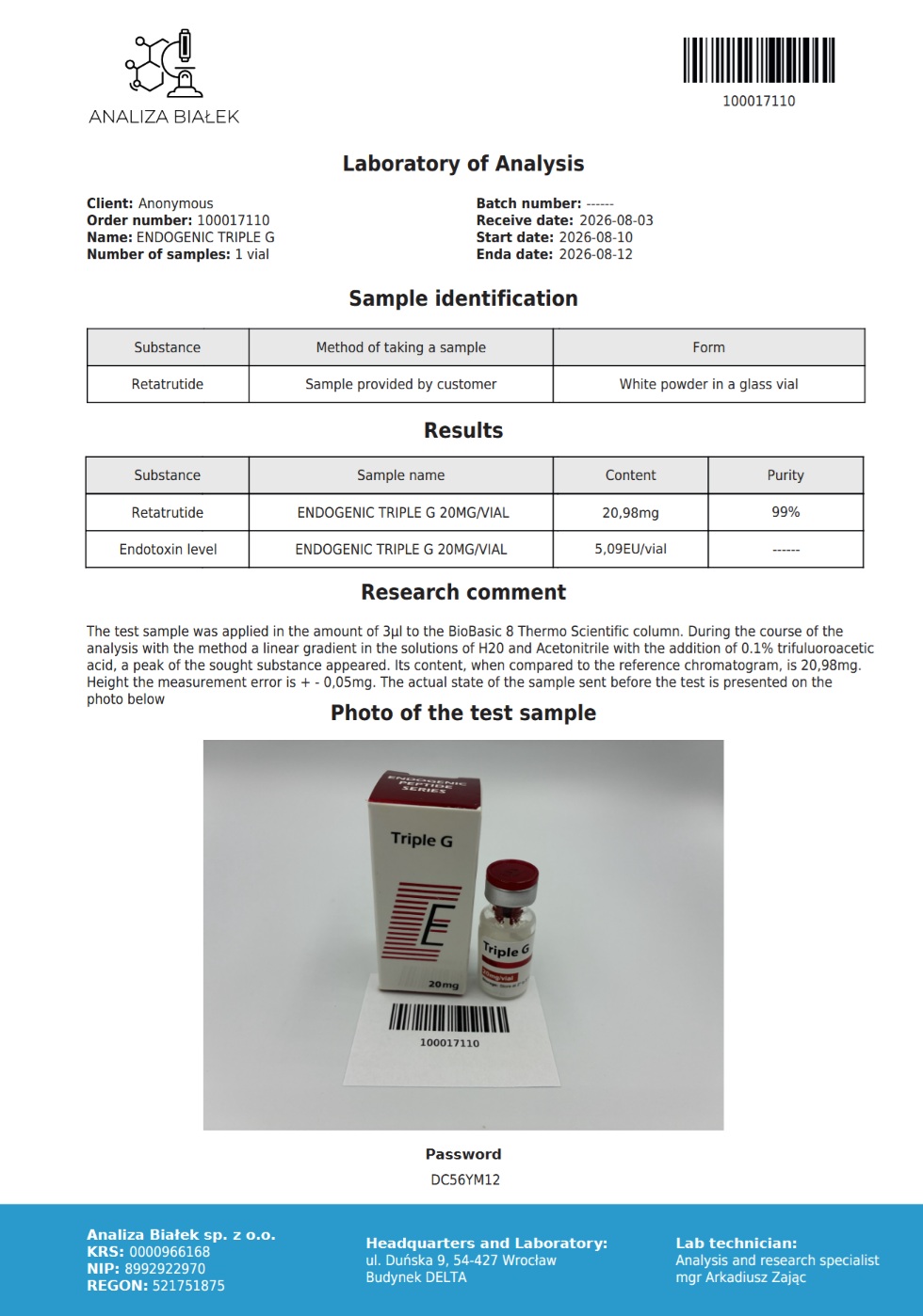
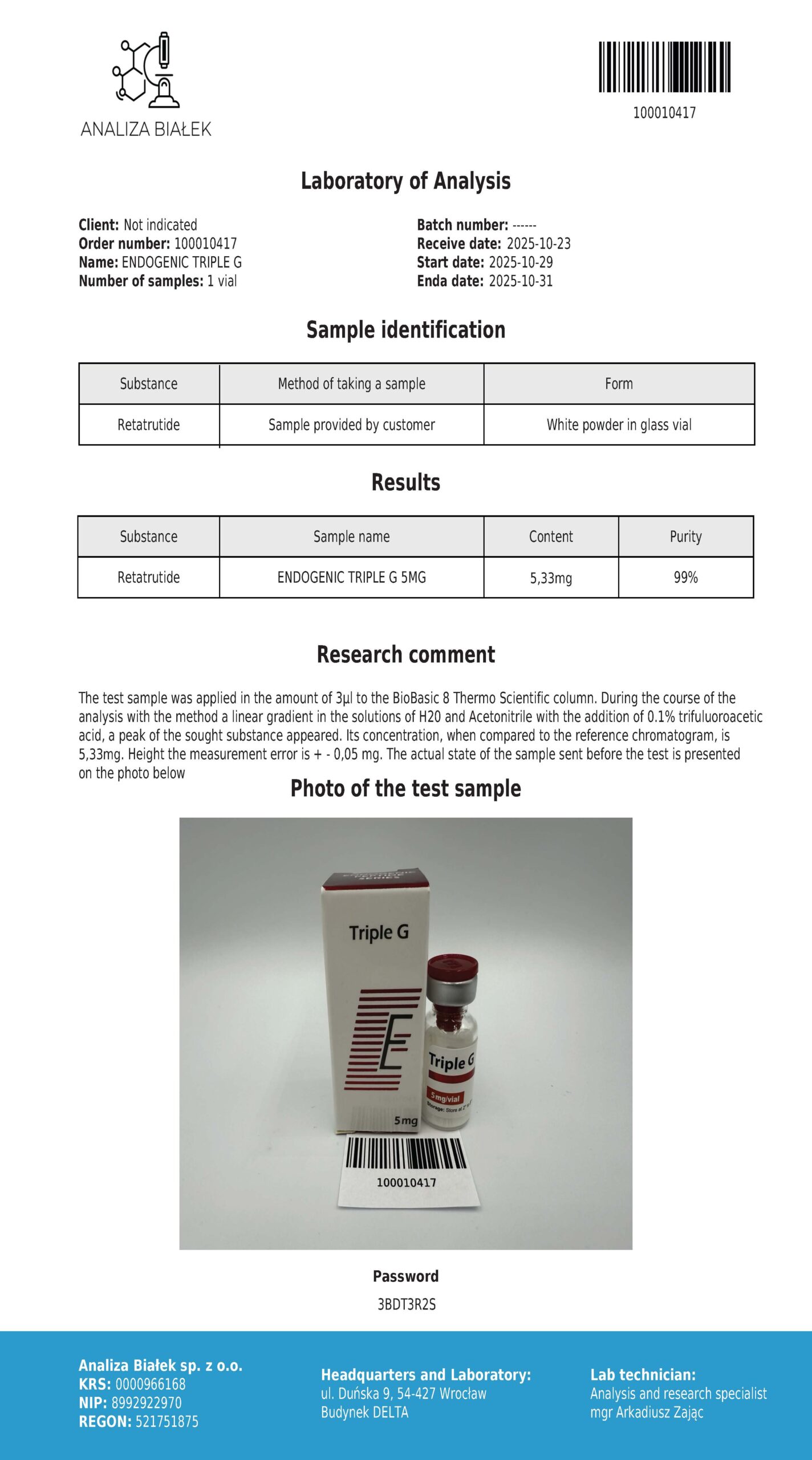
Lyophilisate and factory solution are two forms of the same peptide, differing in physical state and storage stability: dry powder is not subject to the hydrolysis and aggregation that occur in the aqueous phase, while the solution in an applicator has a concentration set at the factory. Every batch is documented by a certificate of analysis with an HPLC result and identity confirmation by mass spectrometry. For a multi-receptor peptide that document is decisive, because structure is established by mass and sequence rather than by a trade name.
Retatrutide serves as a tool in the pharmacology of incretin receptors and the glucagon receptor. Working concentrations are chosen by the researcher depending on the model; the subcategory gives no quantities and no schedules.
Scientific perspective. The clinical figures relate to a drug candidate studied under medical supervision, in defined populations and under a stated estimand. A 2026 review notes that values from sponsor disclosures calculated under an efficacy estimand are higher than those under a treatment-regimen estimand, and that population differences and treatment discontinuation also matter to interpretation (Mateescu et al., 2026). A research reagent is not that drug candidate, and the results of those trials do not apply to it.
By receptor scope within the family. Semaglutide, listed in the catalogue as SEMA G, activates one receptor, GLP-1. The GLP-1 + GIP reagent activates two, GLP-1R and GIPR. Retatrutide adds the glucagon receptor to those, so it acts through three. The distinction describes the profile of the molecule in models, not an advantage over the others.
By form, not by molecule. A vial of lyophilisate and a PEN applicator contain the same peptide. Lyophilisate lets the researcher set the concentration of the stock solution to suit the experimental system, while the factory solution has a concentration set by the manufacturer and declared in the batch documentation. The choice between them follows from the methodology of the protocol.
Retatrutide holds no marketing authorisation as a medicine in any jurisdiction. The European Medicines Agency data on products authorised in the member states (Article 57, as of 9 October 2026) contain no entry for this substance, and the Drugs@FDA database holds no product with it as an active ingredient (checked 8 November 2026). There is no authorisation as a food or dietary supplement ingredient in the European Union either.
Anti-doping note. The WADA Prohibited List 2026 does not name retatrutide, and neither does the 2027 List, which applies from 1 January 2027. In both editions the decisive provision is category S0: it covers any pharmacological substance that no governmental regulatory health authority has approved for human therapeutic use, including substances under clinical development. Retatrutide meets that condition, so it falls under category S0 and is prohibited at all times, in and out of competition. The binding sources are the List in force and the ADAMS system, so researchers and athletes verify the status themselves. Materials from this subcategory are research reagents and do not serve as preparation for sporting competition.
Retatrutide (LY3437943) is a lipidated 39-residue peptide, an agonist of the GIP, GLP-1 and glucagon receptors. TRIPLE G is the trade name of the reagent line and refers to the three target receptors; the substance is the same.
By the physical state of the material. Lyophilisate is a dry powder that the researcher reconstitutes, thereby setting the concentration of the stock solution. A PEN holds a solution at a concentration set at the factory and declared on the label and in the batch certificate of analysis. The molecule is identical in both variants.
No. Retatrutide holds no marketing authorisation as a medicine anywhere, and the materials in this subcategory are reagents for laboratory research. Results from clinical trials of the drug candidate do not apply to a reagent.
By mass and sequence in the batch certificate of analysis. For dual and triple agonists a trade name does not establish the structure; confirmation by mass spectrometry and the HPLC result decide the matter.
Yes. It is not named in the 2026 List or the 2027 List, but as a substance with no approval for human use it falls under category S0 in both editions, prohibited at all times.
This category groups chemical reagents intended solely for laboratory research (Research Use Only). The peptides collected here are not medicinal products, dietary supplements or foodstuffs. They are not intended for use in humans or animals. Sales are restricted to registered research institutions and laboratories.