



Melanotan 2
Other categories
3 products
Black Week
Black Week deals before everyone else
Sign up for the newsletter and get access to the Black Week promotion before other customers.
By signing up you agree to receive the Pro-Body newsletter with news and promotions. You can unsubscribe at any time with one click in the e-mail. Privacy policy
Melanotan 2 - research reagents
Melanotan 2, written in the literature as MT-II, is a cyclic, truncated analogue of the melanotropic hormone α-MSH. It acts as a non-selective melanocortin receptor agonist, engaging more than one subtype of that receptor family (Wessells et al., 2000, PMID 11035391).
The molecule came out of a programme that designed melanocortin analogues with enhanced potency and enzymatic resistance to clarify the role of melanocortin receptors. That same programme described two compounds still confused with each other today: the linear melanotan 1, studied clinically in the context of skin pigmentation, and the cyclic truncated melanotan 2, studied in male erectile dysfunction; a later analogue of melanotan 2 is PT-141 (Hadley and Dorr, 2006, PMID 16412534).
This subcategory collects reagents holding melanotan 2 in three formats. The materials are intended for laboratory research; they are not medicinal products or cosmetics. The remaining peptides of the section are gathered by the parent category Peptides.
Variants in the range
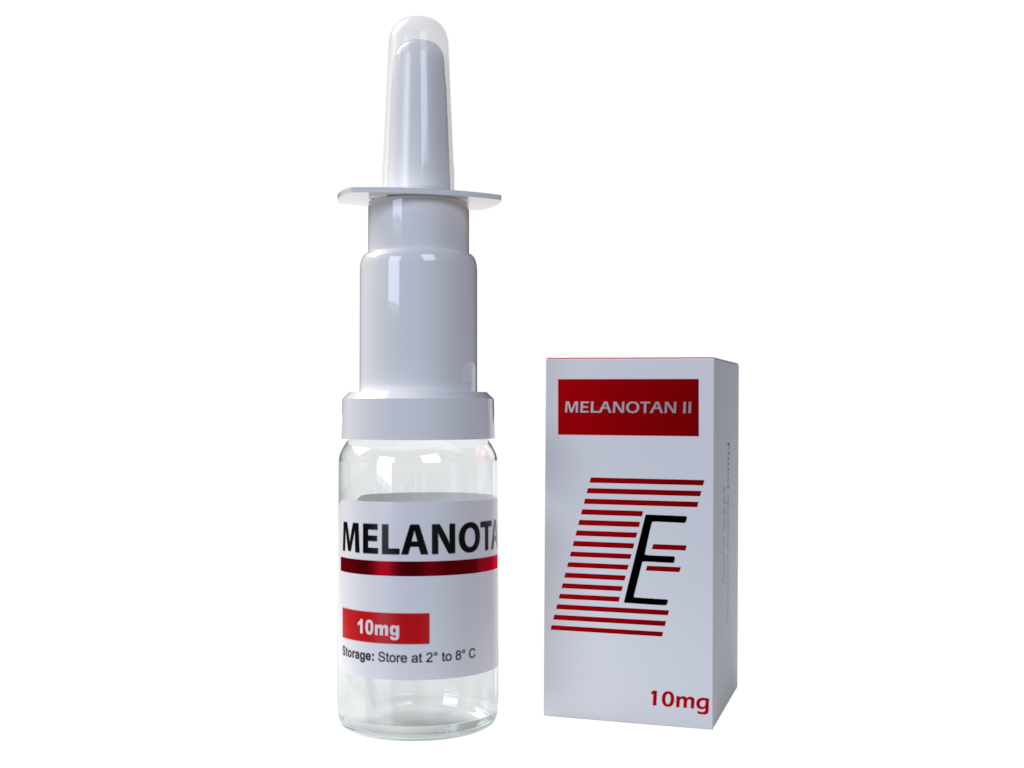
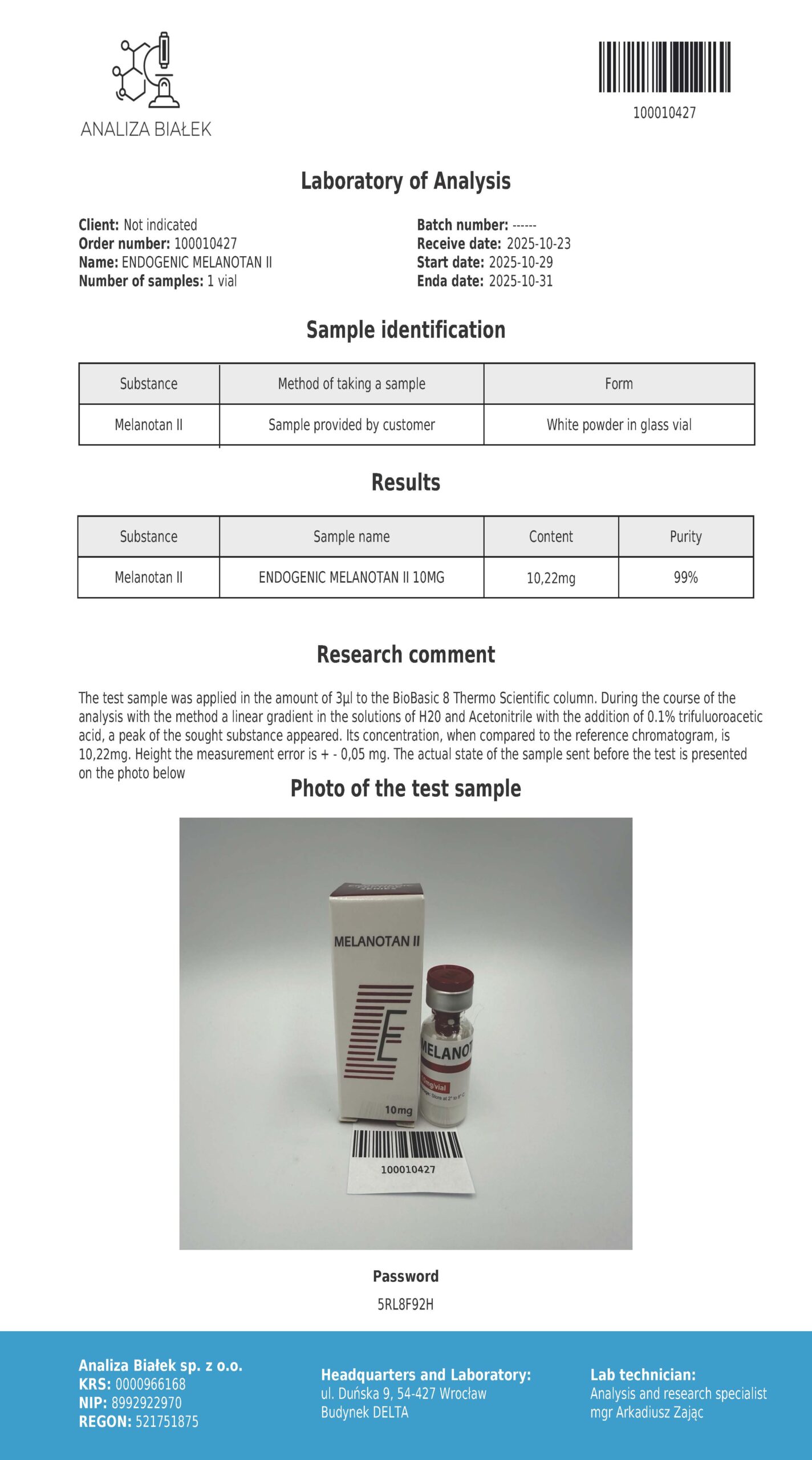
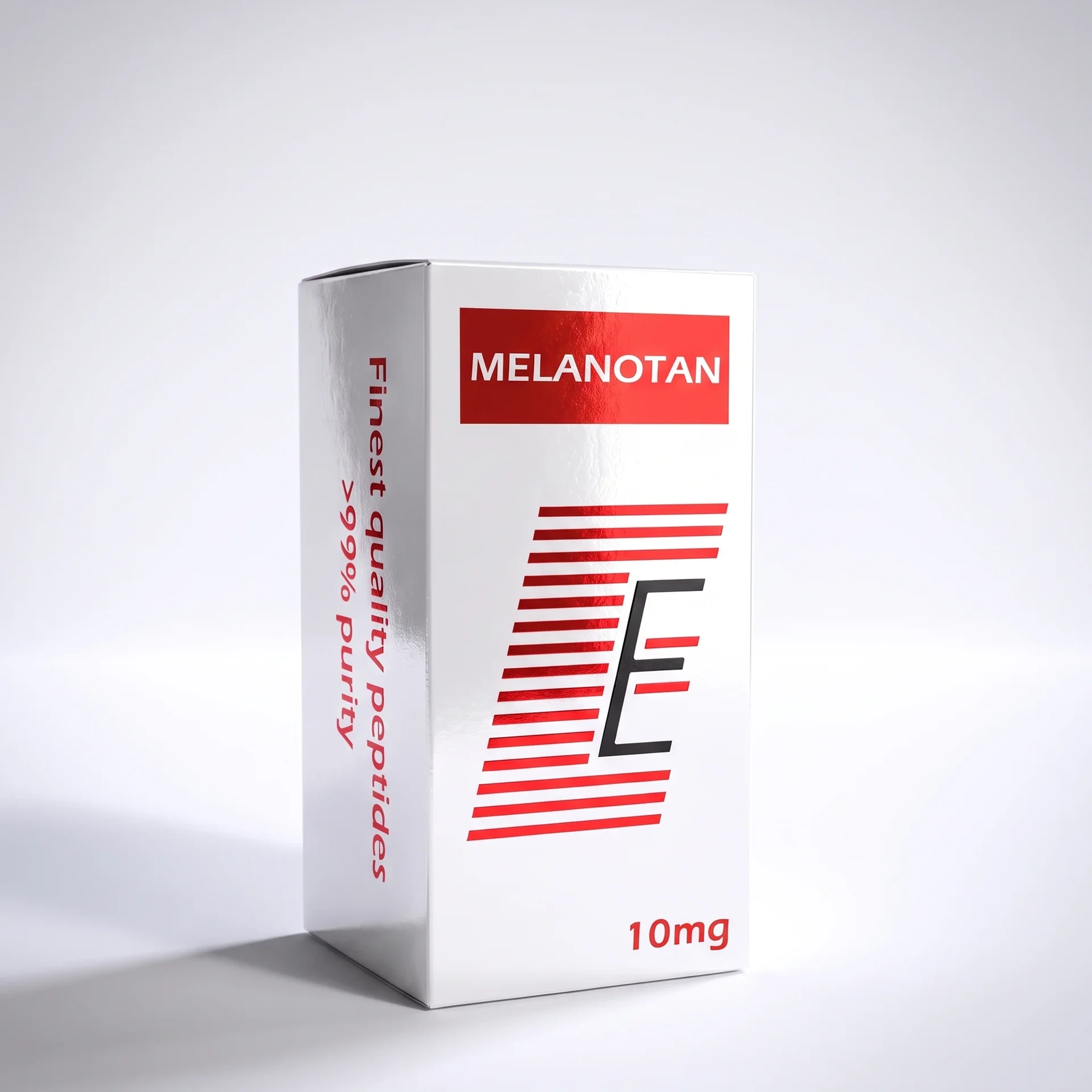
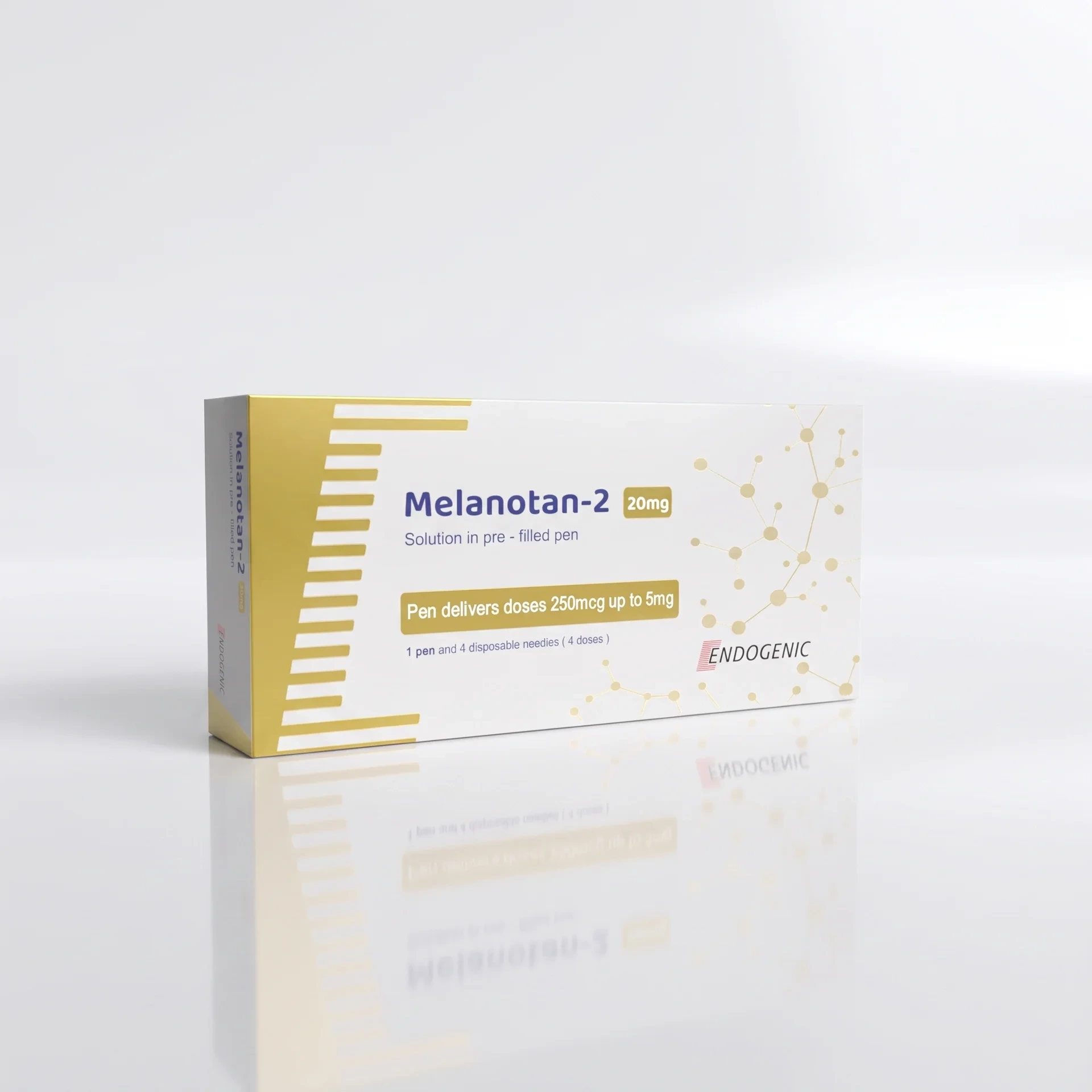
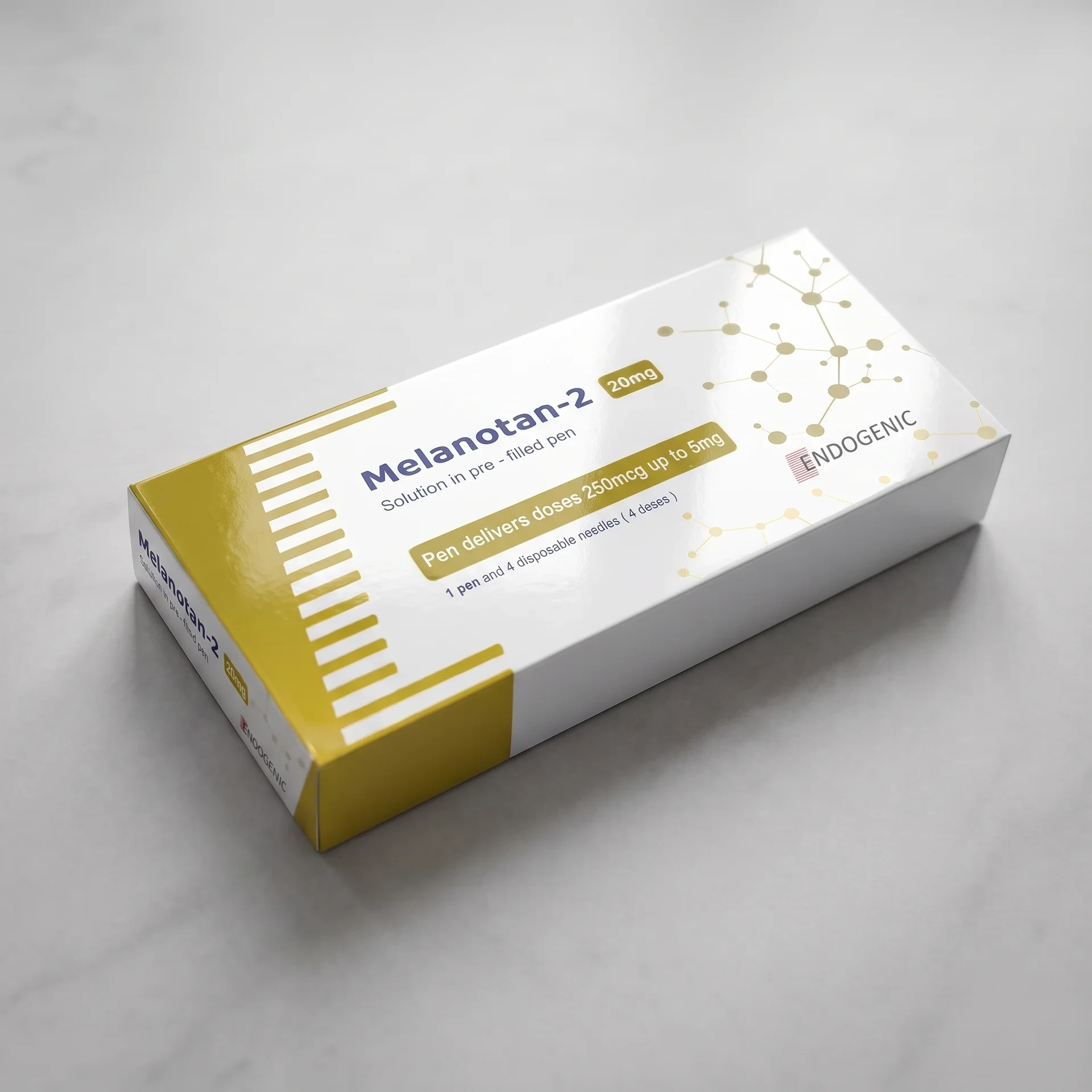
The subcategory covers three reagents holding the same peptide. Melanotan-2 10mg is a vial of lyophilisate for the researcher to reconstitute. MELANOTAN-2 20mg PEN is a factory solution in an applicator holding 20 mg, with the concentration and unit count calibrated at the factory and declared in the batch certificate. Melanotan 2 spray is a set with 10 mg of lyophilisate, water and a glass atomiser, not a ready solution.
The three formats hold the same cyclic peptide in different states of the material. Batch purity is confirmed by HPLC and identity by mass spectrometry; for a cyclic analogue the batch documentation matters, because ring closure and chain truncation are precisely the features that separate it from the linear analogue of similar name.
Applications in scientific research
In the literature melanotan 2 is a tool for studying melanocortin receptors, and its clinical history is limited to small studies from 1996 to 2000. Working concentrations are chosen by the researcher depending on the model; the subcategory gives no quantities and no schedules.
- Melanocortin receptor pharmacology. The melanocortins are a family of multifunctional peptide hormones, and analogues of enhanced potency were designed precisely to separate the functions of individual receptors (Hadley and Dorr, 2006).
- Studies in men with erectile dysfunction. In a double-blind, placebo-controlled crossover study in 20 men with erectile dysfunction, erection without sexual stimulation was recorded in 17 participants, and the mean duration of tip rigidity above 80% on RigiScan was 41 minutes; increased desire was reported in 13 of 19 exposures (68%) against 4 of 21 (19%) on placebo (p < 0.01), and frequent adverse events were nausea and yawning (Wessells et al., 2000).
- Population with organic risk factors. In a second study from the same group, erections were reported in 12 of 19 exposures against 1 of 21 on placebo, the mean rigidity score among responders was 6.9 on a scale of 0 to 10, and the mean duration of tip rigidity above 80% was 45.3 minutes against 1.9 minutes (p = 0.047); severe nausea occurred in 4 of 19 exposures (Wessells et al., 2000, PMID 11018622).
- Pigmentation in a phase I pilot. In a controlled study in three healthy volunteers, two showed increased pigmentation of the face, upper body and buttock, measured by quantitative reflectance and visual assessment one week after exposure ended; one of two participants at the highest level had grade II somnolence and fatigue, and mild nausea appeared at most levels (Dorr et al., 1996, PMID 8637402).
- Signals from dermatology. A 20-year-old woman with Fitzpatrick skin type II was described with a melanoma of the gluteal region, excised three months after a three to four-week course of melanotan 2, her skin intensely pigmented all over; the authors stressed that the substance is unlicensed and incompletely tested (Hjuler and Lorentzen, 2014, PMID 24355990). In a second case report, a 40-year-old man with a history of melanoma and multiple dysplastic naevi developed crops of new pigmented naevi with atypical features while pre-existing naevi darkened; after use stopped, the lesions lightened. The authors conclude that synthetic α-MSH analogues can drive proliferation of neoplastic melanocytic cells in predisposed people (Cardones et al., 2009, PMID 19380666).
- Material quality on the informal market. A dermatological review described α-MSH analogues reaching users through the internet, tanning salons and gyms, with the British regulator drawing attention to the possible impurity of such preparations; the regulated α-MSH analogue afamelanotide was then in phase II and III trials (Langan et al., 2010, PMID 20545686).
Scientific perspective. The human data come from studies in a dozen to a few dozen participants, run a quarter of a century ago, and newer reports are dermatological case reports. The reagent holds no status as a cosmetic or a tanning preparation; presenting it that way conflicts with the Research Use Only framework.
How melanotan 2 differs from related compounds
By material format within the subcategory. With a vial of lyophilisate the stock concentration is decided by the researcher. In a PEN applicator it is set at the factory, so successive withdrawals stay consistent between batches. The set with an atomiser supplies lyophilisate and water separately, which means the solution has to be prepared before work. The peptide is identical across all three formats.
By structure, compared with analogues of similar name. Melanotan 1 is a linear peptide while melanotan 2 is cyclic and truncated, and the literature studied them in different directions (Hadley and Dorr, 2006). A separate molecule is afamelanotide, a regulated α-MSH analogue with a marketing authorisation in the European Union, which is not part of this range. Similar names do not mean similar status or a similar body of research.
Regulatory status and anti-doping note
Melanotan 2 holds no marketing authorisation as a medicine in any jurisdiction. The European Medicines Agency Article 57 listing (data as of 9 October 2026) contains no entry for this substance; four hits on “melanotan” concern afamelanotide in the product Scenesse, authorised under the centralised procedure. The Drugs@FDA database holds no product with melanotan 2, and the National Drug Code catalogue carries three bulk-ingredient filings, which are identifiers rather than approvals (checked 8 November 2026). The substance holds no authorisation as a food, dietary supplement or cosmetic ingredient in the European Union either.
Anti-doping note. Neither the WADA Prohibited List 2026 nor the 2027 List, which applies from 1 January 2027, names melanotan 2; the full text of both editions also contains no class covering melanocortin receptor agonists. Class S0 therefore decides: it covers any pharmacological substance that no governmental regulatory health authority has approved for human therapeutic use, and in the 2027 edition the examples name peptides explicitly. Melanotan 2 meets that condition, so it falls under class S0 and is prohibited at all times, in and out of competition. The binding sources are the List in force and the ADAMS system. Materials from this subcategory are research reagents and do not serve as preparation for sporting competition.
Frequently asked questions (FAQ)
What is melanotan 2?
A cyclic, truncated analogue of the hormone α-MSH that acts as a non-selective melanocortin receptor agonist. The literature also writes it as MT-II.
How does melanotan 2 differ from melanotan 1?
By structure and by the direction of research. Melanotan 1 is a linear peptide and melanotan 2 is cyclic and truncated; both were described in the same melanocortin research programme but studied in different contexts (Hadley and Dorr, 2006).
Which formats are in this subcategory?
Three: a vial of lyophilisate at 10 mg, a PEN applicator with a factory solution at 20 mg, and a set with 10 mg of lyophilisate, water and a glass atomiser. All hold the same peptide.
What do the human studies show?
Little, and in small groups. Two studies from 2000 covered a few dozen men with erectile dysfunction, a 1996 pilot covered three volunteers, and newer reports are dermatological case reports.
Is melanotan 2 prohibited in sport?
Yes. It is not named in the 2026 List or the 2027 List, but as a substance with no approval for human use it falls under class S0 in both editions, prohibited at all times.
Category status notice
This category groups chemical reagents intended solely for laboratory research (Research Use Only). The peptides collected here are not medicinal products, dietary supplements or foodstuffs. They are not intended for use in humans or animals. Sales are restricted to registered research institutions and laboratories.