



RAD-140 (testolone)
Other categories
2 products
Black Week
Black Week deals before everyone else
Sign up for the newsletter and get access to the Black Week promotion before other customers.
By signing up you agree to receive the Pro-Body newsletter with news and promotions. You can unsubscribe at any time with one click in the e-mail. Privacy policy
RAD-140 (testolone) - research reagents
RAD-140, known in research commerce as testolone, is a non-steroidal selective androgen receptor modulator. It was described as a compound characterised across several preclinical models of anabolic androgen action and was developed at Radius Health (Miller et al., 2011, PMID 24900290).
Tissue selectivity in this class means that the same ligand behaves differently in different tissues. In gonadectomised rats, RAD-140 showed tissue-specific androgen action that largely spared the prostate while remaining active in the central nervous system (Jayaraman et al., 2014, PMID 24428527).
The subcategory collects reagents holding this molecule in two forms. The materials are intended for laboratory research; they are not medicinal products or dietary supplements. The remaining compounds of the section are gathered by the parent category SARMs.
Variants in the range
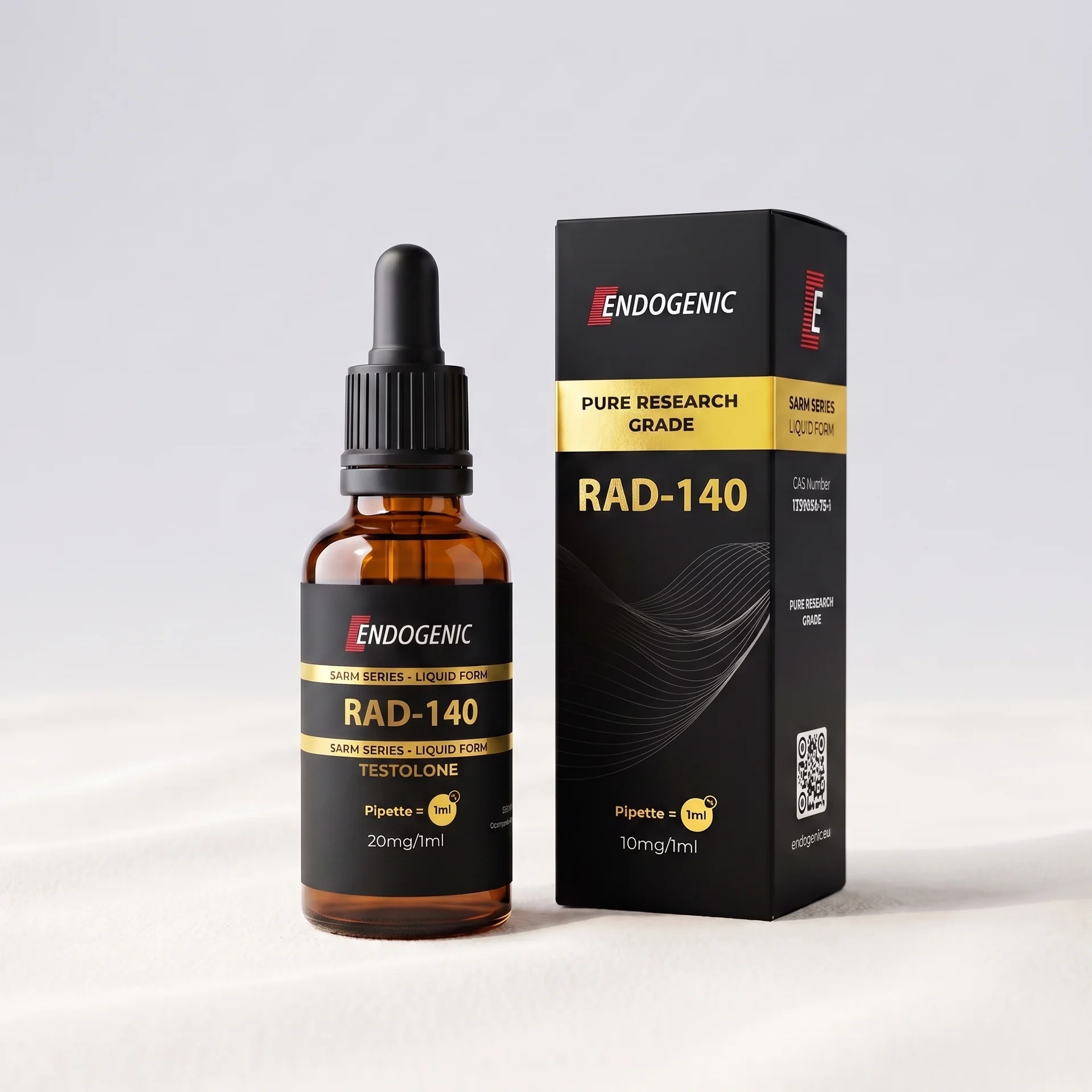
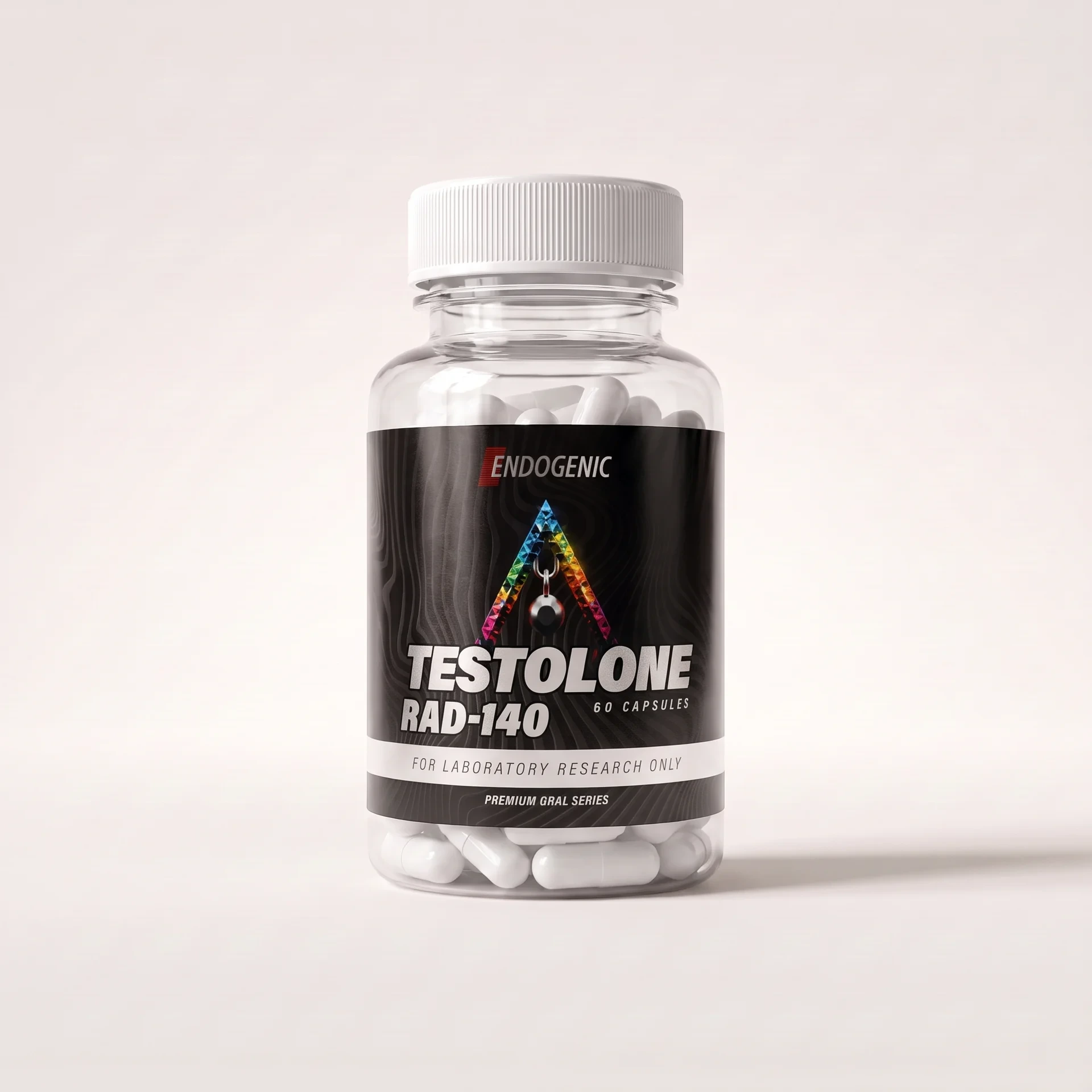
There are two reagents in the subcategory, holding the same substance. RAD140 60 caps supplies the substance in capsules of 10 mg, sixty to a pack. RAD 140 LIQUID is a 30 ml dropper bottle, and the milligrams per millilitre come from the batch documentation.
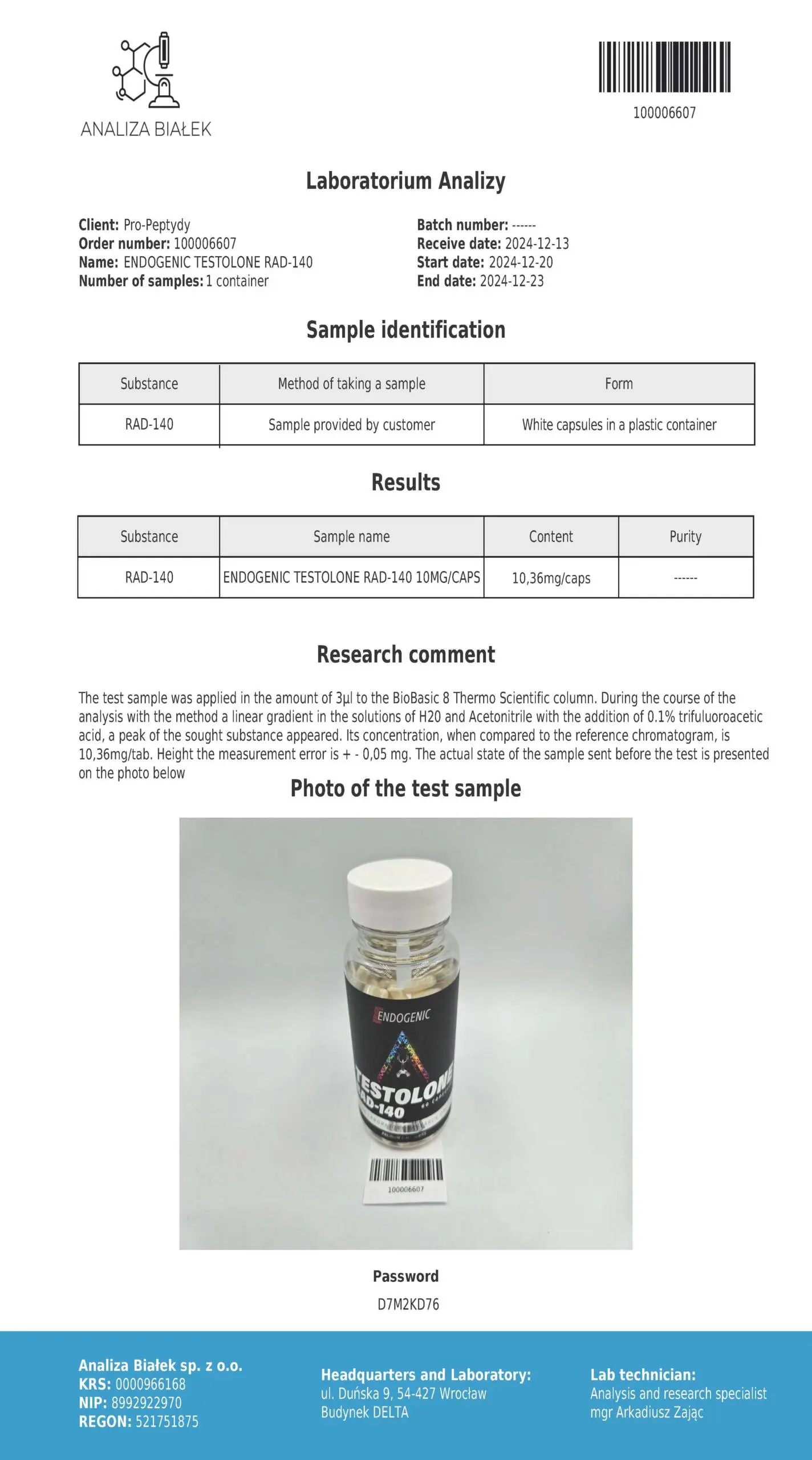
Both formats hold the same small molecule and differ in how the material is measured out. Batch purity is verified by HPLC and identity by mass spectrometry, with the results recorded in the certificate of analysis. For this class the batch documentation carries extra weight: analyses of products from the informal market show that in one study only about half of the preparations sold as SARMs contained a substance from the class at all, and some contained a different, unapproved drug (Adolf et al., 2026, PMID 42919612).
Applications in scientific research
The molecule appears in work on the androgen receptor in peripheral tissues and in the central nervous system, and in oncology of receptor-dependent tumours. Working concentrations are chosen by the researcher depending on the model; the subcategory gives no quantities and no schedules.
- Hippocampal neurons and a rat model. In cultured hippocampal neurons RAD-140 reduced cell death induced by apoptotic insults as effectively as testosterone, and the protection depended on the MAPK pathway: ERK phosphorylation rose and a MAPK kinase inhibitor abolished the effect. The protective action was also confirmed in vivo in the rat kainate lesion model (Jayaraman et al., 2014).
- The first study in humans. In a phase I study in 22 patients with advanced breast cancer positive for the androgen and oestrogen receptors and without HER2 overexpression, the most frequent adverse events were raised aspartate transaminase (59.1%), alanine transaminase (45.5%) and total bilirubin (27.3%). Grade 3 or 4 events occurred in 16 of 22 patients (72.7%) and treatment-related events in 17 of 22 (77.3%). The half-life was 44.7 hours, the clinical benefit rate at 24 weeks 18.2% and median progression-free survival 2.3 months; sex hormone-binding globulin fell in 18 of 18 patients and prostate-specific antigen rose in 16 of 20 (LoRusso et al., 2022, PMID 34565686).
- Reports of liver injury. In a 52-year-old man who had taken two supplements, one containing RAD-140 and the other RAD-140 together with LGD-4033, liver biopsy showed diffuse centrilobular canalicular cholestasis, a prominent ductular reaction and mild lobular inflammation; enzyme activity returned to normal about three months after discontinuation (Barbara et al., 2020, PMID 33062783). In a second report, acute liver injury with jaundice in a man with no significant medical history resolved within two months of stopping, and the workup identified no other cause (Ladna et al., 2023, PMID 36978171).
- A cardiology signal. A Polish team reported a case of heart failure attributed to RAD-140 abuse; the PubMed record carries no abstract, and the title points to a severe course (Skorupski et al., 2024, PMID 38864168).
- The doping-control context. The authors of a 2026 review stress that in almost all the events described the preparation never went through analysis, so undeclared androgens cannot be ruled out. As the dominant serious harm they name prolonged but usually reversible liver injury of the cholestatic type, with accompanying endocrine suppression (Adolf et al., 2026).
Scientific perspective. The evidence for this molecule spans cell and animal models and one phase I oncology study. Its authors described the safety profile as acceptable in an oncology population, with grade 3 or 4 events in close to three quarters of participants; carrying that judgement into another context has no basis. A research reagent is not an investigational medicine and does not inherit conclusions from clinical trials.
How RAD-140 differs from related compounds
By its body of evidence, compared with the other SARMs in the category. Each molecule in this class has its own literature: RAD-140 a phase I study in breast cancer, LGD-4033 a phase I study in healthy young men, and MK-2866 a phase II study in cancer cachexia. Modulating the same receptor does not make them interchangeable as reagents, because they were described in different models and endpoints.
By material format. A capsule takes the weighing off the researcher, while a liquid allows work by volume and dilution without dissolving a powder first. The molecule and its target stay the same in both variants.
Regulatory status and anti-doping note
RAD-140 is not authorised as a medicinal product. The European Medicines Agency Article 57 listing (data as of 9 October 2026) contains no entry for this substance, and the Drugs@FDA database and the National Drug Code catalogue hold no product with it as an active ingredient (checked 8 November 2026). No selective androgen receptor modulator has gained approval in the United States or the European Union. The United States regulator has also sent warning letters to distributors classifying preparations containing RAD-140 and related compounds as unapproved new drugs, regardless of “research compound” markings on the label.
Anti-doping note. The WADA Prohibited List 2026 names RAD140 explicitly in subclass S1.2 (other anabolic agents), in the same line as andarine, LGD-4033 (ligandrol), enobosarm (ostarine), S-23 and YK-11. The 2027 List, which applies from 1 January 2027, repeats that entry unchanged. The whole S1 class is prohibited at all times, in and out of competition, and SARMs have been on the List since 2008 (Adolf et al., 2026). The binding sources are the List in force and the ADAMS system. Materials from this subcategory are research reagents and do not serve as preparation for sporting competition.
Frequently asked questions (FAQ)
What is RAD-140?
A non-steroidal selective androgen receptor modulator, known in research commerce as testolone. It was developed at Radius Health and characterised in preclinical models of anabolic androgen action.
What does tissue selectivity mean in this class?
That the same ligand acts differently in different tissues. In gonadectomised rats RAD-140 showed androgen action that largely spared the prostate while remaining active in the central nervous system (Jayaraman et al., 2014).
How is the material measured out in each format?
In a capsule the mass is weighed at the factory; with the solution the researcher takes a volume at a concentration declared in the batch documentation.
Is RAD-140 a medicine?
No. It holds no authorisation as a medicinal product in any jurisdiction, and it is neither a dietary supplement nor a foodstuff. The most advanced publication is a phase I oncology study.
Is RAD-140 prohibited in sport?
Yes. The 2026 and 2027 Lists name RAD140 explicitly in subclass S1.2, and the prohibition applies at all times, in and out of competition.
Category status notice
This category groups chemical reagents intended solely for laboratory research (Research Use Only). The compounds presented are not medicinal products, dietary supplements or foodstuffs. They are not intended for use in humans or animals. Sales are restricted to registered research institutions and laboratories.